Enhancing Circularity, Sustainability, and Innovation
The Olivetti Hub of Roccavaldina
The Olivetti Hub of Roccavaldina: Driving Circular and Inclusive Territorial Metamorphosis
In Roccavaldina, a small Sicilian village, a circular innovation initiative has acted as a transformative trigger, activating a systemic territorial metamorphosis. From agricultural waste to bioplastics, the process generates inclusive jobs, new enterprises and community-led development, reconnecting inner areas to sustainable futures.
Italy
Local
Roccavaldina, province of Messina, in Sicily
Mainly rural
It involves a physical transformation of the built environment (hard investment)
Yes
2025-03-31
Yes
Co-funded by the European Union under the LIFE Programme (LIFE20 ENV/IT/000160 – LIFE RESTART)
Funded under the Italian National Recovery and Resilience Plan (PNRR), Mission 1 Component 3 – Investment 2.1 “Attractiveness of Historic Villages”, financed by the European Union – NextGenerationEU
No
No
Organisation
A place-based territorial transformation process is underway in Roccavaldina, an inner-area village in Sicily (around 1,000 inhabitants), where global challenges such as socio-economic decline, inequalities and climate transition intersect with demographic shrinkage and limited access to opportunities—conditions particularly acute in many European inner areas.
The main purpose of the process is to regenerate local capabilities by activating a circular, inclusive and innovation-driven territorial development model. At the core of this strategy is an Olivetti-inspired hub combining research, production and community-oriented functions, acting as a lever to trigger systemic territorial metamorphosis.
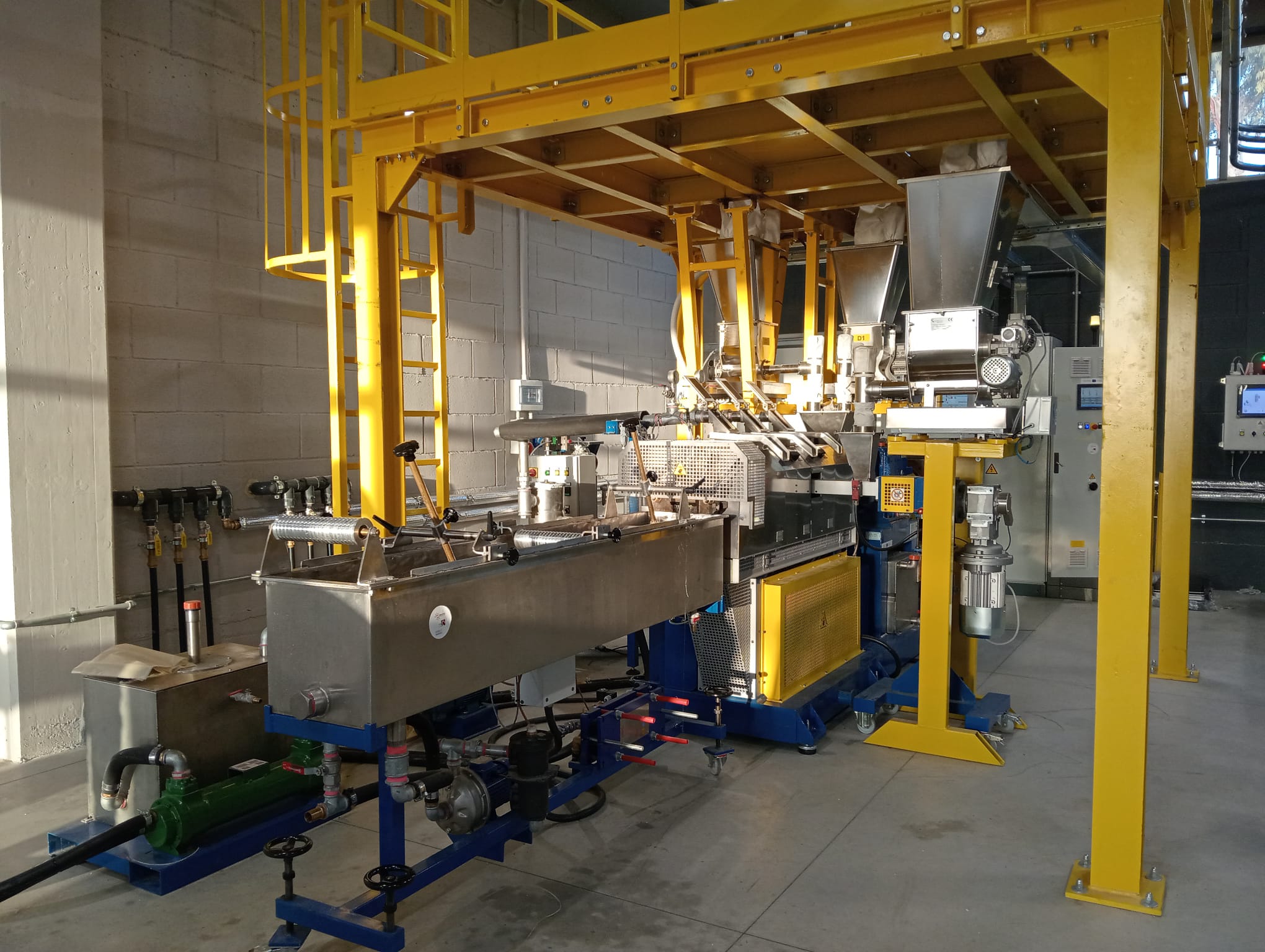
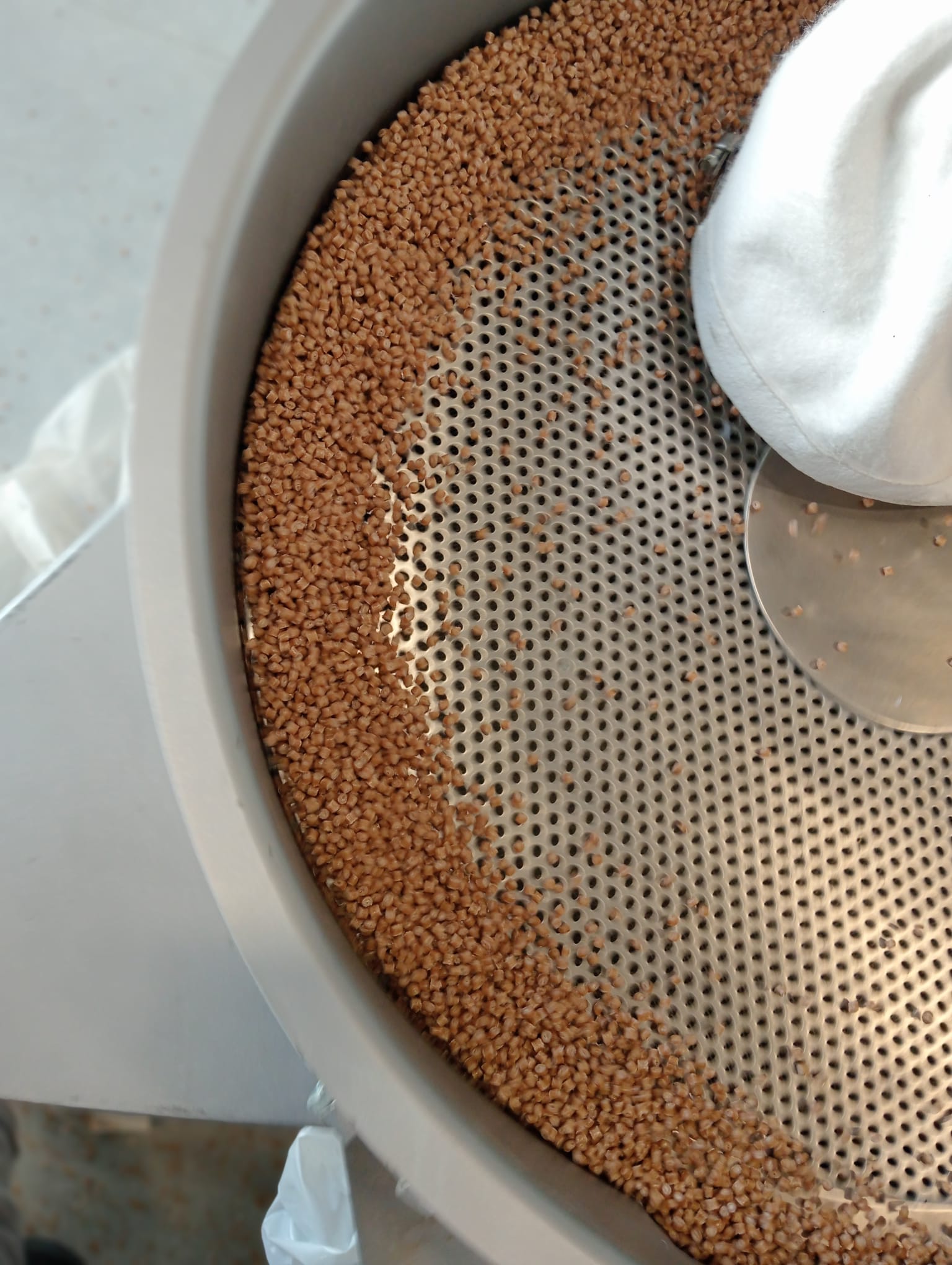
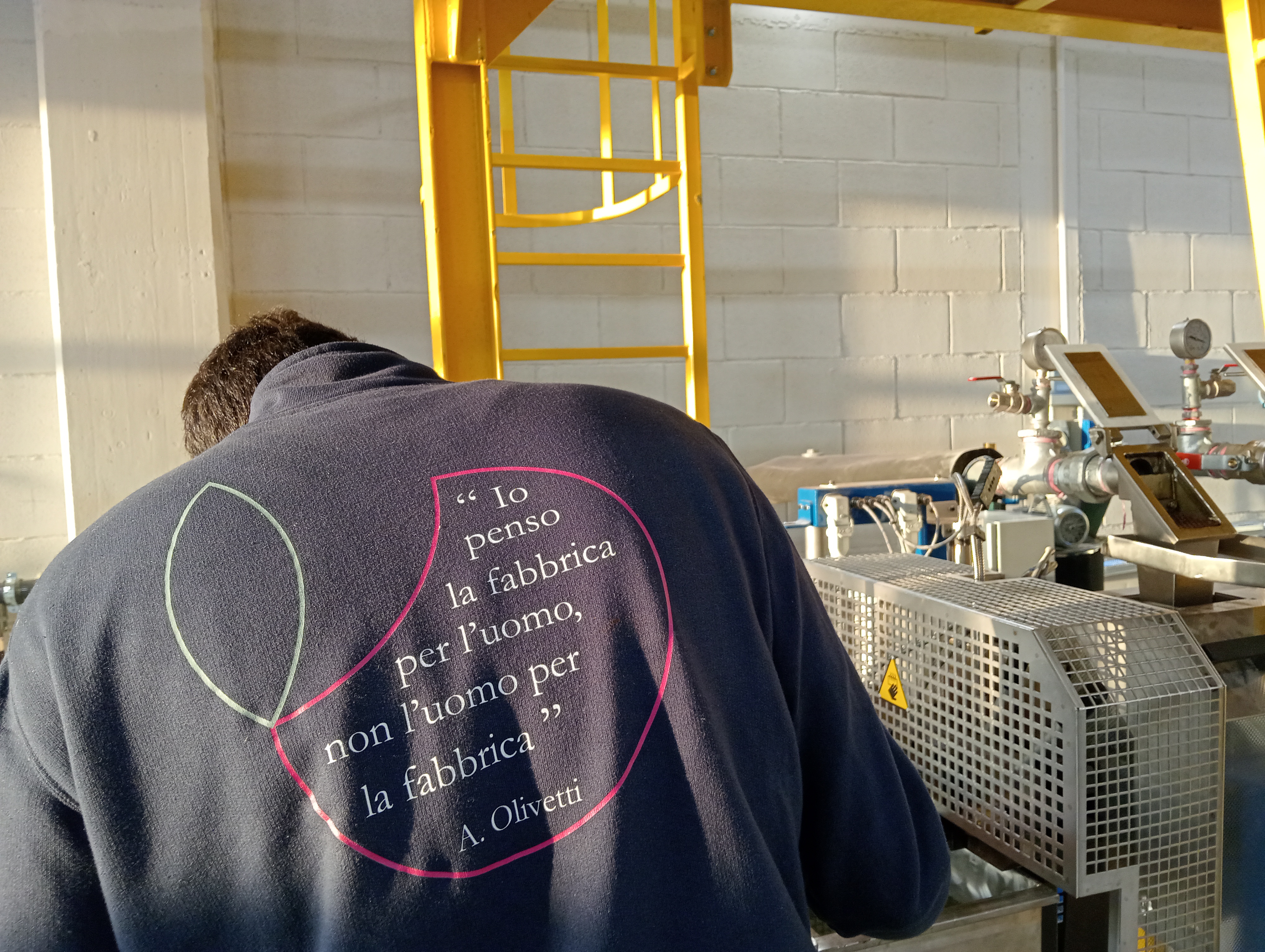
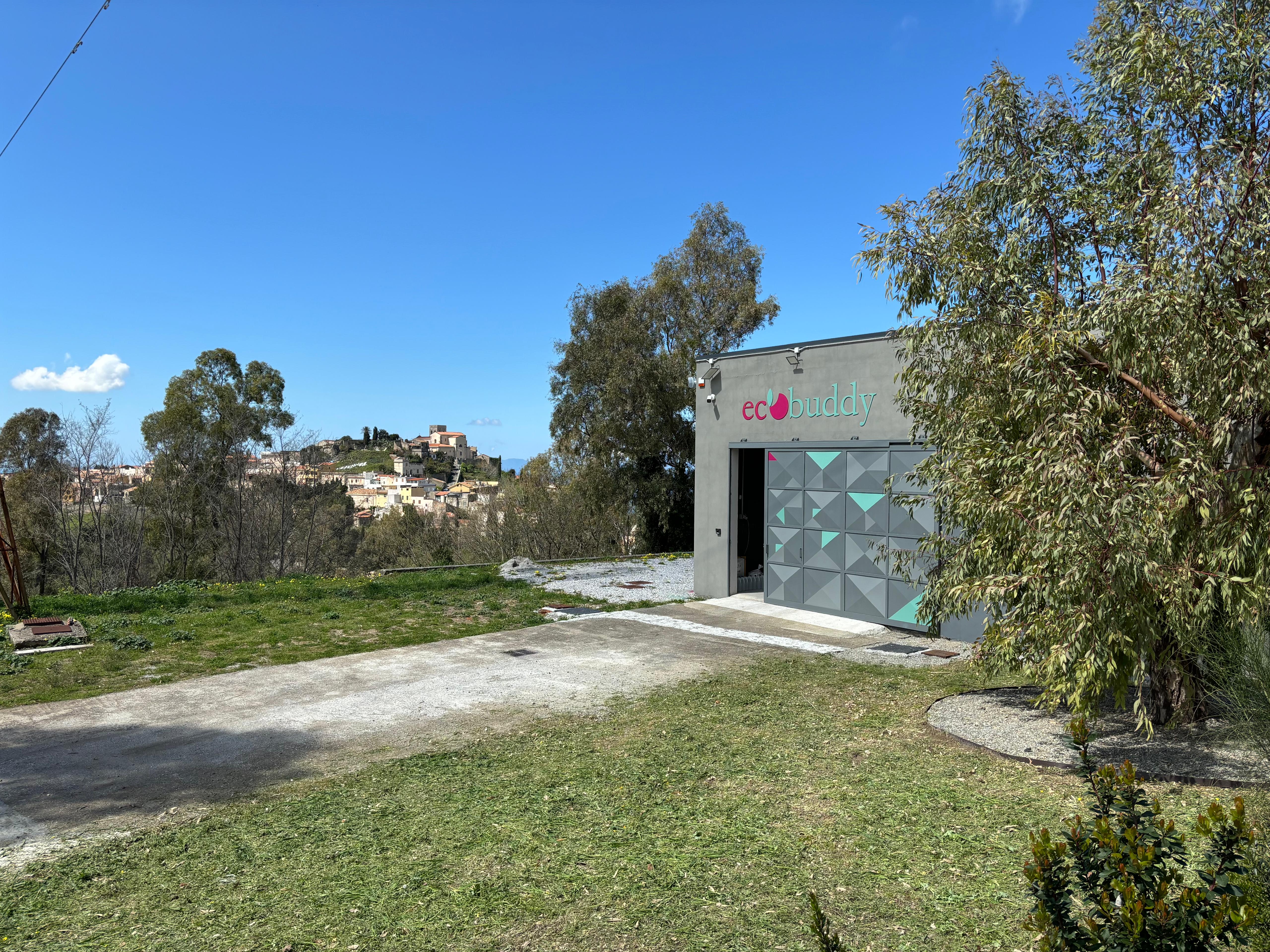
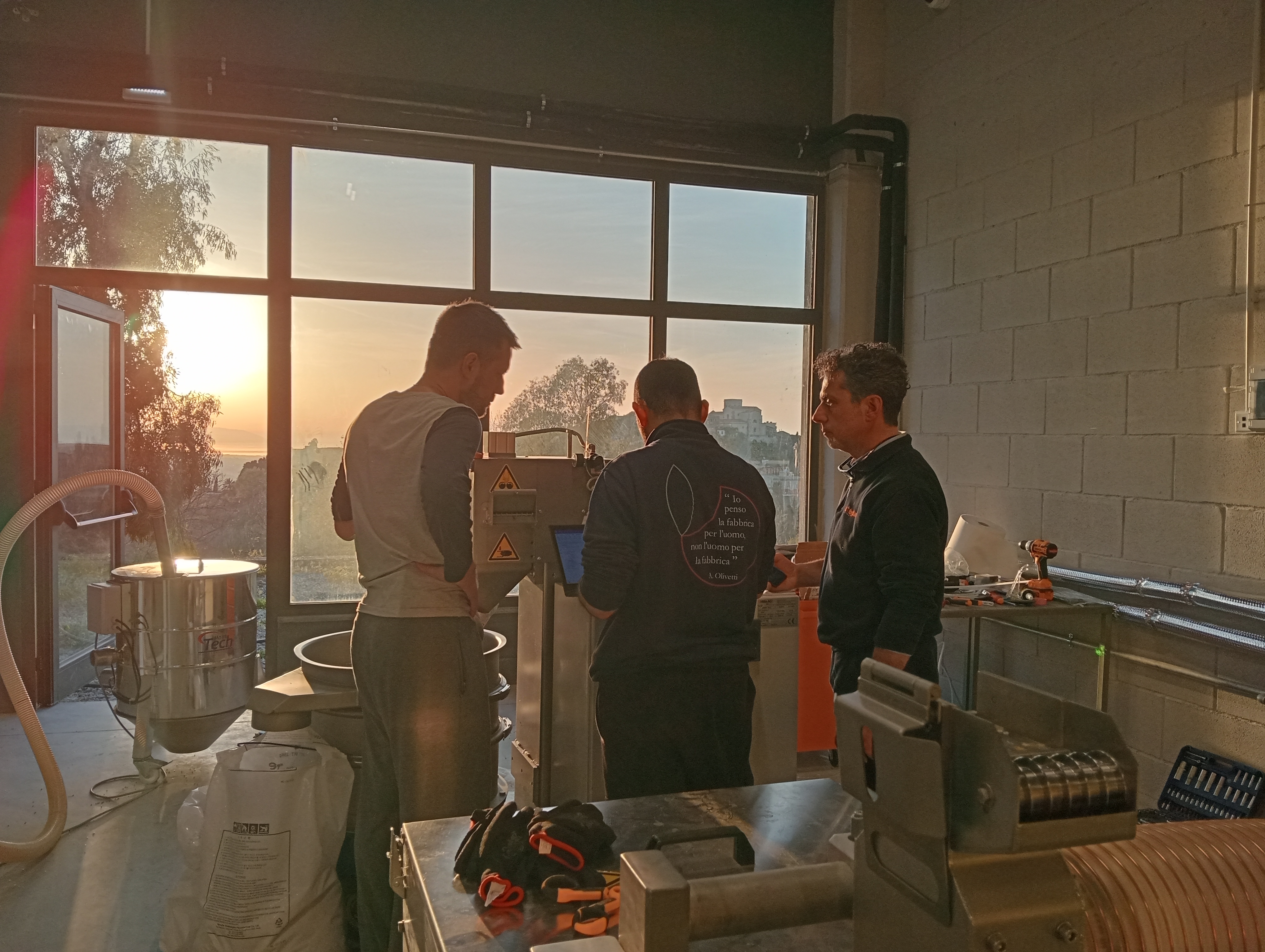
This hub is a formerly abandoned artisanal area transformed into an operational bioplastics production facility. A production line (Ecobuddy®) is active, converting agricultural by-products into bio-compounds, reducing water use and fossil plastic dependency while structuring circular value chains rooted in the local territory and connected to broader innovation networks.
Around this transformative trigger, the process activates a territorial strategy involving the local community of Roccavaldina—especially young people and individuals in conditions of social and economic vulnerability—while strengthening the capacity of emerging entrepreneurs, researchers, public institutions and local actors to co-design and implement integrated territorial development strategies.
This strategy connects ecological transition with inclusive local development, combining environmental regeneration, sustainable mobility, community energy systems, cultural initiatives and new forms of social and green entrepreneurship. It also reconnects the territory to local and international research, education and innovation systems, demonstrating a replicable model of circular and inclusive territorial metamorphosis.
A pivotal starting point was the successful workers’ buyout of the Messina Brewery, supported by the social economy cluster led by the Messina Community Foundation (2025 NEB Prize finalist with the “Capacity” project), of which Ecosmed - a social cooperative active in rural and urban regeneration, community welfare, and business support, leading the intervention in Roccavaldina - is a key member. The workers’ buyout transformed a failing industrial activity into a cooperative enterprise. However, a critical issue remained: the management of brewing by-products, specifically beer spent grain (BSG). The solution emerged through a circular approach, where the reuse of BSG became the basis for developing bio-based materials.
The process was then structured through the TSR® (Socially Responsible Territories) methodology, a participatory planning approach applied in Roccavaldina to align local values, needs, and development priorities with the territorial strategy.
Building on TSR® insights, the co-design process engaged a multi-actor ecosystem, combining economic, social, and environmental expertise with local knowledge and enabling collective decision-making.
This led to the regeneration of a formerly abandoned artisanal area, now transformed into a multifunctional hub hosting—alongside the production facility—a research centre on bio-materials and ecological transition, as well as training and co-working spaces.
Research and experimentation on bio-based materials enabled the installation of a bioplastics production line, while parallel actions—still ongoing—address the structural complexity of inner areas through an integrated approach combining circular bioeconomy, social innovation, environmental regeneration, and community welfare, promoting inclusive employment and reinvesting part of the generated value into education, research, and long-term local development, thus contributing to a systemic process of territorial metamorphosis.
Circular bioeconomy
Territorial metamorphosis
Social inclusion
Olivetti-inspired Hub
Ecological Transition
Sustainability is addressed through a measurable circular bioeconomy model combined with a broader territorial strategy for ecological transition and inclusive development. At its core is a unique industrial plant producing bio-based materials from agri-food residues. Initially based on brewer’s spent grain (BSG), the process has been extended to other biomass streams such as olive pomace and coffee silverskin.
Each product incorporates up to 40% agri-food waste, reducing dependence on fossil-based plastics and on natural resources used for virgin bioplastics. For every 1,000 kg of bio-compound produced, the process achieves: 13–20% reduction in fossil resource use, 270,000–450,000 litres of water saved, and 300–500 m² of agricultural land spared.
The production system is powered by photovoltaic energy, reducing the facility’s energy footprint. Sustainability is strengthened through nature-based and systemic actions: a reforestation programme—integrated with educational and community practices—aims to move the territory towards a negative greenhouse gas balance. In parallel, the hub acts as the core node of a Solidarity Energy Community, redistributing renewable energy through social algorithms to address energy poverty.
The project also supports the creation and attraction of sustainable enterprises through ethical finance, training and incubation. A dedicated programme enabled 9 enterprises to access public funding, attracting over €650,000, and contributing to local employment and economic diversification,while 5 additional enterprises have been attracted to the area.
Finally, the territorial strategy is supported by a research and innovation ecosystem involving universities, research centres and industrial partners, ensuring continuous technological development and long-term sustainability.
Aesthetics in the project is conceived not as a superficial layer, but as a collective and living dimension emerging from local values, culture and everyday practices. Through the TSR® methodology, applied from the very beginning of the process, the project is grounded in a participatory approach that identifies and translates the community’s shared imaginaries, memories and relationships with the landscape into spatial and design choices. In this way, transformation becomes an expression of a deeply rooted sense of place, shaped by the continuous interaction between people, heritage and environment.
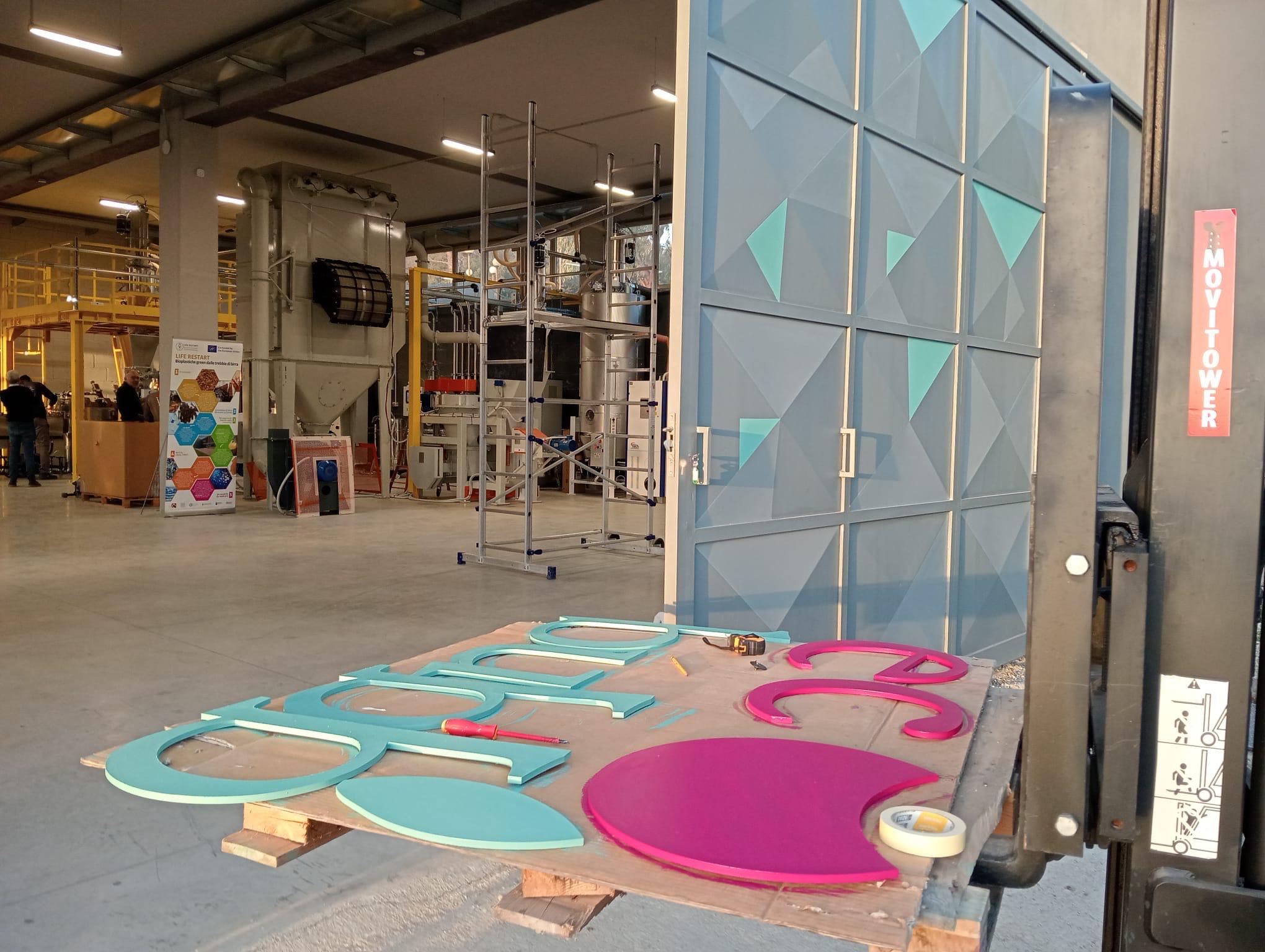
The project has transformed abandoned and marginal spaces into meaningful, beautiful and accessible environments. A key example is the regeneration of the former industrial area through a large-scale land art installation designed by internationally renowned contemporary artist Agostino Ferrari, under the artistic direction of Martina Corgnati. The intervention transforms the façade of the “Polo Olivettiano” into an energy-producing artwork: a system of innovative photovoltaic panels becomes the physical support of the artistic composition, where engraved signs reinterpret abstract calligraphies and symbolic languages. Integrated LED lighting generates depth and dynamic light effects, turning the installation into a living landmark that continuously changes perception—merging art, architecture and renewable energy into a single intervention.
Among its systemic actions, the project improves everyday experience through slow mobility systems and cultural itineraries developed through international workshops and research activities on local historical heritage. These pathways reconnect people with medieval and landscape assets, enabling new ways of inhabiting and perceiving the territory. Digital platforms supporting these systems further enhance accessibility and participation.
The project addresses inclusion as a systemic principle, integrating social, economic, educational, energy and governance dimensions within a single territorial model.
Its economic model challenges the conventional trade-off between growth and equality. Rather than redistributing value ex post, it is intrinsically pre-distributive, combining circular bioeconomy with community welfare, development of local capabilities, and rural and social regeneration.
Ecosmed promotes the employment of vulnerable people, with 5 workers already employed (3 with social or health vulnerabilities, 1 migrant and 1 young person), while the value generated is continuously reinvested locally, supporting education, research and community development.
Inclusion is implemented through tools that expand access to opportunities. Ethical finance, training and coaching have supported local enterprises, enabling 9 initiatives to access public funding, attracting over €650,000, while additional enterprises have been activated or attracted, contributing to employment and economic diversification.
Educational inclusion is central. The Hub hosts multidisciplinary programmes on climate change, design and social inequalities. More than 150 citizens have been involved in participatory processes based on TSR®, including over 50 young people, strengthening local capabilities and empowerment.
The project also addresses energy poverty through a Solidarity Energy Community, redistributing renewable energy through social algorithms to ensure fair access.
What makes this approach exemplary is its ability to embed inclusion within economic flows and everyday practices. Inclusion becomes a generative force shaping how value, knowledge, energy and opportunities are produced and distributed, offering a replicable model for inner areas.
The project is grounded in a structured participatory planning process based on the TSR® (Territori Socialmente Responsabili) methodology, which actively involved citizens, local stakeholders and civil society from the earliest stages.
A wide range of actors took part, including residents of all ages, local associations, informal groups, researchers and public institutions. Between February and June 2022, 121 citizens were directly involved through face-to-face interviews, small group meetings and structured questionnaires, ensuring the inclusion of different social groups in terms of age, gender and occupation.
Participation began in the analysis and design phase, where citizens contributed to identifying local values, priorities and development needs. Their inputs directly informed key strategic choices, highlighting issues such as employment, youth opportunities and local economic development as central for the future of the territory.
Participation continued beyond consultation, evolving into an ongoing co-design and governance process. The TSR® approach establishes a multi-actor system where citizens, social economy organisations and public authorities interact continuously, contributing to decision-making and implementation.
This high level of involvement ensured that the project is not externally imposed but rooted in the community’s values, perceptions and aspirations. It improved the quality and legitimacy of decisions, strengthened social cohesion and fostered a shared sense of responsibility for the territory.
The result is a more inclusive, adaptive and resilient development model, where participation becomes a structural component of territorial transformation rather than a one-off consultation exercise.
The project adopts a multi-dimensional governance model conceived as an adaptive ecosystem of interconnected actors, including core partners, research institutions, enterprises and territorial clusters.
The governance model is articulated across four interdependent dimensions.
The research and innovation dimension connects applied research, prototyping and technology transfer, supported by national and international collaborations. Universities and research centres, including the University of Messina and the Ca’ Foscari University spin-off Crossing s.r.l., contribute scientific expertise, R&D capacity and validation of innovative bio-based materials, ensuring the translation of policy objectives into market-ready solutions.
The social and welfare dimension promotes inclusion through personalised support pathways, community services and capability-building processes, integrated with urban regeneration and social innovation actions.
The financial dimension, including microfinance instruments, facilitates access to resources, supports inclusive entrepreneurship and strengthens local value chains, reducing structural barriers.
The energy dimension functions both as infrastructure and redistribution mechanism: renewable energy systems generate environmental benefits and stable financial flows, which are reinvested in local development and community welfare programmes.
These dimensions are structurally interconnected and generate systemic effects through their interaction, in line with a circular bioeconomy model linking environmental sustainability, economic development and social redistribution.
The governance system integrates continuous learning, monitoring and feedback mechanisms, enabling adaptive management and progressive scaling through the activation of new actors and clusters.
This approach allows the project to address complex territorial challenges through a coherent, place-based strategy that combines innovation, inclusion and sustainability.
The project adopts a transdisciplinary approach integrating multiple knowledge fields, including environmental sciences, engineering, architecture and design, social sciences, digital technologies, education and the arts. This diversity reflects the complexity of the challenges addressed, combining technological innovation with social inclusion and rural regeneration.
Representatives from these disciplines interacted through a structured ecosystem involving universities, research centres, enterprises and social organisations. Scientific partners contributed expertise in bio-based materials, circular economy and energy systems, while social actors and local stakeholders ensured alignment with community needs and inclusion objectives. Design, architecture and cultural practices supported place-based regeneration and the enhancement of local identity.
Collaboration was organised through interdisciplinary teams, co-design workshops, pilot actions and continuous feedback mechanisms, while shared governance structures ensured collective decision-making. Different perspectives were combined through iterative processes that integrated research, practice and community engagement. Technical solutions were continuously validated against social, environmental and cultural criteria, ensuring coherence with the overall vision.
This transdisciplinary approach generated significant added value. It enabled the development of more innovative and context-sensitive solutions, strengthened problem-solving capacity and increased the project’s adaptability. By bridging scientific research with social innovation and local knowledge, the project achieved stronger environmental and social impacts, fostering systemic change and long-term sustainability.
The project is based on an innovative circular and social business model that combines industrial production, community welfare and territorial regeneration.
The implementation has been financed through a mix of public and private resources, including European funding (LIFE Programme), national programmes (PNRR), philanthropic capital and co-financing from project partners within a public-private partnership framework.
The project already generates revenues through the production (800 tons/year) and sale of biodegradable and compostable bioplastics derived from agri-food waste. These revenues are generated by Ecosmed and target industrial clients and sustainability-oriented markets.
A distinctive feature is the redistribution mechanism: a significant share of operating margins is reinvested into research, education and local welfare programmes, creating a virtuous economic and social cycle.
Future revenue potential is high, driven by the growing demand for sustainable materials, new applications of biopolymers and the activation of services such as fablabs, training activities and innovation hubs, opening new market opportunities and green jobs.
Main costs relate to production (raw materials, energy, infrastructure), research and development, training, and community services. These are borne by the operating entity and partially supported through partnerships and fundraising networks involving banks, foundations and impact finance actors.
The model ensures long-term sustainability by combining market revenues with blended finance, while philanthropic actors cover potential gaps.
This approach is highly scalable and replicable: it integrates industrial innovation with social economy principles and can be transferred to other territories by leveraging local waste streams and community ecosystems, fostering inclusive and regenerative local economies.
The project is designed as a replicable territorial model, combining circular bioeconomy, social innovation and community-based governance within an integrated and adaptable framework. Its scalability lies not in a single solution, but in a system of interconnected components that can be transferred and reconfigured in different contexts.
Several elements are highly transferable. The industrial model based on the valorisation of agri-food waste into bio-based materials can be replicated wherever similar biomass streams are available. This has already been demonstrated within the project itself: initially focused on brewer’s spent grain (BSG), the process has been progressively expanded to other waste streams such as olive pomace and coffee silverskin, increasing its adaptability and impact.
The Olivetti-inspired hub model, integrating production, research, education and community functions, provides a flexible infrastructure for place-based regeneration. Equally transferable is the TSR® methodology, enabling participatory planning and alignment between local values and development strategies. The governance model—based on multi-actor ecosystems and interconnected dimensions (energy, finance, welfare, research)—can also be adapted to different territories.
Replication requires key partnerships, including research institutions (for technological development), social economy actors (for inclusion and community engagement), and financial intermediaries (for microcredit and blended finance). These are essential to ensure both technical feasibility and social impact.
At the same time, the model is inherently adaptable: while core principles remain constant, elements such as biomass sources, value chains and governance arrangements can be tailored to local conditions.
What makes the project exemplary is its ability to function as a transferable system rather than a fixed solution, offering a scalable pathway for inclusive and regenerative territorial development.