Enhancing Circularity, Sustainability, and Innovation
Public Open Space Development in Liepāja
Revitalizing two central beach exits in Jūrmala’s Park (Liepāja) in accessible and functional areas
Liepāja city as a seasonal city is developing a sustainable and attractive public open space within the area of the Jūrmala’s Park by greatly improving two main beach exits with its adjacent infrastructure. The innovative nature-based solutions and environmental accessibility approach applied has considerably promoted the creation of a high-quality, safe, and modern urban environment for both residents and visitors throughout all the year.
Latvia
Local
Liepāja city, Latvia
Mainly urban
It involves a physical transformation of the built environment (hard investment)
Yes
2025-12-31
Yes
ERDF : European Regional Development Fund
No
Yes
Organisation
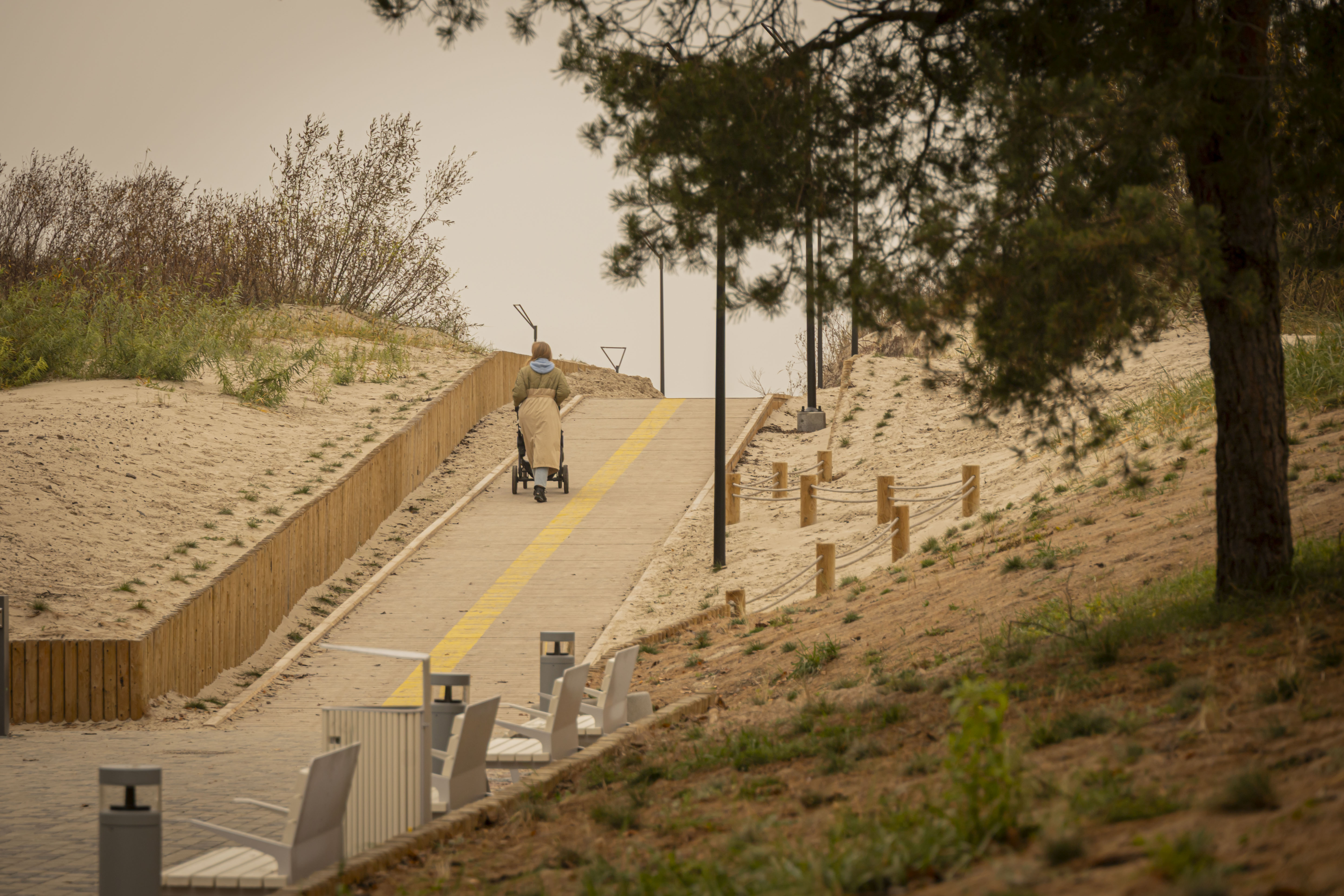
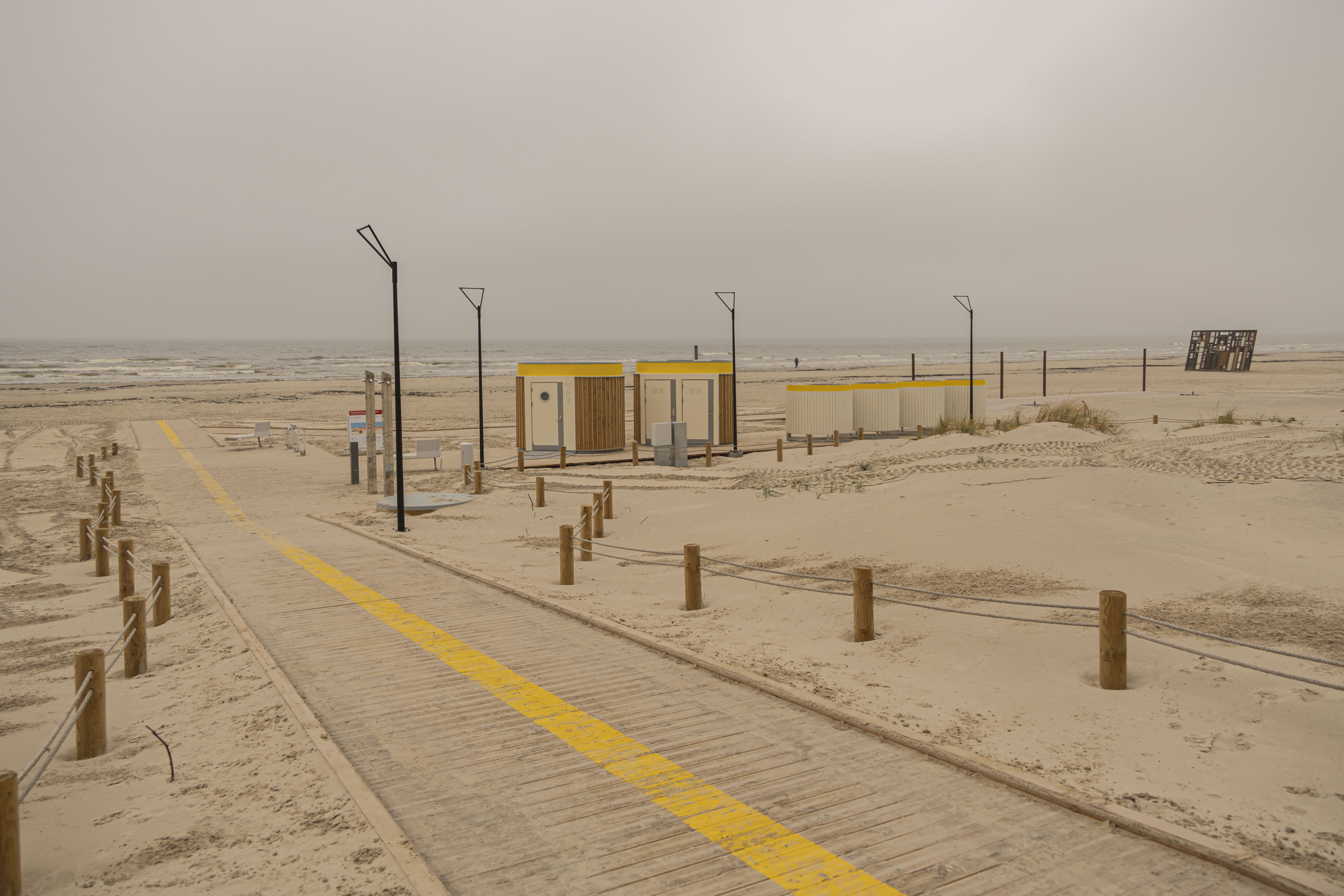
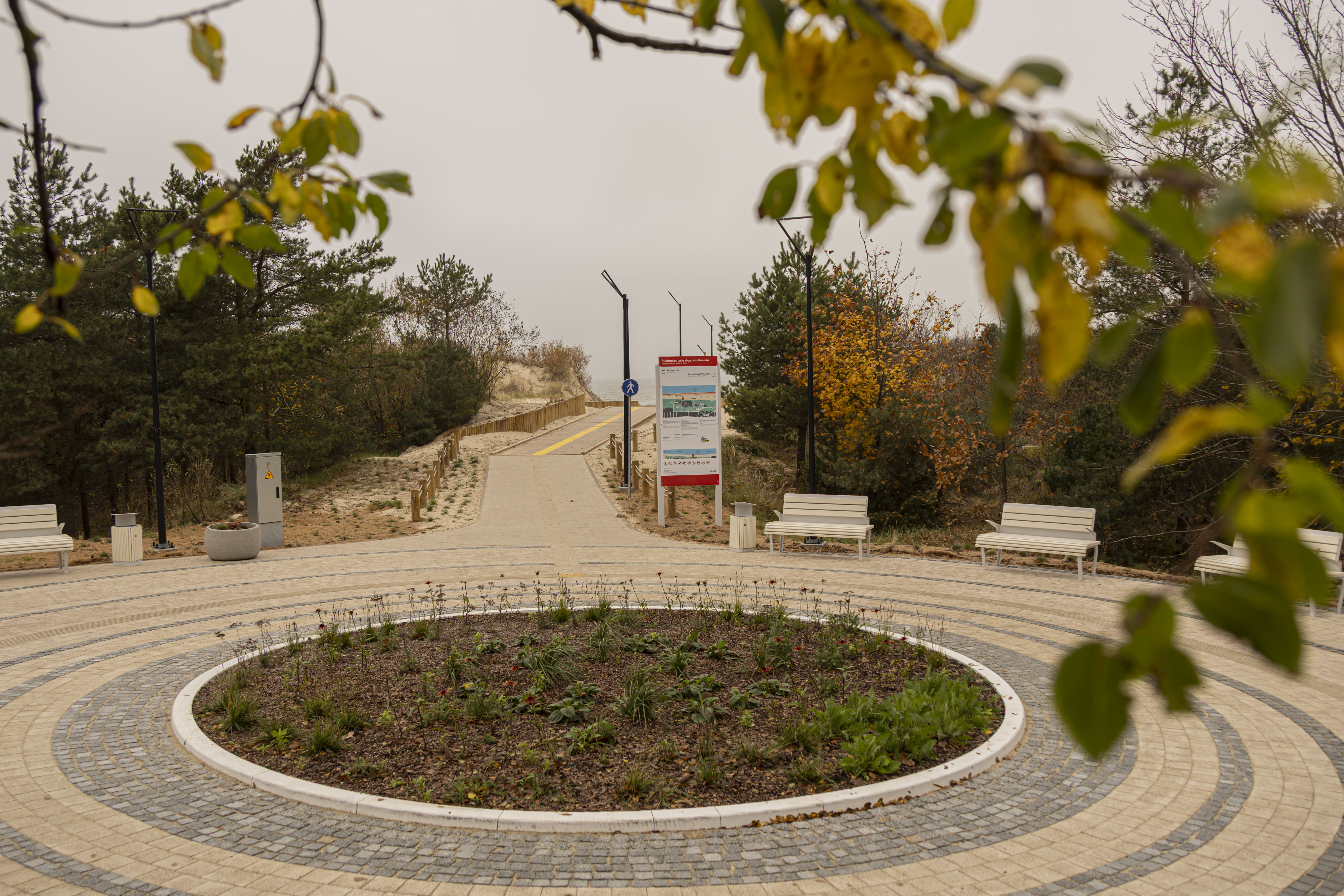
In 2025, Liepāja has developed a sustainable and attractive public open space within the area of the Jūrmala’s Park by greatly improving 2 main beach exits with its adjacent infrastructure. The public open space has been significantly shaped by enhancing one beach access point at the end of Jūrmala’s Street and the other access point between two sport stadiums leading to the central beach (“Miljonu kalniņš”). These areas, along with their surrounding territories, have now become more accessible, functional, and safe from the perspective of accessibility, nature protection, modern safety and design elements in adherence to all three principles of the NEB: aesthetics, sustainability, and inclusion. Simultaneously, solutions for the preservation of natural assets have been implemented , preventing their degradation and ensuring the sustainable development of the territory for the future. Environmental accessibility for persons with functional disabilities has also been significantly improved, thereby ensuring convenient and safe access for all groups of society.
The main beneficiaries and users are all the residents (young people, families with children, seniors, persons with special disabilities, particularly with functional disabilities, different sport professionals), visitors, nearly surrounded catering businesses, beach rescue and communal services, Liepāja Society of the Blind, local water supply provider and Liepāja City Municipality Central administration.
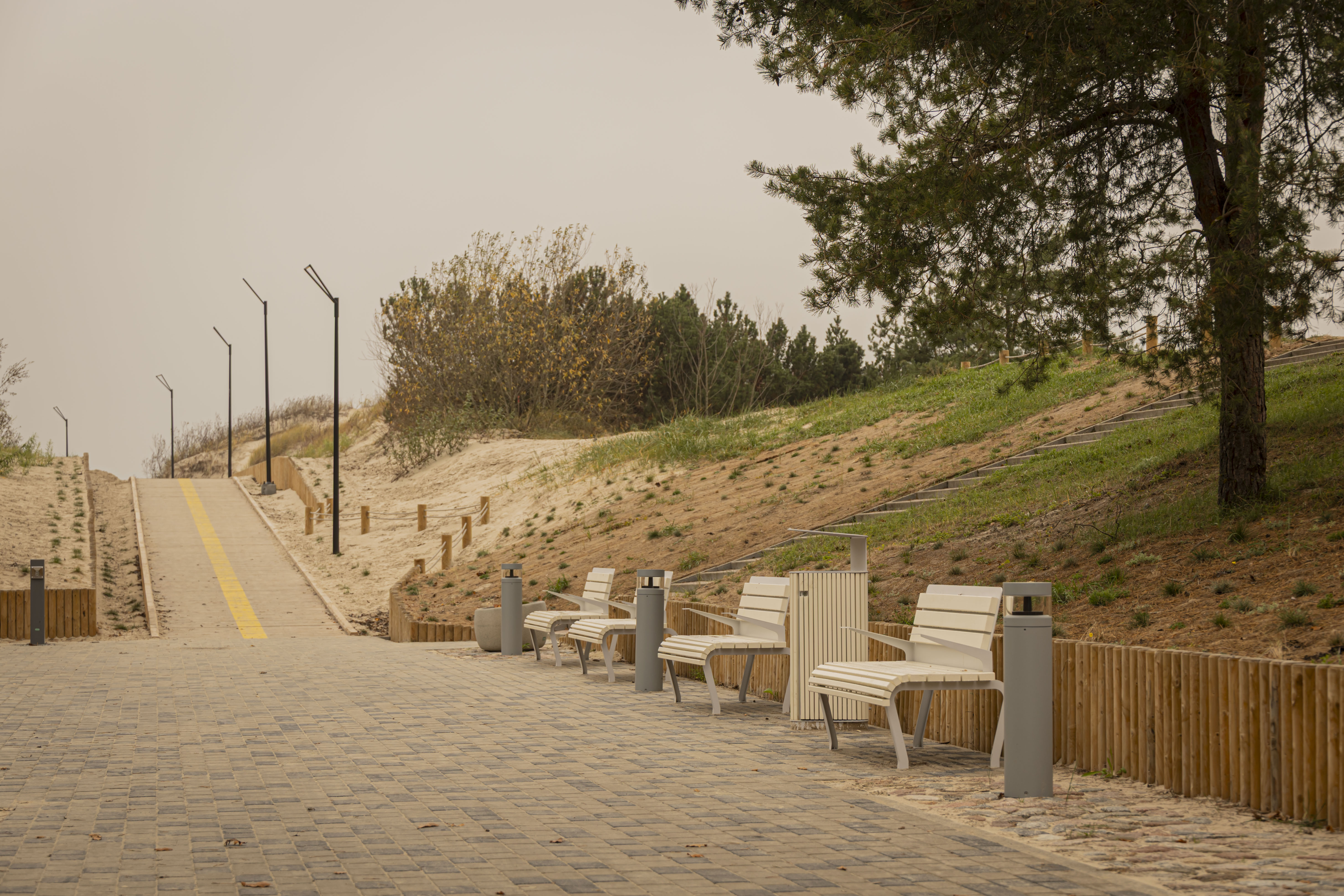
All the vision’s key objectives resulted in these achievements: restored urban open public space of 32,147 m², reconstructed and developed pedestrian access infrastructure, installed sanitary equipment, external water supply and sewerage systems, created small-scale architectural elements, constructed dune erosion mitigation solutions and measures to improve the status of dune habitats, created new greenery, and lighting. It has promoted the creation of a high-quality, safe, and modern urban environment.
The reconstruction was carried out based on the local thematic beach plan “Development of Liepāja City Beach and Coastline,” where Liepāja is the first and, to date, the only municipality in Latvia to have developed such a planning document, allowing for the purposeful continued development and improvement of similar beach exits.
Inspired by the great public enthusiasm for the four previously completed beach access points, the Development Department of the Liepāja City Municipality Central administration sought to secure national ERDF funding for further improvements. With the City Council’s approval, the municipality successfully applied for and launched the project "Development of Public Open Space in the Jūrmala Park Territory, Liepāja" and fully completed it as a finished public space on 13th November 2025.
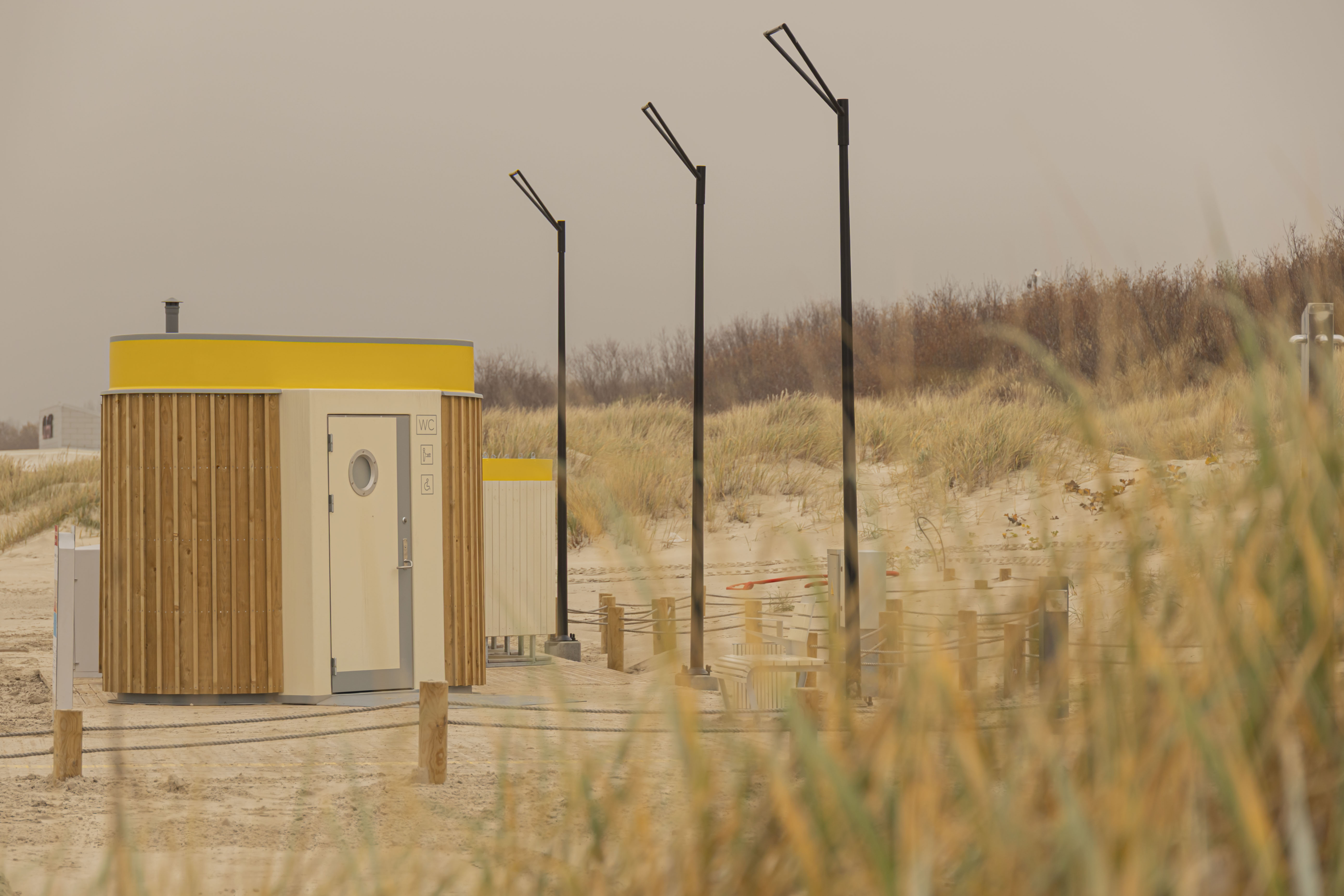
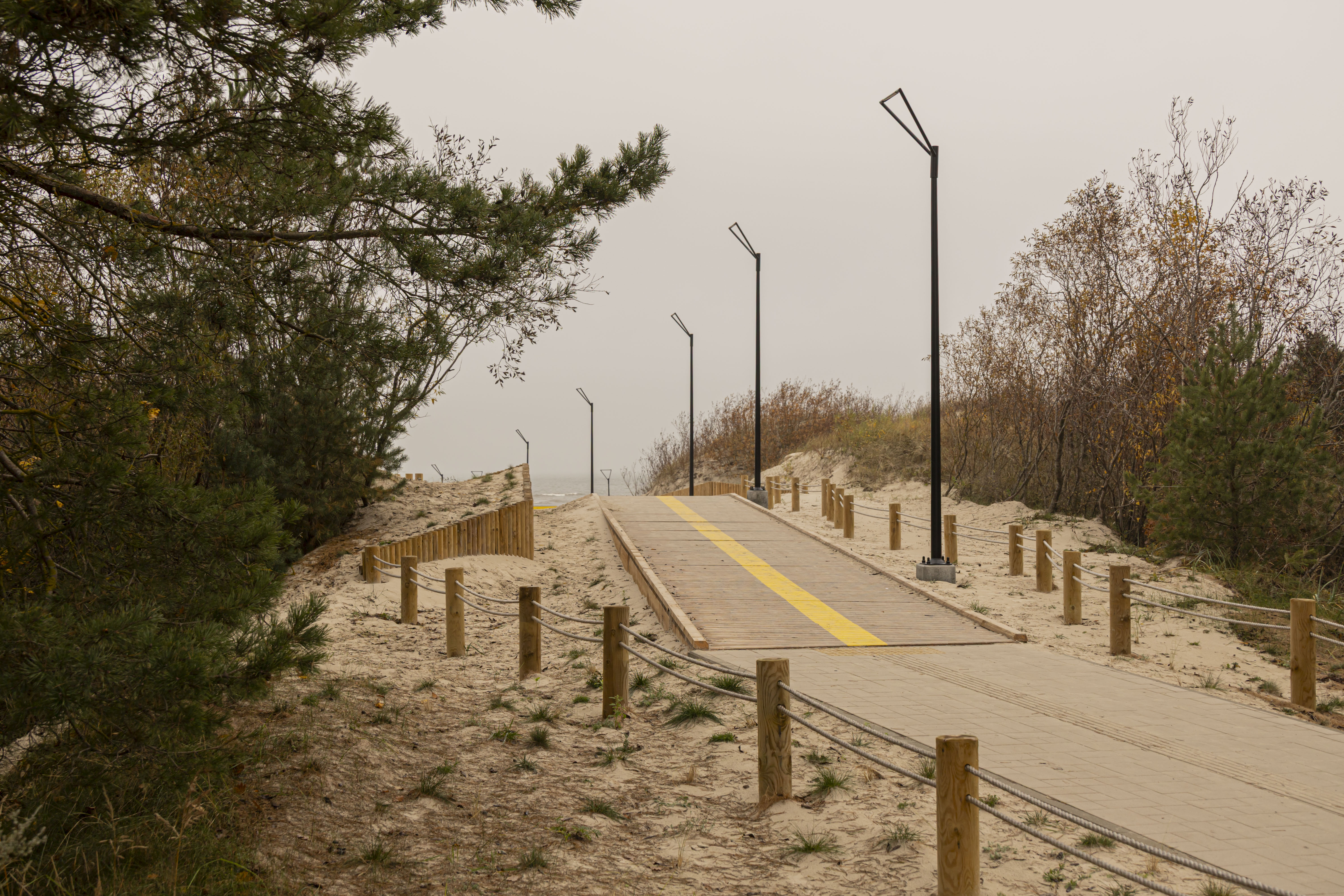
From the nature preservation point, the project greatly mitigates anthropogenic load, as it utilized round log palisades and special nature-based solution (geo-mats) to stabilize dunes and improve grey dune habitats. Furthermore, from accessibility point of view, it has created a modern universal design with facilities that include stationary toilets, showers, and SOS points, with specific features for persons with special and functional needs and young families.
Environmental accessibility
Local nature-based solutions
More functionality
Thematic beach development planning
Sustainability and modern infrastructure
By consistently pursuing the introduced unified design for the beach and its adjacent territories (local thematic plan), Liepāja continues to develop an accessible and sustainable public open space by having completed already 7 beach exits like these 2. This reconstruction forms a unified and recognizable city image, which not only fosters the development of local services but also enhances the well-being of residents, public safety, and tourist attraction. The implementation of this project increases the diversity of recreational opportunities for both the city’s inhabitants and its guests.
The capacity and quality of the existing public infrastructure (resting areas, pedestrian paths leading to the sea, etc.) within the project area were unable to meet the growing demand for recreation and leisure during the peak tourism season. These 2 beach exits were previously equipped only with wooden boardwalks, not addressing dune stabilization, only partially resolving environmental accessibility issues, and lacking the necessary year-round infrastructure and equipment. Consequently, this led to the trampling of protected natural assets—the dunes—resulting in territory degradation and a decrease in its potential. Liepāja’s central beach and its coastal zone are characterized by typical coastal habitats (sandy beach, embryonic dunes, foredunes, grey dunes, and wooded dunes), the significance of which is underscored by the designated Baltic Sea coastal protection belt. Therefore, the project incorporates dune erosion mitigation solutions (reinforcement with round log retaining walls or palisades, and wooden dune fencing) and the creation of protective greenery to manage sand flow. Additionally, improvements to the state of the grey dune habitat were carried out based on a habitat expert’s assessment, including the removal of invasive and expansive species and the pruning of old willows.
The capacity and quality of the existing public infrastructure (resting areas, pedestrian paths leading to the sea, etc.) within the project area were unable to meet the growing demand for recreation and leisure during the peak tourism season. These 2 beach exits were previously equipped only with wooden boardwalks, not addressing dune stabilization, only partially resolving environmental accessibility issues, and lacking the necessary year-round infrastructure and equipment. Consequently, this led to the trampling of protected natural assets—the dunes—resulting in territory degradation and a decrease in its potential. Liepāja’s central beach and its coastal zone are characterized by typical coastal habitats (sandy beach, embryonic dunes, foredunes, grey dunes, and wooded dunes), the significance of which is underscored by the designated Baltic Sea coastal protection belt. Therefore, the project incorporates dune erosion mitigation solutions (reinforcement with round log retaining walls or palisades, and wooden dune fencing) and the creation of protective greenery to manage sand flow. Additionally, improvements to the state of the grey dune habitat were carried out based on a habitat expert’s assessment, including the removal of invasive and expansive species and the pruning of old willows.
The project adhered to aesthetically pleasing environmental accessibility and landscape solutions that harmoniously align with the unique identity of the site, the typical coastal habitats of Liepāja, and the goals for convenient, safe, and functional beach use, utilizing modern design elements appropriate for this public open space.
Landscaping of the territory included surface replacement, construction of cobblestone paving with tactile paving guidelines, and the application of horizontal markings for better accessibility. Various urban furniture elements were installed, including park and beach benches, waste bins, bicycle racks, and sanitary facilities. Greenery was established through plants in containers, beautiful thematic flowerbeds, and slope reinforcement plantings in the dune habitat zone using special nature-based solution - natural anti-erosion geo-mats, alongside the restoration of coastal habitats.
The project also involved the installation of appealing information stands, the fabrication and assembly of wooden boardwalks and platforms, and the fencing and dune reinforcements.
The newly constructed infrastructure will not only make the beach more accessible to holidaymakers and visitors but will also conserve and help protect coastal natural assets from the impact of excessive human activity. The activities planned within the project will especially reduce anthropogenic impact on the dunes and address the issue of dune erosion, thereby improving the overall state of the grey dune habitat.
By implementing the project, environmental accessibility and bathing safety solutions were significantly improved, enabling residents of all ages to visit Liepāja’s central beach. Accessibility was ensured by widening the pedestrian paths at the access points and providing a ramp-type incline for the beach gate structure, ensuring that all groups of society can access the installed equipment. Additionally, sanitary facilities were established that are adapted for persons with special needs and equipped with baby changing tables, ensuring that young parents also feel secure and included.
In 2018, the Municipality, in cooperation with the Liepāja Building Board, the Liepāja Society of the Blind, and the Liepāja Diaconal Center, developed the guidelines “Ensuring Environmental Accessibility in Liepāja.” These guidelines are intended for a broad audience—planners, architects, builders, state and local authorities, and other stakeholders—with the aim of promoting a high-quality living and working environment for every resident and visitor. The guidelines include recommendations in various areas, including accessibility in public objects and improvements to city infrastructure. These proposals were taken into account, and universal design principles were applied during the development of this beach exit reconstruction project, thereby ensuring an accessible environment, infrastructure, and services for all people, regardless of age, health status, or mobility.
One of Liepāja's goals is to become the most accessible city in Latvia and Europe. By addressing environmental accessibility issues within this project, Liepāja continues to grow and develop, becoming increasingly accessible to anyone with special needs in any life situation.
The range of stakeholders involved in the project was diverse, with their engagement occurring in various ways and at different stages of implementation. To carry out the construction and reconstruction of water and sewage networks, “Liepāja Water” Ltd. as the official cooperation partner was brought on board, providing its own co-financing for this project.
During the implementation process, environmental accessibility experts from the Liepāja Society of the Blind were consulted to ensure the most appropriate accessibility solutions. To foster public engagement, a design competition was previously organized for the development of the thematic beach and landscaping plan (the foundation for the current construction project). During this process, a public survey titled “My Suggestions for the Development of Liepāja Beach” was conducted. This provided residents and other interested parties with the opportunity to voice their opinions on beach development issues, which were then integrated into the thematic plan and subsequently reflected in the construction designs for these two beach access points.
Discussions have been also held with the closest economic business operator in the immediate vicinity of this public development area – Liepaja Beach Cafe, Ltd.
Stakeholders such as the building companies “JOE” (developer of the project design), “CORE project”, “CTB”, “GEO Consultants”, Ltd. were highly involved in the design and implementation of the project, accomplishing the highest possible quality of the implemented landscaping and constructions at both beach exits.
In relation to all the planned construction activities with its unique natural habitats towards this open public space, the State Environmental Bureau of Latvia in 2018 issued an opinion on the Environmental Impact Assessment report for the improvement of the beach and coastal territory according to the thematic plan “Development of Liepāja City Beach and Coastline", which allowed to launch and carry out this project.
Coordinating and approving construction project amendments was administered with the architects and engineering specialists from the municipal institutions “Liepāja Building Board” and “Communal Services” together with this project’s cooperation partner “Liepāja Water”, Ltd. and the Development Department of the Liepāja City Municipality Central administration.
This multifaceted multi-level governance ensured a well-planned, highly monitored and overseen processes during all the project stages, comprehensively ensuring the most relevant nature-based solutions of the New European Bauhaus approach for the project’s sustainability and accessibility.
Architects, designers, engineering and environmental science professionals have been convinced that a unified design for the beach and its adjacent territories (developed local thematic plan that was adopted in Liepāja before developing this project) had been a great fundament for the admiring results of the design and implementation of this project. Different field expert discussions, numerous consultations in environmental accessibility and nature based questions (opinions from habitat experts and accessibility experts were gained) were insured providing for their involvement during both the design and construction processes, as well as regular meetings for detailed solutions with the developers of the construction project and building experts were held during various project development and implementation stages, having led to major success for this project vision. This success has resulted in high satisfaction by the local society and visitors which has been reflected by praising the municipality’s and its cooperation partner devoted efforts and competences for the works that had been completed.
These actions have resulted in promoted sustainable, eco-friendly, and environment-enhancing development of the territory. By implementing the activities planned in the project, the anthropogenic load on coastal and inland habitats is being reduced.
These actions have resulted in promoted sustainable, eco-friendly, and environment-enhancing development of the territory. By implementing the activities planned in the project, the anthropogenic load on coastal and inland habitats is being reduced.
The total cost of the project amounts to EUR 1,033,856.21, of which EUR 800,000 (77.38%) is co-financed by the European Regional Development Fund (ERDF). The combined funding from the Liepāja State City Municipality and the project partner totals EUR 228,220.78 (22.07%). The project generates revenues to the surrounding business companies which have the seasonal café or catering business or recreational sport activity income owned by different business company stakeholders, boosting the tourism increase.
The business model of this construction project may be continued by sequentially developing other further beach access points, for example, Vētru Street and beach exits in the Southern part of the beach territory further from the centre by the residential district (Pakaviņš), which are planned to be soon developed. In this way, this development may bring a disruptive innovation, in attracting higher people numbers to settle down by the developed beach area territories, since new residential building areas are currently being built there and boost new tourism waves by providing new places for holiday-seeker summer vacation.
The business model of this construction project may be continued by sequentially developing other further beach access points, for example, Vētru Street and beach exits in the Southern part of the beach territory further from the centre by the residential district (Pakaviņš), which are planned to be soon developed. In this way, this development may bring a disruptive innovation, in attracting higher people numbers to settle down by the developed beach area territories, since new residential building areas are currently being built there and boost new tourism waves by providing new places for holiday-seeker summer vacation.
This beach development project may serve as a great inspiring practice for the middle-sized port cities who are seeking innovative and beautiful nature-based solutions for sustainable and modern beach development for the purpose of preserving them from anthropogenic load of human use. If intending to shape your beach exits in widely-accessible, highly aesthetic places for recreation and different types of mobility patterns (bike, scooters, etc.) and reconnecting with nature, this example serves as a sound example for protecting and respecting its cultural heritage and the unique identity.
Although this project may bring easily transferable nature-based solutions, for example, natural elements for dune stabilization, functional bench design, modern sanitary facilities (water taps, etc.), greenery, lighting and other design elements, etc., but more essentially it provides an opportunity to develop in your city a local thematic plan for your beach development with its adjacent areas before launching a project.
Although this project may bring easily transferable nature-based solutions, for example, natural elements for dune stabilization, functional bench design, modern sanitary facilities (water taps, etc.), greenery, lighting and other design elements, etc., but more essentially it provides an opportunity to develop in your city a local thematic plan for your beach development with its adjacent areas before launching a project.