Enhancing Circularity, Sustainability, and Innovation
Energy Lab: “Energiaren Memoria”
Energy Lab: Design and Implementation of an IoT-based Hybrid Renewable Energy Laboratory
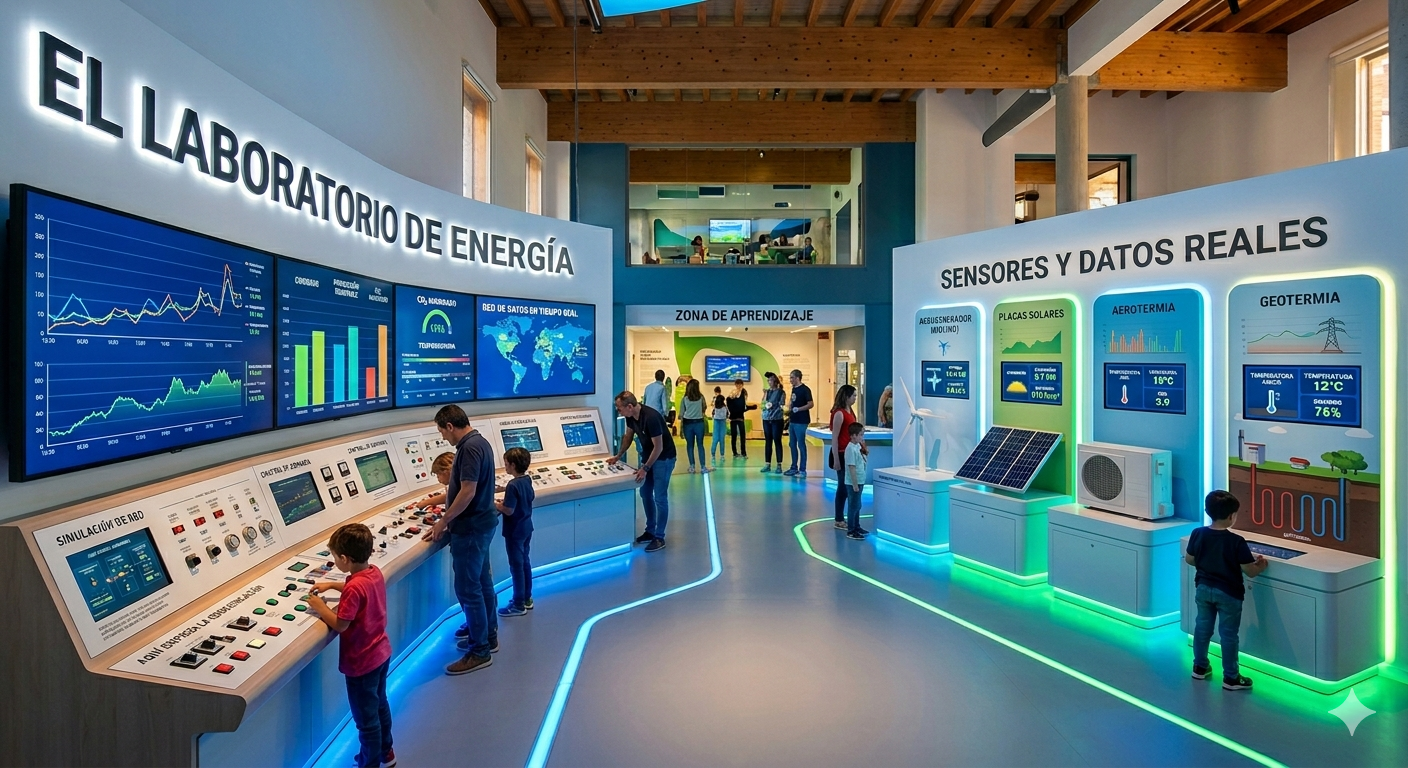
Energy Lab: "Energiaren Memoria" transforms Gallarta’s mining past into a renewable future. Located at Ekoetxea Meatzaldea, this laboratory uses IoT sensors to monitor a hybrid system of solar, wind, geothermal, and aerothermal energy in real-time. We correlate local climate data with energy yield to show families that energy sovereignty is possible. By using our own resources, we move from extraction to collaboration with nature. It is science at the service of the community.
Spain
Local
Energiaren Memoria" transforms Gallarta’s mining history into a pioneering energy laboratory for the entire Basque Country. Located at Ekoetxea Meatzaldea, this project marks a systemic change for Euskadi, moving from extraction to collaboration with nature.
It addresses urban-rural linkages
It involves a physical transformation of the built environment (hard investment)
Early concept
No
No
No
Individual
Energy Lab: "Energiaren Memoria” is a pioneering initiative designed to transform the historic industrial landscape of Gallarta into a benchmark for the energy transition in the Basque Country. Located at the Ekoetxea Meatzaldea, the project repurposes the post-industrial site of the Concha II Mine—once a symbol of environmental extraction—into a living laboratory for renewable energy and social awareness. The project integrates and monitors a hybrid system of four clean energy sources: geothermal and aerothermal systems already installed at the center, vertical axis wind energy (VAWT) via the Darwin rotor, and solar photovoltaics. By deploying an advanced IoT network using Hall effect sensors, shunts, and industrial PLCs, the laboratory captures high-fidelity data on energy flows. This infrastructure correlates generation with local meteorological variables, such as atmospheric pressure and humidity, to optimize performance and feed predictive models.
The project expects to achieve significant results in energy sovereignty by demonstrating to Basque citizens that local resources can effectively replace fossil fuels. Scientifically, it will provide a detailed climatological study of the mine’s unique "inverse orography," where turbulent winds favor vertical turbines over conventional ones. Pedagogically, through interactive Grafana dashboards and dedicated educational units, the Ekoetxea will offer real-time visualization of energy generation and savings for schools and families. Ultimately, validated by the UPV/EHU, "Energiaren Memoria" aims to trigger a systemic change across Euskadi, positioning the region as a leader in decentralized, resilient energy production in harmony with its unique geology.
The project expects to achieve significant results in energy sovereignty by demonstrating to Basque citizens that local resources can effectively replace fossil fuels. Scientifically, it will provide a detailed climatological study of the mine’s unique "inverse orography," where turbulent winds favor vertical turbines over conventional ones. Pedagogically, through interactive Grafana dashboards and dedicated educational units, the Ekoetxea will offer real-time visualization of energy generation and savings for schools and families. Ultimately, validated by the UPV/EHU, "Energiaren Memoria" aims to trigger a systemic change across Euskadi, positioning the region as a leader in decentralized, resilient energy production in harmony with its unique geology.
The concept for "Energiaren Memoria" was born from a personal and academic intersection during my fourth year of a Double Degree in Physics and Electronic Engineering at the University of the Basque Country (UPV/EHU). While exploring the historic Concha II mine in Gallarta, I realized the profound contrast between its extractivist past and the urgent need for a sustainable future. This reflection coincided with a call for projects on energy transition and social impact; although I did not submit to that specific call, it ignited a drive to develop a tangible solution that honors our industrial heritage while leading Euskadi toward energy sovereignty.
The development of the concept is structured through a dual-scientific approach, integrating my two Final Degree Projects (TFG). From a Physics perspective, the project focuses on a climatological study of the mine’s unique "inverse orography," analyzing how its microclimate and turbulent winds interact with renewable technology. Simultaneously, the Electronic Engineering component involves designing and deploying a high-fidelity IoT architecture. This includes implementing a network of Hall effect sensors and split-core current transformers to monitor energy flows from a hybrid system of four sources: solar, vertical wind (Darwin rotor), geothermal, and aerothermal energy.
The implementation strategy relies on transforming the Ekoetxea Meatzaldea into an active energy laboratory. Data collected by industrial PLCs is stored in a time-series database and translated into interactive Grafana dashboards for public visualization. This process ensures that complex technical data becomes a pedagogical tool for the community. By collaborating with academic advisors and the Ekoetxea network, the project moves from a solitary idea to a systemic change for the entire Basque Country.
Energy Sovereignty
Social inclusion
Renewable Energy
IoT Monitoring
Industrial Heritage
"Energiaren Memoria" addresses sustainability by transforming the historic Concha II mine from a site of environmental extraction into a resilient, circular energy laboratory. The project integrates a hybrid system of four renewable sources: solar, vertical wind, geothermal, and aerothermal energy. By utilizing the mine’s unique "inverse orography" to capture turbulent winds with the Darwin rotor, the concept exemplifies the reuse of existing industrial infrastructure for clean energy production.
Environmentally, the project mitigates climate impact by providing a model for local energy sovereignty, reducing reliance on fossil fuels. Technically, it uses an advanced IoT network with Hall effect sensors and industrial PLCs to monitor efficiency and optimize the complementarity of these resources in real-time. This data-driven approach allows for precise climate change adaptation by correlating energy generation with local variables like pressure and humidity.
Economically and socially, the project serves as a "Point of Citizen Consultancy," offering families practical information on domestic energy transitions and connecting them with local installers and subsidies. It fosters a "Science Hub" where data is shared with the academic community, enhancing the prestige and visibility of the Red de Ekoetxeas.
The concept is exemplary because it "gives back more than it takes" by restoring the value of a degraded landscape. It closes the loop of the circular economy by repurposing "industrial archaeology" to demonstrate that a sustainable future is possible through technical capacity and harmony with our own geology.
"Energiaren Memoria" contributes to aesthetics by transforming the "industrial archaeology" of the Concha II mine from a symbol of environmental debt into a landmark of renewable beauty. The project enhances the quality of experience for the Gallarta community by integrating a hybrid energy system that respects and highlights the site's unique "inverse orography". This transformation creates a new sense of belonging, as residents no longer see a neglected pit, but a "living laboratory" where the history of their ancestors meets the technology of their future.
The project is exemplary in terms of aesthetics through the following concrete actions:
• Visual Integration: It uses the Darwin vertical wind rotor, which is specifically chosen for its sculptural form and its ability to operate harmoniously within the turbulent winds of the mine's topography.
• Interactive Design: The installation of interactive Grafana dashboards within the Ekoetxea Meatzaldea translates complex technical data into clear, engaging visual stories for visitors.
• Cultural Continuity: By using the mining past as a "thread," the project reactivates the identity of the place, making the transition to clean energy a meaningful collective experience rather than a purely technical one.
• Sensory Engagement: The laboratory allows the community to "see" energy generation in real-time, fostering a deeper emotional connection and care for the local environment.
In the long term, "Energiaren Memoria" makes everyday life more beautiful by providing a space for reflection and education, ensuring that the local landscape remains a source of pride and sovereignty for future generations.
"Energiaren Memoria" addresses inclusion by transforming a technical energy project into a public pedagogical space that ensures energy literacy is accessible to all citizens. By integrating the laboratory into the Ekoetxea Meatzaldea, the project provides a free, non-discriminatory environment where families and students can interact with complex data through simple, visual interfaces. The concept specifically targets the challenge of affordability by serving as a "Point of Citizen Consultancy," offering practical technical information and professional contacts to help diverse social groups navigate the transition to renewable energy in their own homes.
The project promotes inclusive governance and "design for all" principles through the following actions:
• Social Innovation: It introduces a new societal model where citizens are not just passive consumers but are empowered to become independent and resilient energy producers.
• Universal Access to Knowledge: The use of interactive Grafana dashboards translates technical variables into easy-to-understand graphics, ensuring that visitors of all educational backgrounds can participate in the energy transition.
• Open Science: By making the data captured by the IoT network available to the community, the project fosters a "Hub of Science" that encourages collaboration between academic institutions and local associations.
• Community Engagement: The laboratory provides a space for collective reflection, linking the shared mining history of the region with a collaborative future, thereby fostering a sense of belonging and social justice.
"Energiaren Memoria" is exemplary in terms of inclusion because it democratizes technical knowledge. It ensures that the benefits of the energy transition are not limited to experts, but are shared with the entire community, providing the tools necessary for every household in Bizkaia to achieve energy sovereignty.
"Energiaren Memoria" follows a participatory model by transforming the Ekoetxea Meatzaldea into an active hub for community engagement and collective learning. The development of the concept involves the following strategies to include citizens and stakeholders:
• Educational Integration: The project is designed to develop didactic units and interactive talks specifically for local schools, allowing students to link their ancestral mining history with modern technological challenges.
• Citizen Consultancy: The laboratory acts as a permanent point of contact where families receive technical advice, simplified information on subsidies, and connections to local installers to facilitate their own energy transition.
• Open Data Access: By implementing a "Science Hub" approach, all data collected by the IoT network is made available to the community, universities, and local associations for independent research and testing.
• Stakeholder Collaboration: The concept was developed through continuous dialogue with academic experts from the UPV/EHU in Physics and Renewable Energy Engineering to ensure technical validation and social relevance.
The impact of this participation has been fundamental in shifting the project from a purely technical installation to a social instrument for energy sovereignty. By involving future users in the visualization of real-time data through interactive dashboards, the concept ensures that technical complexity is translated into actionable public knowledge. This participatory framework guarantees that the laboratory does not just exist as a static exhibit, but as a dynamic tool that empowers the citizens of the Basque Country to become resilient and independent energy producers.
"Energiaren Memoria" is designed as a multi-level engagement platform that connects local community initiatives with regional and academic institutions to achieve a broader transformational impact across Euskadi. The project involves stakeholders at several key levels to ensure its technical and social success:
• Local Level: The project directly engages the citizens and families of Gallarta and the Meatzaldea region through the Ekoetxea Meatzaldea, providing them with a "Point of Citizen Consultancy" to simplify the transition to domestic renewable energy. The added value is the democratization of energy knowledge, moving from a history of extraction to one of local collaboration and sovereignty.
• Regional Level: The implementation is aligned with the Ekoetxea Network of Euskadi and the Basque Energy Strategy 2030, transforming a degraded mining site into a regional benchmark for I+D+i. Furthermore, the project integrates real-time data and forecasts from Euskalmet to optimize the performance of the hybrid energy system.
• Academic and Technical Level: The design is backed by the University of the Basque Country (UPV/EHU), specifically involving the Faculty of Science and Technology for physical validation and the Faculty of Renewable Energy Engineering in Eibar for microgrid integration. This ensures that the laboratory acts as a "Science Hub" where universities and local associations can utilize real-world data for testing and research.
• Industrial Level: Engagement is expected with the Basque renewable energy industrial fabric, connecting households directly with local installers, cooperatives, and equipment manufacturers to ensure a sustainable economic loop.
The added value of this multi-level engagement is the creation of a resilient ecosystem where technical research, public administration, and citizen participation converge to guarantee energy independence and social justice
"Energiaren Memoria" is built on a strictly transdisciplinary framework that merges technical scientific rigor with social and pedagogical innovation. The design and implementation of the concept reflect a deep integration of the following knowledge fields:
• Physics and Environmental Sciences: The project incorporates a climatological study of the "inverse orography" of the Gallarta mine pit to understand microclimates and turbulent wind patterns.
• Electronic Engineering and Digital Technologies: It involves the design of an advanced IoT architecture, utilizing industrial PLCs, Hall effect sensors, and time-series databases for real-time monitoring.
• Renewable Energy Engineering: The core infrastructure is a hybrid system combining geothermal, aerothermal, solar photovoltaic, and vertical axis wind energy (VAWT).
• Education and Social Sciences: The laboratory functions as a pedagogical space, developing didactic units for schools and serving as a consultancy point for citizen energy sovereignty.
• Industrial Heritage and History: The concept uses the mining past of the Meatzaldea region as a narrative thread to facilitate the cultural transition toward a sustainable future.
• Data Visualization and Design: Through the use of Grafana, complex physical variables are translated into interactive, user-friendly dashboards for public engagement.
This collaboration between disciplines—validated by the Faculty of Science and Technology and the Faculty of Renewable Energy Engineering (UPV/EHU)—ensures that technical data is transformed into actionable social knowledge. The transdisciplinary approach is essential to move from a purely extractivist history to a future of collaborative energy resilience in Euskadi.
The financial sustainability of "Energiaren Memoria" is based on a hybrid model that combines public institutional support, cost-saving efficiencies, and high-value technical services. Rather than a purely commercial venture, it operates as a Public-Social Partnership focused on the long-term resilience of the Basque energy landscape.
Revenue Streams and Financial Instruments
The project aligns with the Basque Energy Strategy 2030 and Horizon Europe objectives, attracting funding from the Basque Government (EVE) and European structural funds (ERDF) dedicated to the "Just Transition" of post-industrial regions. Furthermore, the laboratory generates revenue by offering specialized performance reports and feasibility studies for local municipalities and SMEs looking to implement similar hybrid microgrids in complex terrains. The Ekoetxea Meatzaldea can also monetize the "Science Hub" through specialized workshops and certified training for installers interested in the New European Bauhaus model.
Advanced Software and Long-term Scalability
In the long term, the business model evolves from a physical laboratory into a technological service platform. The core of this sustainability is the development and licensing of a specialized Simulation and Decision Software. Utilizing the real-world data captured by the IoT network (correlating climate variables with actual energy yields), this tool will provide automated technical consultancy. The system will allow users to:
• Site-Specific Analysis: Evaluate which specific renewable configuration is best for a particular building based on its unique location and orography.
• Optimal Sizing: Calculate the exact combination of the four renewable sources (solar, wind, geothermal, and aerothermal) to maximize ROI and efficiency for a specific property.
My commitment to implementing "Energiaren Memoria" is deeply rooted in my current academic and professional trajectory. As a fourth-year student of the Double Degree in Physics and Electronic Engineering (UPV/EHU), I have already integrated the core research of this project into my two mandatory Final Degree Projects (TFG). This ensures a dedicated, high-level technical focus over the coming year.
Foreseen Implementation Steps (Next 12 Months)
• Q1: Technical Deployment & Prototyping
I will finalize the design of the IoT data acquisition system, selecting and testing the Hall effect sensors and industrial PLCs. This phase includes the initial "stress test" of the Darwin vertical rotor within the unique orography of the Gallarta mine pit to correlate turbulent wind patterns with energy yield.
• Q2: Data Integration & Software Development
Using the first sets of empirical data, I will begin developing the Predictive Simulation Software. This involves building the time-series database and the initial Grafana dashboards at the Ekoetxea Meatzaldea to translate complex physical variables (P, T, H) into accessible public information.
• Q3: Stakeholder Engagement & Promotion
I will present the preliminary results to the Red de Ekoetxeas and the Basque Energy Agency (EVE) to advocate for the laboratory's expansion. This phase includes launching the first "Citizen Consultancy" pilot sessions to gather feedback from the Gallarta community on energy literacy needs.
• Q4: Academic Validation & Scaling
The final results will be defended as my TFGs at UPV/EHU, providing the scientific validation necessary to seek further European or regional funding. By the end of the year, the software will be ready for a "Digital Twin" pilot at a second location within the Basque Country.
This project is not a theoretical exercise; it is my primary professional objective for 2026, combining technical rigor with a tangible commitment to the European Green Deal.
My commitment to implementing "Energiaren Memoria" is demonstrated through its integration into my current academic and professional trajectory. As a fourth-year student of the Double Degree in Physics and Electronic Engineering at UPV/EHU, I have formally adopted this project as the core of my two mandatory Final Degree Projects (TFG), ensuring dedicated technical development throughout 2026.
Foreseen Implementation Steps (Next 12 Months)
• Q1: Technical Deployment & Prototyping
I will finalize the design of the IoT data acquisition system, selecting and testing Hall effect sensors and industrial PLCs. This phase includes the first "stress test" of the Darwin vertical rotor within the unique orography of the Gallarta mine pit to correlate turbulent wind patterns with real energy yield.
• Q2: Data Integration & Software Development
Using the initial empirical data, I will develop the Predictive Simulation Software. This involves building the time-series database and the first Grafana dashboards at Ekoetxea Meatzaldea, translating complex physical variables (P, T, H) into accessible public information.
• Q3: Stakeholder Engagement & Promotion
I will present preliminary results to the Red de Ekoetxeas and the Basque Energy Agency (EVE) to advocate for the laboratory's expansion. This includes launching "Citizen Consultancy" pilot sessions to gather feedback from the Gallarta community on local energy literacy needs.
• Q4: Academic Validation & Scaling
The final results will be defended as my TFGs at UPV/EHU, providing the scientific validation necessary to seek further European or regional funding. By year-end, the software will be ready for a "Digital Twin" pilot at a second location within the Basque Country.
This project is a tangible commitment to the European Green Deal, transforming my academic specialization into a professional tool for regional energy sovereignty.