Strengthening Local Democracy and Inclusion
Mobil
Mobil — Shared Infrastructure for Collective Use of Public Space
Mobil is a shared civic infrastructure that enables collective use of public space. Developed and managed by 9 different partner organisations, it combines a modular spatial system, logistics and a shared governance model. It allows citizens and organisations to co-design, use and manage public space through activities such as sport, play and arts, lowering barriers to access and strengthening everyday local democracy.
Belgium
Regional
Brussels Region
Mainly urban
It involves a physical transformation of the built environment (hard investment)
Yes
2026-03-01
No
No
No
Organisation
Mobil is a shared civic infrastructure that enables organisations and communities in Brussels to collectively use and shape public space. It was developed by nine socio-cultural, educational and sports organisations that faced the same obstacle: they wanted to organise inclusive activities in public space, but lacked affordable, adaptable and shareable infrastructure.
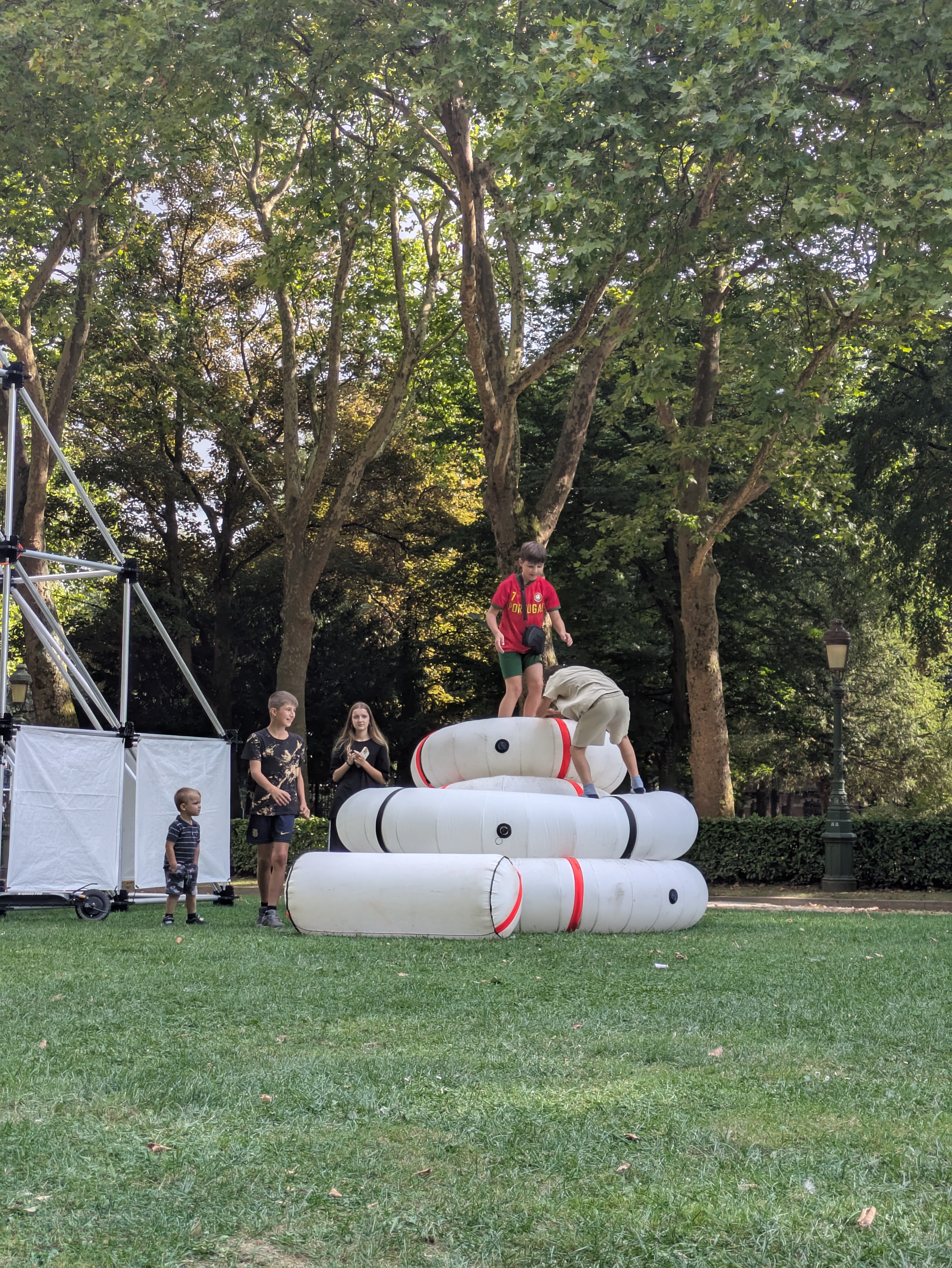
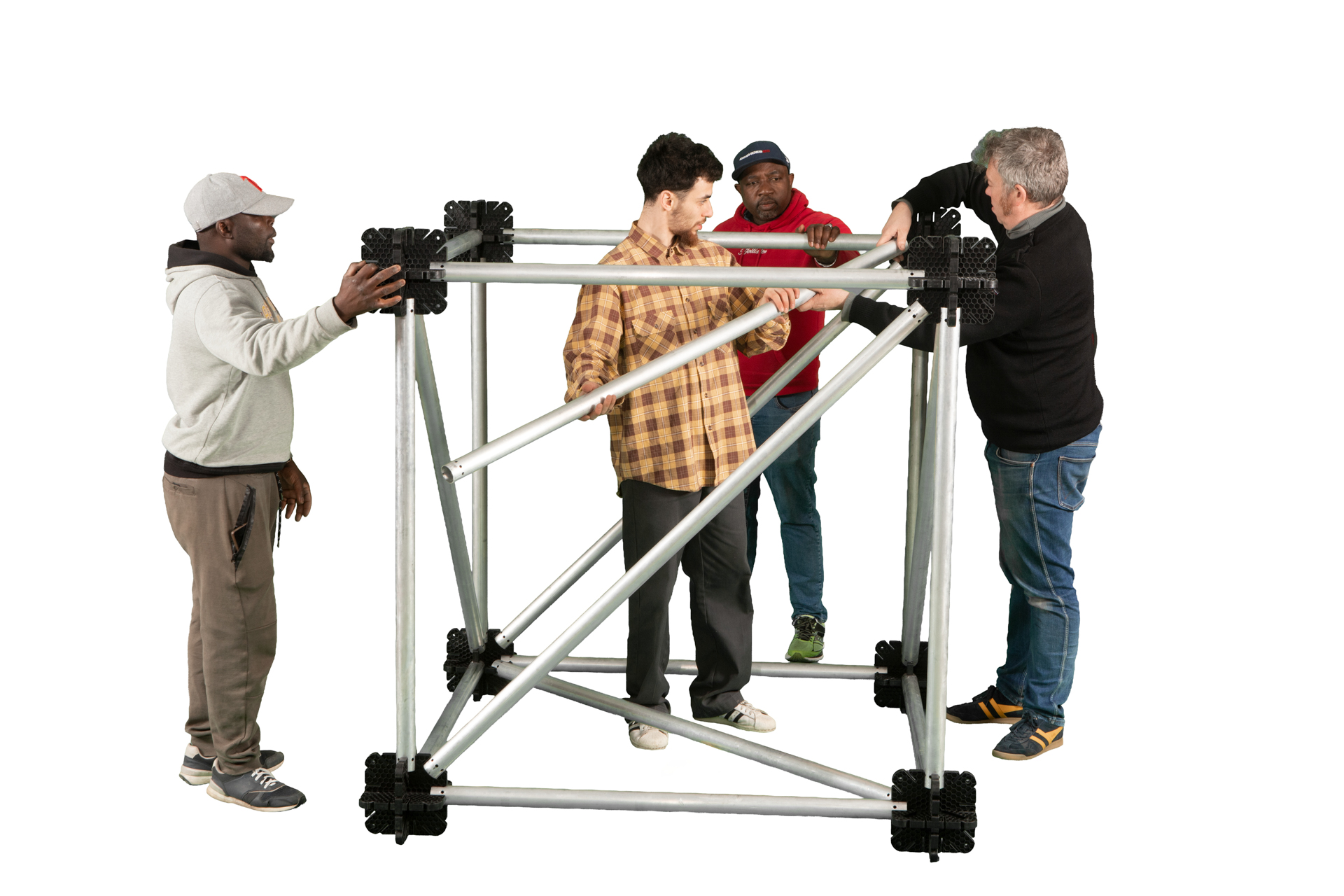
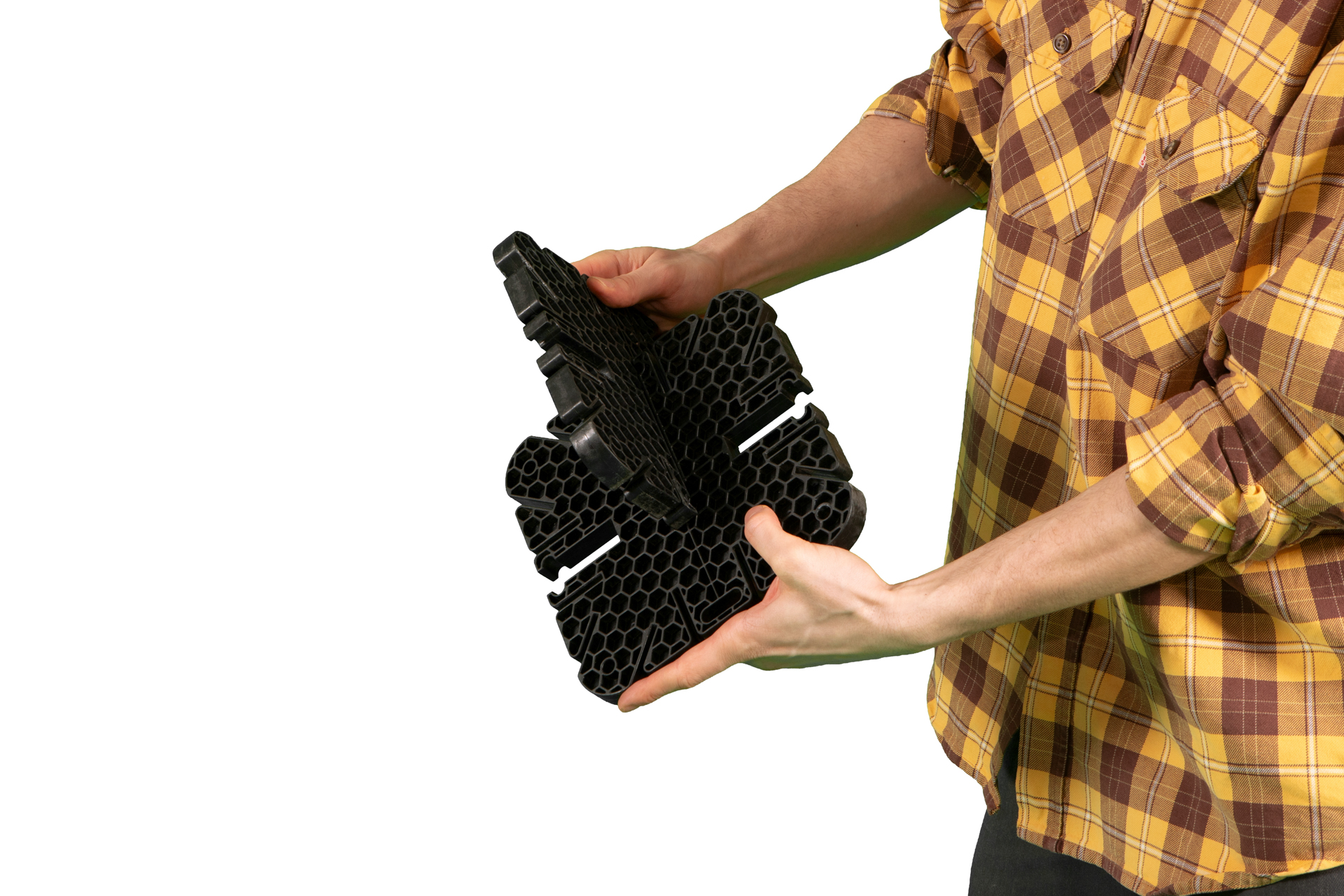
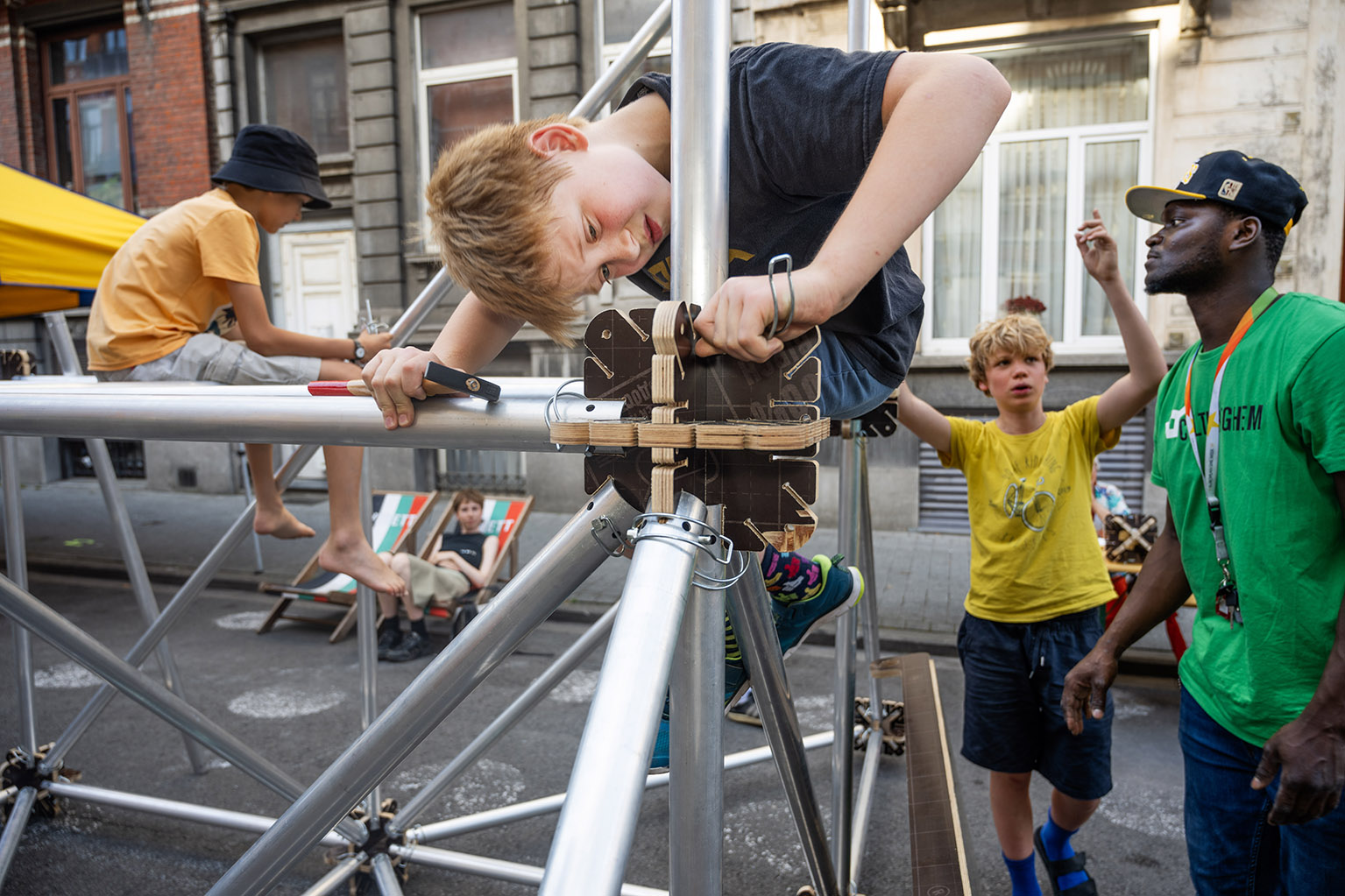
Mobil combines a lightweight modular building system with a shared model for access, transport, storage and maintenance. Its core element is a flat-pack connector used with standard aluminium tubes to create many different spatial setups, from shaded meeting places and informal seating to structures for play, cooking, rest, sound and projection. The system is low-cost, repairable, easy to transport by cargo bike and expandable with add-ons such as tarps, hammocks, inflatables and a mobile cinema.
The project is already fully implemented and in use. In 2025, Mobil reached around 75 activations and 7,500 participants annually, after growing from 10–15 activations in 2023 and 35–40 in 2024. It allows partner organisations to organise activities in public space that would otherwise be difficult to realise, while reducing costs through shared ownership and shared logistics. Beyond the physical system, Mobil has also created a practical framework for collective responsibility and cooperation between organisations working with children, young people, families and vulnerable groups.
Its long-term impact lies in lowering the threshold to use public space, strengthening local capacity for collective action, and making public space more accessible as a place for encounter, care, learning and civic life. Mobil shows that public-space infrastructure can be shared rather than privately owned, and governed collectively rather than centrally controlled. Its open documentation and wiki make the model transferable to other neighbourhoods and cities.
Mobil grew out of Cultureghem’s long-standing work in public space through mobile kitchens, play infrastructures and temporary collective setups. Through that practice, a clear need emerged: many organisations wanted to work in public space, but did not have the means to do so in a flexible, affordable and shared way.
From that shared reality, nine organisations in Brussels joined forces around a common ambition: to create a collective infrastructure for public space. The project was developed within the Broedplekken trajectory, which helped turn this ambition into a structured collaboration.
The first phase consisted of working sessions with the partners and Architecture Workroom Brussels. These sessions started from concrete needs, not from a predefined design. Partners mapped the kinds of actions they wanted to support in public space, identified their operational constraints, and defined the added value of collaboration. This led to a shared development framework built around three lines: the tools themselves, the storage system, and transport and management. The process also introduced the idea of an “alphabet” of elements: simple components that can support many different uses and meanings depending on the context.
From there, Mobil was implemented through repeated cycles of co-design, prototyping, field testing and evaluation. Each phase built on real use in public space and on feedback from the partners. In parallel, the organisations developed practical agreements around access, booking, maintenance, responsibility and logistics.
This is what gives Mobil its strength on the ground: it was not introduced as a finished object, but built over time as a shared system shaped by practice. The result is a working civic infrastructure that combines spatial design, logistics and collective governance.
inclusive public space
community co-design
shared civic infrastructure
collective governance
local democracy
Mobil addresses sustainability as an environmental, social, economic and organisational challenge at once. Instead of producing one-off event infrastructures or relying on repeated temporary purchases, it creates a shared civic infrastructure that can be used, adapted and shared between organisations over time.
Mobil is based on a lightweight modular logic: one connector and standard aluminium tubes generate many different configurations. This reduces material use, extends lifespan and avoids building separate structures for every activity. The connector was developed for durable serial production in injection-moulded carbon-reinforced polyamide, making the system robust, repeatable and affordable. Its flat-pack logic reduces storage needs, and its mobility by cargo bike lowers transport impact while making the system accessible across the city.
Mobil replaces isolated ownership with collective use. Nine organisations share one infrastructure, one storage logic and one maintenance framework. This lowers costs, spreads resources and makes access to public-space infrastructure possible for actors who could not finance or manage such tools individually.
Its sustainability also lies in governance. From the start, partners worked on access rules, repair responsibilities, maintenance budgets, storage and logistics. This makes Mobil resilient not only as a set of objects, but as a collective practice and long-term support structure for public-space use.
Mobil is exemplary because it combines durable materials, shared governance and open replication in one system. It keeps public-space infrastructure out of the hands of a happy few, both financially and conceptually, and turns it into a common resource. Through its open wiki, design files, methods and lessons remain available for others to copy, adapt and improve.
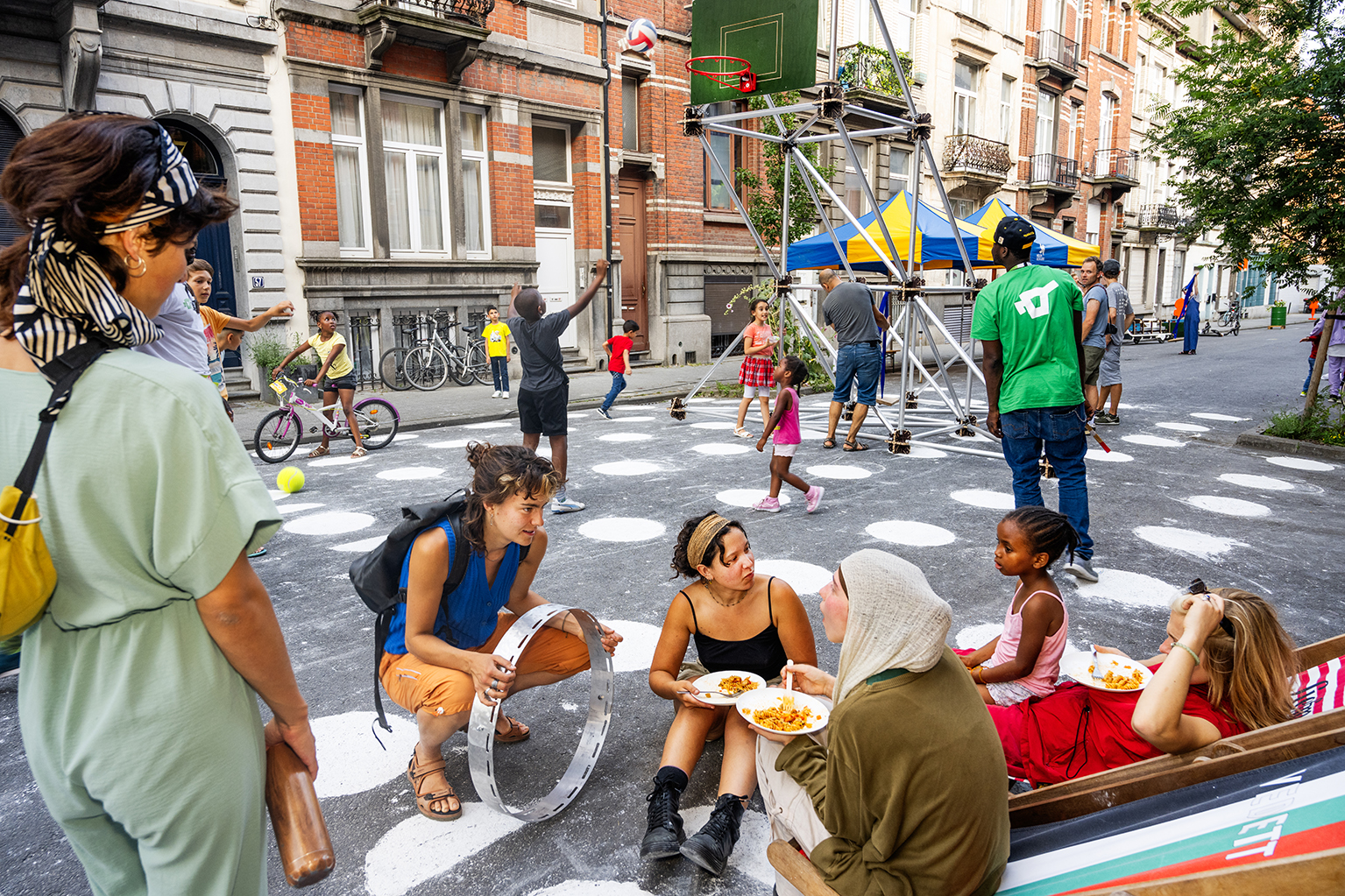
Mobil contributes to aesthetics by making public space more welcoming, readable and alive in everyday life. Its beauty does not lie only in the objects themselves, but in the situations they make possible: a parking space becoming a place to gather, a street turning into a sports field, a roundabout becoming a concert setting, or an anonymous square becoming a place to sit, eat, talk, rest, play or watch a film together.
This matters because many public spaces are technically open but not truly hospitable. Too often they are approached mainly through problems such as safety, cleanliness, control or conflict. Mobil creates space for solutions. It gives communities the means to transform leftover or contested spaces into settings of use, care and encounter.
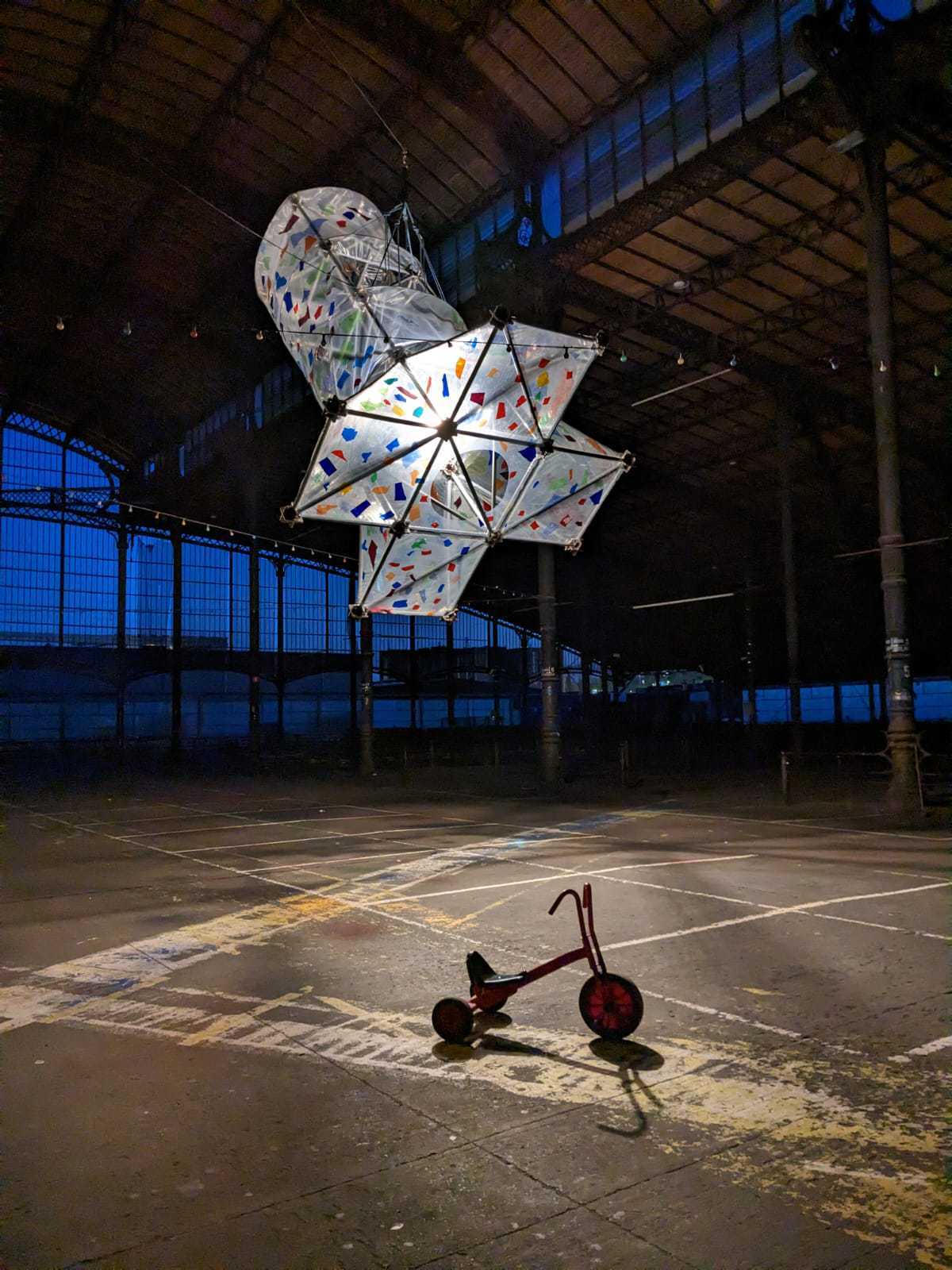
The aesthetic quality of Mobil is both literal and social. Literally, the system is carefully designed: light, clear and easy to use, with attention to materials, colours, fabrics and atmosphere. Tarps, hammocks, inflatables, banners, light, sound and projection make it possible to create comfort, visibility and recognition. These elements help people appropriate a place and make it feel temporarily theirs. The structures are recognisable without being prescriptive: they invite different uses and meanings.
Figuratively, Mobil changes how a place is perceived. It turns public space from a neutral or frustrating backdrop into a shared environment with identity and possibility. This creates a sense of belonging, because people do not just pass through the space, but actively shape and care for it together.
Its longer-term aesthetic value lies in making collective transformation visible. Mobil shows that beauty in public space is not only a matter of form, but of use, openness and shared authorship. That is what makes it exemplary: aesthetics is embedded in how people claim space together and turn it into a place worth caring for.
Mobil was developed to lower the barriers that often prevent people and organisations from using public space. Its inclusion logic is spatial, social, economic and organisational at the same time.
First, it is affordable. Instead of each organisation needing its own equipment, nine partners share one infrastructure, one storage logic and one maintenance framework. This distributes costs for purchase, transport, storage and repair, and makes collective use possible in neighbourhoods where individual investment would be unrealistic.
Second, it is low-threshold by design. From the workshops onward, partners stressed that access should remain as open as possible: no expensive setup, no specialised venue, and ideally no registration or payment barrier for participation. The project also started from the concrete needs of organisations working closely with children, parents, young people and vulnerable groups. This meant the tools had to be simple, flexible and easy to appropriate across ages, cultures and types of activity.
Third, Mobil promotes inclusive governance. It is not managed as a closed system controlled by one institution, but as a shared infrastructure shaped by organisations with different kinds of expertise and different relationships to their communities. The workshops explicitly recognised that actors close to vulnerable groups hold essential knowledge about needs, trust and access, and even explored roles for young people in logistics and upkeep.
What makes Mobil exemplary is that inclusion is not added afterwards as outreach. It is built into the system itself: robust but simple elements, developed with many hands and easy to assemble together. In that sense, Mobil makes a small utopia practical: public space should not be shaped by a happy few, but through cooperation. The infrastructure only works when people work together — and that is precisely its inclusive power.
Mobil is fundamentally participatory: from concept, to production, to the way the infrastructure is shared, to the way it is used in the street.
The project began with working sessions involving nine socio-cultural, educational and sports organisations. These sessions did not start from a finished design, but from the concrete needs, experiences and constraints of actors already active in public space. Partners mapped what they needed, which communities they worked with, and what kinds of activities, atmospheres and forms of appropriation were missing. This led to the shared definition of the system: an “alphabet” of elements and three development lines — tools, storage and transport/management.
Participation then continued in the making of Mobil. The infrastructure was developed through repeated testing, feedback and adaptation, with partners shaping both the physical elements and the practical conditions for access, booking, maintenance and responsibility. Organisations close to children, parents, young people and vulnerable groups had a particularly important role because they brought detailed knowledge of trust, use and accessibility.
Participation also extends into implementation. Mobil is not centrally programmed for passive audiences; it is used by partner organisations together with their communities in real public-space situations. Activities are often open, low-threshold and shaped on site. The workshops even explored how young people could take part in logistics and upkeep, extending participation beyond programming into stewardship.
The impact is clear: Mobil is more relevant, more usable and more widely shared because it was built with and through the people who use it. More importantly, it shifts agency. Communities are not treated as end users of a finished project, but as co-authors of a shared civic infrastructure and of the public spaces it helps create.
Mobil operates through multilevel governance by linking neighbourhood-based practice to regional support structures, inter-project exchange, and European research.
At the local level, nine socio-cultural, educational and sports organisations are the core actors. They use, manage and continuously adapt the infrastructure in relation to their own communities and neighbourhoods. Their role is not consultative but operational: they shape how Mobil is used, shared and maintained in everyday practice.
Cultureghem plays a coordinating role within this network. It facilitates cooperation between partners and helps organise shared access, logistics, storage and continuity. This allows Mobil to function as common infrastructure rather than as separate tools owned by individual organisations.
At the regional level, Mobil was developed through the Broedplekken programme, which created the conditions for a collective trajectory. This call also supported 13 other Broedplekken across the region, placing Mobil within a wider ecosystem of civic and spatial experimentation. Architecture Workroom Brussels helped frame the common mission with all partners at the outset and continues to connect different Broedplekken, strengthening exchange and visibility at regional and national level.
At the European level, Mobil also served as a case study within the Streetforum project, a JPI Urban Europe project bringing together research centres, non-profit organisations, public institutions and private actors from Belgium, Austria, Sweden and Turkey.
The added value of this multilevel structure is that resources, legitimacy and knowledge circulate across levels, while decision-making and use remain anchored locally. This avoids top-down implementation and makes Mobil both grounded and transferable.
Mobil is the result of a transdisciplinary collaboration in which social, spatial, technical and organisational knowledge continuously shaped one another.
The project brings together expertise from community work, youth work, education, sports, arts, design, engineering, fabrication and logistics. The nine partner organisations contributed practical knowledge from their daily work with children, families, young people and vulnerable groups. This grounded the project in real needs and in concrete uses of public space.
That practice-based knowledge was translated into physical infrastructure through collaboration with a broad team of designers, manufacturers and specialists. Industrial engineers helped develop the connector and production logic; textile and inflatable artists developed soft spatial elements; electronic engineers and sound specialists contributed technical modules; and fabricators helped turn the system into robust, usable infrastructure. Sirris carried out stress tests to improve connector design and manufacturing, while Kind & Samenleving helped assess how mobile infrastructure can remain safe and compatible with norms for public use.
This transdisciplinary process also shaped the diversity of Mobil itself: modules for sport, relaxation, culinary activities, cultural use, collective gathering and wellbeing, including elements such as pools or changing cabins.
Mobil is exemplary because it does not place design above other forms of knowledge. Materials meet people. Technical development, safety, social practice and everyday use were developed together. The result is not a single designed object, but a shared infrastructure in which different disciplines made each other more relevant, more robust and more usable in real public space.
Mobil is based on a shared-use model that combines public investment, cost-sharing and service-based revenue potential. The initial development was financed through the Broedplekken programme, which made it possible to develop the modular system, organise the partner process and build the first governance and logistics framework.
Its long-term financial logic is not based on commercial rental to end users in public space. On the contrary, Mobil is conceived as community infrastructure: the aim is to keep access in the street as open and low-threshold as possible, while civil-society organisations facilitate its use. This is important, because the social value of the project depends on affordability and accessibility. The workshops already framed shared maintenance, booking, storage and repair budgets as part of the model.
For partner organisations, shared ownership strongly reduces costs. Instead of each organisation buying, storing and maintaining its own equipment, they use one common system. The modular structure also allows incremental growth, while durable and repairable components keep replacement costs low.
At the same time, Mobil opens up revenue possibilities around the infrastructure. The system can support paid workshops, team-buildings, facilitation trajectories and public-space activation services for external actors. A dedicated Mobil activation website (mobil.brussels in development) already follows this logic: free access for partners, paid use for others. In that sense, Mobil is not only a space-making system, but also a way for civil-society actors to expand their audience and diversify their business model.
Mobil is financially sustainable because it reduces structural costs, shares resources, and creates service-based earning potential around a common good rather than around exclusion.
Mobil is designed as a transferable system rather than a site-specific project. What can be replicated is not only the physical infrastructure, but also the method, governance model and open knowledge base behind it. Mobil is strong precisely because its core logic is simple and adaptable.
On the technical side, the system relies on a limited number of robust principles: one connector, standard materials, flat-pack logic and modular add-ons. This makes reproduction feasible in other places without needing highly specialised supply chains. The move toward injection-moulded production strengthens that logic further: it allows durable, repeatable and affordable manufacturing at scale. Mobil combines a strong DIY culture with a more advanced production level.
Just as important is the process. Mobil offers a replicable method for building shared civic infrastructure: start from the needs of local organisations, define use cases together, test in real situations, and develop agreements around access, transport, storage and maintenance. The workshop files show that these governance questions were part of the project from the start, not an afterthought.
Its open-source wiki makes this transferable in practice, by sharing design files, methods and lessons learned. Mobil has also already gained relevance beyond Brussels through research and dissemination, including its role as a case study in the Streetforum JPI Urban Europe project.
Mobil is scalable because it offers a framework that others can copy, adapt and improve locally: standard materials, open documentation, shared governance and a public-space logic that travels well across contexts.