Arts, Culture, and Heritage as Drivers of Change
From Spaces to Places: Living the City
Transforming urban spaces into vibrant community places through culture, events and shared life in S
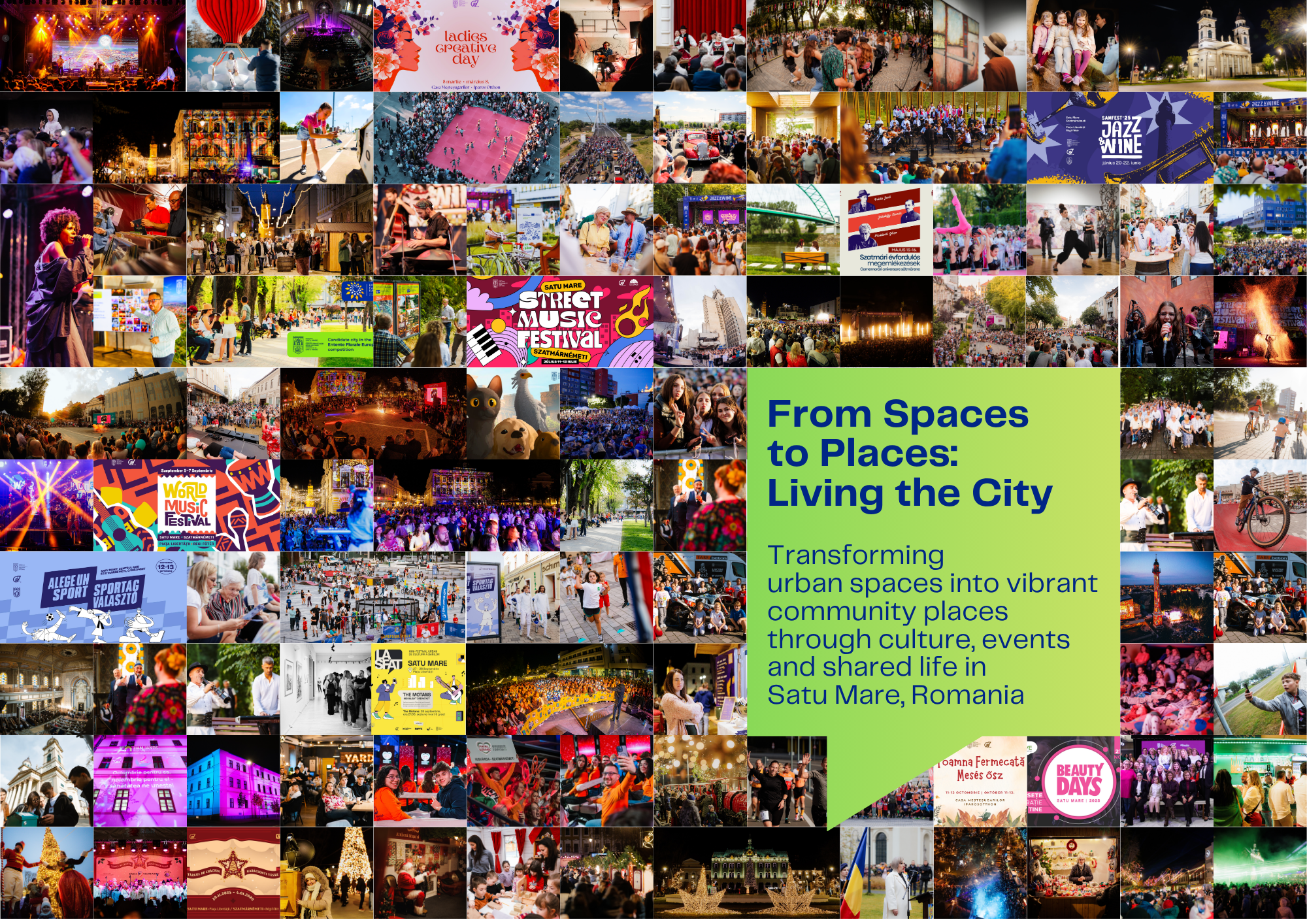
Satu Mare is turning its public spaces into vibrant places where people connect, create and belong. Through culture, events and community-driven initiatives, EU-funded urban infrastructure is brought to life, activating streets, squares and riverbanks. Led by the G.M. Zamfirescu Cultural Center, the city transforms everyday spaces into shared experiences that shape a more inclusive and lively urban life, through placemaking and over 50 events yearly, including 300+ concerts and performances.
Romania
Local
Municipality of Satu Mare
Mainly urban
It refers to other types of transformations (soft investment)
Prototype level
No
No
No
Organisation
Satu Mare has undergone a significant urban transformation in recent years, with multiple public spaces renewed through European funding. However, infrastructure alone does not create a city – people do. Our project responds to this challenge by turning these renewed spaces into a living urban fabric.
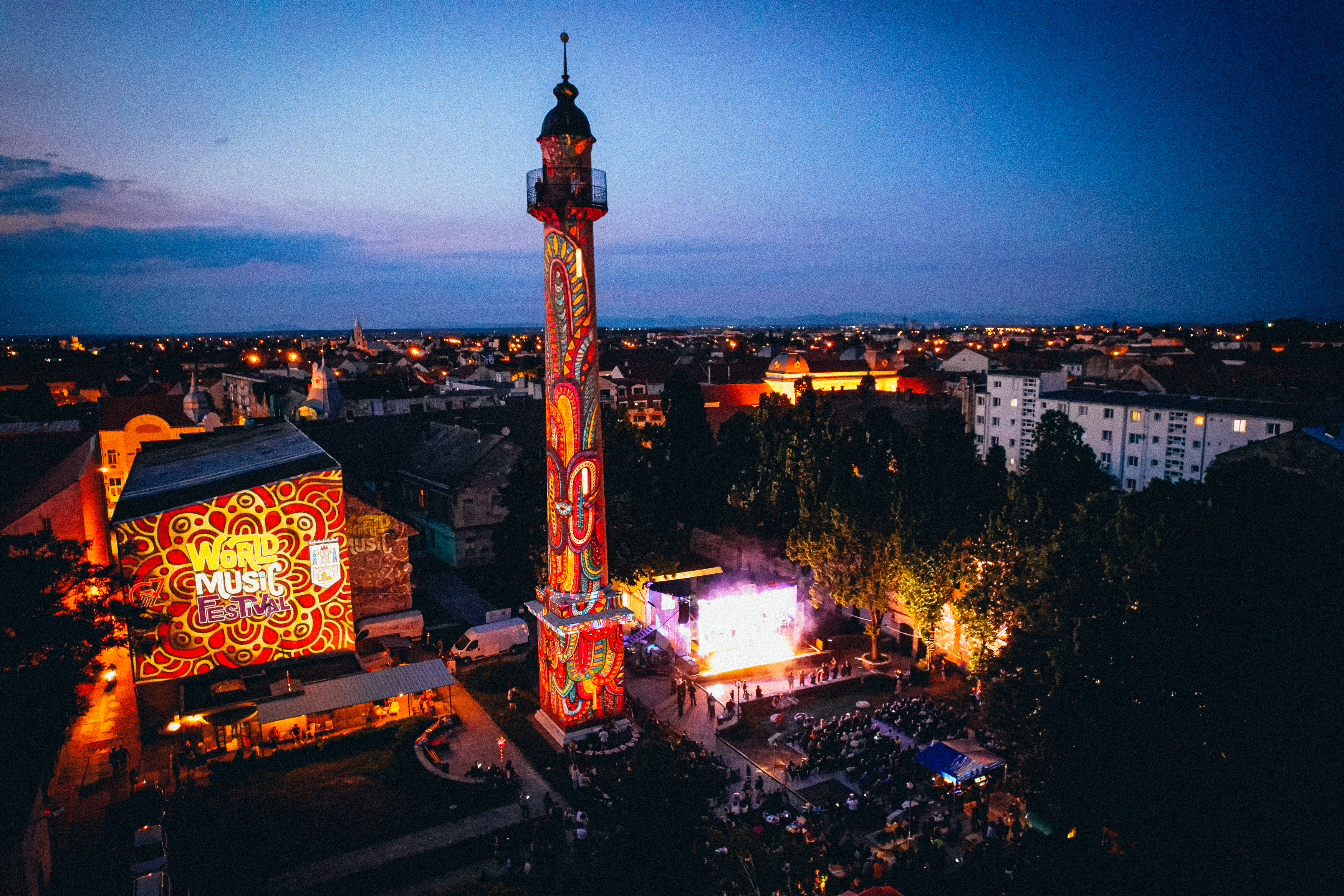
Led by the G.M. Zamfirescu Cultural Center, we activate the historic center, the new civic core and the Someș riverbank through a coherent cultural and community-driven programme. We curate over 50 events annually, including major festivals such as Street Music Festival, World Music Festival, Jazz & Wine and outdoor film screenings, alongside sports and leisure activities. These are not isolated events, but carefully designed placemaking interventions that redefine how public space is used and experienced.
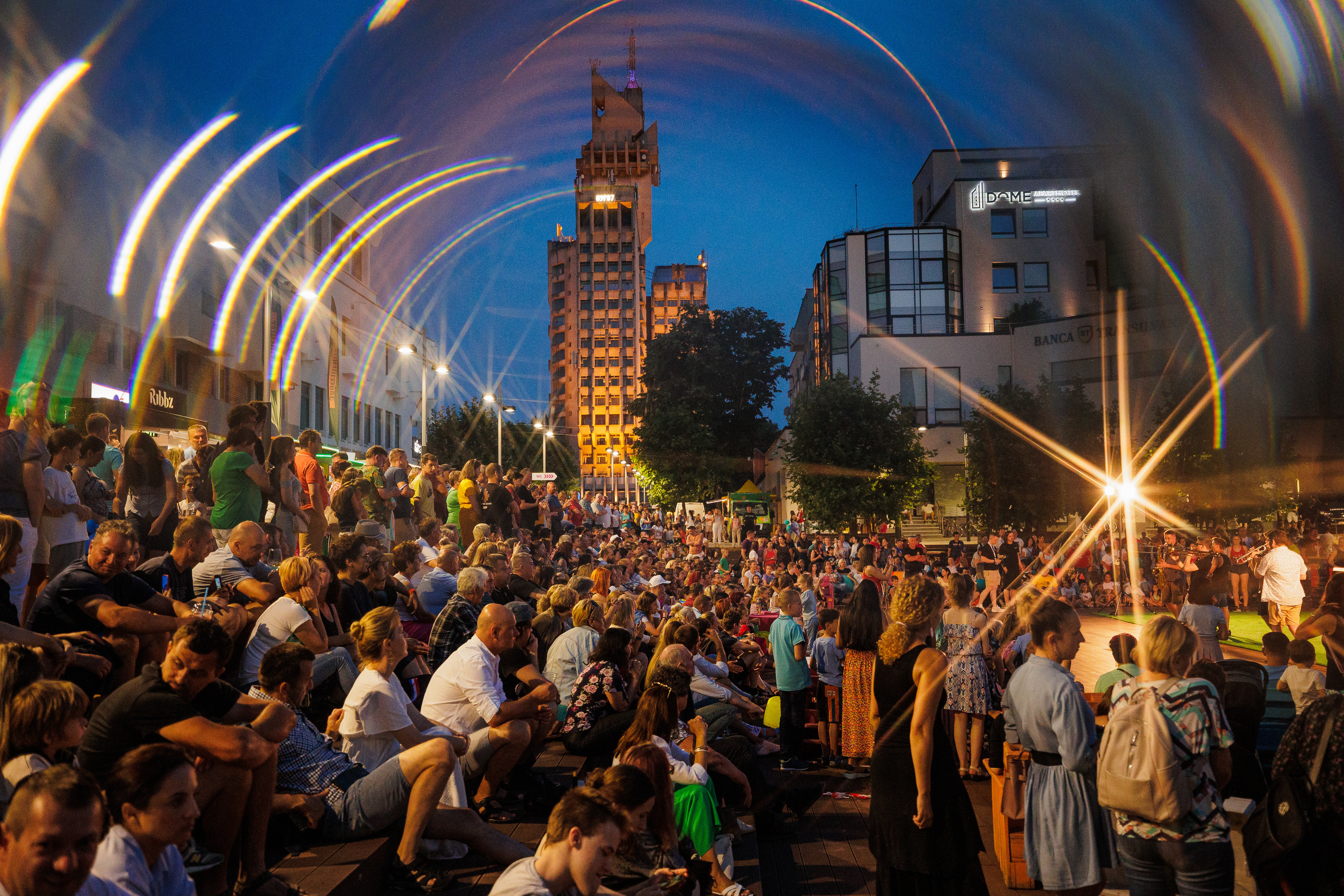
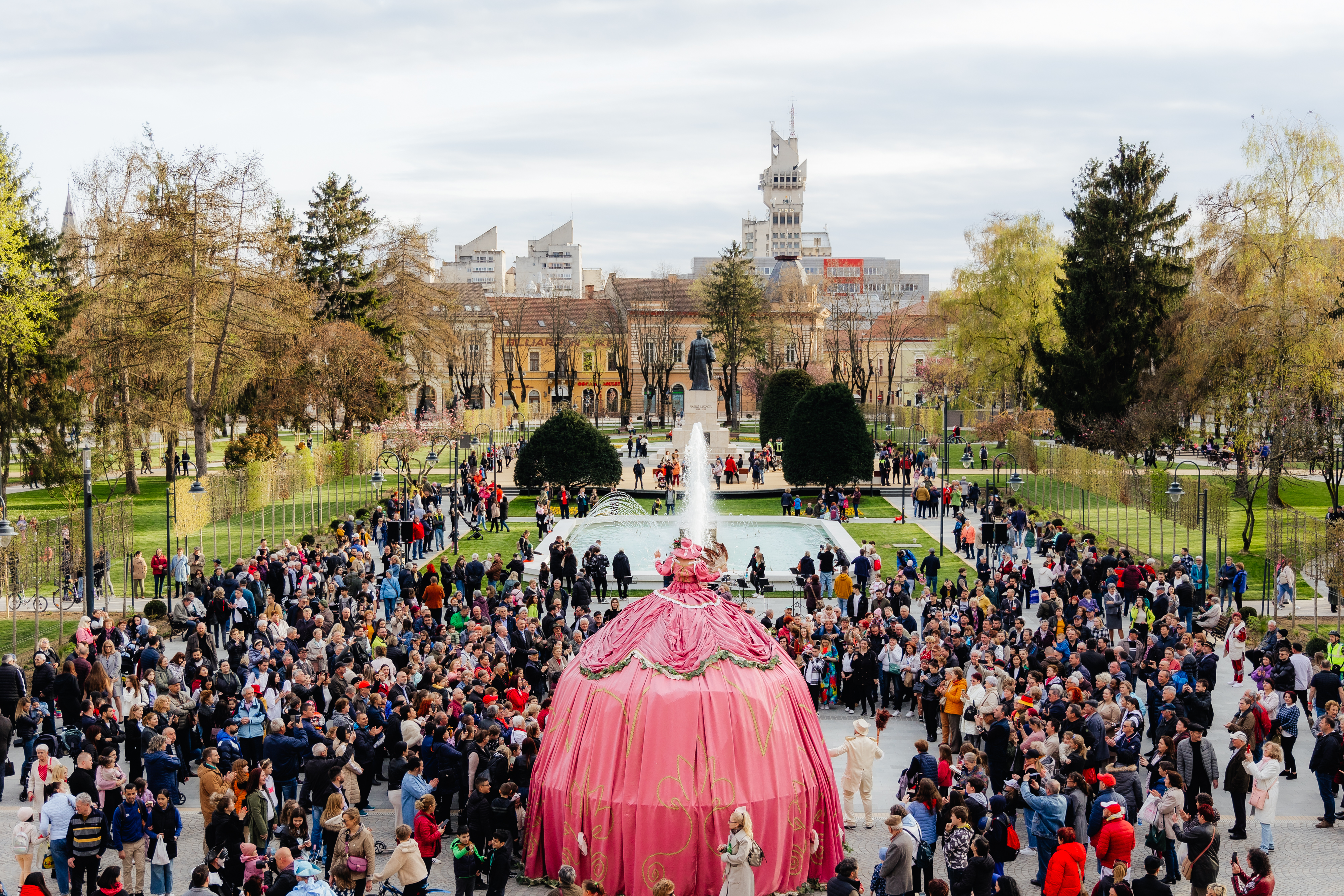
A key shift has been the transition from traditional indoor, ticket-based events to inclusive, open-access cultural experiences. By offering free events in accessible public spaces, we have removed social and economic barriers, encouraging diverse audiences to participate. The city has become more walkable and bike-friendly during events, supporting more sustainable urban behavior.
Beyond programming, we actively reshape the function of these spaces. Previously underused or mono-functional areas – including the new brutalist civic zone – are reimagined as vibrant, green and youth-oriented environments, enriched with urban sports infrastructure, community zones and cultural installations.
Already, this approach has transformed Satu Mare into a dynamic cultural destination. In the long term, the project builds a replicable model where culture acts as a catalyst for sustainable urban life, turning infrastructure into meaningful places and connecting communities through shared experiences.
For many years, Satu Mare was perceived as a grey city – both architecturally and in terms of its cultural life. Public spaces were underused, and events were limited, offering little reason for people to engage with the city.
This began to change in 2022, when a young and dynamic team took over the G.M. Zamfirescu Cultural Center. Guided by a strategic vision approved by the City Council, the team set out to reshape the city’s cultural infrastructure in a conscious, long-term way. At the same time, major European-funded investments renewed key public spaces, including the historic center, riverbank and new civic areas.
We quickly understood that infrastructure alone is not enough. A city becomes alive only when people actively use and experience it. This insight became the foundation of our project.
Our approach was to connect these renewed spaces through culture, creating a coherent, city-wide cultural ecosystem. We activated them through festivals, community events, sports and leisure activities, designed to bring people together and redefine how public space is used.
A key focus has been young families aged 25–45, many of whom left Satu Mare for larger university cities. By creating a vibrant, inclusive and family-friendly urban life, we aim to encourage them to stay or return. The goal is not only to provide infrastructure, but to build a city where people want to live.
Implementation on the ground meant shifting from indoor, ticket-based events to free, accessible programmes in public spaces, and reimagining these spaces as places of connection, belonging and everyday life.
Today, Satu Mare is evolving into a living city, where culture connects spaces, people and community into a shared urban experience.
Placemaking
Cultural Activation
Social Inclusion
Urban Regeneration
Community Engagement
Our project addresses sustainability through a resource-efficient, community-based and scalable approach that maximizes the use of existing urban infrastructure. Instead of requiring new investments, we activate already renewed public spaces through a diverse portfolio of cultural, social and recreational events. This reduces environmental impact while increasing the long-term value and use of previously developed urban areas.
From an environmental perspective, our activities are designed with low resource consumption. Event infrastructure is lightweight, modular and reusable, with decorative elements and materials continuously repurposed across multiple events. By organizing activities in central, walkable locations, we also encourage sustainable mobility.
A concrete example is our CityWalk initiative, through which families are encouraged to attend events by bicycle instead of by car. We install additional bike parking areas and offer small incentives for those choosing sustainable transport, contributing to behavioral change and reduced urban congestion.
Social sustainability is at the core of the project. By shifting from ticket-based indoor events to free, accessible public programming, we remove economic barriers and ensure broad participation across all social groups. The project actively involves local artists, volunteers and community members, strengthening local ownership and social cohesion.
Culturally, the initiative supports local creative ecosystems and builds long-term partnerships, creating a sustainable cultural infrastructure that evolves organically. The project has been running for over four years, with a continuously expanding portfolio.
Economically, the model is based on diversified funding, combining municipal support with private sponsorships and community contributions, ensuring long-term viability.
Overall, the project transforms existing investments into living, sustainable urban systems.
Our project brings a new aesthetic dimension to Satu Mare by transforming underused and often visually unappealing urban environments into vibrant, welcoming and meaningful places. Many of the city’s public spaces, shaped by functional and often harsh communist-era architecture, lacked identity and emotional connection. Through our interventions, we reintroduce beauty as a shared public value.
We achieve this primarily through cultural activation. Festivals and events introduce color, light, sound and atmosphere into these spaces, temporarily reshaping their perception and use. Carefully designed visual identities, installations and decorations create a warm, inclusive and recognizable environment that appeals to all generations. For children and families, these elements make public spaces more playful and inviting, while for adults they offer a renewed sense of pride and attachment to the city.
Our approach combines accessibility with strong visual character. Events are designed to be both friendly and distinctive, creating a consistent urban aesthetic that people can recognize and associate with quality experiences. This is reinforced through an active and visually coherent social media presence, extending the aesthetic experience beyond the physical space and strengthening the city’s image.
A concrete example is the Restart Street Art Festival, through which we introduce large-scale murals on urban buildings. These artworks transform blank or deteriorated surfaces into expressive cultural landmarks, contributing to a more dynamic and visually engaging cityscape.
Beyond individual events, the long-term impact lies in changing how people perceive and relate to their environment. By continuously activating and beautifying public spaces, we foster a sense of belonging, care and ownership.
Inclusion is a core principle of our project, ensuring that culture and public space are accessible to everyone, regardless of age, income or social background. As the only cultural institution in Satu Mare that consistently delivers large-scale free events, we actively remove financial barriers and open access to cultural experiences for the entire community.
Our programme is built around inclusivity by design. All major events take place in public spaces and are free of charge, allowing anyone to participate without restrictions. This approach has proven particularly impactful for families and children. For example, our workshops during the Christmas Fair attracted over 2,200 children, and we organize more than 50 such accessible activities annually, creating opportunities for learning, creativity and social interaction.
We also ensure accessibility for vulnerable and marginalized groups. We collaborate with NGOs such as the Order of Malta, who actively support the participation of disadvantaged individuals and families in our events. Through these partnerships, we extend access to those who would otherwise be excluded from cultural life.
In terms of physical accessibility, we prioritize central, open and barrier-free locations, making events reachable and usable for people with reduced mobility. Our programming is designed to be flexible and welcoming, offering a variety of formats that respond to different needs and preferences.
Beyond access, the project promotes a new model of inclusive urban life. By bringing diverse groups together in shared public spaces, we foster interaction, mutual understanding and a sense of belonging. Culture becomes a common ground where different generations and social groups meet naturally.
The project is exemplary in terms of inclusion because it does not treat accessibility as an add-on, but as a fundamental principle.
Participation is a fundamental working principle of our project, shaping both the design and implementation of our cultural programmes. We actively involve citizens, communities and civil society organisations in defining the city’s cultural life, ensuring that public spaces respond to real needs and expectations.
Each year begins with a broad public consultation process, including surveys and direct feedback collection, through which we assess cultural preferences, interests and expectations. These insights directly influence the planning of our annual event portfolio, making citizens active contributors rather than passive audiences.
Our most important participatory initiative is Com’On Satu Mare, a participatory budgeting programme dedicated to young people. In 2023, more than 20 youth teams submitted their own project ideas, which were then publicly voted on by the community. The selected initiatives were implemented with our support, giving young citizens real decision-making power over cultural and community activities. The programme continues to grow, with new editions planned.
Beyond structured programmes, we work closely with more than 20 NGOs and informal groups, co-creating events and initiatives across cultural, social and educational fields. These partnerships allow for a diverse and inclusive programme, reflecting the richness of the local community.
Citizens are also involved through volunteering, creative contributions and continuous feedback during and after events. This creates a dynamic loop of participation, where the community not only shapes the content but also contributes to its delivery.
The impact of this participatory approach is visible in increased community ownership, stronger social cohesion and a higher engagement in public life. Our project demonstrates how cities can become more democratic and responsive by integrating citizens.
Our project is built on a multilevel governance model that connects local decision-making, civil society engagement and international cooperation into a coherent framework.
At the local level, the City Council plays a key strategic role, defining the long-term development vision of Satu Mare, within which our cultural activities are aligned. The G.M. Zamfirescu Cultural Center works in close coordination with local authorities, ensuring that cultural programming supports broader urban, social and economic objectives.
At the national level, our activities are aligned with the strategic priorities of the Ministry of Culture and Romania’s cultural policy framework, particularly in areas such as access to culture, support for contemporary creation and the promotion of cultural diversity.
Civil society is another essential pillar. We collaborate with a wide range of stakeholders, including youth organizations, cultural NGOs and traditional heritage groups. These partners are actively involved in the design and implementation of events, contributing ideas, content and community outreach. This creates a balanced ecosystem where both contemporary and traditional cultural expressions are represented.
At the regional and cross-border level, we maintain active partnerships with organizations from Hungary, Slovakia and Ukraine. These collaborations enable knowledge exchange, joint programming and the development of shared cultural initiatives. We have also submitted two cross-border project proposals, further strengthening this cooperation.
At the European level, the project builds on EU-funded urban development investments, which provide the physical infrastructure that we activate through cultural programming.
Our project is inherently transdisciplinary, combining a wide range of knowledge fields and practices that intersect in the activation of urban space through culture.
At its core, the initiative brings together architecture, urbanism and design by rethinking how public spaces function and are experienced. Cultural programming is directly linked to spatial transformation, turning squares, riverbanks and civic areas into active, human-centered environments.
The arts play a central role, with a diverse portfolio including music, visual arts, street art, film and performance. Events such as Street Music Festival, World Music Festival, Jazz & Wine and Caravana TIFF integrate artistic expression into everyday urban life. Visual arts are represented through exhibitions like “Atelier în Mai” and projects such as the Restart Street Art Festival, which transforms urban surfaces into cultural landmarks.
Education and knowledge-sharing are also key components. Through conferences such as TEDx Satu Mare and educational formats like “La Sfat – cultura banilor”, as well as workshops for children and families (e.g. over 2,200 participants at Christmas Fair workshops), we connect culture with learning, critical thinking and personal development.
Social sciences and community development are reflected in our participatory approach, including public consultations and initiatives such as Com’On Satu Mare, where citizens directly shape cultural content.
Sports and wellbeing are integrated through projects like “Choose a Sport”, promoting active lifestyles and linking physical activity with public space use.
Digital communication and media also play an important role, extending the reach and impact of the project through strong social media engagement.
The project is based on a hybrid and efficient business model that ensures long-term sustainability through a combination of public funding, private support and lean management.
The G.M. Zamfirescu Cultural Center benefits from stable municipal funding derived from local taxes, providing a reliable foundation for long-term planning. In parallel, we actively engage sponsors through event partnerships, including stage naming rights and exclusive collaborations, generating additional resources.
A key strength is our efficiency: less than 20% of the budget is used for operational costs, while over 80% is directly invested in cultural programmes and events. This maximizes impact while minimizing overhead.
Additional support comes from NGOs, volunteers and in-kind contributions, further strengthening the model.
By combining stable funding, diversified income and efficient resource use, the project remains financially sustainable and scalable over time.
The project has a high potential for transferability and scalability, as it is based on a flexible and modular cultural programming model that can be adapted to other cities and contexts.
Our event portfolio is specifically designed for medium-sized European cities (around 100,000 inhabitants) and can be easily replicated using existing public spaces. Key formats include the Street Music Festival, bringing together over 25 international street artists; Jazz & Wine and World Music Festival, combining culture and local identity; CityRocks, involving over 200 musicians in collective performances; outdoor film screenings such as TIFF; urban light and visual installations; and large-scale community events like “Alege un Sport”, engaging over 2,000 young participants.
These initiatives do not require significant new infrastructure, as they rely on activating existing urban spaces through culture. The methodology—combining placemaking, inclusive access, community engagement and low-cost implementation—can be transferred to other cities with similar urban structures.
Beyond events, the project offers a replicable model of how culture can connect fragmented urban spaces into a coherent, living system.
This makes the project highly adaptable, scalable and relevant for other European cities aiming to transform infrastructure into meaningful places.
In the year following the application, we will continue and expand our activities with a strong focus on scaling the impact of cultural placemaking across the entire city. Our approach remains consistent: transforming infrastructure into lived, meaningful spaces through culture, community engagement, and accessible programming.
**1. Activating all EU-funded investments**
We will bring cultural life into every major urban development realized through European funding. This includes the Someș riverside promenade, the Museum of Industry area, Cubic Park, Noroieni Urban Park, and the regenerated Micro 15 district. These spaces will host concerts, festivals, community events, and creative interventions, ensuring that each investment becomes a vibrant, attractive, and regularly used public space.
**2. Expanding into residential neighborhoods**
A key priority is to move beyond the city center and extend our cultural programming into residential areas. By organizing events directly within neighborhoods, we aim to reach new audiences, improve accessibility, and create a sense of belonging at local level. This step will help decentralize culture and integrate it into everyday life for all citizens.
**3. Securing new funding and partnerships**
We will actively apply for additional EU funding and expand our network of sponsors and partners. By combining public funding with private support, we aim to ensure the long-term sustainability and growth of the project, while increasing the scale and diversity of our programmes.
Through these steps, we will continue to develop a connected ecosystem of active public spaces, reinforcing Satu Mare’s vision as a vibrant, inclusive, and forward-looking European city.