Strengthening Local Democracy and Inclusion
I Feel From
{Empty}
‘I feel from’ is a project that explores ‘sense of belonging’ in culturally diverse environments. Drawing from feminist thought that values lived experience, we use participatory design methods to help people reflect on what makes an environment ‘home’ and how they can make themselves at home, while simultaneously we work against ‘othering’ of social groups. Emerged out of immigrant experience, the project serves as a bridge between marginalized and dominant communities and foster inclusion.
Denmark
Local
Copenhagen and Malmö with international exposure of some project elements.
Mainly urban
It involves other types of transformations (soft investment)
Yes
2026-03-22
No
No
No
Organisation
‘I feel from’ is a project that explores ‘sense of belonging’ in culturally diverse environments. Drawing from feminist thought that values lived experience, we use participatory design methods to help people reflect on what makes an environment ‘home’ and how they can make themselves at home, while simultaneously we work against ‘othering’ of social groups. Emerged out of immigrant experience, our project serves as a bridge between marginalized and dominant communities and foster inclusion.
Our project has various parts:
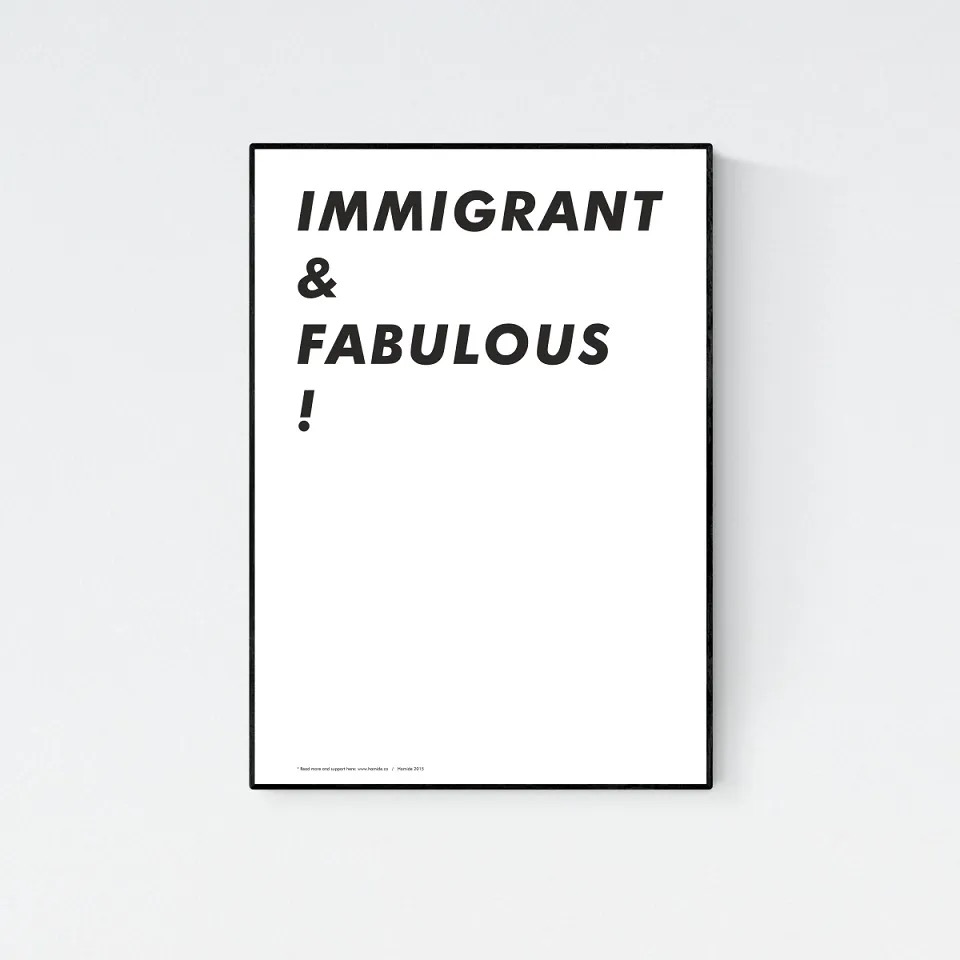
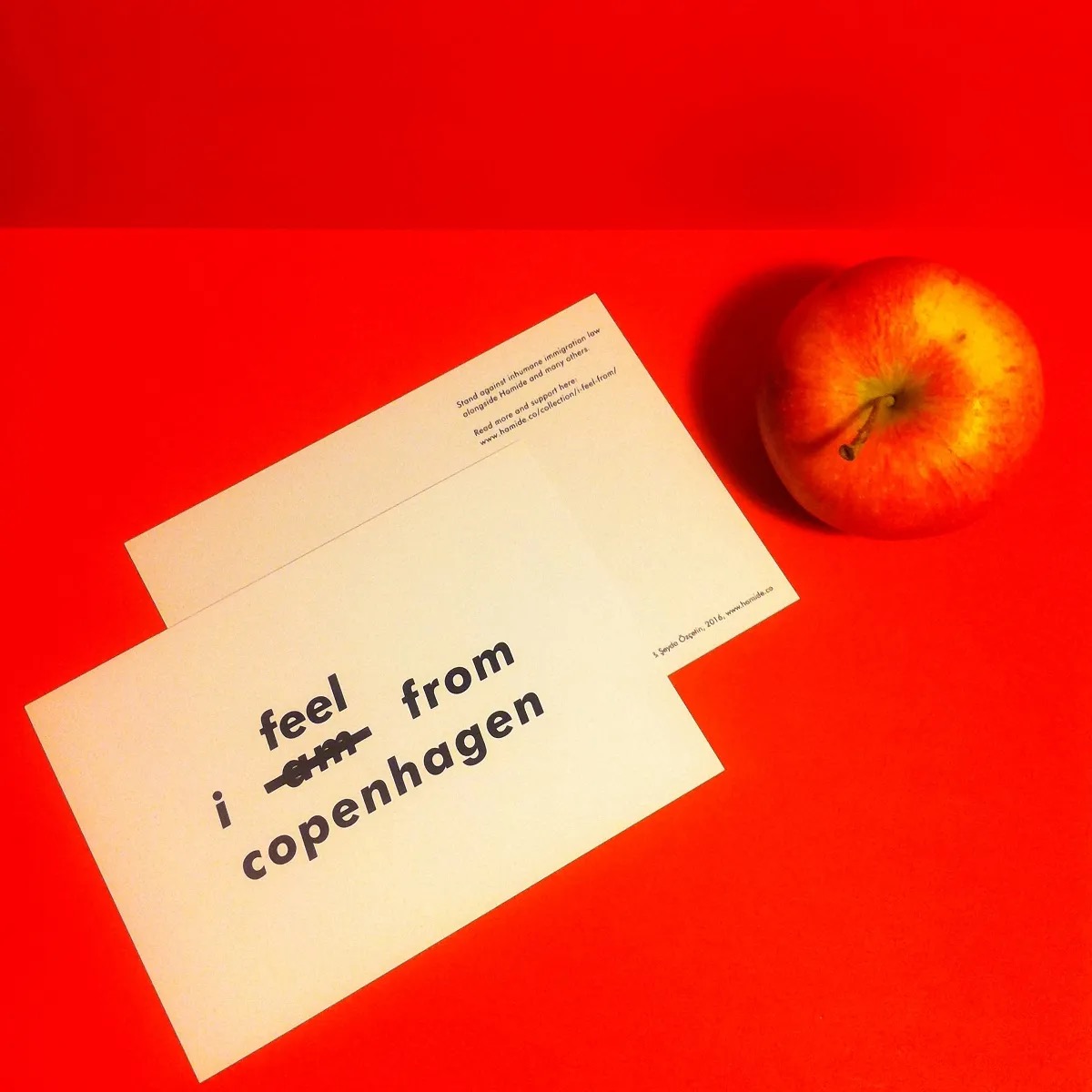
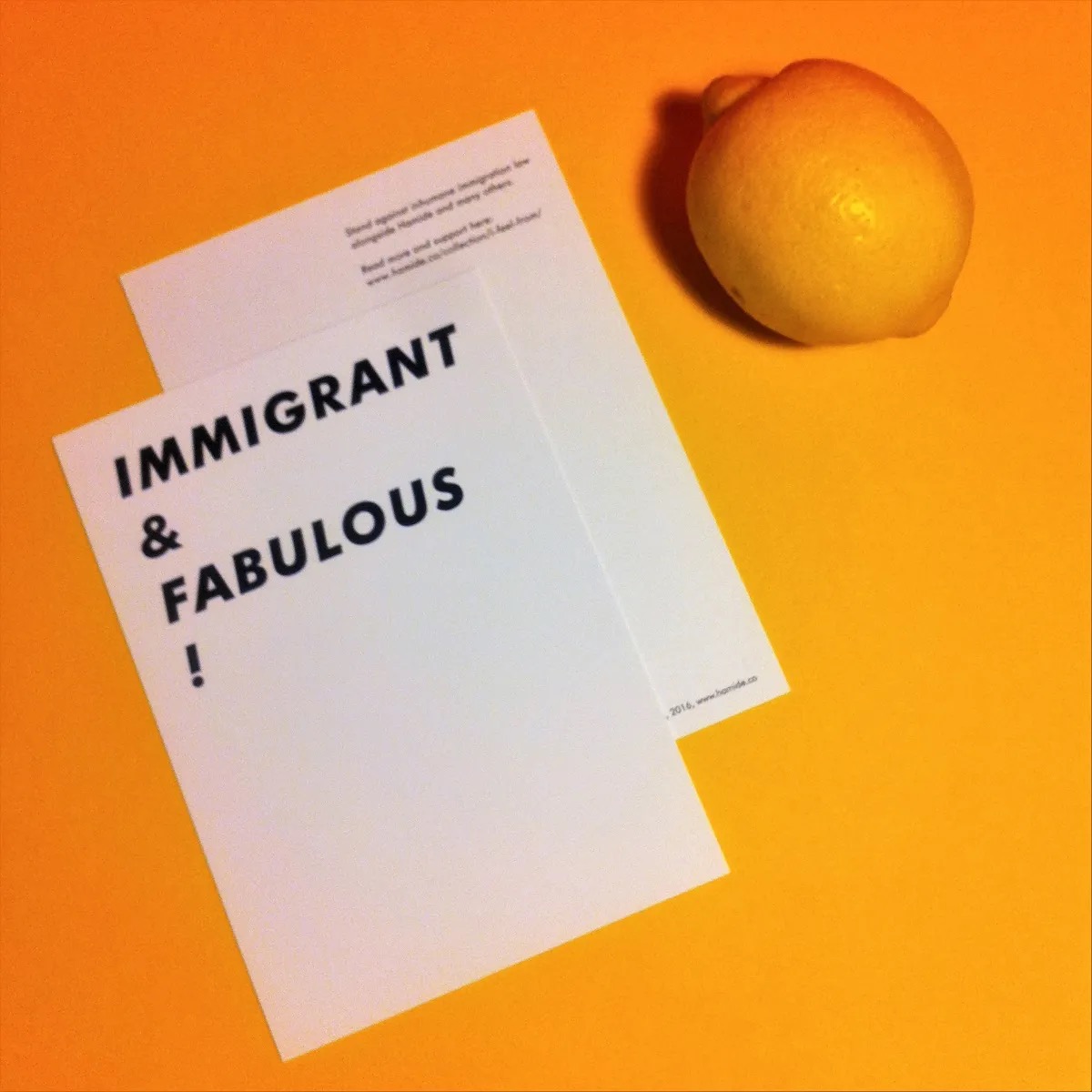
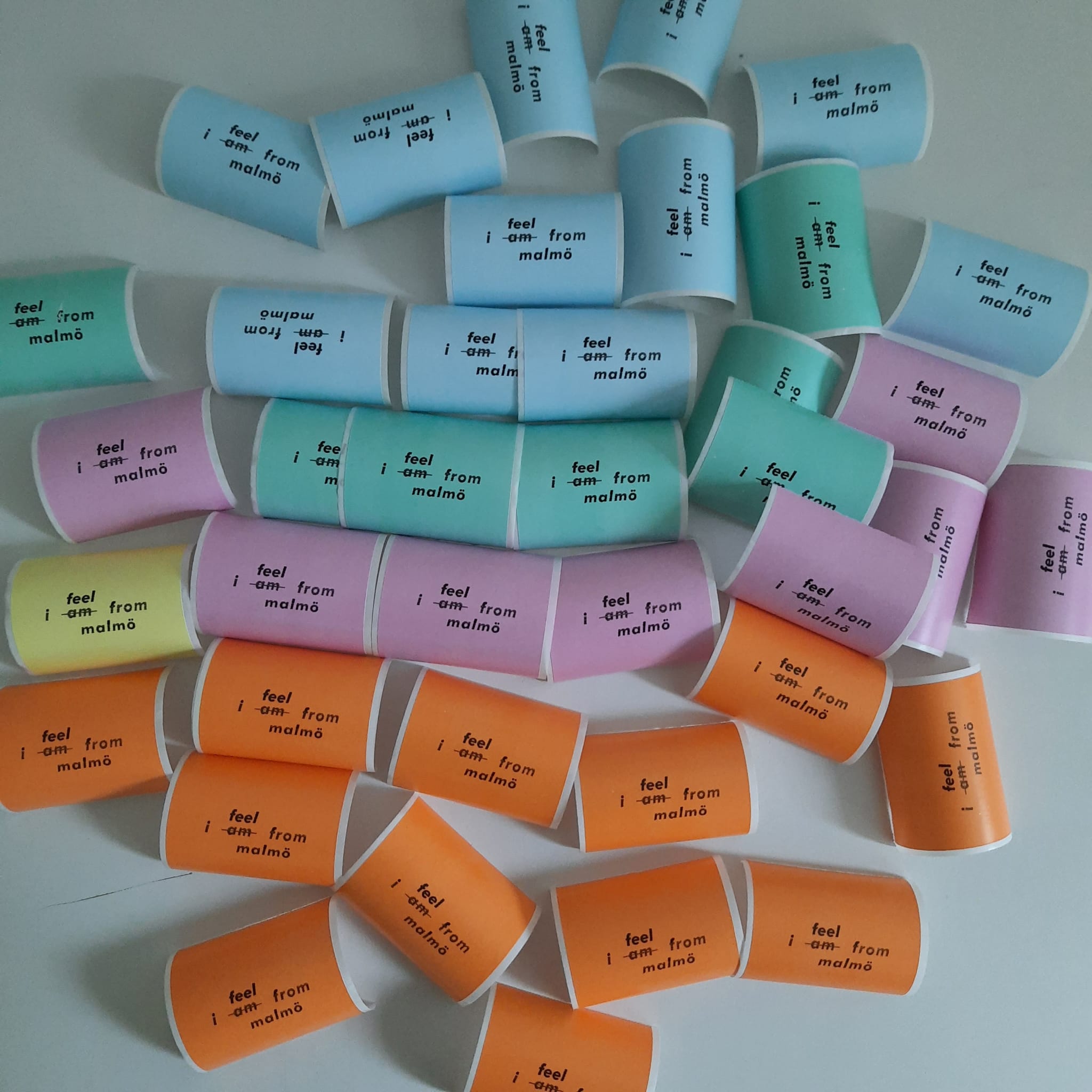
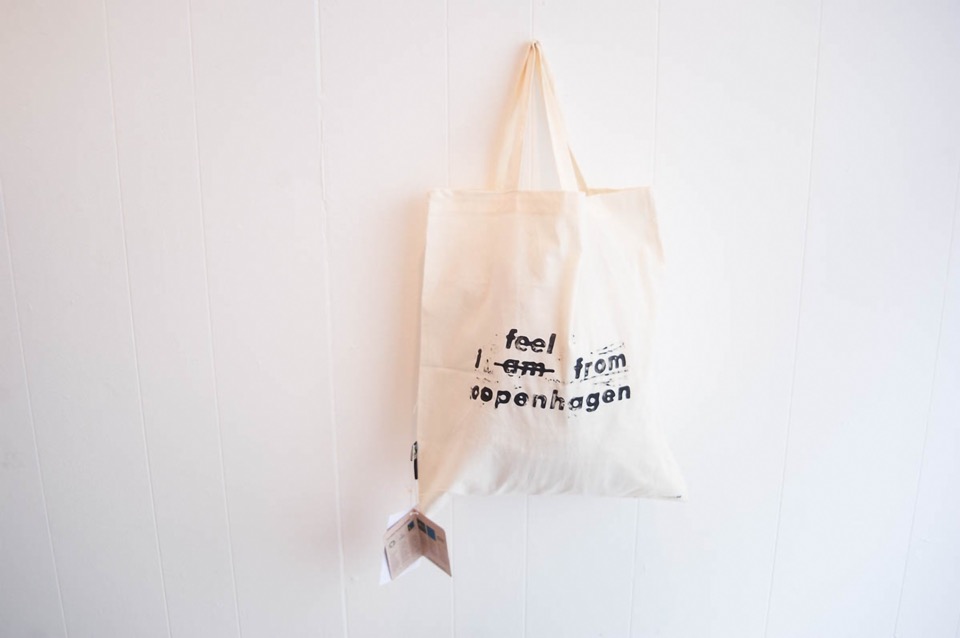
1. We designed ‘I feel from collection’ to spread our message of inclusivity. The collection consists of art prints, postcards, stickers, tshirts and totebags carrying two messages. One of them positions immigrant identity under a positive light with statement “immigrant & fabulous!”. The other one draws attention to sense of belonging with statement “ I feel from Copenhagen / Malmö /[any city].
2. We designed participatory engagements in the form of ‘I feel from passport workshops’. In these workshops, participants design their own passports using creative expression as a way to discuss matters of belonging, immigration, and inclusion. For these workshops we collaborated with festivals, public cultural institutions, and public and private schools in Copenhagen.
3. We exhibited several times our collection as well as some of the passports from our workshops.
4. We licensed our project to Assemble Theatre Collective for a series of plays co-created with a marginalized community in Saxogade Copenhagen, that took place within Copenhagen Culture Night in 2024 and 2025.
Our project helps people find language to express themselves in relation to sense of belonging and inclusion and change the negative and highly politicized narratives around immigration and being part of marginalized communities. It creates channels for dialogue and builds communities. It provides professionals tools to navigate challenging dynamics within diverse groups.
Our project started around 2014 through a reflection on our personal experiences of being Turkish immigrants in Denmark for a few years. We felt that our social interactions were often guided by stereotypes and biases associated with Türkiye. Whenever we met someone new, we would immediately be asked about where we come from. This would be followed by questions around our habits associated with religion like wearing headscarf, eating pork or drinking alcohol, as well as our thoughts about specific political figures and issues.
Needless to say, we didn’t enjoy these interactions. They felt like interrogations done to decide which stereotype box we would fit in and if we were worth their time. We felt like we were never seen as individuals with our own life stories but were seen through a misguided stereotypical lens. These personal interactions were not happening in the void but in a political atmosphere that consistently painted a negative picture of immigrants as criminals, problems, and welfare consumers.
Frustrated by having such experiences repeatedly as well as feeling misrepresented by the political discussions, we started thinking about how we can change the conversation. It is how we came up with the idea to use the expression ‘I feel from’ instead of ‘I am from’ to be able to move the conversation away from nationality to where one feels belonging to, which could be many places or places other than their origin. We felt that our identities were shaped by several places and their cultures that we had roots in and lived at. We were also influenced heavily by art, design, and culture that we were subjected to whether we lived in those places or not. We were a fusion of diverse mix of lived experience, interests, and future dreams. We also knew we were not the only people to feel like that. Many of our international friends were diverse and interesting individuals. None of this could be captured by stereotypes associated with our nationalities.
Social inclusion
Immigration
Co-integration
Sense of belonging
Participatory design
Our project directly works with social, cultural and economic dimensions of sustainability. Our cities, workplaces, and schools are becoming more diverse in terms of people’s backgrounds, social and economic status. Ignoring this diversity and imposing a single way of life, pointing at one as superior to other will cause more problems in the long run. Our individual well-beings are interdependent to the wellbeing in our surroundings. If pandemic taught us anything it is that ‘we are in this all together’. Therefore, we should collectively think how we can create welcoming and inclusive environments. Our project takes inclusivity as an important dimension of creating social and cultural sustainability, which indirectly would have economic impact.
1. By working with vulnerable groups on matters of sense of belonging through creative expression, we help them process their experiences and find vocabularies and language to express themselves. The participatory dimension helps them meet others going through similar experiences and show them that they are not alone. They find their communities. These social exchanges empower them and take ownership of their lives by being proactive in taking space in the public realm.
2. By creating visibility about issues of ‘sense of belonging’ we help create debate in micro scale. For instance, whenever we exhibit our work, we receive such positive feedback from locals who are bothered by exclusionary and hostile politics and rhetoric around immigration. These exchanges help them see that each individual can create and contribute to change. Democracy moves from the parliament to the street, to homes, to workplaces, and to schools.
Our project directly works with the concept of ‘sense of belonging’. In our workshops, we surface how participants experience place and related culture. We discuss what is unique about these places or cultural practices, what we like, how we want future to be. These discussions help people embrace their connection to their cities, neighborhoods and communities and develop a sense of ownership, which contributes to caring for places and their cultural practices.
Some examples are as follows: People originating from cities with bad traffic appreciate the freedom and safety in bike-friendly Copenhagen, and therefore they become advocates of this urban planning decision and related cultural practices. People originating from cities with informal care networks carry these valuable practices to their new cities and improve the local life such as by helping neighbors in need. Such examples can be given around recycling, food waste, female experience in the city and so on.
Our workshops help us surface these dimensions and appreciate and work for what needs to be preserved, what is problematic and could be better. Best part is that it is not a top-down thing but emerges through personal reflections and thus spreads.
Our project is all about inclusivity. It is about standing against ‘othering’ of individuals because they come from another country, or they are not ‘normal’ because of disabilities, or social-economic challenges. It is about creating environments where everyone is treated with respect and dignity. We foster inclusivity by operating in two directions:
1. Inclusion starts from bottom-up, from individuals. Our project is about cultivating a sense in each of us that we have the right to belong to anywhere, based on our own senses of belonging, not because of privilege or paperwork. Our project empowers individuals to claim the right to inclusion instead of waiting to be invited to the table. Our workshops help people see their immigrant identities as something positive. Being resilient, resourceful, and adaptable are qualities to be proud of rather than to hide away. With our collection of products, people are able to carry this message with them, such as by wearing ‘immigrant & fabulous!’ tshirts or ‘I feel from Copenhagen’ totebags, or by sending these postcards.
2. Inclusion also needs institutional support either from top-down or in the middle ground. In our project, we were able to gain contact in the middle ground such as through our collaborations with public and private cultural and educational institutions. These engagements give a strong supportive message both to participants of our workshops and the larger communities that it is an environment that celebrates diversity.
A core part of our project is participation. We do this in a number of ways:
1. Workshops: We hosted several workshops at cultural events, cultural institutions such as libraries, and schools. In these workshops after we introduce the topic, participants design their own passports using a variety of materials and share with other participants. These personal exchanges open the topic up allowing participants to see the issue from diverse perspectives.
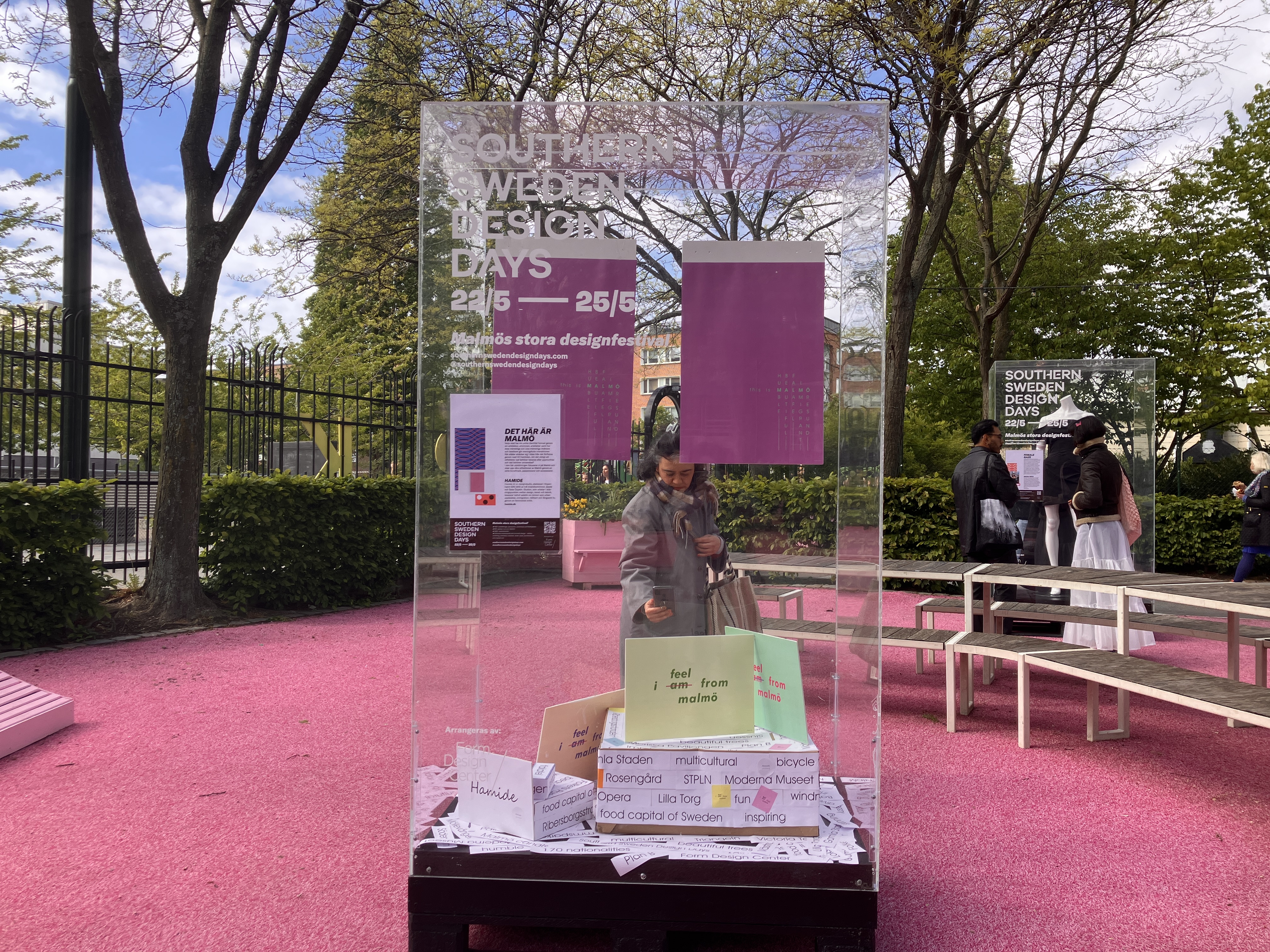
2. Exhibitions: We hosted several exhibitions in Copenhagen (such as Deleby, Gallery VESS) and Malmö (such as Southern Sweden Design Days 2025) where we presented our own collection, as well as some of the passports designed at our workshops. Through these engagements, the message reached to wider audiences.
3. Talks: We hosted several talks (such as Pecha Kucha and Ignite) where we introduced our project. These public engagements helped us reach wider audiences and start new collaborations.
4. Theatre: We licensed our project to Assemble Theatre Collective and opened it up for participation of a vulnerable group based in Saxogade Copenhagen. Assemble Theatre Collective hosted workshops with this community to write their plays. Plays were presented to the public during Copenhagen Culture Night 2024 and 2025 and was visited by about 250 people.
The project is run by us, Hamide Design Studio. We collaborate with different stakeholders upon agreement. These were sometimes our initiations and sometimes came from the other party. For example, when we host a workshop at another cultural institution, we have a dialogue about the timeframe, budget, audience profile, and their expectations from the workshop. The added value of such collaborations is that they bring us expertise from different audience groups and contexts. A workshop done with adult internationals and third-country children or pedagogues in training are quite different. We learned from their concerns in tailoring our workshop.
When we licensed the project to Assemble Theatre Collective, after briefing, we let them be independent in how they interpreted the project and worked with the community in focus. Thus, they had artistic freedom. Their engagement translated the project into another medium that we are not experts in, theater. This collaboration helped us see the scalability and transferability of our project to different artistic expression and contexts. Additionally, we also see the value in letting the project live its own life at the hands of other creative professionals.
When we licensed the project to Assemble Theatre Collective, after briefing, we let them be independent in how they interpreted the project and worked with the community in focus. Thus, they had artistic freedom. Their engagement translated the project into another medium that we are not experts in, theater. This collaboration helped us see the scalability and transferability of our project to different artistic expression and contexts. Additionally, we also see the value in letting the project live its own life at the hands of other creative professionals.
The project is situated in participatory design discipline and draws from social sciences such as political science and feminist and decolonial thought, with implications for architecture, urban planning, and social sciences.
The core idea in participatory design is to involve communities in decisions about matters that directly affect their lives. To do so, participatory engagements are organized such as workshops. In these contexts, ‘designed things’ or ‘boundary objects’ are used as a way to form publics (further theoretical reading Pelle Ehn, Carl di Salvo).
In our project, we use a couple of ‘designed things’. The collection we designed draws attention to the topic, gets the message out there. Our workshops where participants design their own passports uses the passport as a vehicle to open and guide conversations about ‘sense of belonging’. The idea here is not to design a new and perfect passport. It is to use this materialization, the passport design, as a way to discuss our experiences and share perspectives. Similarly, the goal of these discussions is not to reach a consensus on what ‘sense of belonging’ is but to enact agonistic democracy through sharing different experiences (further theoretical reading Chantal Mouffe). Additionally, by valuing lived experience, the project draws from feminist thought. By opening conversations about mobility, the right to move, and how these rights are organized, the project surfaces power relations in the Global South and Global North and thus draws from decolonial thought (further theoretical reading Mahmoud Keshavarz, Arturo Escobar).
Our project started as an initiative self-financed by our design studio. However, in time, we have applied the following business model approaches:
1. Revenue through sales of ‘I feel from’ products: We designed ‘I feel from’ collection that consists of art prints, stickers, postcards, tshirts, and totebags. By presenting and selling these products we both generate interest on our project and revenue.
2. Revenue through hosting workshops: We developed ‘I feel from passport workshops’ as a way to organize participatory engagements with communities. We held these workshops sometimes against a fee at cultural and educational institutions such as libraries, international schools, and colleges. At times we waived the fee for instance at festivals.
3. Revenue through licensing: We licensed our project to Assemble Theatre Collective in Copenhagen for them to develop a series of small theatre play ‘I feel from Saxogade’ that was situated in a Saxogade street in Copenhagen for the Copenhagen Culture Night in 2024 and 2025.
While our project started in Copenhagen, it could be applied to anywhere in Europe. Since it is about ‘sense of belonging’ it could be applied to various contexts:
1. The immigrant experience: Immigration continues to be an important topic across European countries. The project helps immigrants process their experiences and sense of belonging (especially through workshops). The project applies well to neighborhoods with immigrant communities, schools with students from a diverse ethnicity, large corporations with employers from diverse countries. It helps find the language and manners to talk with culturally diverse people.
2. Vulnerable communities: Vulnerable communities such as people with disabilities, or challenging pasts, also experience exclusion. The project with its focus on ‘sense of belonging’ surfaces their life experiences and breaks prejudice and sterotype. For instance, our licensing collaboration ‘I feel from Saxogade’ theatre plays worked with a vulnerable community located in Saxogade. In that sense, municipalities, could be key figures.
Various elements of our project can be transferred.
1. I feel from collection: Our products could be sold across Europe such as at museum shops, libraries, bookstores. Municipalities could buy these and give to new immigrants welcoming them to the neighborhood.
2. I feel from passport workshops: We can train professionals from design, art, and social sciences to host these workshops. We can make the workshop materials open-source.