Arts, Culture, and Heritage as Drivers of Change
Vera Grillmaier Keramik
Reframing Ceramic Production: Between Craft, Design, and Accessibility
The project repositions ceramic production in Europe by combining traditional craft with contemporary production to enable sustainable and competitive local manufacturing. Through collaborations with designers, cultural spaces, and hospitality contexts, ceramics are developed in real-use environments. An independent design line positions the work within the contemporary design field, while public formats make processes accessible, redefining craft as a relevant practice and strengthen.
Austria
Regional
The project is primarily rooted in Vienna and Austria, where it builds on existing networks and local production capacities. Vienna serves as the starting point due to its strong ecosystem of cultural spaces, design actors, and collaborators.
At the same time, the project is conceived with a broader European scope: collaborations, partnerships, and especially the distribution of the design line are intended to extend across Europe. This allows locally produced ceramics to operate within an international context while remaining grounded in regional production.
At the same time, the project is conceived with a broader European scope: collaborations, partnerships, and especially the distribution of the design line are intended to extend across Europe. This allows locally produced ceramics to operate within an international context while remaining grounded in regional production.
It addresses urban-rural linkages
It refers to other types of transformations (soft investment)
Prototype level
No
No
No
Individual
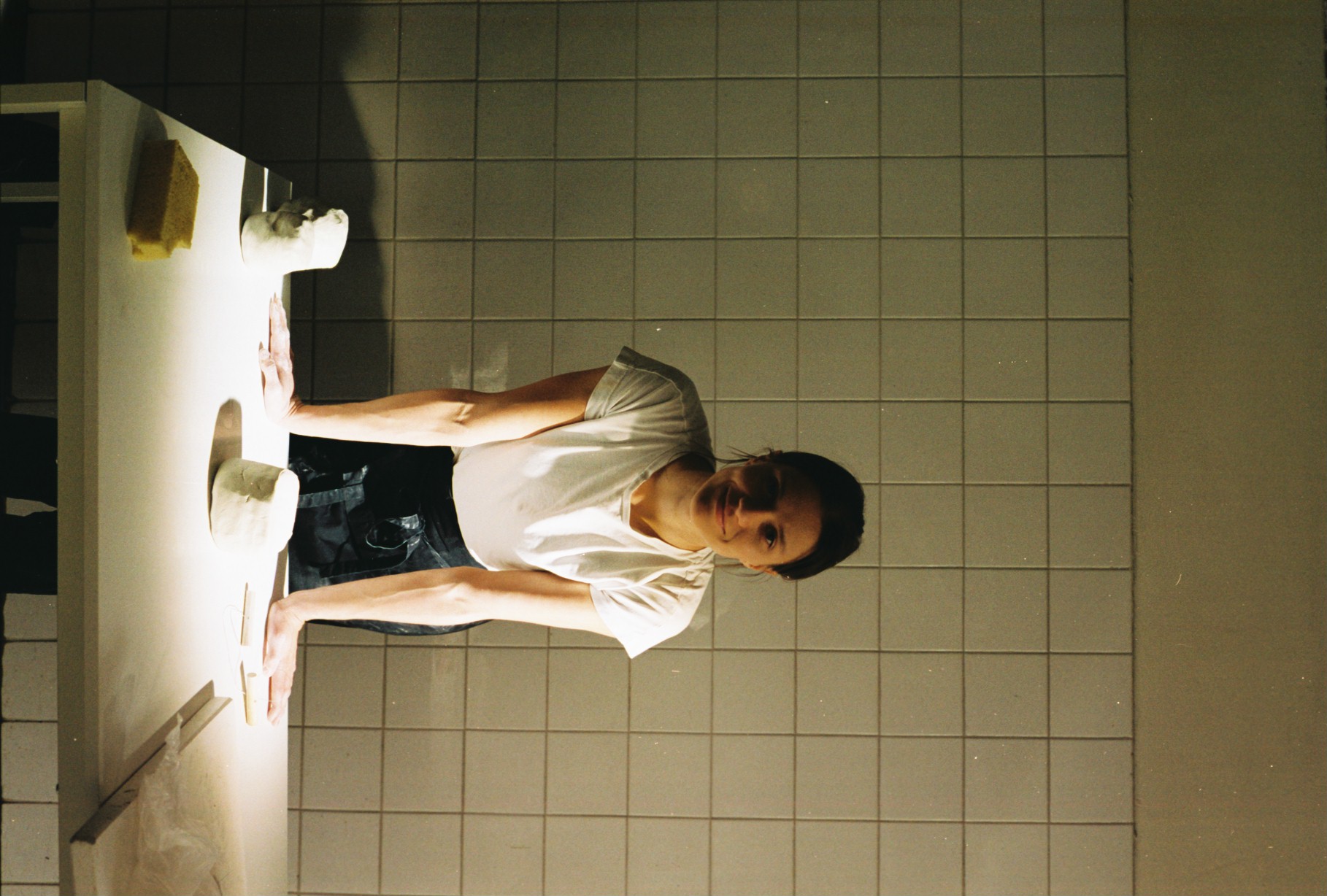
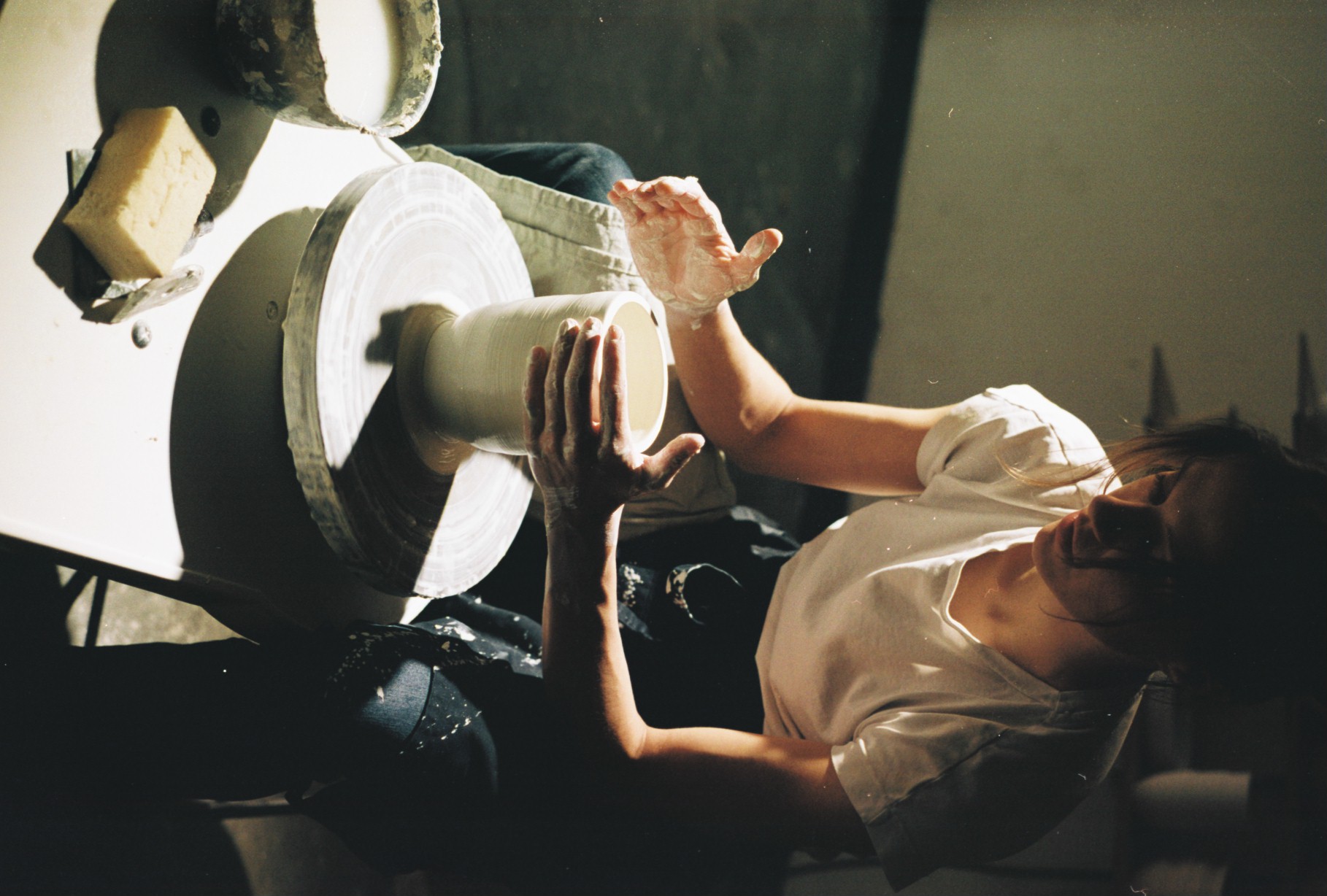
The project investigates how ceramic production in Europe can be reconfigured as a sustainable, socially relevant, and economically viable practice by combining traditional craft with contemporary production methods. It is grounded in an already established foundation of expertise: the initiator holds a master certification in ceramics and has developed extensive skills in both design and production, supported by continuous professional training which makes production in Europe possible and economically relevant.
The concept has already been validated through confirmed collaborations with Humanprojects and NeverAtHome, demonstrating its relevance across both design and artistic/cultural contexts. Initial design developments and prototypes have been realized, and the project builds on an existing network of partners in Vienna and Austria.
The project unfolds along three interconnected strands. First, it develops a model for competitive ceramic production in Europe by integrating craft-based knowledge with scalable techniques such as slip casting, aiming to establish locally rooted yet economically viable manufacturing. Second, it advances an independent design line that positions ceramic objects within the contemporary international design discourse, strengthening their cultural and market presence. Third, it activates ceramics as a social and educational practice through public formats, sharing material knowledge with broader audiences - also working with ceramics as easily approachable artisic method for amateurs.
Expected outcomes include strengthening local knowledge networks and sharing ceramic skills through accessible formats. The project fosters engagement with craft as a collective cultural and social practice. By linking design, making, and public interaction, it positions ceramics as an artistic medium for learning, experimentation, and exchange.
The idea emerged from an ongoing engagement with ceramics as both a material practice and an artistic framework, combined with practical experience in developing and positioning design and art projects within contemporary contexts. A key influence is my role at NeverAtHome (co-founder and current director), an independent art space in Vienna, where the intersection of art, design, social engagement, and economic conditions became central. This experience revealed the need for formats that do not separate artistic practice from its social, cultural, and material contexts, but instead operate across them.
The project is therefore structured around three interconnected pillars. The first pillar is the artistic and cultural dimension, rooted in NeverAtHome as a space for experimentation, discourse, and presentation. It situates the work within a contemporary art context and enables formats that extend beyond object-based production.
The second pillar addresses the social dimension through collaboration (such as already established cooperation with Humainprojects) Here, ceramics function as a medium for participation, accessibility, and exchange, engaging different audiences and exploring how design can operate within socially relevant practices.
The third pillar focuses on material knowledge and local craft-based production. It investigates how traditional ceramic techniques can be combined with contemporary methods to create a form of production that is both locally grounded and relevant within a European context, emphasising the value of craft and material expertise.
By interweaving these three pillars, the project positions ceramics as a medium that connects artistic practice, social engagement, and material production, contributing to a broader understanding of contemporary craft.
Artistic practice
Social inclusion
Community engagement
Local (manufacturing) production
Knowledge exchange
The project addresses sustainability through an integrated approach that links environmental responsibility, social engagement, and cultural production within ceramic practice:
On an environmental level, it promotes local, craft-based production in Europe, reducing reliance on globalised supply chains and supporting smaller-scale, resource-conscious manufacturing. By combining traditional techniques with contemporary production methods, it seeks to develop processes that are durable, efficient, and adaptable, emphasising longevity over mass consumption.
Social sustainability is addressed through participatory formats and collaborations that make material knowledge accessible. Workshops and open production settings foster exchange, collective learning, and new forms of engagement with making, positioning craft as a shared cultural resource rather than a specialised or exclusive field.
Culturally, the project contributes to the revaluation of craft within a contemporary context. It challenges the marginalisation of manual production by positioning ceramics as a relevant artistic and design practice, thereby strengthening cultural diversity and local knowledge systems within Europe.
Economically, the project explores alternative models of production that balance quality, scalability, and local value creation. Rather than prioritising growth, it focuses on resilience and the development of sustainable networks between designers, producers, and cultural actors.
The project contributes to aesthetics by positioning ceramics as a medium that shapes everyday experiences through material quality, form, and use. Aesthetic value is central: the objects are designed to be both visually and functionally enduring, encouraging more conscious consumption. Less consumption, but more meaningful and lasting objects that are valued over time.
By situating the work in real-use environments and local contexts, the project creates connections between people and place. Locally produced ceramics carry traces of their making, embedding material knowledge within everyday life and fostering a sense of belonging and care.
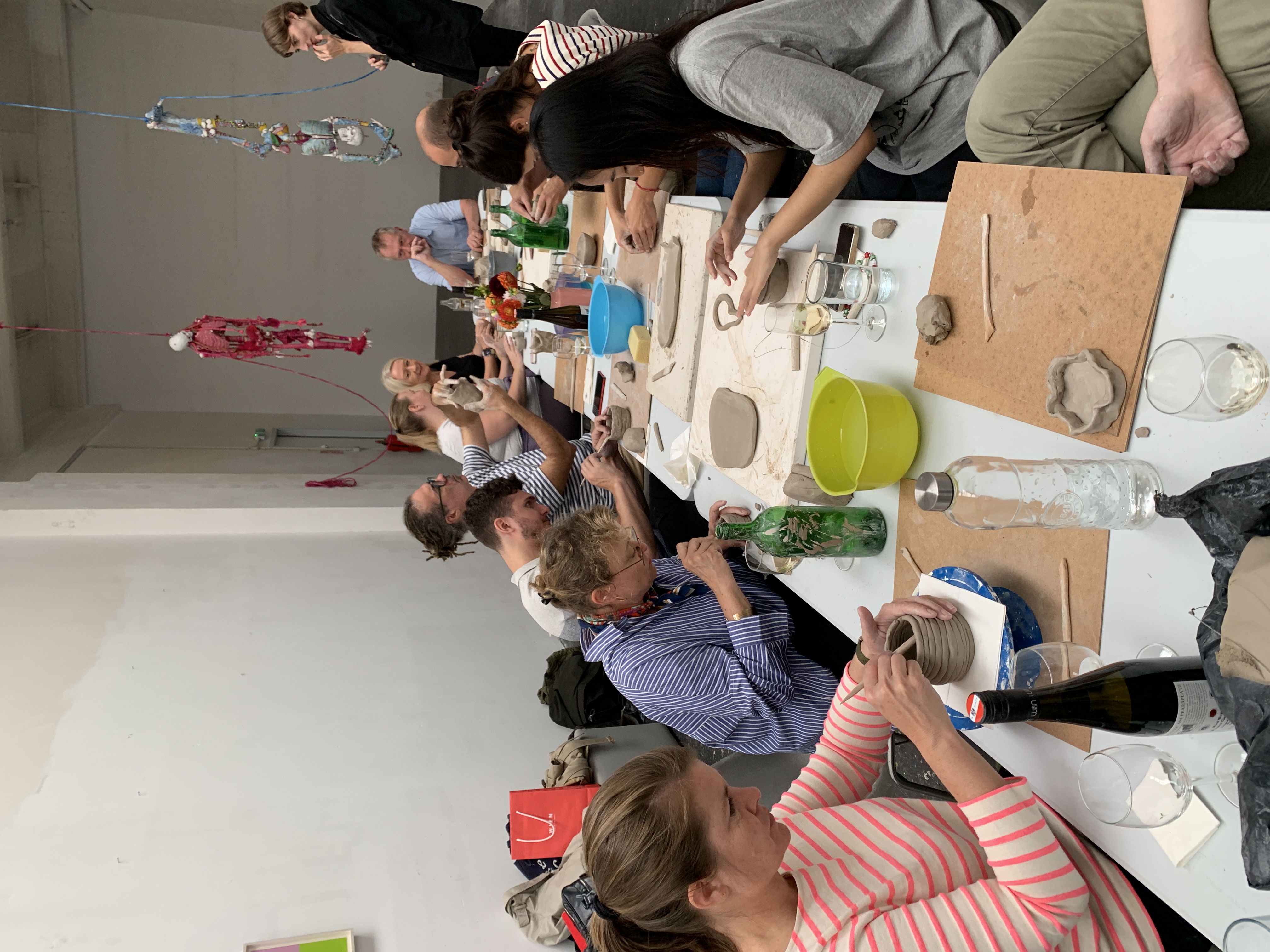
Public formats such as workshops and open production settings extend this approach. They enable participants to engage directly with material processes, to create their own objects, and to experience making as a collective and accessible practice. This not only facilitates knowledge sharing, but also brings communities together through shared creative activity.
The project can be considered exemplary in its integrated understanding of aesthetics: high design quality is not separate from social engagement or local production, but a prerequisite for their relevance. It links beauty, function, and participation, proposing an aesthetic that is grounded in experience, durability, and collective making.
Aesthetics are therefore fundamental to the project, understood as a high quality design approach, as it is precisely this level of quality that makes the work relevant, desirable, and economically viable for people.
The project addresses inclusion by expanding access to both material production and design processes, which are often perceived as exclusive or specialised fields. Through open workshops, public formats, and temporary production settings, it creates low-threshold entry points that enable diverse groups to engage with ceramics, regardless of prior experience or background.
By positioning making as a shared activity, the project fosters collective learning and exchange. Participants are not only recipients but active contributors, engaging in processes of co-creation and knowledge sharing. This approach supports more inclusive models of cultural participation, where expertise is not centralised but distributed and accessible.
Affordability is addressed through the combination of local production and scalable methods, which aim to make well-designed, durable objects more accessible while maintaining high aesthetic quality. At the same time, the project encourages self-production, enabling participants to create and value their own objects, thereby shifting the relationship from passive consumption to active engagement.
Collaborative structures with partners such as Humainprojects and NeverAtHome function as inclusive platforms that bring together different audiences across artistic, social, and design contexts. These partnerships support the development of formats that are responsive to diverse needs and contexts.
Participation and collaboration are fundamental to the concept and shape both its development and implementation. The project is not conceived as an isolated design initiative, but as a process that evolves through continuous exchange with users, collaborators, and audiences.
A key framework for this is NeverAtHome, where, as co-founder and director, I have established an existing platform that enables direct engagement with diverse participants. This context provides the structural and social conditions to test, develop, and implement the project in close relation to its audiences through discussions, events, and collaborative formats.
Workshops and open production settings extend this approach by inviting participants to actively engage in making processes. This not only facilitates knowledge sharing, but also enables participants to contribute to the evolution of the project through their experiences, perspectives, and material experimentation.
As a result, the concept is continuously shaped by its contexts and communities. Participation is not a separate component, but a core working principle that ensures the project remains responsive, accessible, and grounded in collective practice.
Local level (Vienna):
Stakeholders include NeverAtHome as a starting platform, local designers, cultural practitioners, and workshop participants. They can be consideres as already established strong network due to many years of wokring together with them in different formats. Their engagement enables direct testing, public interaction, and context-specific development, ensuring accessibility and strong community integration.
Regional / national level (Austria):
Involvement of Austrian design actors, cultural institutions, and production partners. They contribute to strengthening local craft-based production, connecting design and cultural practice, and supporting sustainable structures within the national context.
European level:
Collaboration with partners and bigger design platforms, galleries, and hospitality contexts across Europe. Their role is to provide broader visibility, enable cross-cultural exchange, and situate the project within an international discourse.
Added value:
The multi-level engagement allows the project to remain locally grounded while being internationally connected. It fosters knowledge exchange, strengthens networks between art, design, and society, and ensures that the project is both context-sensitive and scalable across different environments.
Art and artistic practice:
Framing ceramics as a cultural and discursive medium, including exhibition, spatial presentation, and performative formats.
Design (product and material design):
Development of a contemporary ceramic design language, integrating aesthetics, function, and usability.
Craft and material knowledge:
Ceramic techniques, tacit knowledge, and process-based expertise as a foundation for both production and experimentation.
Social practice / social design:
Participatory formats, community engagement, and collaborative processes that position making as a shared activity.
Cultural management and curatorial practice:
Development of formats, programmes, and platforms (e.g. through never At home) that connect audiences, contexts, and disciplines.
Education and knowledge transfer:
Workshops, open production settings, and informal learning environments that make material knowledge accessible.
Production and manufacturing:
Exploration of hybrid models combining traditional craft with contemporary, scalable production methods within a European context.
A central component is the development and distribution of an independent ceramic design line, positioned within the contemporary (international) design market. Revenue is generated through sales via collaborations with design platforms, galleries, concept stores, and hospitality contexts. These partnerships function not only as distribution channels but as curated environments in which the work is embedded and continuously developed.
In parallel, the project includes commissioned collaborations with partners in gastronomy, cultural spaces, and design initiatives, where site-specific or custom ceramic works are developed. These collaborations provide both financial income and opportunities for applied research and visibility.
Public formats such as workshops, courses, and open production settings represent a further revenue stream while also contributing to the project’s social and educational dimension. These formats are designed to remain accessible. They can be financed through fundings or financially supported through the sales of the designs.
Therefore some public funding schemes and cultural grants can also be relevant for parts of the project.
The combination of design sales, collaborative projects, educational formats, and public funding creates a diversified model that reduces dependency on a single income source. This structure supports both economic resilience and the ability to maintain a strong artistic and social focus.
Methodological framework:
The combination of artistic practice, social engagement, and craft-based production can be transferred as a model to other contexts, enabling locally adapted formats that connect design, community, and material knowledge.
Participatory formats:
Workshops, open production settings, and collaborative making processes can be replicated in different cultural or social environments, engaging diverse groups and fostering local communities.
Knowledge-sharing approaches:
The dissemination of material knowledge and process-based learning can be adapted to educational, cultural, or community-based settings across different regions.
Hybrid production model:
The integration of traditional craft with contemporary production methods (e.g. slip casting) can be applied in other local production contexts to support small-scale, sustainable manufacturing.
Collaborative network structure:
Partnerships with cultural spaces, design platforms, and social initiatives can be transferred and expanded to other cities or regions, creating interconnected networks across Europe.
Design approach:
The development of a design language that links aesthetics, function, and material awareness can be adapted to different cultural contexts while maintaining a strong local identity.
Production and sales of design objects:
Development, production, and active distribution of the ceramic design line through collaborations with design platforms, galleries, and hospitality contexts, generating revenue and increasing visibility.
Participation in European design events:
Presentation of the work at international platforms such as Dutch Design Week and other relevant fairs to expand networks and reach new audiences.
Workshops and public formats:
Realisation of approximately 5–10 workshops in collaboration with NeverAtHome, focusing on knowledge sharing, material engagement, and accessible making.
Socially oriented collaborations:
Development of projects addressing health and social aspects through design, for example in collaboration with partners exploring ceramic objects adapted to specific user needs (e.g. ergonomically designed cups for people with rheumatic conditions).
Expansion of collaborative network:
Initiation of further partnerships with cultural spaces, social initiatives, and design actors to test ceramics in diverse applied contexts.
Communication and dissemination:
Ongoing documentation and communication of processes and results to strengthen visibility, share knowledge, and engage wider audiences.