Strengthening Local Democracy and Inclusion
Placemaking for Socio-Ecological Justice
Reclaiming Public Space through Participatory Placemaking: A Democratic and Inclusive Transformation
The Socio-Ecological Forum Skopje 2025 transforms a neglected yet symbolically rich public space into a living platform for democracy, inclusion, and collective action. Through participatory placemaking, the project brings together local citizens, young people, artists, and participants from across Southeast Europe to co-create visions for a more just and sustainable city.
Combining walking tours, storytelling, artistic expression, and interactive tools—such as illustration, mapping, and public
Combining walking tours, storytelling, artistic expression, and interactive tools—such as illustration, mapping, and public
North Macedonia
Local
Centar area of Skopje, the space in front of Cinema Kultura.
Mainly urban
It involves other types of transformations (soft investment)
Yes
2025-12-01
No
No
No
Organisation
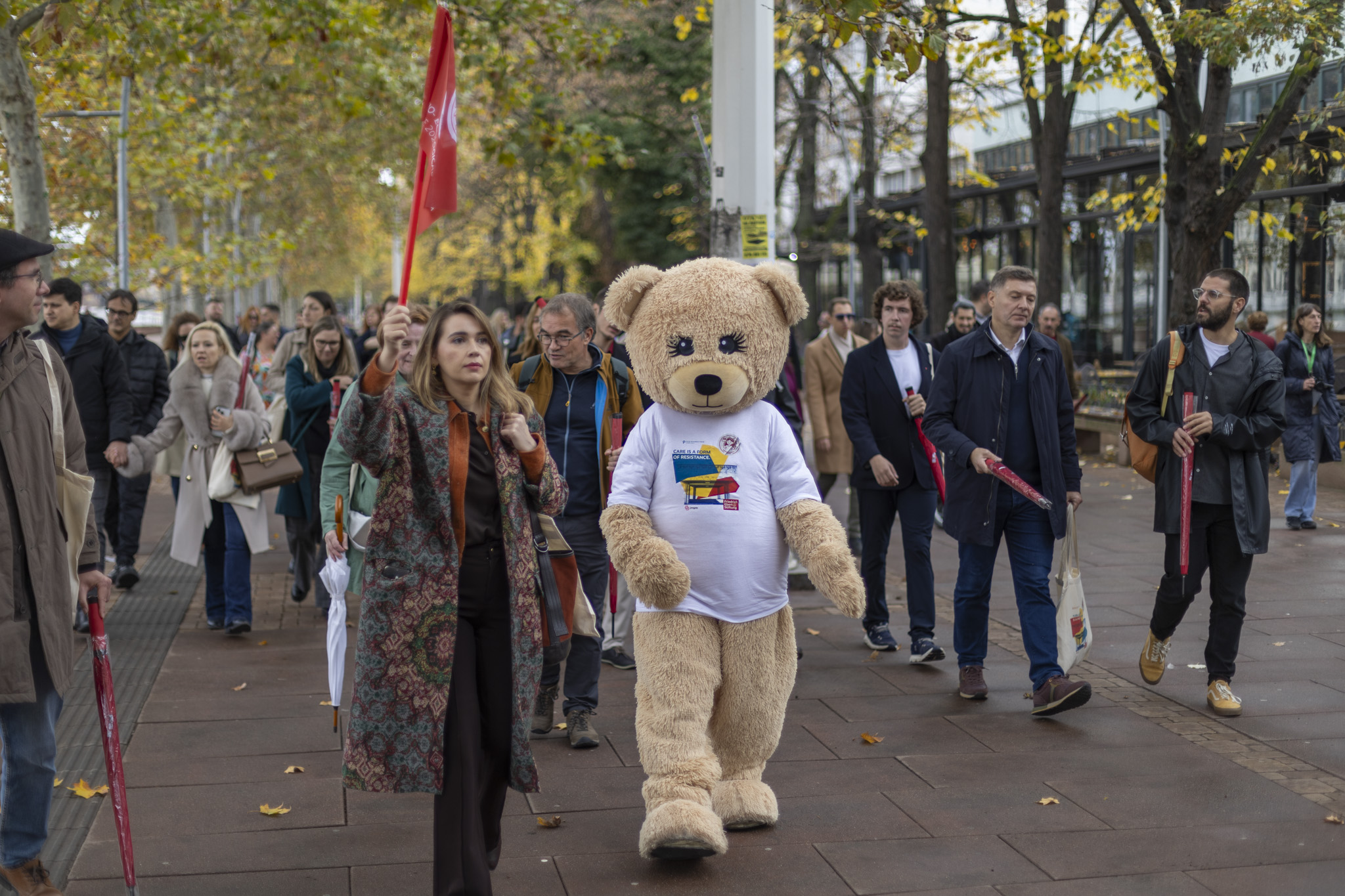
The Socio-Ecological Forum Skopje 2025 transformed a neglected yet symbolically rich urban space in central Skopje into a participatory platform for democracy, inclusion, and socio-ecological action. Bringing together young people from North Macedonia, local citizens, artists, illustrators, filmmakers, and participants from across Southeast Europe—including Serbia, Croatia, Bulgaria, Romania, Greece, Bosnia and Herzegovina, and Kosovo—the project fostered cross-border knowledge exchange and dialogue. Implemented in collaboration with the Friedrich-Ebert-Stiftung and the local Associations, the Forum used participatory placemaking methods combining walking tours, storytelling, interactive mapping, visual illustration, surveys, and creative workshops, engaging both participants and the surrounding public.
Already achieved results include activation of the central urban site through temporary artistic installations and greenery, engagement of 50+ participants alongside hundreds of local residents, and the generation of actionable proposals addressing social inclusion, energy efficiency, and heat-resilient urban design. Collaboration between civil society, NGOs, regional policymakers, and institutional actors—including the German Ambassador—strengthened local networks and policy dialogue. Documentation through maps, illustrations, and surveys created a knowledge repository for replication.
Long-term impacts include a replicable methodology for democratic, inclusive, and climate-aware placemaking; increased civic engagement and sense of belonging; greater awareness of public space as a social, cultural, and ecological resource; and support for a just green transition. By integrating art, culture, and community participation with urban planning and socio-ecological analysis, the Forum demonstrates how cities can co-create public spaces that are inclusive, sustainable, and beautiful while connecting local action to regional and European networks.
The Socio-Ecological Forum Skopje 2025 began from the recognition that many central public spaces in Skopje were underused, fragmented, and disconnected from local communities. The project aimed to reclaim the space between Cinema Kultura and the ARM House, turning it into a platform for democracy, inclusion, and socio-ecological engagement. Developed in collaboration with the Friedrich-Ebert-Stiftung and the local Association, such as Progres Institute for Social Democracy and ACR GRADOT UBAV, the Forum brought together young people from North Macedonia, local residents, artists, illustrators, filmmakers, and participants from Southeast Europe, including Serbia, Croatia, Bulgaria, Romania, Greece, Bosnia and Herzegovina, and Kosovo.
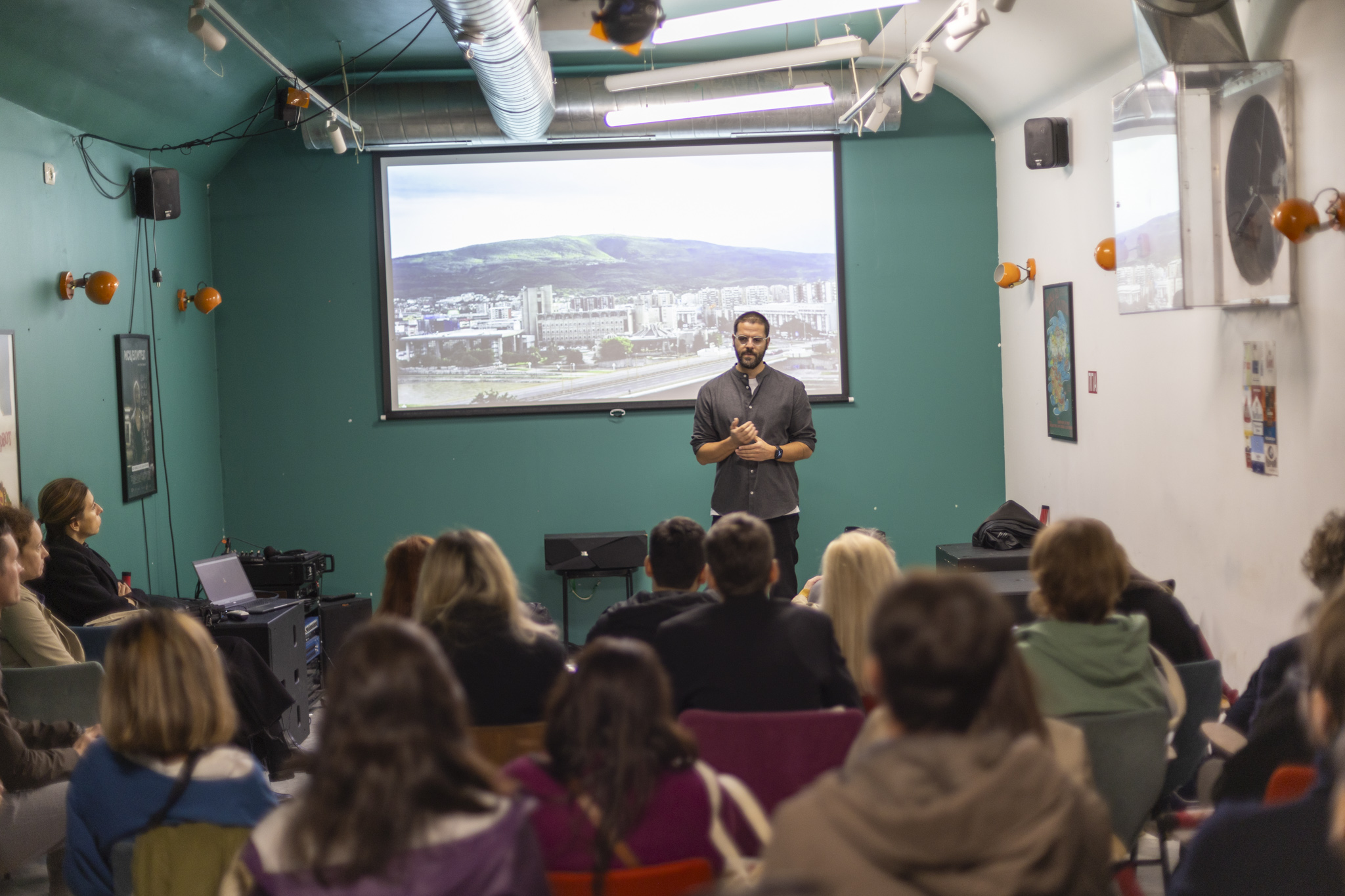
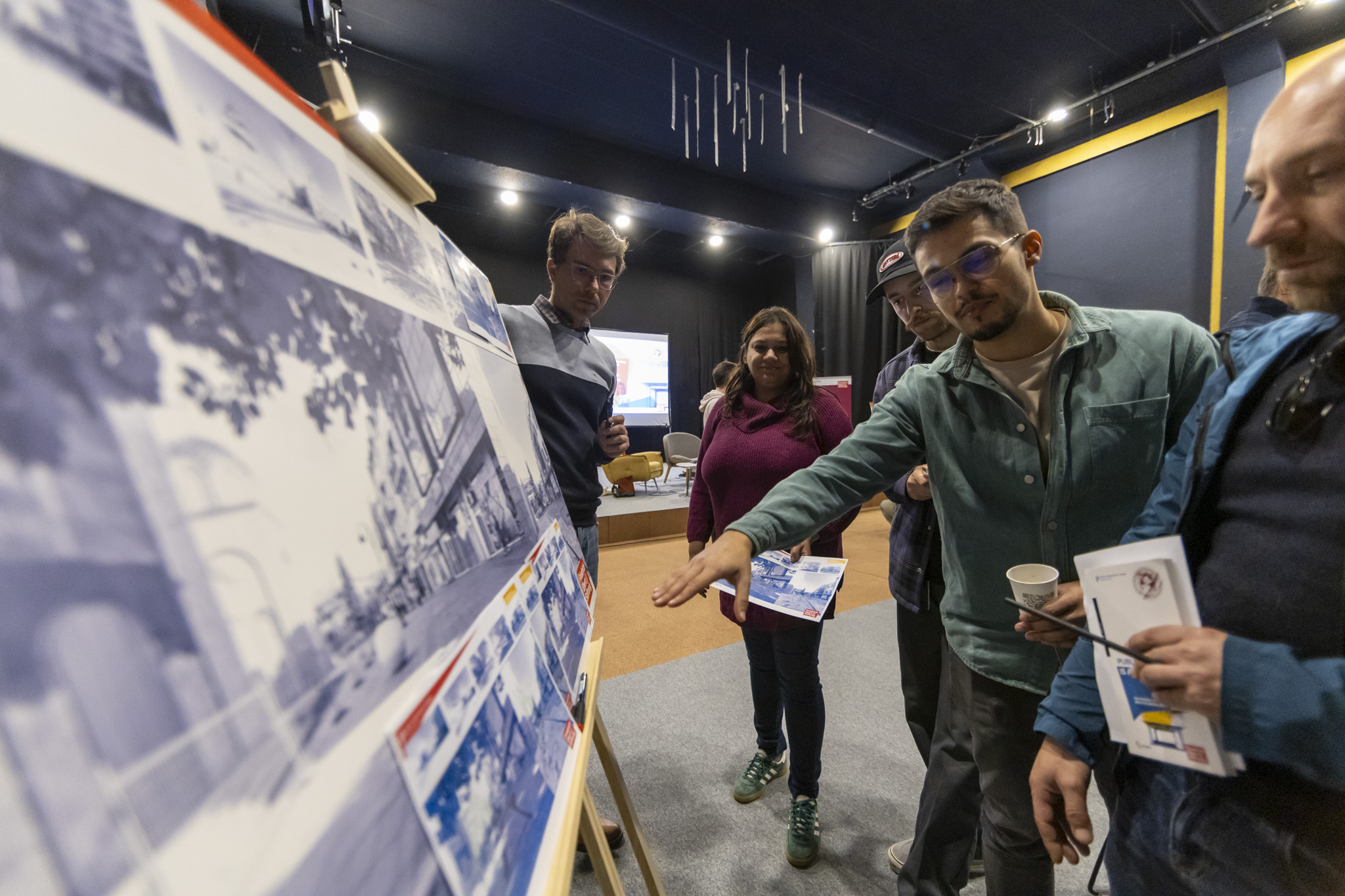
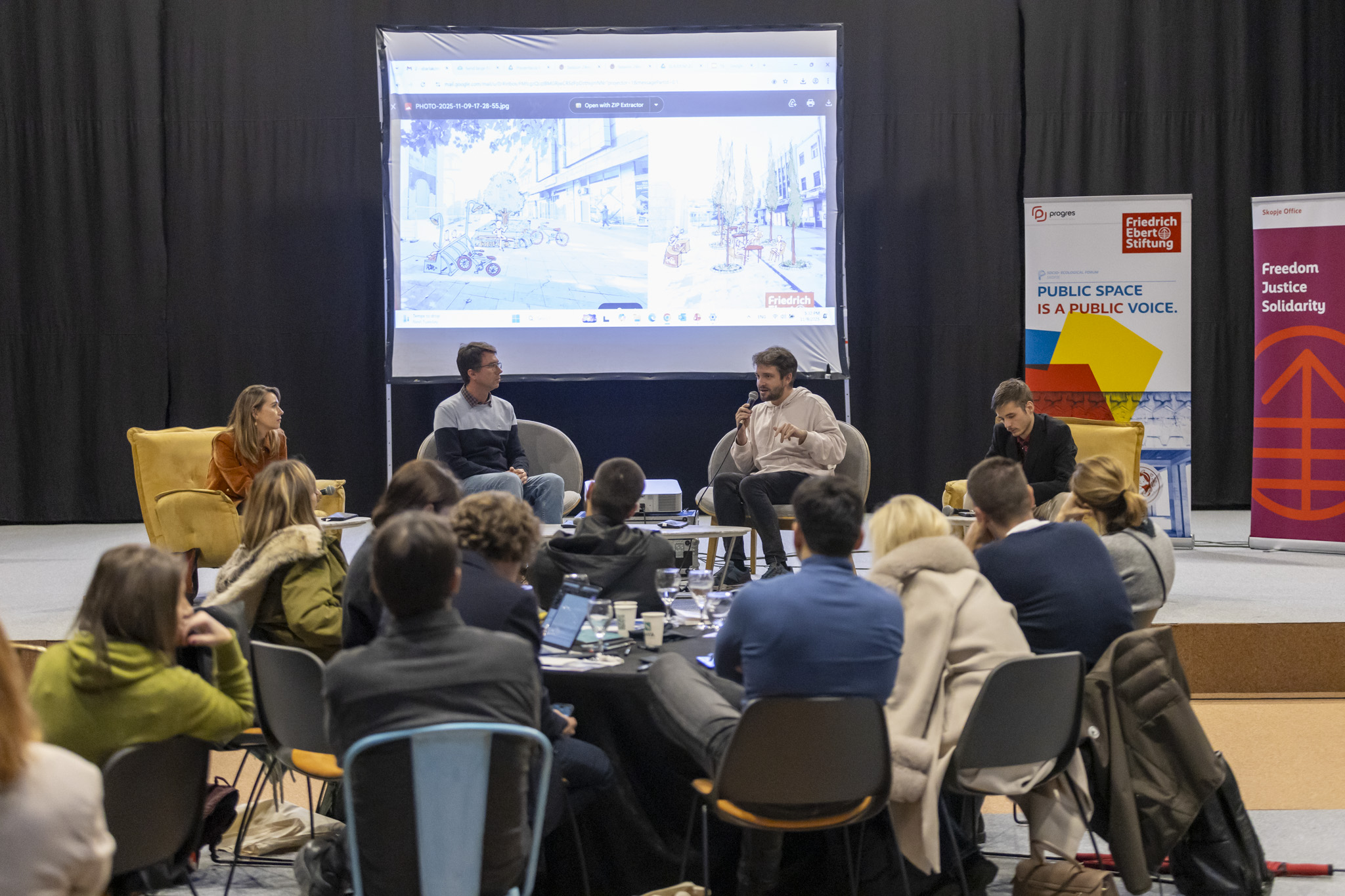
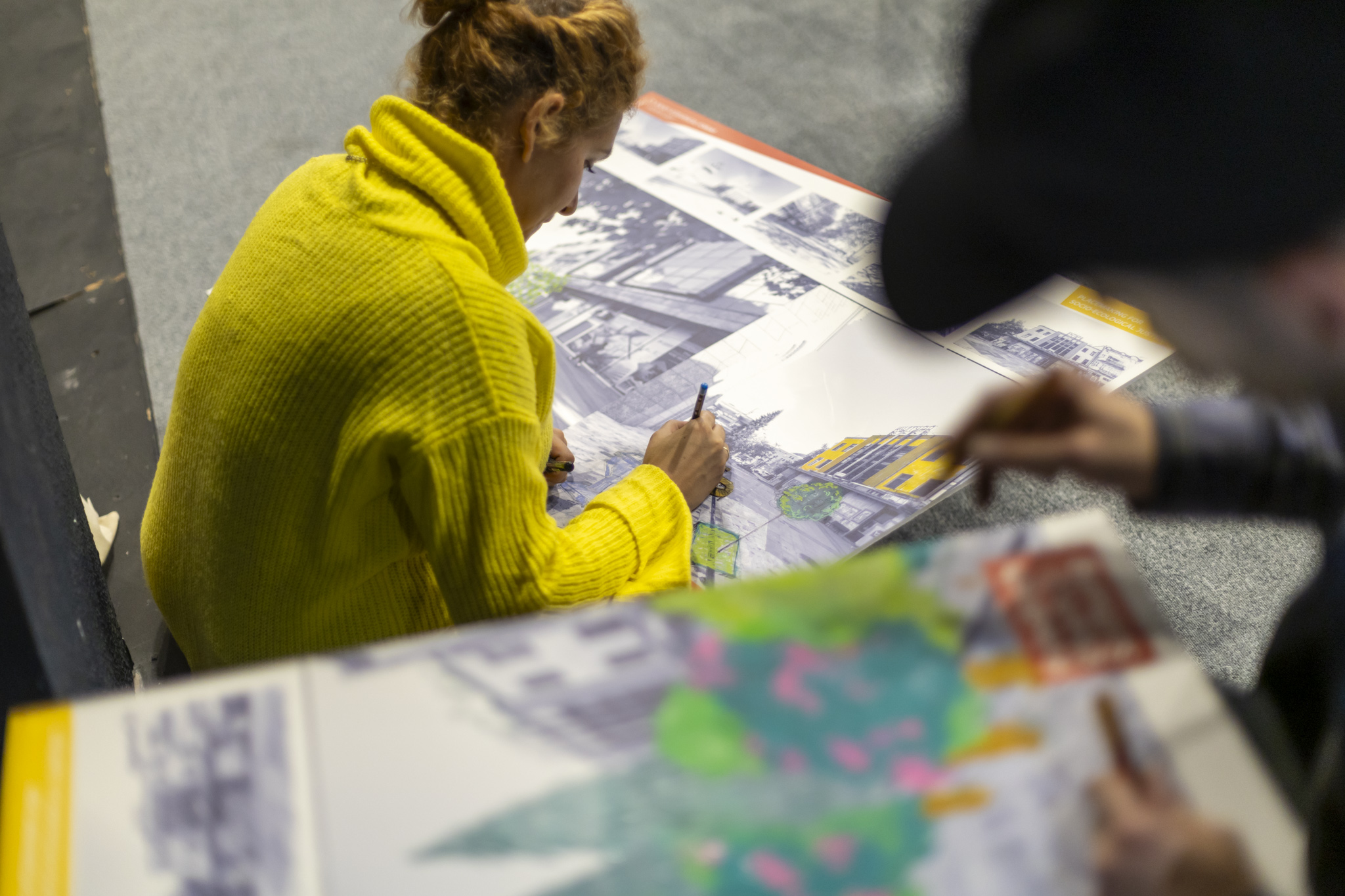
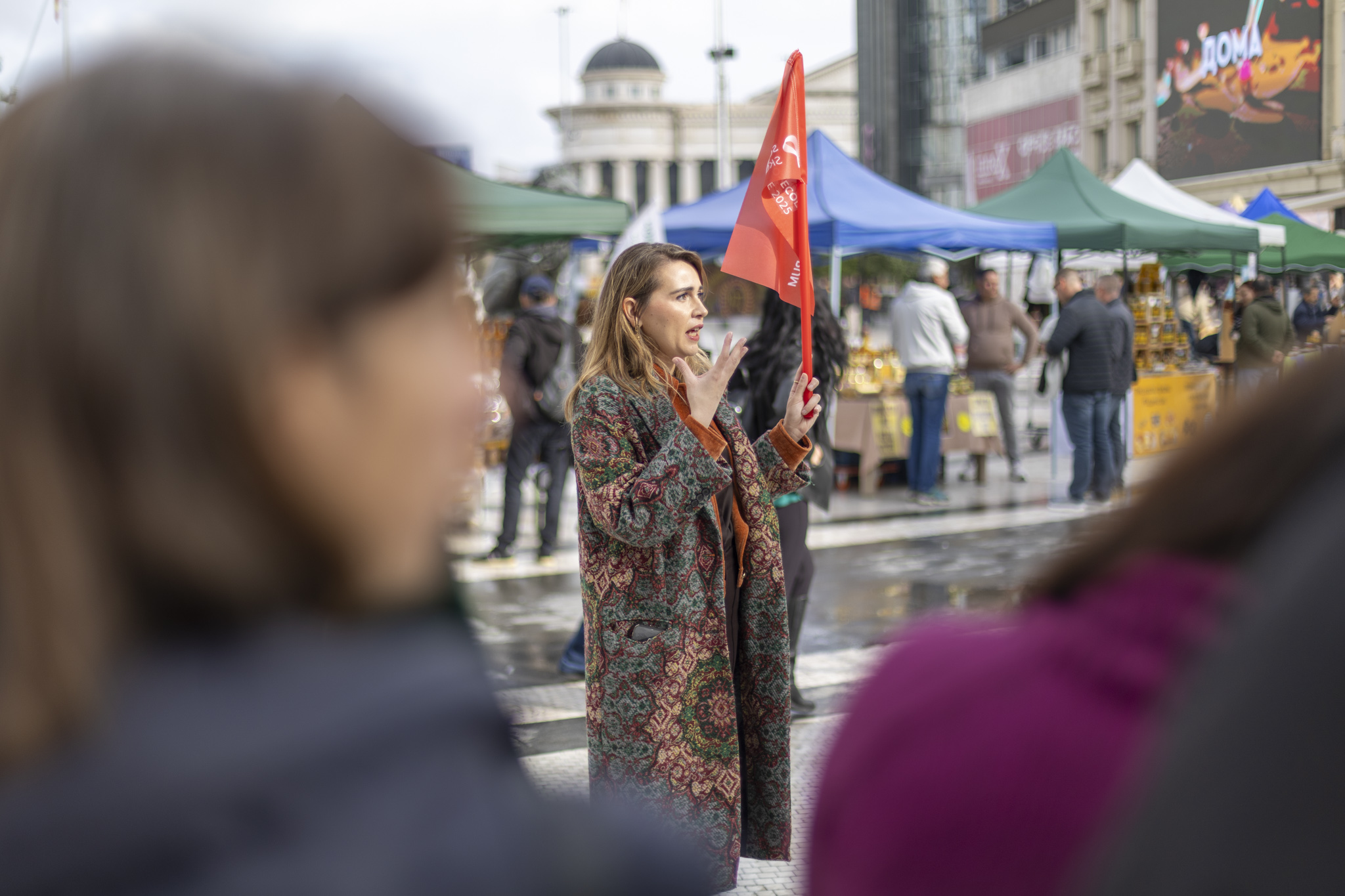
The implementation followed a three-phase participatory approach. First, participants explored the site through walking tours, storytelling, and sensory mapping, identifying social, cultural, and ecological layers. Second, interdisciplinary groups co-created placemaking interventions addressing social inclusion, energy efficiency, and climate adaptation, using interactive tools such as collaborative drawing, digital and physical maps, surveys, and artistic expression. Third, a public presentation and discussion engaged the surrounding community, NGOs, regional policymakers, and institutional actors, including the German Ambassador, ensuring transparency and inclusivity. Temporary installations, greenery activation, and visual storytelling transformed the site into a vibrant civic space.
Through documentation of maps, illustrations, surveys, and narrative reflections, the project created a replicable methodology for democratic and inclusive placemaking. It strengthened civic engagement, fostered a sense of belonging, and demonstrated how participatory, creative, and cross-border approaches can generate lasting socio-ecological and cultural impacts in urban environments.
Participatory Placemaking
Social Inclusion
Democracy & Civic Engagement
Artistic & Cultural Practices
Climate-Resilient Urban Spaces
The Socio-Ecological Forum Skopje 2025 addresses sustainability by integrating environmental, social, cultural, and economic dimensions into participatory placemaking. Environmentally, the project revitalized a neglected urban space with temporary greenery, shading, and micro-interventions, reducing heat exposure and improving local climate resilience. Socially, it fostered inclusion by engaging local residents, young people, artists, and regional participants in co-creating the future of the space. Culturally, storytelling, illustration, filmmaking, and workshops preserved and celebrated local memory, identity, and collective narratives. Economically, low-cost, replicable interventions maximized social impact while minimizing resources.
The project exemplifies sustainability by combining tangible environmental improvements with long-term civic empowerment. Interactive mapping, surveys, and creative installations documented social and ecological needs, creating a knowledge base for replication. Collaboration with NGOs, policymakers, and the German Embassy strengthened networks that reinforce community resilience. By linking participation, cultural continuity, and socially equitable urban development, the Forum offers a holistic, multi-dimensional model for sustainable urban futures, demonstrating how public spaces can be inclusive, resilient, and culturally vibrant.
The project exemplifies sustainability by combining tangible environmental improvements with long-term civic empowerment. Interactive mapping, surveys, and creative installations documented social and ecological needs, creating a knowledge base for replication. Collaboration with NGOs, policymakers, and the German Embassy strengthened networks that reinforce community resilience. By linking participation, cultural continuity, and socially equitable urban development, the Forum offers a holistic, multi-dimensional model for sustainable urban futures, demonstrating how public spaces can be inclusive, resilient, and culturally vibrant.
The Socio-Ecological Forum Skopje 2025 contributes to aesthetics by transforming a neglected urban space into a visually, socially, and experientially engaging environment. Through artistic interventions, illustrative mapping, storytelling, film, and creative workshops, the project turned a previously overlooked area between Cinema Kultura and the ARM House into a vibrant, participatory canvas. Temporary installations, greenery, and micro-design interventions enhanced the sensory quality of the space, creating moments of beauty, play, and reflection in everyday urban life.
Beyond visual appeal, the project fostered a sense of belonging and care by involving local citizens, young people, and regional participants in co-creation, making them active stewards of the space. The process encouraged people to observe, reflect, and engage with the history, identity, and social fabric of the place, linking aesthetic experience with collective memory and civic responsibility.
The Forum exemplifies aesthetics by showing that beauty in public space is inseparable from participation, inclusivity, and cultural expression. By combining art, design, and community engagement, the project created an accessible and meaningful urban environment that is not only visually attractive but also emotionally and socially resonant. Its methods are replicable, demonstrating how aesthetic interventions can enhance everyday urban life, strengthen social cohesion, and foster lasting care and pride for shared public spaces.
The Socio-Ecological Forum Skopje 2025 addresses inclusion by actively engaging diverse groups in the co-creation of public space. The project was designed to be fully accessible and affordable, inviting local citizens, young people, artists, illustrators, and filmmakers, alongside participants from Southeast Europe, to collaboratively explore and transform a neglected urban site between Cinema Kultura and the ARM House. By combining walking tours, storytelling, interactive mapping, surveys, and collaborative workshops, the Forum ensured that both formal participants and passers-by could contribute, making the process open to all regardless of age, background, or expertise.
Inclusive governance was embedded in the project’s structure, as decisions and ideas emerged through dialogue between residents, civil society actors, NGOs, regional policymakers, and institutional partners, including the German Ambassador to North Macedonia. The use of creative methods—illustration, visual mapping, film, and interactive boards—enabled non-experts to participate meaningfully, embodying design-for-all principles. The project also addressed affordability and accessibility by implementing low-cost, temporary interventions that improved the public space without creating barriers to participation.
The Forum exemplifies inclusion by creating a democratic urban commons, where diverse voices, perspectives, and experiences are equally valued. It demonstrates how participatory, cross-disciplinary, and cross-regional approaches can foster equity, social cohesion, and shared ownership of public space. By connecting local communities with regional participants, civil society, and policymakers, the project provides a replicable model for inclusive urban transformation that ensures everyone can access, shape, and benefit from public spaces, reinforcing both social justice and civic empowerment.
The Socio-Ecological Forum Skopje 2025 was designed around participatory principles, placing citizens, communities, and civil society organizations at the core of every stage. Local residents, young people, artists, illustrators, and filmmakers were actively involved in exploring, observing, and reimagining the space between Cinema Kultura and the ARM House. Civil society organizations, including local NGOs and regional networks, participated as facilitators, knowledge providers, and mentors, ensuring that diverse perspectives informed the process.
Participation took multiple forms: walking tours guided by local voices, storytelling, sensory mapping, collaborative drawing and illustration, interactive surveys, and co-design workshops. These activities enabled both direct participants and the surrounding public to contribute ideas, identify challenges, and co-create solutions. Their involvement shaped tangible outcomes, including proposals for social inclusion, climate-resilient design, and energy efficiency interventions. Temporary artistic installations and greenery interventions reflected participants’ input, transforming the space into a vibrant, shared civic environment.
The impact of participatory engagement was significant. Citizens and communities gained a sense of ownership, care, and belonging, while civil society actors strengthened networks with policymakers and institutional partners, including the German Ambassador to North Macedonia. The project demonstrated that meaningful participation leads to more socially responsive, inclusive, and contextually grounded urban design. By embedding co-creation at every stage, the Forum offers a replicable model for participatory placemaking, showing how collective knowledge and collaborative action can produce lasting social, cultural, and environmental impact.
The Socio-Ecological Forum Skopje 2025 applied a multilevel governance approach by engaging stakeholders across local, regional, national, and European levels throughout the project. At the local level, residents, youth, and community organizations were central to exploring the urban site, participating in walking tours, storytelling, mapping, and co-creation workshops, ensuring that interventions were rooted in everyday experiences and community needs. Local policymakers and municipal representatives supported coordination, logistical planning, and connections with urban planning authorities, helping to align the activities with broader city priorities.
At the regional level, participants from Southeast Europe—including Serbia, Croatia, Bulgaria, Romania, Greece, Bosnia and Herzegovina, and Kosovo—shared knowledge, creative approaches, and best practices. Regional NGOs, civil society networks, and research institutions facilitated co-creation, mentoring, and cross-border learning, strengthening collaboration and dialogue between communities. At the national and European level, institutional partners such as the Friedrich-Ebert-Stiftung, the Progres Institute for Social Democracy, and the German Embassy in North Macedonia provided strategic guidance, policy perspectives, and visibility, connecting local initiatives to wider European socio-ecological agendas.
This multilevel engagement added significant value by combining local knowledge, regional expertise, and European policy insights, ensuring that interventions were contextually grounded, socially relevant, and scalable. The collaboration enhanced legitimacy, promoted inclusive decision-making, and strengthened networks for ongoing civic engagement and urban transformation. By linking citizens, civil society, and institutional actors across levels, the Forum exemplifies how multilevel governance can support participatory, inclusive, and resilient urban development.
The Socio-Ecological Forum Skopje 2025 applied a transdisciplinary approach by integrating multiple knowledge fields to address complex socio-ecological challenges in urban spaces. Architecture and urban design guided the spatial analysis and transformation of the neglected area between Cinema Kultura and the ARM House, ensuring that interventions were contextually appropriate and functional. Social sciences, including urban sociology and political science, informed participatory methods, community engagement, and governance dynamics. Environmental sciences provided insights on climate adaptation, heat-resilient urban design, and ecological interventions.
Arts and cultural practices—illustration, storytelling, filmmaking, and creative workshops—enabled participants to express local narratives and collective memory, turning abstract concepts into tangible interventions. Education and facilitation methodologies supported capacity building among young participants and local residents, while digital tools, including interactive mapping and collaborative boards, facilitated co-creation, visualization, and reflection.
By combining architecture, social sciences, environmental knowledge, arts, education, and digital technologies, the Forum fostered holistic, context-sensitive, and socially inclusive urban interventions. This transdisciplinary integration enabled creative, participatory solutions that are not only sustainable and functional but also culturally and aesthetically meaningful, providing a replicable model for urban transformation across different European contexts.
The Socio-Ecological Forum Skopje 2025 is designed as a financially sustainable and replicable project by combining public funding, institutional partnerships, and low-cost participatory methods. The primary funding sources include contributions from the Friedrich-Ebert-Stiftung, the Progres Institute for Social Democracy, and municipal support, which cover operational costs, facilitation, materials, and event logistics. Low-cost, temporary interventions such as greenery, micro-installations, and digital mapping tools ensure that the project delivers high social and environmental impact without significant capital expenditure.
In addition, the project leverages in-kind contributions from local artists, cultural institutions, civil society organizations, and regional participants, reducing the need for direct financial resources while enriching content and engagement. Knowledge products generated through the project—maps, illustrations, surveys, and documented methodologies—can be used for training, workshops, and consultancy, creating opportunities for modest revenue streams that support replication and scaling in other cities. Community engagement and public visibility also open possibilities for sponsorship, collaborative grants, and crowdfunding initiatives for future editions, while maintaining the accessibility and affordability of participation.
By combining public funding, in-kind support, and low-cost creative interventions, the Forum demonstrates a financially sustainable model that balances resource efficiency with high social, cultural, and environmental impact. Its methodology is designed to be replicable, adaptable, and scalable, allowing future implementations to maintain financial viability while fostering civic engagement, inclusive placemaking, and climate-resilient urban transformation across diverse European contexts.
The Socio-Ecological Forum Skopje 2025 demonstrates strong potential for scalability through its methodology, tools, and participatory processes, which can be adapted and replicated in other urban contexts, communities, and regions. Core elements that are transferable include the three-phase approach of understanding place, co-creating interventions, and public presentation, which provides a structured yet flexible framework for engaging diverse stakeholders. Participatory methods such as walking tours, storytelling, sensory mapping, interactive surveys, collaborative drawing, and visual illustration can be applied in any public space to document local needs, experiences, and aspirations.
The integration of arts, culture, and digital tools—including film, illustration, interactive mapping, and collaborative boards—offers replicable techniques for inclusive engagement, allowing non-experts to meaningfully contribute to urban planning and placemaking. Temporary, low-cost interventions such as greenery, shading, and small installations demonstrate how environmental and social improvements can be achieved with minimal resources while maximizing impact. Cross-border collaboration, involving regional participants and civil society actors, provides a model for knowledge exchange and co-learning across contexts.
Key learnings, including strategies for fostering social inclusion, civic participation, climate-resilient design, and community ownership of public spaces, can inform future projects in different cities and countries. By combining participatory design, interdisciplinary expertise, and creative engagement, the Forum offers a replicable and adaptable model for sustainable urban transformation that enhances social cohesion, cultural vitality, and environmental resilience in diverse European contexts.