Enhancing Circularity, Sustainability, and Innovation
Bega Echoes.Triple Observatory
BEGA ECHOES: A Tri-Partite Observatory for Urban Rewilding
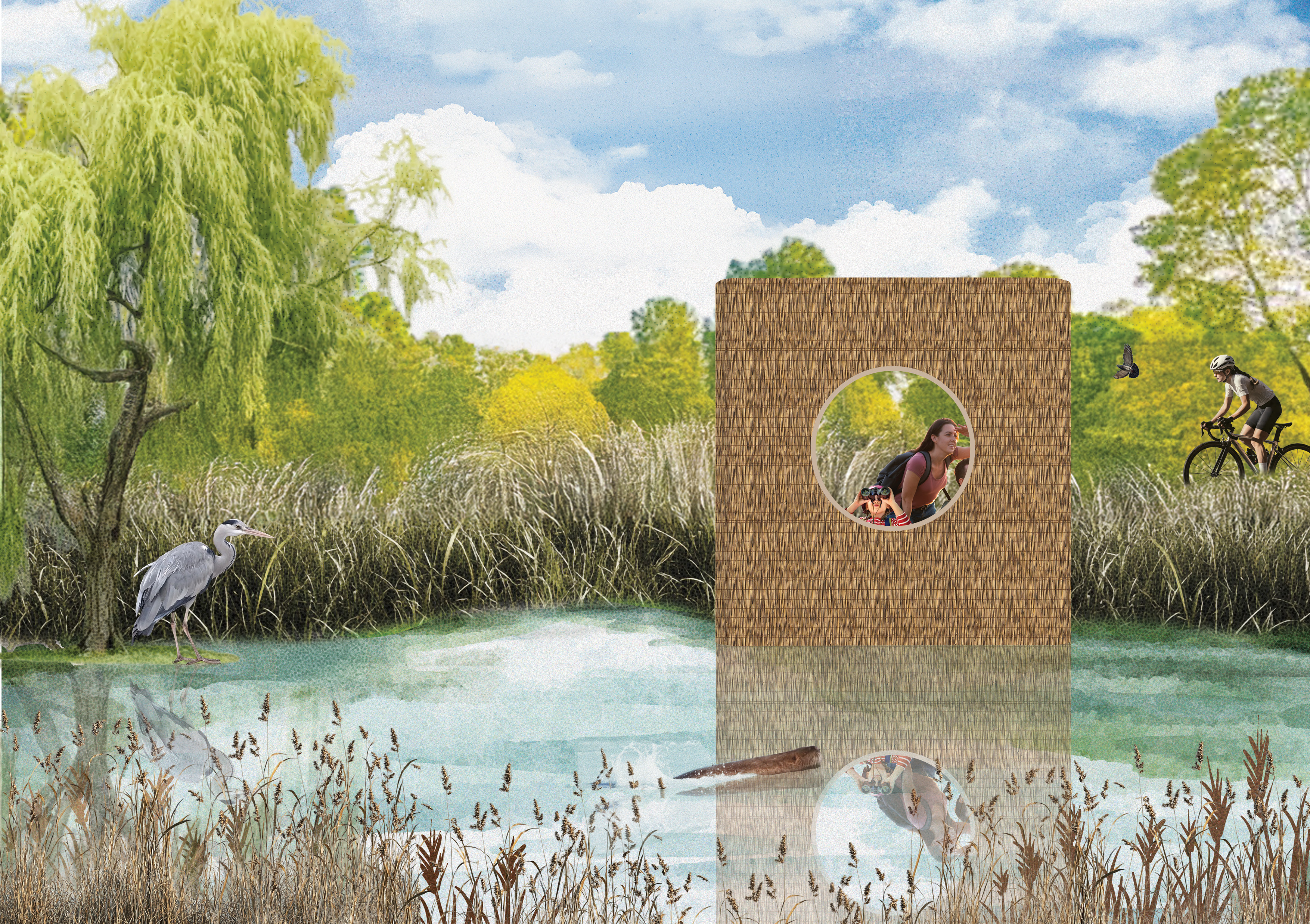
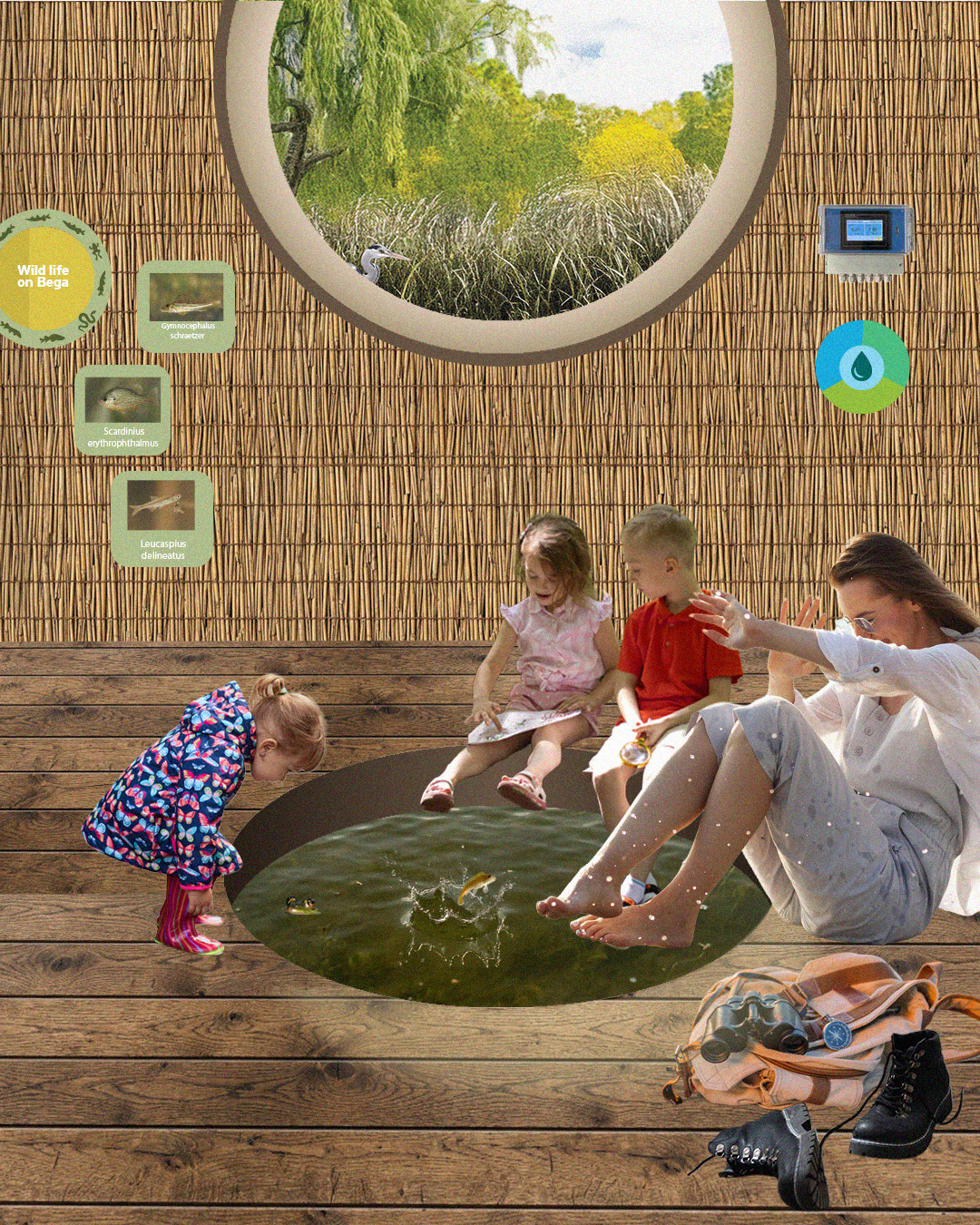
Bega Echoes reclaims Timișoara’s blue highway as a living classroom. Three reed observatories (upstream, urban, downstream) offer sensory sanctuary. A circular floor opening invites direct water contact, often for the first time. Real-time sensors ensure safety, turning citizens into active monitors. If pollution peaks, data becomes evidence for civic accountability. Upcycling local reed via workshops turns waste into regenerative skin.An architectural interface for empathy and water resilience.
Romania
Local
The project spans the entire Bega Canal ecological corridor, strategically crossing the administrative limit of Timișoara to link urban and peri-urban areas. It covers three distinct pilot zones: the natural upstream (Ghiroda), the dense urban core (Iosefin/Central), and the industrial downstream area. This spatial strategy ensures a systemic monitoring of the river’s health and a diverse social reconnection across the city’s different functional layers.
It addresses urban-rural linkages
It involves a physical transformation of the built environment (hard investment)
Early concept
No
No
Yes
Individual
Bega Echoes is a systemic mechanism created to restore the ecological and social fabric of urban rivers. It specifically addresses the historical challenges of Eastern Europe and Romania. For the last century, while Western European rivers underwent restoration, rivers in the CEE region were often treated as industrial waste sites. This neglect destroyed native flora and fauna, especially in urban centers. This project acts as an agent of change, shifting the river’s status from a hidden drain to a living classroom.
The strategy uses a network of three modular, zero-trace observatories located upstream, in the urban core, and downstream. Built from locally upcycled reed and timber, each structure acts as a sensory filter. The thatched skin provides an acoustic sanctuary to isolate urban noise. A circular floor opening invites direct water contact. For many citizens, this will be the first time they physically touch the water they have seen from bridges for decades. This tactile reconnection is a vital step toward collective healing and environmental awareness.
Real-time sensors signal water safety via light cues. If pollution peaks, the data becomes evidence for civic accountability, directly challenging the legacy of river neglect. Designed as a modular kit, the project is highly replicable across Romania and Eastern Europe. It offers a low-cost tool for any city facing similar ecological degradation, allowing users to reconnect with their liquid heart through a shared mechanism of change.
Expected Results:
1.Replicability: A scalable model for Eastern European urban rivers, providing a standardized yet vernacular solution for community-led restoration.
2.Social Impact: Shifting civic perception from apathy to active stewardship through the first-touch experience.
3.Environmental: Promoting urban rewilding by creating safe observation zones for native species.
4.Circularity: Converting river maintenance waste into architecture through community workshops.
The story began with a decade of observation while living and studying in Timișoara. We noticed a profound irony: we live in a city defined by its river, yet citizens are physically and psychologically isolated from it. Due to historical canalization, the Bega flows nearly three meters below the pedestrian level. This vertical gap creates a permanent distance. The river is perceived as a sunken trench or a dangerous, polluted entity rather than a vital part of the city’s life. Most residents have never touched the water, a lack of intimacy that breeds apathy. Our concept was born from the need to break this vertical barrier and democratize access for everyone, including the elderly and people with disabilities who currently face steep, inaccessible banks.
The cube's geometry is a functional response to this dual need for connection and protection. In the wilder sections of the Bega, we designed the structure to act as a protective hide. It allows people to observe the returning wildlife, such as otters and rare birds, without disturbing their habitat. By placing circular portholes on each side, the pavilion becomes a multi-directional periscope. One opening frames the sky and riparian birds, another focuses on the riverbank fauna, while the floor aperture connects the occupant directly to the water. This design ensures that in wilderness zones, the observer remains a silent guest. In urban areas, the thatched volume provides a sensory sanctuary from the city’s chaos.
We wanted to design a mechanism that acts as a downward bridge to bring the water level up to the human heart. The integration of real-time sensors provides the psychological trust needed to re-establish this relationship. If the sensor indicates safety, the fear of contamination disappears. This project is a response to our ten-year observation: a tool to transform every citizen from a distant spectator into an empowered guardian of our shared liquid heritage.
Water Resilience
Nature-based Solutions
Social Inclusion
Urban Rewilding
Circular Economy
Our approach to sustainability is regenerative, moving beyond passive conservation to active restoration. We prioritize circularity by using local reed harvested from the Bega river's routine maintenance as the primary building envelope. This process transforms organic waste into a high-performance architectural skin through community-led craft. The timber structure is designed for a zero-trace lifecycle, utilizing modular joinery that allows for full disassembly and composting at the end of its functional life, leaving no carbon footprint or industrial residue on the riverbanks.
The core innovation lies in the phytoremediation garden integrated beneath each platform. This living filter uses native aquatic plants to actively absorb nitrates and phosphates, turning the observatory into a functional organ for the river. While the public observes the water, the pavilion heals it. This nature-based solution is paired with low-power, real-time sensors that monitor water health, providing transparent data for the community. This turns the structure into a tool for water stewardship, ensuring that the intervention contributes to the long-term chemical and biological resilience of the canal.
Technically, the project leverages the unique status of the Bega as a hydro-technically controlled canal. This controlled environment ensures a relatively stable water level, which increases the feasibility of our modular intervention.
By choosing bio-based materials and active filtration, we address the environmental legacy of Eastern European industrial rivers. We demonstrate that small-scale, low-cost interventions can serve as powerful agents for ecological change. Our sustainability model is exemplary because it closes the resource loop: it uses the river's waste to build, employs the community to assemble, and utilizes the resulting architecture to purify the water and protect the surrounding biodiversity.
Aesthetics in our project is defined as an instrument of empathy and sensory reconnection. In the visually cluttered urban environment of Timișoara, where the Bega is often perceived as a sunken, forgotten trench, we propose a minimalist geometry: a pure thatched cube that acts as a focal lens. This choice is deliberate. By isolating the viewer from the city's visual and acoustic chaos, we create a sanctuary of silence. The reed envelope is not merely decorative; its porous texture absorbs the harsh sounds of traffic, turning the interior into a tactile space where the only audible rhythm is the flow of the river itself.
The circular portholes transform the pavilion into a multi-directional periscope. We offer a curated encounter with the river's diverse life. One aperture frames the sky and the flight of riparian birds, another captures the movement of the bank fauna, and the floor opening invites a radical, intimate gesture: the physical touch of the water. For many, this "first touch" is a profound aesthetic experience that restores the human-river relationship, making the invisible visible again. This is beauty through focus and intimacy.
By using vernacular materials like reed in a contemporary, geometric form, we bridge the gap between traditional Banat crafts and modern urban needs. This creates a sense of belonging and care for a place that was previously perceived as a neglected industrial drain. Our project demonstrates that beauty lies in the quality of attention we give to our environment. It is an exemplary aesthetic intervention because it uses architecture as a humble mediator, framing the river as a masterpiece of nature that deserves our protection and love.
Our project redefines inclusion as the democratization of natural heritage across the city’s diverse social strata. In Timișoara, the Bega is physically severed by three-meter concrete banks, creating a vertical exclusion zone for the elderly and people with reduced mobility. We address this by transforming our observatories into downward bridges, providing a safe, barrier-free path to the water surface. These three pavilions strategically overlap with the main regional cycling corridor connecting Timișoara to Serbia. By integrating into this cross-border transit route, we target a vast community of cyclists as a primary audience, turning the pavilions into rest stops and hubs for sustainable mobility. This ensures the project is a functional node in a larger territorial network, solidarity along the water.
Psychological inclusion is equally vital. The historical neglect of Eastern European rivers has left a legacy of mistrust. Our real-time sensors use intuitive light cues to communicate water safety, bypassing technical jargon and making data accessible to everyone regardless of education. This transparency turns a hidden risk into shared knowledge, fostering environmental justice. If pollution peaks, this data becomes a tool for civic accountability, giving citizens the evidence needed to demand change from authorities.
Economic inclusion is built into the modularity and low-cost nature of the design. By utilizing river maintenance waste such as reed and local timber, we demonstrate a model that is affordable for any community to replicate. The workshops are social rituals where residents participate in the physical assembly of their neighborhood landmark, building deep ownership. The hide function allows humans to share space with returning wildlife without conflict. We invite the public to be silent guests in the Bega ecosystem, fostering a culture of care that embraces the marginalized, the elderly, and the natural world as equal stakeholders.
Our participatory strategy is based on transitioning from a top-down industrial legacy to a bottom-up civic ecosystem. The development of Bega Echoes was informed by ten years of living and studying in Timișoara, where we engaged with residents who feel disconnected from the river due to the three-meter vertical barrier and safety concerns. This feedback drove the integration of real-time sensors and the downward bridge mechanism to restore physical proximity and trust.
We established synergies with key local actors to ensure technical and urban feasibility. We collaborated with the "Ecluze pe Bega" initiative to align our pavilions with broader urban planning strategies for the canal. To validate our monitoring system, we partnered with "Muzeul Apei" (The Water Museum), utilizing their expertise to manage water health data and transform it into public education. Furthermore, by positioning the modules along the international Timișoara to Serbia velo track, we address the needs of the cross-border cycling community. This multi-stakeholder input shifted our focus from a single object to a resilient regional network.
The most significant participatory element is the construction through community workshops. By involving citizens in upcycling local reed, we transform a technical maintenance task into a social ritual. This creates deep psychological ownership, as participants become the active builders of their neighborhood landmark. This approach ensures long-term stewardship, turning residents from spectators into guardians of the river’s future. The impact is a design that functions as a dynamic social interface, fostering collective responsibility for our shared liquid heritage
Our strategy for multilevel governance links local civic energy with national regulations and professional funding frameworks. We ensure that Bega Echoes is a legally viable, financially feasible, and technically sound urban system.
Local Level: We collaborate with residents and civic groups to ensure social relevance. We work with the "Ecluze pe Bega" initiative to integrate the pavilions into the city’s long-term urban vision for the canal. "Muzeul Apei" (The Water Museum) provides the scientific validation for our sensor data, transforming measurements into public education tools. This local engagement creates the primary layer of trust and daily stewardship.
Regional and National Level: We expect to involve the National Administration "Romanian Waters" (Apele Române) for hydraulic compliance and safety. Crucially, we identify the Order of Architects of Romania (OAR) as a key institutional partner. We aim to secure support through the "Architecture Stamp" (Timbrul de Arhitectura), a dedicated national fund for projects that promote architectural quality and public interest. This involvement adds immense value by validating our professional standards and ensuring the project’s financial feasibility. We also align with the West Regional Development Agency to integrate our modules into regional green infrastructure strategies.
European and International Level: The project targets a trans-border audience through the Timișoara to Serbia velo corridor. We aim to engage Serbian municipalities and environmental NGOs to share data on river health, creating a regional monitoring network. By joining the New European Bauhaus community, we expect to exchange knowledge with similar riverine restoration projects across the EU.
The added value of this multilevel engagement is a resilient framework. It ensures that the project is socially embraced, technically validated, and financially supported, turning a local intervention into a European agent of change.
Bega Echoes is inherently transdisciplinary, merging architectural design with environmental sciences, digital technology, and social engineering to create a resilient urban system. Our concept transcends traditional silos to provide a holistic solution for riverine restoration in the CEE region.
In the fields of Environmental Science and Biology, we integrate phytoremediation to actively purify river water through a biological garden beneath the platforms. We collaborate with ecologists to ensure our observatories act as hides for urban rewilding, protecting native species like otters while allowing for safe human observation. The use of locally upcycled reed bridges the gap between Material Science and Vernacular Craft, demonstrating that bio-based waste can be transformed into high-performance architectural envelopes through community participation.
The integration of Digital Technology is central to our social strategy. Real-time sensors monitor water health, translating complex chemical data into intuitive light signals for the public. This intersection of Engineering and Social Sciences addresses the deep-seated psychological alienation of citizens toward the river. By providing a transparent safety layer, we foster water stewardship and environmental justice, turning raw data into a tool for civic accountability and public education.
From an Urban Planning perspective, we address the physical exclusion caused by the three-meter high canal banks. Our pavilions function as downward bridges, solving a specific accessibility challenge for the elderly and people with reduced mobility. By aligning these modules with the international Timișoara to Serbia cycling corridor, we merge local architectural interventions with regional mobility networks. This synergy of diverse knowledge fields transforms Bega Echoes from a passive object into a dynamic social-ecological interface where architecture mediates the relationship between the city, its people, and nature.
Our business model relies on a multi-layered funding ecosystem designed for long-term scalability and financial resilience. We envision the concept transitioning from an experimental prototype to a standardized tool for urban river management across the CEE region. Initial capital investment is targeted through the Order of Architects of Romania (OAR) via the Architecture Stamp fund, which specifically supports projects of public architectural value. We also aim to secure public funding from the Timișoara Municipality and the West Regional Development Agency.
Operational sustainability is achieved through three key mechanisms:
Circular Cost Efficiency: By utilizing reed harvested from routine river maintenance, we transform a waste management liability into a low-cost material asset. This significantly reduces construction and replacement costs while closing the resource loop.
Private Sector Sponsorship: The strategic location along the international Timișoara to Serbia velo corridor opens opportunities for corporate sponsorship from companies focused on ESG (Environmental, Social, Governance) goals. The pavilions serve as high-visibility hubs for sustainable mobility, offering branding value for partners committed to water resilience.
Community Stewardship: Our workshop-based construction model reduces long-term maintenance expenditures by fostering deep local ownership. Trained residents act as first-line monitors, ensuring the structures are protected and maintained through civic pride rather than expensive external services.
Furthermore, the sensor data validated by Muzeul Apei creates intangible value that attracts research grants and environmental monitoring contracts. As a modular kit, the project offers scalability. We envision a consultancy model where we provide technical expertise to other cities facing similar ecological challenges, creating a self-sustaining cycle of innovation and implementation.
Scalability is built into the modular DNA of our concept, making it a highly transferable tool for diverse geographies and urban contexts. We designed Bega Echoes as a kit of parts that can be easily replicated across the Central and Eastern European (CEE) region, where many cities face the same legacy of river canalization, steep concrete banks, and environmental neglect.
The architectural methodology is the first element of transferability. The structural logic of the pavilions is material-agnostic within the realm of bio-based resources. While we utilize local reed in Timișoara, the system can be adapted to use other vernacular materials such as willow or timber, depending on regional availability. This ensure the circular economic model remains relevant regardless of the specific location.
The technological layer is also designed for universal application. Our real-time sensor interface translates water health into a visual language of light cues, bypassing linguistic and educational barriers. This digital toolset can be integrated into any existing water monitoring network, turning technical data into a civic asset for environmental justice. Similarly, the phytoremediation garden located beneath the platforms is a nature-based solution that can be scaled horizontally to cover larger sections of degraded urban riverbanks.
Beyond the water sector, the project’s downward bridge mechanism solves a universal accessibility challenge: the vertical separation between citizens and natural infrastructure. This logic is transferable to other under-utilized urban corridors, such as abandoned railways or brownfield edges. By aligning our sites with international transit routes like the Timișoara to Serbia velo corridor, we demonstrate how local modular interventions can scale into regional networks of resilience and cross-border ecological solidarity.
In the first year following the application, our roadmap focuses on transforming Bega Echoes from a concept into a functional civic network. We have structured our strategy into four strategic phases to ensure technical, legal, and social viability.
Phase 1: Technical and Regulatory Validation (Months 1 to 3). We will finalize the engineering for the modular joinery and the downward bridge mechanism. We initiate formal dialogue with the National Administration "Romanian Waters" (Apele Române) to secure hydraulic permits. Simultaneously, we collaborate with Muzeul Apei to calibrate sensors and test the phytoremediation prototypes in a controlled environment.
Phase 2: Resource Sourcing and Co-Creation (Months 4 to 6). We will coordinate with maintenance teams for the first reed harvest. We launch the community workshops to train residents in traditional weaving for the pavilions' sensory skin. During this stage, we finalize the funding application for the Architecture Stamp through the Order of Architects of Romania (OAR) to secure construction capital.
Phase 3: Deployment and Activation (Months 7 to 9). We will implement the three modular observatories in Ghiroda, Iosefin, and the industrial south. Each installation will target the regional cycling community along the Timișoara to Serbia corridor. We will activate the sensor interface, making water health data visible to the public through intuitive light signals.
Phase 4: Monitoring and Dissemination (Months 10 to 12). We will monitor the biological efficiency of the gardens and the social impact of the pavilions. We will engage with Serbian municipalities for cross-border replication. Finally, we document the process into an open-source manual for the New European Bauhaus community, helping other cities face similar ecological challenges.