Arts, Culture, and Heritage as Drivers of Change
Welcome to BelMondo
{Empty}
BelMondo is a collective project for rural regeneration in Belmonte Calabro. Through cultural production, spatial experimentation, and an international network of creatives, researchers, and local actors, it transforms underused public spaces into places for living, working, learning, and exchange.
Italy
Local
Belmonte Calabro (CS)
Mainly rural
It involves a physical transformation of the built environment (hard investment)
Yes
2025-03-30
Yes
ERASMUS
No
No
Individual
BelMondo is a rural regeneration project developed by La Rivoluzione delle Seppie in Belmonte Calabro, Southern Italy. It addresses depopulation, underused public spaces, and the lack of opportunities connecting local communities with wider cultural and professional networks. Rather than starting from new construction, the project reactivates existing civic spaces and transforms them into environments for living, working, learning, and cultural exchange.
The project grew out of Crossings, a series of interdisciplinary workshops and public actions that since 2016 have brought together architects, artists, students, migrants, residents, academics, and creative professionals. These activities first reactivated public space and the Municipal Library through temporary installations, shared construction, and collective programmes. Over time, this process generated a more stable vision: the transformation of the former convent into Casa di BelMondo, an open and evolving hub for co-living, co-working, research, and experimentation.
BelMondo has already achieved concrete results. It has activated underused public spaces, created long-term relationships between local and temporary communities, and established a working model based on collaboration, incremental design, and shared use. It has also increased Belmonte Calabro's visibility as a hub for cultural production and rural innovation.
Its long-term impact lies in building a replicable model for rural regeneration based on reuse, participation, and collective learning. By connecting local knowledge with translocal networks, BelMondo strengthens the village's social and cultural infrastructure and shows how marginal territories can become active sites of contemporary life rather than places of decline.
BelMondo emerged from the long-term work of La Rivoluzione delle Seppie in Belmonte Calabro. The project began with a simple but urgent question: how can a small rural village facing depopulation become a place of production, exchange, and collective life again? Since 2016, Le Seppie has explored this question through Crossings, an annual programme of workshops, public events, and spatial experiments developed with local institutions, residents, and external collaborators.
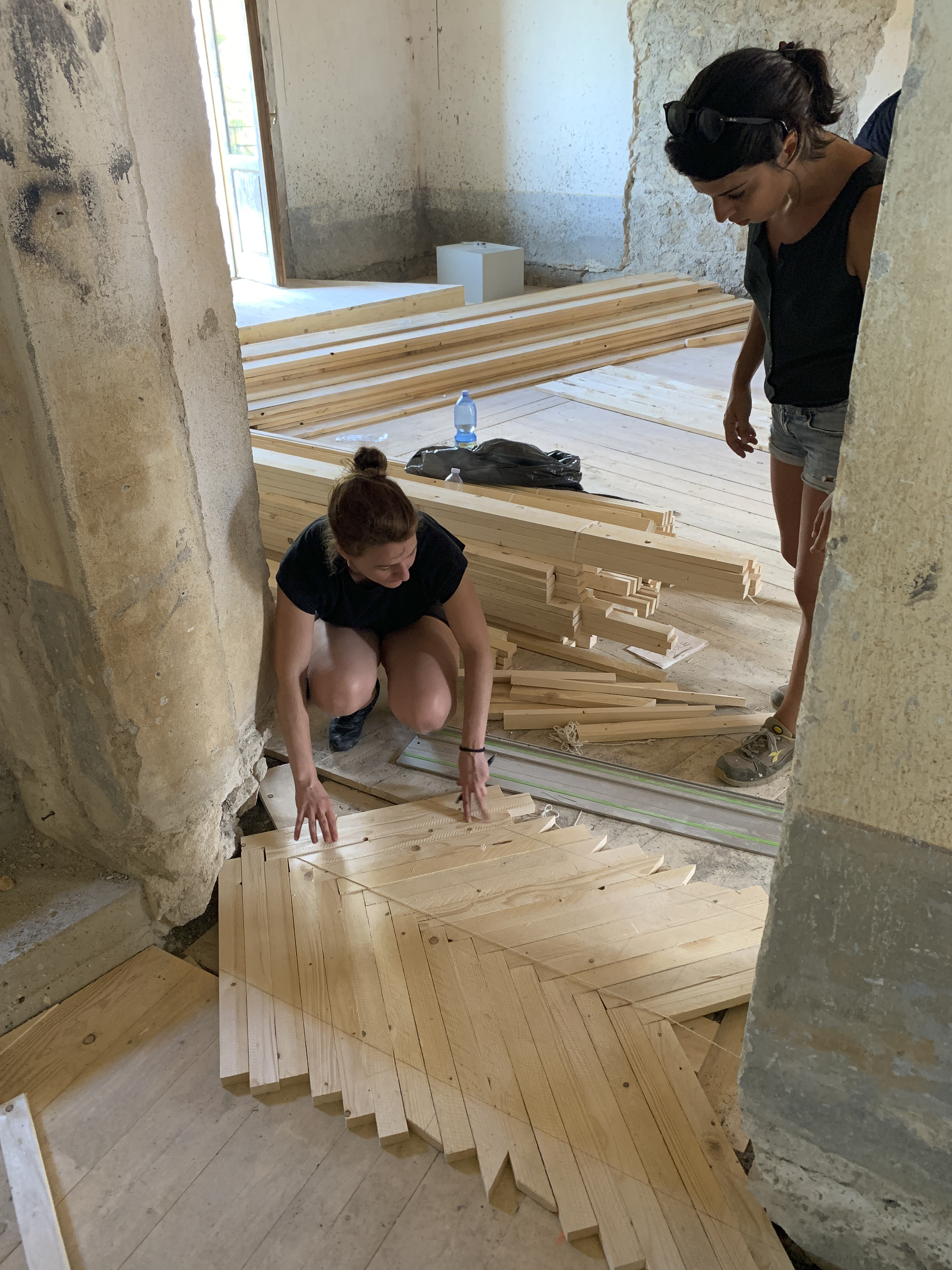
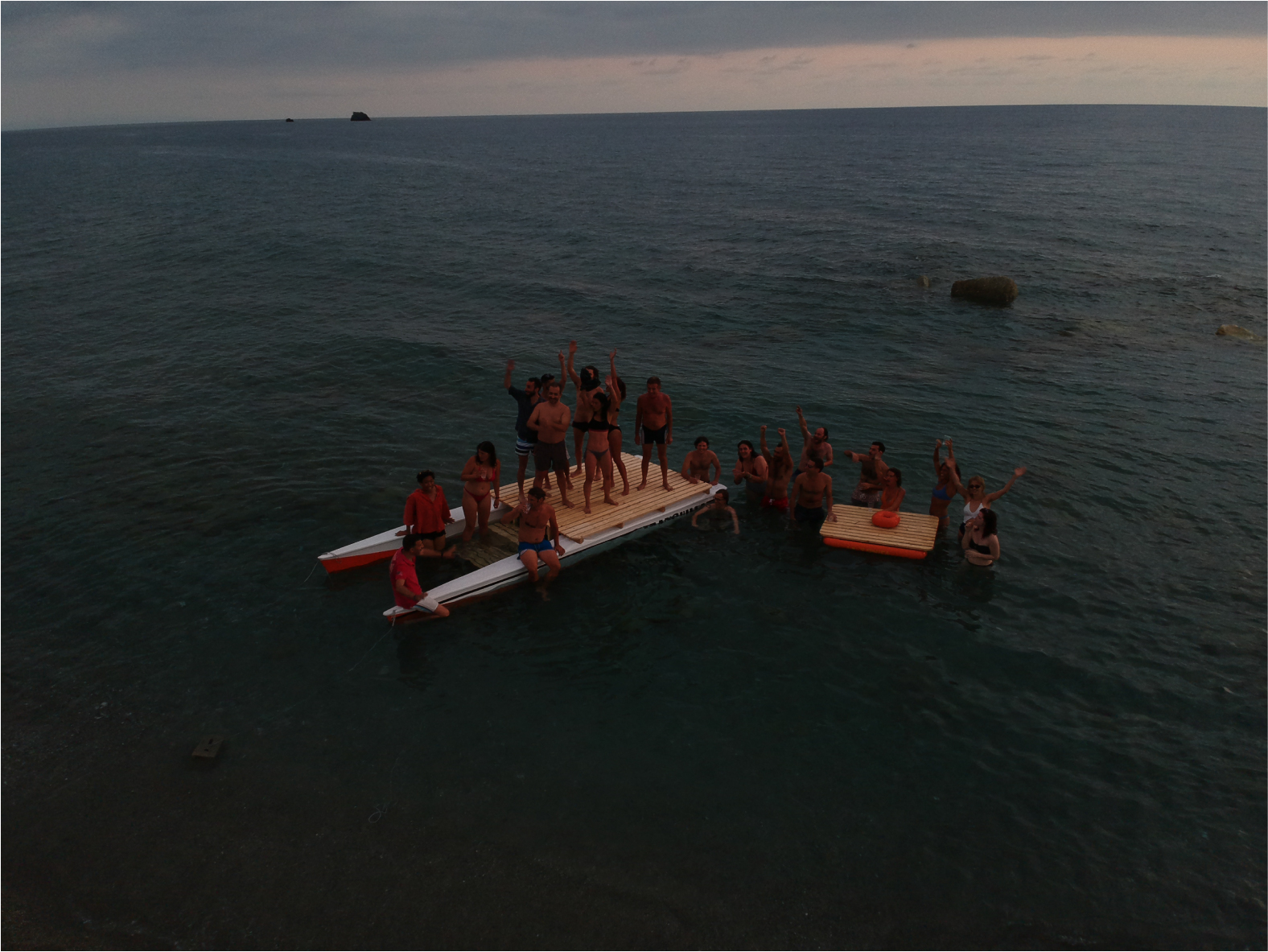
The first phase focused on temporary actions in public space. Through self-built furniture, installations, and shared activities, underused areas of the village became places where migrants, local inhabitants, students, architects, and cultural practitioners could meet and work together. These early interventions allowed the team to test methods directly on site, using a learning-by-doing approach and adapting each step to the site's real conditions.
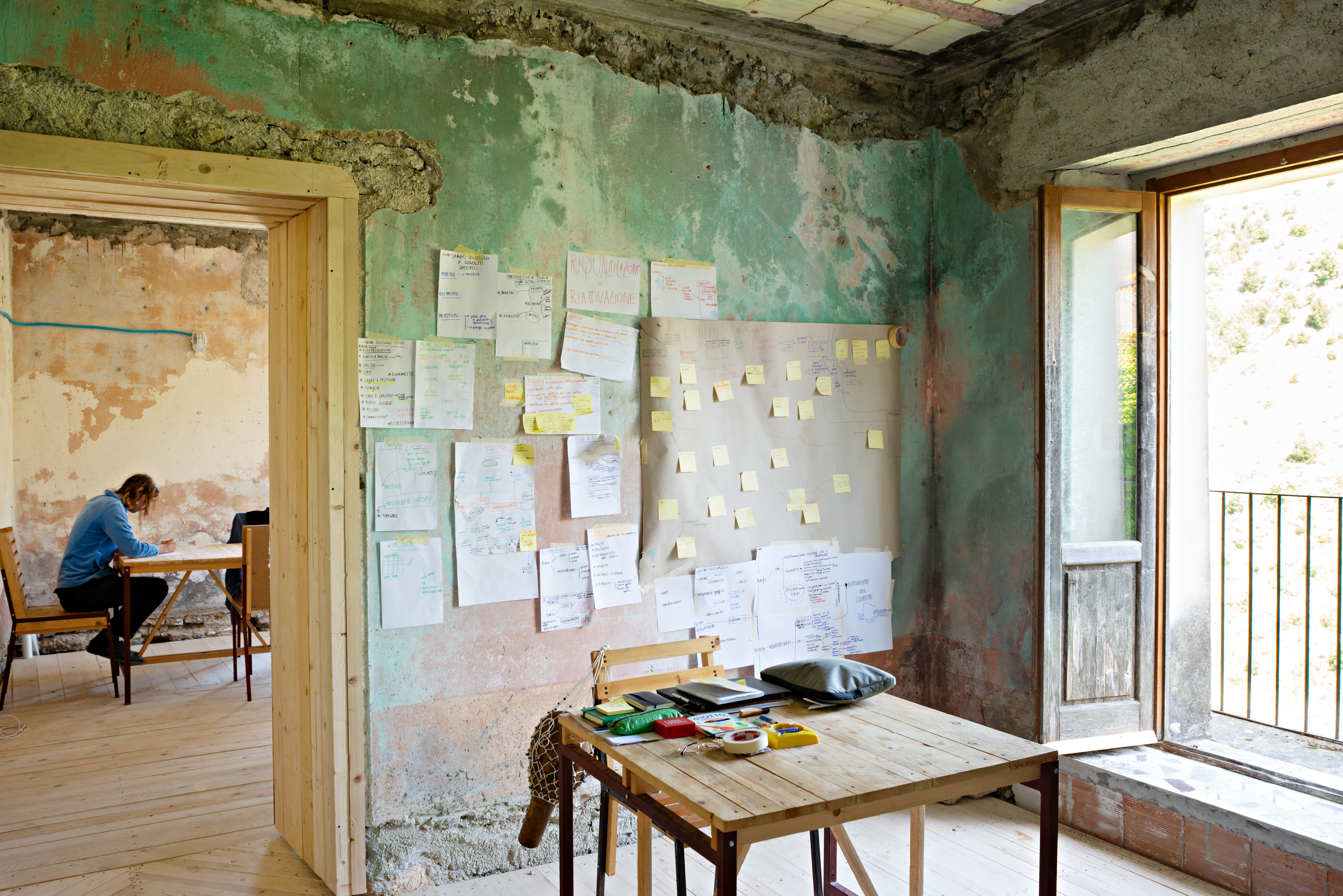
From this experience, the project gradually moved toward reactivating two key civic spaces: the Municipal Library and the former convent. The library became the first space of encounter and exchange. Later, with the support of the architectural collective Orizzontale, attention shifted to the unfinished former convent, originally intended as a House of Culture. Instead of completing it through a fixed top-down plan, BelMondo approached it as an open construction site: a space to be transformed incrementally through use, participation, design, and collective building.
Implementation on the ground has therefore been gradual, collaborative, and adaptive. The project has developed through workshops, site-based construction, cultural programming, and the continuous involvement of different users. In this way, BelMondo has not been imposed as a finished model but has been built over time as a shared process rooted in the everyday life of the village.
Rural regeneration
Adaptive reuse
Participatory design
Social cohesion
Circular practices
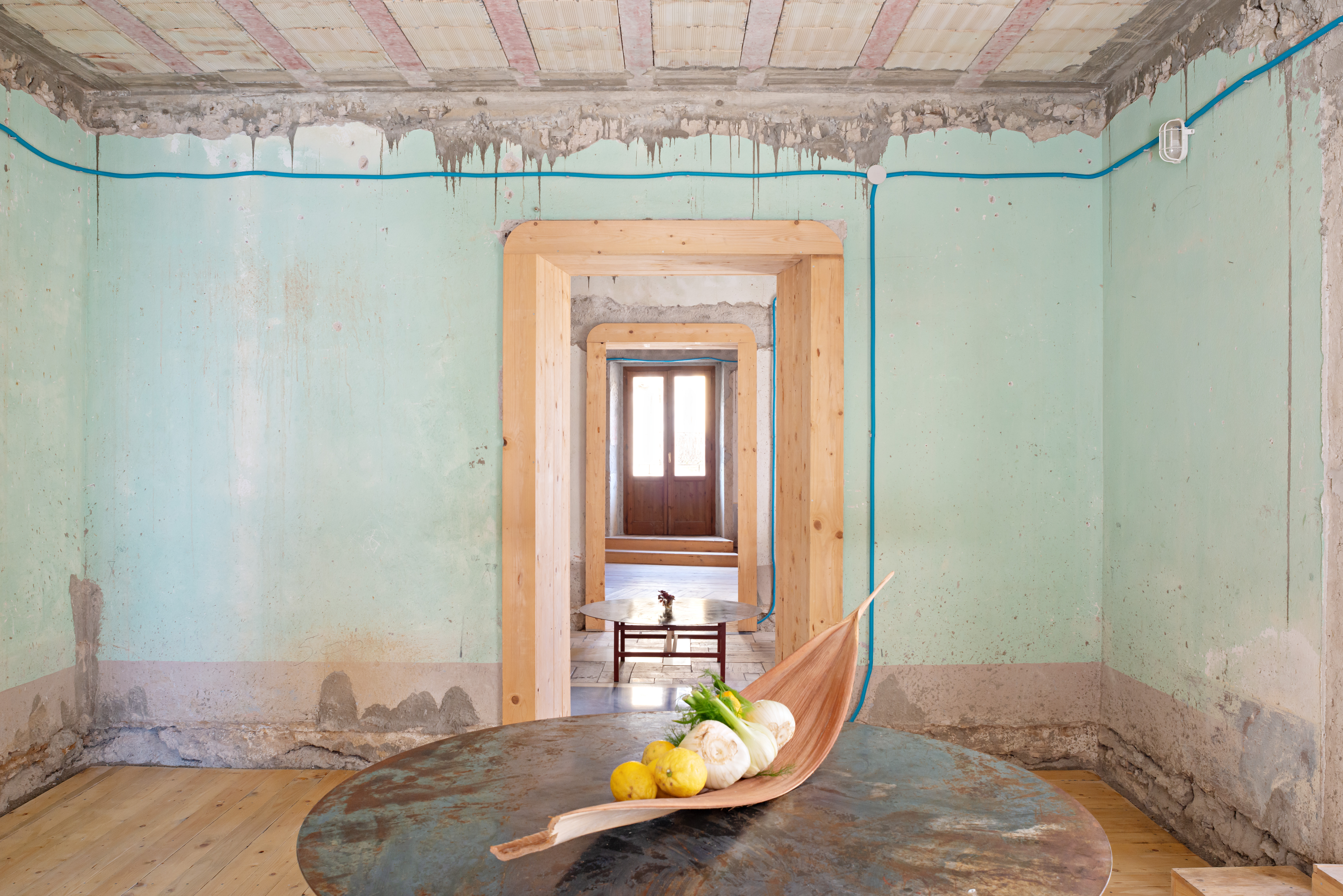
BelMondo addresses sustainability by reusing an existing, unfinished building in the historic centre of Belmonte Calabro. Instead of proposing new construction, the project focuses on the gradual transformation of the former convent into Casa di BelMondo, thereby extending the life of an underused structure and reducing the need for new materials.
The project is developed through phased interventions, collective work, and adaptable solutions that respond to actual use over time. This makes it possible to avoid unnecessary construction, reduce waste, and align the transformation of the space with available resources and local capacities. The project also supports the longer-term viability of the historic centre by creating a shared space for living, working, and cultural activities, helping to reactivate an area affected by depopulation and underuse. Its exemplary value lies in showing how an unfinished building in a depopulated rural area can be reactivated through reuse, phased implementation, and collective management, without relying on large-scale investment or resource-intensive transformation.
BelMondo can be considered exemplary because it offers a practical model for rural regeneration based on reuse, incremental transformation, and long-term responsibility. Its relevance lies in showing that existing buildings in marginal contexts can be reactivated through a gradual process that is both resource-conscious and socially grounded.
BelMondo contributes to the quality of everyday life by transforming an unfinished and underused building into a shared space for living, working, and exchange. Its aesthetic value lies in the careful adaptation of an existing structure, maintaining a strong connection with the character of the historic centre rather than replacing it with a pre-defined finished image.
The project improves the quality of experience through use: the space is shaped to host different forms of everyday activity, temporary residence, collaboration, and cultural production. Its architectural quality is therefore linked not only to the physical transformation of the building, but also to the way the space supports presence, interaction, and continuity over time. This helps create attachment to the place through actual use and shared care.
BelMondo can be considered exemplary in terms of aesthetics because it shows that architectural quality in rural regeneration can emerge from precise, small-scale, and context-based interventions. Rather than relying on formal impact, the project builds value through spatial continuity, adaptability, and the creation of a place that people can recognise, use, and maintain as part of daily life.
Its exemplary value lies in showing that the quality of a place can be built through careful adaptation, continuity with the existing fabric, and forms of use that generate attachment, recognition, and long-term care.
BelMondo addresses inclusion by creating a shared space where people with diverse backgrounds, ages, and conditions can participate in the project's life. It brings together long-term residents, migrants, students, academics, artists, and young professionals through activities connected to the transformation and use of Casa di BelMondo. In this sense, inclusion is not treated as a separate programme, but as a practical condition built into how the project works on the ground.
The project also addresses accessibility in concrete terms by removing architectural barriers in the former convent and introducing solutions that enable the building to serve a wider range of users. Affordability is achieved through the reuse of an existing public building and through collective forms of use, which reduce the threshold for access and enable the sharing of spaces, resources, and opportunities rather than requiring individual ownership or high levels of private investment.
BelMondo promotes an inclusive governance model by developing the project as a gradual and collective process rather than as a fixed programme defined in advance. Since Crossings 2019, the reactivation of Casa di BelMondo has grown through exchanges between architects, residents, and temporary participants, allowing different users to influence how the space is understood and used. This approach supports self-management, active citizenship, and a stronger capacity for local organisation.
BelMondo can be considered exemplary in terms of inclusion because it shows how a rural regeneration project can connect old and new inhabitants, improve access to a civic space, and build shared forms of use and responsibility. Its value lies in demonstrating that inclusion in marginal contexts can be produced through everyday cooperation, spatial accessibility, and collective governance.
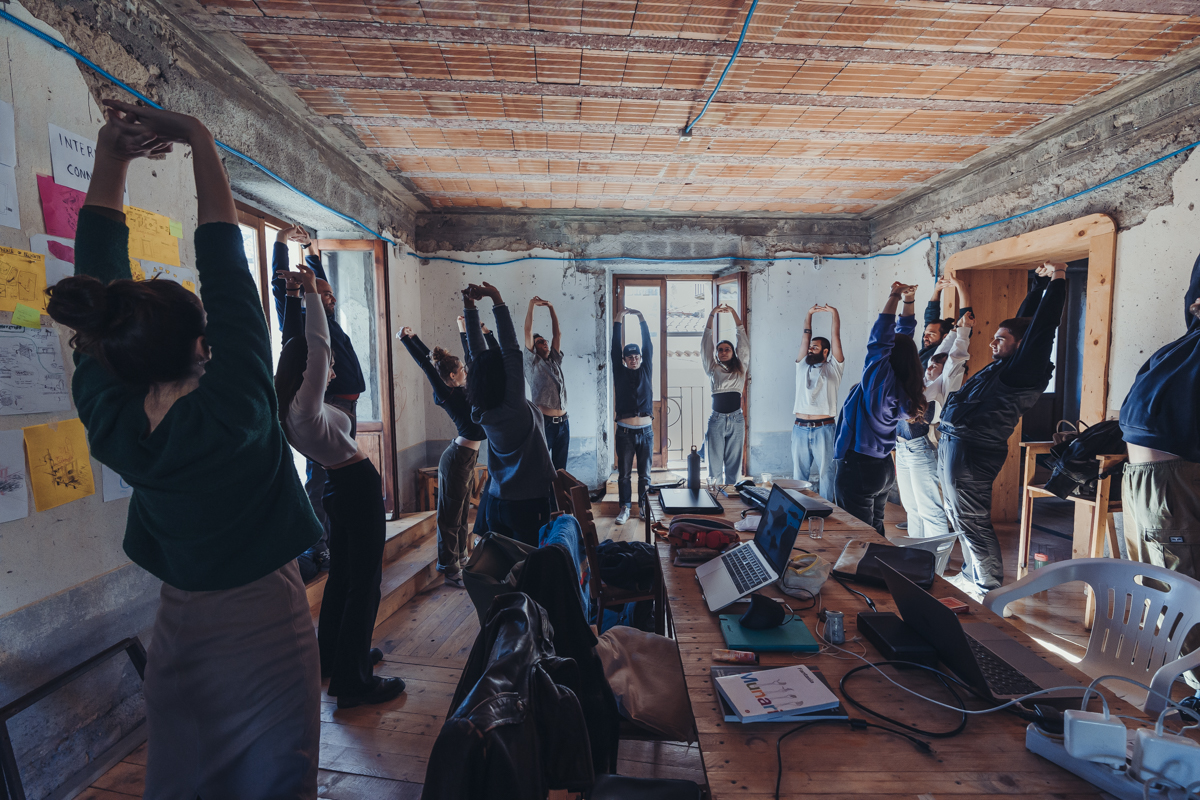
BelMondo has been developed through a participatory process involving residents, cultural actors, temporary participants, and partner organisations in the gradual reactivation of Casa di BelMondo. Their involvement has taken place through workshops, discussions, collective construction, cultural activities, and the shared use of space. Rather than being consulted only at specific moments, different actors have contributed directly to the project as it evolved on the ground.
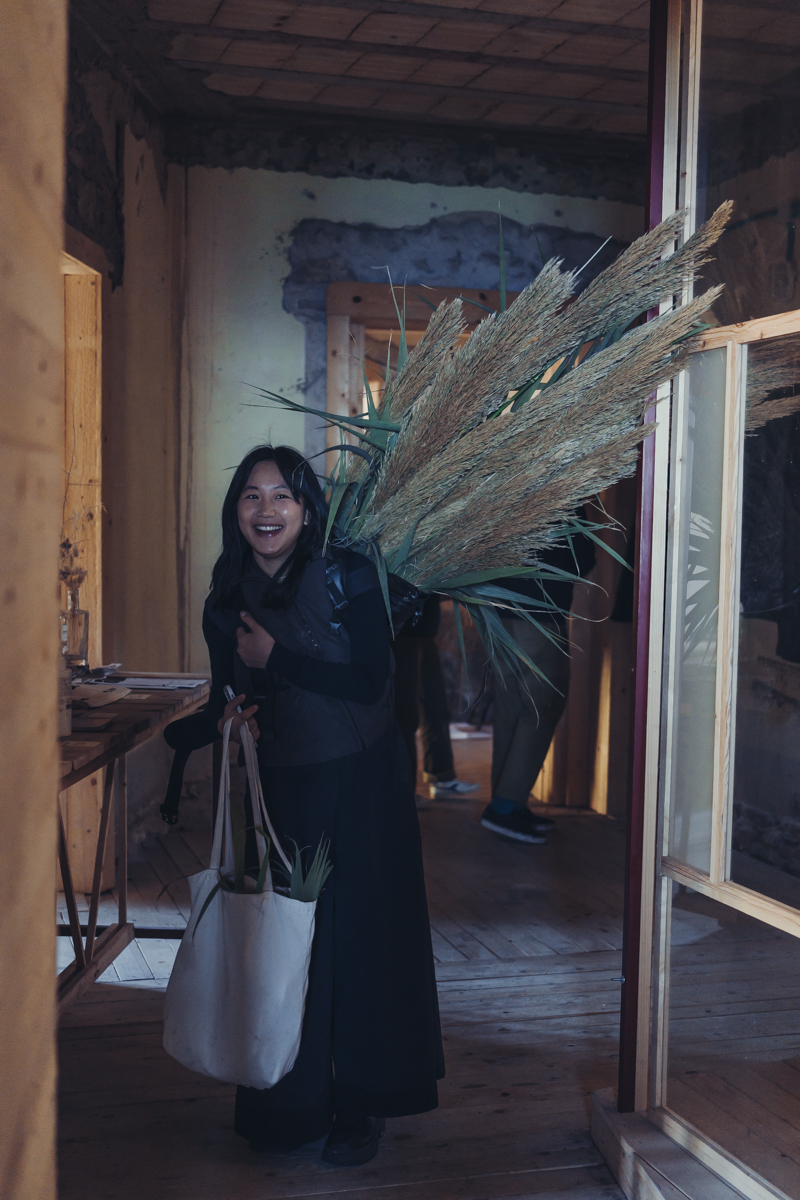
Their role has been both practical and formative. Local participants brought knowledge of the place, continuity, and links to the village's social life. External participants, including students, practitioners, and collaborators, contributed skills, labour, and new perspectives. Civil society actors and project partners supported specific activities, learning processes, and forms of collaboration that helped expand the project beyond a single intervention.
The impact of this involvement has been substantial. It has influenced how the space has been interpreted, adapted, and activated over time, making the project more responsive to actual conditions and uses. Participation has also helped build local ownership, strengthen relationships between different groups, and support the project’s continuity as a shared process rather than a fixed scheme defined in advance.
BelMondo was developed through the involvement of stakeholders operating at different levels, each contributing distinctly to the design and implementation of the project. At the local level, the project is rooted in Belmonte Calabro. It has grown through collaboration with the municipality, residents, and civic actors connected to the village's everyday life. Their role has been essential in identifying local needs, keeping the project grounded in the realities of the historic centre, and supporting the gradual reactivation of Casa di BelMondo as a space with public value.
At a broader professional and inter-territorial level, the project has involved collaborators who brought specific expertise to its development. In particular, the contribution of the architectural collective Orizzontale helped shape the spatial and methodological approach of the reactivation process, strengthening the project's design dimension while keeping it connected to collective use, incremental transformation, and site-based implementation.
At the wider European level, BelMondo has benefited from networks of students, academics, artists, migrants, and young professionals who brought external knowledge, exchange, and translocal perspectives. This has connected a small rural context to broader discussions on depopulation, migration, and the future of European villages.
The added value of this multilevel engagement lies in the combination of local rootedness and external capacity. Local actors provide continuity, legitimacy, and knowledge of the place, while external partners and wider networks contribute skills, methods, and visibility. This has made BelMondo not only a locally grounded initiative but also a project with broader relevance for rural regeneration.
BelMondo reflects a transdisciplinary approach that combines architecture, design, arts, social research, education, and communication. These fields are not treated as separate layers but are integrated through the design and implementation of the project in relation to the specific conditions of Belmonte Calabro.
Architecture and design are central to the gradual transformation of the former convent into Casa di BelMondo, through spatial reuse, incremental interventions, and collective construction. At the same time, the project is shaped by artistic and cultural practices, which activate the space through workshops, public programmes, and shared forms of production and exchange. Education and research are also important components, as the project involves students, academics, and practitioners in site-based learning processes connected to the village and its everyday life.
Social and territorial questions are equally present in the project. BelMondo addresses depopulation, migration, and rural marginality not only as background conditions, but as issues that directly inform how the project is conceived and carried out. Communication also plays a role in connecting local realities with wider networks and in making the project part of a broader discussion on rural regeneration.
The transdisciplinary value of BelMondo lies in its capacity to connect spatial practice, cultural production, learning, and social engagement within a single process.
BelMondo is based on a hybrid and evolving business model. Its long-term financial sustainability does not depend on a single source of income but on a combination of public support, project-based collaborations, and revenue-generating activities related to the use of Casa di BelMondo. The project has grown through partnerships, cultural and educational programmes, and collaborations with external practitioners and organisations, while progressively developing the former convent into a space for shared living, working, and production.
The economic model is intended to develop around a mixed structure: temporary residencies, co-living and co-working activities, workshops, training programmes, cultural events, and project-based partnerships. These activities are designed not only to activate the space socially and culturally, but also to generate resources that can contribute to its maintenance and gradual development over time. At the same time, public and institutional support remains important, especially regarding the building's civic value and the project's broader public interest.
What makes BelMondo financially sustainable over time is the fact that its growth is incremental and closely linked to actual use. Rather than requiring a large upfront investment or a fully fixed programme from the start, the project develops step by step, adapting its activities to available resources, partnerships, and local capacities. This reduces financial risk and allows the project to build sustainability through a combination of shared use, phased implementation, and diversified sources of support and income.
BelMondo can be transferred to other rural and marginal contexts primarily through its methodology rather than through a fixed physical model. The project shows how underused buildings can be reactivated through a gradual process that combines spatial reuse, collective construction, cultural programming, and shared use. This makes the approach adaptable to different places, scales, and beneficiary groups, depending on local needs and available resources.
A key transferable element is the working method developed by Le Seppie through Crossings and further articulated in BelMondo. This includes learning-by-doing, participation, transdisciplinarity, horizontality, self-construction, experimentation, conviviality, and reuse. In the application draft, these principles are described as “Glocal Tools”: a set of practices that connect local conditions with external knowledge and can be adapted to other contexts without being standardised.
The project is also scalable in organisational terms. Its model does not depend on large-scale investment or a fully completed programme from the start. Instead, it can grow step by step through temporary activities, partnerships, workshops, and progressive spatial activation. This makes it relevant to other villages, community groups, and public actors seeking practical ways to address depopulation, underused spaces, and weak local infrastructure.
Its main transferable value lies in showing how a local project can build long-term relevance by combining existing spaces, collective skills, and a flexible implementation process.