Enablers for New European Bauhaus Transformation
FURKAN Gdynia
Food Urban–Rural Knowledge Ambassadors Network Gdynia
FURKAN Gdynia helps local communities build a more resilient food system - from diagnosis to education, cooperation and public action. Working across Gdynia and its surrounding municipalities, the project connects producers, residents, institutions and local ambassadors to strengthen plant-based food production, share practical knowledge and create tools that can support long-term transformation in other places as well.
Poland
Local
Gdynia and surrounding municipalities: Kosakowo, Żukowo, Szemud, Wejherowo, Rumia and Reda.
Mainly urban
It involves other types of transformations (soft investment)
Yes
2025-11-30
Yes
EIT Community New European Bauhaus Enhance 2025
No
No
Organisation
FURKAN Gdynia supports the transformation of the local food system towards more sustainable production and consumption of plant-based food. The local food system does not end at the administrative borders of the city, but connects Gdynia with surrounding rural areas through everyday flows of food, people, knowledge and practices. By strengthening urban–rural relations, FURKAN helps build a resilient, locally rooted and cooperative food system.
The project began with a diagnosis involving 200 consumers, 100 producers and 25 experts. This process identified 30 challenges across environmental change, food quality and safety, and cooperation, creating an evidence base for future food policy and more targeted local initiatives. The findings were compiled into a publicly available diagnostic report for public and regional institutions. In the next phase, the project developed an educational publication for producers and consumers, presenting 15 good practices selected through co-creation as relevant and feasible responses to local challenges.
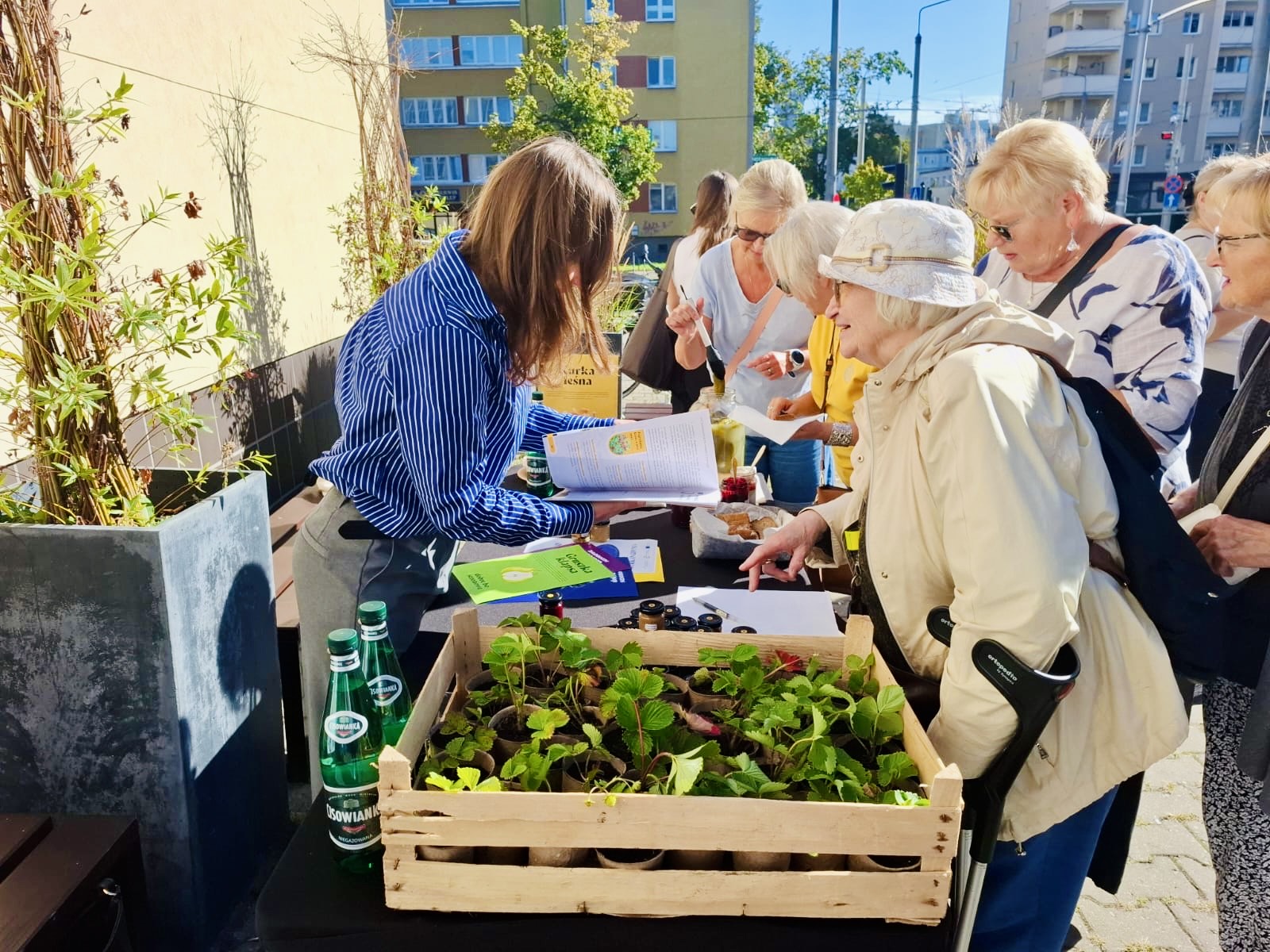
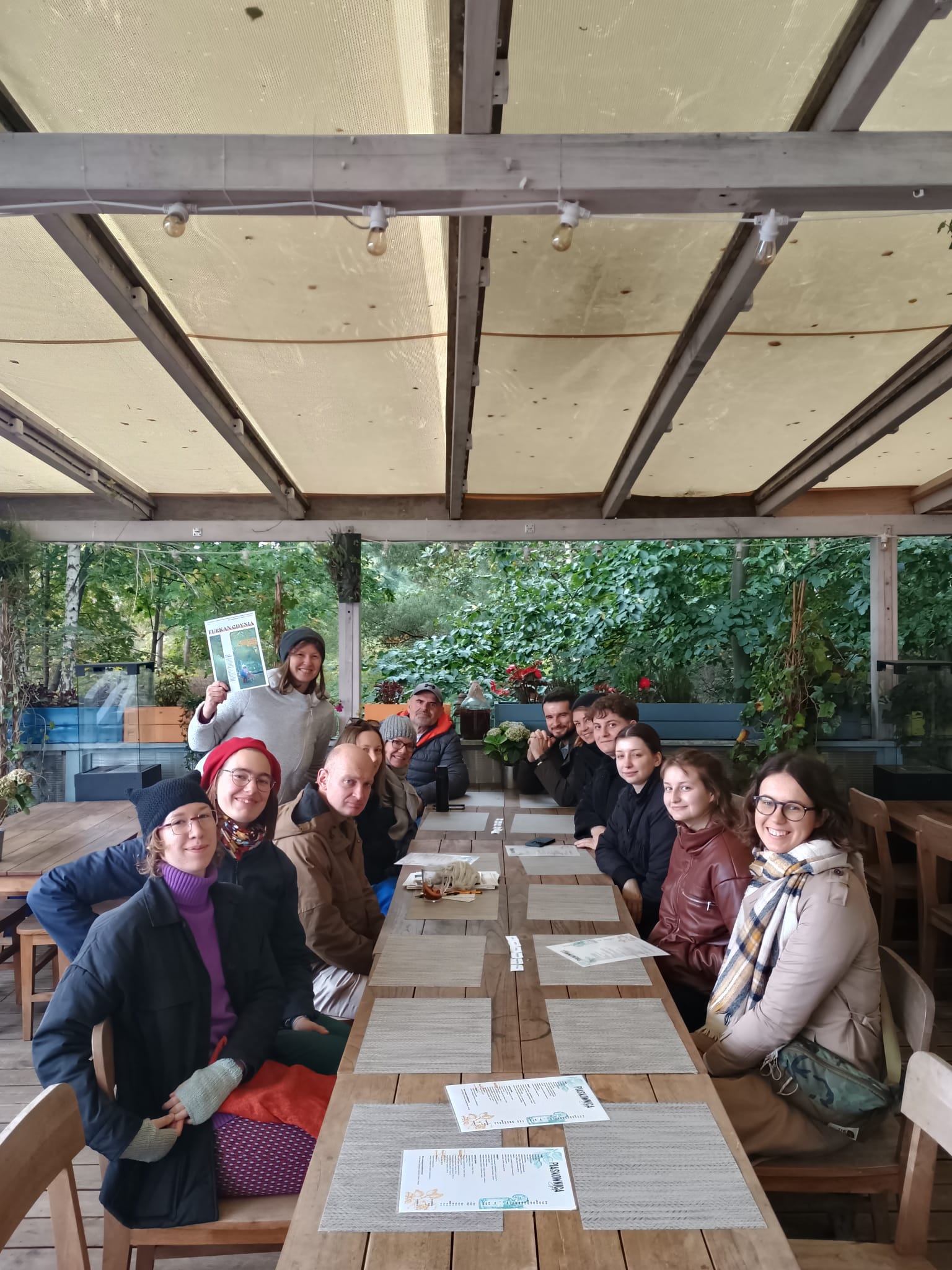
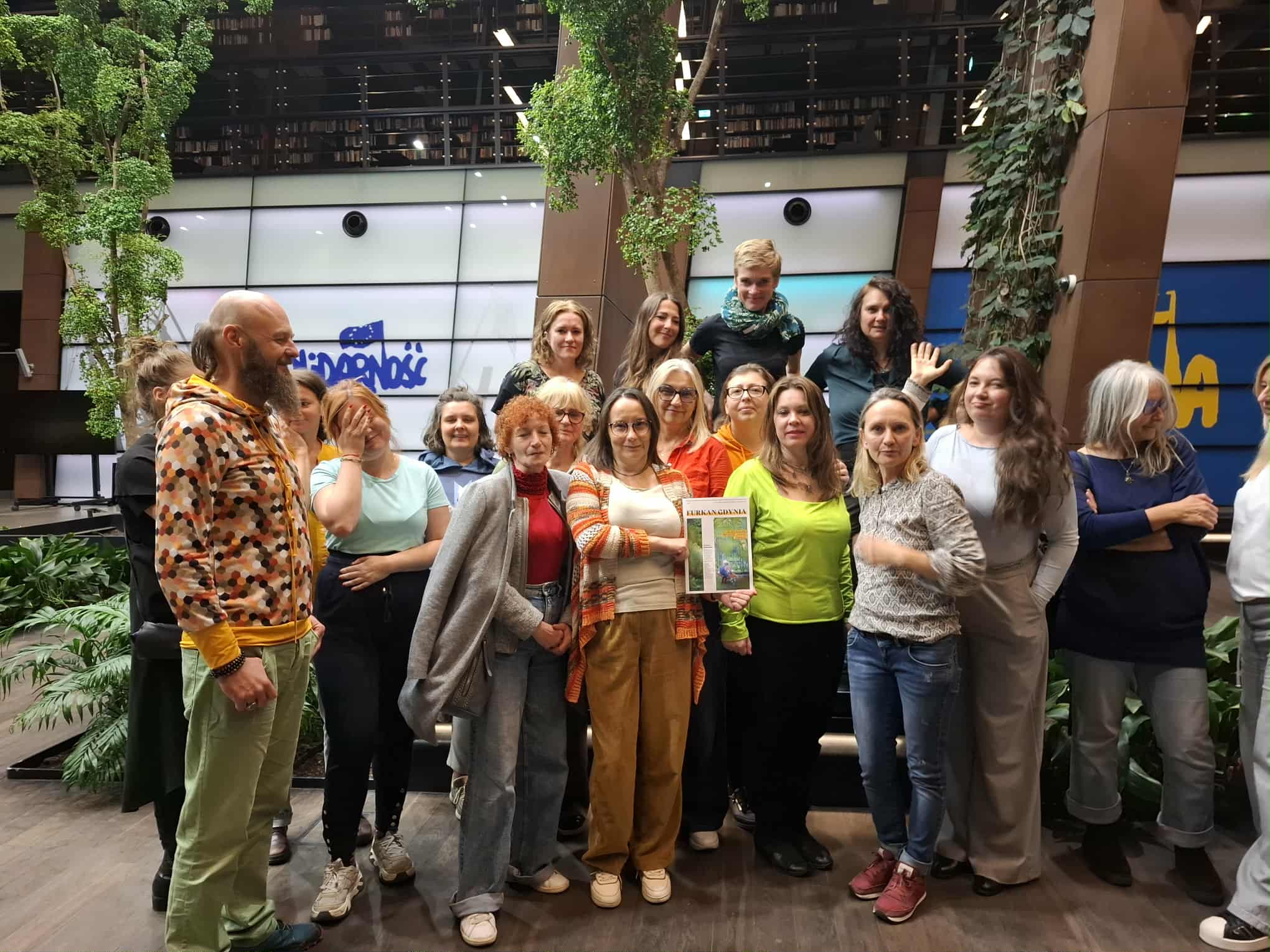
A key achievement of the project was the Food Urban–Rural Ambassadors Network, through which 24 trusted local community members from Gdynia and neighbouring municipalities were trained. As locally rooted multipliers, they organised educational activities, shared knowledge on sustainable plant-based food production and responsible consumption, and helped strengthen cooperation within their communities. Through the network, the project engaged 304 participants in education and training. Its impact was reinforced by educational campaigns, intergenerational workshops, local events and an educational trail installed in a local allotment garden. Together, these activities engaged 475 people across the project.
FURKAN Gdynia created practical tools, strengthened local capacities and laid the groundwork for future food policy. As a scaled continuation of the FURKAN project in Ostróda, it also demonstrated strong replication potential.
The project began with a diagnosis involving 200 consumers, 100 producers and 25 experts. This process identified 30 challenges across environmental change, food quality and safety, and cooperation, creating an evidence base for future food policy and more targeted local initiatives. The findings were compiled into a publicly available diagnostic report for public and regional institutions. In the next phase, the project developed an educational publication for producers and consumers, presenting 15 good practices selected through co-creation as relevant and feasible responses to local challenges.
A key achievement of the project was the Food Urban–Rural Ambassadors Network, through which 24 trusted local community members from Gdynia and neighbouring municipalities were trained. As locally rooted multipliers, they organised educational activities, shared knowledge on sustainable plant-based food production and responsible consumption, and helped strengthen cooperation within their communities. Through the network, the project engaged 304 participants in education and training. Its impact was reinforced by educational campaigns, intergenerational workshops, local events and an educational trail installed in a local allotment garden. Together, these activities engaged 475 people across the project.
FURKAN Gdynia created practical tools, strengthened local capacities and laid the groundwork for future food policy. As a scaled continuation of the FURKAN project in Ostróda, it also demonstrated strong replication potential.
FURKAN Gdynia grew out of the earlier success of the FURKAN project implemented in Ostróda under Connect NEB. In Ostróda, the project tested a methodology for rebuilding urban–rural relations around a shared goal: more sustainable local food production and consumption. This experience became the starting point for scaling the model to Gdynia.
Although strongly urbanised and shaped by its port economy, Gdynia also includes family allotment gardens, agricultural land and strong links with surrounding municipalities. In practice, its food system does not stop at the city’s administrative borders, but extends across a wider urban–rural area through everyday flows of food, people, knowledge and practices. At the same time, many valuable local food-related initiatives already existed, but remained fragmented and lacked a shared framework for cooperation.
The project was implemented as a step-by-step process combining diagnosis, co-creation, education and public outreach. It began with a multi-perspective diagnosis involving consumers, producers and experts, which identified 30 key challenges. These findings were compiled into a publicly available diagnostic report for public and regional institutions. In the next phase, workshops with local stakeholders were used to select 15 good practices relevant to the diagnosed challenges and feasible in the local context, which were then translated into an educational publication for producers and consumers.
The project then moved from analysis to action through the Food Urban–Rural Ambassadors Network. Trusted local community members from Gdynia and neighbouring municipalities were trained to share knowledge, strengthen cooperation and support local transformation from within their own communities. Their work was complemented by campaigns, local events, intergenerational workshops and an educational trail installed in a local allotment garden.
Although strongly urbanised and shaped by its port economy, Gdynia also includes family allotment gardens, agricultural land and strong links with surrounding municipalities. In practice, its food system does not stop at the city’s administrative borders, but extends across a wider urban–rural area through everyday flows of food, people, knowledge and practices. At the same time, many valuable local food-related initiatives already existed, but remained fragmented and lacked a shared framework for cooperation.
The project was implemented as a step-by-step process combining diagnosis, co-creation, education and public outreach. It began with a multi-perspective diagnosis involving consumers, producers and experts, which identified 30 key challenges. These findings were compiled into a publicly available diagnostic report for public and regional institutions. In the next phase, workshops with local stakeholders were used to select 15 good practices relevant to the diagnosed challenges and feasible in the local context, which were then translated into an educational publication for producers and consumers.
The project then moved from analysis to action through the Food Urban–Rural Ambassadors Network. Trusted local community members from Gdynia and neighbouring municipalities were trained to share knowledge, strengthen cooperation and support local transformation from within their own communities. Their work was complemented by campaigns, local events, intergenerational workshops and an educational trail installed in a local allotment garden.
food system transformation
urban–rural resilience
food literacy
plant-based production
community ambassadors
FURKAN Gdynia was designed to support the sustainable transformation of the local food system towards more sustainable production and consumption of plant-based food. Its sustainability objectives were environmental, social and economic at the same time: reducing harmful practices in local production, supporting more resilient use of soil and water resources, strengthening local knowledge and cooperation, and promoting solutions that are not only environmentally beneficial but also feasible for small-scale producers.
The project addressed concrete sustainability challenges identified in the diagnosis. The most important included chemicalisation, poor soil quality, water shortages, and weak cooperation within the local food system. In response, the project analysed 60 good practices and, through co-creation, selected 15 that were considered both relevant to local challenges and realistic in the local context. These practices included alternatives to chemical inputs, methods supporting soil regeneration, more sustainable resource use, and practical responses to the environmental pressures affecting small-scale plant-based production.
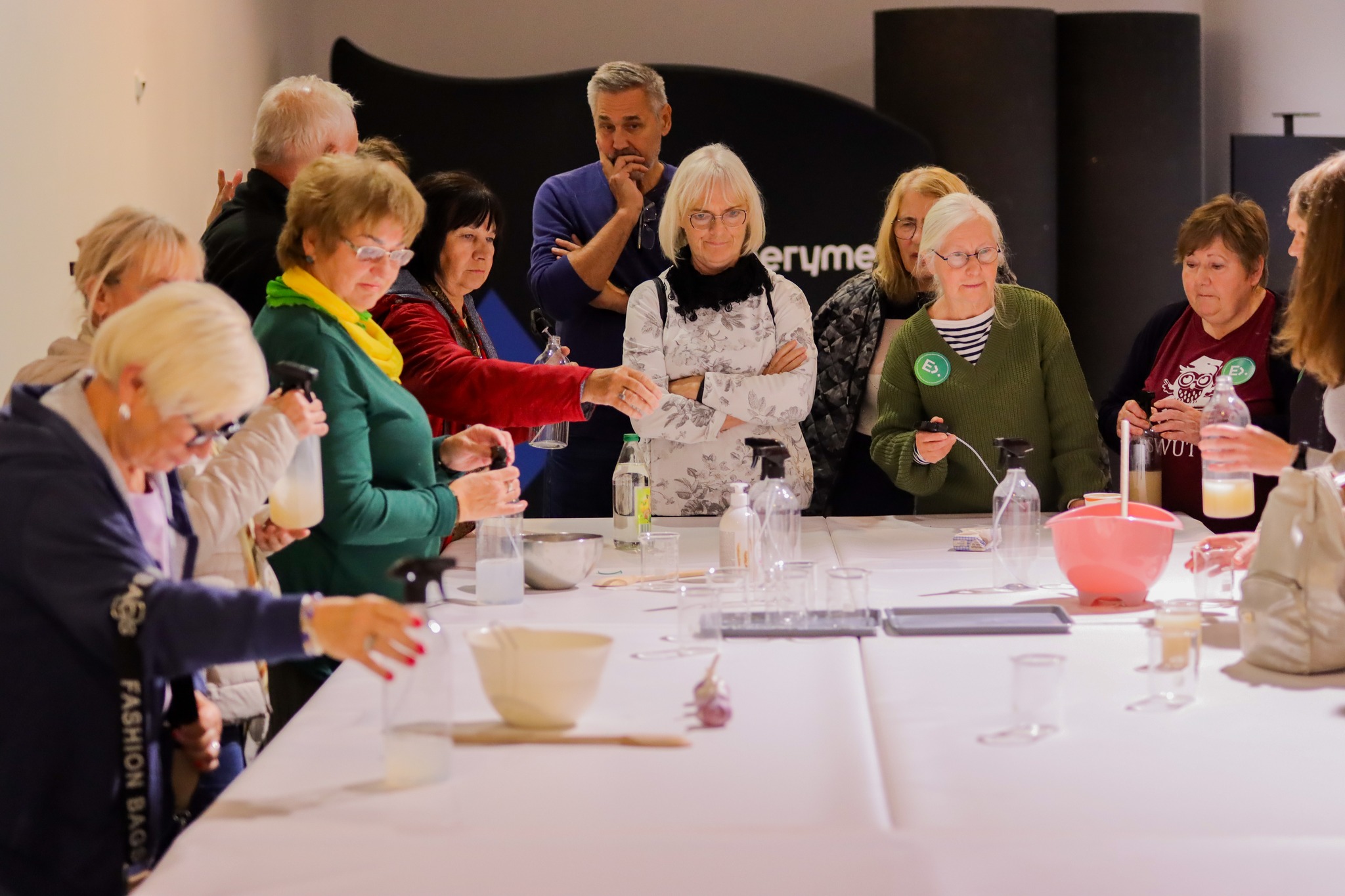
These solutions were translated into accessible tools and actions. They were presented in an educational publication and on educational boards installed in a local allotment garden. The project also delivered educational activities focused on sustainable food practices, including workshops on edible wild plants and workshops on making natural homemade pesticides. Through the Food Urban–Rural Ambassadors Network, trained local actors shared knowledge on sustainable plant-based production and responsible consumption in their own communities.
The results show that sustainability goals were translated into practice. The project produced a public diagnostic report, an educational publication, an educational trail and a toolkit for further use. It engaged producers, consumers and institutions, reached 304 participants in education.
The project addressed concrete sustainability challenges identified in the diagnosis. The most important included chemicalisation, poor soil quality, water shortages, and weak cooperation within the local food system. In response, the project analysed 60 good practices and, through co-creation, selected 15 that were considered both relevant to local challenges and realistic in the local context. These practices included alternatives to chemical inputs, methods supporting soil regeneration, more sustainable resource use, and practical responses to the environmental pressures affecting small-scale plant-based production.
These solutions were translated into accessible tools and actions. They were presented in an educational publication and on educational boards installed in a local allotment garden. The project also delivered educational activities focused on sustainable food practices, including workshops on edible wild plants and workshops on making natural homemade pesticides. Through the Food Urban–Rural Ambassadors Network, trained local actors shared knowledge on sustainable plant-based production and responsible consumption in their own communities.
The results show that sustainability goals were translated into practice. The project produced a public diagnostic report, an educational publication, an educational trail and a toolkit for further use. It engaged producers, consumers and institutions, reached 304 participants in education.
FURKAN Gdynia contributed to making everyday life more beautiful by transforming spaces connected with food production and exchange into engaging environments for learning, dialogue and cultural reflection. The aesthetic dimension of the project emerged through the design of educational installations and communication materials that connected ecological knowledge with the cultural identity of the region.
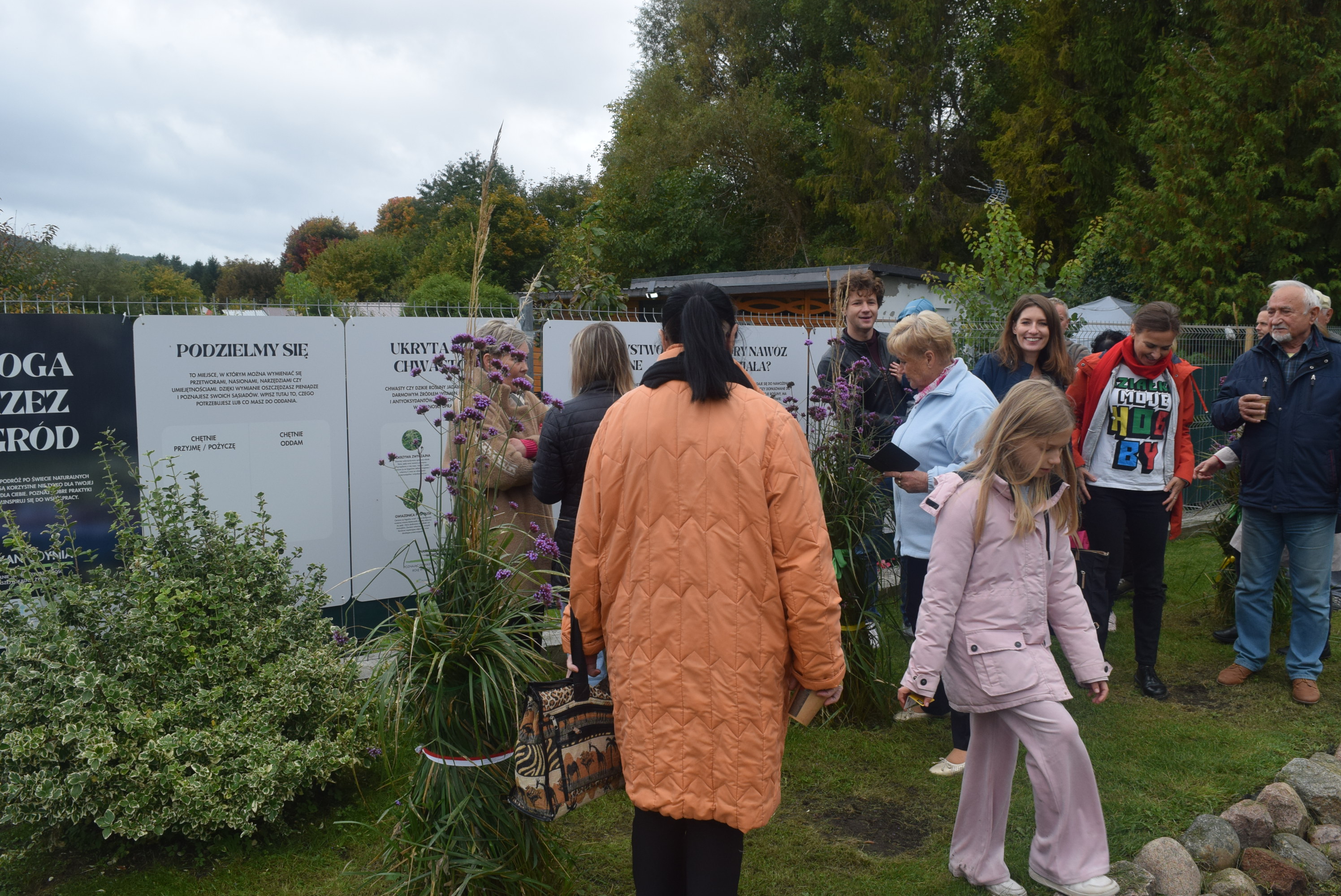
Through participatory workshops with gardeners, educators and designers, the project co-created an educational trail composed of five visually engaging boards installed directly within an allotment garden. Each board presented sustainable cultivation practices—such as natural plant protection, soil regeneration and edible wild plants—through clear illustrations, storytelling and accessible design. Placed within the natural environment of the gardens, the installations encouraged visitors to observe biodiversity, reflect on cultivation practices and rediscover the beauty of locally produced food.
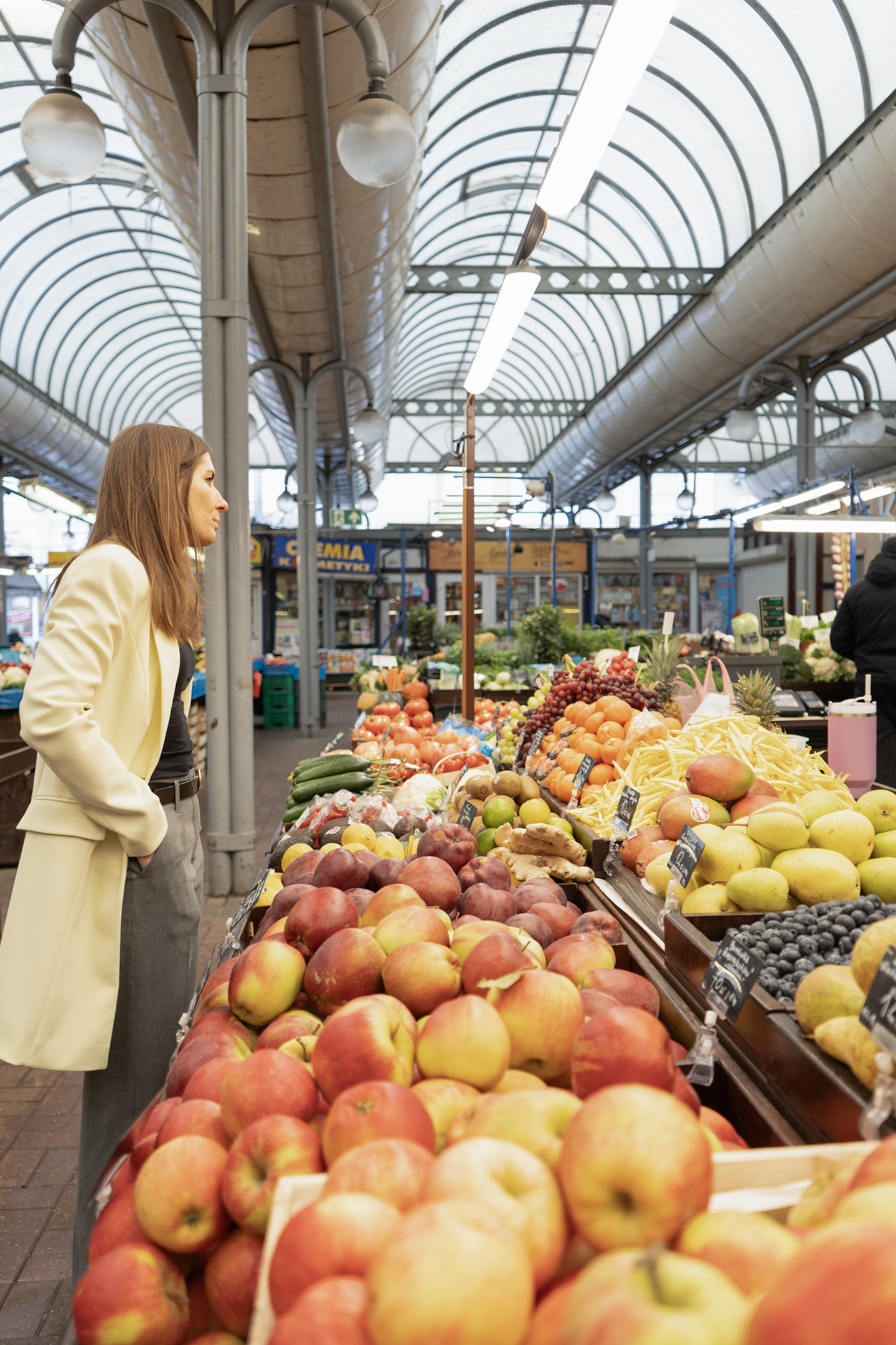
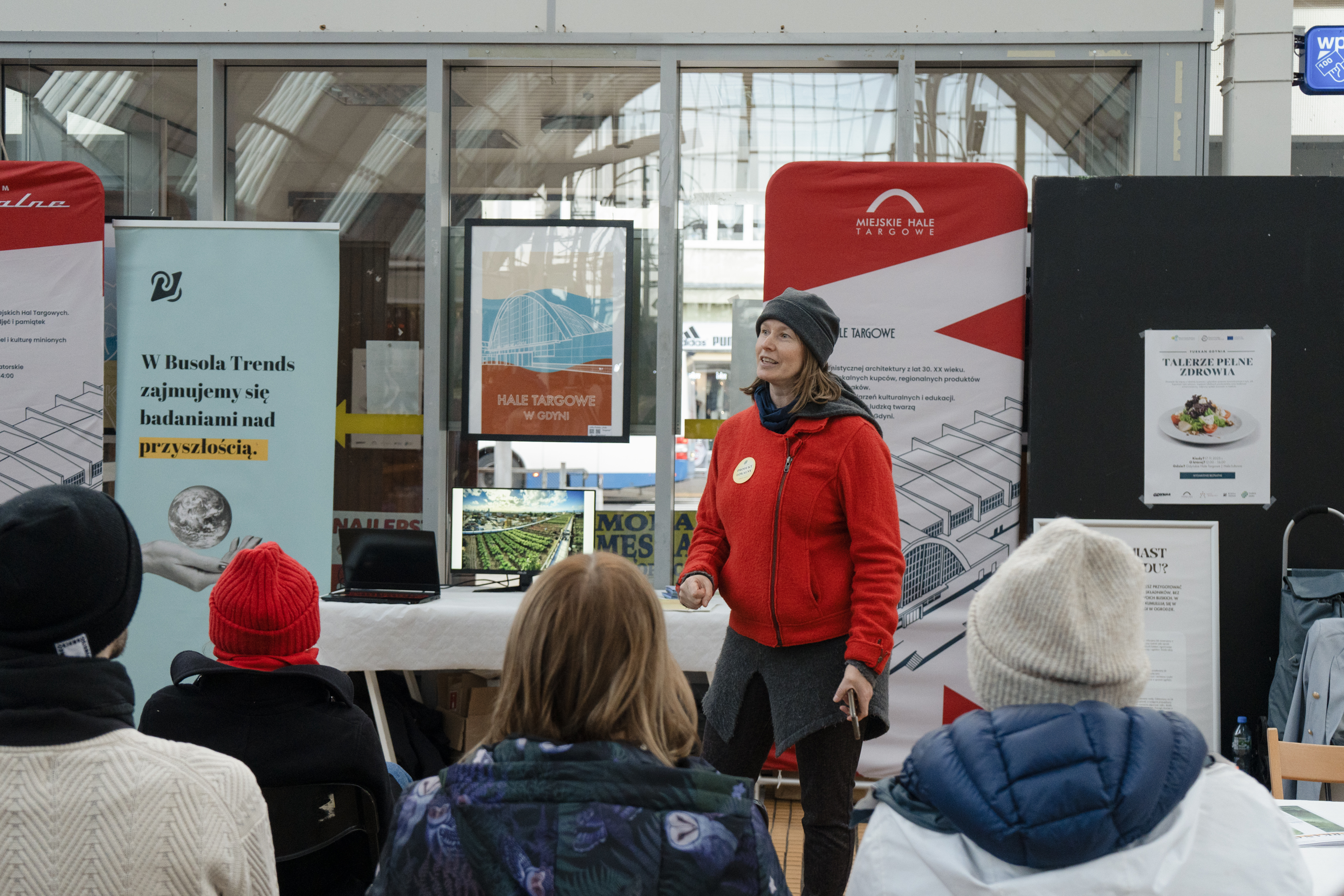
The project also develops a prototype interactive exhibit at the Gdynia Market Halls, an important local marketplace and social meeting point. It was designed as a playful grocery stand where visitors can scan fruits and vegetables to explore the environmental footprint of food choices. Presenting the project in this setting highlighted the aesthetic and cultural dimensions of local food while bringing the narrative of sustainability into everyday urban life.
The aesthetic narrative of the project was further reinforced through the visual identity of all educational and promotional materials, which incorporated a decorative pattern inspired by traditional Kashubian lace, a distinctive element of regional cultural heritage in northern Poland. This motif connected the themes of environmental care and responsible food production with the local cultural landscape, creating a visual bridge between sustainability and regional identity.
Through participatory workshops with gardeners, educators and designers, the project co-created an educational trail composed of five visually engaging boards installed directly within an allotment garden. Each board presented sustainable cultivation practices—such as natural plant protection, soil regeneration and edible wild plants—through clear illustrations, storytelling and accessible design. Placed within the natural environment of the gardens, the installations encouraged visitors to observe biodiversity, reflect on cultivation practices and rediscover the beauty of locally produced food.
The project also develops a prototype interactive exhibit at the Gdynia Market Halls, an important local marketplace and social meeting point. It was designed as a playful grocery stand where visitors can scan fruits and vegetables to explore the environmental footprint of food choices. Presenting the project in this setting highlighted the aesthetic and cultural dimensions of local food while bringing the narrative of sustainability into everyday urban life.
The aesthetic narrative of the project was further reinforced through the visual identity of all educational and promotional materials, which incorporated a decorative pattern inspired by traditional Kashubian lace, a distinctive element of regional cultural heritage in northern Poland. This motif connected the themes of environmental care and responsible food production with the local cultural landscape, creating a visual bridge between sustainability and regional identity.
FURKAN promoted social inclusion by reaching small-scale plant-based food producers, individual gardeners and both older and younger participants. People aged 65+ accounted for more than 25% of participants - significant given their more limited access to digital knowledge-sharing. Inclusion tools combined digital and physical approaches: an educational trail, senior workshops, online education and distribution. An educational publication (550 copies, including 200 printed) ensured reach across both groups.
Small producers (up to 15 hectares) are particularly important due to their greater potential for rapid transformation, despite more limited market access. The project also reached individual producers in family allotment gardens — 23 gardens covering ~228 hectares within Gdynia. These producers receive no formal education, yet chemical use is a significant issue, making them a key target group.
Economic inclusion was embedded in the methodology: when selecting 15 good practices from 60, economic justification and efficiency were criteria alongside long-term environmental impact.
The Food Knowledge Ambassadors programme used microgrants and an equitable recruitment system. Targets were set for age and gender to ensure representation and support for women in agriculture - an often excluded group in rural areas. Over 50% of women Ambassadors initiated dialogue in their communities around education and business models, gaining individual agency.
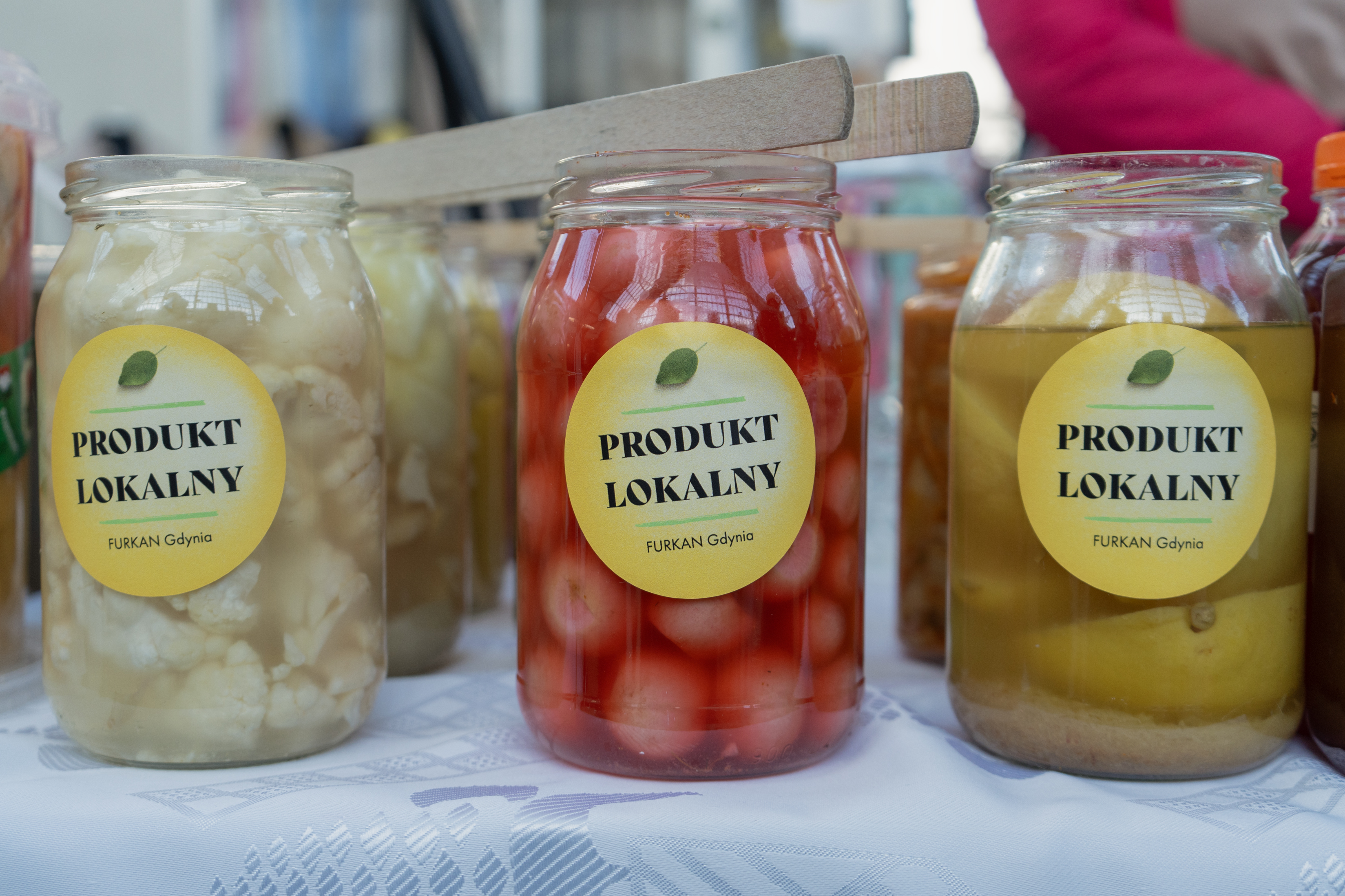
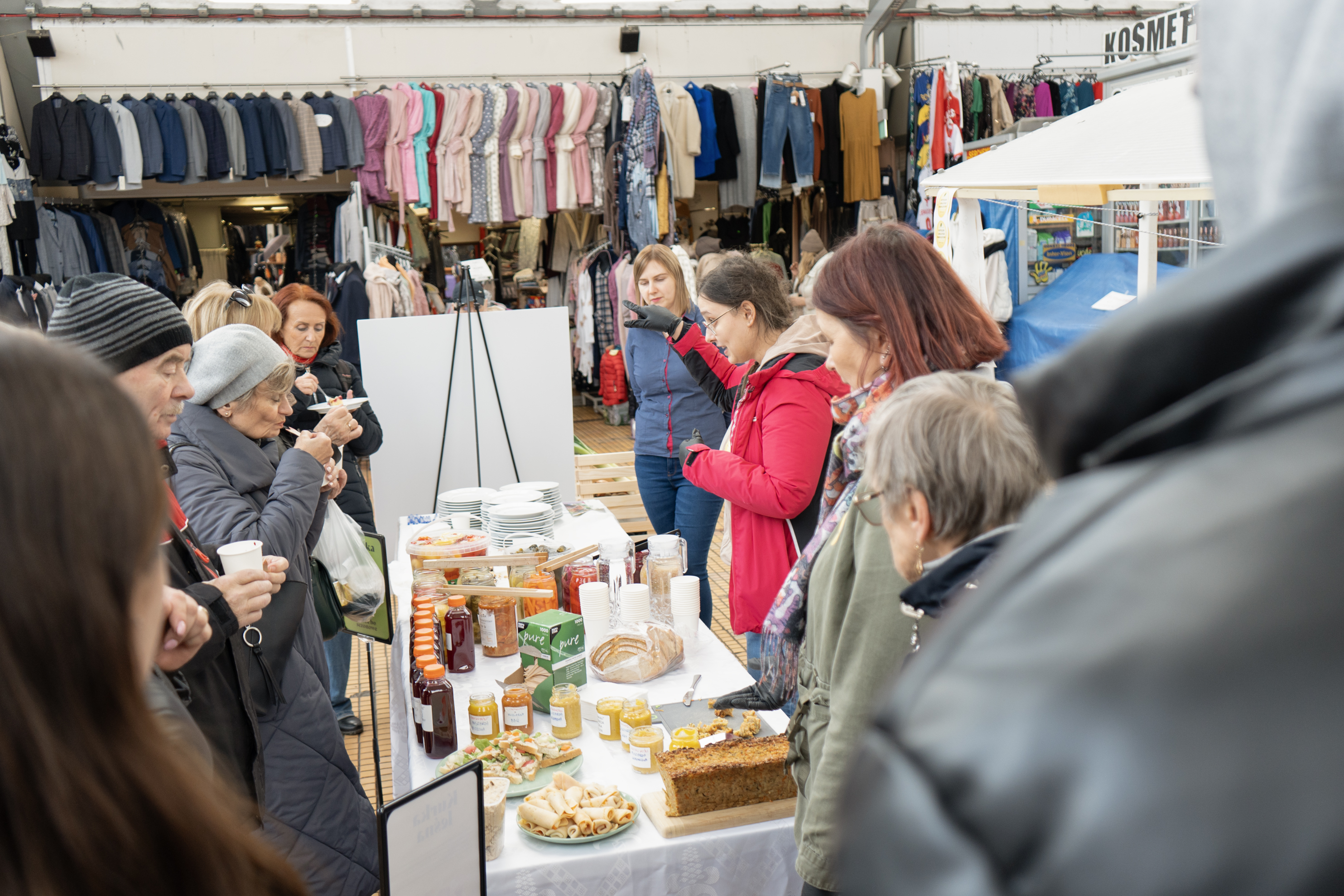
Our toolkit features intergenerational workshop models, piloted during the project. A wild plants workshop engaged both children and seniors, each in different ways. With seniors at the Experyment Science Centre, we prepared natural pesticides; with young people at market halls, we demonstrated seven types of ferments and preservation techniques — skills disappearing among younger generations that older participants could pass on. Our greatest success was creating space for this intergenerational knowledge transfer
Small producers (up to 15 hectares) are particularly important due to their greater potential for rapid transformation, despite more limited market access. The project also reached individual producers in family allotment gardens — 23 gardens covering ~228 hectares within Gdynia. These producers receive no formal education, yet chemical use is a significant issue, making them a key target group.
Economic inclusion was embedded in the methodology: when selecting 15 good practices from 60, economic justification and efficiency were criteria alongside long-term environmental impact.
The Food Knowledge Ambassadors programme used microgrants and an equitable recruitment system. Targets were set for age and gender to ensure representation and support for women in agriculture - an often excluded group in rural areas. Over 50% of women Ambassadors initiated dialogue in their communities around education and business models, gaining individual agency.
Our toolkit features intergenerational workshop models, piloted during the project. A wild plants workshop engaged both children and seniors, each in different ways. With seniors at the Experyment Science Centre, we prepared natural pesticides; with young people at market halls, we demonstrated seven types of ferments and preservation techniques — skills disappearing among younger generations that older participants could pass on. Our greatest success was creating space for this intergenerational knowledge transfer
FURKAN Gdynia was participatory from diagnosis to implementation. The project involved citizens, local communities, civil society organisations, producers, consumers, public institutions and expert bodies connected to the local food system. Participants included allotment gardeners, small-scale plant-based producers, residents of Gdynia and surrounding municipalities, community activists, neighbourhood organisations, food cooperatives, local markets, municipal institutions and supporting organisations.
Participation began at the diagnostic stage. The project involved 100 producers, 200 consumers and 25 experts through surveys, interviews and consultations, ensuring that later stages were grounded in reliable and multidimensional knowledge. This made it possible to identify 30 key challenges affecting the local food system and ensured that the diagnosis reflected different perspectives rather than a single institutional viewpoint.
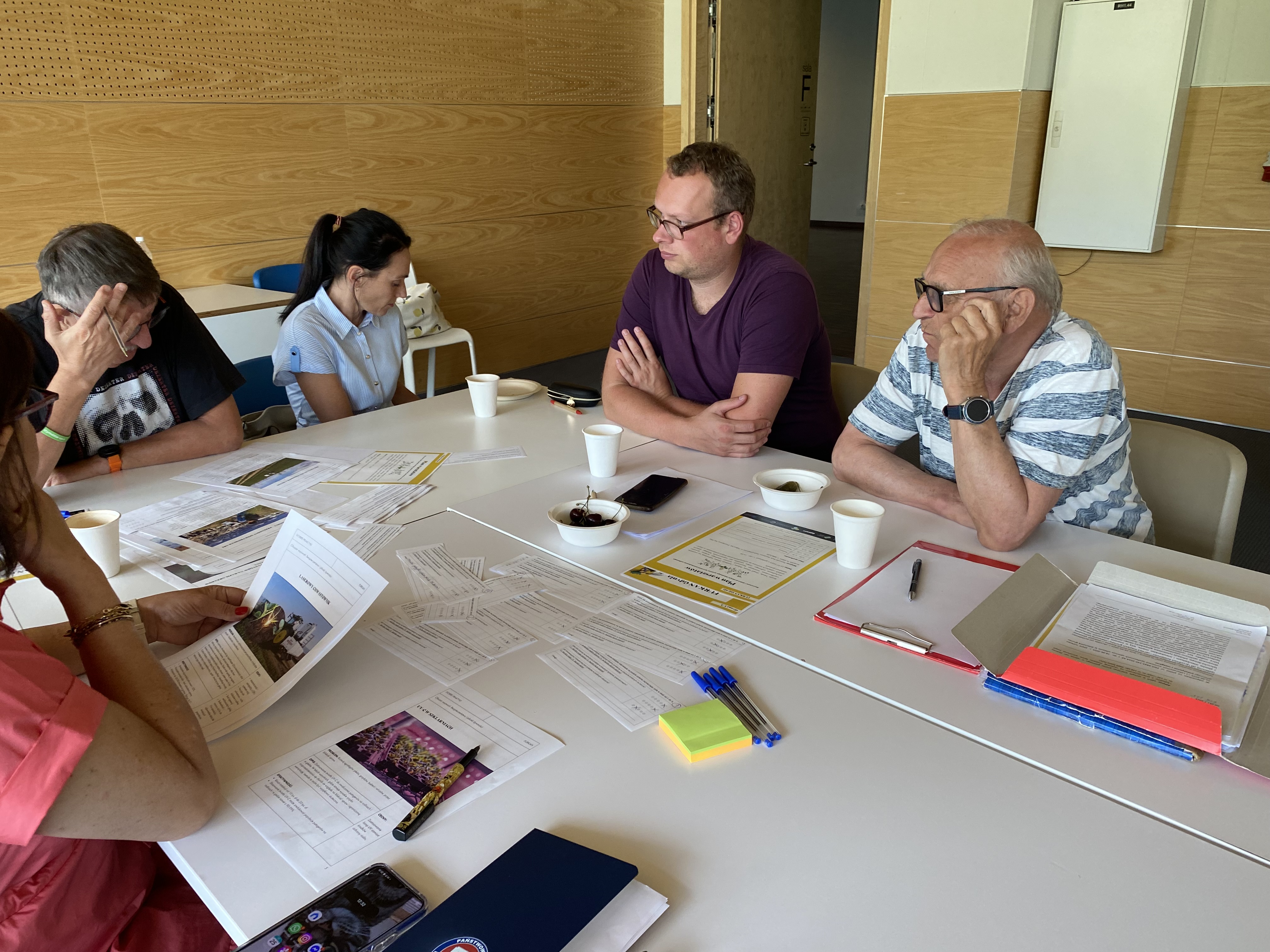
Stakeholders were also involved in shaping solutions. Four co-creation workshops were organised with mixed groups of participants, including producers, consumers, NGOs, local institutions and community representatives. Through co-creation sessions and futures thinking exercises, participants collaboratively identified challenges and selected 15 good practices considered relevant and feasible in the local context. They also influenced the educational publication, the educational boards and the prototype exhibit, which were tailored to the specific needs and realities of the local food system.
During implementation, participation moved into community-led action. Trusted local actors became Food Urban–Rural Ambassadors and organised educational meetings in their own communities. Intergenerational workshops used a learning-by-doing approach and brought together children, youth and seniors. The participatory model improved the quality of the project by grounding it in lived experience, increasing trust.
Participation began at the diagnostic stage. The project involved 100 producers, 200 consumers and 25 experts through surveys, interviews and consultations, ensuring that later stages were grounded in reliable and multidimensional knowledge. This made it possible to identify 30 key challenges affecting the local food system and ensured that the diagnosis reflected different perspectives rather than a single institutional viewpoint.
Stakeholders were also involved in shaping solutions. Four co-creation workshops were organised with mixed groups of participants, including producers, consumers, NGOs, local institutions and community representatives. Through co-creation sessions and futures thinking exercises, participants collaboratively identified challenges and selected 15 good practices considered relevant and feasible in the local context. They also influenced the educational publication, the educational boards and the prototype exhibit, which were tailored to the specific needs and realities of the local food system.
During implementation, participation moved into community-led action. Trusted local actors became Food Urban–Rural Ambassadors and organised educational meetings in their own communities. Intergenerational workshops used a learning-by-doing approach and brought together children, youth and seniors. The participatory model improved the quality of the project by grounding it in lived experience, increasing trust.
FURKAN Gdynia was organised across local, regional and European levels, creating a bridge between community-based action and institutional frameworks. At the local level, the Municipality of Gdynia was the key public partner and played both an operational and strategic role. Municipal experts supported the research phase by sharing data and policy materials, facilitating access to stakeholders, and connecting the project team with relevant departments and decision-makers. The city provided meeting spaces, supported public events and promoted the project among residents. Engagement ranged from working-level specialists to the Deputy Mayor, who participated in project forums.
At the regional level involved surrounding municipalities, producers from the wider urban–rural area, and regional institutions connected to agriculture, food quality, environmental protection and rural development. Representatives of regional administration and public institutions contributed expertise during the research and co-creation phases, helping to place local challenges within wider regional food-system dynamics. The diagnostic report was shared with 52 institutions.
At the national level, project findings and policy-relevant outputs were also shared with the relevant ministry, opening a channel for broader dialogue on sustainable food systems and local food resilience. The FURKAN model, materials and tools were made available on the project website for other cities wishing to replicate the model.
At the European level, the project was implemented under EIT Community New European Bauhaus Enhance 2025 within the EIT Food portfolio. This provided the financial framework, strategic direction and scaling logic for the project. European-level perspectives were further reflected in the project’s analytical framework, which drew on European Commission studies, policy documents and megatrend analyses to align local diagnosis and proposed practices with wider sustainability priorities.
At the regional level involved surrounding municipalities, producers from the wider urban–rural area, and regional institutions connected to agriculture, food quality, environmental protection and rural development. Representatives of regional administration and public institutions contributed expertise during the research and co-creation phases, helping to place local challenges within wider regional food-system dynamics. The diagnostic report was shared with 52 institutions.
At the national level, project findings and policy-relevant outputs were also shared with the relevant ministry, opening a channel for broader dialogue on sustainable food systems and local food resilience. The FURKAN model, materials and tools were made available on the project website for other cities wishing to replicate the model.
At the European level, the project was implemented under EIT Community New European Bauhaus Enhance 2025 within the EIT Food portfolio. This provided the financial framework, strategic direction and scaling logic for the project. European-level perspectives were further reflected in the project’s analytical framework, which drew on European Commission studies, policy documents and megatrend analyses to align local diagnosis and proposed practices with wider sustainability priorities.
FURKAN Gdynia was designed and implemented as a transdisciplinary project combining sociology, food technology, urban policy, foresight, education and environmental practice. The core project team brought together expertise in social research, food systems, urban development and futures studies. This was complemented by expert input from institutions and practitioners working in food safety, environmental protection, social innovation, education and local food production.
The whole project was structured around three interconnected areas: environmental change, food quality and safety, and cooperation. These areas shaped the diagnosis, the selection of good practices, the educational tools and the public activities. Different perspectives were combined through research, expert interviews, co-creation workshops and shared interpretation of results. Experts ranged from sanitary and environmental authorities to social innovation practitioners, educators and local producers, allowing the project to connect regulatory, scientific, civic and practical knowledge.
A particularly innovative element was the use of foresight and long-term analysis in a local food-system project. In addition to identifying current challenges, the project used megatrend analysis and cross-impact analysis to assess which problems are likely to become most critical over time. This made it possible to look beyond immediate issues and support more strategic choices between urgent needs and long-term priorities.
The added value of this approach was practical. It improved problem diagnosis, helped identify more realistic and locally relevant responses, and translated complex food-system knowledge into accessible tools such as the educational publication, educational boards and workshop formats. By combining expert knowledge, local experience and long-term thinking, the project produced solutions that were both evidence-based and usable in practice.
The whole project was structured around three interconnected areas: environmental change, food quality and safety, and cooperation. These areas shaped the diagnosis, the selection of good practices, the educational tools and the public activities. Different perspectives were combined through research, expert interviews, co-creation workshops and shared interpretation of results. Experts ranged from sanitary and environmental authorities to social innovation practitioners, educators and local producers, allowing the project to connect regulatory, scientific, civic and practical knowledge.
A particularly innovative element was the use of foresight and long-term analysis in a local food-system project. In addition to identifying current challenges, the project used megatrend analysis and cross-impact analysis to assess which problems are likely to become most critical over time. This made it possible to look beyond immediate issues and support more strategic choices between urgent needs and long-term priorities.
The added value of this approach was practical. It improved problem diagnosis, helped identify more realistic and locally relevant responses, and translated complex food-system knowledge into accessible tools such as the educational publication, educational boards and workshop formats. By combining expert knowledge, local experience and long-term thinking, the project produced solutions that were both evidence-based and usable in practice.
FURKAN Gdynia was financed through the EIT Community New European Bauhaus Enhance 2025 programme within the EIT Food portfolio, with implementation led by Małgorzata Piskórz Research / Busola Trends in partnership with the Municipality of Gdynia. Its long-term financial sustainability is based on replication as a knowledge-based service model.
The project does not rely on a single revenue stream. Its business model combines the possibility of delivering the full FURKAN process — including diagnosis, co-creation, educational design and community engagement — with the separate use of individual tools developed within the project. These include diagnostic methods for local food systems, foresight-based long-term analysis, educational publications, ambassador models, workshop scenarios and educational trails.
This model is already generating external interest. Two regional capital cities in Poland have already approached us with requests to deliver a similar process for the purposes of local food policy. This shows that both the overall methodology and individual tools are recognised as useful and transferable.
In the future, revenues can be generated through commissioned diagnostic and policy-support processes for municipalities and regions, training and workshop services, educational programmes, and adaptation of project tools to new local contexts. Public institutions are the main potential clients, but the model is also relevant for local agencies, educational institutions and community-based partnerships.
The main continuation costs relate to research, facilitation, expert work, educational design and coordination. These costs are incurred by the institutions or partnerships choosing to implement the model. The business model supports scalability because it allows both full-process replication and modular reuse of selected tools, making FURKAN adaptable to different budgets and territorial contexts.
The project does not rely on a single revenue stream. Its business model combines the possibility of delivering the full FURKAN process — including diagnosis, co-creation, educational design and community engagement — with the separate use of individual tools developed within the project. These include diagnostic methods for local food systems, foresight-based long-term analysis, educational publications, ambassador models, workshop scenarios and educational trails.
This model is already generating external interest. Two regional capital cities in Poland have already approached us with requests to deliver a similar process for the purposes of local food policy. This shows that both the overall methodology and individual tools are recognised as useful and transferable.
In the future, revenues can be generated through commissioned diagnostic and policy-support processes for municipalities and regions, training and workshop services, educational programmes, and adaptation of project tools to new local contexts. Public institutions are the main potential clients, but the model is also relevant for local agencies, educational institutions and community-based partnerships.
The main continuation costs relate to research, facilitation, expert work, educational design and coordination. These costs are incurred by the institutions or partnerships choosing to implement the model. The business model supports scalability because it allows both full-process replication and modular reuse of selected tools, making FURKAN adaptable to different budgets and territorial contexts.
FURKAN Gdynia can serve as a model because it does not offer only isolated activities, but a full process for local food-system transformation: diagnosis, long-term analysis, co-creation, community-based dissemination and public education. It is transferable because it combines tools for policy support with practical formats that work in everyday local settings.
The most easily transferable elements are the diagnostic methodology for local food systems, including surveys, interview guides, data triangulation and long-term analysis; the structure based on three challenge areas — environmental change, food quality and safety, and cooperation; the method for selecting good practices through co-creation; the educational publication model; the Food Urban–Rural Ambassadors Network; intergenerational workshop scenarios; and the use of educational trails and public campaigns to translate research into visible local action. The project model, materials and tools were made available online for other cities interested in replication.
Replication requires a combination of skills and partnerships. The most important are social research, facilitation, foresight, educational design and local coordination. Public institutions are important because the model can support food policy and local planning, but cooperation with community actors, educators, producers and trusted local leaders is equally important for implementation and outreach.
What needs to be adapted is not the core logic, but the local content. Each city or region requires its own diagnosis, its own set of stakeholders, and its own selection of feasible good practices. The Ambassador model, workshop formats and educational tools can be reused, but they need to reflect local food habits, local supply chains, territorial conditions and the social structure of the communities involved. This flexibility is one of the main strengths of the FURKAN model.
The most easily transferable elements are the diagnostic methodology for local food systems, including surveys, interview guides, data triangulation and long-term analysis; the structure based on three challenge areas — environmental change, food quality and safety, and cooperation; the method for selecting good practices through co-creation; the educational publication model; the Food Urban–Rural Ambassadors Network; intergenerational workshop scenarios; and the use of educational trails and public campaigns to translate research into visible local action. The project model, materials and tools were made available online for other cities interested in replication.
Replication requires a combination of skills and partnerships. The most important are social research, facilitation, foresight, educational design and local coordination. Public institutions are important because the model can support food policy and local planning, but cooperation with community actors, educators, producers and trusted local leaders is equally important for implementation and outreach.
What needs to be adapted is not the core logic, but the local content. Each city or region requires its own diagnosis, its own set of stakeholders, and its own selection of feasible good practices. The Ambassador model, workshop formats and educational tools can be reused, but they need to reflect local food habits, local supply chains, territorial conditions and the social structure of the communities involved. This flexibility is one of the main strengths of the FURKAN model.