Enhancing Circularity, Sustainability, and Innovation
Rural revitalization in Transylvania
Sustainable community development in Transylvania via rural revitalization and entrepreneurship
In 2019, the village of Adrianu Mare became home to the Mumush Association, a cultural and educational initiative that helped revitalize an aging, nearly deserted community. However, the need for conscious, coordinated development remained unmet. This project builds on lived experience and research to develop an aware community development methodology, identifying missing links in social entrepreneurship and offering a practical framework for cohesive, sustainable growth of the community.
Romania
Local
The villages Adrianu Mic and Adrianu Mare, which are part of Gălești and also in some aspects involving the nearest city, Miercurea Nirajului.
Mainly rural
It involves a physical transformation of the built environment (hard investment)
Prototype level
Yes
Creative Europe
No
Yes
Individual
The project aims to develop the community alongside existing activities, supported by scientific research. My Master’s thesis in Environmental Engineering and Sustainable Development, to be completed by July 2026, focuses on the community’s social potential and the opportunities that can ensure its long-term sustainability. The village hosts numerous volunteer programs throughout the year, demonstrating a strong social foundation. However, sustainable development relies on three pillars, and currently only the social dimension is well established. The economic pillar must be strengthened in proportion to the community’s size.
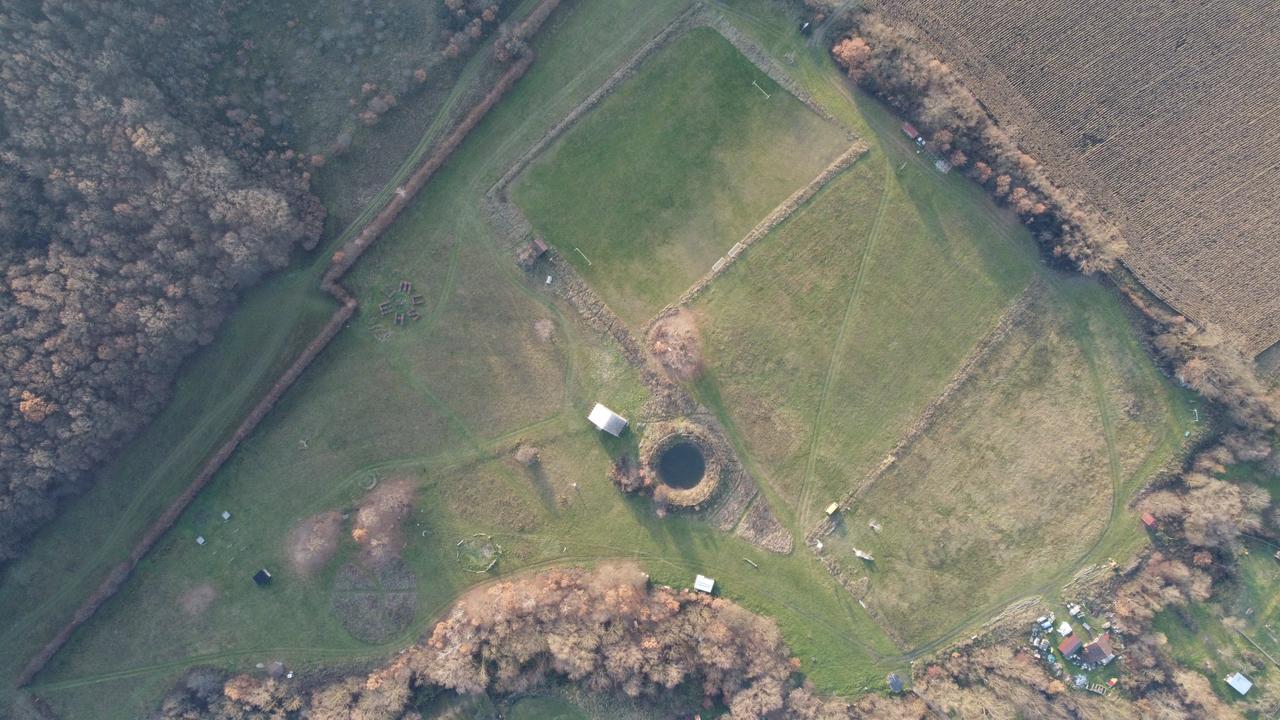
Several workshops already exist in the village, including carpentry, electrical, and visual arts spaces. These are located in deteriorated buildings assembled from recycled local materials. Renovating and equipping them would enable residents, artists and cultural professionals to use them for creative production and income-generating projects, supporting greater financial independence and local stability. This builds on the community’s proven capacity for responsible use and maintenance of shared resources.
The environmental pillar also requires attention, particularly through restoring the local water system and revitalizing gardens. The field hosting community programs has suffered from drought, while the surrounding water system has lacked maintenance for decades. The mostly dried riverbed cannot manage sudden flows and often floods. There is a need for small dams, channels, irrigation, and vegetation planting to restore soil health that would benefit the entire village.
Further potential lies in expanding gardens and building greenhouses, providing both food and employment. By strengthening social entrepreneurship, the project aims to increase self-sufficiency, attract young people, and bring life back to vacant homes.
This idea emerged through a long-term personal process. For six years I have been active in this community, during which time I also changed my professional path, from a Civil Engineering Bachelor’s degree to an MSc in Environmental Engineering, partly inspired by this local example. Here I gained insight into alternative building practices beyond concrete, rarely addressed in formal education, and into shaping a living environment based on mutual exchange rather than simple consumption.
Over the past years, local initiatives have focused on community organizing and international art collaborations. My own approach developed during the last year through my environmental engineering studies, where I began reading research on the functioning and sustainability of small communities. While the existing projects are community-driven, I aim to contribute from a research and systemic perspective.
Through my research and this proposal, I seek to develop a methodology that identifies the potential of rural areas in Eastern Europe and supports local livelihoods. My goal is to contribute to a community that I consider exemplary by introducing practical, implementable improvements that can be maintained locally and strengthened over time by the community itself.
I want to create conditions for the village to be filled with life again, rather than watching its houses, gardens, and environment decline. The current community operates on an open model, hosting international volunteers and running shared kitchens and accommodation in private homes. These efforts, together with environmentally conscious practices such as reuse, renewable materials, and waste separation, have helped establish the values and guidelines on which the community stands. My aim is to channel my academic knowledge back into this community and serve the best available solutions in support of a more sustainable future.
social entrepreneurship
rural revitalization
sustainable community development
multifunctional spaces
sustainable waterway rehabilitation
The existing community has always placed sustainability at its core. From the beginning, this principle has guided every project and volunteer activity. The community follows a vegetarian diet, significantly reducing the environmental footprint of food consumption while enabling energy-efficient cooking based on local, seasonal ingredients. Due to limited water infrastructure, residents carefully manage finite water resources, creating a strong culture of conservation. The built environment prioritizes low-carbon, natural materials such as clay, wood, and shingles whenever possible. These practices are environmentally friendly and help preserve traditional Transylvanian building knowledge. Between May and October, the community organizes regular collective actions such as clean-up days and seasonal food preparation events. The field also serves as an alternative event venue, offering lower-emission alternatives to urban events while creating income opportunities for local residents. During larger gatherings, elderly villagers are involved in cooking, providing additional support to long-term community members. The community is open to everyone, regardless of race, sexual orientation, or disability, demonstrating that diversity strengthens community life. Future project components build on these established practices. Upgrading the workshops aims to strengthen social, cultural, and financial sustainability by providing safe spaces for local craftspeople and professionals. Over the past years the community network has generated relationships that can translate into employment opportunities, but this requires properly equipped local incubator workshops. At the same time, developing gardens and water systems will advance environmental sustainability. The installation of insect hotels on the field has already begun supporting biodiversity, while preserving wildflower meadows and expanding vegetable and flower gardens would further strengthen the local ecosystem.
The approach is clear: a community initiative already exists that has strong positive mental and social impacts, creating connection, purpose, and belonging. However, social value alone is not enough to ensure long-term self-sufficiency. The project therefore aims to involve more people by upgrading and developing local workshops where individuals can create, collaborate, and build sustainable livelihoods within this rural environment.
Recent years show growing interest among young people to relocate to the village. Eight properties have already been purchased from former owners whose families had either moved abroad or gradually aged and passed away, leaving homes empty. Most newcomers first had to build financial stability elsewhere, highlighting a key barrier: rural life often requires starting capital. By strengthening local infrastructure and income-generating opportunities, the project seeks to make rural living more accessible and economically viable.
A central belief behind this initiative is that continuous care for nature eventually creates conditions where nature can sustain the community in return. Restoring a significant part of the local water system would move the village closer to achieving Sustainable Development Goal 6: Ensuring sustainable water management. Beyond irrigation and flood prevention, restored waterways would revive ecosystems and increase residents’ sense of safety and stability.
All major decisions are made collectively, and property or workshop developments follow multi-step community approval. The concept of built heritage best describes this initiative: traditional Transylvanian structures support both human well-being and biodiversity. Because spaces are built by volunteers who later use them, the process creates strong ownership and care for shared places, demonstrating the community’s long-term sustainability potential.
Inclusion is a core pillar of this vision and is already embedded in the community’s daily life. People are connected by shared sustainability values and respect for nature. Everyone is welcome as long as their beliefs do not harm others, regardless of ethnicity, sexual orientation, disability, or social background. Under the concept of inclusive governance, the community itself acts as the main guiding force. While the association carries a certain structure, the community operates independently, guided primarily by respect for personal property and shared spaces. Because of the strong volunteer spirit, individuals contribute according to their abilities and life circumstances, making financial background less of a barrier to participation. Over the years, the community has experimented with new societal models. What began as a free and informal structure has gradually evolved into a clearer system with established community guidelines. This project builds on those experiences and moves toward comprehensive community development supported by planning, professional knowledge, and long-term local insight. Each year, volunteers arrive to maintain shared spaces and work in the community kitchen, ensuring continuity of daily life. The art and music festival organized by the association remains an important pillar supporting year-round activities, yet the long-term goal is to strengthen local initiative so the community can be sustained independently of the festival. Communication primarily takes place in English to support inclusion, while members come from diverse linguistic backgrounds, including Hungarian, Romanian, German, French and Austrian communities. A volunteer wellbeing team, including psychologists, help mediate conflicts and support individuals facing challenges. Everyday practices, shared transport, collective cooking, and mutual help during renovations, ensure that no one is left alone and that everyone can find their place within the community.
Each year between May and October, local residents open their homes to the community. Several households host shared kitchens and communal sleeping spaces, allowing hundreds of community members to stay in the village during this six-month period and benefit from common utilities. These visitors actively contribute to the development of the common areas by working in workshops, maintaining the field, and participating in environmental restoration through both physical and organizational tasks.
Active members who are present throughout the season have regularly organized monthly sharing circles in recent years. These gatherings provide space for personal reflection as well as feedback on community infrastructure and daily operations, where ideas for improvement and optimization are discussed openly. In addition, a larger planning session takes place each November, when the past year is evaluated and the next season is planned by a broader group of committed members working toward the community’s long-term development. This period allows participants to contribute their input most effectively. Topics such as permaculture gardening, home insulation, and improvements to working environments are collectively discussed and prioritized. The involvement of more than thirty people with diverse community experience in a structured brainstorming process, grounded in lessons from the previous year, provides a strong and reliable basis for decision-making. These locally generated insights form the foundation of development, while expert knowledge plays a supporting methodological role. The participatory approach has proven effective, as it ensures that the most urgent local needs are addressed first. Through these collaborative processes, the community actively contributes to achieving key Sustainable Development Goals, including Goal 6 (Sustainable Water Management), Goal 8 (Decent Work & Economic Growth), Goal 11 (Sustainable Cities & Communities), and Goal 17 (Partnerships).
Active members who are present throughout the season have regularly organized monthly sharing circles in recent years. These gatherings provide space for personal reflection as well as feedback on community infrastructure and daily operations, where ideas for improvement and optimization are discussed openly. In addition, a larger planning session takes place each November, when the past year is evaluated and the next season is planned by a broader group of committed members working toward the community’s long-term development. This period allows participants to contribute their input most effectively. Topics such as permaculture gardening, home insulation, and improvements to working environments are collectively discussed and prioritized. The involvement of more than thirty people with diverse community experience in a structured brainstorming process, grounded in lessons from the previous year, provides a strong and reliable basis for decision-making. These locally generated insights form the foundation of development, while expert knowledge plays a supporting methodological role. The participatory approach has proven effective, as it ensures that the most urgent local needs are addressed first. Through these collaborative processes, the community actively contributes to achieving key Sustainable Development Goals, including Goal 6 (Sustainable Water Management), Goal 8 (Decent Work & Economic Growth), Goal 11 (Sustainable Cities & Communities), and Goal 17 (Partnerships).
The design process has already begun over the past years, though in a less structured way. The community has mainly been shaped by stakeholders from Mureș County and the wider Transylvanian region, but it also includes members who previously worked in communities in Sweden, Portugal, and other countries, bringing back knowledge and practices gained abroad. In addition, participants arriving from Western Europe contribute inclusive values and diverse social perspectives that continue to strengthen the community’s development.
In this project, I plan to apply the academic knowledge gained during my Master’s studies in Environmental Management and Sustainable Development at Babeș-Bolyai University in Cluj-Napoca, where I learned from Transylvanian, Italian, and other international professors working in this field. At the same time, I recognize the need for the expert support offered in the next phase of the NEB program, as academic literature on small-scale rural community development remains limited. In my experience, real human practice and lived community knowledge provide the most reliable guidance in this context.
Implementation will rely strongly on local stakeholders. While I am responsible for developing the theoretical background, analysis, methodology, and the collection of best available practices, the physical realization of projects depends on community participation. This has never been a concern, as previous initiatives have consistently attracted motivated volunteers. Their engagement has already been essential in identifying local needs, and the input of residents remains the most important source of direction. It is through their expressed challenges and priorities that I was able to define this project and identify the key areas of sustainable development that require focused action.
In the design process, we primarily rely on hard skills. Our role is to develop the framework based on my own knowledge, scientific literature, and research, applying environmental science and engineering disciplines. Once the framework is established, transdisciplinarity becomes essential, as each development aims to create multifunctional spaces that serve diverse needs.
The first key site is a carpentry workshop that can be expanded through upgrades to also host welding and maintenance functions. This space should be accessible to architects, civil engineers, carpenters, constructors, and hobby woodworkers alike, with improvements shaped by the perspectives of people from different professional backgrounds.
The second site is the arts and crafts workshop, designed to support the community’s creative members. Activities such as string art, painting, sewing, upcycling, and design require safe, dry, and well-equipped spaces where tools and finished works can be protected. The third is a digital workshop, where light design, visual production, photography, small-scale fabrication, and creative work can operate side by side.
In addition, an existing office space currently used during summer needs upgrades. This is where social initiatives, planning, and coordination take place, the organizational heart of the community, and it cannot function effectively without adequate equipment. Developing the community kitchen would attract participants with culinary interests, while expanding community gardens would enable permaculture practices and greater local food production.
Finally, improving the water system would support all other activities by ensuring reliable supply, enabling more volunteers to stay, and increasing safety for residents. Well-equipped spaces with sufficient seating, tools, and infrastructure would reduce operational barriers and create opportunities for teaching, learning, and long-term planning together.
The business model behind our initiative is built on several complementary elements. In the past, personal donations enabled the modernization of certain infrastructure, while property owners have financially maintained the facilities located on their land. However, this model alone cannot sustain the community in the long term. Community events have mostly operated on a donation basis, but we have learned that this approach cannot be scaled to support larger development projects. This realization led to the creation of the present project, recognizing that financial development is one of the three essential pillars of sustainable growth.
By upgrading the workshops, we aim to ensure that skilled professionals do not need to seek employment elsewhere, but can instead work locally in the place they call home. Based on our experience, the lack of adequate infrastructure is one of the main reasons why craftspeople cannot remain in the village year-round. Our projections show that improving these facilities would increase team capacity, attract more diverse work opportunities, and create additional employment within the community.
We believe this business model is not unusual. Successful examples of small-scale, community-based self-sustaining economies exist across Europe, Japan, and Brazil, as well as locally. In our case, the human resources and demand for specialized craftsmanship already exist, particularly locally, where skilled artisans are increasingly scarce. The missing component is properly equipped working spaces that enable consistent production and collaboration.
Environmental improvements such as restoring the waterway system and expanding community-based food production can significantly reduce household costs. Reliable water management prevents damage from flooding, while local food cultivation reduces the need for frequent travel to the town for basic supplies, strengthening both economic resilience and daily security for residents.
Rural areas can be more difficult to access and develop than urban environments, yet the essential elements of community-based sustainability can be replicated anywhere. I would emphasize the theoretical dimension of our project, which can serve as a starting point for other communities.
The first step is to observe how a small community currently functions and which principles of sustainable development are already present. In many similar cases, the social foundation exists, while the economic and environmental dimensions require further development. Replicable models begin with identifying traditional or needed occupations in a region and understanding where these intersect with the existing skills of the community. Development should focus on this intersection and create the working conditions that allow these activities to grow locally.
The second key aspect is the environment. Communities must understand how the local ecosystem supports them and how it can also create risks. Careful observation helps identify nature-based solutions, whether through water management, soil restoration, vegetation for water retention and shading, or protection against erosion and landslides.
Many of these solutions already exist in traditional knowledge and can be strengthened by combining them with modern methodologies. It is important to recognize that communities of this kind can develop sustainably when they embrace an entrepreneurial mindset, allowing them to preserve cultural heritage while maintaining harmony with the environment. We believe these approaches can be transferred to other communities, where local characteristics will naturally fill the remaining gaps.
Our first step would be to assess stakeholders’ needs to ensure the initiative reaches its goals. We would organize conversations about how individuals imagine the future of the community, their role in it, and what they require to build a sustainable livelihood. Because a large network of people is already connected to the community, the second step would involve them in identifying realistic projects and employment opportunities.
Based on these steps, we would develop concrete plans to upgrade workshop spaces and the surrounding environment according to available resources. Implementation would rely on stakeholder participation, which has proven reliable in past projects. Most needs could be addressed within one year, as the required works are mainly renovations, maintenance, and equipment upgrades rather than major structural changes.
Tool procurement would take place during the same period, while community capacity and project opportunities would be developed in parallel, ensuring that once spaces become functional there are no barriers to launching social entrepreneurship activities.
Environmental interventions are season-dependent, but with a detailed action plan we expect visible progress within the next year. Our three-person technical team, an environmental engineer, a geologist, and an engineer working in the public water utility sector, provides the professional expertise needed to guide these actions. The local water system currently requires urgent attention, while gardens, greenhouses, and cultivation areas would be rehabilitated through permaculture planning within the same cycle.
We sense strong readiness among community members for these developments and are confident that, with adequate funding, implementation can proceed with significant collective effort.