Arts, Culture, and Heritage as Drivers of Change
Minu.ti
Minu.ti – A Digital Platform for Participatory Rural Regeneration
Minu.ti is a digital platform that reimagines rural regeneration through storytelling. Rooted in Minucciano, it invites people to share experiences, discover hidden places, and engage with local life. By connecting heritage, community, and tourism, it fosters belonging, preserves local identity, and creates new opportunities for work, entrepreneurship, and revitalizing local activities.
Italy
Local
Minucciano, Lucca, Italy
Mainly rural
It refers to other types of transformations (soft investment)
Prototype level
No
No
No
Individual
Minu.ti is a community-driven digital platform supporting the regeneration of Minucciano, a rural municipality in northern Tuscany facing depopulation, limited economic opportunities, and the loss of local knowledge and identity.
Inspired by the strong sense of belonging typical of small villages, it transforms local stories, knowledge, and everyday practices into a shared digital heritage, reconnecting people with the territory and enabling new forms of sustainable engagement.
The project was developed through collaboration with local stakeholders and institutions, including ongoing dialogue with the Municipality of Minucciano and the Tuscany Region. Participatory co-design with residents shaped the platform’s structure and content, allowing local voices, needs, and aspirations to directly inform it. These activities generated an initial collection of stories, places, and insights forming its foundation.
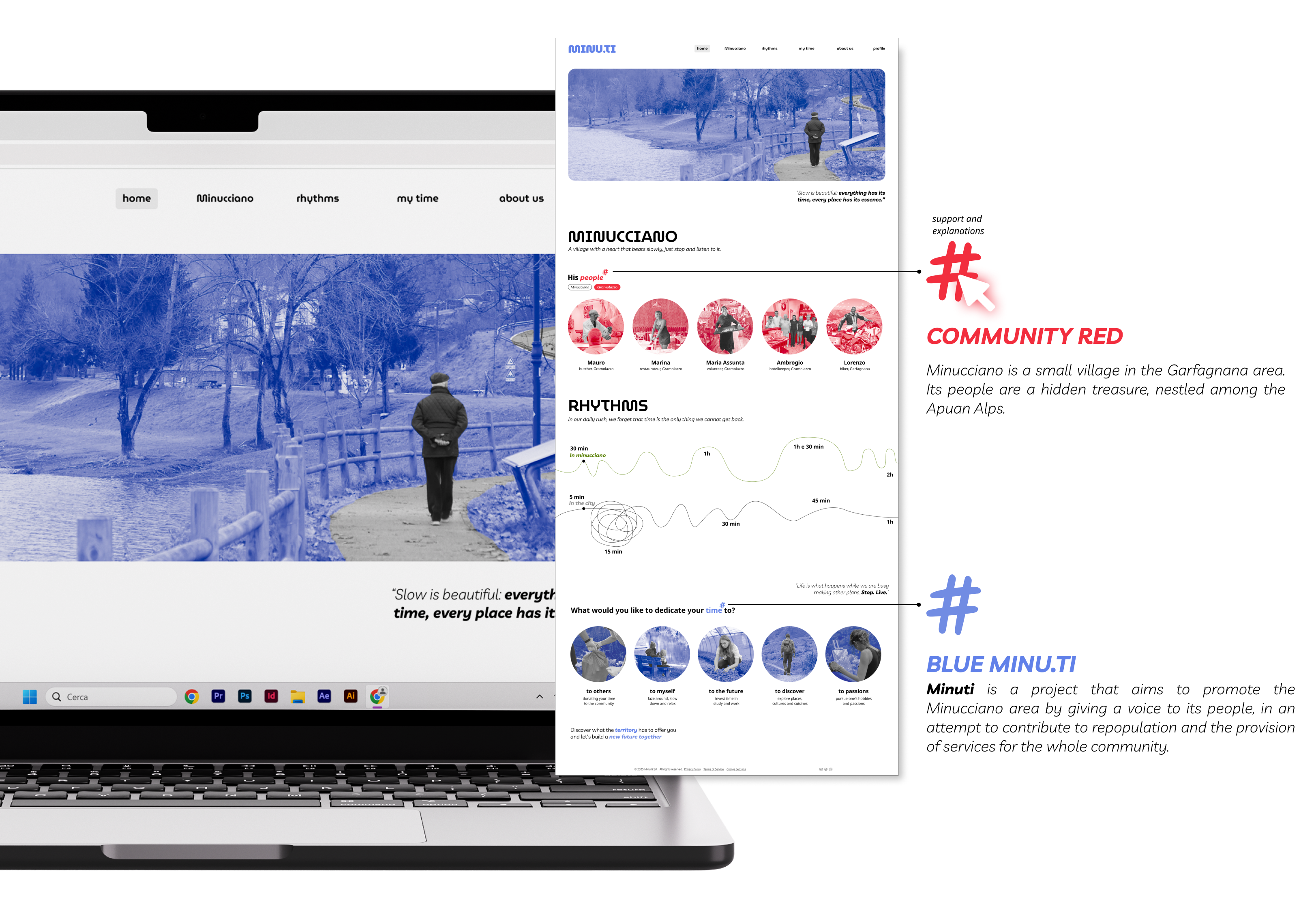
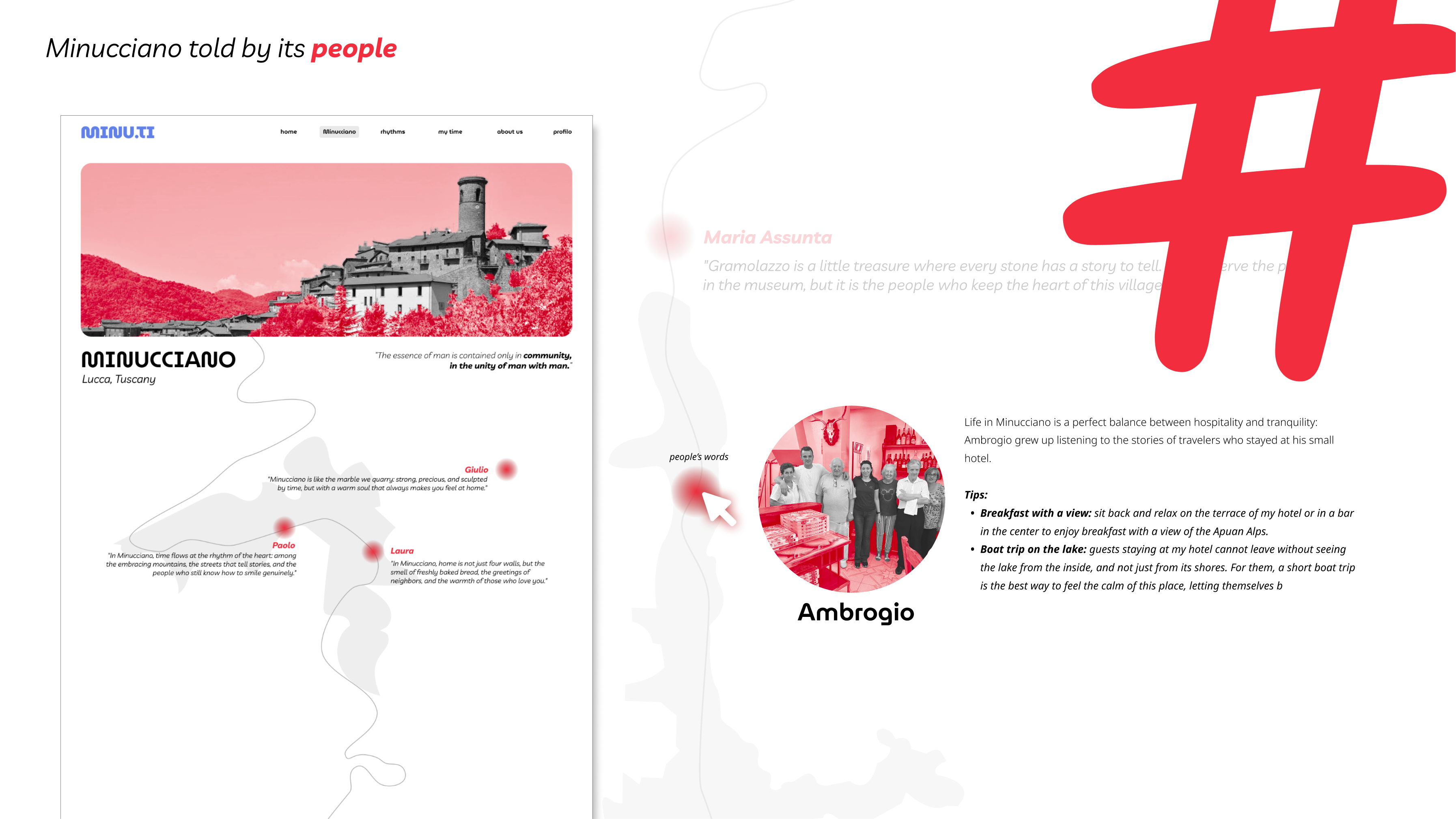
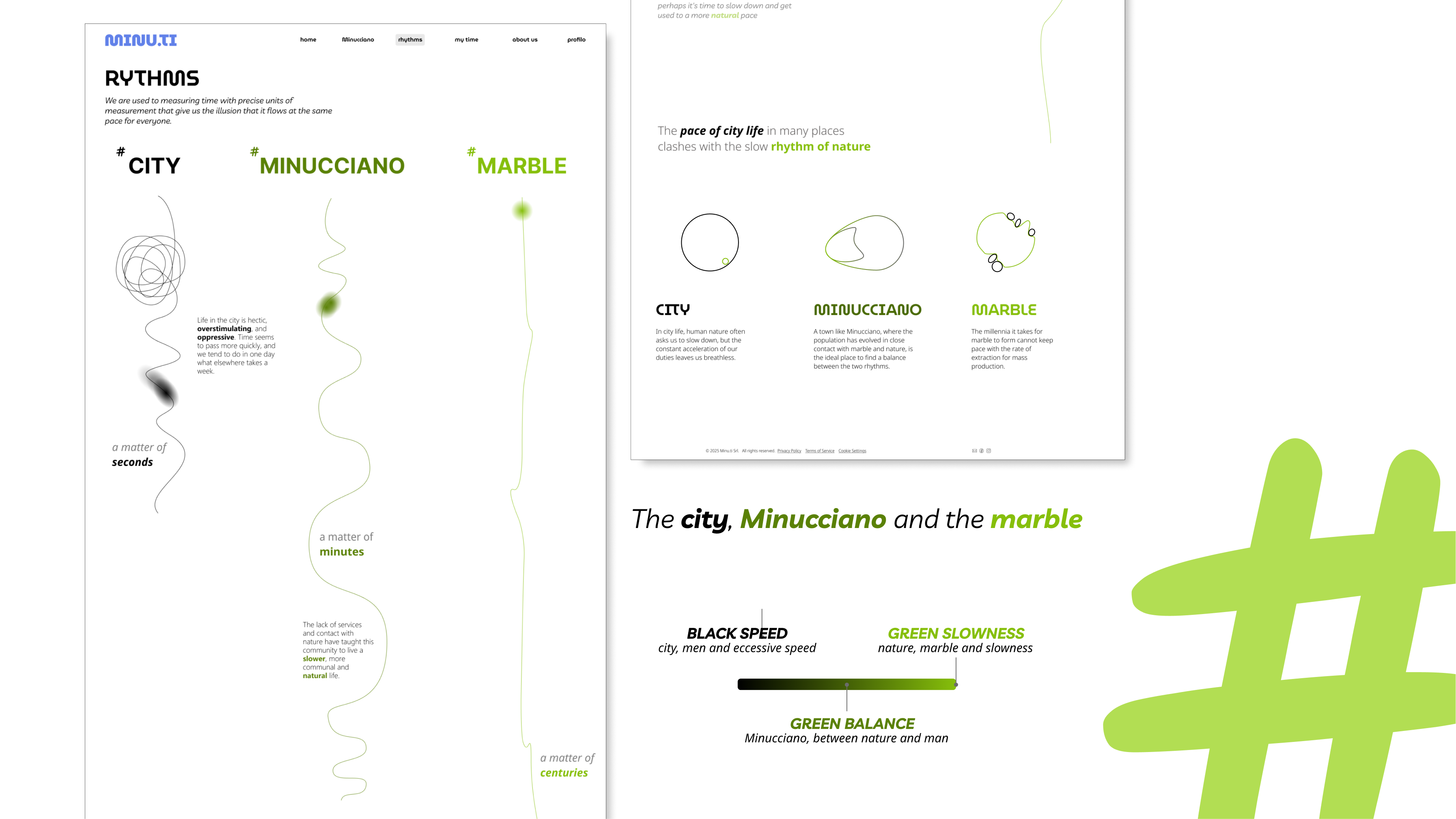
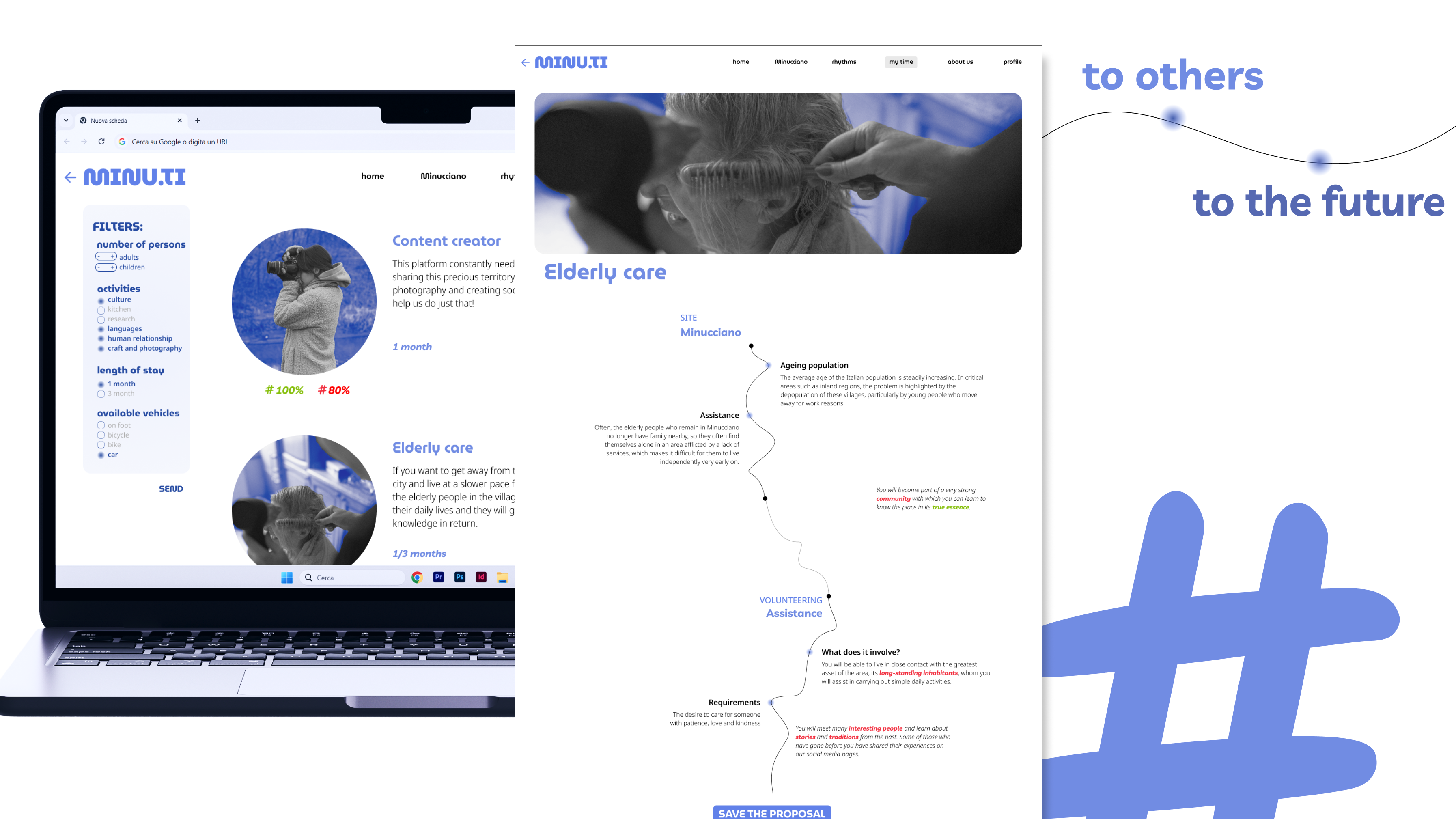
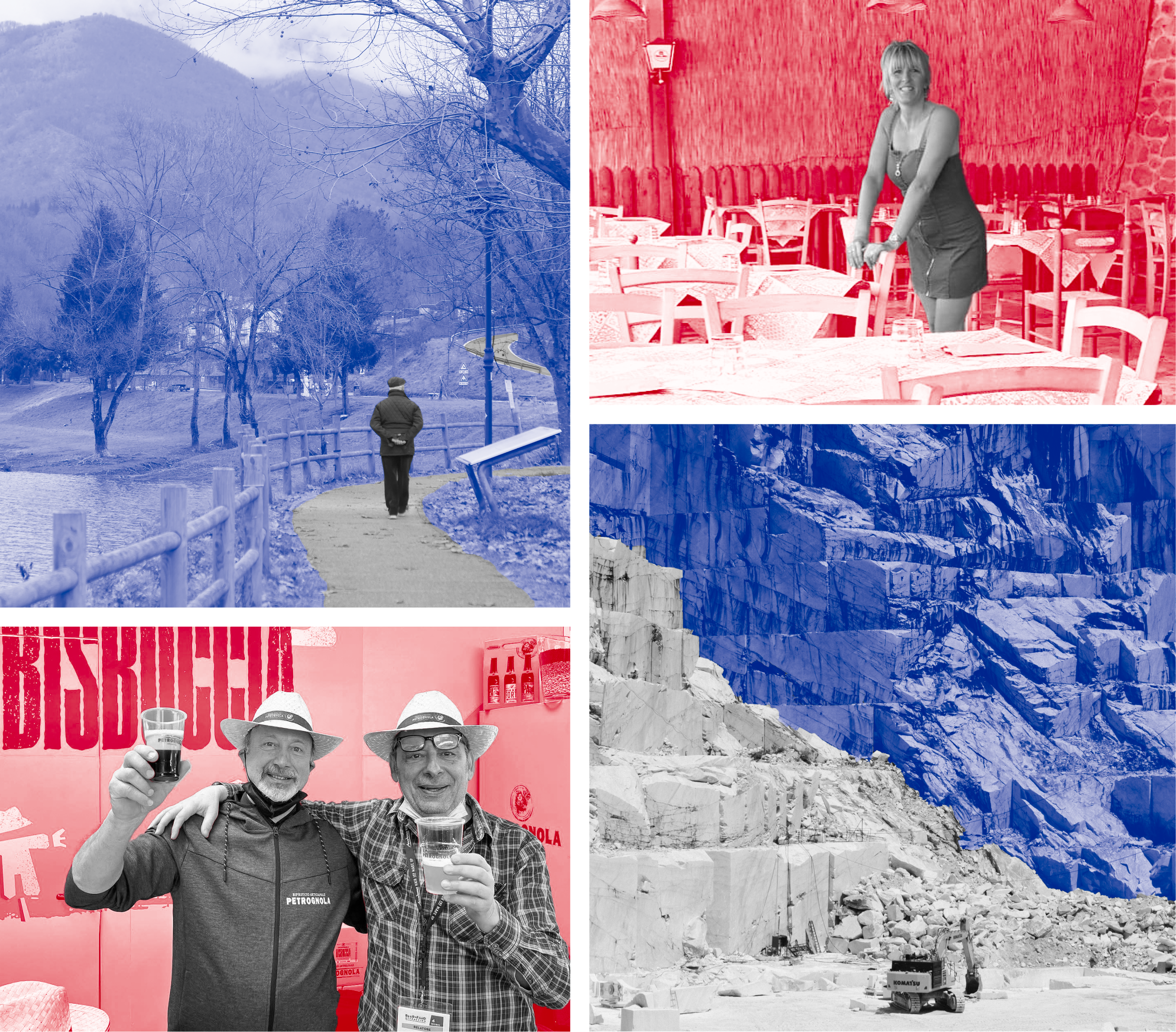
Minu.ti presents the territory through three narratives: people, rhythms, and opportunities. Residents share stories, tips, and hidden places, creating an authentic portrait beyond conventional tourism. Another section explores the relationship between time, landscape, and local marble culture, highlighting the contrast between fast urban life and slower rural rhythms.
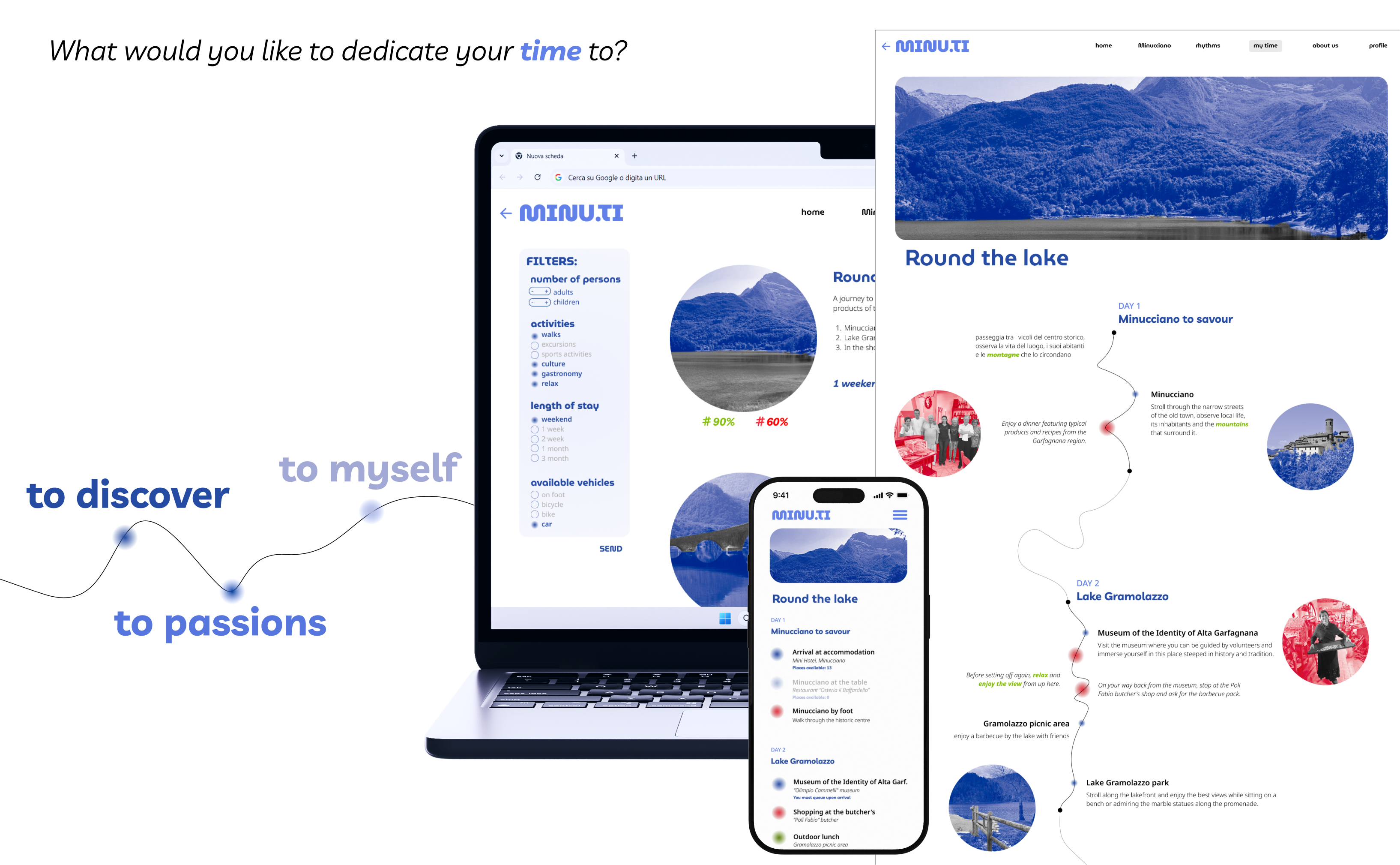
The platform promotes slow tourism through multi-day itineraries and outdoor experiences, while also highlighting volunteering and professional opportunities that encourage engagement and investment in the area.
In the long term, Minu.ti aims to strengthen territorial identity, support local entrepreneurship, and attract new residents. It can evolve into a digital archive of community knowledge and a scalable model for rural regeneration across Europe.
Minu.ti was born from childhood memories of small Tuscan villages, inspiring a desire to preserve their strong sense of community and unique perception of time. Today, these areas face depopulation, weakening social networks, limited services, and fewer opportunities for younger generations.
The project developed through the case of Minucciano, a municipality in northern Tuscany with a strong identity linked to nature, marble, and local traditions. It began with a listening phase involving residents and stakeholders through interviews and participatory activities supported by the Tuscany Region. This helped understand local needs and aspirations while building trust and relationships.
Co-design workshops revealed both concern for the future and a desire to make the area more visible. Residents highlighted the need to attract visitors and newcomers interested in slow lifestyles, nature, and authentic community experiences.
From these insights, a community-driven digital platform was developed, where inhabitants narrate the territory. Beyond tourism, it collects stories, knowledge, hidden places, and everyday practices, creating a living portrait while preserving cultural capital shaped by multiple voices.
The process combined research, storytelling, and iterative testing, leading to a structure based on three dimensions: people, rhythms, and opportunities. Storytelling thus becomes both a narrative and a tool for visibility, connection, and value.
In the long term, Minu.ti aims to strengthen identity and enable sustainable engagement, attracting visitors, remote workers, and new residents, while supporting economic revitalization, social cohesion, and long-term resilience.
Digital Innovation
Social Inclusion
Cultural Heritage
Rural Development
Community-driven and crowdsourced storytelling
Minu.ti addresses sustainability through an integrated approach connecting social, cultural, environmental, and economic dimensions, supporting the long-term resilience of rural areas facing depopulation and economic decline
Its strongest contribution is cultural: the project preserves and transmits local knowledge through storytelling and community input, creating a digital archive of memories, traditions, and everyday practices. In many remote areas, this heritage risks being lost without platforms like Minu.ti. By sharing it with residents and visitors, the project keeps local identity and history alive for future generations.
Social sustainability is also central. Developed through co-design with residents, Minu.ti gives communities an active role in shaping how their territory is represented. By amplifying local voices and encouraging collaboration among citizens, visitors, and new actors, it supports social cohesion and rural revitalization.
Environmentally, the project promotes slow and responsible tourism that respects landscapes and natural resources. Instead of mass tourism, it focuses on small-scale outdoor experiences, multi-day itineraries, and nature-based activities, enabling low-impact exploration while supporting local economies and preserving environmental quality.
Economically, Minu.ti creates opportunities for entrepreneurship and income generation. By promoting local producers, initiatives, volunteering, and professional opportunities, it leverages slow tourism to foster sustainable work, collaboration, and development.
By integrating these aspects, Minu.ti proposes a model of rural regeneration that improves quality of life while offering meaningful and responsible visitor experiences.
Our concept is grounded in the idea of “Invisible Beauty Made Visible.” Many territories already contain remarkable aesthetic, cultural, and environmental value that often remains unnoticed. Rather than creating new infrastructures or transforming landscapes, our project reveals and amplifies this existing beauty through stories, local knowledge, and community narratives.
The project deliberately avoids promoting large-scale tourism infrastructure such as hotels or new developments. Instead, it encourages a low-impact, community-centered way of experiencing places, where visitors and residents engage with the territory through its hidden layers of meaning: memories, traditions, landscapes, and everyday practices.
In this sense, aesthetics is understood not only as visual quality but also as a living relationship between people and place. By making invisible stories visible, the project strengthens local identity and helps communities rediscover the value of their surroundings. This process fosters a renewed sense of belonging, care, and responsibility for the environment.
In everyday life, the initiative invites residents and visitors to slow down, observe, and appreciate the subtle beauty embedded in ordinary spaces. In the long term, it contributes to building a culture of preservation rather than consumption of places, supporting sustainable territorial development that respects ecological limits and local heritage.
The project can be considered exemplary in aesthetic terms because it proposes a different paradigm of beauty: not based on spectacle, growth, or new construction, but on the ability to reveal, interpret, and share what is already present. By doing so, it promotes an inclusive and sustainable aesthetic experience rooted in community narratives, environmental awareness, and collective care for place.
Minu.ti promotes digital inclusion through an accessible online platform that makes the stories, places and rhythms of the territory available to a wide audience. By using simple and intuitive digital tools, the project creates a bridge between local knowledge and contemporary forms of communication, allowing both residents and visitors to discover and engage with the cultural life of Minucciano. At the same time, the platform strengthens community inclusion by placing local inhabitants at the centre of the narrative process. Residents actively contribute by sharing their experiences, memories and everyday perspectives, transforming the community into the main voice of the project.
A particularly important aspect concerns the involvement of older generations. As a digital initiative, Minu.ti consciously works to include elderly residents, who are often excluded from digital projects. Their memories, knowledge of local traditions and personal stories become a fundamental part of the narrative, ensuring that the cultural heritage of the community is preserved and transmitted. This approach also fosters intergenerational dialogue. Through this collaboration, the project not only preserves local memory but also creates meaningful connections between generations, strengthening social cohesion within the community.
Finally, Minu.ti addresses the inclusion of inner and rural areas, which are often marginalised in contemporary development processes. By giving visibility to a small village and its cultural and environmental heritage, the project helps bridge the gap between peripheral territories and broader cultural and tourism networks. In doing so, Minu.ti contributes to creating new opportunities for sustainable tourism, local development and social cohesion, ensuring that smaller communities and remote areas can participate more actively in cultural and digital innovation.
Participation has been central to Minu.ti, both in its design and ongoing content creation. The project originated from a co-design meeting with residents of Minucciano, where key challenges emerged, including depopulation, loss of cultural identity, and the need to promote the territory sustainably. These discussions shaped the project, highlighting the value of everyday knowledge, personal memories, and local stories as key resources. This led to storytelling becoming the platform’s core, supported by a crowdsourcing approach that enables residents, visitors, and enthusiasts to contribute.
Participation not only informed the concept but also defined its structure and objectives, ensuring alignment with community needs and aspirations. It remains central to the platform, conceived as an open participatory tool where residents share stories, recommendations, memories, and hidden places. Crowdsourcing expands this process, creating a diverse archive of experiences and knowledge.
Each story becomes a form of civic participation and collective storytelling, transforming community members into active narrators and curators of their territory. Their contributions shape how the place is represented and experienced.
This model enriches the platform while strengthening the relationship between people and place. By valuing local knowledge and lived experience, the project fosters ownership, belonging, and shared responsibility for the future. Minu.ti thus shows how participatory storytelling can support community engagement and place-based development.
The development of Minu.ti involves actors at different levels, creating connections between local communities, institutions, and external partners, positioning the platform as a GovTech application that can support regional goals and be replicated in other municipalities.
At the local level, residents play a central role by contributing stories, knowledge, and insights that shape the narrative of the platform. Local initiatives, businesses, and associations are also key stakeholders, as the platform aims to increase their visibility and support local activities within the territory of Minucciano.
At the institutional level, collaboration with local and regional administrations is essential. In particular, cooperation with the Municipality of Minucciano and the Region of Tuscany can support the integration of the platform into broader territorial development strategies helping to achieve regional objectives in sustainable tourism, cultural heritage enhancement, and rural regeneration
At a wider level, the concept aligns with European priorities concerning the preservation of cultural heritage, sustainable tourism models, and the revitalisation of rural and mountain areas.
By connecting community knowledge with institutional support and broader networks, Minu.ti creates new opportunities for collaboration that extend beyond the local scale, demonstrating how a GovTech approach can amplify the impact of community-led initiatives while remaining rooted in the identity and experiences of the local community.
Minu.ti is developed through a transdisciplinary approach that integrates knowledge and methods from design, digital technologies, social sciences, tourism, and storytelling. The concept combines ICT (Information and Communication Technologies) with cultural research to create a digital platform that connects people, places, and opportunities, personalizing experiences while optimizing local tourism operations.
Design plays a central role in structuring the user experience, translating complex territorial narratives into an intuitive digital environment. Storytelling transforms personal memories, local knowledge, and everyday experiences into engaging cultural content, allowing communities to share their histories and identities directly with users. Insights from social sciences and territorial studies inform the project’s understanding of rural challenges, such as depopulation, community resilience, and cultural identity, ensuring interventions are socially sensitive and meaningful.
Through the integration of digital technologies and participatory methods, Minu.ti creates a bridge between cultural heritage, tourism innovation, and community engagement. The platform fosters an ecosystem where rural territories are explored, narrated, and revitalized, offering users immersive experiences while supporting local development. This transdisciplinary design positions Minu.ti as a model for combining technology, culture, and people-centered storytelling to sustainably enhance rural tourism and community visibility.
Beyond its local implementation, Minu.ti is designed as a transferable platform that can be adopted by municipalities, regions and cultural organisations seeking to enhance their territorial identity and attract sustainable tourism.
The project is supported by a network of key partners, including local businesses, cultural associations, municipal institutions, universities and creative professionals. These actors contribute to the platform by providing experiences, local knowledge and content, creating a collaborative ecosystem that strengthens territorial identity while supporting local economic activity.
The key activities of the project include the development and management of the digital platform, the production of multimedia storytelling content, the coordination of the local partner network and the design of curated tourism experiences.
From an economic perspective, Minu.ti operates through a hybrid revenue model. On one hand, revenue is generated through premium tourism services, such as personalised itineraries and curated experiences. On the other hand, the platform can be offered as a subscription-based service to municipalities, regions and organisations interested in adopting the model to promote their own territories. Additional financial support may derive from European or regional funding opportunities dedicated to cultural and territorial development, including initiatives such as NEB.
Through tourism services and programmes involving workers, students and volunteers, Minu.ti generates economic opportunities for local actors, increasing the attractiveness of rural areas and supporting local service ecosystems.
The Minu.ti project is designed as a pilot initiative that can be replicated and adapted to other rural and marginalised areas to improve their economic and social situation. However, the power of storytelling in this project also allows it to extend to more well-known cities, showcasing them from a different and more authentic perspective.
One of the most scalable aspects of the project is its territorial storytelling methodology, which places local communities at the centre of the narrative process. By collecting stories, memories and everyday experiences from residents, the platform creates a living archive of local identity that can be replicated in other villages and territories. This storytelling model not only promotes the touristic aspects of the territory, but also highlights local working activities and economic practices, creating an additional layer of value that can be replicated in contexts facing significant challenges such as depopulation and the lack of local services.
The structure of the digital platform also allows the project to scale easily by expanding the number of territories that can be represented and narrated. The platform is designed as a flexible system integrating storytelling, cultural content and tourism experiences, and its architecture can be adapted to different territories. This allows each place to build its own narrative while maintaining a shared structure and methodology.
Another key scalable component is the community-based governance model. In Minu.ti, local businesses, cultural actors and residents actively participate in the creation of content and tourism experiences. This collaborative structure can be replicated to support local economies and strengthen community participation.
Through these elements, Minu.ti proposes a replicable framework, which can be adapted to many Mediterranean contexts while respecting the specific identity and characteristics of each place.
The Minu.ti concept was developed through a co-design process with the local community, ensuring strong relevance and engagement from the early stages.
The project’s implementation is structured over approximately one year through a series of development steps.
Months 1 / Project formalisation
Creation and registration of a legal entity, definition of the brand identity and positioning of Minu.ti as a transferable and scalable platform.
M. 1-2 / Platform prototyping
The project is currently in the prototyping phase, where key aspects such as user experience, storytelling formats and platform usability are being designed and tested through iterative development.
M. 1-4 / Territorial mapping and network activation
In parallel, the project involves mapping local resources, gathering stories and identifying potential experiences. This phase includes the activation and coordination of a local network of stakeholders, such as businesses, associations and residents, who contribute to the platform.
M. 3-6 / Content production
Production of multimedia content, including the organisation of temporary creative residencies where content creators, students and researchers live and work within the territory to document everyday life.
M. 5-8 / Pilot implementation
Once the first content and partnerships are established, the project will move to the launch of the platform, the testing of curated itineraries and the activation of tourism and work-related services, with feedback collection to improve the system.
M. 7-10 / Communication and dissemination
The project will then focus on promotion through digital communication, collaborations with universities and cultural networks, and participation in relevant events.
M. 9-12 / Scaling and expansion
Finally, the project will be extended to other municipalities in the Garfagnana area, building a shared narrative and testing the replicability of the model.