Castel del Piano living heritage
Castel del Piano linving heritage - rediscovering landscape, history and community
Castel del Piano living heritage reconnects archaeology, landscape and community to regenerate two abandoned rural sites of high historical and environmental value, transforming them into shared cultural spaces linking heritage, nature and local identity.
Italy
Two different places both located in the territory of Castel del Piano
Early initiative
Yes
Yes
Yes
No
No
53004: Castel del Piano (IT)
"Castel del Piano living heritage" is a heritage-led regeneration initiative in a small rural municipality in southern Tuscany that reconnects archaeology, landscape and community life through a participatory approach inspired by the values of the New European Bauhaus.
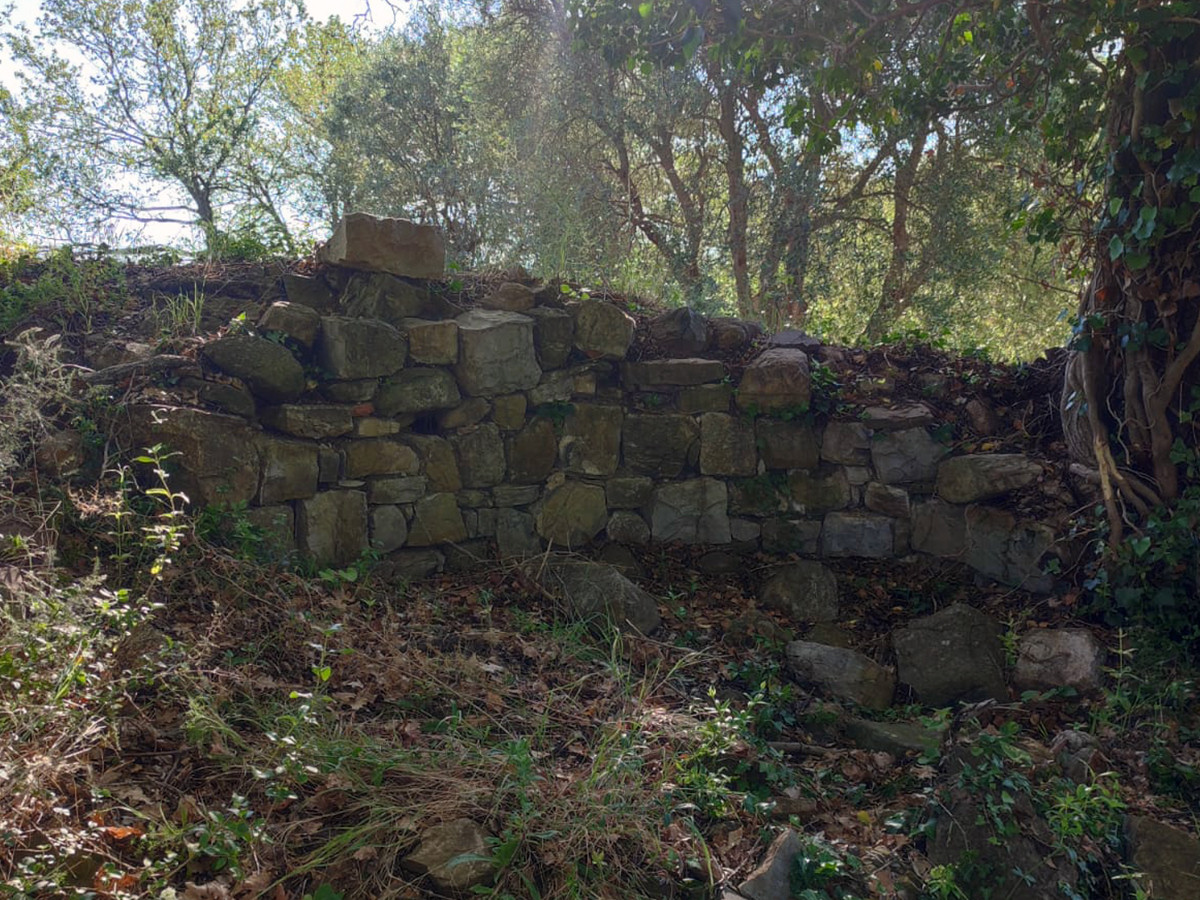
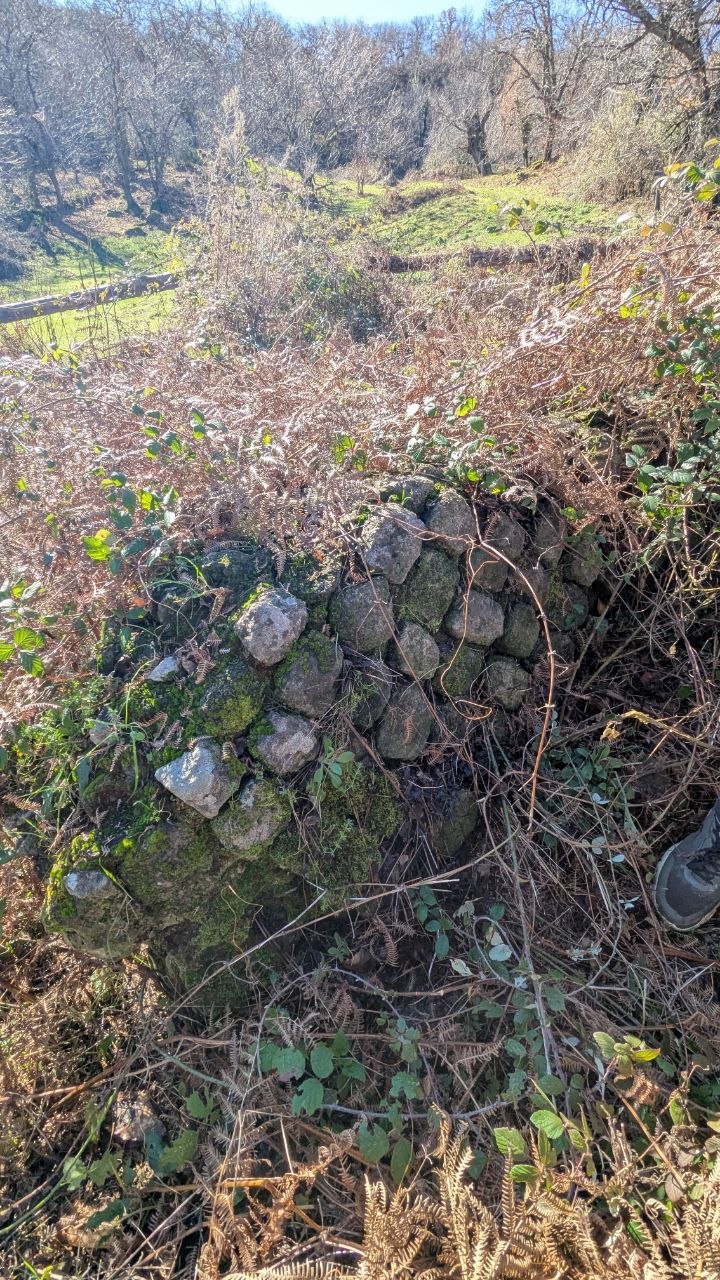
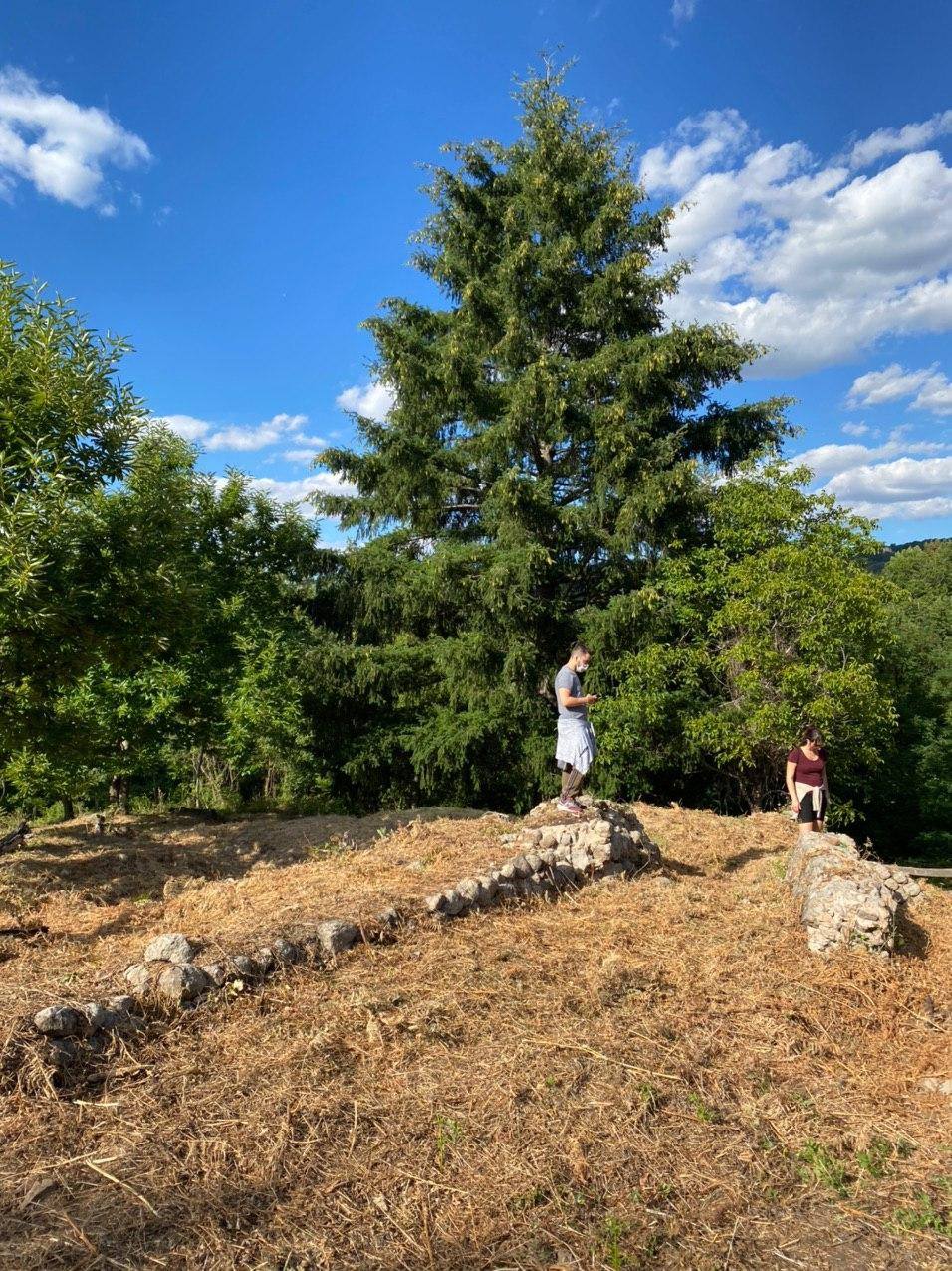
The project focuses on two rural sites where traces of Roman and Early Medieval settlements remain visible within landscapes shaped by centuries of agricultural activity. Today these places are largely abandoned and marginal despite their historical and environmental value.
The initiative aims to rediscover and revitalise these areas through archaeological research combined with community engagement and landscape-sensitive actions. Excavation activities will be accompanied by an archaeology field school, educational programmes with local schools, open excavation days and cultural events organised with local associations.
From the early stages, the project promotes a co-creation process involving citizens, local organisations, schools and cultural stakeholders in the interpretation and future use of the sites. Public meetings, workshops and participatory activities will allow residents and end-users to contribute ideas and perspectives, ensuring that the project reflects the needs and identity of the community.
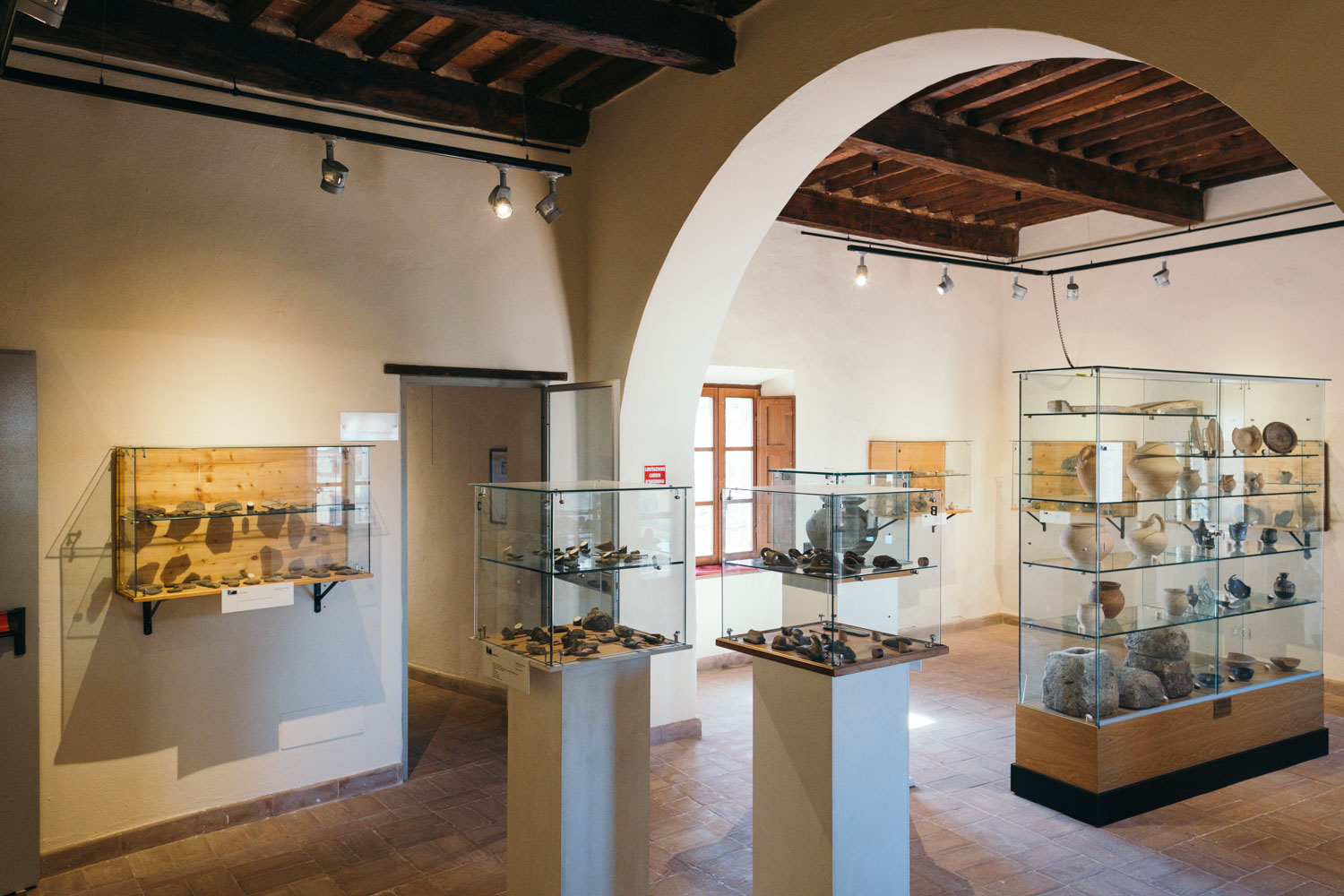
The project will also strengthen the role of the Palazzo Nerucci museum as a hub for interpreting the historical landscape and connecting archaeological discoveries with local identity. In the long term, the initiative will create the basis for a cultural route linking excavation sites, museum interpretation and the surrounding natural environment.
By revealing the beauty of hidden heritage, promoting sustainable landscape care and involving the community in decision-making processes, "Castel del Piano living heritage" demonstrates how small European municipalities can regenerate marginal rural landscapes through culture, participation and shared stewardship of heritage.
Heritage regeneration
Rural landscape
Community participation
Archaeology
Cultural tourism
"Castel del Piano living heritage" promotes a sustainable approach to heritage and landscape regeneration in a rural European territory affected by the gradual abandonment of traditional land management.
The project focuses on two marginal areas where traces of historical settlements remain embedded in the landscape. Over time, the interruption of agricultural activities has not resulted in balanced ecological regeneration but rather in progressive degradation of rural structures and landscape quality.
Through archaeological research and landscape care, the project aims to rediscover and maintain historical elements such as terraces, pathways and structural remains that are part of the cultural landscape. These activities contribute to restoring a relationship between people and land while promoting responsible stewardship of heritage.
The intervention strategy is intentionally based on light and reversible actions. The project avoids heavy construction or infrastructure and instead focuses on documentation, interpretation and minimal maintenance of existing structures.
By reconnecting heritage conservation with landscape management, the initiative contributes to improving environmental quality and resilience in areas where neglect has altered the historical balance between human activity and nature.
At the same time, the project promotes sustainable cultural tourism by encouraging visitors to explore the territory through slow and educational experiences that respect the landscape and local community.
In this way, "Castel del Piano living heritage" demonstrates how small municipalities can address rural abandonment while promoting sustainable heritage management and landscape regeneration.
The idea is based to reveal the beauty of a cultural landscape shaped over centuries by the interaction between nature, history and human activity.
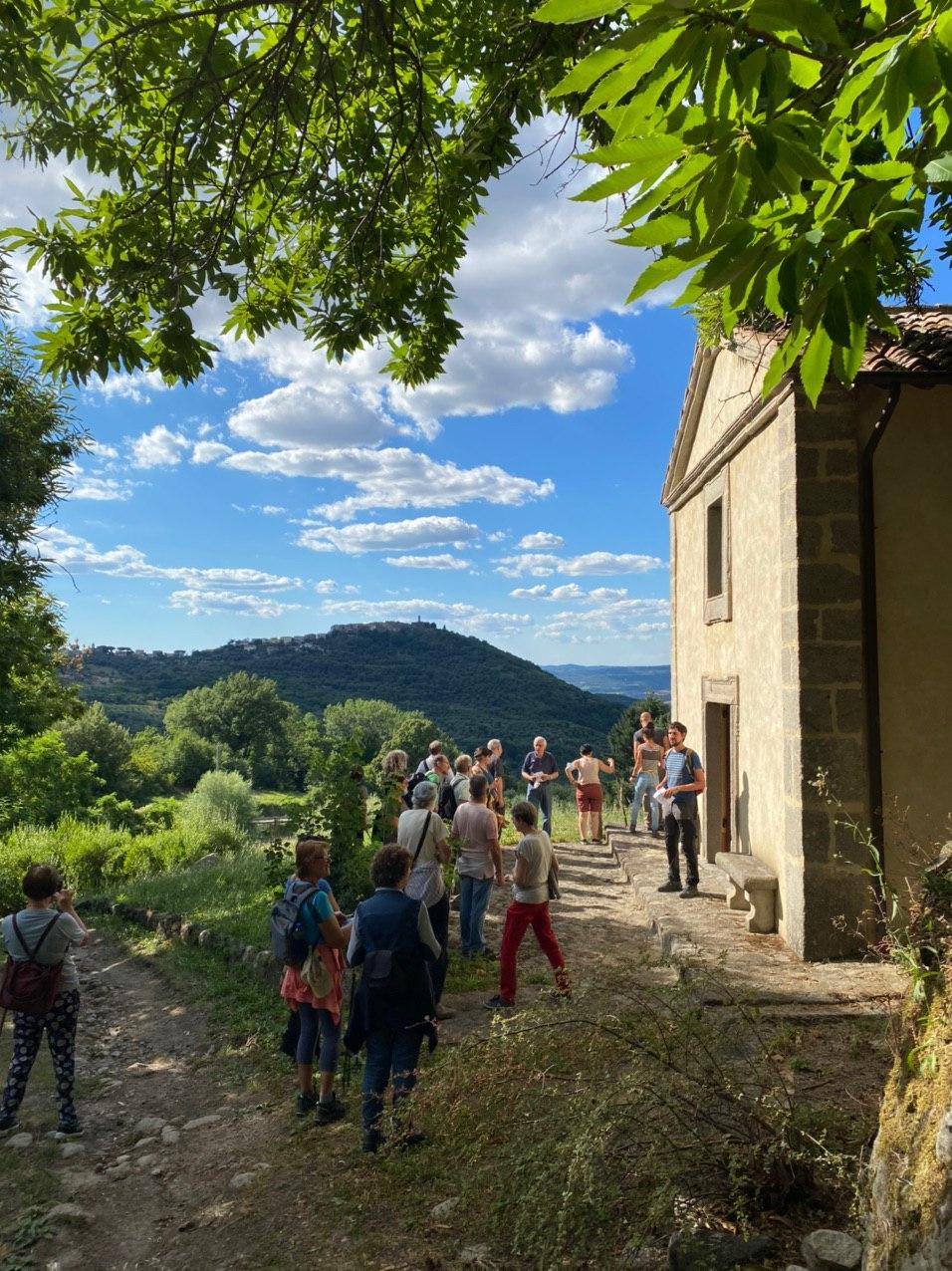
The project focuses on two rural sites located in environments of particular natural value within the Mount Amiata landscape. The first area, known as Noceto, lies within centuries-old chestnut forests at the transition between the volcanic stone belt generated by the eruptions of Mount Amiata and the surrounding clay formations. This geological condition allows the emergence of numerous natural springs, creating a landscape where water, forest and historical traces coexist.
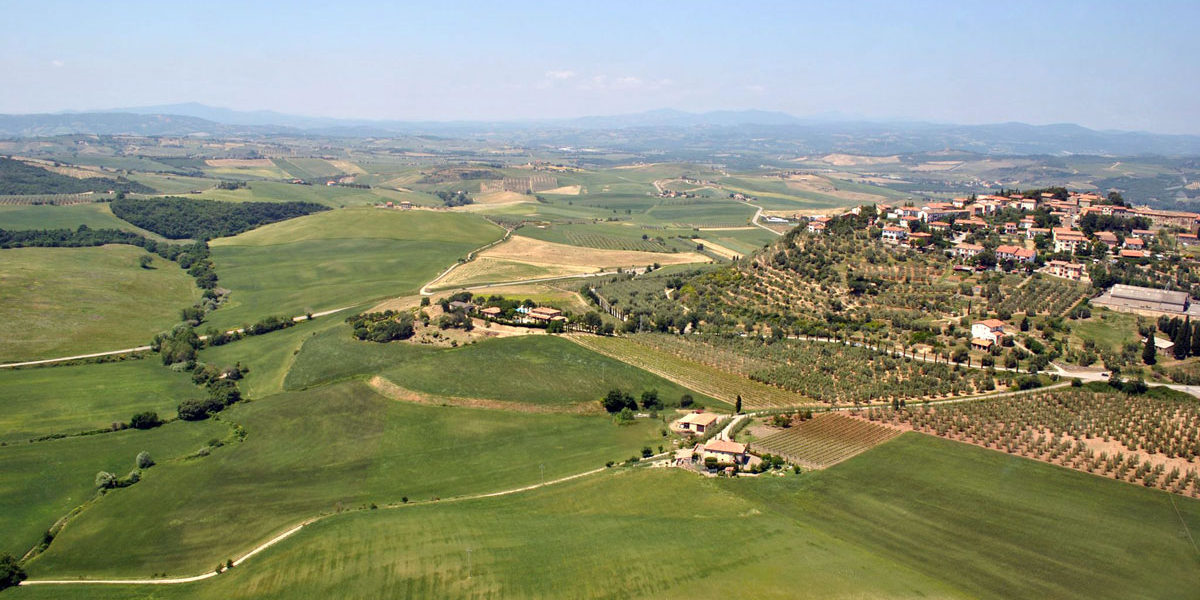
The second site, known as Mustia, overlooks the first hills of the Val d’Orcia and is surrounded by oak woods and traditional olive groves, forming a landscape that reflects the long interaction between agricultural practices and natural ecosystems.
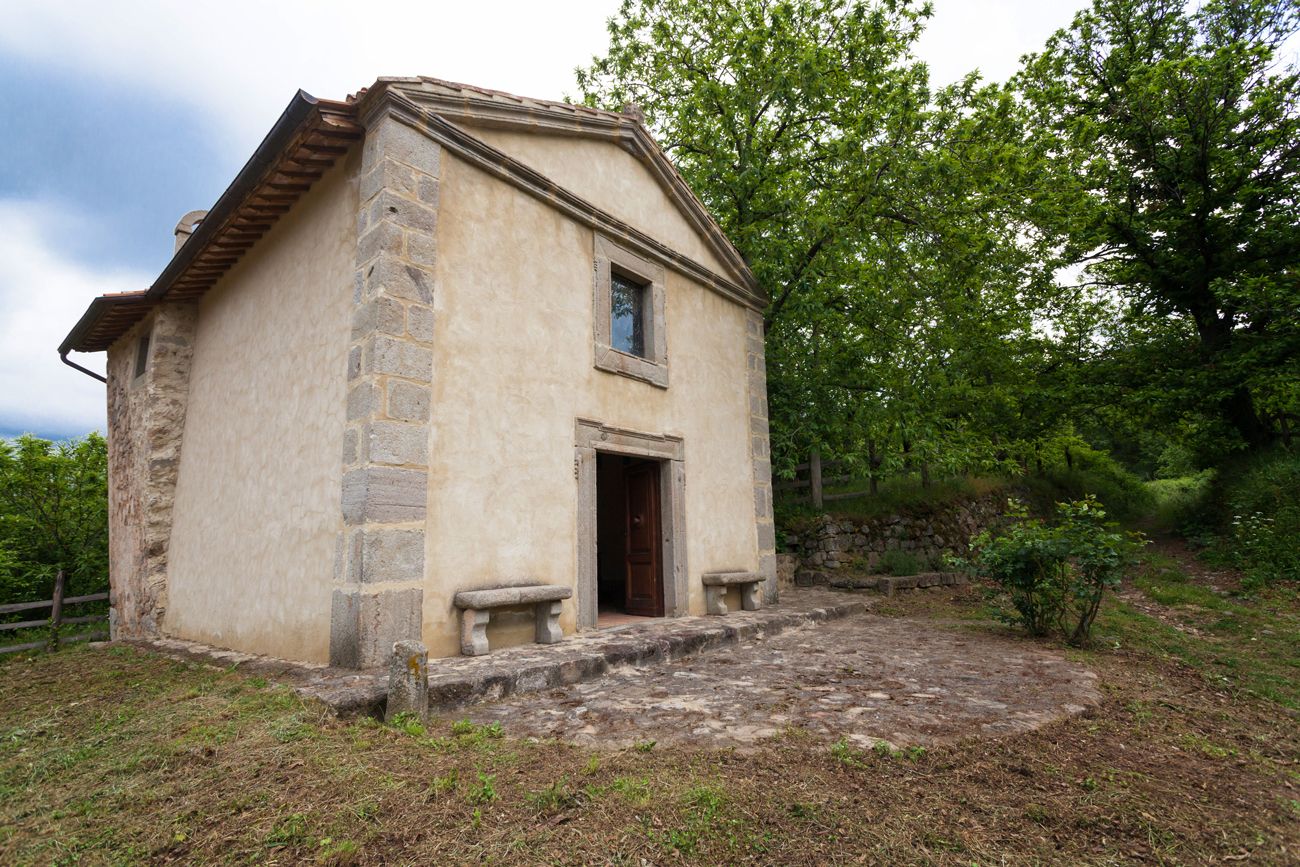
Both sites preserve the remains of medieval churches, which testify to the historical presence of communities that once shaped and inhabited these landscapes. Today these structures survive as silent traces within the natural environment.
Through archaeological research and landscape interpretation, the project seeks to make these historical layers visible again. Rather than introducing new constructions, the intervention highlights the existing relationship between archaeological remains, natural features and rural landscape.
By rediscovering these places and reconnecting them with community life, "Castel del Piano living heritage" reveals the beauty of a landscape where history, nature and cultural memory are deeply intertwined.
"Castel del Piano living heritage" adopts an inclusive approach that aims to make cultural heritage accessible, understandable and shared by the entire community.
The project transforms archaeological research into a collective cultural process in which citizens are not only spectators but active participants. Public activities such as open excavation days, guided visits, educational workshops and cultural events will allow residents, visitors and schools to engage directly with the discovery and interpretation of the territory’s history.
Attention to accessibility and affordability. Public activities connected to the excavation and the cultural programme will be free or low-cost, ensuring that people from different social and economic backgrounds can take part. Educational initiatives developed in collaboration with local schools will involve younger generations and promote intergenerational dialogue around the cultural landscape of the territory.
The association "Cultura e Territorio" will play a role in this process by coordinating the archaeological activities and promoting a field school in archaeology that will involve university students and young researchers. Through this initiative, the project opens opportunities for learning, participation and exchange between academic research and local communities.
Organisations as "Cultura e terrtorio" and the Associazione “Ildebrando Imberciadori”, both engaged in the scientific study and promotion of the history of the Amiata region, contribute to connecting research institutions with the territory and to fostering wider public participation.
Residents, associations and cultural stakeholders will also be invited to participate in meetings and workshops aimed at discussing the interpretation and future use of the archaeological sites.
By opening the archaeological process to the community and promoting shared stewardship of heritage, "Castel del Piano living heritage" proposes an inclusive model.
Citizens and local civil society are central to the development of "Castel del Piano living heritage". The project is conceived not only as a scientific research programme but as a shared cultural process that reconnects the community with the historical landscape of the territory.
The initiative is promoted by the Municipality of Castel del Piano in collaboration with local cultural organisations and heritage associations active in studying and promoting the history of the Amiata region. "Cultura e territorio" will coordinate the archaeological activities and organise a field school in archaeology, plays a key role in connecting academic research with the local community. The Associazione “Ildebrando Imberciadori”, engaged in the scientific study and dissemination of local history, contributes to strengthening the cultural dialogue between research, institutions and citizens.
Citizens will be involved throughout the project through public meetings, presentations and open excavation days that will allow residents and visitors to observe the archaeological work and interact with researchers. Educational activities with local schools will involve younger generations in the discovery of the territory’s historical layers.
Local associations and cultural actors will also participate in the organisation of cultural initiatives connected to the project.
This participatory approach ensures that the initiative responds to the needs and expectations of the local community while strengthening the sense of ownership and responsibility toward the cultural landscape.
The involvement of citizens and civil society therefore has a direct impact on the project: it transforms archaeological research into a shared experience, strengthens local identity and creates the conditions for long-term community stewardship of heritage.
"Castel del Piano living heritage" is developed through collaboration between local institutions, cultural organisations and heritage authorities, ensuring that the initiative combines scientific research, community participation and responsible heritage management.
At the local level, the Municipality of Castel del Piano acts as promoter and coordinator of the initiative. Local civil society plays an important role in the project’s development. The association "Cultura e territorio" will coordinate the archaeological activities and promote a field school in archaeology involving students and young researchers. The Associazione “Ildebrando Imberciadori”, engaged in the scientific study and promotion of the history of the Amiata territory, contributes to strengthening the dialogue between historical research and the local community. Schools, cultural associations and residents will also be involved through educational initiatives, public events and community engagement activities.
The Regione Toscana will be informed as soon as the project will start.
The project has already been presented to the Soprintendenza Archeologia, Belle Arti e Paesaggio for the provinces of Siena, Arezzo and Grosseto, which carried out a preliminary site visit in the areas identified for the excavation. The heritage authority is familiar with the sites and has expressed interest in their archaeological potential. Its involvement ensures that the project is developed in accordance with heritage protection regulations and appropriate scientific standards.
Although primarily local, the initiative aligns with broader European discussions on rural landscape regeneration and heritage-based development. The involvement of these stakeholders ensures scientific quality, institutional legitimacy and strong community participation.
The project is based on an interdisciplinary approach that combines archaeology, history, landscape studies, environmental knowledge and community participation.
Archaeology represents the central discipline of the initiative, guiding the excavation activities and the scientific interpretation of the sites. Through archaeological research it is possible to reconstruct the historical development of the territory and understand how human settlements interacted with the natural environment over time.
Historical research also plays an important role in the project. Local historians and cultural associations, including the Associazione “Ildebrando Imberciadori”, contribute to the interpretation and dissemination of the historical context of the Amiata region. Their work helps connect archaeological findings with broader historical narratives and local cultural memory.
Landscape and environmental knowledge are also fundamental components of the initiative. The project takes into account the specific natural characteristics of the area, including forests, traditional agricultural landscapes and geological features linked to the volcanic origins of Mount Amiata. This perspective allows the archaeological sites to be interpreted as part of a broader cultural landscape.
"Cultura e territorio" plays a key role in connecting academic research with educational and community-oriented activities lead by Associazione "Ildebrando Imberciadori".
Interaction between these different disciplines takes place through collaboration between researchers, local associations, institutions and citizens. Archaeological work, historical interpretation and landscape awareness are integrated in the design of activities.
This interdisciplinary process generates significant added value by combining scientific knowledge, local expertise and community participation, allowing the project to interpret heritage not only as archaeological resource but as a living cultural landscape.
"Castel del Piano living heritage" introduces an innovative approach by transforming archaeology from a specialised research activity into a driver of community-based landscape regeneration.
In mainstream practices, archaeological projects are often limited to excavation, documentation and academic dissemination, with limited interaction with local communities and little integration into territorial development strategies. In contrast, this initiative embeds archaeological research within a broader process that connects heritage, landscape and everyday life.
The project combines scientific excavation with active community participation, educational programmes and cultural events, allowing citizens to engage directly with the discovery and interpretation of their territory. This shifts archaeology from a closed, expert-driven activity to an open and shared process.
Another innovative aspect lies in the integration between archaeological sites and the local museum. Rather than treating findings as isolated objects, the project connects excavation results with the Palazzo Nerucci Museum, creating a continuous narrative between landscape, history and cultural identity.
The initiative also introduces a landscape-based perspective. Archaeological remains are not considered as isolated elements but as part of a wider cultural landscape shaped by natural processes and historical land use. This approach allows the project to address issues such as rural abandonment and landscape degradation through heritage-led actions.
Finally, the project adopts a low-impact strategy based on light and reversible interventions, avoiding heavy infrastructure and focusing instead on interpretation, accessibility and community use of the sites.
By combining scientific research, community engagement and landscape regeneration, this project proposes an innovative and transferable model for small municipalities seeking to activate hidden heritage as a resource for culture.
The project adopts a step-by-step and integrated methodology that combines scientific research, community engagement and landscape interpretation.
The project starts with a preparatory phase focused on identifying and documenting the archaeological potential of the sites. This includes landscape observation, preliminary surveys and the collection of existing historical and archaeological data. A preliminary site visit has already been carried out with the heritage authority, ensuring alignment with protection regulations and scientific standards.
The core phase of the project is based on archaeological excavation conducted with a rigorous scientific approach. The activities are coordinated by association "Cultura e territorio", which will also organise a field school in archaeology involving students and young researchers. This allows the project to combine research and training while ensuring continuous on-site presence.
Parallel to the excavation activities, the project develops a participatory approach. Open excavation days, guided visits, workshops and public meetings are organised to involve citizens, schools and local associations. This ensures that the research process is transparent and accessible.
The project also integrates historical interpretation and local knowledge through collaboration with organisations such as the Associazione “Ildebrando Imberciadori”, which contributes to contextualising the archaeological findings within the broader history of the territory.
A further methodological element is the landscape-based approach. The sites are interpreted not as isolated archaeological remains but as part of a wider cultural landscape shaped by natural and human processes. This perspective guides both the research and the future development of a cultural route linking the excavation sites with the Palazzo Nerucci Civic Museum.
The methodology is therefore based on the interaction between scientific research, community participation
"Castel del Piano living heritage" is designed as a model that can be adapted and replicated in many small municipalities facing similar conditions of rural abandonment and underexplored cultural heritage.
The initiative is based on transferable elements that do not depend on large financial resources but on the integration of existing local assets, knowledge and community engagement.
A first replicable element is the methodology, which combines archaeological research with participatory processes. The integration of excavation activities, public events, educational programmes and community involvement can be applied in other contexts where heritage is present but not actively connected to local communities.
A second element is the governance model, based on collaboration between municipalities, local associations and heritage authorities. This structure allows small administrations to activate cultural projects by leveraging local competences and existing networks, without requiring complex institutional frameworks.
The educational approach, through the creation of a field school in archaeology, is also transferable. This model enables the combination of research, training and local economic impact, attracting students and researchers to rural areas.
The project’s landscape-based perspective represents another replicable aspect. Interpreting archaeological remains as part of a wider cultural landscape allows similar initiatives to address not only heritage preservation but also landscape regeneration and environmental awareness.
Finally, the use of low-impact and reversible interventions makes the project adaptable to different territorial contexts, as it does not rely on heavy infrastructure but on interpretation, accessibility and community use of existing sites.
The main learning of the initiative is that small municipalities can activate heritage as a driver of cultural and territorial development by combining scientific knowledge, local
We think about a progressive initiative that moves from archaeological research to long-term cultural and landscape regeneration.
The first phase focuses on the activation of the project through excavation campaigns, landscape documentation and the launch of an archaeology field school coordinated by Archeoamiata. At the same time, the project promotes community participation through open excavation days, educational activities with schools and public events involving local associations.
These actions already reflect the core values of the New European Bauhaus. The project enhances the beauty of the landscape by revealing its historical layers, adopts a sustainable approach through low-impact and reversible interventions, and promotes inclusion by actively involving citizens and stakeholders.
The next phase will strengthen the connection between research and cultural interpretation. Archaeological findings will be integrated into the narrative of the Palazzo Nerucci Civic Museum, and participatory processes will be expanded through meetings and workshops involving residents and local actors.
A key step will be the development of a feasibility study for a “museum–archaeological landscape route” linking the sites with the surrounding environment.
In the long term, the project aims to establish a cultural ecosystem where archaeology, landscape and community life are interconnected, following NEB principles of participation, sustainability and quality of life.