Enhancing Circularity, Sustainability, and Innovation
The Shed
{Empty}
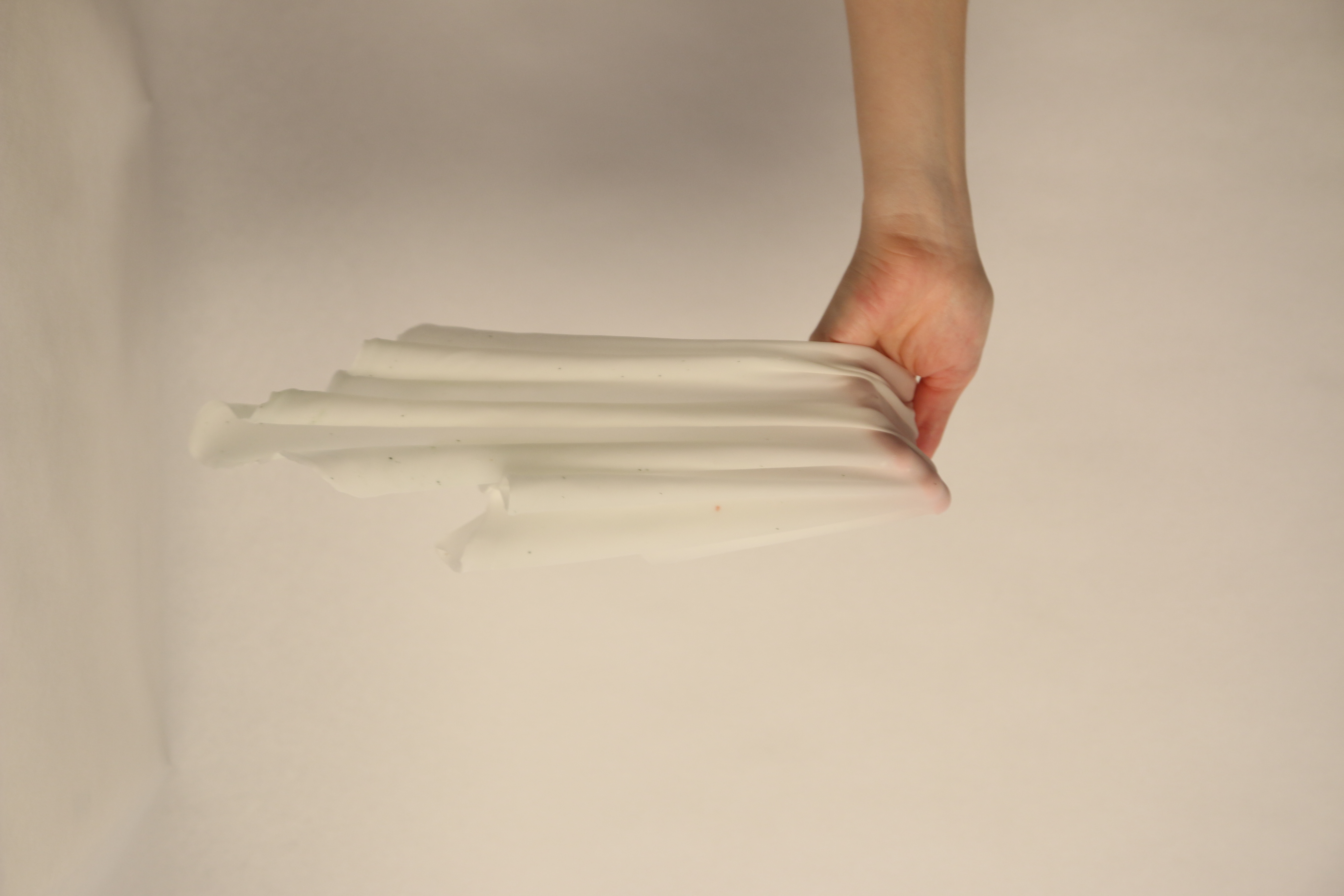
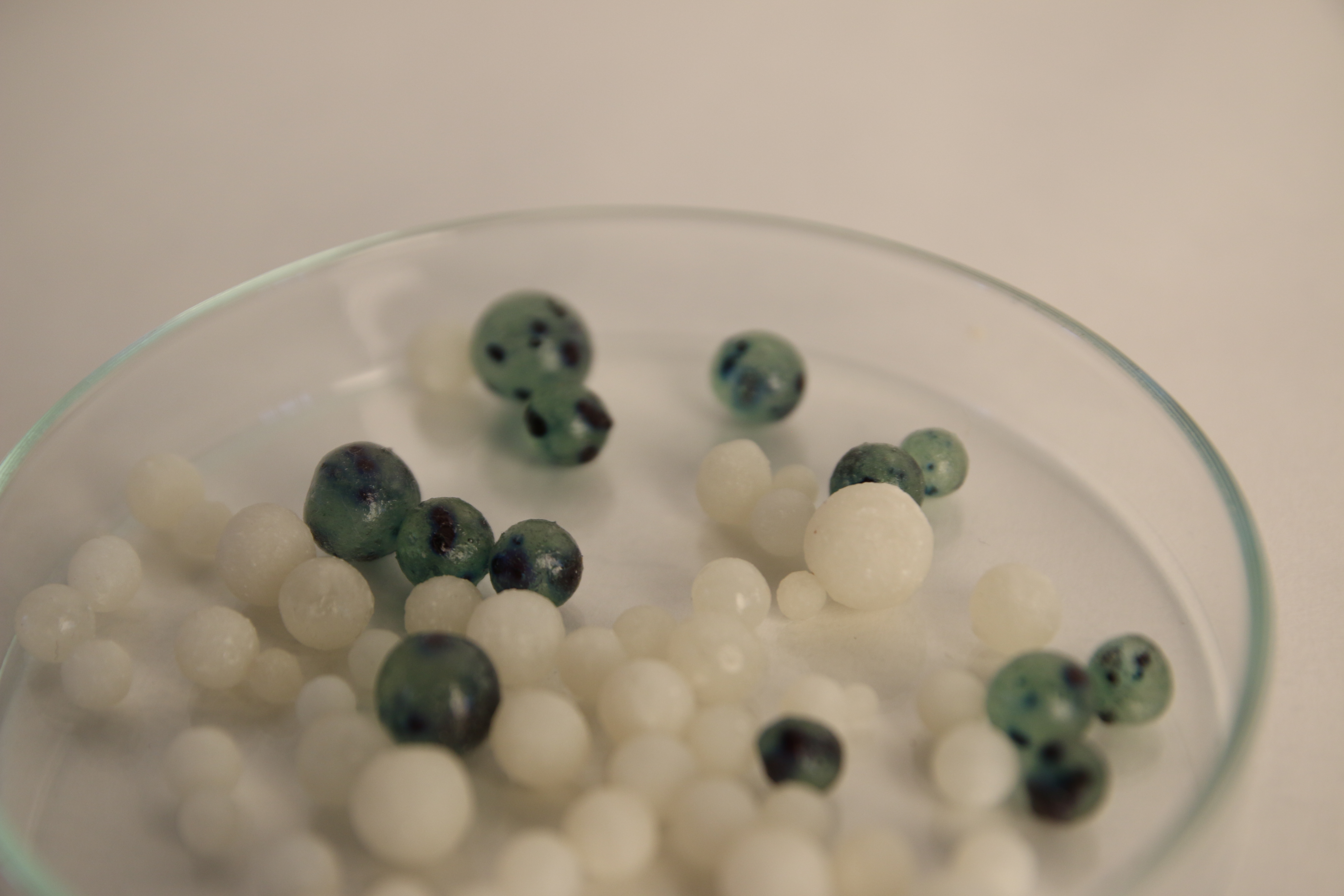
The shed explores bio-based textiles made out of alginate. Alginate is a powder, extracted from brown seaweed, which mixed with water and glycerine can be turned in different textiles and yarns.
These new biomaterials are not only bio degradable and can be easily reproduced in a kitchen setting - they are also skin friendly, have a cooling as well as moisturizing effect on the skin.
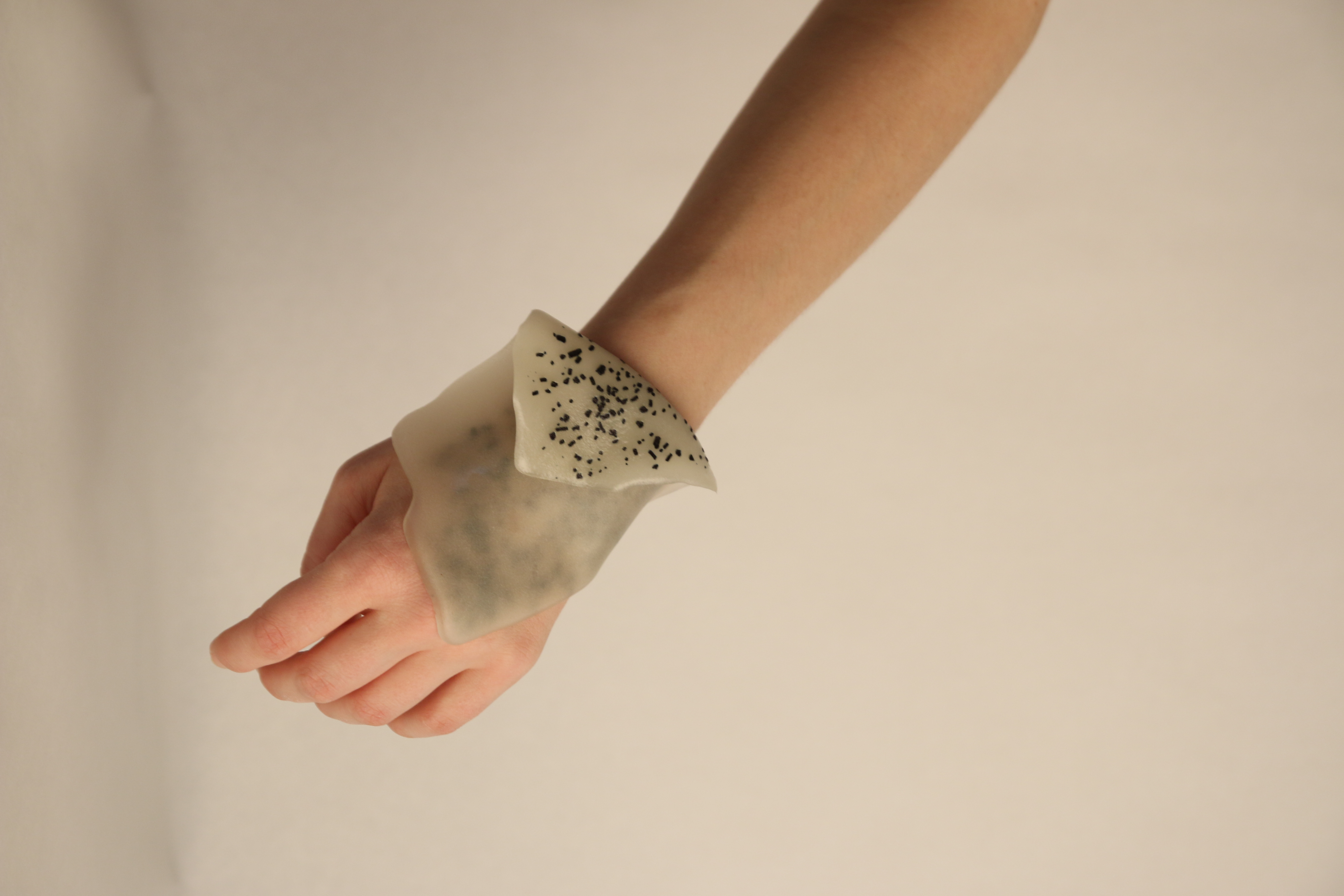
The goal of the project is to create garments whit skincare benefits, a new "care wear".
These new biomaterials are not only bio degradable and can be easily reproduced in a kitchen setting - they are also skin friendly, have a cooling as well as moisturizing effect on the skin.
The goal of the project is to create garments whit skincare benefits, a new "care wear".
Austria
Local
Linz/Upper Austria
Mainly urban
It refers to other types of transformations (soft investment)
Prototype level
No
No
No
Individual
The shed explores the development of alginate-based biotextiles as a sustainable and accessible alternative to conventional fabrics.
Using alginate derived from European seaweed, I have created a series of material recipes that can be produced with simple, low-cost processes in a kitchen-like setting. These recipes are designed to be open and reproducible, enabling others to experiment with and adapt the materials themselves.
So far, I have successfully developed and tested a range of biotextile samples with different textures, thicknesses, and properties, as well as integrating skincare benefits into the material to enhance its functionality and user experience. Building on these initial results, I am currently working on scaling the materials into larger formats and translating them into wearable prototypes. This includes exploring suitable garment silhouettes, construction methods, and ways to improve durability, flexibility, and comfort for everyday use.
The expected outcome is a collection of fully functional, biodegradable garments that combine material innovation, sustainability, and bodily well-being. Also the project aims to provide accessible knowledge through shared recipes and processes, supporting a shift toward more transparent, decentralized, and participatory approaches to textile production.
I have been working on alginate-based materials for years now and already created garments out of it. But for my project "The shed" I wanted to add more value to the materials. the goal is not just the appearance and sustainability but also a new function with is added by used the materials in different forms and shapes on the right body part.
I started this project by reading into the state of European seaweed and wanted to figure out if it's really that sustainable to use alginate for textiles. Than I focused on creating different variations of my biomaterial and explored the characteristics of it. During this process I came across a social media trend called "The morning shed", where people show their excessive use of single use skin care products to achieve their "perfect" look.
This kept me thinking why we care so much about skincare products we use and what health benefiting foods and supplements we consume. But when it comes to garments this thinking often doesn't apply.
Therefore currently I am working on how I can create garments with that skincare and wellbeing factor.
Biomaterials
Nature-based solutions
Wellbeing
European Seaweed
Open Source
My project addresses sustainability by developing innovative biotextiles derived from alginate, a naturally occurring biopolymer sourced from European seaweed. By prioritizing locally sourced raw materials and actively tracing the origin of all inputs, the project reduces transportation impacts and increases transparency across the supply chain. The use of alginate enables the creation of biodegradable textiles, offering an alternative to petroleum-based fibers and contributing to circular material cycles and reduced environmental footprint.
Beyond material innovation, the project integrates skincare benefits directly into garments, extending product functionality. The approach also promotes responsible resource use and a low tech and low energy production as everything is created in a basic kitchen setting.
By combining regenerative marine resources, traceability, and multifunctional design, the concept demonstrates an exemplary model of sustainability that connects environmental responsibility with innovation in textile production.
My project contributes to aesthetics by reimagining textiles as living, sensory materials that connect the body, nature, and everyday experience. The alginate-based biotextiles offer unique tactile qualities, organic textures, and subtle visual variations that reflect their natural origin. By embedding skincare benefits into the fabric, the garments foster a deeper, caring relationship between wearer and material, transforming clothing into an experience of well-being rather than just consumption.
The project also draws on the cultural and environmental context of European marine landscapes and focuses on the importance of European seaweed in the future.
The user should be encouraged to value the origins of materials and develop a stronger sense of belonging and responsibility toward their environment.
By combining innovative bio-material design with emotional, sensory, and cultural dimensions, the concept creates aesthetics that go beyond appearance - offering meaningful, enduring experiences that integrate beauty, care, and sustainability into daily life.
My project addresses inclusion by making material innovation accessible to everyone. The alginate-based biotextiles are developed using widely available, low-cost resources and simple processes that can be replicated in a basic kitchen setting. By designing the materials to be easy to produce without specialized equipment, the project lowers barriers to entry and opens up textile creation to a broader range of people, regardless of technical background or economic means.
A key aspect of the concept is the intention to openly share recipes and methods, enabling individuals and communities to produce their own biomaterials locally. This approach supports knowledge-sharing, collective learning, and co-working, where users can become makers rather than just consumers.
By combining affordability, simplicity, and open access to information, the project promotes a more inclusive model of design and production. It empowers diverse communities to engage with sustainable materials, fosters creativity across different contexts, and exemplifies inclusion through accessibility, shared knowledge, and the democratization of textile innovation.
The development of my project is informed by direct engagement with key stakeholders involved in the material’s origin and production. I have been in contact with alginate producers and seaweed farms to gain first-hand insight into harvesting practices, processing methods, and the environmental implications of alginate production. This exchange has helped ground the project in real-world conditions, ensuring that the material development aligns with sustainable and responsible sourcing practices.
These conversations have influenced both the technical and conceptual direction of the work, particularly in understanding resource availability, ecological impacts, and opportunities for improvement within existing systems. By integrating this knowledge, the project moves beyond a purely experimental approach and becomes more connected to the communities and environments it depends on.
Looking ahead, the project aims to expand this participatory approach by sharing material recipes and processes openly, enabling broader communities to engage with, adapt, and co-develop the materials. In this way, the concept contributes to empowering local production, fostering knowledge exchange, and supporting more collaborative and inclusive forms of design and making.
My project engages with stakeholders across multiple levels to ensure a well-informed and scalable approach to sustainable material innovation. At the local and regional level, I have connected with alginate producers and seaweed farms to understand sourcing practices, environmental impacts, and regional production capacities. This direct exchange provides essential knowledge about the material’s lifecycle and grounds the project in existing ecological and industrial contexts.
At a broader level, the project relates to European networks of bio-based material research, sustainable textile innovation, and circular design. By aligning with these frameworks, the concept benefits from shared knowledge, standards, and emerging best practices in sustainability and biofabrication. Future engagement may include collaborations with designers, researchers, and institutions working on biomaterials, as well as platforms that support open-source and decentralized production models.
The added value of this multi-level engagement lies in connecting practical, on-the-ground knowledge with wider systemic perspectives. It enables the project to bridge small-scale experimentation with larger sustainability goals, supports knowledge exchange across sectors, and strengthens the potential for the concept to be adapted, replicated, and scaled within different contexts.
My project is inherently transdisciplinary, combining knowledge and methods from multiple fields to develop and implement alginate-based biotextiles. It is rooted in material design and textile design, where experimentation with form, texture, and garment construction shapes the aesthetic and functional outcomes. At the same time, it draws heavily on environmental sciences and biomaterial research, particularly in understanding seaweed-based resources, biodegradability, and the ecological impact of material sourcing and processing.
The project also engages with chemistry and biofabrication, as the development of alginate recipes requires an understanding of material behavior, composition, and transformation processes. Elements of fashion design are central in translating the materials into wearable garments, exploring silhouettes, usability, and the relationship between body and material.
In addition, the concept incorporates aspects of social design and education through its open-source approach. By sharing recipes and enabling production in accessible, kitchen-based settings, it draws on informal knowledge systems and encourages participation from non-experts and the wider public.
By bridging design, science, craft, and community knowledge, the project exemplifies a transdisciplinary approach that connects technical innovation with cultural, environmental, and social dimensions.
The envisioned business model of the project combines material innovation, open knowledge sharing, and design-driven applications to ensure long-term financial sustainability. A key component is the development and sale of finished garments made from alginate-based biotextiles, which offer unique aesthetic and functional qualities, including biodegradability and skincare benefits. These garments position themselves within a growing market for sustainable and experimental fashion.
In parallel, the project explores revenue through workshops, educational formats, and collaborative programs where participants learn to create the materials themselves. This not only generates income but also aligns with the project’s inclusive and participatory values by sharing knowledge and skills.
While core recipes and basic processes are intended to remain openly accessible, there is potential for specialized material formulations, design applications, or consulting services to be offered to designers, brands, or institutions working in sustainable textiles and biomaterials.
In its early stages, the project may also benefit from public funding, grants, or cultural and innovation programs that support sustainable design and research. Over time, a hybrid model—combining product sales, education, collaborations, and funding—ensures financial resilience while maintaining the project’s commitment to accessibility, sustainability, and open innovation.
The concept is highly scalable due to its focus on accessible materials, simple processes, and open knowledge. One of the most transferable elements is the set of alginate-based biotextile recipes, which are designed to be replicated using basic tools in a kitchen setting. Because the raw materials are widely available and relatively low-cost, the production process can be easily adapted to different geographic contexts and communities.
Beyond the materials themselves, the methodology of combining local resource awareness, low-tech fabrication, and open-source sharing can be applied in various settings—from educational environments and community workshops to small-scale local production initiatives. This enables different groups to experiment with biomaterials based on locally available resources, fostering regional adaptation and innovation.
The project’s approach to integrating functionality (such as skincare benefits) with sustainable design can also be transferred to other material systems and product categories. Additionally, the emphasis on transparency, traceability, and participatory making offers a model that can be adopted by designers, researchers, and communities aiming to develop more circular and inclusive practices.
Overall, the combination of low barriers to entry, adaptability, and shared knowledge makes the concept particularly well-suited for replication across diverse contexts, supporting a broader shift toward decentralized, sustainable material cultures.
Over the next year, the project will focus on scaling, testing, and refining both materials and garments while expanding outreach and participatory engagement. The main steps are:
1. Scaling Materials:Produce larger-format alginate biotextiles, optimizing thickness, flexibility, and durability for wearable applications. Test different processing methods to ensure consistent quality in bigger pieces.
2. Garment Development: Experiment with silhouettes, construction techniques, and fit to translate the materials into functional, comfortable, and aesthetically appealing garments. Evaluate which forms work best with the unique properties of alginate textiles.
3.Sustainability & Traceability: Continue mapping the origins of all raw materials, strengthening knowledge of environmental impacts and sourcing practices. Refine processes to minimize waste and energy consumption.
4. Open-Source Sharing & Community Engagement: Begin documenting recipes, methods, and design guidance to make the materials and production processes accessible to wider communities. Organize workshops or online tutorials to involve non-experts and makers.
5. Networking & Collaborations: Strengthen connections with alginate producers, seaweed farms, sustainable textile networks, and design institutions to support co-development, feedback, and potential partnerships.
6. Promotion & Visibility: Showcase prototypes through exhibitions, online platforms, or events to demonstrate the possibilities of alginate-based textiles and attract interest from designers, researchers, and early adopters.
By the end of the year, the goal is to have a set of functional garments, optimized material processes, and publicly accessible knowledge that collectively advance both the practical and participatory aspects of the project.