Arts, Culture, and Heritage as Drivers of Change
Monteagudo Art Town
Monteagudo Art Town: Culture-led rural transformation through heritage and public art
A small village in Spain transformed through art, heritage and public space into a living cultural ecosystem.
Spain
Local
Monteagudo de las Vicarías (Soria) Spain.
Mainly rural
It involves a physical transformation of the built environment (hard investment)
Yes
2025-12-31
No
No
No
Organisation
Monteagudo Art Town is an ongoing rural regeneration project located in Monteagudo de las Vicarías (Soria, Spain), a municipality with fewer than 200 inhabitants facing severe depopulation. The initiative transforms the village into a cultural and creative hub by integrating heritage, contemporary art, and sustainable development.
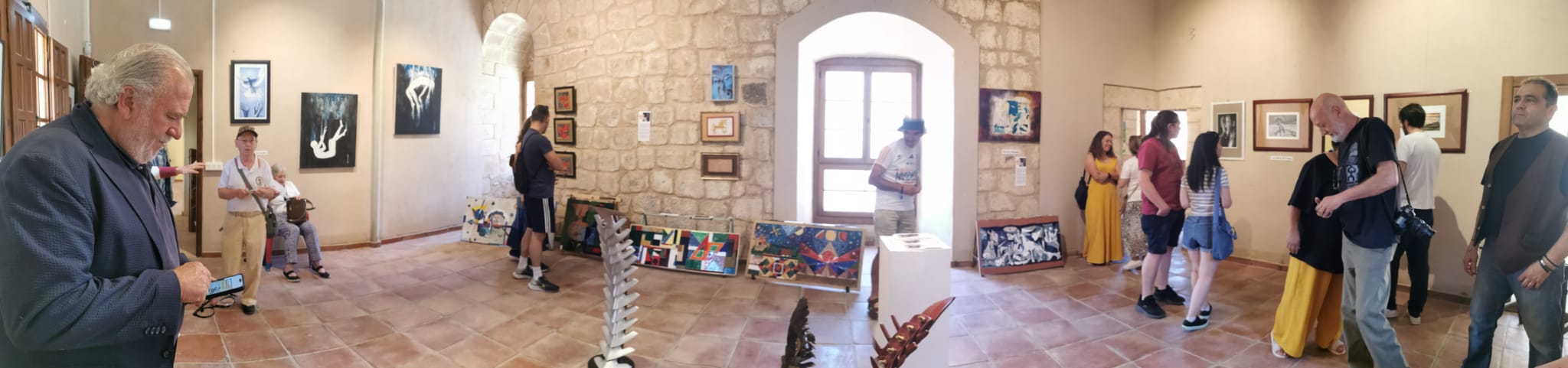
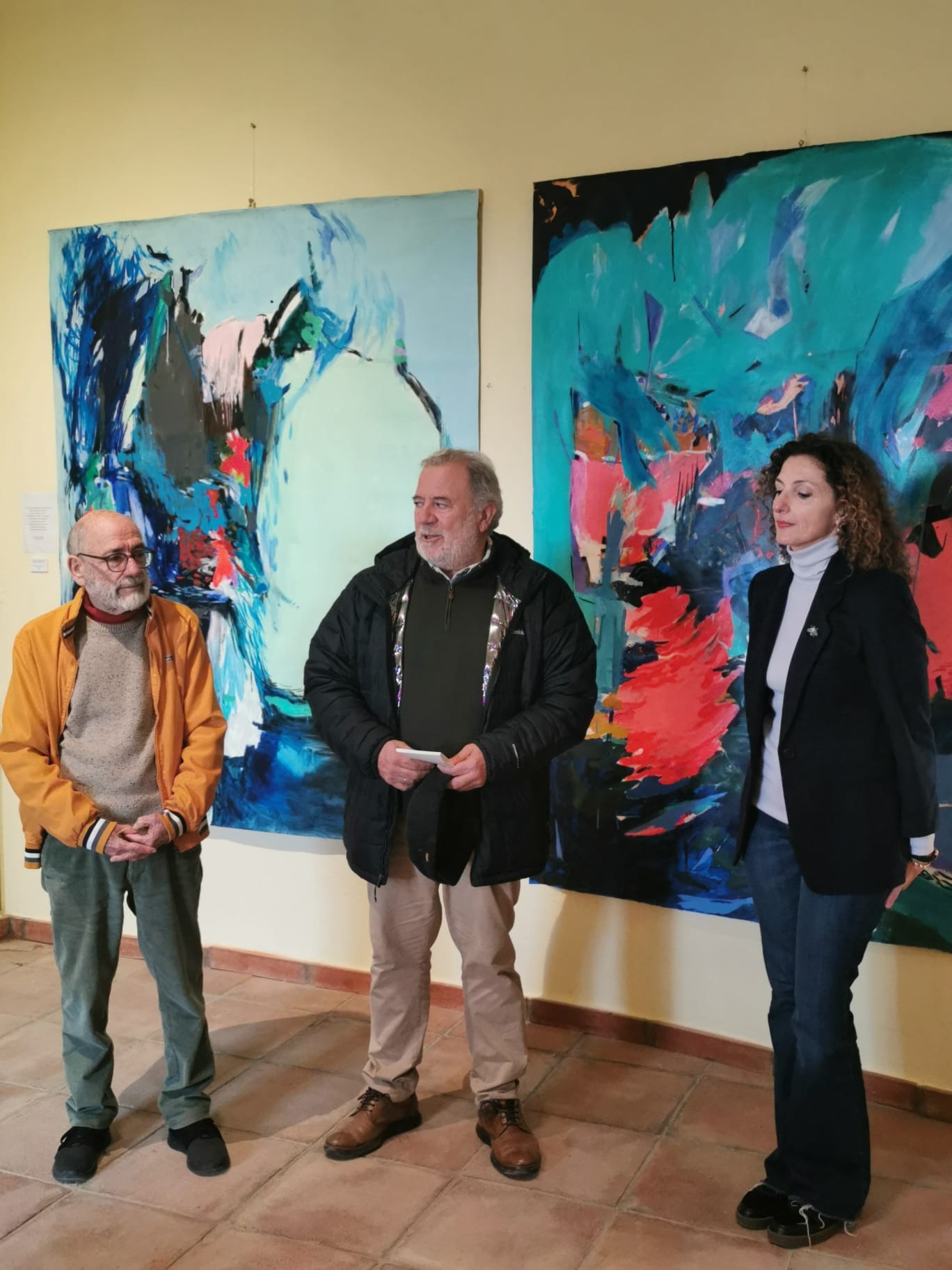
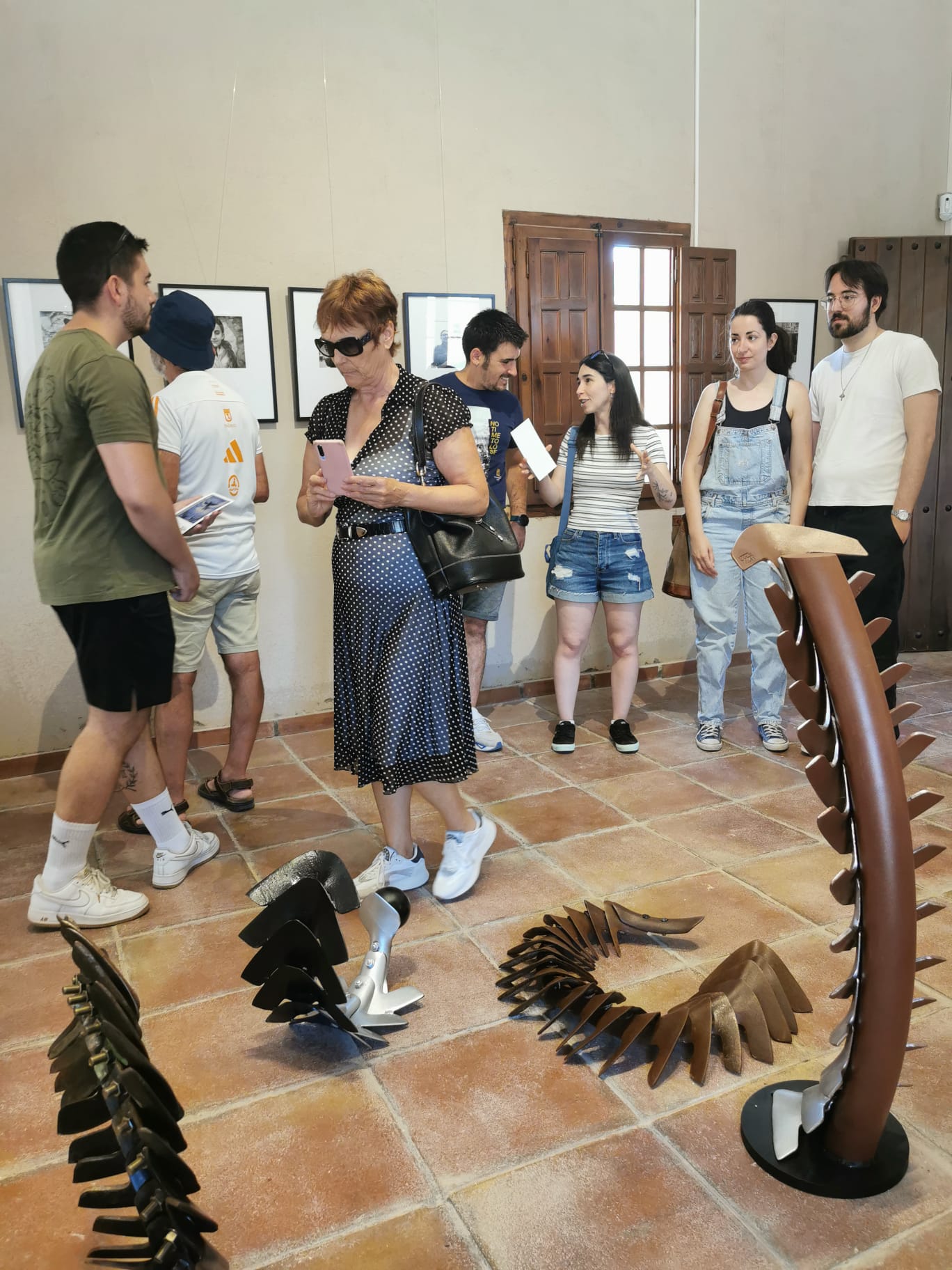
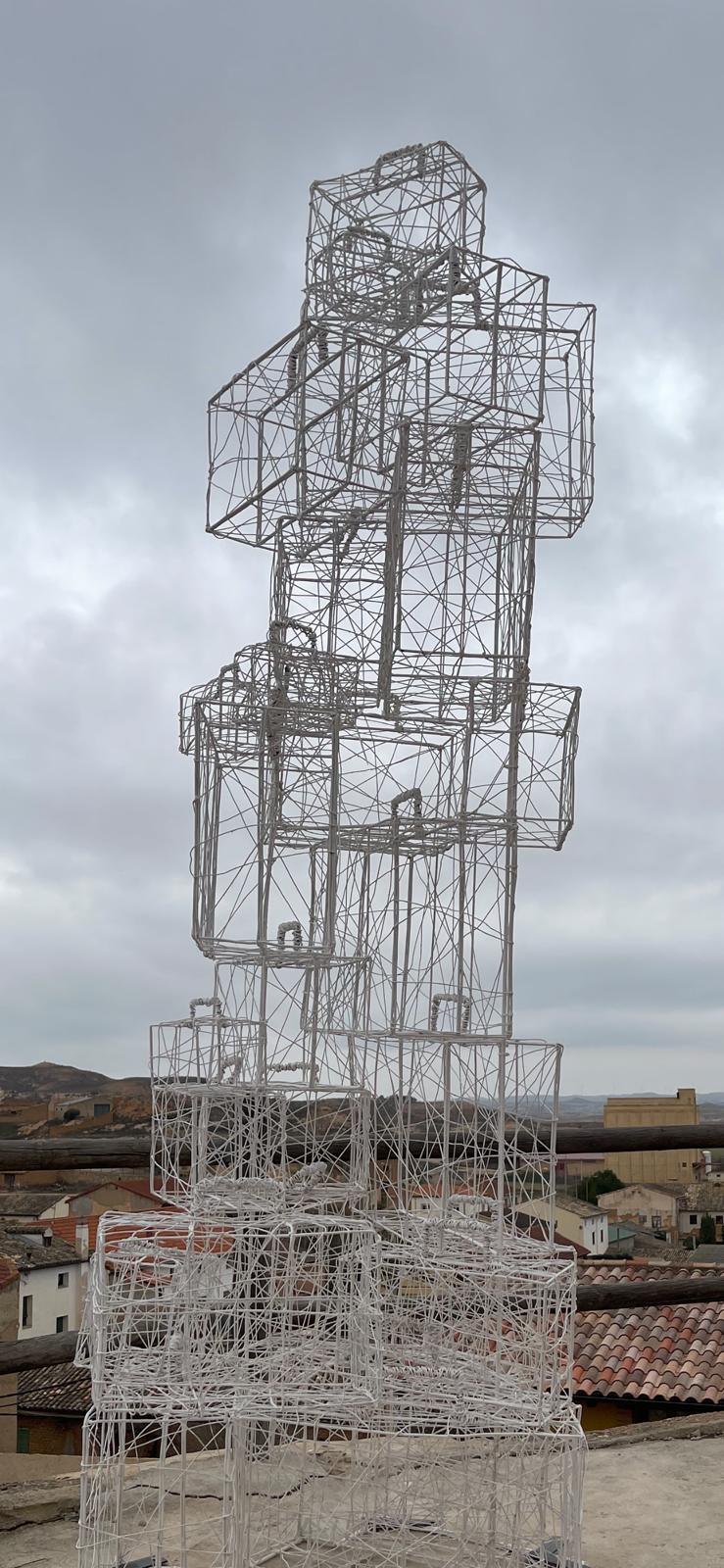
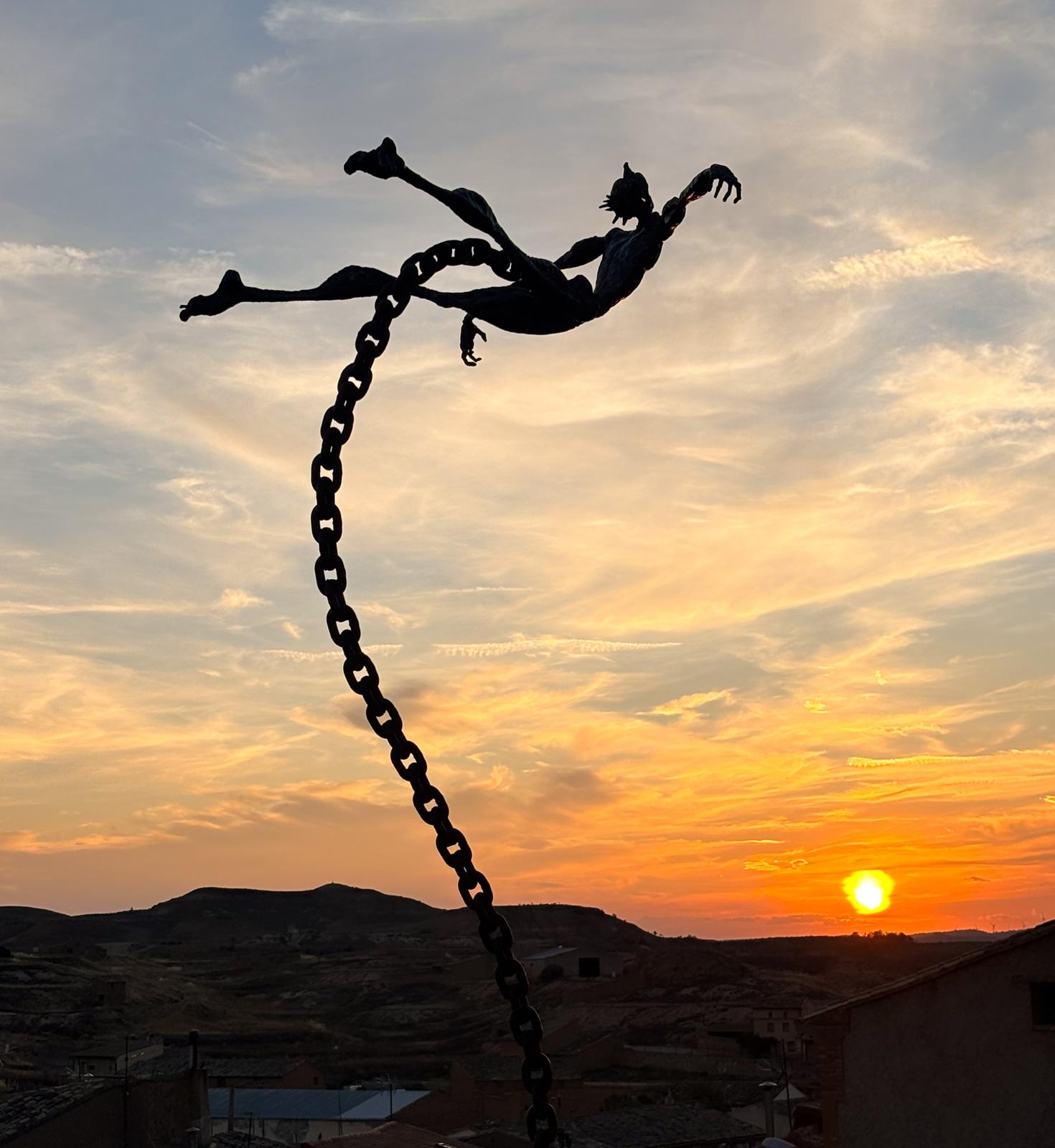
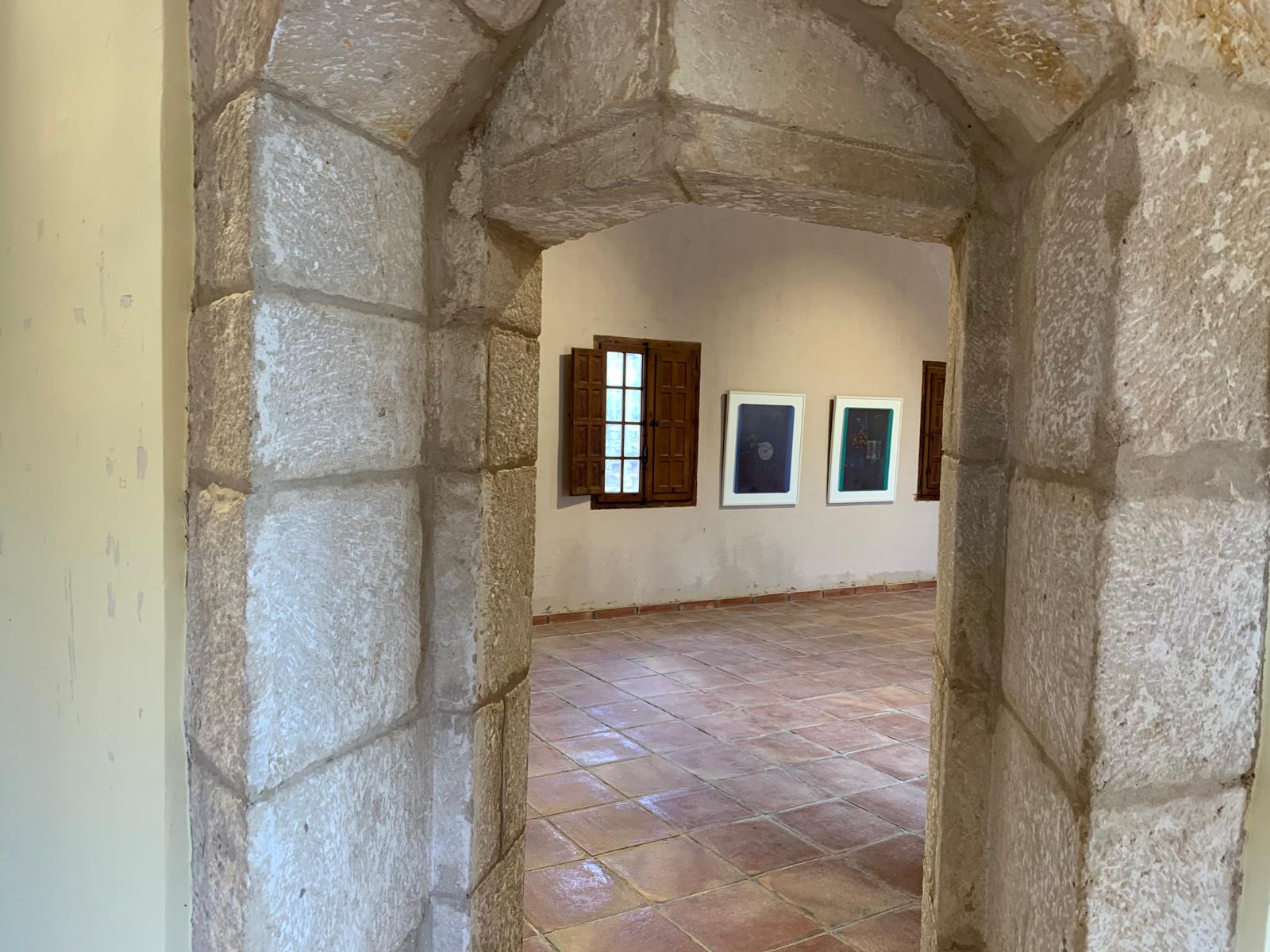
The project builds on already achieved results. The Torre del Arte is fully operational as a cultural space, hosting exhibitions and attracting visitors. Public space interventions have begun, including sculptures and mural projects that activate the urban landscape. The municipality receives over 14,000 visitors annually, demonstrating its latent territorial attractiveness. A strong governance model is in place, involving the City Council, the Leonor Machado Cultural Association, and local stakeholders, ensuring long-term continuity.
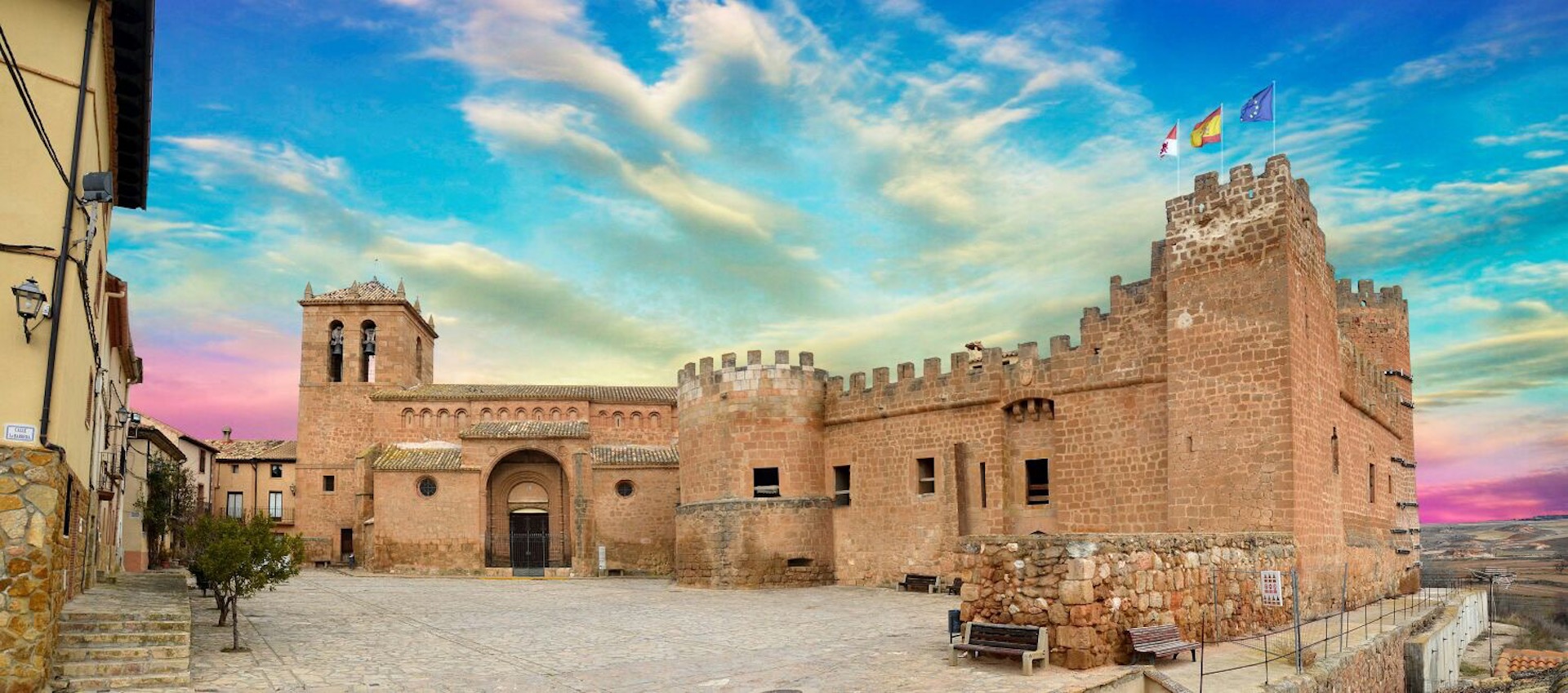
The next phase focuses on scaling impact through strategic infrastructure: the rehabilitation of the castle into a large museum, the transformation of a former silo into a creative industries hub, and the development of artist housing and workshops. These actions aim to attract artists, entrepreneurs, and visitors, fostering a circular local economy linked to culture, tourism, and innovation.
The long-term impact is to create a replicable model of rural regeneration aligned with the New European Bauhaus principles—sustainability, inclusion, and beauty. Monteagudo Art Town seeks to reverse depopulation, generate economic opportunities, and strengthen social cohesion while preserving identity and landscape. By combining culture, ecological awareness, and community participation, the project contributes to a new vision for rural Europe.
Monteagudo Art Town emerged as a response to a structural reality shared by many rural areas in Europe: depopulation, ageing populations, and the gradual loss of economic and social vitality. Rather than approaching this challenge through traditional economic measures, the project was conceived from a cultural perspective—understanding art, heritage, and creativity as drivers of transformation.
The initiative began with local actors who recognised the untapped potential of the village: its architectural heritage, its landscape, and its identity. A key turning point was the activation of the Torre del Arte, a privately owned cultural space made accessible for public use through collaboration with the Leonor Machado Cultural Association. This created an initial cultural nucleus capable of attracting visitors and programming activities.
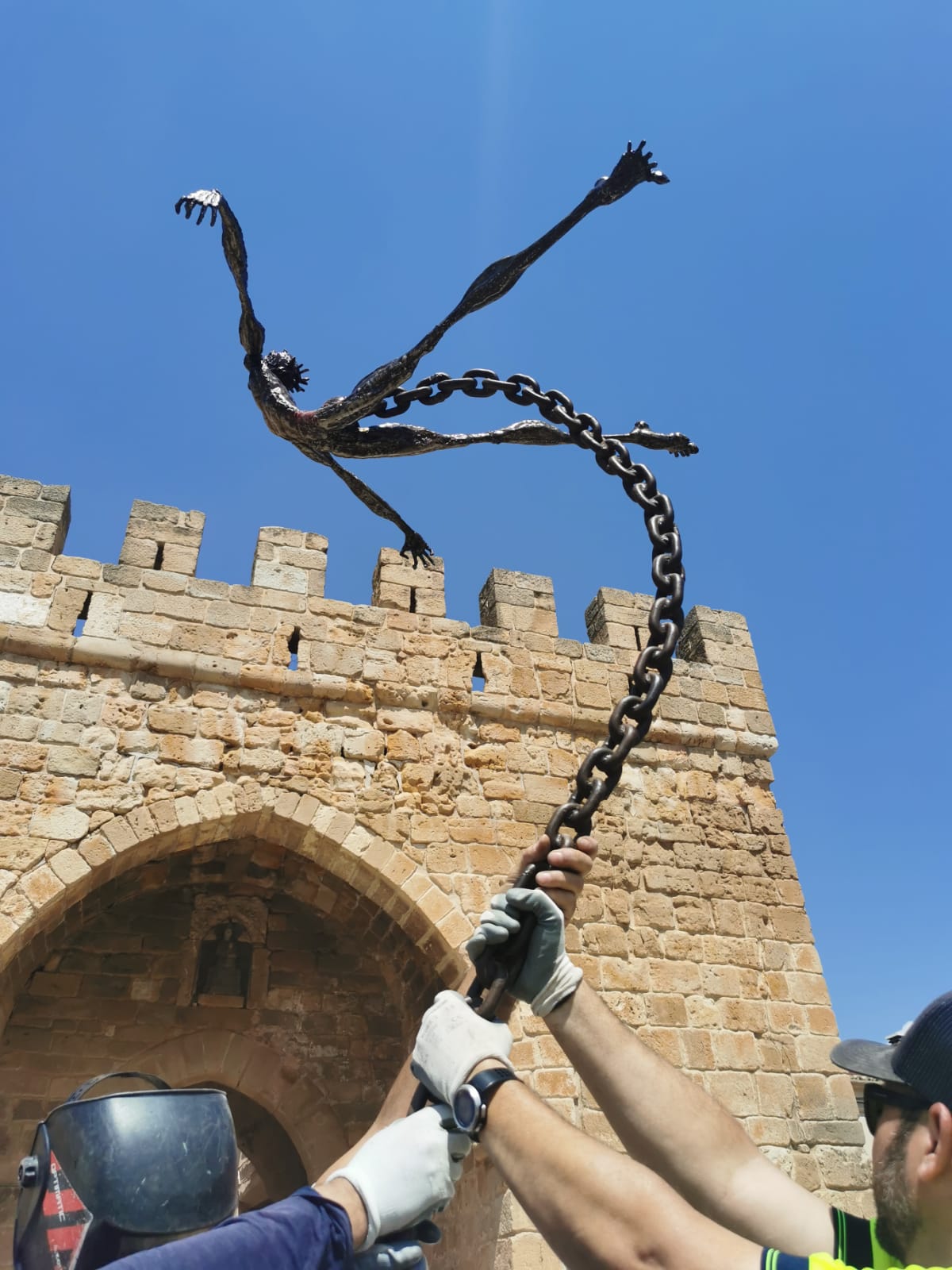
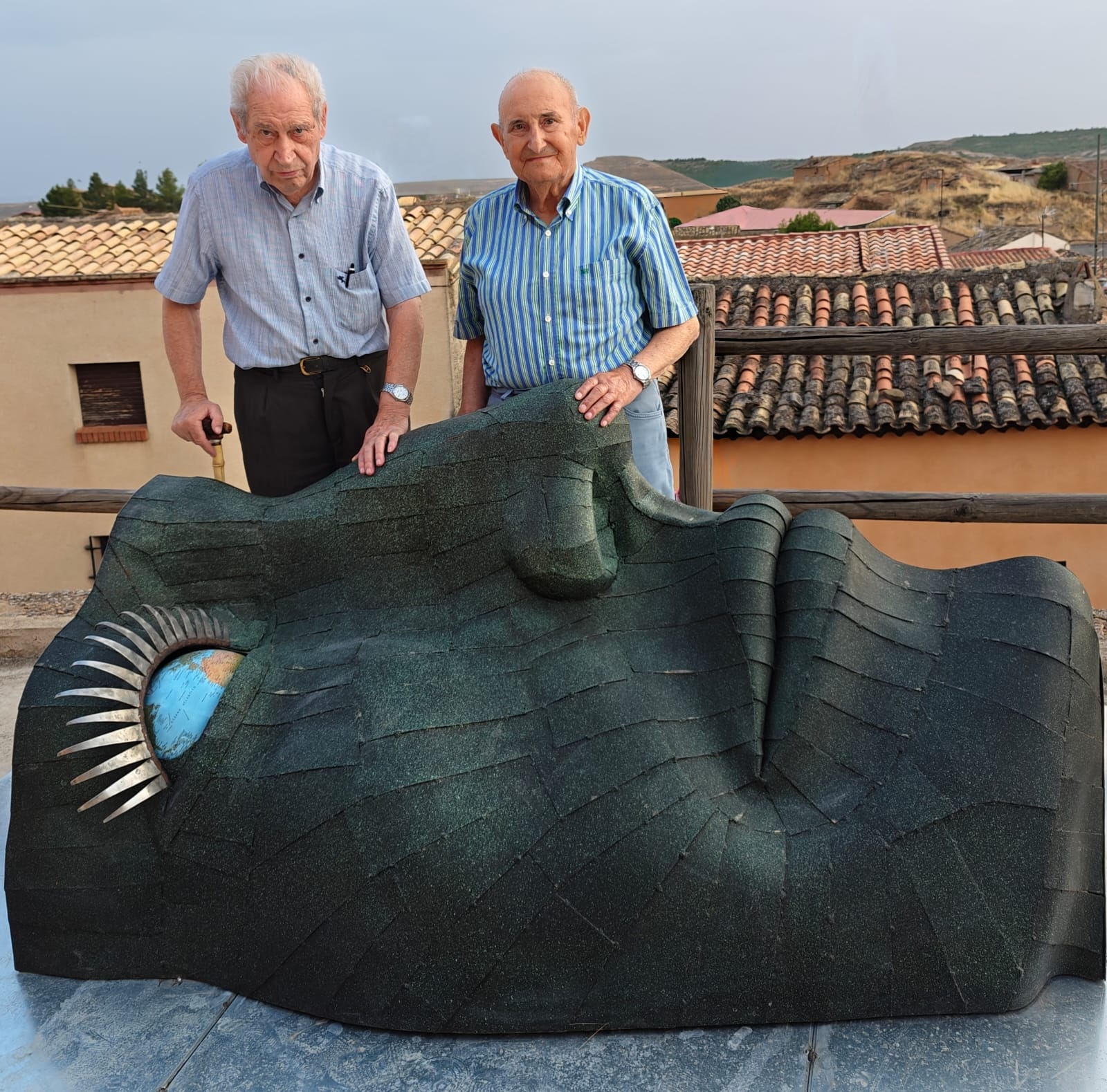
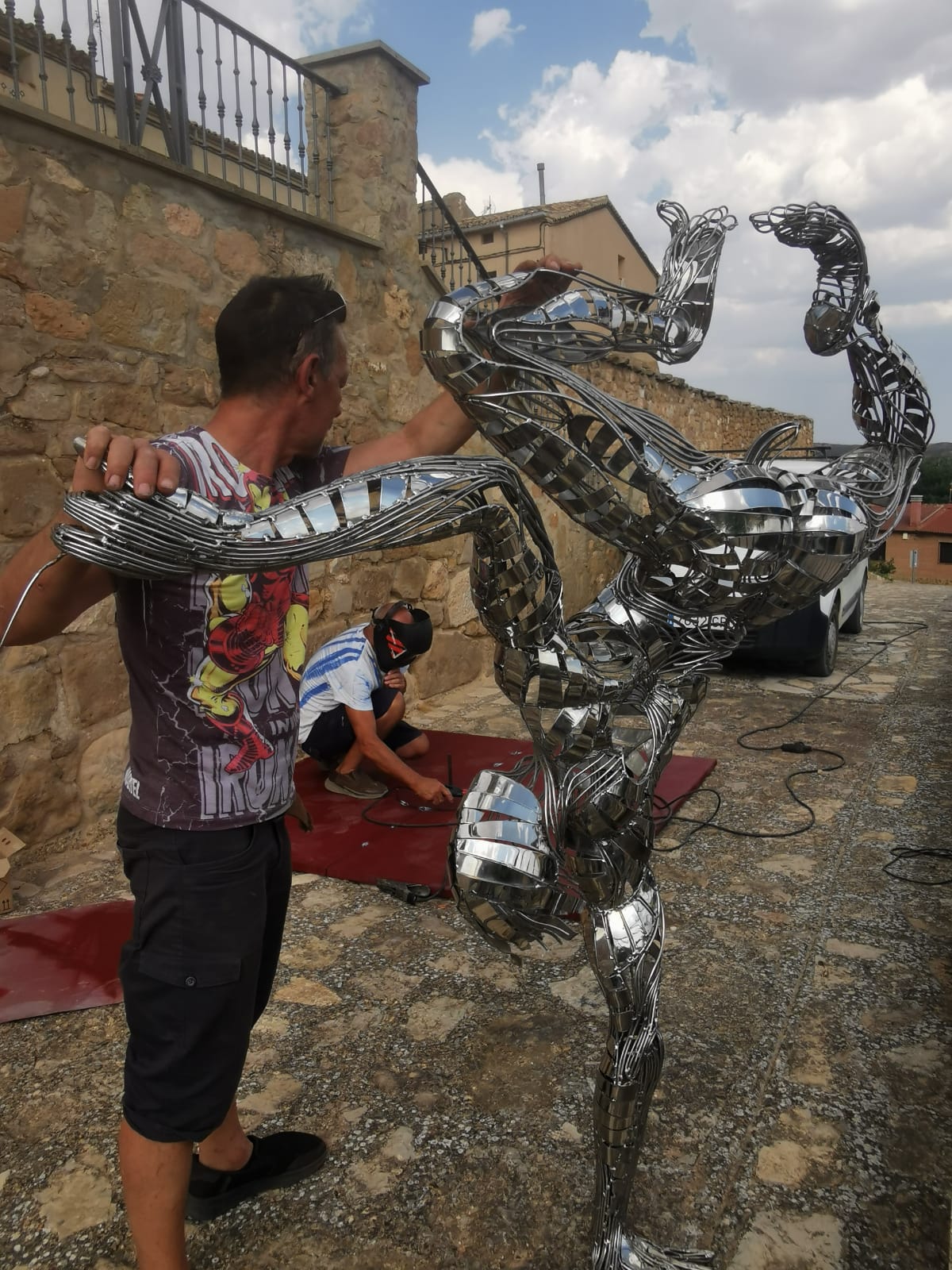
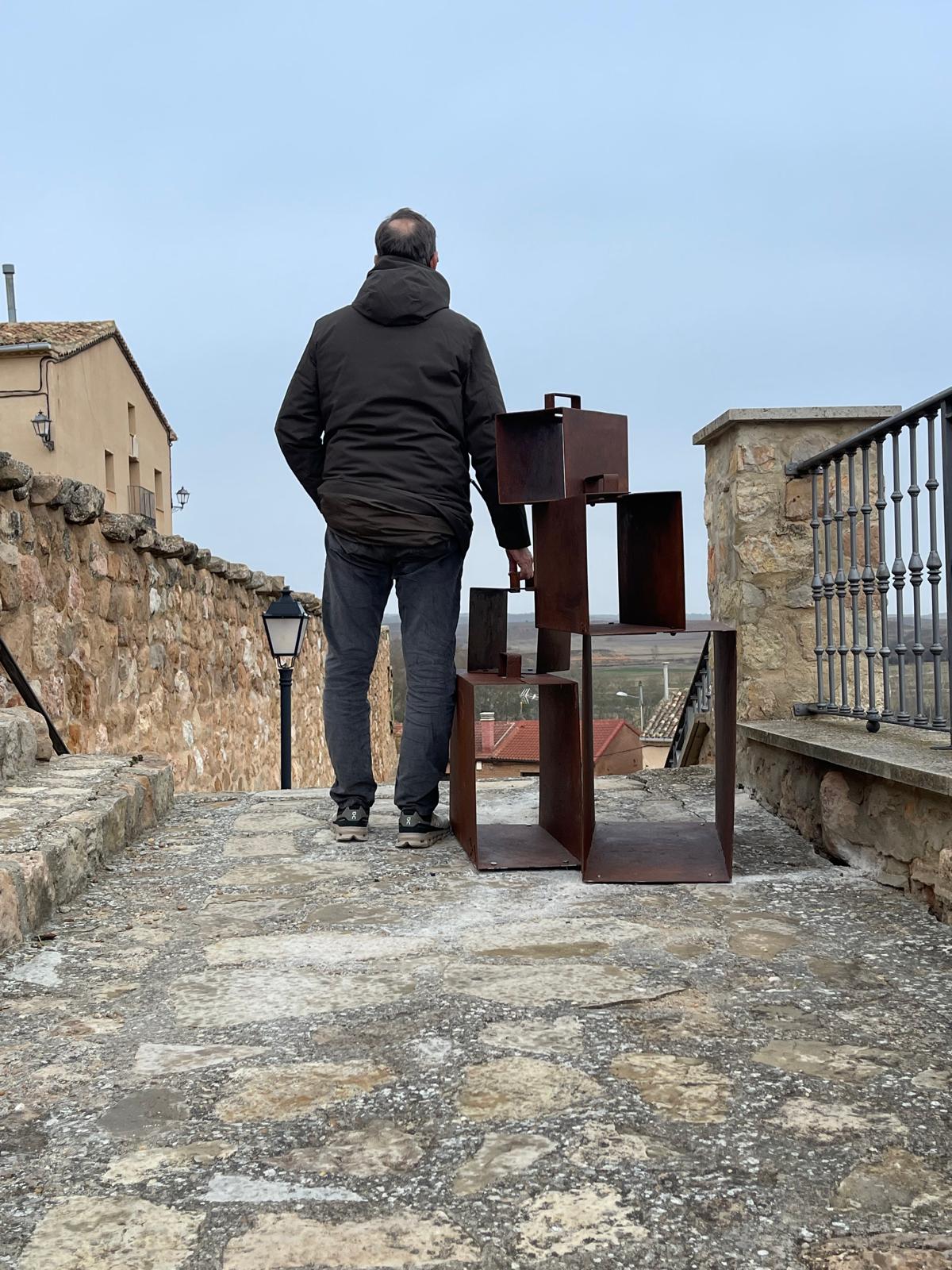
From there, the project evolved through a bottom-up and collaborative approach. The City Council supported the vision by facilitating spaces and enabling cultural interventions in the public realm. Early actions included exhibitions, the installation of sculptures, and the identification of façades for mural interventions. These visible changes helped build local trust and demonstrate that transformation was possible.
Implementation has been gradual and adaptive. Partnerships with local professionals—such as technical experts and cultural managers—have ensured feasibility and quality. At the same time, the project has remained open to new ideas, integrating proposals for artist residencies, creative workspaces, and the reuse of underutilised buildings such as the silo and the castle.
Today, Monteagudo Art Town is both a reality and an evolving process: a living project that grows through experimentation, community involvement, and a shared commitment to reimagining rural life through culture.
Rural regeneration
Cultural Heritage reuse
Community co-creation
Sustainable tourism
Creative economy
Monteagudo Art Town addresses sustainability through an integrated approach that connects environmental responsibility, social cohesion, cultural preservation, and local economic development.
Environmentally, the project prioritises the adaptive reuse of existing buildings—such as the castle, the silo, and traditional houses—avoiding new land consumption and reducing the carbon footprint associated with new construction. Future interventions include energy-efficient rehabilitation strategies (e.g. insulation systems, passive design) aligned with European standards. The project also promotes low-impact tourism based on walking routes, landscape appreciation, and ecological observation around the reservoir.
Social sustainability is achieved through community involvement and access to culture. Public spaces are reactivated through art, making culture accessible to residents and visitors alike. The project fosters intergenerational participation and strengthens local identity, counteracting isolation and demographic decline.
Culturally, Monteagudo Art Town preserves and reinterprets heritage. Instead of static conservation, heritage becomes a living resource through exhibitions, artistic interventions, and creative reuse, ensuring its transmission to future generations.
Economically, the project builds a circular local economy linked to culture and creativity. By attracting visitors, artists, and small-scale initiatives, it generates new opportunities without relying on extractive or unsustainable models.
The project is exemplary because it demonstrates how small rural municipalities can transition towards sustainability using existing assets, minimal resources, and strong local governance. It offers a replicable model where environmental care, cultural value, and economic viability are mutually reinforcing.
Monteagudo Art Town enhances aesthetics by transforming everyday spaces into meaningful, beautiful environments that connect people with their surroundings. The project does not treat beauty as decoration, but as a lived experience embedded in daily life.
Public space is a central element. Streets, façades, and squares are progressively activated through murals, sculptures, and artistic interventions that are integrated into the architectural and landscape context. These actions improve visual quality while respecting the traditional identity of the village, including the use of local colours and materials. Beauty is therefore rooted in continuity, not disruption.
The project also redefines abandoned or underused spaces. The Torre del Arte, already in operation, demonstrates how a former structure can become a vibrant cultural venue. Future transformations—such as the silo as a creative hub and the castle as a museum—extend this approach, turning overlooked buildings into attractive, inspiring places.
Aesthetics is closely linked to belonging. By involving local actors and making culture visible in everyday life, residents reconnect with their environment and take pride in it. The presence of art in the streets fosters care, respect, and shared ownership of public space.
In the long term, Monteagudo Art Town contributes to a coherent and recognisable identity, where heritage and contemporary creation coexist. It is exemplary because it shows that high-quality aesthetics can be achieved in small rural contexts through thoughtful design, cultural sensitivity, and community engagement—making beauty accessible to all, not only to urban centres.
Monteagudo Art Town promotes inclusion by ensuring that culture, space, and opportunities are accessible to all, regardless of age, income, or background. In a rural context marked by depopulation and ageing, inclusion is not an add-on but a central objective.
Accessibility is addressed through the activation of public space. Artistic interventions—murals, sculptures, and exhibitions—are placed in open, everyday environments, making culture freely available without economic or physical barriers. Future interventions in buildings such as the silo and the castle incorporate universal accessibility principles, ensuring that spaces are usable by all.
Affordability is embedded in the project’s model. By prioritising the reuse of existing infrastructure and promoting low-cost cultural participation, the initiative avoids exclusion based on income. The planned development of artist housing and workshops introduces opportunities for creators and small-scale entrepreneurs who might otherwise be excluded from urban cultural systems.
The project is grounded in inclusive governance. It is developed through collaboration between the City Council, local associations, and community members, fostering shared decision-making and long-term engagement. This participatory approach strengthens trust and ensures that the project responds to real local needs.
Monteagudo Art Town also contributes to new societal models by reconnecting rural areas with innovation and creativity, offering alternatives to urban concentration. It demonstrates that small municipalities can become inclusive ecosystems where culture, economy, and community life are accessible and interconnected.
The project is exemplary because it translates inclusion into tangible actions—open access to culture, participatory governance, and affordable opportunities—creating a model that can be replicated in other rural contexts across Europe.
Monteagudo Art Town is grounded in a participatory approach that actively involves citizens, local organisations, and public institutions in both the conception and implementation of the project.
From the outset, the initiative has been shaped through collaboration between the City Council, the Leonor Machado Cultural Association, local residents, and external cultural agents. Rather than a top-down intervention, the project has evolved through dialogue, identifying shared priorities such as the reuse of heritage, the activation of public space, and the attraction of cultural activity.
Citizens have played an active role in multiple ways. Local stakeholders have facilitated access to spaces, supported cultural programming, and contributed to defining the identity of the project. The use of public space for artistic interventions has been discussed and accepted collectively, ensuring that transformations are socially embedded and culturally respectful. This has been particularly important in a small rural context, where trust and proximity are key.
Civil society organisations, especially the Leonor Machado Cultural Association, have acted as intermediaries between institutions and the community, enabling flexible management, cultural programming, and ongoing engagement.
The impact of this participatory approach is visible in the level of local acceptance and ownership. The project is not perceived as an external imposition, but as a shared process that reflects the community’s aspirations. Participation has strengthened social cohesion, increased trust in local governance, and created a sense of collective responsibility for the care and future of the village.
Monteagudo Art Town is exemplary because it demonstrates that meaningful participation—based on co-creation, dialogue, and long-term involvement—can be achieved even in small rural municipalities, generating more resilient and inclusive outcomes.
Multilevel governance
Monteagudo Art Town is developed through a multilevel governance approach that connects local initiative with regional, national, and European frameworks, ensuring coherence, scalability, and long-term impact.
At the local level, the City Council plays a central role by facilitating access to public spaces, supporting planning processes, and aligning the project with municipal strategies. Local actors—including cultural associations, residents, and professionals—are directly involved in implementation, programming, and day-to-day activation.
At the regional and provincial level, the project is embedded within strategies addressing depopulation and rural development in Soria and Castilla y León. Collaboration with technical professionals and alignment with territorial planning frameworks ensure feasibility and integration with regional priorities.
At the national level, Monteagudo Art Town engages with funding and policy instruments related to cultural heritage, rural regeneration, and sustainability, reinforcing its institutional viability.
At the European level, the project aligns with the New European Bauhaus and other EU initiatives on sustainability, inclusion, and cultural transformation. It is conceived as a pilot that contributes to European discussions on rural regeneration and serves as a replicable model.
The added value lies in combining bottom-up initiative with institutional support, strengthening local ownership while enabling access to wider resources, expertise, and policy frameworks.
Monteagudo Art Town is inherently transdisciplinary, bringing together multiple fields of knowledge to address complex rural challenges through an integrated approach.
Architecture and urban design play a key role in the adaptive reuse of buildings such as the Torre del Arte, the silo, and the castle, ensuring that interventions respect heritage while introducing new functions. Engineering and technical expertise support the feasibility of these transformations, particularly in areas such as structural rehabilitation and energy efficiency.
The arts are at the core of the project, shaping both identity and everyday experience through exhibitions, murals, and sculptures integrated into public space. At the same time, cultural management and creative industries contribute to programming, audience development, and the sustainability of activities.
Social sciences inform the project’s understanding of depopulation, community dynamics, and rural resilience, ensuring that interventions respond to real social needs. This is complemented by participatory practices that connect research with lived experience.
Environmental perspectives are also integrated, promoting low-impact interventions, landscape awareness, and sustainable tourism linked to walking routes and ecological observation.
In addition, education and knowledge exchange are embedded in the project through workshops, residencies, and informal learning opportunities that connect local communities with external creators and professionals.
The transdisciplinary nature of Monteagudo Art Town is not only a combination of fields, but a continuous interaction between them. This integrated approach allows the project to generate innovative solutions that are culturally meaningful, technically feasible, socially relevant, and environmentally responsible, making it exemplary within the New European Bauhaus framework.
Monteagudo Art Town is based on a hybrid business model that combines public support, private initiative, and self-generated revenues to ensure long-term financial sustainability.
At its core, the project activates existing assets—heritage buildings, public space, and cultural infrastructure—to generate economic value. The Torre del Arte, already operational, hosts exhibitions and cultural events that attract visitors and generate income through ticketing, guided visits, and cultural programming.
Future developments will diversify revenue streams. The transformation of the castle into a museum and the silo into a creative hub will introduce additional income sources, including exhibitions, workspace rentals, cultural events, and residencies. The planned artist housing and workshops will provide affordable accommodation and working spaces, generating stable rental income while attracting creative talent.
The project also benefits from public funding and institutional support at local, national, and European levels, particularly for infrastructure rehabilitation and initial investment phases. These funds act as catalysts, enabling long-term self-sufficiency rather than permanent dependency.
Indirect economic impact is equally important. By increasing visitor flows (currently over 14,000 annually), the project supports local businesses, stimulates new services, and fosters a circular local economy linked to culture, tourism, and creativity.
The model is designed to be scalable and replicable, combining low initial investment—through adaptive reuse—with diversified income streams and strong governance. This balance between cultural value and economic viability ensures that Monteagudo Art Town can remain financially sustainable while contributing to broader territorial development.
Monteagudo Art Town has strong potential for transferability and replicability because it is based on a flexible, low-cost, and modular methodology that can be adapted to different rural contexts.
A key transferable element is the adaptive reuse of existing assets. The project demonstrates how underused buildings—such as silos, castles, or traditional houses—can be transformed into cultural and creative infrastructures without the need for large-scale new construction. This approach is applicable to many rural areas across Europe facing similar challenges of vacancy and decline.
The governance model is also replicable. The combination of local authorities, civil society organisations, and private actors creates a balanced structure that ensures both community ownership and operational capacity. This model can be adapted to different institutional contexts while maintaining its participatory nature.
Another scalable component is the activation of public space through art. Murals, sculptures, and cultural programming are relatively low-cost interventions with high social and visual impact, making them easily transferable to other municipalities.
The project’s economic model—based on diversified revenue streams (tourism, cultural activities, workspace rental, residencies) combined with initial public investment—offers a sustainable framework that can be replicated in other territories.
Finally, Monteagudo Art Town functions as a pilot within a broader “Cultural Town” concept (Art Towns, Craft Towns, Book Towns), providing a methodology that can be adapted to different identities and local resources.
Its scalability lies not in copying a fixed model, but in transferring principles, processes, and tools that enable each place to develop its own version of cultural regeneration.