Enablers for New European Bauhaus Transformation
Just a Change
Volunteer-driven housing renovation tackling poverty. Renovating homes, rebuilding lives
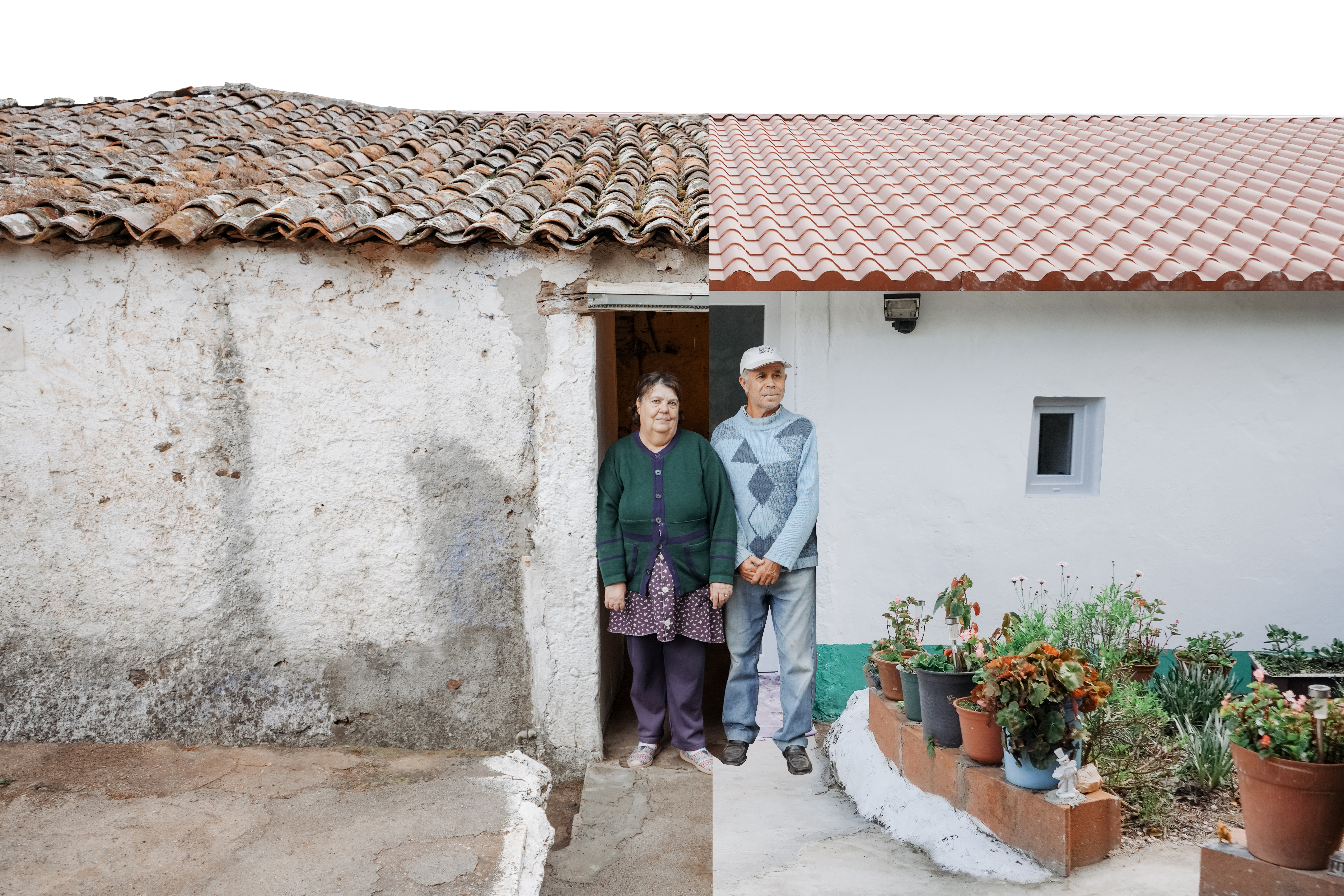
Just a Change renovates degraded homes for people living in housing poverty through volunteer-led renovations and strong community partnerships. By improving living conditions, restoring dignity and mobilising citizens to act, the initiative transforms neglected houses into safe homes while rebuilding lives and strengthening social cohesion.
Portugal
National
It addresses urban-rural linkages
It involves a physical transformation of the built environment (hard investment)
Completed
Yes
ESF: European Social Fund
Horizon2020 / Horizon Europe
No
No
Individual
Just a Change is a Portuguese non-profit organisation addressing housing poverty through a collaborative model that mobilizes citizens, institutions and communities to renovate homes of people that are living in vulnerable conditions.
Across Europe, thousands of families live in deteriorated homes lacking basic safety, sanitation and thermal comfort. In Portugal, 6 % of the population live in housing poverty conditions. Just a Change addresses this challenge by enabling collective action: volunteers, municipalities, companies and social organizations work together to transform unsafe houses into dignified homes.
Through structured volunteer-driven renovation programmes supported by professional expertise and local partnerships, the initiative delivers high-impact housing improvements while promoting energy efficiency and sustainable rehabilitation practices. Each intervention restores basic living conditions while improving safety, health and wellbeing for residents.
Beyond physical renovation, the project rebuilds dignity, autonomy and hope for residents. The model empowers citizens to actively contribute to solving social challenges, creating strong connections between communities, local authorities and civil society.
Since its creation, Just a Change has mobilised thousands of volunteers and improved the living conditions of many families across Portugal, demonstrating the effectiveness of a civic-driven approach to tackling housing poverty.
By linking social inclusion, sustainability and citizen participation, the initiative demonstrates how communities can collectively tackle structural social challenges while regenerating the built environment. Its scalable and replicable model shows how communities can work together to regenerate homes, strengthen social cohesion and advance the values of the New European Bauhaus
Just a Change emerged from the recognition that housing poverty is one of the most urgent yet often invisible social challenges in Europe. Many families live in degraded homes that are unsafe, unhealthy or structurally compromised, yet lack the financial means to repair them. While housing policies often focus on new construction, many existing homes continue to deteriorate, leaving vulnerable households trapped in poverty.
The idea was simple but powerful: mobilise communities to directly improve the homes of those who need it most. By combining volunteer action, professional technical support and partnerships with municipalities and social organisations, Just a Change created a collaborative model to renovate homes and restore dignity.
Each renovation project follows a structured process. Social partners identify families living in housing poverty, technical teams assess the structural and safety needs of the home, and volunteers participate in renovation works under professional supervision.
Over time, the initiative evolved from a grassroots effort into a nationwide movement that mobilises citizens, local authorities, companies and civil society organisations. Volunteers not only contribute to the renovation works but also become advocates for housing dignity and social inclusion.
By transforming individual homes, Just a Change also transforms communities. The initiative demonstrates how collective action can address housing poverty while strengthening civic engagement and fostering more inclusive and sustainable living environments.
Housing renovation
Housing poverty
Community volunteering
Social inclusion
Collective action
Just a Change contributes to sustainability by extending the life cycle of existing buildings and improving the environmental performance of degraded housing. Rather than demolishing and rebuilding, the project prioritises renovation, significantly reducing construction waste and the environmental impact associated with new construction.
Renovation works frequently include improvements in insulation, structural safety and energy efficiency, helping households reduce energy consumption and living costs. By prioritising repair, reuse and long-term building durability, the initiative aligns with circular economy principles and promotes a more responsible use of resources within the built environment.
Social sustainability is also at the core of the concept. Housing poverty often exposes vulnerable households to unsafe structures, humidity, poor thermal comfort and inadequate sanitation, which can have serious impacts on health and wellbeing. By transforming degraded houses into safe and dignified homes, Just a Change improves living conditions while strengthening long-term stability and resilience for families and communities.
The project also promotes civic sustainability by mobilising citizens to actively participate in addressing social challenges. Volunteers become engaged actors in their communities, fostering a culture of solidarity, responsibility and collective care.
Through this combination of environmental responsibility, social impact and community engagement, Just a Change demonstrates how housing rehabilitation can contribute to a more sustainable and resilient society.
The transformation of degraded housing into dignified living spaces is central to the aesthetic dimension of Just a Change. The project does not only repair structural problems; it restores the beauty, comfort and sense of belonging that a home should provide.
Renovation works aim to create living environments that are safe, functional and pleasant. Repaired walls, improved lighting, renewed structures and better interior conditions significantly enhance the quality of everyday life for families. These improvements transform houses that were previously associated with insecurity and hardship into spaces where people can feel safe, comfortable and proud to live.
Beyond the physical improvements, the aesthetic value lies in restoring dignity to people who have often lived for years in inadequate conditions. The transformation of a deteriorated house into a welcoming home has a profound emotional and social impact on families.
At the neighbourhood level, rehabilitating neglected homes contributes to the regeneration of the built environment and strengthens a shared sense of pride and care for the place. Restored houses become visible signs that communities are valued and that everyone deserves to live in spaces that are safe, beautiful and dignified.
Through these interventions, Just a Change demonstrates that beauty in the built environment is not only about design but also about dignity, care and human wellbeing.
Inclusion is at the heart of the Just a Change model. The project directly addresses housing poverty by improving living conditions for people who would otherwise not have the resources to renovate their homes. By providing renovation support at no cost to vulnerable households, the project ensures that access to safe and dignified housing is not limited by economic resources.
The initiative ensures that vulnerable households gain access to safe and dignified housing conditions, which is a fundamental requirement for social inclusion and equal opportunities.
Inclusion is also embedded in the governance and implementation of the project. The initiative operates through a collaborative ecosystem that brings together municipalities, social organisations, technical professionals, companies and citizens. This multi-stakeholder approach enables communities to collectively address housing challenges that no single actor could solve alone.
Citizen participation is a key element of the model. Volunteers from diverse social, cultural and professional backgrounds actively contribute to the renovation works, creating opportunities for meaningful engagement and solidarity across communities. Through this process, citizens become active participants in addressing housing inequality and improving living environments.
Through this approach, Just a Change reduces inequalities in access to decent housing while strengthening community bonds and promoting a more inclusive society.
Participation is a fundamental pillar of the Just a Change model and has shaped the initiative from its earliest stages. The concept was developed as a collaborative response to housing poverty, bringing together citizens, municipalities, social organisations, technical professionals and private partners to address a complex social challenge collectively.
Citizens actively contribute to the renovation of homes through volunteer work, fundraising initiatives and community engagement. Working alongside technical professionals, they contribute directly to improving housing conditions for vulnerable families while gaining a deeper understanding of housing inequality and social challenges.
Stakeholders are also closely involved in the development and implementation of the model. Municipalities and social organisations help identify households living in inadequate housing conditions and support the social follow-up of beneficiary families. Technical experts ensure that renovation works meet safety and quality standards, while companies and institutional partners contribute resources, materials and expertise.
Beneficiary and their families are also involved in the process, strengthening the sense of ownership and community connection that emerges from the transformation of their homes.
The participatory nature of the initiative has had a transformative impact. Volunteers often become long-term supporters and advocates for housing dignity, while local partners strengthen their collaboration around social housing challenges. Through this multi-stakeholder approach, Just a Change demonstrates how citizen engagement can generate lasting social impact while transforming living environments and strengthening community solidarity.
Just a Change operates through a collaborative model that engages stakeholders across multiple governance levels, creating coordinated responses to housing poverty.
At local level, municipalities play a key role in identifying housing needs and facilitating collaboration with local communities.Municipal engagement ensures that interventions respond to concrete social challenges while strengthening local capacity to address housing vulnerability.
Social organisations help identify vulnerable households and ensure that interventions reach those most in need.Their close knowledge of communities helps that interventions reach the most in need. They also support after the renovation to guarantee that the change is systemic and with a long term impact.
Technical professionals contribute expertise in architecture, engineering and construction. Their involvement ensures that volunteer-driven interventions achieve durable and high-quality results.
At the national level, partnerships with institutions and organisations help expand the initiative and strengthen its impact across Portugal. These partnerships provide resources, materials, and expertise, strengthening the capacity to mobilize and to intervene.
This multilevel collaboration creates an effective network that combines public institutions, civil society and citizen participation. By aligning these actors around a shared mission, the initiative creates stronger and more coordinated responses to housing poverty.
By connecting actors across governance levels, from citizens and local organisations to national institutions and potential European partners, Just a Change demonstrates how multilevel collaboration can generate effective and scalable responses to complex social challenges while strengthening community resilience.
The Just a Change initiative integrates knowledge and expertise from multiple disciplines to address housing poverty holistically.
The initiative integrates knowledge related to construction, housing rehabilitation and safety through the experience accumulated over years of renovation projects. Team members and long-term collaborators have developed strong practical expertise that supports the planning and execution of renovation works.
Training is a key element of the model. Volunteers receive guidance, training sessions and support materials that help them understand renovation processes, safety procedures and the organisation of construction works. This allows people from diverse educational and professional backgrounds to safely participate in improving housing conditions.
Social organisations contribute essential knowledge about community needs and social vulnerabilities, helping identify families living in inadequate housing conditions and ensuring that interventions respond to real social challenges.
The initiative also integrates elements of social innovation, urban regeneration and community development. By combining these perspectives, the project goes beyond traditional construction projects and becomes a platform for social transformation.
This transdisciplinary approach enables the initiative to address both the physical and social dimensions of housing poverty. By combining practical expertise, social knowledge and community action, Just a Change creates an accessible and collaborative model for improving homes and strengthening communities.
The Just a Change model is based on a hybrid financing approach that combines philanthropic funding, partnerships and community mobilisation to ensure financial sustainability.
Renovation projects are financed through donations, corporate partnerships, philanthropic contributions and support from municipalities and partner organisations. These resources cover construction materials, technical supervision and project coordination.
A key element of the model is volunteer participation. By mobilizing volunteer participation, Just a Change reduces labour costs while strengthening community engagement and social impact. This model allows the initiative to maximise resources while maintaining high levels of transparency and efficiency.
Corporate partnerships and social responsibility programmes also play an important role by supporting renovation projects or sponsoring volunteer initiatives.Companies contribute financial resources, materials or employee volunteering programmes, creating mutually beneficial collaborations that strengthens the initiative’s capacity to expand its activities.
The model demonstrates how civic participation, philanthropy and institutional collaboration can create financially sustainable solutions to social challenges.
The Just a Change model is highly replicable, as it is based on simple operational principles combined with strong community engagement and cross-sector collaboration.
Key elements that can be transferred to other contexts include the volunteer-based renovation model, structured partnerships with municipalities and social organisations, and the integration of professional technical supervision with community participation. The methodology for identifying families in housing poverty, coordinating renovation works and mobilising volunteers is adaptable to different territorial, social and regulatory contexts.
The initiative has already demonstrated its scalability across Portugal, having implemented projects in more than 60 municipalities, in both urban and rural settings. This expansion has validated the model’s flexibility and its capacity to respond to diverse local needs while maintaining quality and impact.
While international replication is not currently a strategic priority, the model is designed to be transferable. Through benchmarking exercises, we identified a clear gap at European level: there are no organisations applying this specific combination of community mobilisation, volunteer engagement and structured housing rehabilitation methodology at scale.
By offering a tested, adaptable and community-driven framework, the concept provides a strong foundation that could be replicated in other regions facing housing poverty, contributing to a more inclusive and socially cohesive Europe.
In the year following this application, as part of its 2026–2030 strategic plan, Just a Change will focus on scaling its proven model at national level, in line with its objective of increasing the number of homes renovated and maximising impact per intervention.
The priority will be to grow the current operational model by expanding activities in existing regions and strengthening cluster-based interventions, allowing for greater efficiency and deeper local impact. This includes reinforcing partnerships with municipalities, particularly in adjacent territories, and leveraging existing field presence to reach new beneficiaries.
At the same time, the organisation will invest in improving operational efficiency through process optimisation and better planning tools, ensuring that growth is sustainable and scalable. Strengthening volunteer recruitment and retention will also be central, recognising volunteers as the core of the model and a key driver of impact.
In parallel, Just a Change will reinforce its role as an advocacy actor, increasing awareness of housing poverty, generating knowledge based on field experience, and contributing to public debate and policy discussions.
The organisation will also continue to consolidate its social support ecosystem by strengthening collaboration with social institutions, ensuring that beneficiaries receive follow-up support beyond the physical intervention.
International expansion may be explored on an opportunistic basis, only when strong local partnerships are secured.
These steps are supported by a clear implementation roadmap and investment plan, ensuring the organisation’s capacity to grow its impact while preserving the quality and community-driven nature of its interventions.