Arts, Culture, and Heritage as Drivers of Change
Pescatori Digitali
Pescatori Digitali
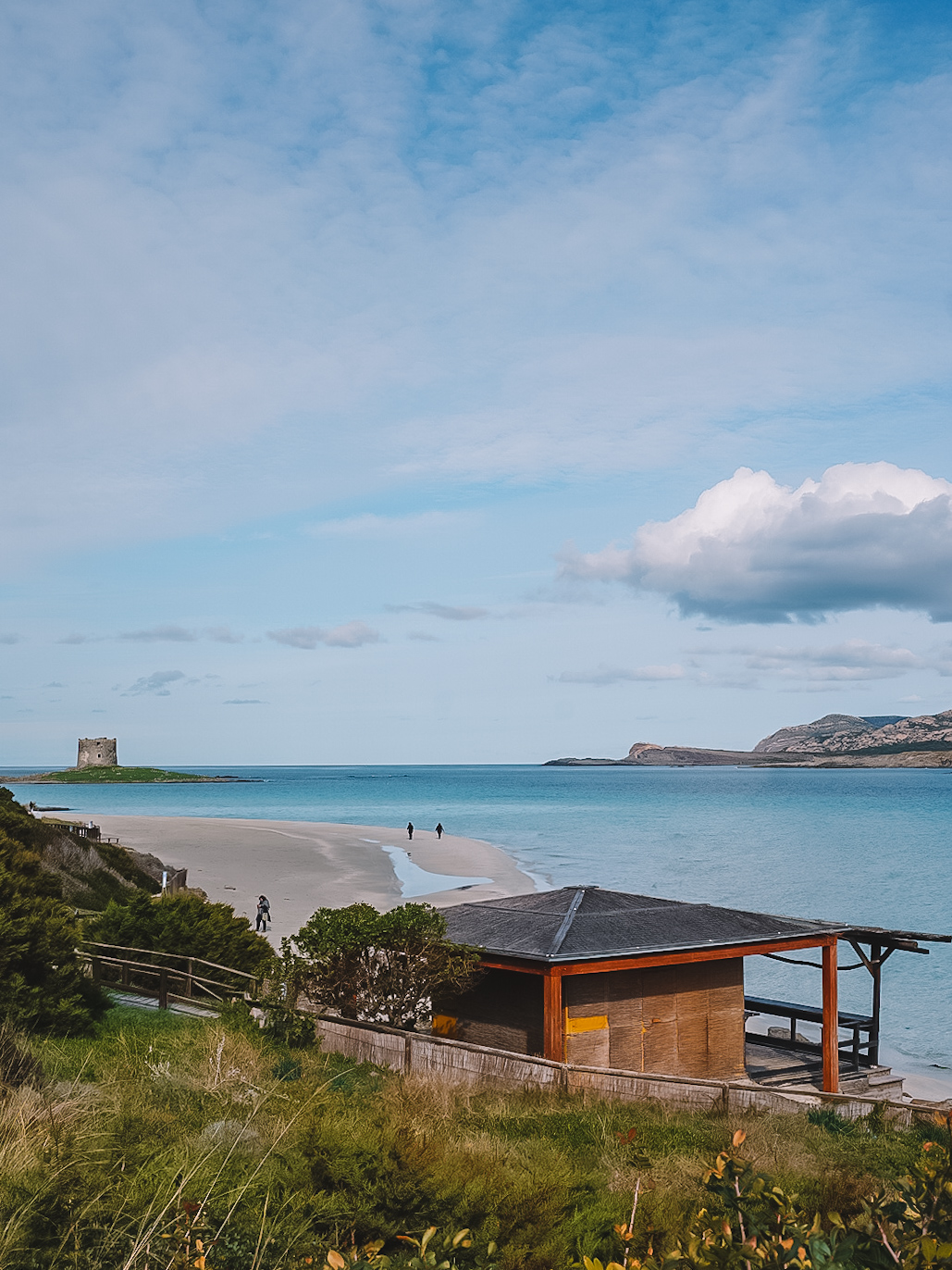
Pescatori Digitali turns Stintino from a seasonal tourist destination into a living cultural ecosystem. In a village where 82.5% of homes stand empty in the low season, international creatives and remote workers temporarily inhabit historic fishermen’s houses and reactivate underused heritage spaces through work, culture and exchange with locals. The result is a low-impact model for regenerating coastal villages under tourist pressure.
Italy
Local
Stintino, Sardinia.
Mainly rural
It involves other types of transformations (soft investment)
Yes
2025-11-30
No
No
No
Organisation
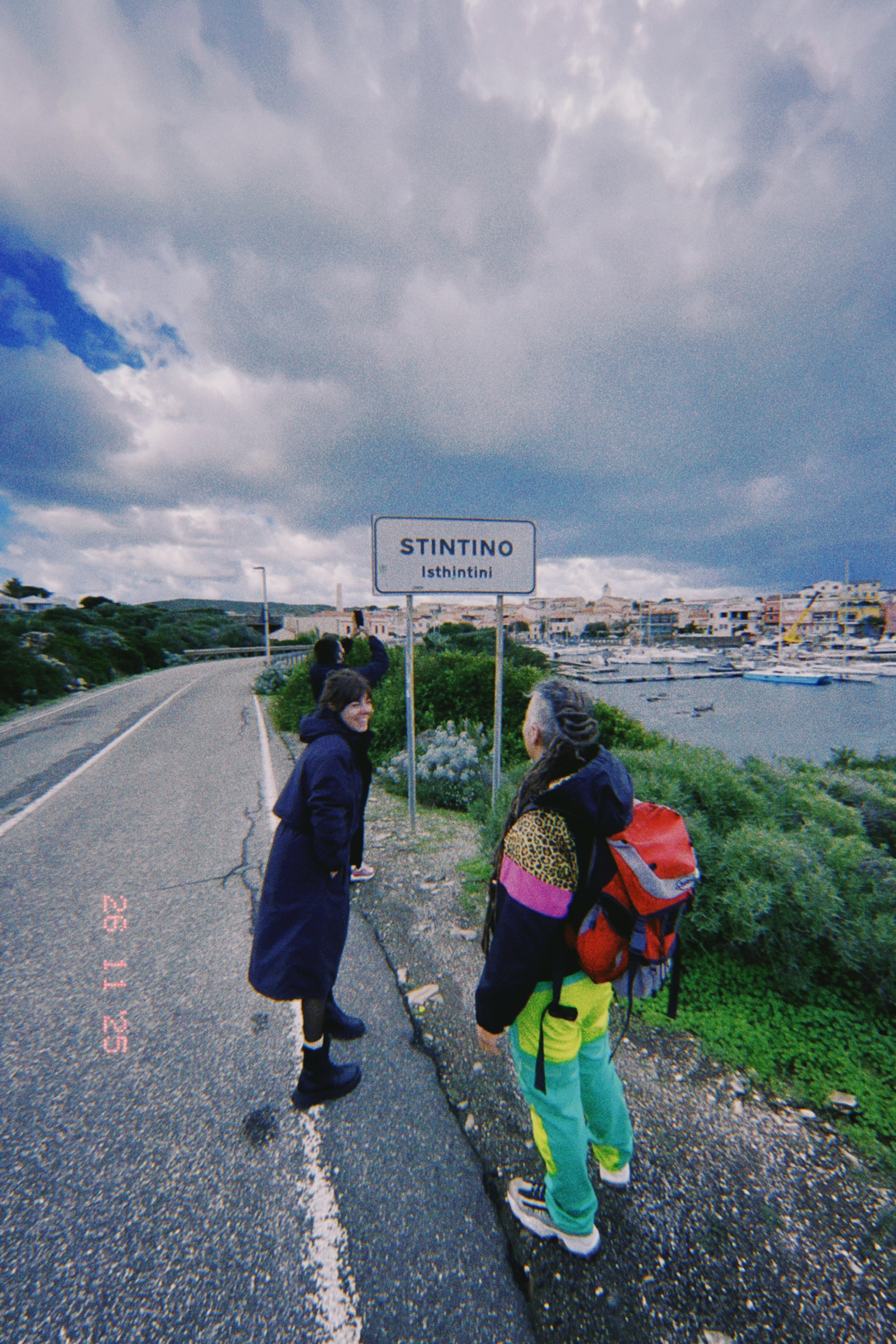
Pescatori Digitali is a heritage-led, off-season cultural regeneration model in Stintino, a coastal village in northern Sardinia shaped by extreme tourist seasonality. In a context where 82.5% of homes stand empty in the low season, the project does not add new infrastructure: it reactivates what already exists. In November 2025, international creatives and remote workers temporarily inhabited historic fishermen’s houses and helped reopen 8 underused civic and heritage spaces, transforming them into places for work, culture, learning and everyday exchange with residents.
By activating the Museum of the Tonnara, the library, the tourist office and other dormant local assets, Pescatori Digitali shifted Stintino from a destination consumed in summer to a living cultural ecosystem in the off-season. Its programme combined cultural production, shared work, local knowledge, intergenerational exchange and low-impact public activities, turning heritage into a living infrastructure rather than a static backdrop. Instead of designing experiences for tourists, the project invited temporary residents to become active contributors to village life.
The results are already tangible: dormant spaces were reopened, local cultural life intensified, relationships between residents and temporary inhabitants deepened, and small businesses still operating in winter benefited from sustained presence rather than short-term consumption. More importantly, the project demonstrated that cultural heritage can support contemporary forms of inhabitation without losing its identity.
Its long-term impact lies in testing a transferable model for heritage villages under tourist pressure: a low-cost, culture-led alternative to extractive seasonal tourism, capable of reducing off-season emptiness, strengthening local belonging, and generating new forms of social, cultural and economic vitality through adaptive reuse, participation and care.
The project was born from a contradiction visible in many heritage villages under tourist pressure: places that appear intensely alive for a few summer weeks, yet remain socially and culturally dormant for much of the year. In Stintino, we did not want to respond to this condition with more tourism, more branding, or more infrastructure. We wanted to test whether the off-season itself could become a space for regeneration.
A major source of inspiration was Sende in rural Galicia, a pioneering experience developed in a village of just 20 inhabitants. What inspired us was not only its scale, but its ethic: a way of linking temporary inhabitation, culture and everyday life without extracting value from the place. At the same time, our travels, exchanges and research on digital nomadism helped us understand a crucial point: simply attracting remote workers is not enough. In several contexts, especially islands and highly branded destinations, digital nomadism risks becoming another layer of short-term consumption, socially detached from local realities. We wanted to move in the opposite direction.
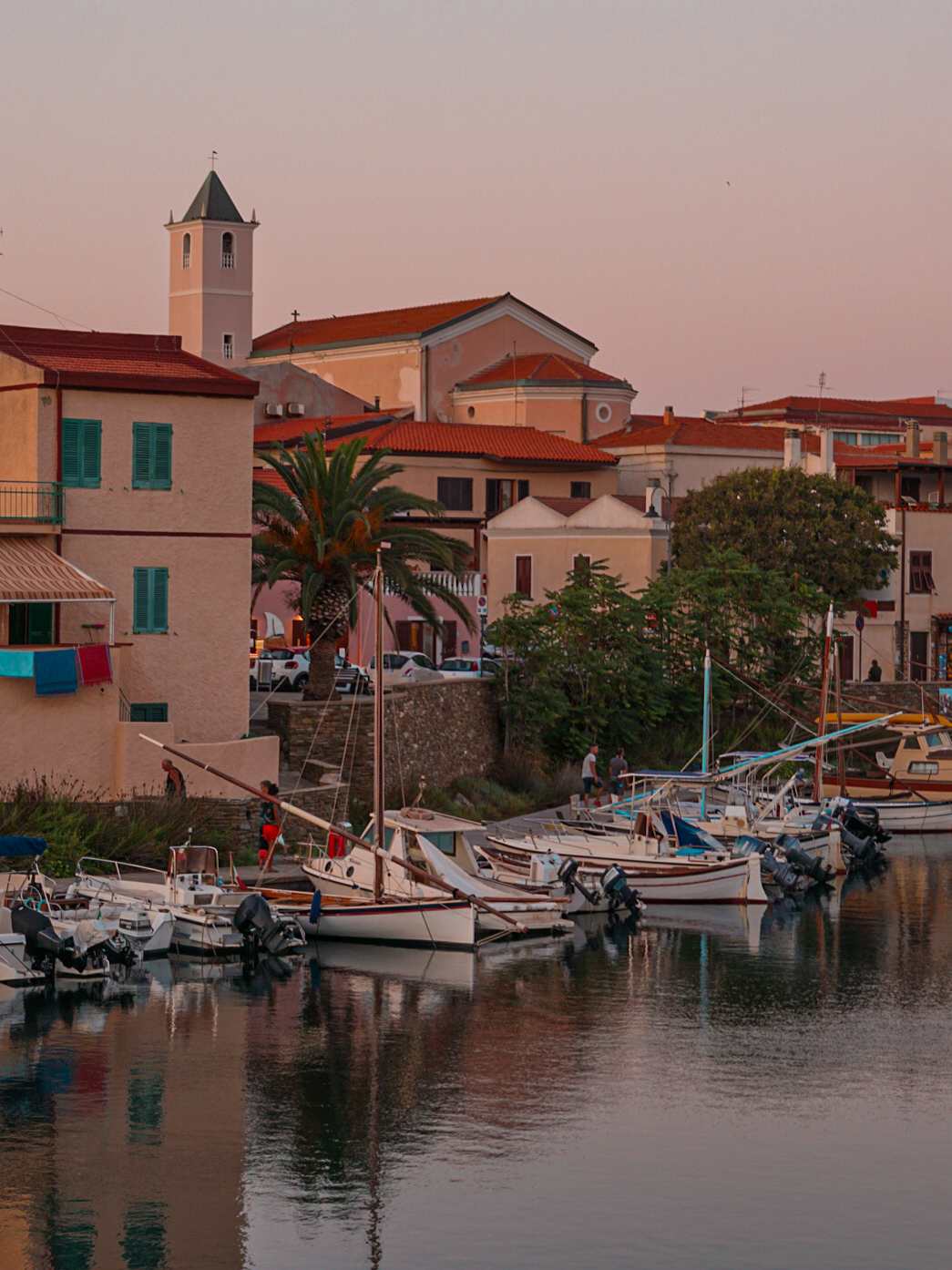
Pescatori Digitali was therefore designed as a place-based, low-impact and heritage-led model. Instead of creating new spaces, we reactivated existing ones: historic fishermen’s houses became temporary homes, while the Museum of the Tonnara, the library, the tourist office and other underused local assets were reopened as a distributed infrastructure for work, exchange and public culture.
Implementation on the ground relied on a light but intentional methodology: adaptive reuse of dormant spaces, collaboration with the municipality and local actors, and a programme shaped through contributions from both residents and participants. People were not invited as consumers of an experience, but as temporary inhabitants willing to bring a skill, a dinner, a workshop, a conversation, or simply time and care. In this way, culture was not an accessory to the project: it was the tool.
Heritage regeneration
Adaptive reuse
Off-season inhabitation
Cultural exchange
Coastal resilience
Pescatori Digitali is exemplary in terms of sustainability because it changes how a heritage village uses space, time and existing resources. In Stintino, the core problem is not only environmental pressure in summer, but structural underuse for most of the year: empty homes, dormant civic spaces and an economy concentrated into a short and intense season. Our project responds without new construction, permanent expansion or heavy infrastructure. Instead, it works through adaptive reuse and seasonal reactivation. Historic fishermen’s houses become temporary homes, while underused public and cultural spaces are reopened as shared environments for work, learning and collective life.
This makes the project environmentally sustainable by reducing pressure rather than adding volume. Instead of feeding peak-season extraction, it redistributes presence into the low season and promotes a lighter pattern of inhabitation based on reuse, walkability, local consumption and care for place. The environmental dimension is therefore embedded in the model itself, and was also made tangible through concrete collective practices, including a coastal clean-up carried out with residents and participants.
Its sustainability is also social, cultural and economic. By reactivating 8 dormant spaces in November 2025, the project extended the useful life of existing heritage and civic assets, supported the few businesses still open in winter, and demonstrated that local vitality does not depend on high volumes of visitors. What it sustains is not only the environment, but the continuity of everyday life, local culture and small-scale economic activity in the off-season.
Pescatori Digitali approaches aesthetics not as beautification, but as the recovery of quality of experience in a village whose beauty had become almost exclusively seasonal and externally consumed. In Stintino, the problem was not the absence of beauty, but the absence of use, rhythm and shared life in the off-season. Closed shutters, dormant spaces and silence had turned a place of strong identity into a place that often felt emotionally suspended. Our project responded by making heritage visible and liveable again in everyday life.
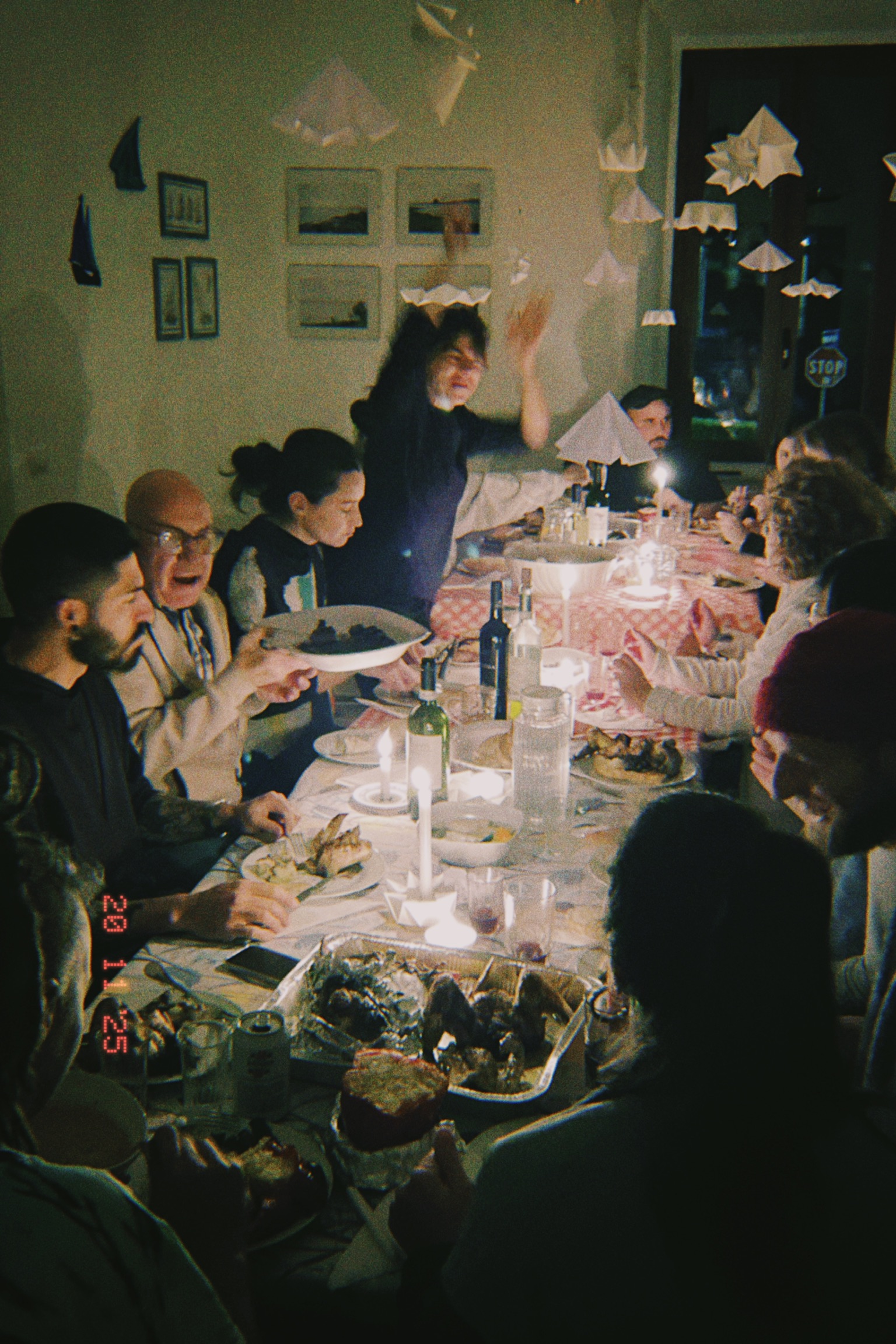
Historic fishermen’s houses became temporary homes; the Museum of the Tonnara, the library, the tourist office and other underused spaces became places for work, exchange and public culture. This changed not only the function of these places, but their atmosphere. A museum became a setting for talks and workshops, a winter-quiet bar became the site of a concert full of local people, homes became spaces of shared meals, and ordinary routines regained intensity through encounters, creativity and care. Beauty emerged through activation, not staging.
The project also contributed to a sense of belonging because local culture was not performed for visitors as a product; it was shared as a living practice. Fishing with Giorgio, cooking with local families, collective dinners, rowing, workshops, conversations and small acts of co-creation allowed participants and residents to experience Stintino not as a postcard, but as a place with memory, relationships and everyday dignity. This generated care for place in a very concrete way: people did not simply admire Stintino, they inhabited it attentively and contributed to its social and cultural life.
Its exemplary character lies in showing that aesthetics in fragile heritage villages does not require iconic architecture or heavy investment. It can be produced through the sensitive reactivation of existing spaces, through cultural programming rooted in local identity.
Pescatori Digitali is exemplary in terms of inclusion because it challenges a familiar pattern in tourist destinations: the separation between those who live in a place, those who work there seasonally, and those who only consume it temporarily. Instead of creating an exclusive coliving bubble, the project proposes a different social model: a distributed form of temporary inhabitation in which international participants become part of the everyday life of the village, while local residents remain central to the experience.
In practical terms, inclusion was built through openness, affordability and shared agency. The project used existing homes and public spaces rather than private premium infrastructure, lowering costs and avoiding the gated logic often associated with digital nomadism. Many activities were free or based on minimal shared contributions, making participation possible for local residents as well as guests. Spaces that are usually dormant in the low season were reopened as accessible places for work, exchange and public culture, allowing different generations, professions and social groups to meet in ordinary, familiar settings rather than in exclusive venues.
Inclusion also shaped governance. The programme was not imposed from above: it was co-produced by the organising team, participants and local people. Some activities were facilitated by Absentia, others were self-initiated by guests, and others emerged directly from residents, associations and local actors. This created a light but meaningful model of shared authorship, where people were not treated as audiences or beneficiaries, but as contributors.
The project’s exemplary value lies in showing that inclusion in heritage villages is not only a question of physical access, but of social access: who gets to use spaces, shape programmes, and feel that village life also belongs to them in the off-season.
Pescatori Digitali treated participation as a method of implementation, not as an add-on. In its 2025 edition, the project was built through a shared process involving residents, local associations, small businesses, cultural actors and public institutions. Their role was not limited to hosting or attending activities: they helped open spaces, shape the programme, contribute knowledge, and influence how the project related to the village. Participation was therefore embedded in the project’s structure from the outset.
This was especially significant in the off-season, when public life in Stintino is usually reduced and many spaces remain inactive. Rather than importing a fixed programme, Pescatori Digitali created conditions for local initiative. Heritage and civic spaces were reopened and used as common platforms for work, exchange and cultural activity. The programme remained intentionally permeable: some moments were facilitated by Absentia, others emerged through participants, and others were generated directly with residents, associations and informal community networks. This produced a form of co-authorship rather than simple attendance.
Citizens and civil society actors were involved at different levels. Some shared skills, stories, food traditions or artistic practices; some hosted dinners or opened informal social spaces; some co-organised public moments, from music and workshops to collective environmental action.
The impact of this involvement was not only visible in the number and diversity of activities, but in the way the project began to be absorbed into local language and imagination. A particularly revealing sign was the emerging distinction, in local vocabulary, between “digital fishermen” and “analogue fishermen” to refer to the village’s traditional fishers. This ironic and affectionate contrast suggests that the project was not perceived as something alien, but as something locally understood, reinterpreted and discussed.
Pescatori Digitali grew through a genuinely multilevel governance process, in which each level contributed a different form of knowledge, support and legitimacy. At European level, the project was shaped through dialogue with organisations experimenting with rural coworking, coliving and community-led regeneration. Sende in rural Galicia was a key inspiration, showing how a village of around 20 inhabitants can host temporary residents without losing identity or scale. This learning was enriched through exchanges with spaces connected to the CRABS ecosystem, with East of Moon in Iceland, and through networks such as RURACTIVE, where Absentia was selected as a best practice, and the ISEC sustainable economy community. These connections positioned Pescatori Digitali within a wider European reflection on how heritage villages can respond to seasonal pressure through culture, temporary inhabitation and local activation.
At regional level, this learning was grounded in Sardinia through a strong support ecology. Partners such as Treballu, RU.RA.LE. APS and Cocò Sardinia contributed to a wider conversation on rural innovation and new economies for fragile territories. Fondazione di Sardegna played an essential enabling role through its financial support, while dialogue with the Autonomous Region of Sardinia gave the project relevance within regional discussions on depopulation, seasonality and territorial regeneration.
At national level, the project benefited from links with organisations and movements working on environmental responsibility, civic participation and social innovation.
At local level, governance became concrete: the Municipality of Stintino, the Museum of the Tonnara, local associations, residents and small businesses opened spaces, shared tools and transmitted knowledge. This multilevel ecosystem allowed the project to remain deeply rooted in village life while connected to a wider transformation agenda.
Pescatori Digitali is transdisciplinary because it does not treat regeneration as a single-field problem. The project was designed at the intersection of cultural programming, heritage activation, community organising, remote work culture, environmental action, education and territorial development. Its starting point was simple: in a village marked by seasonal emptiness, neither tourism alone nor culture alone is enough. What is needed is a way of reconnecting spaces, people, skills and everyday life.
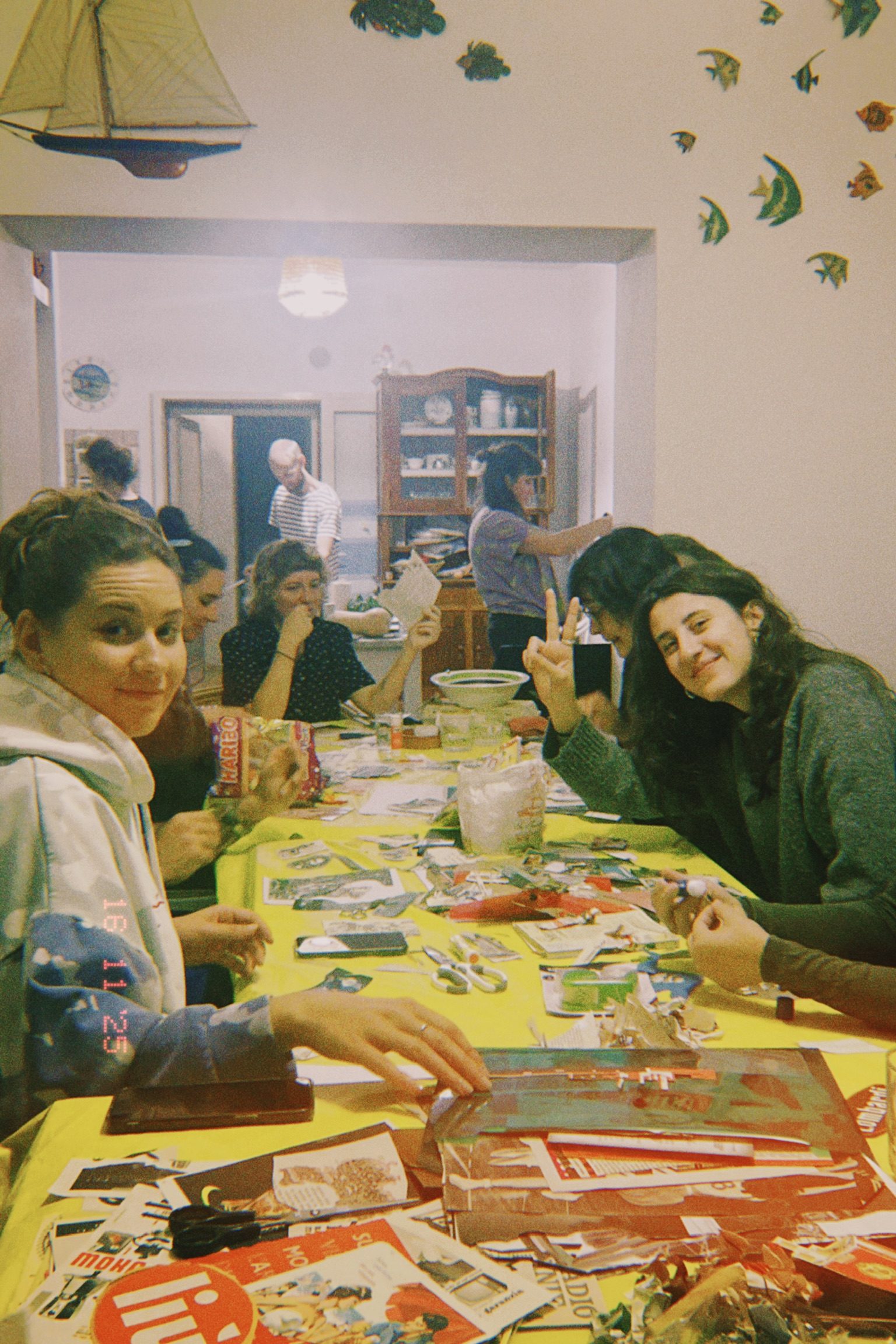
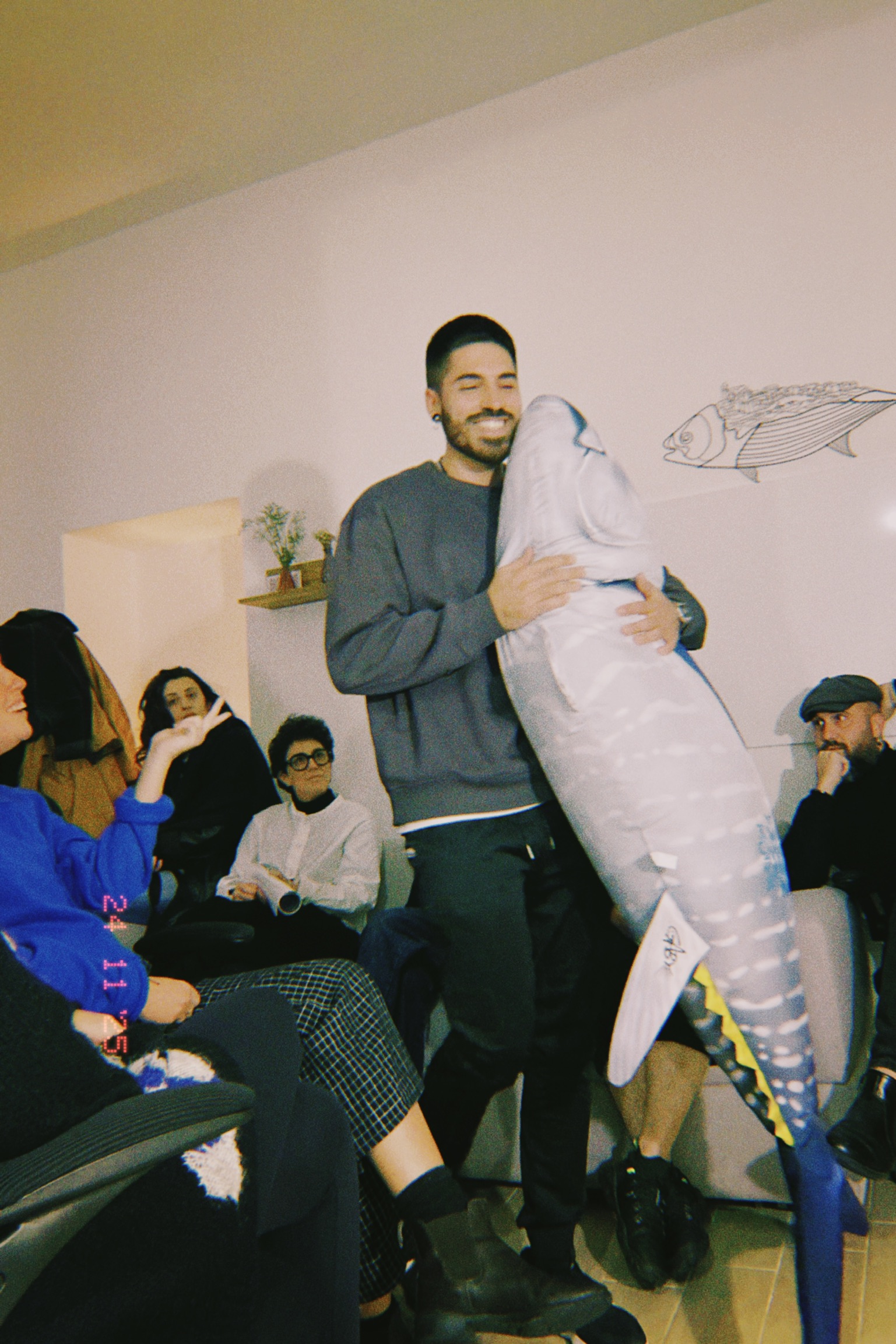
Different knowledge fields then entered the project through the people involved. Arts and creative practice were present in concerts, visual experimentation and workshops such as the plastic lights workshop and the creation of colours and stamps from local stones. Digital culture and education emerged through Tuna Talks and activities on video game making. Environmental knowledge was activated through the coastal clean-up and reflections on reforestation and coastal communities. Local and embodied knowledge came from fishing, rowing, cooking, hospitality and everyday exchange with residents.
The added value of this transdisciplinary process lies in the way these fields interacted. Local traditions were not isolated from contemporary practices; digital workers were not separated from manual, cultural or ecological knowledge; and public programming was not detached from daily life. Instead, the project created a shared learning environment in which international participants, residents, artists, organisers, cooks, fishers and associations all contributed different forms of expertise. This made the project more than a cultural programme or a remote work experience: it became a living prototype of how heritage villages can generate new forms of knowledge, belonging and regeneration through the encounter of disciplines that rarely meet on equal terms.
Pescatori Digitali is based on a blended, low-overhead business model that combines philanthropic support, in-kind public contribution and affordable participant fees. The project was made possible through a €15,000 grant from Fondazione di Sardegna, which provided the initial financial base for coordination, programming and implementation. At the same time, the Municipality of Stintino contributed essential in-kind support by making public spaces available free of charge. These spaces were temporarily transformed into coworking environments and venues for workshops, talks and community activities, significantly reducing fixed costs and avoiding the need for new infrastructure or commercial rents.
Participants also contribute directly to the model. They cover their own travel costs and pay an accessible participation fee of €300 for one month of stay. This fee is intentionally kept low in order to remain inclusive and aligned with the project’s social mission, while still contributing to basic organisational and operational costs.
What makes the model financially sustainable over time is precisely this combination of limited structural costs and diversified support. Pescatori Digitali does not depend on expensive buildings, permanent staff expansion or high visitor volumes. Its economic logic is based on adaptive reuse, temporary activation and shared responsibility. Public support lowers the threshold for experimentation, participant contributions create co-responsibility, and the use of existing spaces keeps the model light and replicable.
The project has strong transferability potential because it is not based on unique infrastructure or high financial capacity, but on a lightweight methodology that can be adapted to many heritage villages facing seasonality, depopulation or underuse. What can be replicated is not a fixed cultural programme, but a place-based format that combines temporary inhabitation, adaptive reuse of dormant spaces, and co-created public life in the off-season.
Several elements are particularly transferable. First, the spatial model: underused houses, civic buildings and heritage spaces can be temporarily reactivated as homes, coworking environments and cultural venues without permanent construction. Second, the governance model: the project works through a low-cost alliance between local authorities, cultural actors, associations, residents and an organising team able to curate participation. Third, the economic model: a mix of public or philanthropic support, in-kind local contributions and affordable participant fees makes the initiative accessible while keeping structural costs low.
The methodology is also highly replicable. Participants are not treated as tourists or consumers, but as temporary inhabitants expected to contribute skills, time and care. This principle can be transferred to many contexts, from coastal villages under tourist pressure to rural or inner areas struggling with vacancy, weak off-season economies or social isolation. The format is flexible enough to work with different local identities, whether based on fishing heritage, agriculture, crafts, landscape or cultural memory.
The project has generated growing interest from other organisations, territories and communities looking for alternatives to extractive tourism and more meaningful ways of activating places beyond peak season. The model is already proving transferable in practice: the Municipality of Sennori has funded a new project to replicate Pescatori Digitali in its own local context.