Arts, Culture, and Heritage as Drivers of Change
Café Bauhaus
European Union Youth Orchestra Café Bauhaus Awards
Café Bauhaus empowers EUYO musicians and alumni as creative entrepreneurs, supporting bold, locally rooted projects that connect music with other disciplines and art forms, activism, and community. Each award combines seed funding with expert consultancy from EUYO and partners to develop sustainable, inclusive ventures and turn innovative ideas into real-world impact. All projects - 11 to date - are completed within one calendar year; the initiative continues in 2026-27.
Austria
Local
The Balearic Islands, Bergamo, Paris, Glasgow, London, Madrid, Mo i Rana, Prague, Stuttgart, Tarnowskie Góry, Vienna, and six different centres for asylum seekers in the Netherlands: Musselkanaal, Schagen, Velsen-Noord, Heerughoward, Amsterdam, Utrecht.
It addresses urban-rural linkages
It involves other types of transformations (soft investment)
Yes
2025-12-31
Yes
Creative Europe
No
No
Organisation
With only 3% of applicants securing a place each year, EUYO musicians are among the top emerging professional musicians across all 27 EU Member States. The Orchestra tours extensively every spring and summer, alongside year-round pan-European and international projects. Recognising also that music must be accessible locally, the EUYO began its Café Bauhaus Awards in 2021 with the overall aim of supporting its exceptional young artists to conceive and deliver beautiful, sustainable, and inclusive projects in their own communities.
Café Bauhaus projects are particularly targeted at local, young, and diverse audiences, and those new to classical music. Each award encourages connections between top-level music, other art forms, and activism, addressing societal issues like sustainability, gender equality, and inclusion. To realize these visions, we focus on two key objectives: building musicians’ own capacity as creative entrepreneurs and accompanying best-possible project execution. Excellence is crucial - in artistic vision and in implementation - because it is excellence that draws people in and makes them hungry for more.
Each Café Bauhaus award offers €5000 of seed funding plus consultancy services from the EUYO executive team and partnership network, across the fields of artistic planning, production, financial management, marketing, and communications. Awardees are also encouraged to develop further local partnerships to amplify impact.
To date, 11 Café Bauhaus laureates have completed projects across the Balearic Islands, Bergamo, Paris, Glasgow, London, Madrid, Mo i Rana, Prague, Stuttgart, Tarnowskie Góry, Vienna, and the Netherlands. Recent projects include an immersive contemporary music experience for Silesian schoolchildren and a reimagining of classical music incorporating street theatre and audience participation in Bergamo and Milan.
Café Bauhaus was born from a meeting of ideas: the radical creativity of the original Bauhaus, the values of New European Bauhaus championed by Ursula von der Leyen, and the European Union Youth Orchestra’s own long-standing commitment to community engagement. Together, these influences shaped a new model: one that empowers young musicians not just as performers, but as creative entrepreneurs and changemakers.
The first Café Bauhaus Awards were launched with an open call in 2021 and presented in 2022, inviting EUYO musicians and recent alumni to imagine and lead their own projects across Europe. From the outset, the programme focused on three core principles.
Creativity and innovation sit at its heart: projects must reimagine how high-quality music connects with other art forms, social issues, and new audiences - especially young people and those new to classical music, and often in unexpected settings to widen access.
Sustainability is equally central, echoing the New European Bauhaus vision. Projects aim for international artistic excellence while minimising environmental impact, prioritising low-carbon approaches and avoiding air travel.
Partnerships complete the model. Café Bauhaus is designed as a growing network, where one collaboration sparks another. To give an example of how this can work: when we set it up in 2022, we went to the Community Arts Network. They the idea, and put us in touch with The Necessary Space, Young Innovators and MasterPeace. We also spoke to our Creative Partner Europa Nostra about helping with cultural spaces. That’s how it works: one partnership leads to another.
Through this interconnected approach, Café Bauhaus has become a platform where ideas evolve into sustainable, locally rooted projects. Every year, winners are selected, then accompanied through regular check-in meetings. Results are announced in February/March for the following year, enabling nine months of planning and one to implement each project.
Community
Access
Entrepreneurship
Innovation
Sustainability
Environmentally sustainable project design is part of each Award Call’s requirements. We highlight to applicants how the New European Bauhaus’s Green Transition aligns with the original Bauhaus movement’s fusion of art and daily life - because sustainability is essential to daily life’s functioning and thriving today. Applicants are required to avoid air travel and encouraged to consult the EUYO Green Team for support in further rendering the project as carbon-neutral as possible. This Green Team is responsible for the EUYO’s sustainability policy and action plan (https://euyo.eu/responsibility/environmental-sustainability), which provides a framework across artistic planning (programming on sustainability themes), production (carbon reduction and other resource consumption), and raising sustainability awareness in communications.
These requirements are designed to embed sustainability in an ongoing, 360° manner. Some laureates choose thematically to highlight the issue. Trio Bórea (2022)’s Interilles promoted its sustainability agenda among tourist audiences in the Balearic Islands. Trobairitz: Histoires Naturelles (2022) took inspiration from early Medieval female troubadours to combine music with societal commentary, including tributes to nature (notably in Caroline Shaw’s string quartet Plan & Elevation: The Grounds of Dumbarton Oaks). 2025’s Ensemble Nuovi Orizzonti supported their 2025 Responsoria artistic residency with local and zero-kilometre products.
Regarding financial sustainability, candidates are also required to submit a proposed budget, for which we provide a budget template and informational video to help. Thereafter, the EUYO finance and fundraising support laureates to manage their award and other funding.
Because Café Bauhaus’s core is music, its aesthetic contribution is at its heart.
1. Aesthetic excellence
EUYO musicians are the best of their generation. Excellence is often mistaken for elitism, but it is both aspirational and deeply accessible. Its beauty inspires and enriches communities. Exposure to great art fosters self-esteem, connection, and personal growth, expanding our understanding of ourselves and others - ultimately making us feel less alone. The artistic content, range, and conceptual quality of each Café Bauhaus project to date is detailed individually here: https://euyo.eu/projects/community/cafe-bauhaus/.
2. Something to say
Music touches people, allowing artists to address key issues on a deeper level that the cognitive alone.
Trobairitz: Histoires Naturelles (2022) drew on medieval female troubadours to tell stories of ecology and cultural diversity across Paris.
Dos Miradas (‘Two Views’) (2024) explored expression and suppression through works by Shostakovich, Webern, Ravel, and Silvestrov.
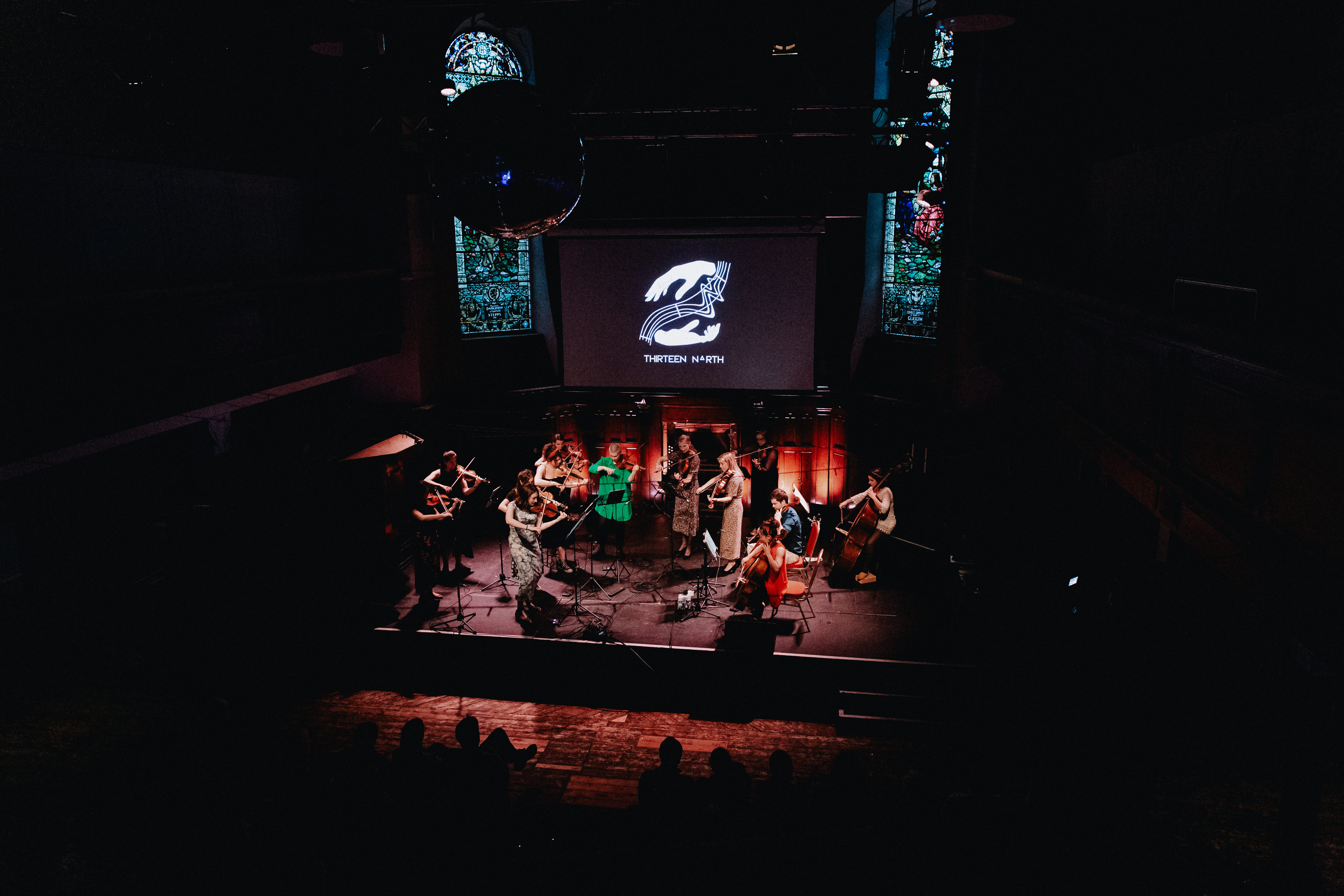
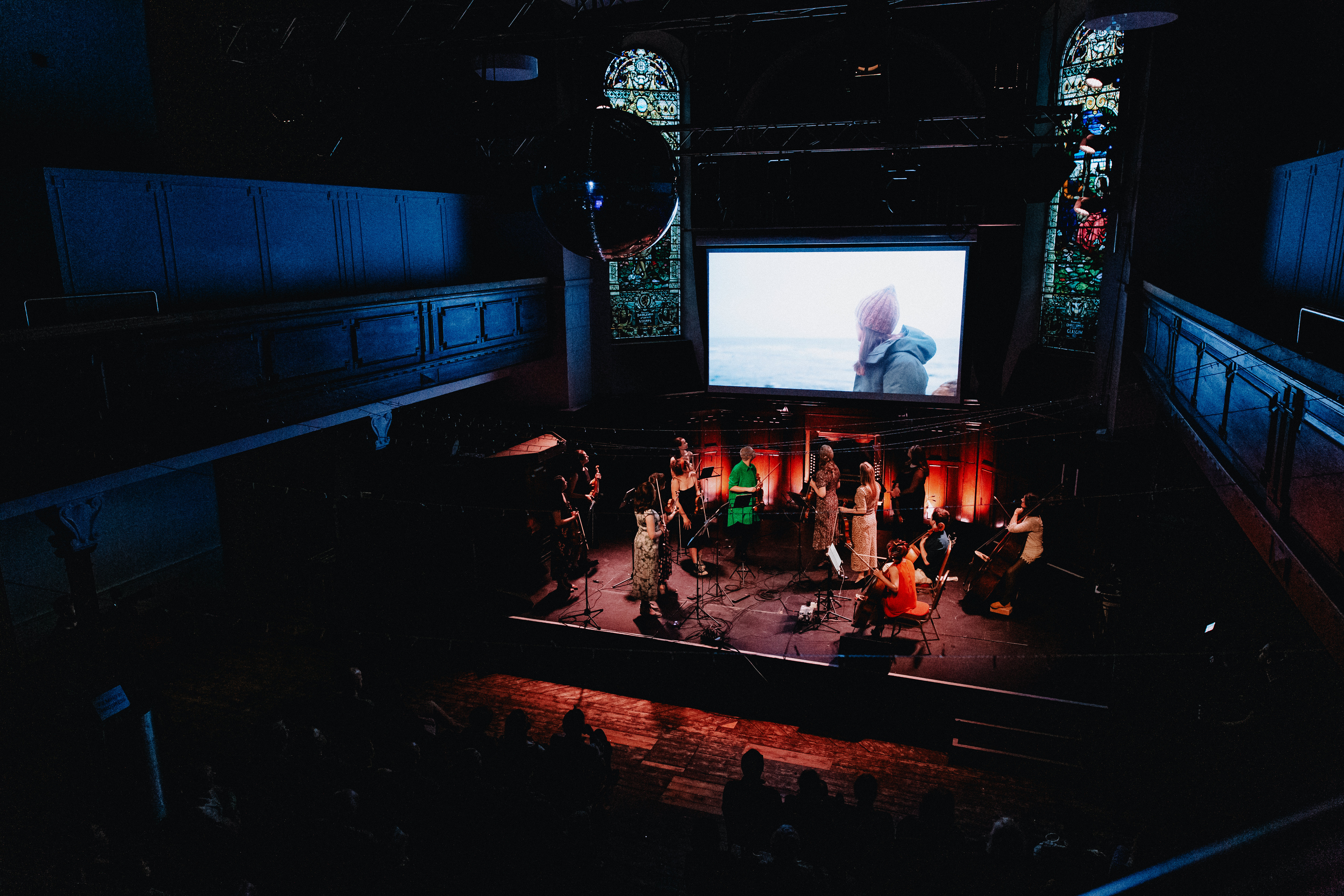
Thirteen North (2022-2023) explored generations, culture, and tradition through three Scottish folk-inspired world premieres, paired with short films by Glasgow filmmaker Bircan Birol.
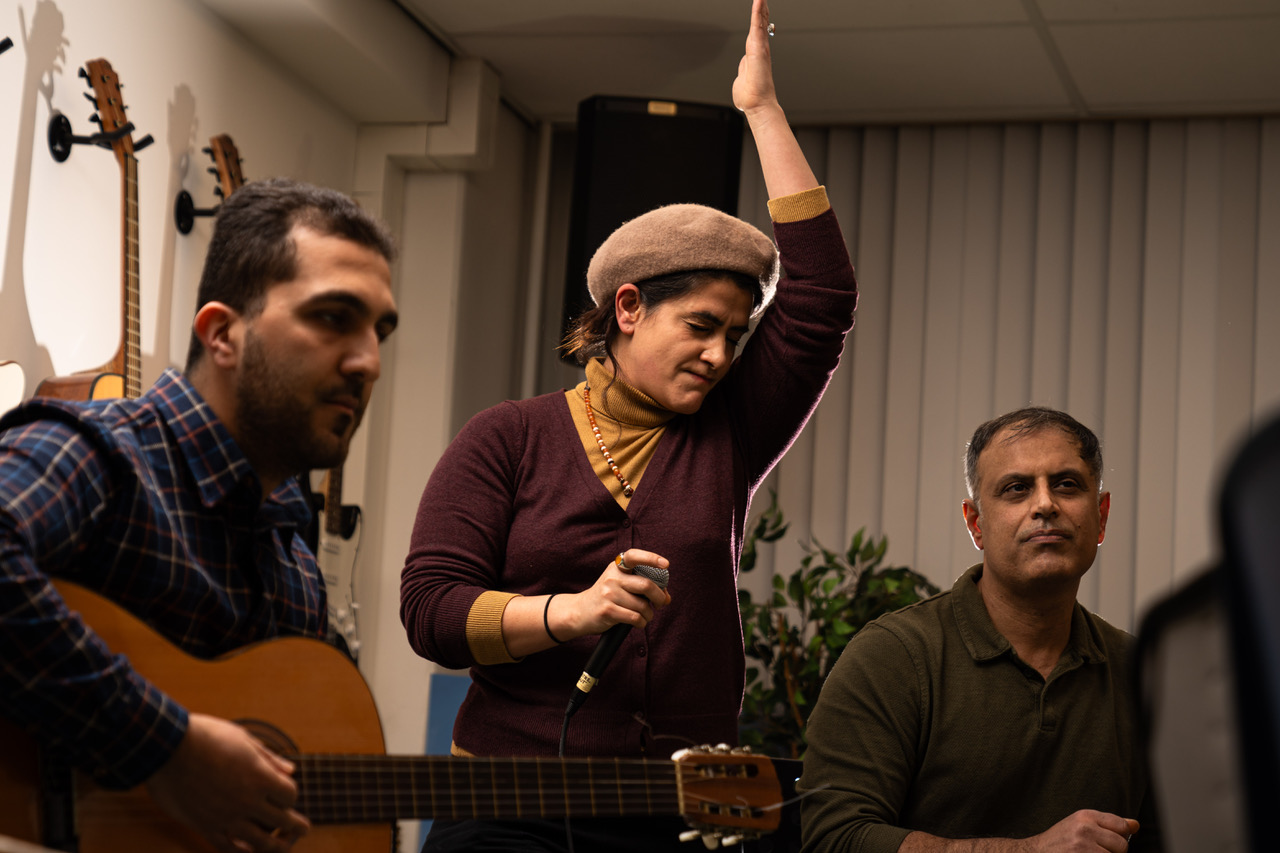
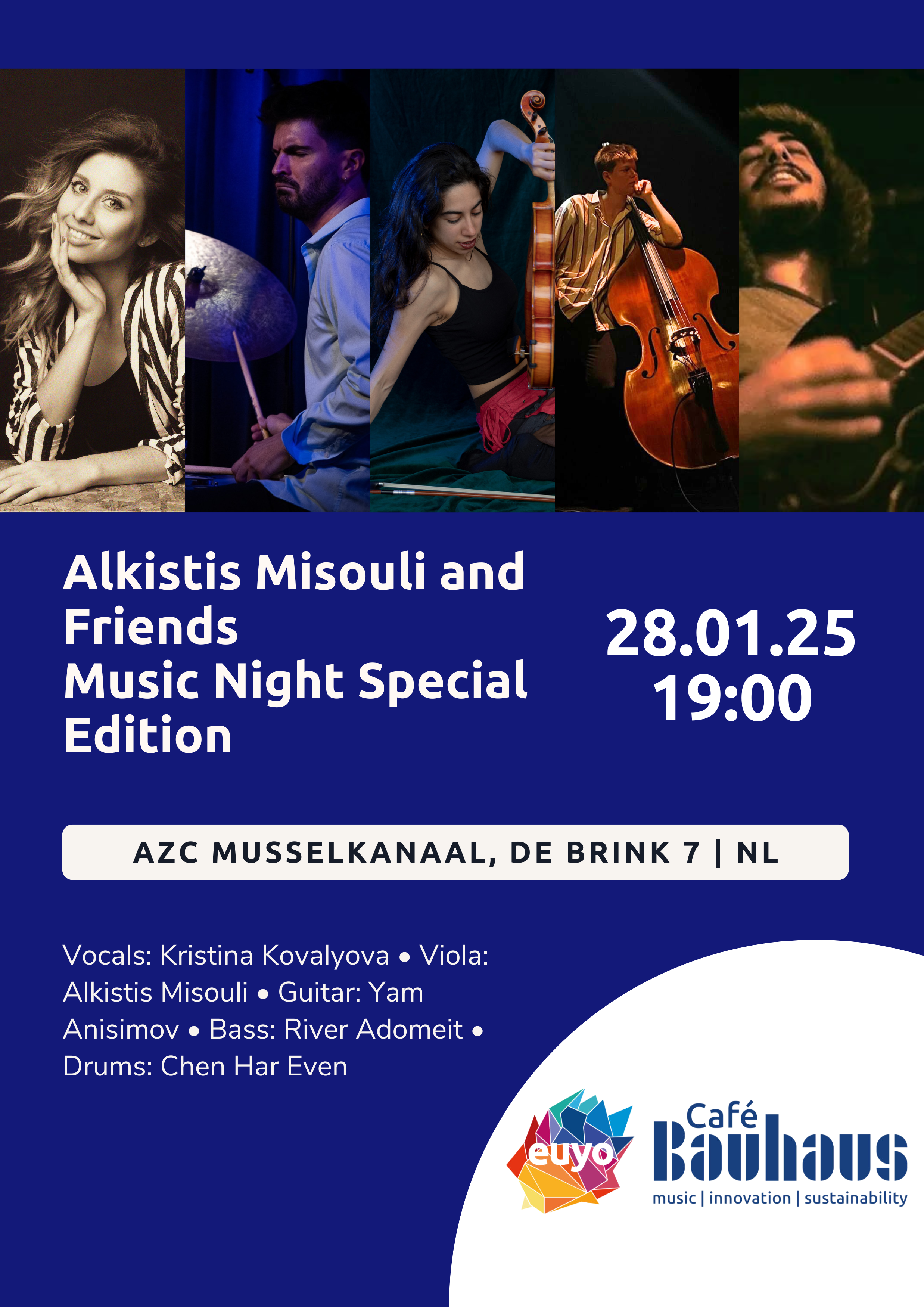
Alkistis Misouli and Friends (2024 & ongoing) led workshop/jam sessions in refugee centers, inviting residents to share their music in a statement of respect and connection. "This", Alkistis recounts from her first experience of creating musical projects for refugees, "filled me with such a powerful sense of purpose that I knew I wanted to continue this work. It was much more than a concert for me. It felt absolutely necessary."
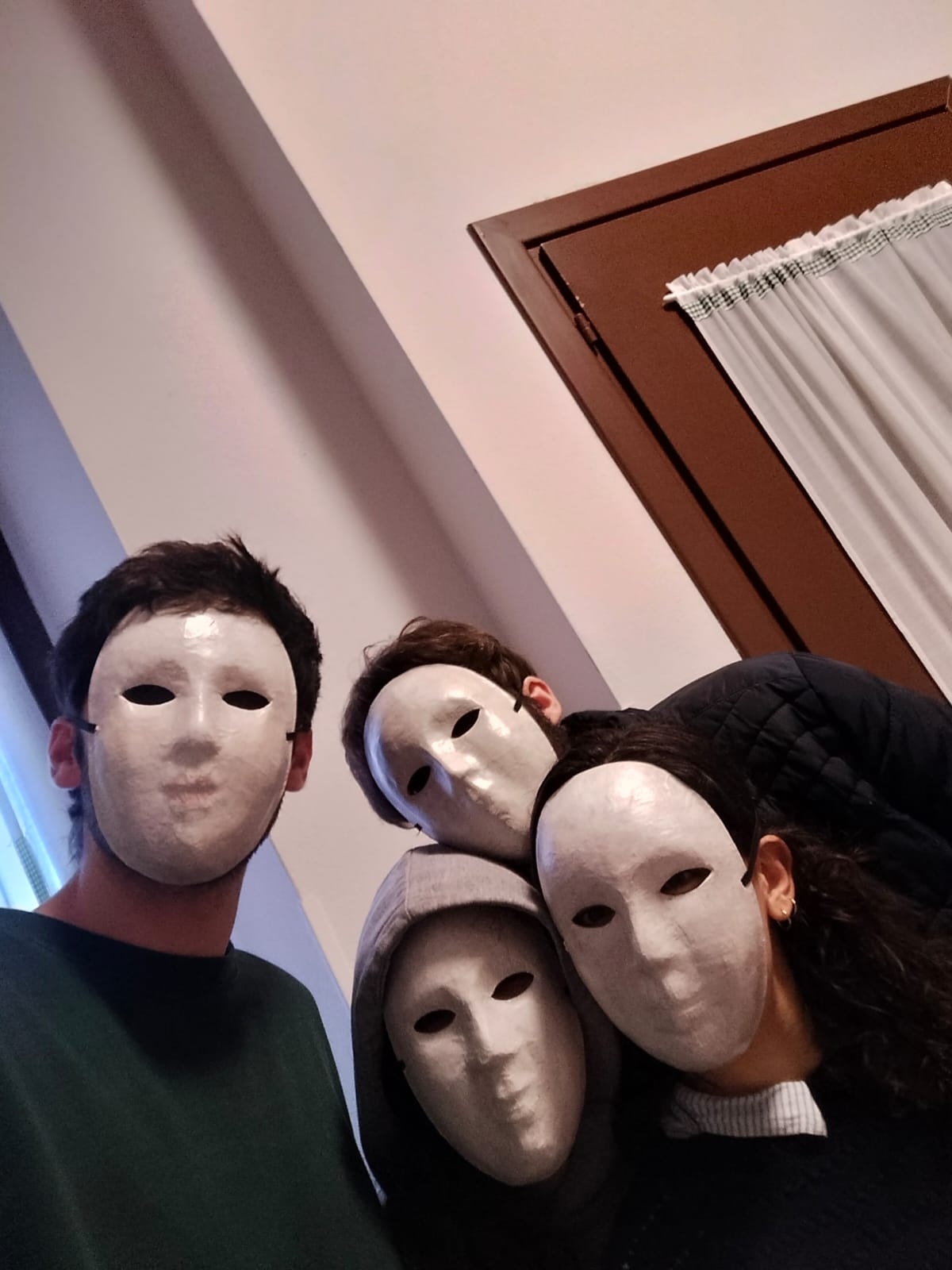
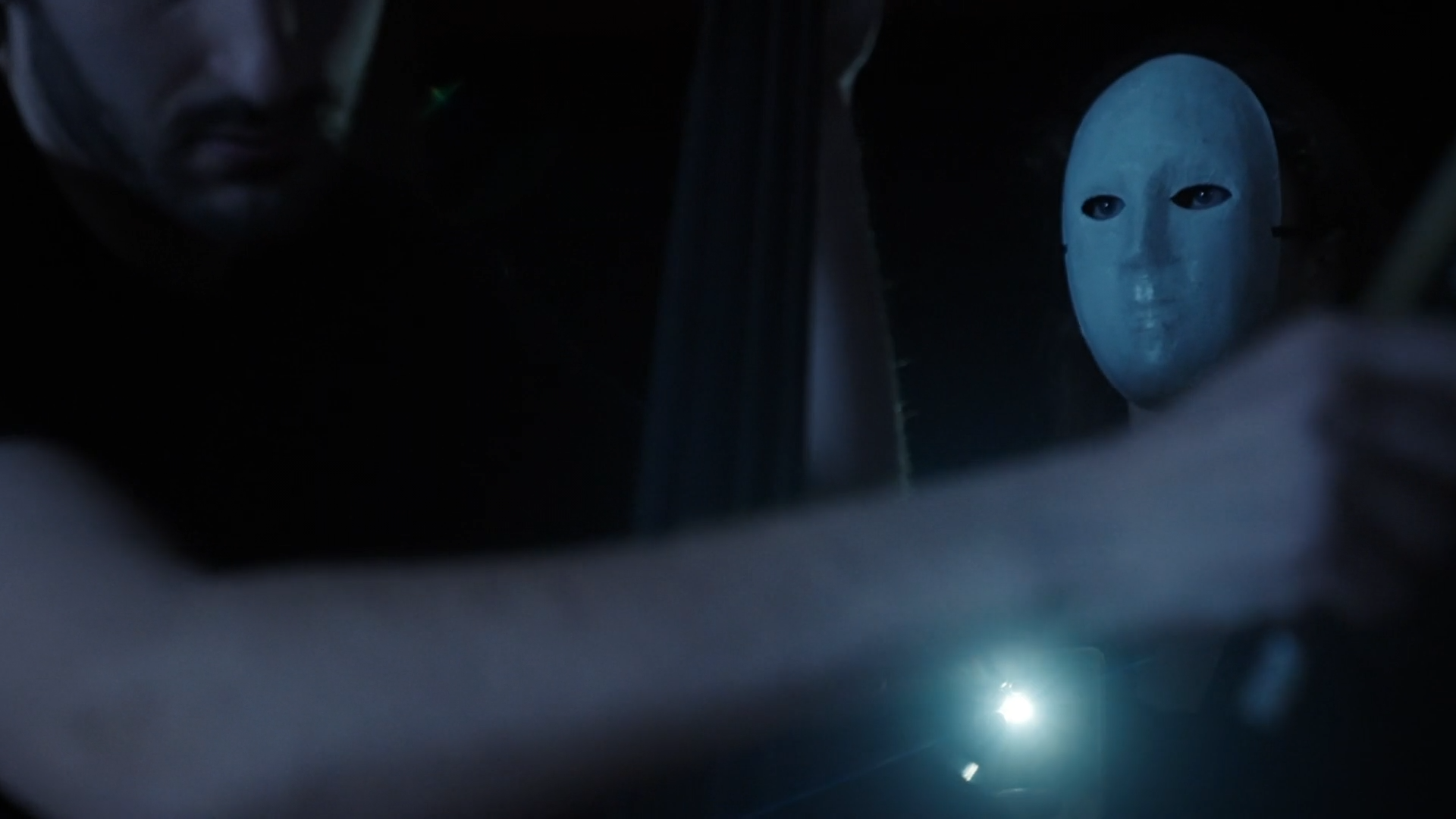
Responsoria (2025) used theatre masks and the musicians serving pre-concert food to the audience (many facing marginalisation, homelessness, and poverty) to reflect on performance, authenticity, and service.
Café Bauhaus has two key inclusivity objectives: including diverse audiences and embracing shared leadership with laureates. While shared and adaptive leadership is explored in the methodology section, this section highlights project approaches to audience inclusion.
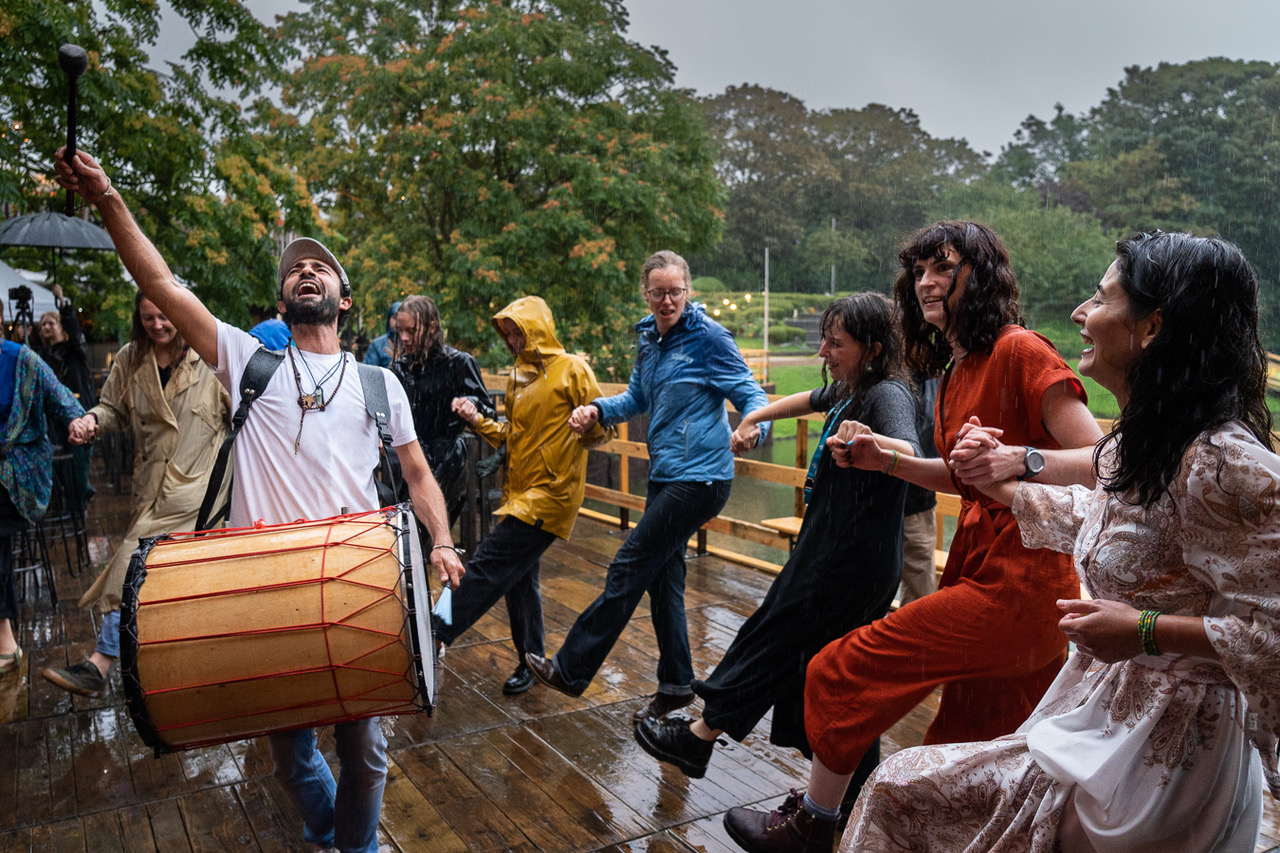
Thirteen North placed inclusion at the heart of its ‘Connected’ launch concert. Praised as “genuinely warm and inclusive” by The Guardian, the group also engaged with local Additional Support Needs schools through pre-launch events.
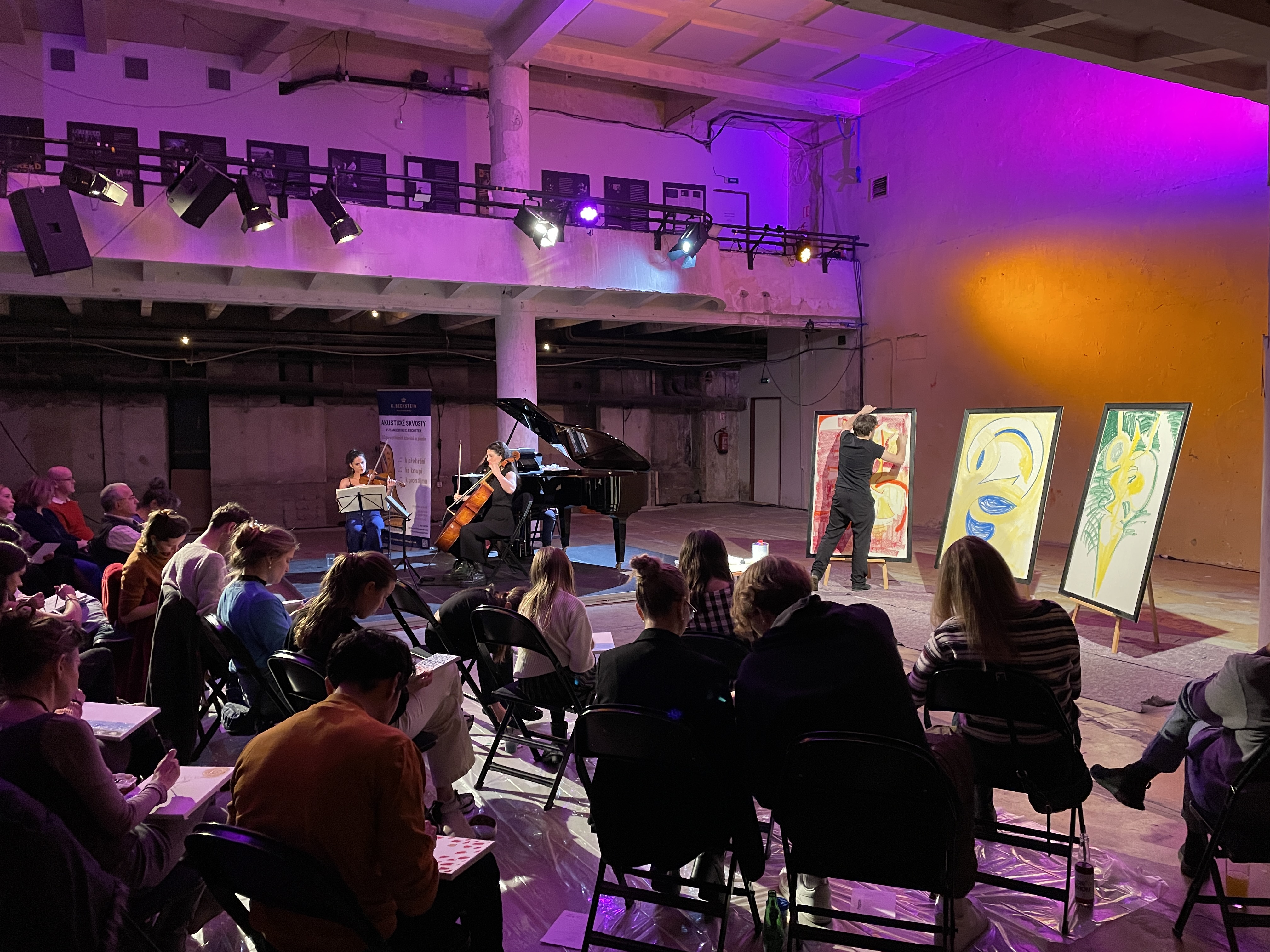
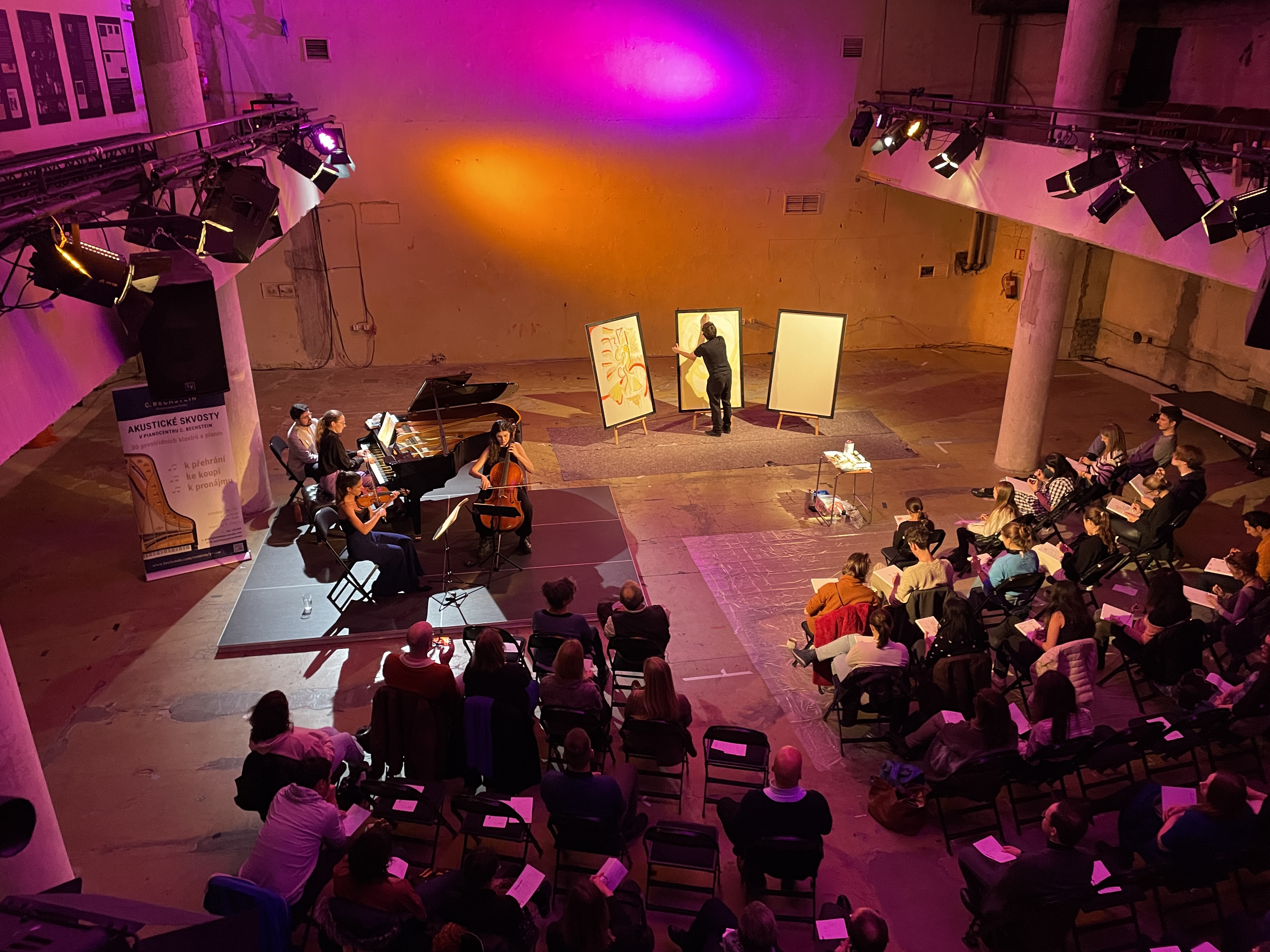
Collab (2023) created accessible, multi-sensory performances in response to classical music’s challenges of lengthy concerts and high ticket prices. Concerts in Vienna and Prague were free of charge and lasted one hour, targeted particularly at young audiences.
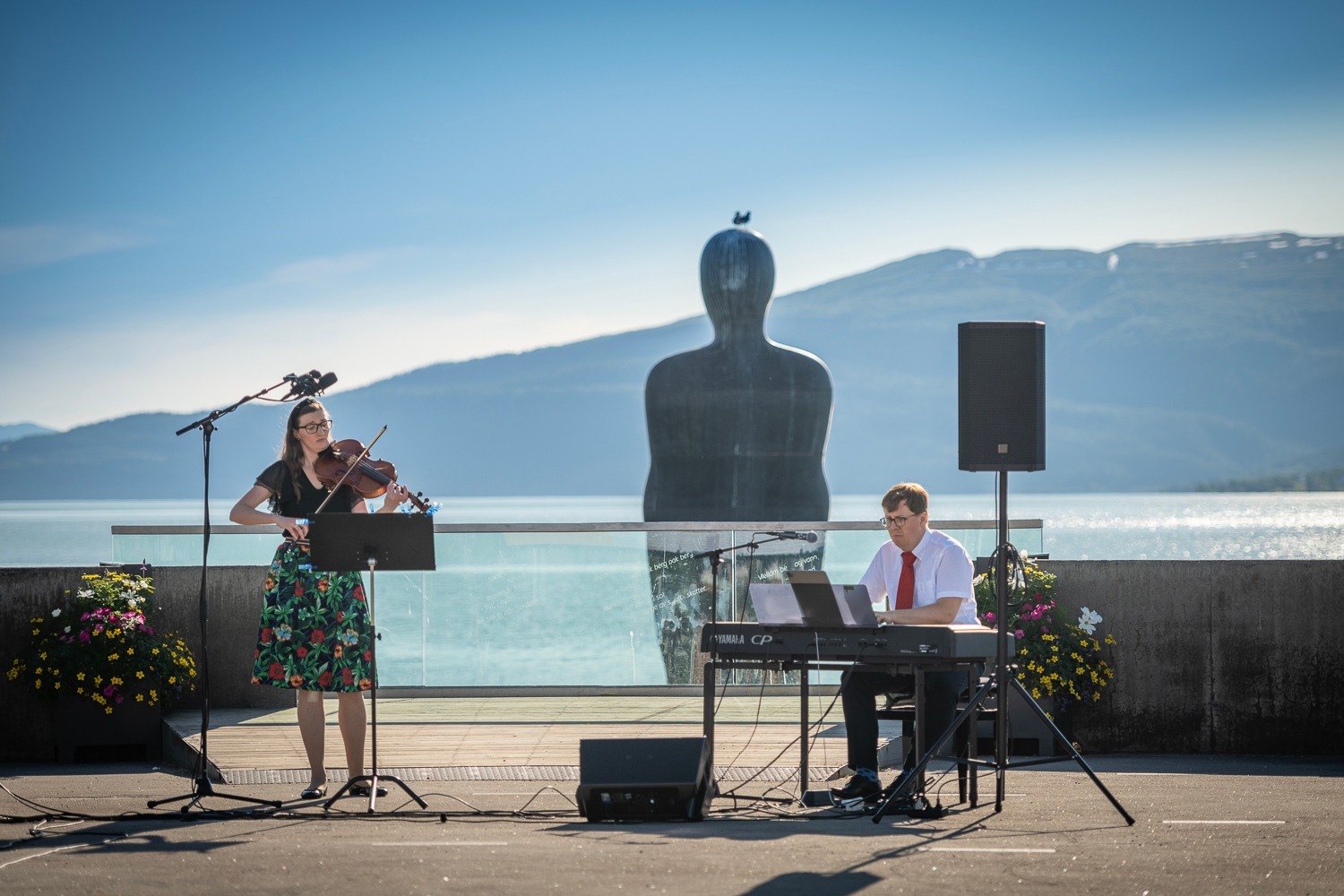
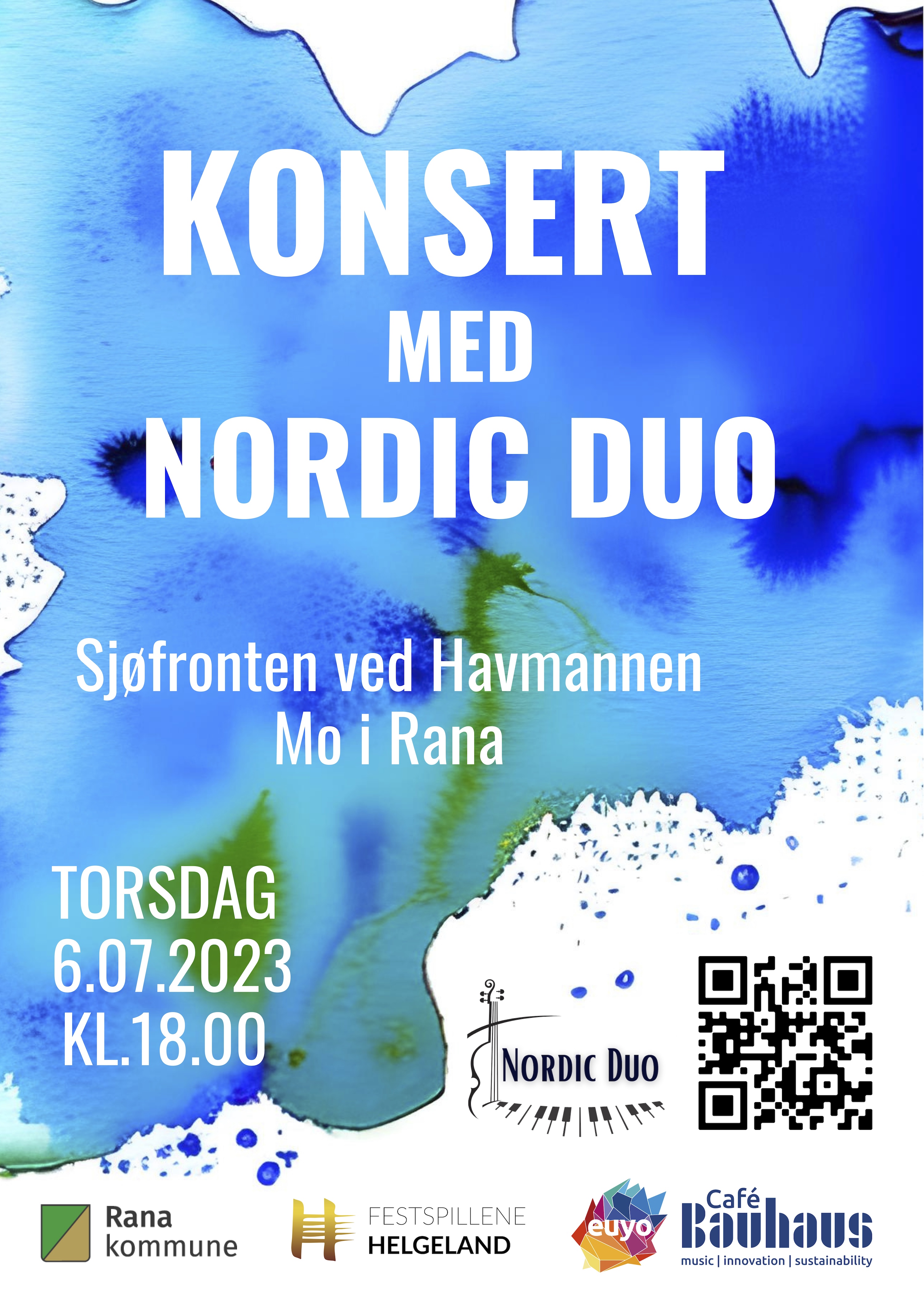
The Nordic Duo (2023) performed on the Mo I Rana seafront before Antony Gormley’s Havmannen sculpture, playing music reflecting the city’s rapid development and industrial heritage.
Dos Miradas explored inclusivity through its opposite: themes of expression and suppression.
Alkistis Misouli and Friends‘s workshop/jam sessions in Dutch refugee centers offer residents an opportunity to share music from their own cultures, creating connection without a common language.
Strings & Other Things #1 (2024) combined early music and electronica in Stuttgart’s queer culture space UTOPIA Kiosk.
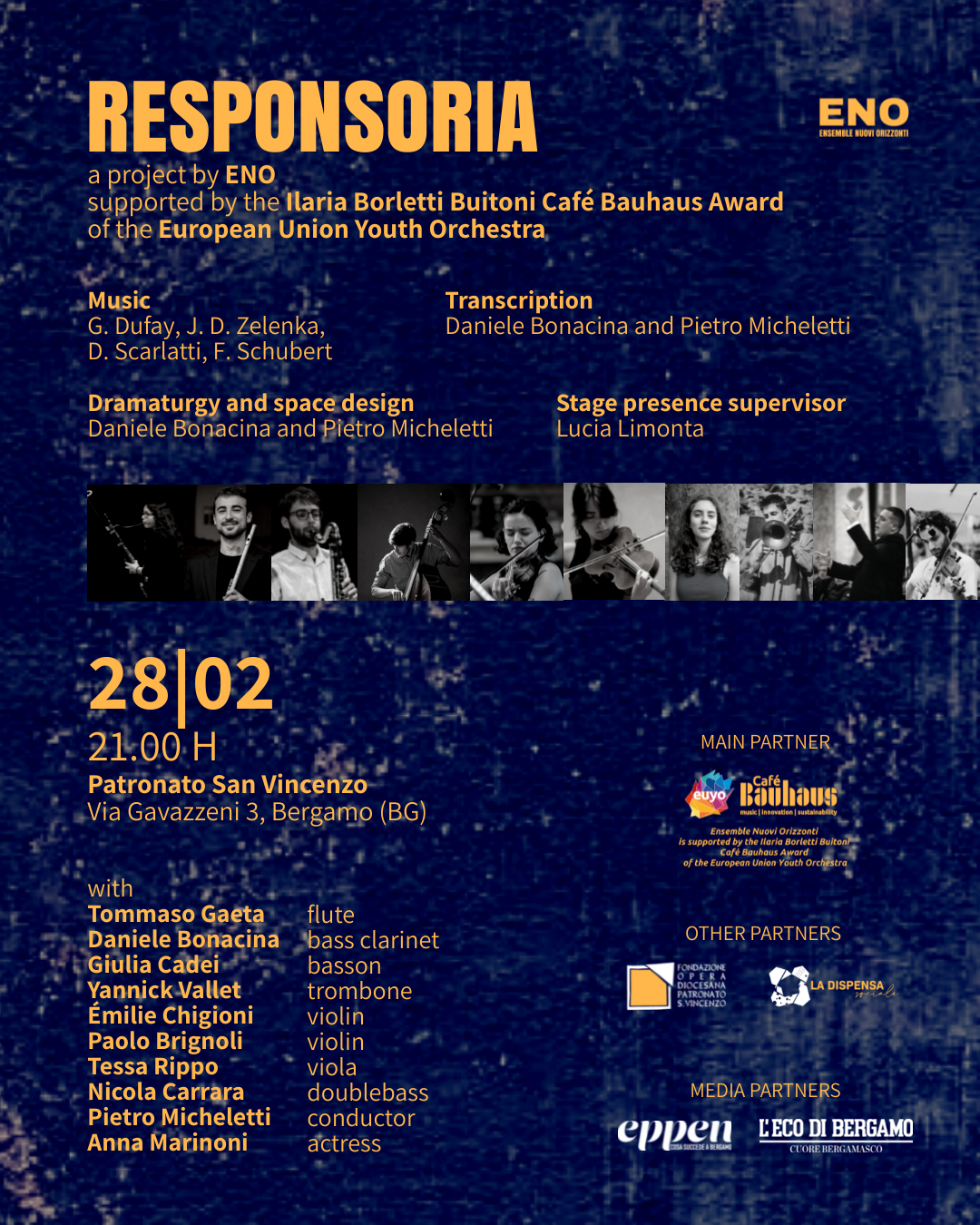
Responsoria’s launch concert (28.02.2025) took place in Bergamo’s Patronato San Vincenzo, an Association supporting those facing marginalisation, homelessness, and poverty. Before their performance, the ENO musicians served supper in the canteen, open to both regular visitors and residents of the Association and to new audience members. "We think", says ensemble spokesperson Daniele Bonacina, "this idea supports an even closer exchange between performers and audience, and raises citizen awareness of the reality and value of the work of an organisation like Patronato san Vincenzo."
Participatory processes have been extensive and intersect with the inclusion objectives above. Several projects assigned participation significant agency in the aesthetic success of the performances.
Collab’s Cordelia Piano Trio and painter Marius S. Binder created a live artwork on stage in response to the music. At the project’s Prague concert, audience members were given paints and canvases too. This expanded audience perception of the music in terms of colour, shape, and form, and was inviting for younger audiences and those new to classical music.
Ensemble+ (2024) centralised audience participation in their double bill at Shoreditch Treehouse, London. Audience members contributed words in their native languages, travel memories, and favourite songs to shape an improvisation. Tickets also included the right to film, providing agency to capture and share the event through one’s own lens. Both concerts in the double bill followed a similar structure, but moods and outcomes were entirely different, showcasing how audience input can transform the music.
In February 2025, Ensemble Nuovi Orizzonti incorporated masks, street theatre, and service to explore the relationship between musicians and audiences, seeking to break down the line between active performer and passive listener. Dominik Kossakowski offered school-age music students immersive experiences of contemporary music, including hands-on workshops to get to grips with extended techniques and side-by-side rehearsals.
Independently of her Café Bauhaus seed funding for 2024, Alkistis Misouli continues to organise workshop/jam sessions in refugee centres. These succeed also thanks to network participation: Musicians Without Borders, the different centres (including emergency centres, whose locations cannot be divulged), and a flexible network of musician colleagues to share songs from Greek and Brazilian to Persian and Arab, connecting with the music closest to the centres’ residents.
Café Bauhaus is ‘think global, act local’. Aesthetic offerings must reach people where they are, for many cannot travel even 5km for a concert or exhibition, highlighting the need for accessible local provision – which has always underpinned strong musical traditions in Europe.
Laureates must design projects for and in the regions they live and work. They collaborate with local venues, other artists and organisations. Dominik Kossakowski worked with local music pupils and well-known Silesian composers like Monika Szpyrka and Przemysław Scheller. Ensemble Nuovi Orizzonti’s upcoming artistic residency involved six community partners (a convent with a wing dedicated to hosting young and creative people, 2 anti-food waste organisations, a local library, cinema, and the Patronato san Vincenzo Association described above).
Regionally and nationally, laureates are encouraged to leverage additional supporters and networks, increasing project sustainability and impact and integrating into broader cultural frameworks. National recognition enhances the visibility of Café Bauhaus initiatives, fostering support for young artists. Thirteen North was co-supported by Creative Scotland and appeared twice at Celtic Connections and at IMBOLC (Ireland).
At European level, the EUYO provides opportunity, structure, mentorship, a partner network, and pan-EU communications. Café Bauhaus’s consultancy services have drawn on expertise across Germany, Italy, Romania, Finland, Sweden, and international partners. We send Café Bauhaus press releases to our journalist network, promote each project on our social media, and in our annual Yearbook which is sent to all EU Heads of State and Government, Ministers of Culture, key diplomatic representatives, creative and national partners, venue and other supporters. This raises awareness and support for the initiative; for the first time in 2025, we are proud that Café Bauhaus was the object of a significant philanthropic pledge.
The Café Bauhaus Call emphasises its transdisciplinary nature, for greater creative and entrepreneurial opportunities and to engage wider and more diverse audiences. To date, this has encompassed:
Musical styles fusing with the Western classical music core - free impro; Persian, Greek, Arabic, Brazilian, and Scottish folk; electronica; new music (premieres).
Other art forms: film, painting, video projections, video-mapping, live electronics, field recordings, sculpture, street theatre, masks, printmaking, lighting design.
Topics: refugees, climate change, gender and environmental exploitation, expression and suppression, community identity, generations, culture and tradition, audience/performer relationships, external and internal selves and outward presentations.
For example, in 2025 Ensemble Nuovi Orizzonti’s Responsoria project began by living, working, and cooking together with local and zero-kilometre products. During the creative residency, the musicians not only took care of the musical part of the project, with rehearsals and meticulous work on the repertoire, recording sessions and generative improvisation sessions, but also devoted themselves to the dramaturgical conception of Responsoria, which involves movement, spatial design and lighting. They were guided by actress Lucia Limonta into what is for musicians often unknown territory: the awareness of the body as a presence in a space. This involved white, neutral theatre masks, directing focus on an inner type of theatre.
The EUYO Café Bauhaus Awards operate as a hybrid cultural entrepreneurship and capacity-building model, rather than a profit-driven scheme. Their financial sustainability relies on a combination of public funding, catalytic seed investment, and decentralized value creation.
At the core, the programme distributes small-scale seed grants (€5000 per project) plus in-kind consultancy (management, marketing, fundraising). These grants function as early-stage investment, enabling musicians to prototype projects that can later attract additional funding. The EUYO encourages awardees to build independent, scalable initiatives.
A key sustainability mechanism is leveraging external funding and partnerships. Awardees are expected to collaborate with local institutions, venues, municipalities, and community networks, often unlocking co-financing, ticket income, or sponsorship at project level. This creates a multiplier effect, where limited central funding generates broader economic activity across regions.
The programme is embedded within deliverables for the EUYO’s Creative Europe funding 2024-2027, ensuring a funding base in alignment with EU cultural, social, and environmental policy priorities.
Another pillar is capacity building as a financial strategy. By training musicians in entrepreneurship, budgeting, and fundraising, EUYO reduces long-term dependency on grants and fosters self-sustaining creative enterprises.
Finally, the model is cost-efficient: projects are locally produced, small-scale, and network-driven, minimizing overhead while maximizing social impact (new audiences, community engagement).
In sum, Café Bauhaus’s business model is sustainable because it blends public funding with decentralized revenue generation, uses seed funding to catalyze larger financing streams, and invests in human capital - turning artists into long-term cultural entrepreneurs rather than grant recipients.
Several core elements of the Café Bauhaus model are highly transferable to other contexts, particularly those seeking to combine cultural production with social innovation and community engagement.
First, the seed-funding plus capacity-building approach is broadly replicable. Providing small grants alongside mentorship, training in entrepreneurship, and access to networks can be applied to other creative sectors (e.g. visual arts, design, performing arts, or even social enterprises). The key transferable insight is that modest financial support, when paired with skills development, can unlock disproportionately larger outcomes.
Second, the interdisciplinary and collaborative project format is adaptable. Café Bauhaus encourages musicians to work across sectors (urbanism, education, sustainability, community development). This methodology can be replicated in other fields by structuring calls for projects that require cross-sector partnerships, thereby fostering innovation through diversity of perspectives.
Third, the network-based implementation model is transferable. Rather than centralizing activities, projects are developed locally by participants while being connected through a wider European framework. This “distributed hub” model can be applied in other regions or institutions to scale impact without heavy central infrastructure.
Fourth, the mentorship and knowledge-sharing processes are replicable. Structured guidance in project design, fundraising, audience development, and communication can be standardized as toolkits or modular training programmes. These resources can be adapted for different beneficiary groups, including early-career artists, community leaders, or cultural managers.
Fifth, the programme’s pilot projects and experimentation are a key transferable principles. By framing initiatives as prototypes, organisations can encourage innovation while limiting risk. This approach is particularly relevant for public or philanthropic programmes.