Arts, Culture, and Heritage as Drivers of Change
Pascasia: Regenerative Roots Heritage.
Pascasia: A regenerative living lab for the Mediterranean Diaspora and water resilience
Pascasia regenerates the rural heritage of Badolato by transforming an abandoned historic site into a bridge for the global diaspora. We blend high-end sustainable Glamping with ancient hydraulic archaeology to restore water resilience. Through "Digital Tree Adoption," we reconnect emigrants to their roots, creating a circular economy that funds biodiversity and social inclusion. Pascasia isn't just a destination; it’s a scalable model for a beautiful, sustainable, and shared rural future.
Italy
Local
Località Pascasia ,Badolato (CZ) , Calabria, Italy
Mainly rural
It refers to other types of transformations (soft investment)
Early concept
No
No
Yes
Individual
Pascasia is a circular rural regeneration model located in Badolato, transforming a historic site of high testimonial value into a bridge for the global diaspora. The project focuses on a protected forest (pursuant to the Forestry Regulations and a request for protection under the Cultural Heritage Code is underway), the custodian of an ancient rural structure and historic water sources for which a request for protection is currently underway with the Superintendency.
The Pillars of the Concept
The concept develops through the integration of three fundamental assets:
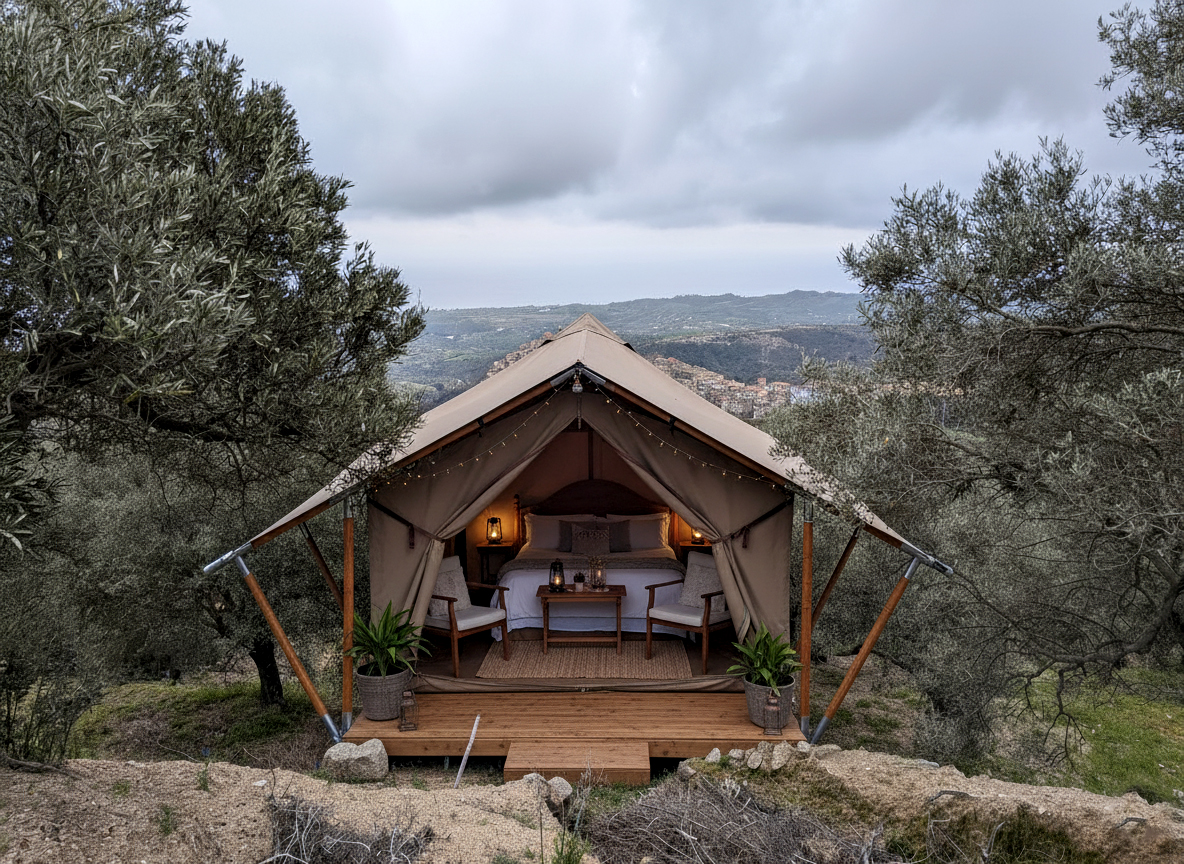
1.High-End Protection and Hospitality: The creation of an eco-sustainable glamping experience that allows for the respectful enjoyment of the monumental forest, enhancing the silence and memory of the place.
2.Hydraulic Archaeology and Resilience: The functional recovery of ancient water sources and existing canalization works, to re-establish the water resilience of the micro-ecosystem and combat soil erosion.
3.Digital Tree Adoption: A technological platform that allows emigrants and their descendants to symbolically "reclaim" their roots, funding forest care and social inclusion projects for the local community.
Results Achieved (Achieved Results)
•Identification and Constraint: initiation of the knowledge and protection process with the Superintendency for the recognition of the historical-ethnoanthropological value of the artefact.
•Environmental Analysis: Study of forestry and landscape constraints to ensure a zero-impact intervention in full compliance with the Cultural Heritage Code.
•Diaspora Network: Consolidation of initial contacts with Calabrian emigrant communities abroad, ready to support the circular economy model.
Expected Results (Expected Results)
•Conservative Restoration: Recovery of the historic structure and water infrastructure, transforming them into a center for interpreting the landscape and rural spirituality.
Ecological Impact: Increased local biodiversity.
The idea of Pascasia was born from the encounter between collective memory (many farmers had a "handkerchief of land" in Pascasia) and the strength of nature in Badolato. The family's protected and almost inaccessible wooded land, the ancient rural artefact and the historic water sources acted as a spark. Observing the constructive wisdom of those stones and the resilience of the surrounding hydraulic system, an awareness emerged: that place was not just a piece of land, but a silent witness to a rural and perhaps monastic civilization that was in danger of disappearing. The desire to protect this ecosystem, guardian of a monumental forest, has given rise to the vision of a bridge between the past and the global diaspora.The concept evolved through a process of analyzing and listening to the territory. We didn't want to create a simple tourism project, but an "active custody" model. To do this, we applied three key strategies:
Scientific Rigour and Protection: We have started an in-depth study of the constraints (Forestry Regulations and Cultural Heritage Code), deciding to submit the artifact to the Superintendency's request. This turned the bureaucratic "limit" into the beating heart of the project's value.
Memory Engineering: We studied the site's hydraulic archaeology to understand how the ancients managed water, deciding to integrate these techniques with modern climate resilience solutions.
Processes and Applied Tools
The implementation follows a precise roadmap:
Circular Economy Strategy: Designing an ecosystem where the proceeds of hospitality (sustainable glamping) and digital adoptions are directly reinvested in forest maintenance and source cleaning.
Social Inclusion: Collaboration with local workers to recover dry construction techniques and forest management, ensuring that the value generated remains in the Badolato community.
Rural Regeneration
Hydraulic Archaeology
Global Diaspora
Forest Stewardship
Circular Bioeconomy
1. Environmental Sustainability, Design Sensitivity and Historical Connection
The Pascasia project interprets sustainability as the restoration of an ecosystem where architecture, water, and pathways form a single living organism:
Philological Restoration and Architectural "Subtraction": The rural building will undergo a critical restoration project. The strategy involves removing incongruous additions from the last 80 years to resurface the original volume of the artifact, respecting its nature as a potential protected asset and its historical dignity.
Recovery of Historical Mobility (IGM Trail): The project includes the restoration of the ancient trail registered in the official IGM (Military Geographic Institute) cartography. This historical route, which connects the artifact to neighboring water sources, is not only an access route, but a narrative and functional "backbone." Its recovery, carried out using naturalistic engineering techniques, will allow for a slow and conscious use of the forest, physically reconnecting the building to its source of life.
Naturalistic Engineering and Terraces: The original dry stone walls, in an excellent state of preservation, will be maintained and maintained as fundamental infrastructures for natural drainage and erosion prevention, ensuring the hydrogeological stability of the site and the monumental forest.
Energy Independence and Water Cycle: Hospitality will be powered by off-grid micro-photovoltaic systems to negate landscape impact. Water treatment will be carried out through phytoremediation, ensuring that natural filtration returns clean water to the environment, protecting the purity of historical sources.
Pascasia: The Aesthetics of Care and the Harmony of the Historical Landscape
For Pascasia, beauty is not decorum, but a form of respect. The project elevates aesthetics as a tool for deep reconnection between the individual, the community, and the Badolato area.
1. Beauty as Reconnection and Belonging
Pascasia transforms a place of abandonment into a "landscape of the soul".
The Return to the Roots: For the global diaspora, beauty lies in finding a physical connection to their history. Through "Digital Tree Adoption" and artifact recovery, we create a sense of belonging that transcends geographical boundaries. Emigrants see not just a forest, but a piece of their identity that is flourishing again.
Care of the Place: Long-term beauty is guaranteed by active maintenance. By transforming a fragile site into a premier destination, we educate the community and visitors to the "sense of care" (Stewardship), demonstrating that rural heritage is not a burden of the past, but a treasure for the future.
2. Aesthetics of "Restoration by Subtraction"
Our aesthetic approach is guided by rigor and historical truth:
Volumetric Harmony: The choice to remove incongruous additions from the last 80 years from the rural artefact is a fundamental aesthetic act. We want to unleash the purity of the original lines, allowing the stone and the (perhaps monastic) history to speak again.
Technological Invisibility: The beauty of the monumental forest is not interrupted by heavy infrastructure. The use of off-grid micro-photovoltaics and hospitality in lightweight structures (Glamping) allow you to experience the site without desecrating it. The aesthetic here is the harmony between contemporary comfort and wild nature.
3. The Landscape of Water and Stone
Pascasia's contribution to everyday beauty lies in the restoration of the senses:
The Aesthetics of Water: The recovery of the historic IGM trail and ancient water sources regenerates a forgotten sensory experience.
Participation, Roots and Democracy of Places
Pascasia transforms Badolato's rural heritage into an accessible common good, breaking down geographical, economic, and social barriers through a "widespread custody" model.
1. Accessibility and Affordability (Economic Sustainability for All)
Our model ensures that site regeneration is not an exclusive operation, but a shared value:
Cross-Subsidy Model: High-level hospitality (Glamping) funds the maintenance of the monumental woodland and the IGM historic trail, ensuring that access to nature and historical memory remains free and safe for the local community and walkers.
Digital Inclusion of the Diaspora: Thanks to the "Digital Tree Adoption" platform, anyone —regardless of income— can participate in Badolato's rebirth with micro-contributions, making the restoration of the artifact a collective work and not tied to individual large investors.
2. Design for All and Inclusive Governance
We apply the principles of universal design not only to physical space, but to the social system:
The Trail as Connection: The restoration of the IGM registered trail is not only functional, but symbolic. It reconnects the village to its water sources, restoring a fundamental right to enjoy the landscape to all generations.
Participatory Governance (The Memory Map): Pascasia introduces a new social model where the "owner" of the project is the community of custodians. Through the Memory Map, each participant (local or diaspora) carves their own story into the DNA of the place. This emotional governance system ensures that future decisions on the site respect collective identity.
3. New Social Models: From Depopulation to the Global Community
Decent Local Work: We include local artisans in the restoration of dry stone walls and rural artefacts, enhancing knowledge that risks oblivion and creating employment that respects cultural identity.
NEB Working Principle: Participatory Process
Co-design between Territory and Diaspora
Pascasia was not conceived in isolation, but is the result of an ongoing dialogue between memories of the past and the needs of the present, actively involving three key stakeholder groups.
1. Involvement of Stakeholders and Citizens
The participatory process developed through several phases:
Listening to the Local Community: We have started a dialogue with the elders and custodians of Badolato's memory to map the hydraulic archaeology and identify the ancient IGM path. This exchange allowed us to rediscover uses and functions of the rural artefact that were not officially documented, directly influencing restoration choices.
Global Diaspora Engagement: Through digital surveys and meetings with Calabrian associations abroad, we tested the concept of "Digital Tree Adoption." The feedback received transformed a simple donation into an "emotional custody" system, leading to the creation of the Memory Map.
Institutional Interlocution: The involvement of the Superintendency of Cultural Heritage and forestry bodies was not only bureaucratic, but a process of co-defining the site's limitations and opportunities, ensuring that every design choice was scientifically validated.
2. Impact of Participation on Concept Development
The contribution of users and citizens profoundly changed the original project:
From the Tourism Project to Identity Regeneration: Thanks to dialogue with the diaspora, the focus has shifted from simple "glamping" to the creation of a cultural "bridge." Thus was born the idea of making the artifact a center for interpreting local history, rather than simply housing.
Sustainability Based on Local Knowledge: The involvement of residents allowed us to identify critical points of dry stone walls and the correct functioning of historical sources, leading to a water resilience strategy based on ancient peasant wisdom integrated with modern phytoremediation.
An alliance for the Regeneration of Heritage and Landscape
Pascasia operates as a connector between different institutional and social scales, integrating technical expertise, legal protections, and global visions to ensure the model's feasibility and replicability.
1. Stakeholders Involved and Levels of Governance
Local Level (Community and Municipality of Badolato):
Stakeholders: Municipal administration, local associations, craftsmen experienced in dry construction.
Involvement: Collaboration for the integration of the project into the social fabric and for the recovery of historic trails.
Added Value: Ensures social acceptance, logistical support, and continuity of local artisanal knowledge necessary for drywall maintenance.
National Level (Ministry of Culture and IGM):
Stakeholders: Superintendency of Archaeology, Fine Arts and Landscape; Military Geographic Institute (IGM).
Involvement: Protection request for the rural artefact (potential laura/cenobio) and use of official cartography for the restoration of the historic path.
Added Value: Elevates the project from a private initiative to an intervention of scientific and cultural importance, ensuring maximum rigor in the philological restoration and protection of the Cultural Heritage Code.
European and Global Level (European Commission and Diaspora):
Stakeholders: New European Bauhaus communities, associations of Calabrians around the world (Australia, Americas, Northern Europe).
Engagement: Using European sustainability frameworks and engaging the diaspora through the Digital Tree Adoption platform.
Value Added: Transforms Pascasia into a European case study for combating rural depopulation and creates an international market for conscious tourism, ensuring long-term economic sustainability.
The Crossroads of Humanistic, Scientific and Digital Knowledge
Pascasia emerges from the fusion of different disciplines that collaborate to regenerate a fragile ecosystem. The project does not simply add skills, but integrates them into a single process:
1. Architecture, Restoration and Archaeology
Philological Restoration: We apply an architectural sensibility of "subtraction" to restore the rural artefact to its essence, eliminating modern superfetations.
Hydraulic Archaeology: We study ancient water channeling and harvesting techniques to restore the functionality of historical sources, treating them as cultural infrastructures and not just technical ones.
2. Environmental Sciences and Naturalistic Engineering
We operate in compliance with the Forestry Regulations to preserve the monumental forest as a living ecosystem.
Hydrogeological Resilience: We use naturalistic engineering to maintain dry stone walls and terraces, recognizing them as key passive drainage systems against climate change.
Off-Grid Systems: Energy (micro-photovoltaic) and environmental (phytoremediation) engineering enable zero-impact anthropization.3. Digital Technologies and Communication
Digital Tree Adoption: We use digital not as an end, but as a means of connection. The platform integrates environmental databases and circular payment systems to enable "remote custody".
Historical Cartography and GIS: The use of IGM cartography crossed with modern surveys allows the scientific recovery of historical mobility (trails).
4. Social Sciences, Arts and Memory
Diaspora Studies: Sociological research on Badolato's migration flows guides emigrant engagement strategies.
The Memory Map: Here the historical discipline meets the art of storytelling (storytelling). We transform genealogical data and oral memories into a collective archive, making the project an applied cultural anthropology operation.
Business Model: Economy of Regeneration and Custody
Pascasia's business model transforms environmental protection and historical recovery into economic assets, ensuring that every euro generated is partially reinvested in the maintenance of the forest and the artifact.
1. Revenue Streams (Revenue Streams)
High-End Hospitality (Sustainable Glamping): The main source of income comes from an elite tourism offering, aimed at a conscious international target. The exclusivity of the site (monumental forest, sound insulation, monastic history) justifies a premium price positioning.
"Digital Tree Adoption" Platform: A model of recurring or one-off micro-contributions. Users (especially the diaspora) adopt a tree or section of the IGM trail, receiving in return digital updates, inclusion in the Memory Map, and pre-emption rights or discounts on stays.
Value Added Experiences and Services: Hydraulic archaeology workshops, meditation trails in the woods, tastings of local products regenerated thanks to recovered sources.
Narrative Merchandising: Sale of products related to the history of the place (e.g. forest essences, local crafts) both on site and through e-commerce.
2. Financial Instruments and Support (Funding Strategy)
Identitarian Crowdfunding: Launch of a campaign targeting the global Badolato community to fund the philological restoration of the rural artefact, offering "memory quotas" in the project.
Public Funds and Calls (PNRR/EU): Access to funding for village regeneration, ecological transition (micro-photovoltaic and phytoremediation) and protection of cultural property.
Ethics Sponsorship: Partnership with companies interested in CO2 compensation or CSR (Corporate Social Responsibility) for the protection of protected forest.
3. Cost Structure and Reinvestment
Active Maintenance: A fixed share of the revenue is allocated to cleaning the springs, caring for the forest and maintaining the dry stone walls, employing local workers.
Pascasia's scalability lies in the fact that it is not just an architectural project, but a replicable method for the regeneration of Europe's "fragile places." The concept addresses challenges common to thousands of villages (depopulation, heritage abandonment, hydrogeological instability) by offering solutions that can be exported to other rural contexts.
Here are the key elements that make Pascasia a transferable model:
Scalability: A Blueprint for European Rural Rebirth
Pascasia's value as a model lies in the combination of digital technologies, ancient wisdom, and inclusive governance. These elements can be replicated individually or in bulk:
1. Methodology: The "Subtraction Restoration" and Water Regeneration
Replicability: The approach of recovering rural artifacts through the removal of modern superfetations can become a standard for restoration in historic villages.
Transferability: The recovery of hydraulic archaeology and dry stone walls is applicable in any Mediterranean area prone to drought and disaster, transforming ancient infrastructure into modern climate resilience devices.
2. Technology: The "Digital Tree Adoption" Model
The Tool: The digital platform that connects land ownership to the diaspora is a highly scalable technology product.
Contexts: It can be transferred to any community experiencing the phenomenon of emigration (e.g. villages in the Apennines, rural areas in Eastern Europe or Greece). It is not limited to trees, but can extend to the adoption of paths, portions of dry stone walls or small monuments
3. Processes: The "Map of Memory" and Heritage Tourism
Process: Transforming genealogy and oral memories into a tourist and economic asset is an exportable strategy wherever there is a strong identity link between the territory and those who left.
Beneficiaries: Other municipalities, networks of small villages or districts.
Multidisciplinary Governance between archaeologist, environmental engineer and software developer.
Implementation & Development Roadmap: The First 12 Months
The action plan for the year following the application is divided into a synergy between the innovative vision of the young leader and the technical experience of the partner engineering company, specializing in spatial planning and SEA.
Q1: Technical and Authorizing Consolidation (Months 1-3)Urban Planning Sector: Launch of the co-planning process with the Superintendency and regional forestry offices. Thanks to the partner company's experience in Strategic Environmental Assessments (SEA), a zero-impact intervention protocol will be developed for the monumental forest.
Archaeological Sector: Detailed survey of the artefact and sources, aimed at the "restoration by subtraction" project to eliminate modern superfetations.
Q2: Digital Platform & Community Engagement (Months 4-6)
Technological Development: Under the guidance of the young coordinator, the beta version of the Digital Tree Adoption platform is launched.
Crowdsourcing of Memory: Launching the collection of historical documents and photos from the Badolato diaspora to feed the Memory Map, creating an emotional bond before the physical work even begins.
Q3: Naturalistic Engineering and Infrastructure (Months 7-9)
Pilot Construction Sites: Extraordinary dry stone wall maintenance and IGM trail restoration using naturalistic engineering techniques coordinated by the senior team.
Off-Grid systems: Installation of the first micro-photovoltaic modules and the phytoremediation system for circular water management.
Q4: Soft Opening and Monitoring (Months 10-12)
Opening of the Trail: Inauguration of the historic trail with interactive signage (QR code) connecting the physical site to the digital platform.
During the development of the concept, we relied on the technical and scientific support provided by Kains Engineering SRL, an expert in spatial planning, architecture, and environmental assessments.