Strengthening Local Democracy and Inclusion
Hej Våxnäs!
Co-creating a Climate-Resilient and Inclusive Urban District
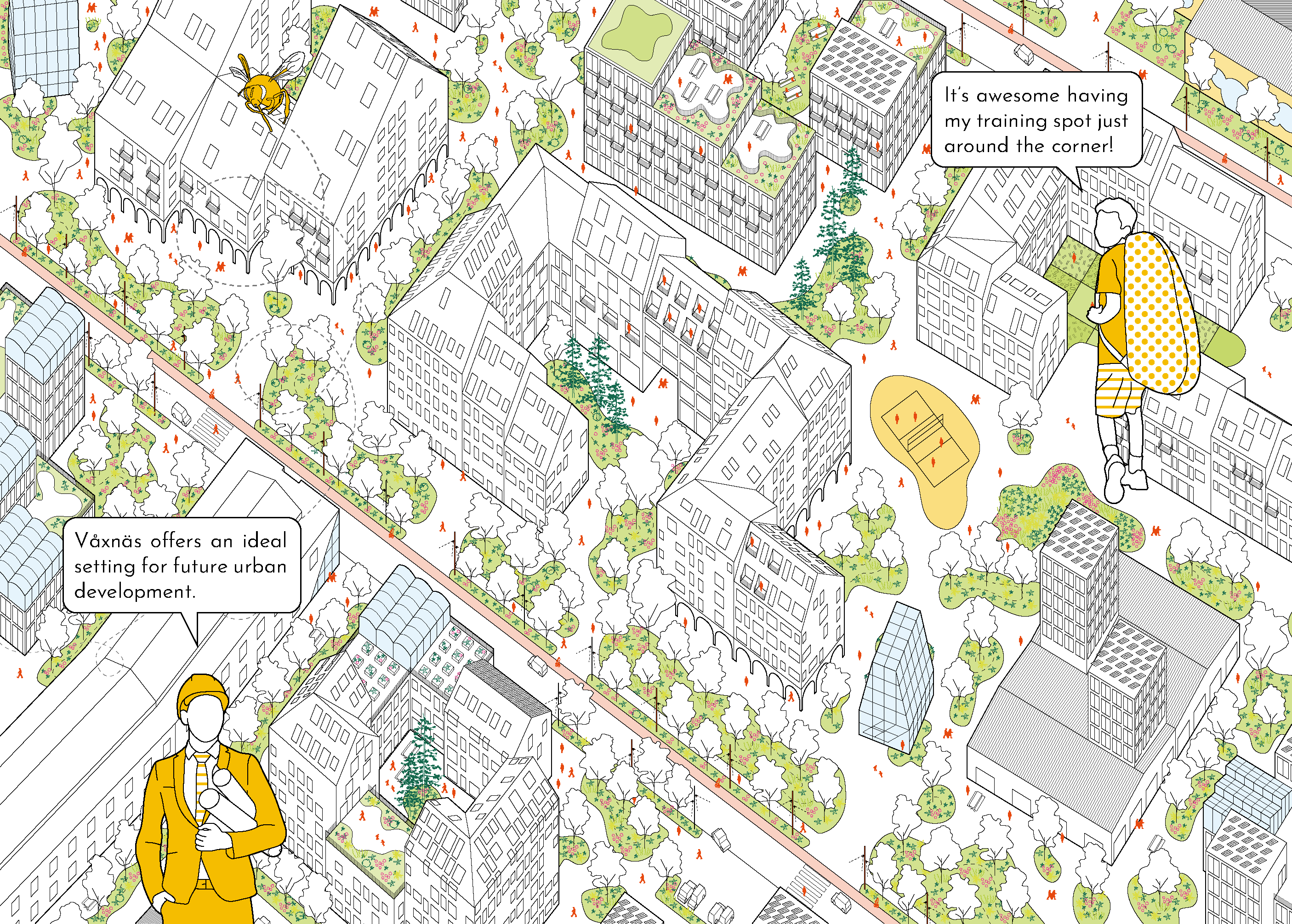
Hej Våxnäs! reimagines a fragmented industrial area in Karlstad as a people-centred, climate-resilient neighbourhood. Through participatory design, citizens become co-creators in decision-making, transforming barriers into connections. By combining adaptive reuse, green infrastructure, and shared governance, the project fosters inclusion, strengthens local democracy, and offers a replicable model for post-industrial cities across Europe.
Sweden
Local
Karlstad
Mainly urban
It involves a physical transformation of the built environment (hard investment)
Early concept
No
Yes
1st Prize Winner Europan 18
No
Individual
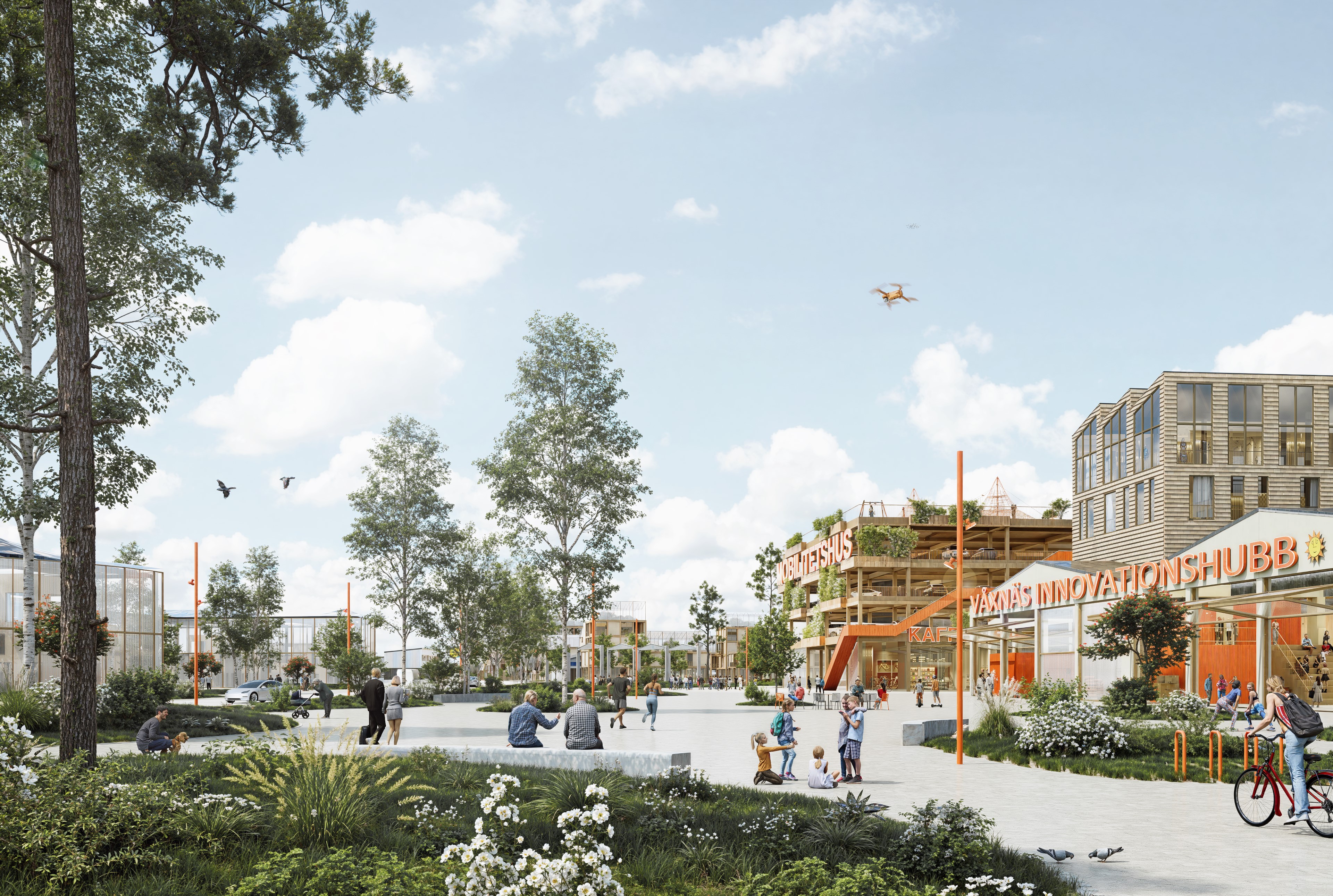
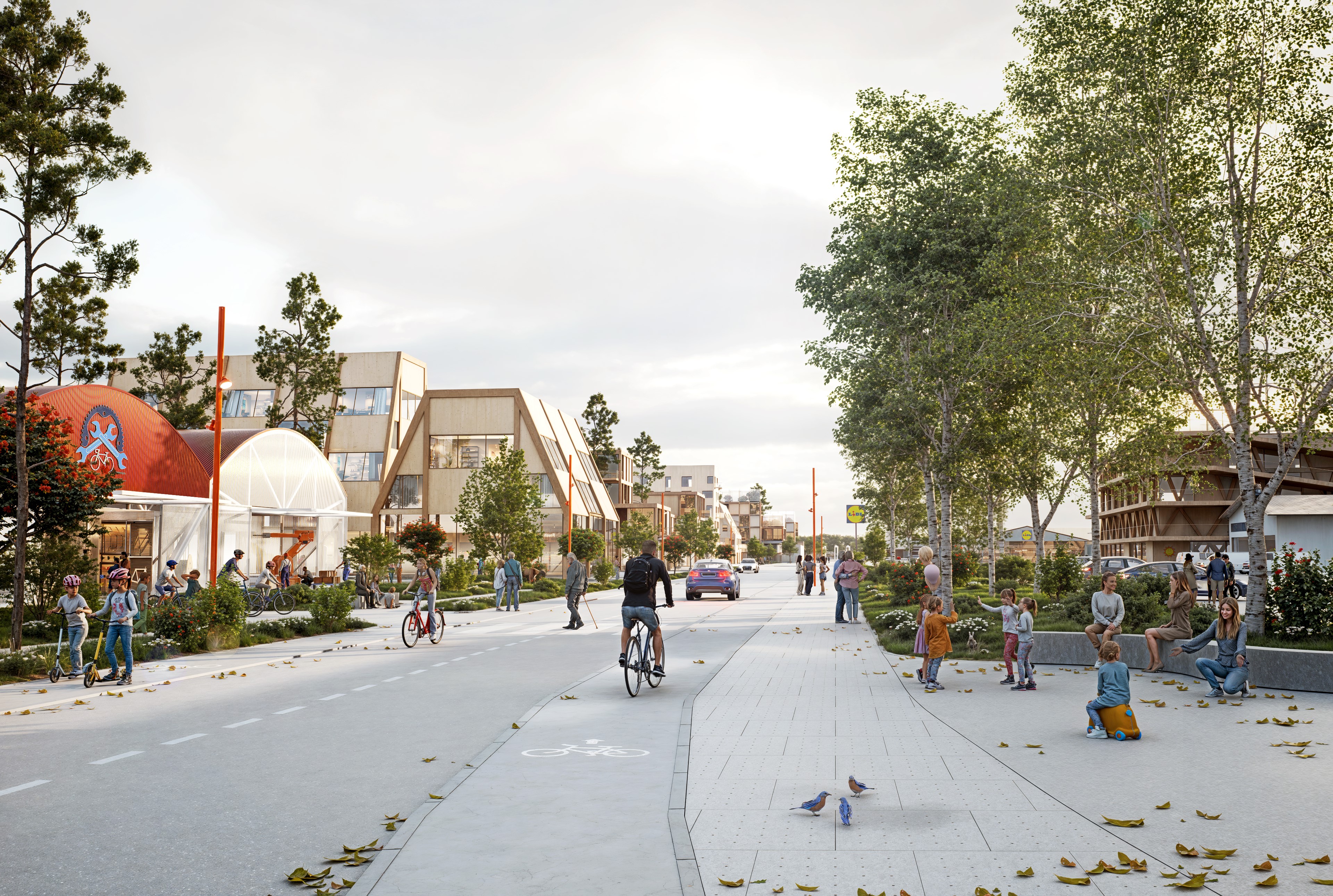
Hej Våxnäs! addresses the transformation of a fragmented industrial area in Karlstad into a climate-resilient, inclusive, and people-centred neighbourhood. Currently characterised by car-oriented infrastructure, underused buildings, and environmental risks such as flooding and heat islands, the area acts as both a physical and social barrier. The project’s aim is to reconnect urban life while embedding citizens at the core of decision-making processes.
The concept targets current and future residents, including young people, families, and elderly citizens, as well as local entrepreneurs, creatives, and community groups. It also considers broader urban users by reconnecting the district to Karlstad’s centre and the I2-Forest.
Hej Våxnäs! pursues three main objectives: to transform grey industrial land into biodiverse and accessible public spaces; to establish a participatory framework where citizens co-design and co-evaluate urban interventions; and to create a flexible, mixed-use neighbourhood through adaptive reuse and modular development.
As a Europan-winning proposal, the project has already demonstrated strong feasibility and relevance within a real European context. Its phased strategy—Reactivate, Reintegrate, Reconnect—enables early pilot interventions, such as the adaptive reuse of industrial buildings and temporary public spaces, generating immediate social value while informing long-term development. The participatory model, combining workshops, digital platforms, and citizen-led testing, provides a clear and implementable governance framework.
Hej Våxnäs! is transformative in its integration of spatial design and democratic processes. By combining nature-based solutions, circular reuse, and shared decision-making, it redefines how post-industrial areas can evolve into inclusive, resilient neighbourhoods. Its adaptable methodology offers strong potential for replication across European cities facing similar challenges.
Hej Våxnäs! emerged through the Europan competition as a response to the fragmented condition of a post-industrial area in Karlstad. The site’s separation from the city, combined with environmental challenges and mono-functional infrastructure, revealed an opportunity to rethink how industrial districts can become inclusive, climate-resilient neighbourhoods shaped by their communities.
The concept was developed through an iterative and collaborative process. The design team worked closely with the Municipality of Karlstad and local stakeholders, engaging experts from mobility, landscape, urban planning, and architecture, as well as political representatives. This transdisciplinary dialogue ensured that the proposal responds to real local conditions while aligning with broader municipal strategies.
The project integrates a participatory framework that evolves alongside the spatial proposal. Early workshops and exchanges with municipal departments and decision-makers helped definekey priorities, from mobility systems to public space design. These processes informed the development of a phased strategy—Reactivate, Reintegrate, and Reconnect—allowing gradual transformation through testing, feedback, and adaptation.
A combination of tools to support ongoing participation, including public exhibitions, co-design workshops, and digital feedback platforms. Pilot interventions and temporary uses are designed as testing grounds, enabling stakeholders and future users to evaluate and refine solutions in real conditions before long-term implementation.
Hej Våxnäs! is therefore not conceived as a fixed masterplan, but as an open and evolving process. Moving forward, the project envisions deeper engagement with residents and community groups, the implementation of pilot projects, and the consolidation of shared governance structures. This approach ensures that decision-making remains inclusive, transparent, and rooted in local knowledge, long-term ownership and resilience.
Participatory decision-making
Social inclusion
Nature-based solutions
Adaptive reuse
Post-industrial regeneration & replicability
Hej Våxnäs! addresses environmental challenges associated with post-industrial landscapes by transforming a fragmented, impermeable district into a climate-resilient and ecologically integrated urban environment. The project responds to key issues such as flooding, urban heat islands, soil impermeability, and high carbon emissions linked to demolition and new construction.
The main objective is to establish a low-impact, regenerative urban system that enhances biodiversity, manages water naturally, and reduces resource consumption. This is achieved through the integration of nature-based solutions, circular design strategies, and low-carbon construction methods.
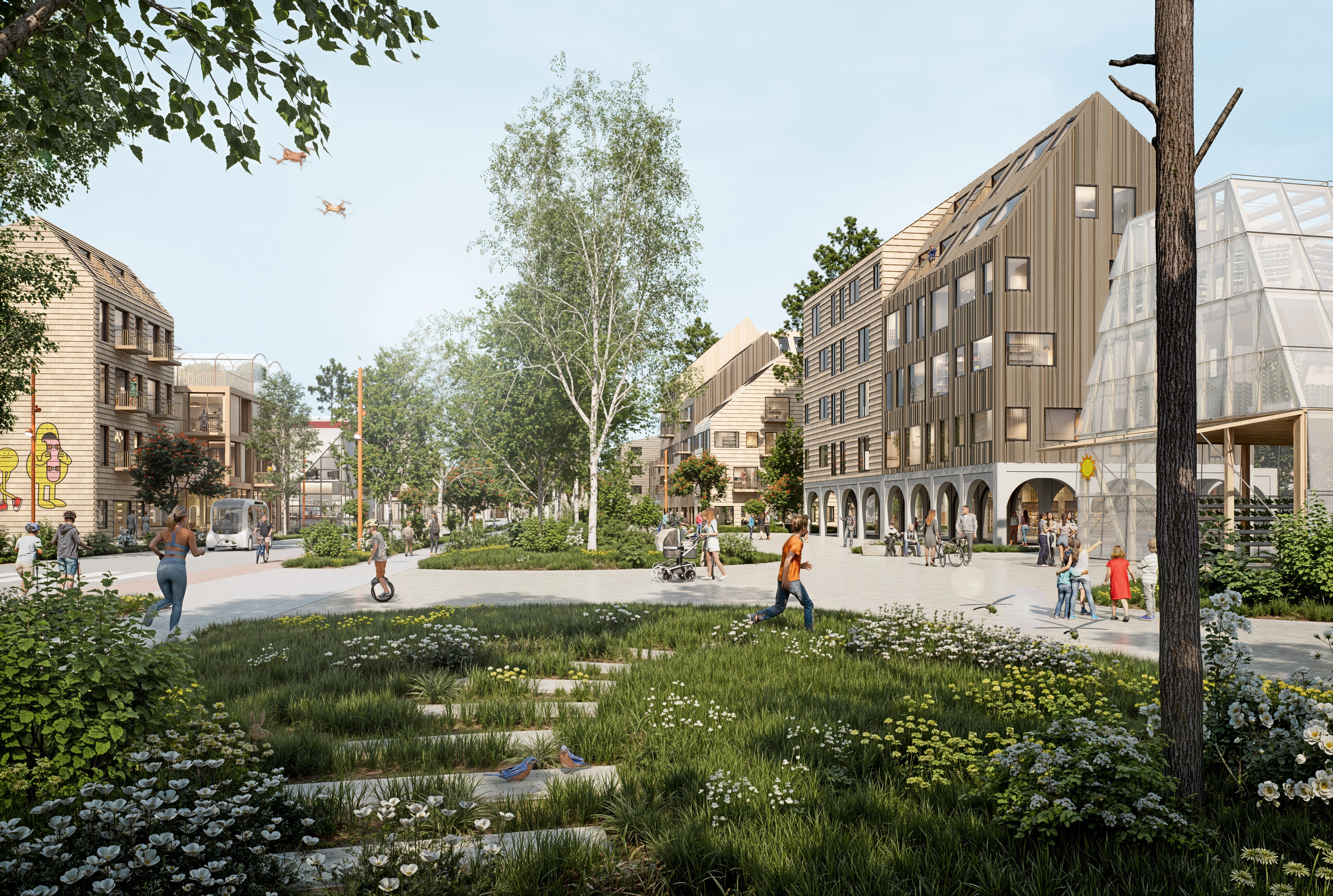
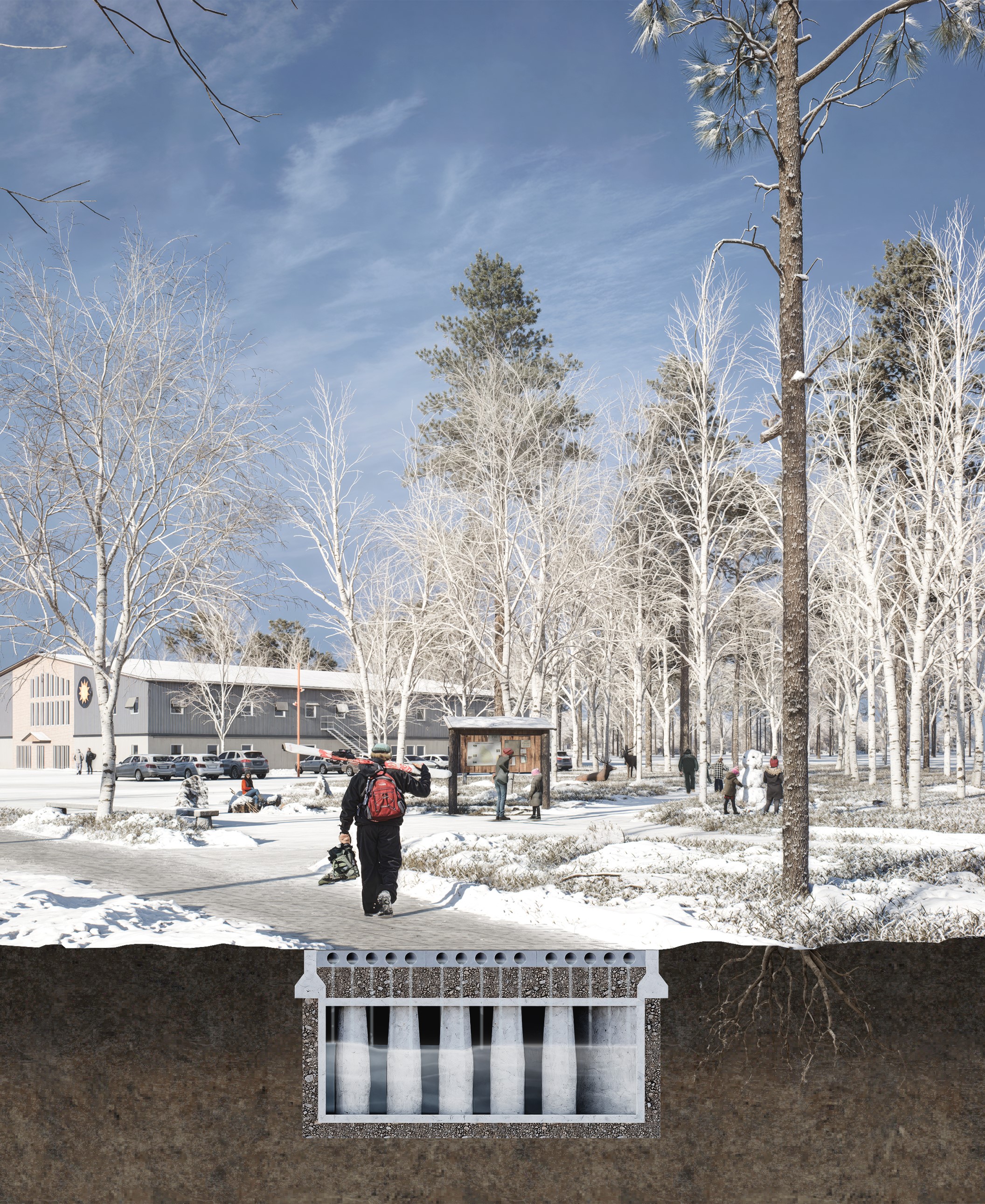
Concrete measures include the replacement of large asphalt surfaces with permeable materials, enabling natural water infiltration and reducing runoff. A network of green corridors, bioswales, and wetland parks manages stormwater while creating habitats and improving microclimates. Several existing industrial buildings are preserved and transformed through adaptive reuse, changing their use into community and productive spaces. This approach significantly reduces material waste, minimizes CO₂ emissions, and lowers the overall carbon footprint, aligning with the principles of the Sustainable Development Goals. New housing is developed using timber construction, supporting low-emission building practices and local material traditions.
Hej Våxnäs! is exemplary in its integration of ecological systems with urban transformation. Rather than treating sustainability as a technical layer, it embeds environmental performance into the spatial and structural logic of the neighbourhood. By combining nature-based solutions, circular reuse, and phased implementation, the project offers a durable and transferable model for the regeneration of post-industrial areas facing climate-related challenges.
Hej Våxnäs! enhances everyday life by transforming a fragmented industrial landscape into a vibrant, human-scaled neighbourhood where nature, culture, and urban life are closely intertwined. The project aims to create a high-quality living environment that is not only functional, but meaningful—fostering well-being, comfort, and a strong sense of belonging.
Aesthetic quality is achieved through the integration of green and blue infrastructures into the urban fabric. Former asphalt surfaces are reimagined as biodiverse corridors, wetland parks, and public spaces where water, vegetation, and seasonal change shape the sensory experience of the city. Light, texture, and materiality—such as permeable surfaces and timber construction—contribute to a warm and tactile environment that invites everyday use.
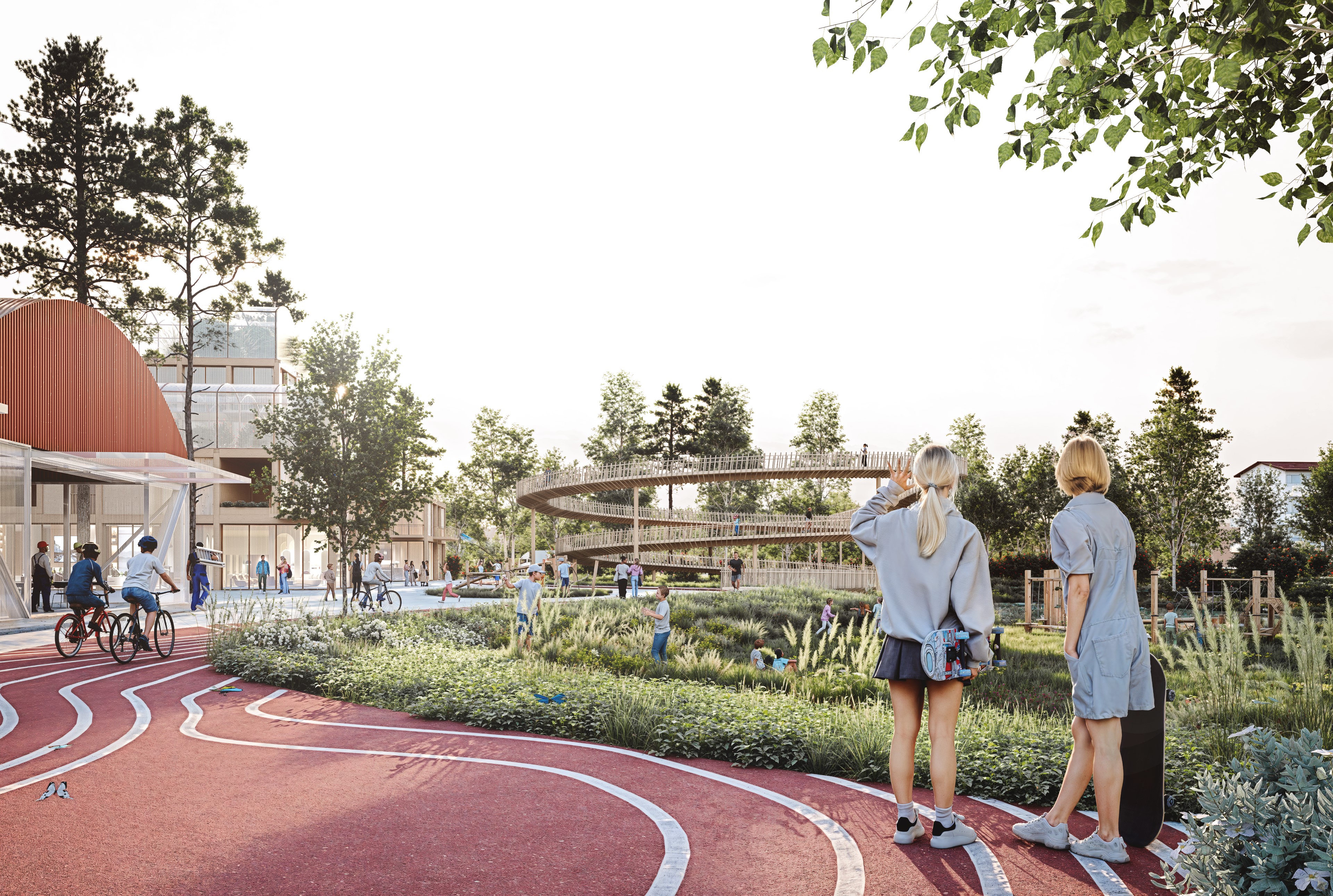
The project builds on local identity by preserving and reinterpreting industrial heritage. Existing structures are adaptively reused and transformed into creative hubs, sports facilities, and community spaces, maintaining a connection to the site’s history while enabling new cultural expressions. New timber housing reflects regional craftsmanship and reinforces a coherent architectural language rooted in place.
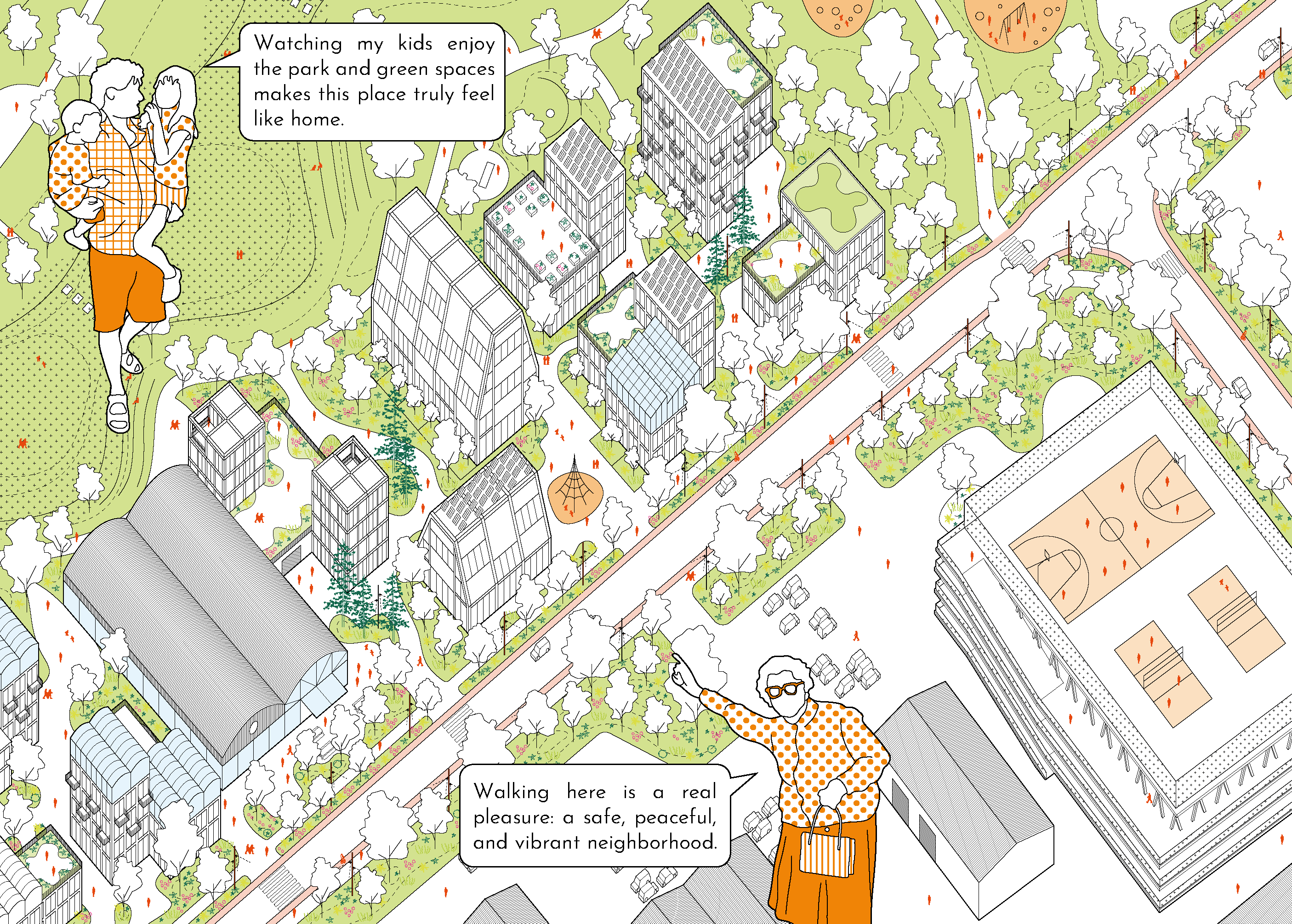
Hej Våxnäs! promotes well-being through accessible public spaces designed for all ages, encouraging movement, social interaction, and outdoor activity. From quiet green paths to active sports areas and lively public squares, the neighbourhood offers diverse spatial experiences that stimulate the senses and support both individual and collective life.
The project is exemplary in its ability to merge environmental performance with spatial and cultural quality. Rather than treating aesthetics as an added layer, it embeds beauty in everyday infrastructure—transforming water management, mobility, and reuse into meaningful and engaging experiences. This approach creates a lasting sense of care, identity, and attachment to place.
Hej Våxnäs! promotes inclusion by transforming a fragmented industrial area into an accessible, affordable, and community-driven neighbourhood that supports diverse users and strengthens local democracy. The project addresses spatial, social, and governance-related exclusion by reconnecting isolated areas and embedding citizens in decision-making processes.
The concept targets a wide range of users, including future residents, young people, elderly, families, local entrepreneurs, and communities. It prioritises accessibility through walkable streets, continuous cycling paths, and barrier-free public spaces, ensuring usability across ages and abilities.
Inclusion is implemented through a participatory framework that allows citizens to actively shape their environment. Workshops, co-design sessions, and digital platforms allow residents and stakeholders to contribute to planning, testing, and evaluation. Collaboration with the Municipality of Karlstad, local experts, and political representatives ensures multi-level engagement and transparent decision-making. Pilot projects and temporary uses act as accessible entry points for participation, allowing users to experience and influence change before long-term implementation.
Affordability and social diversity are supported through mixed-use development, adaptive reuse of existing buildings, and flexible housing models, enabling a range of living and working opportunities within the site.
Hej Våxnäs! demonstrates inclusive outcomes by transforming underused and unsafe areas into active public spaces that encourage social interaction, reduce segregation, and reconnect neighbourhoods to the city and surrounding nature.
The project is exemplary in linking spatial transformation with inclusive governance. By combining design for all, participatory decision-making, and adaptable development strategies, it offers an innovative and transferable model for creating equitable, accessible, and community-led urban environments.
Hej Våxnäs! is developed as a participatory process that places users, stakeholders, and public authorities at the centre of decision-making. The project benefits current and future residents, local communities, entrepreneurs, and visitors, while directly involving municipal actors and stakeholders responsible for its implementation.
From early stages, the design process has been shaped through collaboration with the Municipality of Karlstad and local stakeholders, including experts in mobility, landscape, urban planning, and architecture, as well as political representatives. Workshops and working sessions enabled the identification of key priorities, such as improving accessibility, integrating green infrastructure, and reactivating underused industrial spaces.
Participation is embedded as an ongoing framework that evolves alongside the project. The concept proposes co-design workshops, public exhibitions, and digital platforms to engage citizens and future users in shaping public spaces, mobility systems, and community programmes. Pilot interventions and temporary uses act as testing grounds, allowing participants to experience, evaluate, and refine solutions in real conditions.
Stakeholders are not only consulted but actively influence decisions. Inputs gathered through workshops and exchanges inform spatial strategies, phasing priorities, and the design of key elements such as green corridors, public spaces, and adaptive reuse programmes. This ensures that the project responds to real needs and local knowledge.
Participation has strengthened the project by grounding it in realistic conditions, increasing its feasibility, and fostering shared ownership. By combining expert input with citizen engagement and institutional collaboration, Hej Våxnäs! establishes a transparent and inclusive process that enhances both the quality of the proposal and its long-term implementation.
Hej Våxnäs! is developed through collaboration across multiple levels of governance, ensuring alignment between local needs, municipal strategies, and broader European urban agendas. At the local level, the project is shaped in close cooperation with the Municipality of Karlstad, involving departments such as mobility, landscape, urban planning, and architecture, as well as political representatives. This engagement ensures that the proposal responds to real spatial, environmental, and social challenges while supporting the city’s long-term development goals.
Local stakeholders, including community organisations, entrepreneurs, and future users, are also key actors in the process. Their involvement supports the activation of spaces, the diversification of uses, and the creation of a neighbourhood that reflects local identity and needs.
At the regional and national levels, the project aligns with priorities related to climate adaptation, sustainable mobility, and housing innovation. It has the potential to engage regional authorities and public agencies.
At the European level, Hej Våxnäs! contributes to shared challenges addressed by EU initiatives, such as climate resilience, circular economy, and inclusive urban development. Its methodology and outcomes are relevant for European networks, research platforms, and funding programmes focused on sustainable cities. Networks such as Europan provide a platform for knowledge exchange, enabling the project to be shared, adapted and replicated in other European contexts.
This multi-level engagement brings added value by combining local knowledge with institutional expertise, policy alignment, and access to resources. It strengthens the project’s feasibility, legitimacy, and long-term impact, while enabling its replication in other contexts. By connecting actors across scales, Hej Våxnäs! operates as both a locally grounded project and a transferable European model.
Hej Våxnäs! is developed through a transdisciplinary approach that integrates architecture, urban design, landscape architecture, mobility planning, environmental strategies, and governance. The concept combines spatial, ecological, and social perspectives to address the complex challenges of post-industrial urban transformation.
From the early stages, collaboration has been established with the Municipality of Karlstad, bringing together professionals from mobility, landscape, urban planning, and architectural departments, alongside political representatives. This exchange enabled the alignment of technical expertise with strategic planning and public decision-making.
The process is organised through workshops, working sessions, and iterative design discussions, where different disciplines interact and inform each other. Environmental strategies, such as water management and biodiversity enhancement, are developed in parallel with mobility systems and spatial design. Adaptive reuse strategies combine architectural knowledge with economic and cultural considerations, while participatory processes integrate local and institutional perspectives.
Hej Våxnäs! also incorporates non-academic knowledge by proposing participatory tools that involve citizens and stakeholders in co-design and evaluation. This allows everyday experiences and local insights to complement professional expertise, enriching the design process.
The added value of this approach lies in its ability to produce integrated and robust solutions. By combining diverse knowledge fields, the project avoids isolated interventions and instead creates a coherent urban system where environmental performance, social inclusion, and spatial quality reinforce each other. This transdisciplinary collaboration strengthens the project’s feasibility, adaptability, and long-term impact, offering a holistic model for sustainable urban transformation.
Hej Våxnäs! is based on a phased and hybrid business model that combines public investment, private development, and community-driven initiatives to ensure long-term financial sustainability.
Initial implementation can be supported by the Municipality of Karlstad through strategic public investment in infrastructure, public space, and pilot projects, particularly in early phases focused on adaptive reuse and temporary activation. These low-cost interventions reduce upfront risk while generating immediate social and spatial value.
Private stakeholders, including developers, entrepreneurs, and investors, play a key role in the development of mixed-use buildings, housing, and commercial spaces. Adaptive reuse of industrial structures reduces construction costs and investment thresholds, making development more feasible and attractive.
The project has strong potential to generate revenues over time through diverse sources: rental income from housing, co-working spaces, and commercial units; local services and cultural programmes; and the activation of innovation hubs within repurposed buildings. Mobility hubs and public facilities may also integrate revenue-generating functions.
Costs are distributed across stakeholders: public authorities invest in infrastructure and environmental systems, while private actors finance building development and operations. This shared model supports risk distribution and long-term viability.
Hej Våxnäs! contributes to scalability by offering a flexible, phased approach that allows incremental investment and adaptation over time. Its combination of participatory development and mixed-use programming reduces financial risk while increasing social and economic value.
The project has the potential to introduce a more resilient and adaptive model of urban development, shifting from large-scale, high-risk investments to incremental, community-informed transformation processes that can be replicated across post-industrial contexts.
Hej Våxnäs! is conceived as a transferable model for the regeneration of post-industrial areas, addressing challenges common across European cities such as fragmented urban fabrics, underused industrial land, and climate-related risks. The project builds on the identification of similar conditions across Europe, where industrial estates act as physical and social barriers. In response, Hej Våxnäs! is developed as an adaptable urban toolkit that can be applied to comparable contexts.
Its strength lies not in a fixed design solution, but in a flexible methodology that can be adapted to different geographies and scales. The project combines phased development, adaptive reuse, nature-based solutions, and participatory governance into a coherent and replicable framework.
Key transferable components include the phased strategy—Reactivate, Reintegrate, Reconnect—which allows gradual transformation through pilot projects, testing, and feedback. The adaptive reuse of industrial buildings offers a widely applicable strategy to reduce costs and emissions while preserving local identity. Nature-based systems for water management and biodiversity enhancement can be adapted to different environmental conditions. The participatory framework—combining workshops, digital tools, and co-design processes—can be implemented in diverse governance contexts to strengthen local engagement.
Replication requires collaboration between municipalities, local stakeholders, and multidisciplinary teams, including planners, designers, environmental experts, and community actors. While the principles are widely applicable, implementation must respond to local conditions such as climate, regulatory frameworks, economic capacity, and cultural context.
Hej Våxnäs! is exemplary in its adaptability: it provides a scalable urban toolkit that balances structure and flexibility, enabling cities to tailor solutions while maintaining core values of sustainability, inclusion, and participatory development.
Hej Våxnäs! builds on an active collaboration with the Municipality of Karlstad and local stakeholders, and is supported by a clear, phased roadmap that enables immediate implementation.
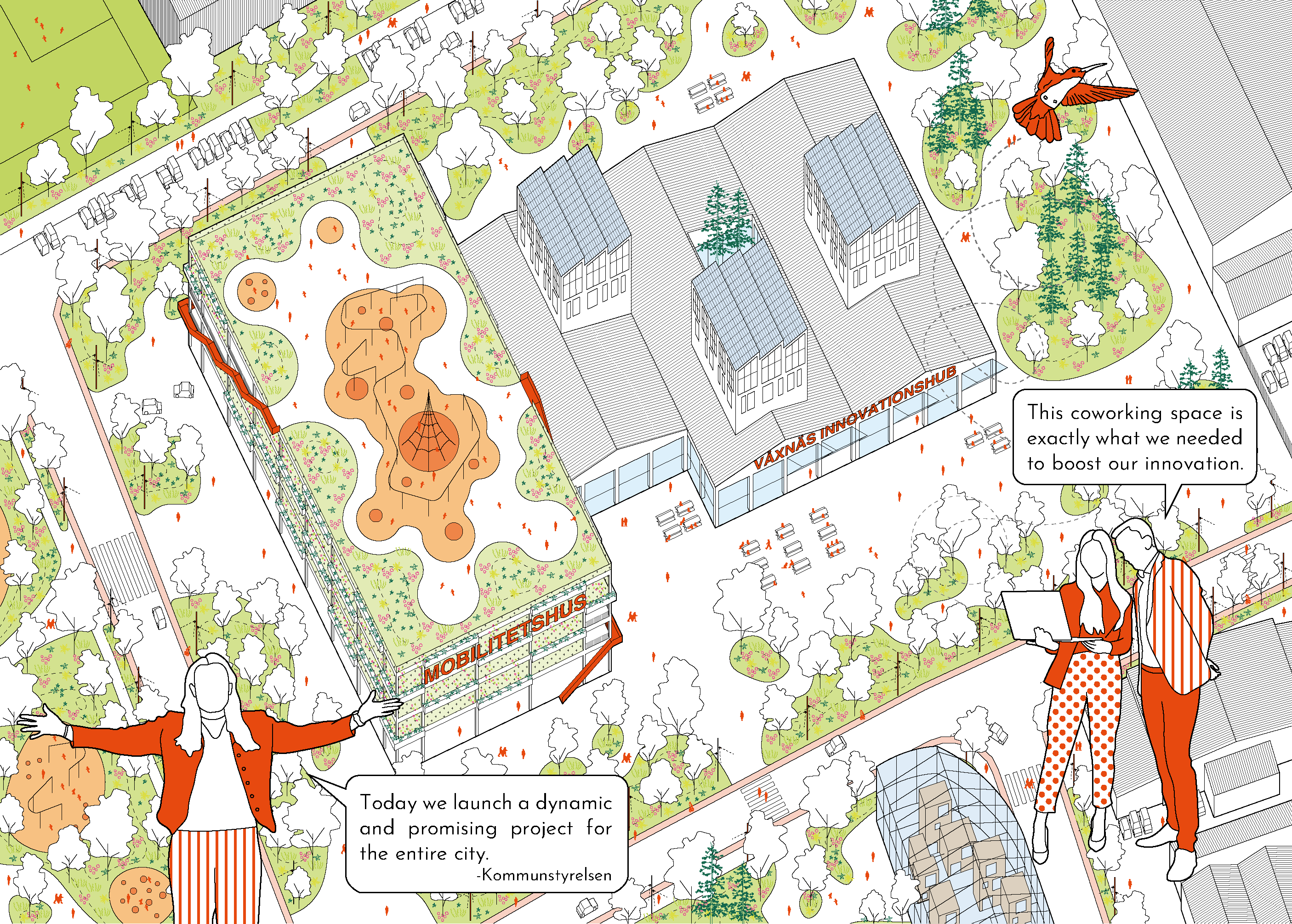
In the year following this application, efforts will focus on advancing Phase 1 – Reactivate through concrete, site-specific actions. A key milestone is the transformation of a recently acquired municipal asset—the former bus depot—into an active urban attractor. This large-scale structure will serve as a catalyst for early activation, hosting temporary programmes such as co-working spaces, cultural activities, and community uses, generating momentum and visibility for the broader transformation.
In parallel, citizen engagement processes will be expanded through workshops, public exhibitions, and co-design sessions, building on ongoing collaboration with municipal departments, experts, and political representatives. Feedback from these processes has already identified priority interventions, including the development of a new pedestrian and cycling bridge connecting Våxnäs to the city centre. As a highly visible and strategic link, this infrastructure is envisioned as an early implementation step to improve accessibility and reconnect the district.
Further actions include advancing feasibility studies and masterplanning in coordination with the municipality, with a focus on green and blue infrastructure, mobility systems, and adaptive reuse strategies. Pilot projects—such as temporary public spaces and the reuse of selected buildings—will be implemented to test solutions in real conditions and inform long-term development.
Partnerships with local stakeholders, developers, and potential investors will be strengthened, while funding opportunities will be explored to support implementation.
These steps demonstrate a strong commitment to action: moving from strategy to tangible interventions through pilot projects, institutional support, and continuous community involvement.