Strengthening Local Democracy and Inclusion
See Your City
See Your City: Eye-tracking and citizen co-design for more inclusive and livable urban spaces
See Your City shows how people actually experience urban spaces by combining eye-tracking with citizen participation. In Ulcinj, the project maps what people notice, how they perceive spaces, and where they face barriers. This helps co-create more inclusive, accessible, and meaningful environments. By turning real human experience into clear insights, it gives citizens a stronger voice and helps shape more human-centered urban decisions.
Montenegro
Local
Ulcinj, Montenegro
Mainly urban
It refers to other types of transformations (soft investment)
Prototype level
No
No
No
Individual
See Your City is a civic concept grounded in research that rethinks how urban spaces are designed by putting real human experience at the centre of decision-making. Developed in Ulcinj, Montenegro, it combines eye-tracking technology with a digital platform for citizen participation to understand how people perceive, move through, and experience public spaces.
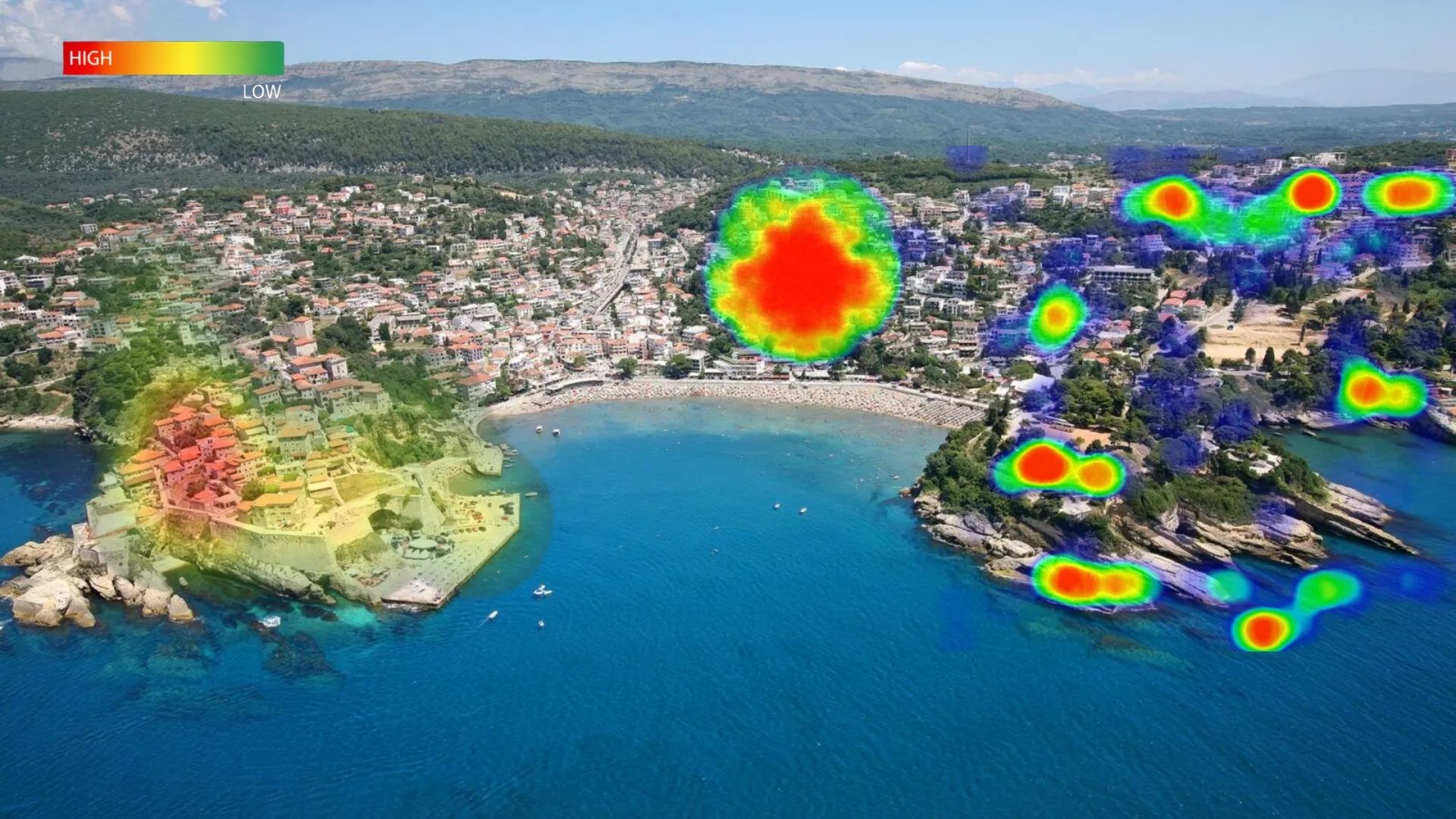
Instead of relying only on what people report, the concept captures what they actually see, where their attention goes, where confusion appears, and which spaces feel welcoming or excluding. These insights are turned into clear recommendations and developed further together with citizens, supporting more inclusive, accessible, and meaningful urban environments.
The concept responds to key challenges in Ulcinj, such as seasonal pressure from tourism, uneven quality of public spaces, and limited citizen involvement in urban decisions. By combining behavioural data with participatory processes, it supports more informed planning and gives citizens a stronger role in shaping their city.
As a prototype, See Your City is planned for testing in Ulcinj, with the potential to be applied in other small and medium-sized cities across Montenegro, the Western Balkans, and Europe. Expected outcomes include better-quality public spaces, a stronger sense of belonging among residents, and new ways for citizens to take part in shaping everyday urban life.
The idea for See Your City grew out of the overlap between data science, cognitive research, and the need for more human-centered urban development. Through academic work and practical experience in data analysis and cognitive science, it became clear that many urban planning approaches rely on assumptions or limited feedback, without a clear picture of how people actually experience spaces in real time.
Ulcinj stood out as a strong context for developing this concept. As a coastal city with a rich cultural identity and strong tourism dynamics, it faces the challenge of balancing the needs of residents and visitors. Public spaces are central to everyday life, yet their design is rarely guided by direct evidence of how people see, move through, and use them.
The concept builds on insights from behavioral science, eye-tracking methods, and participatory urban governance. It looks at how different groups interact with specific spaces, maps patterns of attention and perception, and brings these findings into a digital platform where citizens can take part in shaping solutions.
See Your City is not only a research initiative, it is designed as a practical and scalable model. The process includes pilot testing, data analysis, community involvement, and the development of concrete recommendations for improving how urban spaces are experienced.
By connecting science, technology, and citizen participation, the concept offers a new way to understand and shape cities, grounded in real human experience and focused on creating inclusive, lasting change.
Citizen participation
Urban experience design
Social inclusion
Behavioral insights
Human-centered urban planning
See Your City approaches sustainability by focusing on how urban spaces are actually used and experienced. Instead of pushing for large, resource-heavy redesigns, it looks at how existing spaces can work better. By identifying inefficiencies, underused areas, and barriers through eye-tracking and behavioural data, the project supports small, targeted changes that reduce unnecessary construction and resource use.
In Ulcinj, where seasonal tourism puts pressure on public spaces and infrastructure, the concept helps create a more balanced use of the city throughout the year. It supports spaces that work better for both residents and visitors, improving long-term usability and reducing strain.
The concept also strengthens social sustainability by involving citizens more directly in decision-making. Through a digital participation platform, people can take part in shaping solutions in a continuous and transparent way. This builds a stronger sense of ownership and shared responsibility for public spaces.
From an economic perspective, the project supports more efficient use of resources by grounding decisions in real user experience data. This reduces the risk of investments that do not match actual needs and helps ensure that interventions are focused and relevant.
By combining behavioural insights, citizen participation, and data-driven decision-making, See Your City offers an approach that reduces environmental impact, strengthens communities, and supports long-term urban resilience.
See Your City approaches aesthetics through the way people experience and connect with urban spaces. It does not treat aesthetics as something purely visual, but as something felt, how safe, intuitive, welcoming, and meaningful a place is in everyday life.
In Ulcinj, a city shaped by strong cultural identity, coastal landscapes, and active public life, the project captures how people perceive streets, squares, and shared spaces using eye-tracking data. It shows what draws attention, what is missed, and where people feel confused or excluded. This helps shape spaces that are not only visually appealing, but also easy to navigate, inclusive, and comfortable to use.
By involving citizens in the process, the concept strengthens the connection between people and place. Residents are not just users of space, but part of shaping it. This leads to environments that reflect local identity, cultural diversity, and everyday needs.
The project also improves everyday experience at a smaller scale, how people move, stop, interact, and feel in the city. Even small, well-informed changes can turn ordinary spaces into places where people feel more comfortable and connected.
In this way, See Your City treats aesthetics as something that comes from perception, participation, and local identity, creating spaces that people do not just see as beautiful, but actually experience that way.
See Your City places inclusion at the core of its approach by ensuring that urban spaces are understood and shaped through the diverse experiences of all users, not only the dominant or most visible groups. The concept actively addresses accessibility, participation, and fairness by combining behavioral data with inclusive governance processes.
Through eye-tracking research, the project identifies how different groups—including older adults, women, young people, and individuals facing mobility or spatial barriers—interact with public spaces. It reveals hidden obstacles, points of confusion, and areas where users feel excluded or unsafe, providing concrete evidence to support more accessible and inclusive design.
The digital participation platform further strengthens inclusion by giving citizens an active role in decision-making. It is designed to be accessible, easy to use, and open to diverse voices, enabling people from different backgrounds to contribute their perspectives, propose solutions, and engage in co-design processes. This promotes transparency and reduces barriers to participation, particularly for those who are often underrepresented in urban planning.
The concept follows “design for all” principles by recognizing that inclusive environments are not achieved through standardized solutions, but through understanding real human experiences. By integrating behavioral insights with citizen input, the project ensures that public spaces respond to a wide range of needs, abilities, and expectations.
In Ulcinj, where social diversity and seasonal dynamics shape everyday life, this approach contributes to more equitable and inclusive public spaces that support interaction, accessibility, and shared use. Over time, the concept fosters new models of inclusive governance, where citizens are not passive users but active co-creators of their environment.
Participation is at the core of See Your City, shaping both the development and the implementation of the concept. The project moves away from top down planning by actively involving citizens, users, and stakeholders in understanding and improving urban spaces through structured and measurable processes.
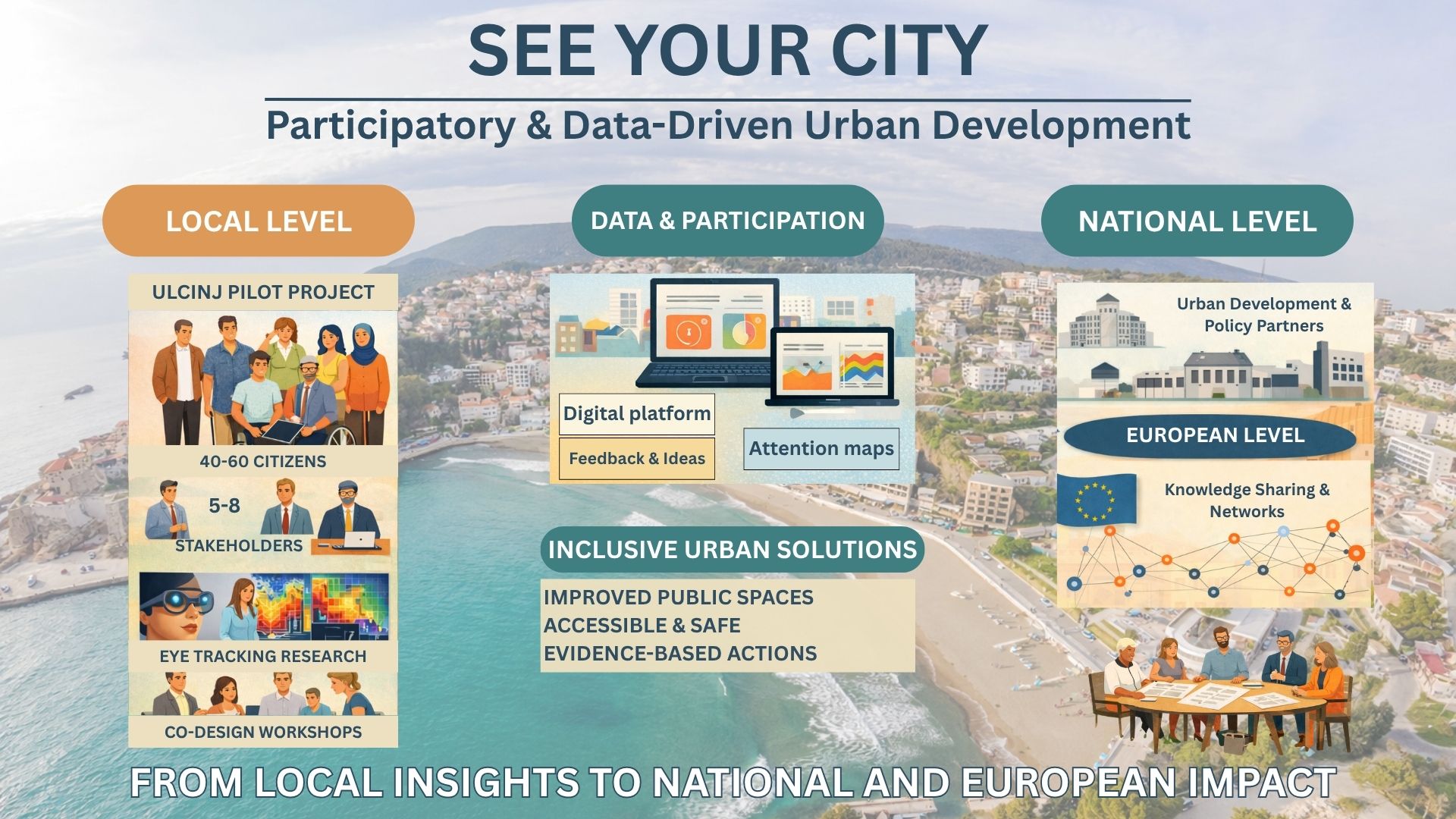
The approach combines two types of participation. First, indirect participation is achieved through eye tracking research with around 40 to 60 participants in the pilot phase in Ulcinj. This group includes youth, older adults, women, and people facing accessibility challenges. Through guided urban walks and testing sessions, the project captures how people actually experience public spaces, what they notice, where they feel comfortable, and where barriers appear. In this way, it includes perspectives that are often missing from standard consultation processes.
Second, direct participation takes place through a digital platform, where around 80 to 120 citizens are invited to engage with the findings. Users can explore visual insights such as attention maps, share feedback, suggest improvements, and take part in two to three co design sessions. This creates an open and transparent space for dialogue, where different perspectives shape the development of solutions.
At the same time, five to eight local stakeholders, including municipal representatives, urban planners, and community organisations, are involved through workshops and validation meetings. Their role is to work with citizens, interpret the findings, and translate them into realistic and context appropriate actions.
This structured participation leads to two main outcomes. It provides a clearer understanding of urban challenges from a human perspective, and it builds stronger trust and cooperation between citizens and decision makers. When people are part of shaping their environment, they are more likely to feel connected to it and take responsibility for it.
See Your City is structured as a multi-level concept that brings together stakeholders at local, national, and European levels, supporting both practical implementation and future scaling.
At the local level in Ulcinj, the pilot phase will involve around 40–60 citizens from different groups, including youth, older adults, women, and people facing accessibility challenges. Alongside them, 5–8 local stakeholders will take part, such as representatives from the municipality, urban planning departments, cultural organisations, and tourism actors. They will be involved in co-design workshops and validation sessions, helping turn findings into realistic improvements.
At the national level, the concept plans to work with 2–3 institutions or organisations in urban development, research, or public policy. Their role is to support the methodology, review results, and explore how the model can be applied in other cities across Montenegro.
At the European level, See Your City connects with existing networks focused on participatory urban design, behavioural research, and civic innovation. The approach will be documented and shared through 1–2 European platforms, opening space for knowledge exchange and collaboration with other cities and research communities.
The value of this multi-level setup is in linking everyday experiences with decision-making across different levels. By combining direct user insights with stakeholder involvement, the concept ensures that results are relevant locally and usable in a wider context, creating a solid base for further urban development.
See Your City is a transdisciplinary concept that brings together cognitive science, data analysis, urban planning, design, digital technologies, and participatory governance to address urban challenges in a practical and connected way.
Cognitive science and behavioural research are used through eye tracking sessions with around 40 to 60 participants, generating real time data on how people perceive, move through, and experience public spaces. These insights are processed through data analysis and presented as clear visual outputs such as attention maps and behavioural patterns.
Urban planning and design are included through collaboration with three to five professionals who interpret the findings and turn them into concrete spatial recommendations. This ensures that the results are not only analytical, but directly usable in improving public spaces.
Digital technologies are part of the concept through a participation platform, where around 80 to 120 users can explore results, give feedback, and take part in co design processes. This allows ongoing interaction between citizens and decision makers.
Social sciences and participatory governance are reflected in structured engagement activities, including two to three co design workshops and validation meetings with five to eight local stakeholders. These processes help include different perspectives and ensure that proposed solutions are realistic and relevant.
The strength of this approach is in connecting human perception, data, and spatial design into one framework. By linking these areas, the concept produces solutions that are grounded in real experience, inclusive, and ready to be applied in different urban settings.
See Your City is designed as a financially sustainable hybrid model that combines public funding, service-based revenue, and scalable digital tools.
In the initial phase, during the first 6 to 12 months, the concept is supported through public and innovation funding. This includes cooperation with the Municipality of Ulcinj, which co-finances pilot activities, as well as applications to national innovation funds and EU programmes such as Horizon Europe, NEB-related calls, and regional development funds. This allows the pilot to be implemented without financial barriers for citizens.
In the operational phase, the model shifts towards a service-based approach. Municipalities and public institutions become the main clients, using See Your City as a tool for participatory urban analysis and decision-making. A typical project includes eye tracking studies with 40 to 60 users, data analysis, two to three co design workshops, and a final report with clear recommendations. Service packages per city are expected to range from 8,000 to 20,000 euros, depending on the scope.
Additional revenue can come from partnerships with urban development projects, tourism strategies, and public space regeneration initiatives, where user experience data helps guide decisions and reduce the risk of ineffective investments.
The digital platform is designed as a scalable product that can be offered as a subscription service to municipalities, providing continuous access to citizen feedback and engagement tools.
The model remains inclusive, with citizens participating free of charge, while costs are covered by institutions and project funding.
In the longer term, See Your City is planned as a model that can be applied in small and medium-sized cities across Montenegro, the Western Balkans, and the EU. Scaling will rely on collaboration between cities, EU-funded projects, and partnerships with research and innovation networks.
See Your City is designed as a model that can be easily transferred and applied in different cities, contexts, and sectors.
The methodology can be used in a wide range of urban environments. It combines mobile eye tracking with 40 to 60 users, structured data analysis, and two to three co design workshops. The process follows a clear sequence of data collection, analysis, visualisation, and co creation, which can be adjusted to different city sizes and needs.
The technology is also designed to scale. The digital participation platform works as a modular tool that can be adapted for other municipalities. It allows cities to collect feedback, present user experience data, and stay in regular contact with citizens, making it useful beyond the initial pilot in Ulcinj.
The governance model can be applied in other settings as well. It connects citizens, around 80 to 120 participants, with five to eight local stakeholders and institutions in a structured way. This creates a clear but flexible approach to inclusive decision making.
The concept is particularly suited to small and medium sized cities, which often do not have access to advanced tools for participatory planning. Its relatively low cost and clear structure make it practical for municipalities across Montenegro, the Western Balkans, and the EU.
It can also be used in different sectors, including urban planning, tourism development, public space improvement, and cultural projects, wherever understanding user experience is important.
By documenting the process and results from Ulcinj, See Your City provides a model that can be taken up and adapted by other cities through partnerships, EU funded projects, and cooperation between municipalities. This allows the impact to extend well beyond the initial pilot.
Phase 1 (Months 1 to 3): Preparation
The project will finalise the methodology, define pilot locations in Ulcinj such as public squares, pedestrian areas, or waterfront zones, and establish cooperation with local stakeholders including the municipality, planners, and community organisations. Technical work will include setting up eye tracking protocols and defining the structure of the digital platform. Recruitment of 40 to 60 participants will begin.
Phase 2 (Months 3 to 6): Data collection and testing
Eye tracking sessions will be carried out through guided urban walks. Data will capture attention, movement, and perceived barriers in public spaces. At the same time, the first version of the digital platform will be launched to present early insights and involve an additional 80 to 120 users. Initial feedback will be collected.
Phase 3 (Months 6 to 9): Analysis and co design
Data will be processed into visual outputs such as attention maps and behavioural patterns. Based on these results, two to three co design workshops will be organised with citizens and five to eight local stakeholders to define priority actions and develop solutions.
Phase 4 (Months 9 to 12): Validation and next steps
A final report will present clear recommendations, including identified barriers, user experience insights, and priority interventions. The report will support local decision making. Validation with local authorities will ensure feasibility. One to two pilot interventions will be prepared.