Arts, Culture, and Heritage as Drivers of Change
Living Traditions, Living Communities
Living Traditions, Living Communities: Connecting Generations Through Culture
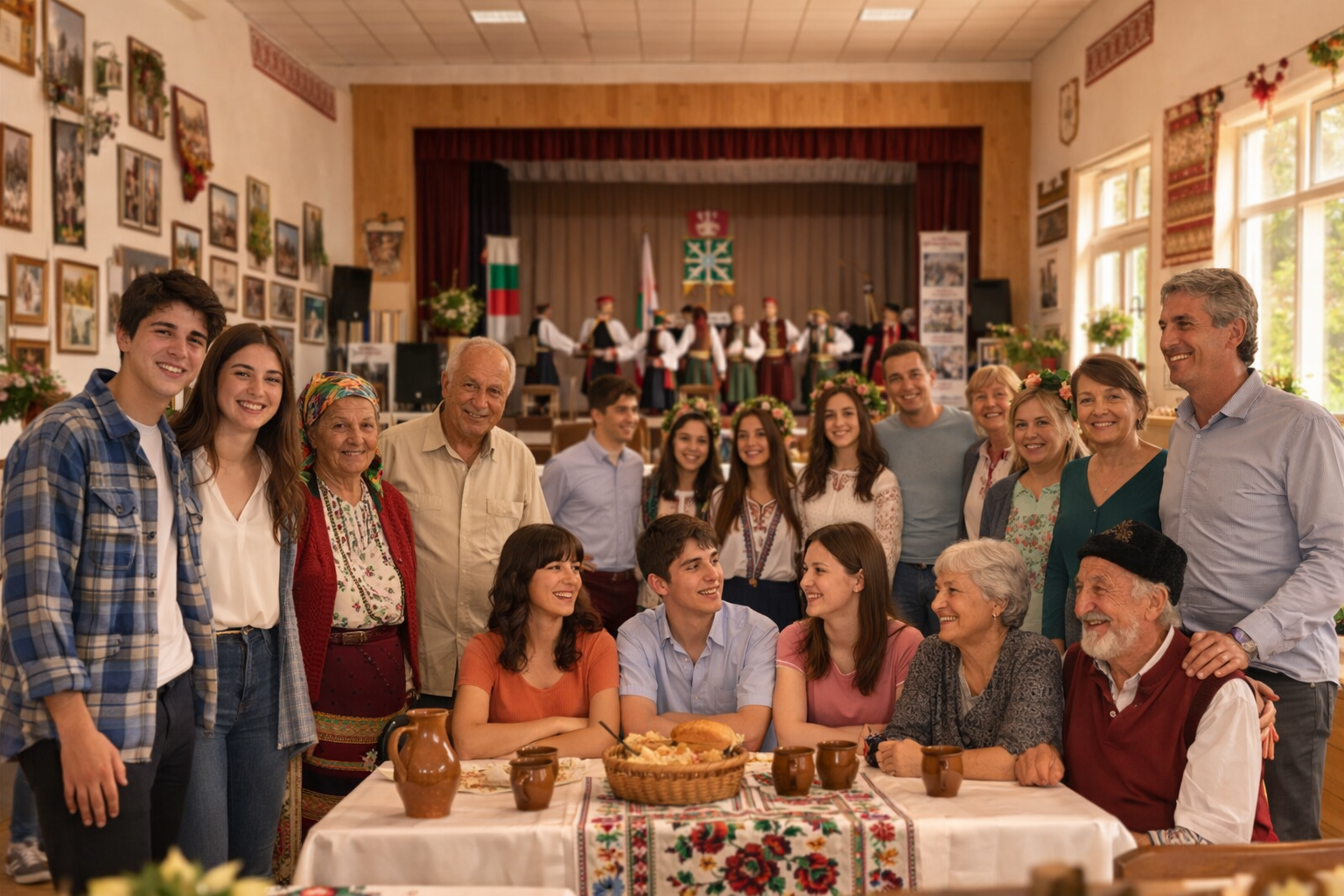
This initiative transforms community centers and pensioners’ clubs into vibrant intergenerational spaces where people of all ages gather regularly to share music, traditions, and experiences. Inspired by real-life celebrations that unite entire communities, it aims to turn these moments into a sustainable and widespread practice. By reconnecting generations through culture, the project combats social isolation and revives the social role of local cultural spaces across Europe.
Bulgaria
National
It addresses urban-rural linkages
It refers to other types of transformations (soft investment)
Prototype level
No
No
No
Individual
Across Europe, community life is gradually fading, and connections between generations are becoming weaker. Elderly people often experience loneliness, while younger generations are increasingly disconnected from cultural traditions and shared social spaces. At the same time, valuable community infrastructures such as cultural centers and local clubs remain underutilized, despite their potential to bring people together. Imagine a place where generations meet, music brings people together, and traditions are not remembered, but lived.
This concept proposes transforming these spaces into active intergenerational hubs, where people of all ages regularly gather to share music, traditional dances, local customs, and personal stories. Activities may include community celebrations, music evenings, shared meals, and cultural exchanges, creating a welcoming and informal environment for interaction.
Inspired by real-life experiences in Bulgaria – where entire communities come together during events such as New Year celebrations, combining traditional music, horo dances, and shared rituals – the initiative aims to transform these spontaneous gatherings into a regular, structured, and sustainable practice.
A key element of the concept is the regular organization and public visibility of these events, encouraging participation and building a sense of continuity. Over time, this can lead to the creation of a network of community-driven gatherings, connected through shared values and experiences.
The expected result is a revival of community life, stronger social bonds between generations, reduced social isolation, and the active preservation of cultural heritage. By activating existing spaces rather than creating new infrastructure, the concept offers a low-cost, scalable solution that can be easily replicated across different European contexts.
The idea was born from deeply personal experiences during community celebrations in Bulgaria. I took part in a New Year’s celebration in the small village of Podslon, Stara Zagora Municipality, where people of all ages gathered in the local community center. The atmosphere was warm, spontaneous, and full of life – young and old sharing music from different generations, dancing traditional horo together, and exchanging stories, laughter, and traditions in a natural and joyful way. In that moment, there was no separation between generations – only a shared sense of belonging.
A similar experience took place in a pensioners’ club in the town of Radnevo, where the celebration extended beyond the building and into the streets, bringing together the wider community. At midnight, people gathered outside to dance together, creating a powerful feeling of unity and collective identity that is rarely experienced in everyday life.
These moments revealed how simple, inclusive gatherings can create meaningful human connections, revive traditions, and make people feel part of something larger than themselves. At the same time, they highlighted an important gap – such experiences are rare and often limited to specific occasions, rather than being part of everyday community life.
The concept was developed as a response to this realization – a way to transform these spontaneous, powerful moments into a structured, repeatable, and accessible practice. By introducing regular events, encouraging active participation, and activating existing cultural spaces, the initiative offers a practical and scalable approach to rebuilding community connections, strengthening intergenerational relationships, and bringing everyday life back into shared spaces.
Intergenerational connection
Cultural heritage preservation
Community engagement
Social inclusion
Community-led innovation
The concept contributes to sustainability primarily through its social and cultural impact, while also minimizing the need for new physical resources. By activating already existing community spaces such as cultural centers and pensioners’ clubs, it avoids the need for new construction or infrastructure, making it a low-cost and resource-efficient solution.
Social sustainability is at the core of the initiative, as it addresses loneliness, social fragmentation, and the weakening of intergenerational ties. By creating regular opportunities for people to meet, share, and participate in cultural activities, the concept strengthens community resilience and long-term social cohesion.
In addition, the initiative supports cultural sustainability by preserving and actively transmitting traditions, music, and collective practices between generations. Instead of allowing cultural heritage to fade, it becomes a living and evolving part of everyday life.
Due to its simplicity, low resource requirements, and reliance on existing structures, the concept is easily scalable and adaptable across different regions and countries, ensuring long-term sustainability and impact.
The concept contributes to aesthetics by redefining beauty as a shared human experience rather than a purely visual or architectural element. It brings life, music, and emotion into existing community spaces, transforming them into vibrant environments filled with connection, joy, and cultural expression. Instead of relying on new infrastructure, it reveals the hidden potential of already familiar places.
By gathering people of different generations in the same space, the initiative creates meaningful and memorable moments that enhance the everyday experience of communities. Traditional music, dances such as horo, storytelling, and shared cultural rituals become living expressions of beauty—something that is felt, lived, and experienced collectively, rather than simply observed.
Over time, the project encourages the regular use of these spaces, turning them into active social hubs. This continuity builds a stronger sense of belonging and reinforces emotional attachment to the local environment. When people actively participate in shaping their community life, they naturally develop a greater sense of care and responsibility toward these places.
In this way, the concept expands the understanding of aesthetics beyond physical design. It highlights human connection, cultural richness, and shared experiences as essential elements of beauty, offering a sustainable and inclusive approach to improving the quality of life in communities.
The concept is inherently inclusive, as it creates open and accessible spaces for people of all ages, backgrounds, and social groups. By using existing community venues such as cultural centers and pensioners’ clubs, participation remains free or low-cost, effectively removing financial barriers and ensuring affordability for everyone. This approach makes the initiative especially accessible to vulnerable groups, including elderly people, low-income individuals, and those living in smaller or remote communities.
A key strength of the initiative is its intergenerational nature. It brings together young people, adults, and older generations, fostering mutual understanding, respect, and the exchange of knowledge and traditions. This directly addresses the growing social gap between generations and helps reduce isolation, particularly among elderly participants, while also reconnecting younger people with cultural heritage.
The concept also promotes accessibility by relying on familiar, local spaces that are already embedded in people’s daily lives. This significantly reduces psychological and social barriers, encouraging participation from individuals who might otherwise feel excluded or uncomfortable in formal cultural settings.
In addition, the initiative supports inclusive governance by encouraging communities to co-create and organize the events. Participants are not passive attendees but active contributors, shaping the content, music, and activities according to their preferences and cultural backgrounds. This participatory approach empowers individuals and strengthens community ownership.
By combining affordability, accessibility, and active civic participation, the concept introduces a sustainable social model based on equality, shared experiences, and collective engagement, making it exemplary in terms of inclusion.
The concept is built on direct participation and real-life experience. It originates from personal involvement in community celebrations, where people of different generations gathered in cultural centers and pensioners’ clubs to share music, dances, and traditions. These experiences clearly demonstrated the strong positive impact such gatherings have on social cohesion, mutual understanding, and emotional well-being, and directly inspired the development of the concept.
Users and citizens are not only participants but active contributors and co-creators. Each event is shaped by the people involved—they select the music, lead traditional dances, share personal stories, and introduce local customs. This collaborative approach ensures that every gathering reflects the identity of the community and remains authentic, inclusive, and adaptable to different cultural and social contexts.
Stakeholders such as local organizers, community leaders, and cultural groups also play an important role by supporting coordination and encouraging wider participation. Their involvement helps strengthen trust and ensures continuity over time.
Feedback is gathered through informal conversations, observations, and ongoing engagement with participants. Understanding what people enjoy, how they interact, and what motivates them to return has been essential in refining and improving the concept. This flexible and responsive process allows the initiative to evolve naturally based on real needs.
The impact of this participatory approach is visible in the increased sense of belonging, stronger intergenerational relationships, and the creation of meaningful shared experiences. Over time, these repeated interactions build lasting community bonds and encourage people to remain actively engaged, making the concept sustainable and socially impactful.
The concept involves and can further engage stakeholders at multiple levels – local, regional, and potentially European. At the local level, key actors include community members, cultural centers (chitalishta), pensioners’ clubs, and local volunteers, who are essential for organizing and sustaining the events.
Municipalities and local authorities can play a supportive role by providing access to spaces, promoting events, and integrating the initiative into local cultural and social policies. At the regional and national level, cultural institutions and NGOs can contribute by supporting coordination, sharing best practices, and expanding the initiative to other communities.
At the European level, the concept aligns with broader goals related to social inclusion, cultural heritage preservation, and community resilience. It has the potential to be adapted and implemented in different countries, encouraging cross-cultural exchange and collaboration.
The added value of this multilevel approach lies in combining grassroots participation with institutional support. While the initiative remains community-driven, collaboration with stakeholders at different levels ensures its sustainability, scalability, and long-term impact.
The concept brings together multiple disciplines and knowledge fields, combining social innovation, cultural heritage, arts, and community development into a coherent and integrated approach.
It draws on social sciences by addressing key challenges such as social isolation, intergenerational disconnect, and the need for stronger community cohesion. Through inclusive and participatory gatherings, the initiative creates opportunities for meaningful interaction, dialogue, and mutual support among community members.
At the same time, the concept strongly incorporates arts and cultural expression through music, traditional dances, storytelling, and shared rituals. These elements are central to the gatherings and transform them into a living cultural platform rather than merely social events.
The initiative is also closely linked to education, as it fosters informal learning and intergenerational knowledge exchange. When people come together around traditional holidays and celebrations, they not only connect socially but also learn about the history, meaning, and customs behind these occasions. In this way, traditions, stories, and skills are naturally passed on in an engaging and participatory environment.
In addition, digital tools and communication channels, such as social media, are used to promote events, connect communities, and share experiences across different locations, allowing the concept to expand beyond local boundaries.
By combining social, cultural, educational, and digital dimensions, the concept reflects a truly transdisciplinary approach that creates richer, more inclusive, and impactful community experiences.
The concept is designed to be financially sustainable through a combination of low-cost implementation and diverse funding sources. Since it relies on existing community spaces such as cultural centers and pensioners’ clubs, the operational costs remain minimal.
In its initial phase, the initiative can be supported through public funding, cultural programs, and European or national grants focused on social inclusion, cultural heritage, and community development.
At the local level, municipalities and community organizations can contribute by providing spaces, logistical support, and small-scale funding. Additional support may come from donations, local sponsorships, and community-based contributions.
A key element of the concept is the creation and promotion of a network of regularly published community events. By sharing and promoting these gatherings through digital platforms and social media, the initiative increases visibility, encourages participation, and connects different communities.
In the long term, the concept can develop complementary activities such as workshops, cultural events, and partnerships with organizations, which may generate modest revenue while maintaining accessibility for participants.
The strength of the model lies in its flexibility and low dependency on high financial investment, allowing it to be replicated and sustained in different communities with limited resources.
The concept has a high potential for transferability and replicability due to its simplicity, flexibility, and reliance on existing community infrastructures. It does not require complex technology or significant financial investment, making it easily adaptable to different geographical, cultural, and socio-economic contexts.
The core methodology – bringing people together in accessible local spaces to share traditions, music, and social experiences – can be implemented in any community that has basic social infrastructure, such as cultural centers, community halls, or local clubs.
A key transferable element is the creation of a decentralized network of community-led events. Each local group can adapt the concept to its own cultural identity while maintaining the shared objective of strengthening social bonds and intergenerational exchange. This ensures both consistency and local authenticity.
The concept also benefits from its potential to be supported by simple tools, such as guidelines for organizing events, communication templates, and digital platforms for publishing and sharing community gatherings. This enables easy replication without the need for specialized expertise.
Furthermore, by encouraging the regular publication and visibility of events, the initiative can grow into a connected ecosystem of communities across regions and countries. This creates opportunities for cross-cultural exchange, knowledge sharing, and the development of a broader European movement based on shared experiences and cultural diversity.
Due to its low-cost structure, adaptability, and strong social impact, the concept can be successfully transferred across different sectors and regions, contributing to inclusive and resilient communities at scale.
The implementation of the concept will begin immediately through small-scale, locally organized events, building on real-life experiences that have already demonstrated its value. The first step is to initiate regular gatherings in selected communities, using existing cultural centers and pensioners’ clubs as pilot locations.
In parallel, a simple but effective communication approach will be developed, focusing on the regular publication and visibility of events through social media and digital channels. This will help create awareness, attract participants, and connect different communities.
During the first year, the focus will be on testing and refining the concept through pilot events, collecting feedback from participants, and identifying best practices for organization and engagement. This will allow the development of a flexible model that can be easily replicated.
At the same time, efforts will be made to establish partnerships with local stakeholders such as municipalities, cultural institutions, and community organizations to support and expand the initiative.
As the concept grows, the goal is to create a recognizable and self-sustaining network of regularly organized community events, encouraging more communities to adopt and adapt the model.
The long-term vision is to develop the initiative into a wider European network that promotes cultural exchange, strengthens social connections, and keeps traditions alive through continuous, community-driven activities.
The concept is not starting from zero – it is inspired by real, lived experiences that have already proven its impact. The next step is to transform these spontaneous moments into a structured, repeatable, and widely accessible practice.