Enablers for New European Bauhaus Transformation
Science-education centre Nature House
Nature House & AquaLab: integrated environmental education and research hub in Liepāja
Nature House in Liepāja is an innovative environmental education and research centre on Zirgu Island, connecting people with nature through science, sustainability, and community engagement. Together with the floating research laboratory AquaLab, the project creates a unique learning environment where students, researchers, and the wider public explore coastal ecosystems, biodiversity, and sustainable solutions for the Baltic Sea region.
Latvia
Local
Liepāja
It addresses urban-rural linkages
It involves other types of transformations (soft investment)
Yes
2020-05-28
Yes
EMFF : European Maritime and Fisheries Fund
No
Yes
Organisation
The Nature House and AquaLab project in Liepaja is an innovative environmental education, research, and community engagement hub that successfully combines sustainable architecture, science, and public participation. Its main goal is to strengthen society’s understanding of coastal ecosystems, climate change, and sustainable resource use, while creating an accessible and inspiring environment for diverse target groups.
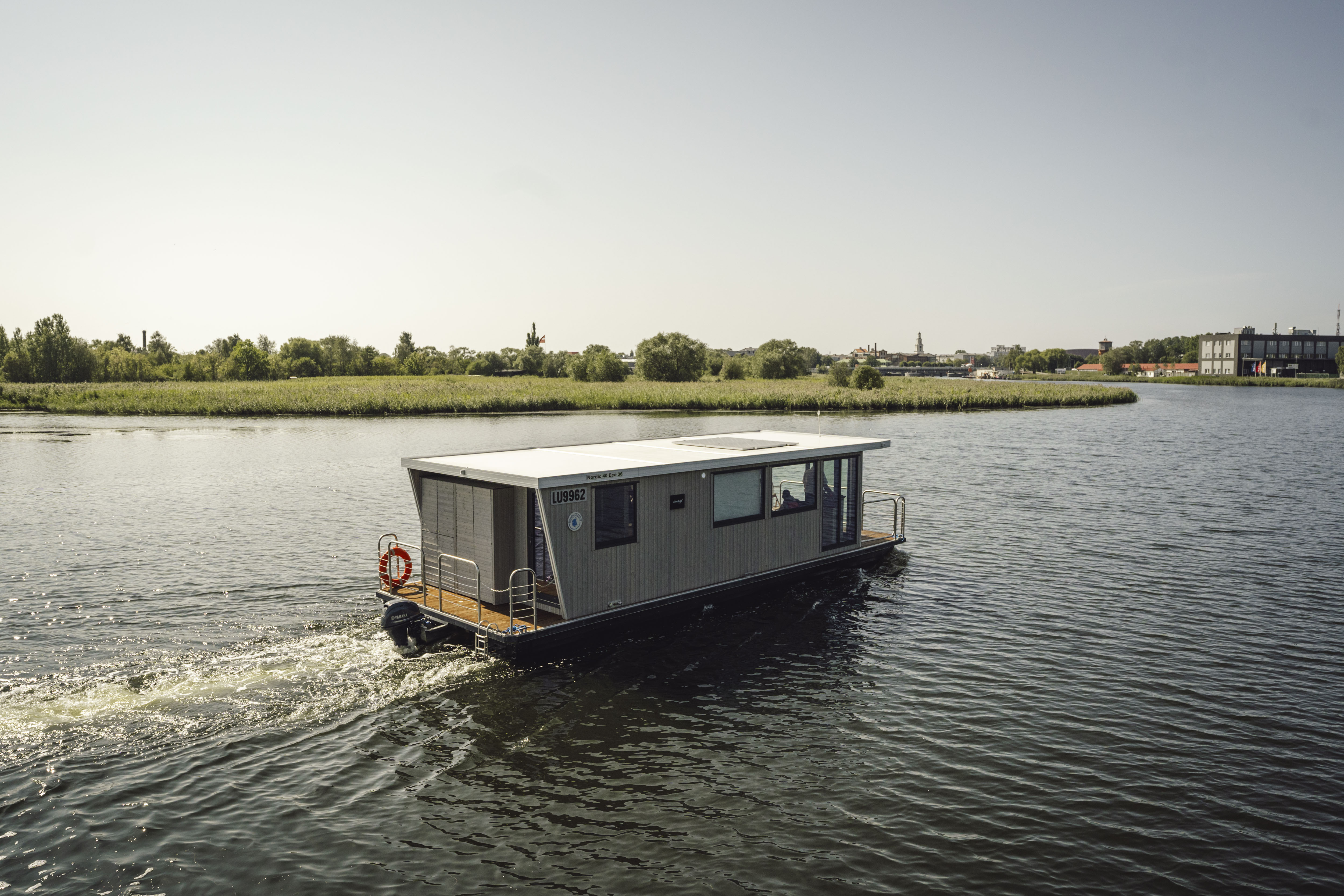
Since its opening in 2020, the project has been fully operational and has become an important regional centre. A modern infrastructure has been developed on Zirgu Island, carefully integrated into the natural landscape, alongside the unique floating research laboratory “AquaLab,” which enables direct observation and study of aquatic ecosystems. The project has already achieved significant results, including expanded environmental education opportunities, the development of interactive learning programmes, and increased public engagement in scientific activities.
Direct beneficiaries include schoolchildren, students, educators, researchers, and families who participate in workshops, experiments, and citizen science initiatives. Indirect beneficiaries include the wider community and future generations, as the project fosters long-term behavioural change and a more responsible attitude towards the environment. Nature House has become a platform for collaboration between science, education, and society.
In the long term, the project contributes to sustainable coastal development, strengthens environmental literacy, and serves as a replicable model for other cities. It demonstrates how an integrated approach -combining infrastructure, education, and participation -can create lasting impact on both society and the environment.
The Nature House and AquaLab project was initiated as a strategic response to the need for new models that enable sustainable, inclusive, and knowledge-based transformation in coastal urban environments. Led by the Liepāja municipality, the project was designed not only as infrastructure, but as an enabling platform aligned with New European Bauhaus principles -integrating education, governance, community participation, and environmental innovation.
From the outset, the project applied a participatory and cross-sectoral approach. Local authorities, schools, researchers, NGOs, and citizens co-created the concept through consultations and collaborative planning. This process ensured that the project reflects real community needs while fostering shared ownership and long-term engagement. The initiative also introduced new learning and collaboration models, combining formal education, citizen science, and hands-on experimentation.
Implementation on the ground combined public funding with local investment, demonstrating an effective multi-level financing model. The physical development on Zirgu Island followed sustainable design principles, integrating architecture into the natural landscape. At the same time, the AkvaLab floating platform was established as an experimental environment for testing, learning, and scaling environmental solutions in real-life conditions.
The project functions as a living laboratory where education, research, and community co-creation intersect. It enables new skills development, supports interdisciplinary cooperation, and provides a replicable model for integrating NEB values into local development. Its implementation shows how governance innovation, community involvement, and place-based solutions can create conditions for long-term systemic impact.
Sustainability
Environmental education
Community engagement
Coastal ecosystems
Innovation
The Nature House and AquaLab project addresses key environmental, social, cultural, and economic challenges through an integrated, place-based approach aligned with New European Bauhaus principles. Environmentally, it responds to climate change and ecosystem degradation by enabling direct monitoring and understanding of coastal and aquatic systems. Through the AquaLab platform and hands-on programmes, citizens, students, and researchers actively engage in observing biodiversity, water quality, and environmental processes, fostering long-term environmental responsibility.
Socially, the project tackles the growing disconnection between people and nature, as well as gaps in environmental literacy. It creates an inclusive, accessible space where diverse groups - children, youth, educators, families, and communities - participate in experiential learning, co-creation, and citizen science. This strengthens community ownership, skills, and capacity for sustainable action.
Culturally, the project enhances the relationship between people and place by integrating architecture with the natural landscape and transforming learning into a spatial and sensory experience. It promotes values of sustainability, aesthetics, and inclusion through design and everyday use.
Economically, the project demonstrates an effective model combining EU funding and local investment, while supporting local development through education, innovation, and increased attractiveness of the area.
The project is exemplary in terms of sustainability because it goes beyond environmental performance to create systemic impact. It integrates governance, education, and community participation into a living laboratory that enables testing, learning, and scaling of sustainable practices. By building skills, fostering collaboration, and creating replicable models, it establishes long-term conditions for sustainable transformation and aligns with NEB goals of inclusive, high-quality change.
Nature House demonstrates how architecture, landscape and education can create a meaningful aesthetic experience connected with nature.
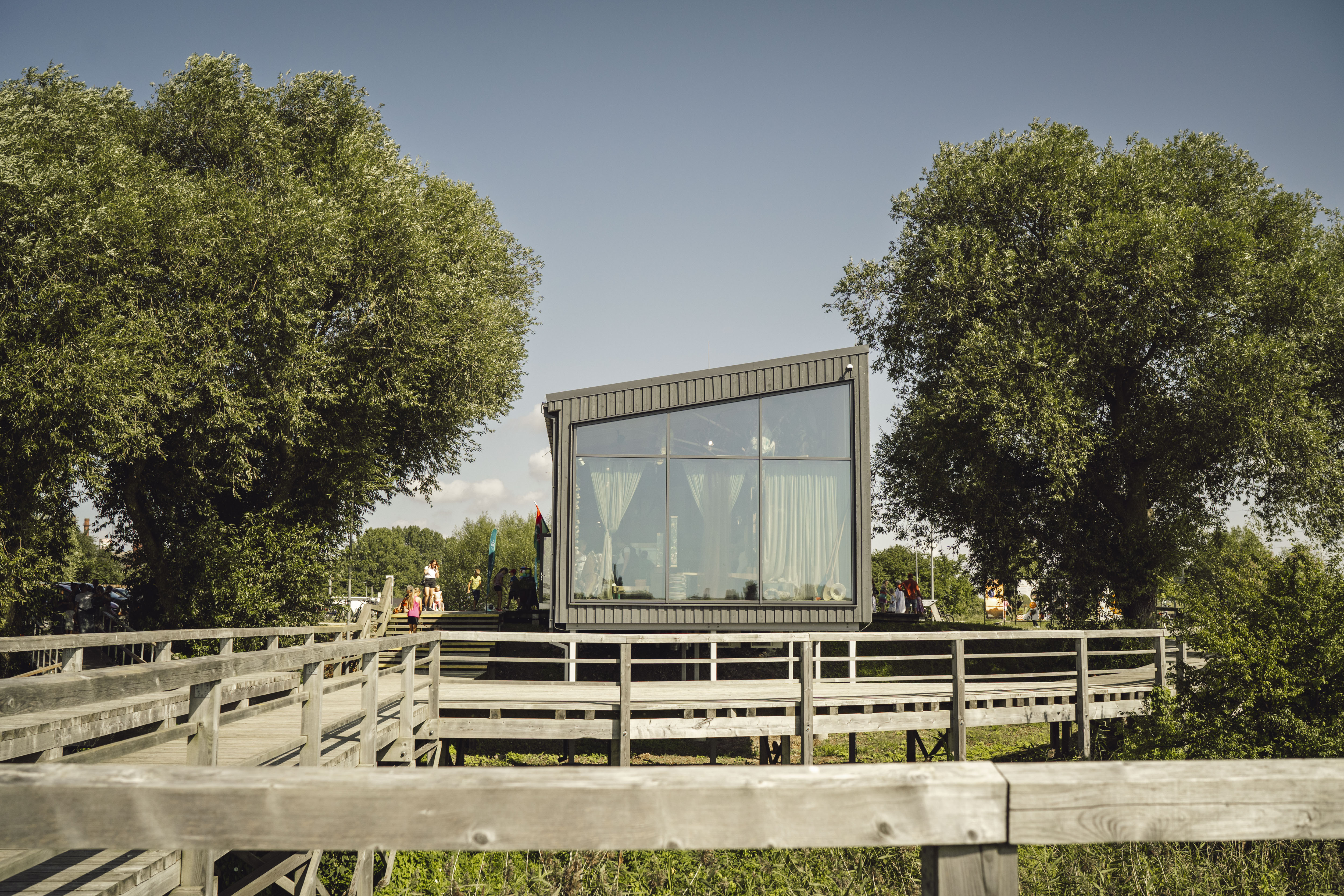
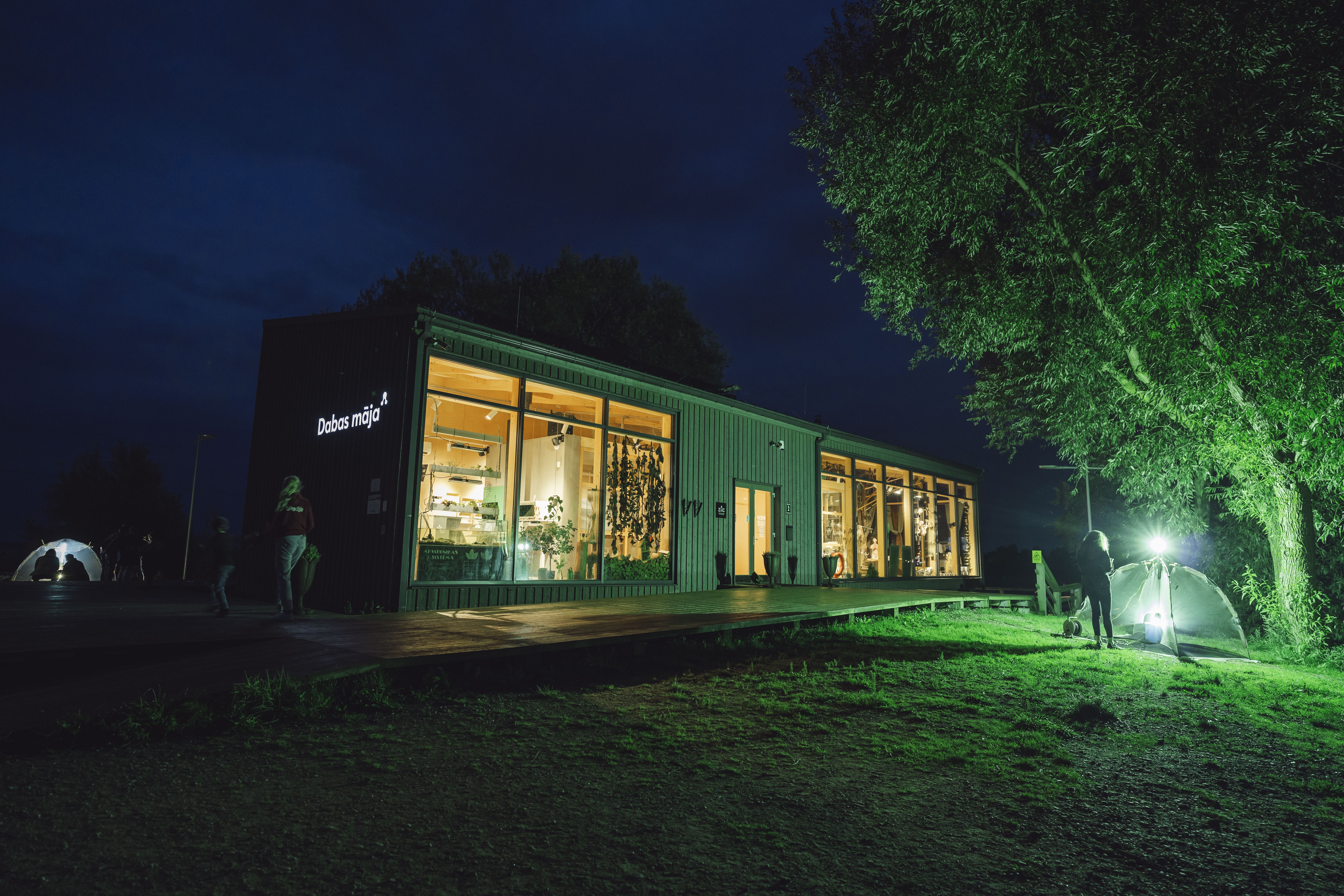
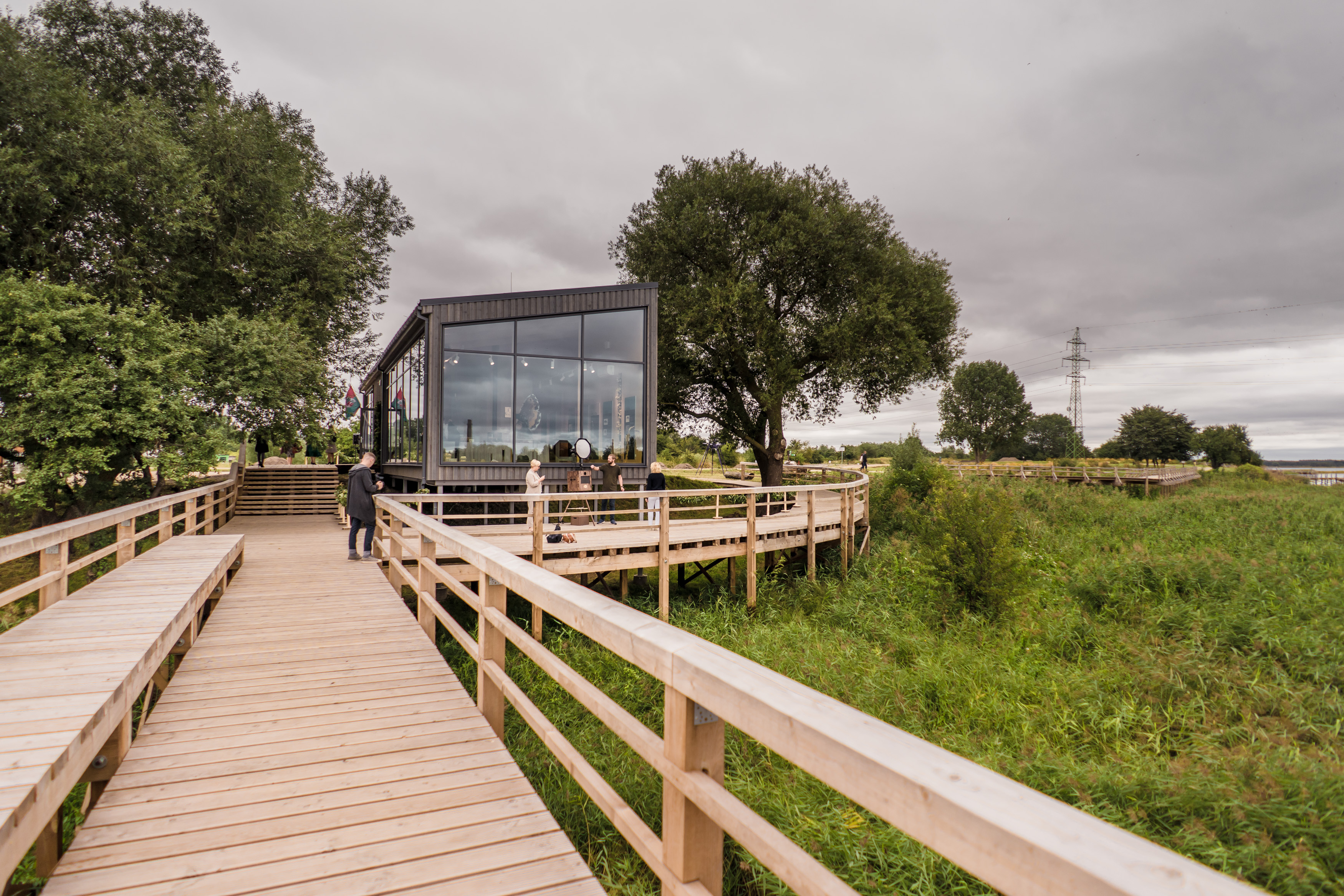
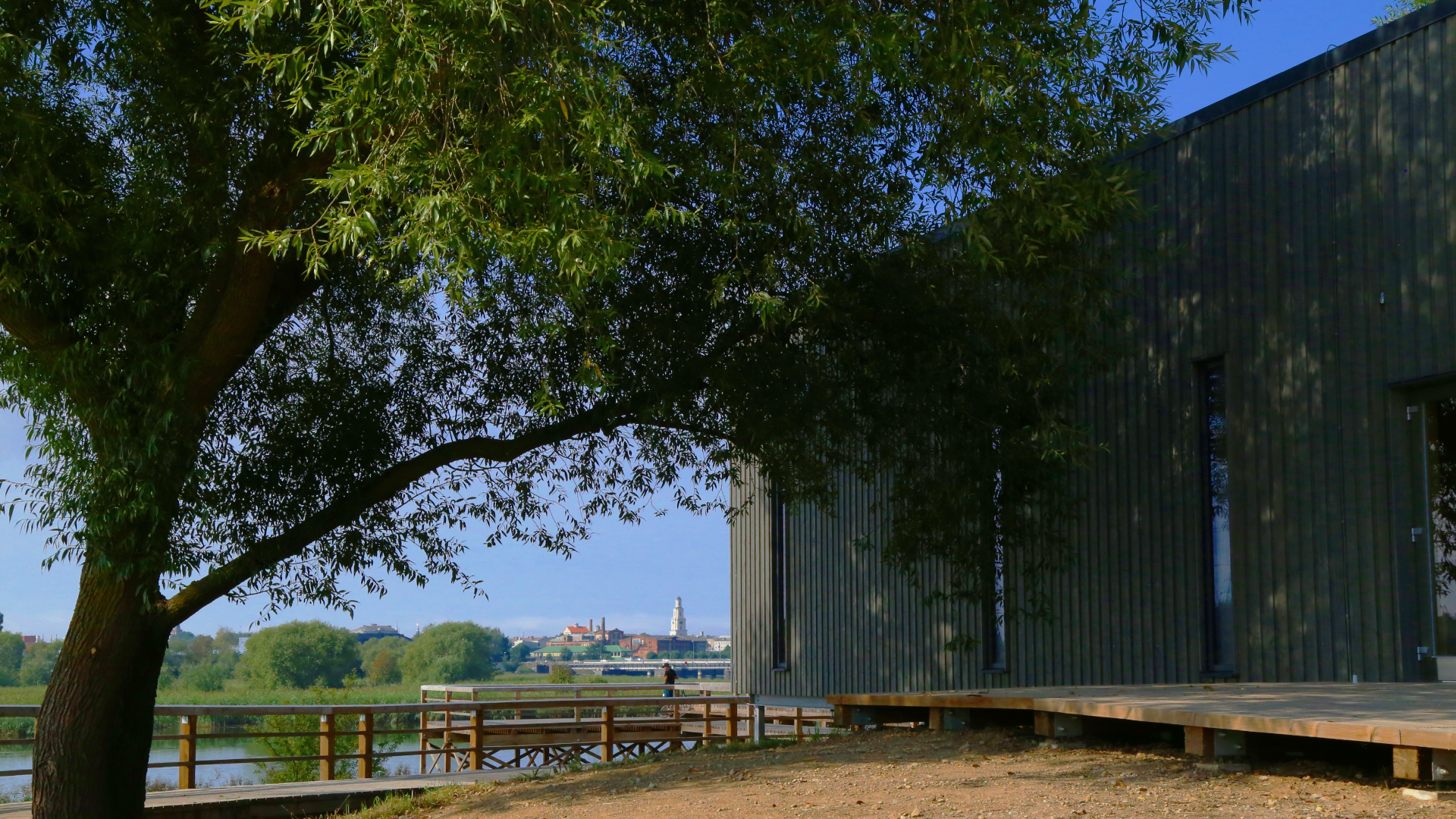
The building is carefully integrated into the natural environment of Zirgu Island, respecting the surrounding wetlands, coastal ecosystems and open landscapes. The design uses natural materials, simple architectural forms and large windows that visually connect the indoor spaces with the surrounding nature.
This creates a learning environment where visitors can directly experience the landscape while participating in educational activities.
The surrounding outdoor spaces are also designed as learning environments, allowing visitors to observe nature, participate in field activities and experience environmental processes directly.
The project therefore transforms environmental education into a spatial experience where architecture, landscape and knowledge interact.
5. Inclusion is a central principle of the Nature House project. The centre was designed as an open and accessible space for people of all ages, educational backgrounds and social groups.
The infrastructure is accessible and welcoming for families, school groups, researchers and the wider community. Educational activities are designed to engage diverse audiences, including children, young people, educators and citizens interested in environmental topics.
The project also supports inclusive learning by emphasising experiential education. Visitors do not only receive information but actively participate in experiments, observations and environmental activities.
By combining accessibility, open participation and hands-on learning, the project creates an inclusive environment where everyone can develop a stronger relationship with nature.
The Nature House and AquaLab project is built on active citizen and community involvement, positioning them not only as beneficiaries but as co-creators. From the initial planning phase, local residents, schools, NGOs, educators, and environmental organisations were engaged through consultations, workshops, and collaborative discussions. Their input helped shape the project as an open, inclusive, and accessible platform that reflects local needs and strengthens the connection between the city and its coastal ecosystems.
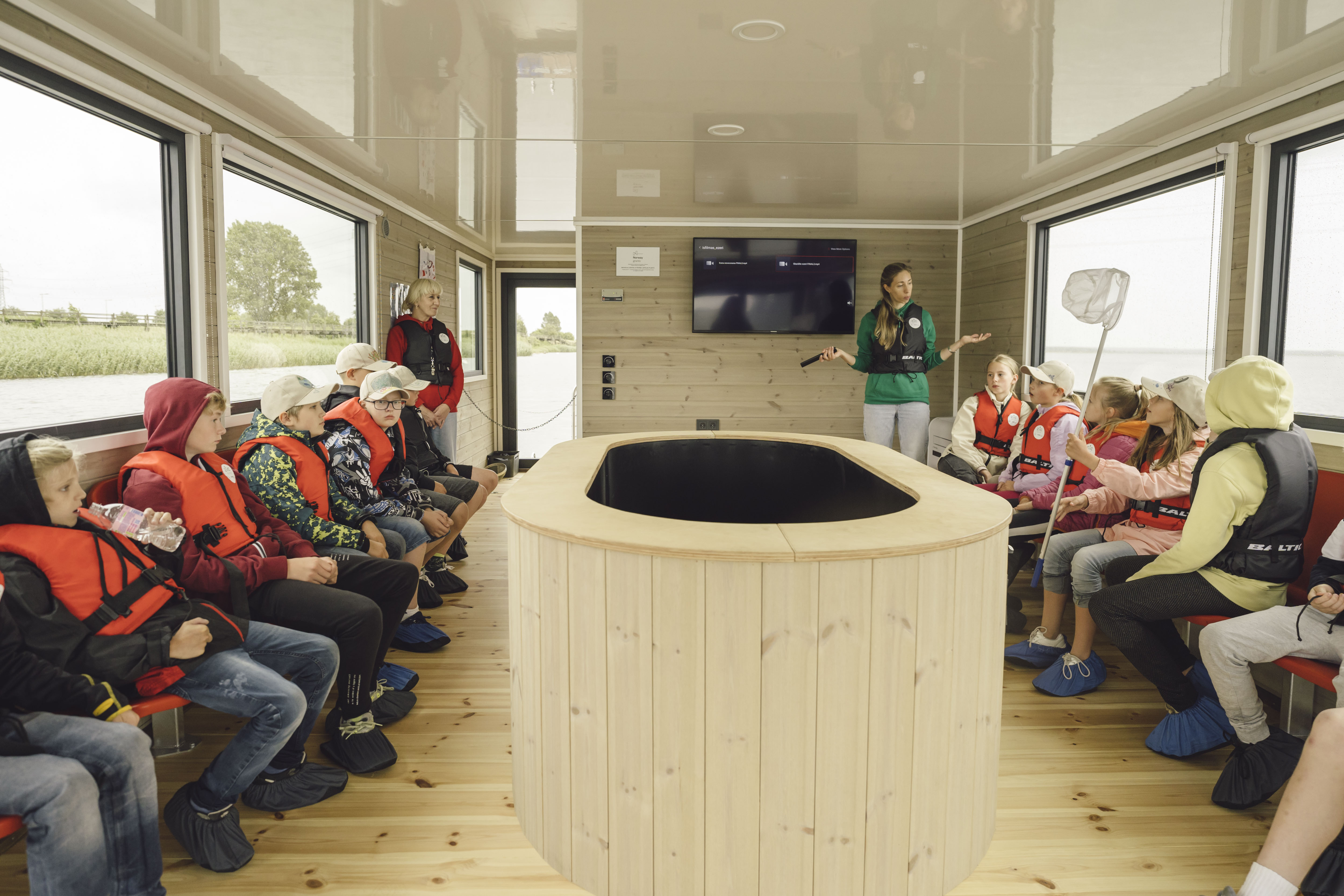
During implementation and operation, this participatory approach evolved into continuous engagement. Citizens are actively involved in educational programmes, workshops, public events, and citizen science activities. They contribute to environmental monitoring, data collection, and experimentation, particularly through the AquaLab platform, where real-life observation of aquatic ecosystems takes place.
The level of involvement ranges from participation in activities to co-creation of knowledge and local initiatives. Educators and community groups collaborate in developing and delivering programmes, while individuals gain hands-on experience and practical skills.
The impact of this involvement is significant. It has increased environmental awareness, strengthened community ownership, and built long-term capacity for sustainable action. The project has created a shared space where science, education, and society interact, fostering trust, collaboration, and innovation. This inclusive model exemplifies how participatory governance and community engagement can enable systemic change and support the long-term implementation of New European Bauhaus values.
The Nature House and AquaLab project places citizens and communities at the core, positioning them as active contributors to sustainable transformation in line with New European Bauhaus principles. From the early design phase, local residents, schools, NGOs, and environmental organisations were engaged through consultations, co-creation workshops, and participatory planning processes. Their input shaped the project into an open, inclusive, and accessible platform responding to real local needs.
During implementation and operation, this engagement evolved into continuous participation. Citizens are involved in educational programmes, workshops, public events, and citizen science initiatives. Through the AkvaLab platform, they actively contribute to environmental monitoring, data collection, and experimentation, gaining practical experience and skills.
The level of involvement ranges from participation to co-creation and collaboration. Educators and community groups co-develop and deliver learning activities, while individuals contribute to knowledge generation and local initiatives. This creates a shared governance and learning environment.
The impact of this involvement is substantial. It has increased environmental awareness, strengthened community ownership, and built long-term capacity for sustainable action. The project fosters trust, collaboration, and knowledge exchange between citizens, experts, and institutions. As a result, it creates an enabling environment for systemic change, demonstrating how inclusive participation and community empowerment can support the long-term integration and scaling of NEB values.
The Nature House and AquaLab project is based on a strongly interdisciplinary approach, integrating multiple disciplines to create an enabling environment for sustainable and inclusive transformation in line with New European Bauhaus principles.
Architecture and landscape architecture played a key role in designing a building that is both functional and aesthetically integrated into the natural environment of Zirgu Island. Sustainable design principles ensured minimal environmental impact while enhancing the quality of user experience.
Environmental sciences and ecology were central to the project, informing the understanding of coastal ecosystems, biodiversity, and water systems. These fields directly shape both the research activities and the educational content delivered through the centre and the AkvaLab platform.
Education and social sciences contributed to the development of innovative learning models, combining formal education, experiential learning, and citizen science. These approaches foster environmental literacy, inclusion, and active participation.
Engineering and technical disciplines ensured the feasibility, safety, and sustainability of the infrastructure, including the development of the floating research platform. Digital tools support data collection, environmental monitoring, and interactive learning experiences.
The interaction between these disciplines created a holistic, living laboratory where design, science, and society intersect. This interdisciplinary collaboration enables knowledge exchange, skills development, and innovation, making the project a replicable model for integrating NEB values into practice and supporting long-term systemic change.
The Nature House and AquaLab project is grounded in a strongly interdisciplinary approach, bringing together diverse fields to enable sustainable, inclusive, and high-quality transformation in line with New European Bauhaus principles.
Architecture and landscape architecture shaped the spatial concept, ensuring that the building is environmentally integrated, aesthetically coherent, and accessible. Design principles focused on creating a meaningful user experience that connects people with nature.
Environmental sciences and ecology provided the scientific foundation, informing both the design and the ongoing activities. Knowledge of coastal ecosystems, biodiversity, and water systems is directly embedded in research, monitoring, and educational programmes, particularly through the AquaLab platform.
Education and social sciences played a key role in developing innovative learning models. The project combines formal education, experiential learning, and citizen science, enabling skills development, environmental literacy, and active participation across different social groups.
Engineering and technical disciplines ensured the feasibility, safety, and sustainability of the infrastructure, including the development of the floating research platform. Digital technologies support environmental monitoring, data collection, and interactive learning tools.
Arts and communication approaches contribute to how knowledge is interpreted and experienced, strengthening cultural connections and public engagement.
The interaction of these disciplines created a “living laboratory” where knowledge, design, and society intersect. This interdisciplinary model supports collaboration, innovation, and capacity-building, making the project exemplary in enabling the integration and scaling of NEB values in practice.
The Nature House and AquaLab project is based on a hybrid, multi-source business model that ensures long-term financial sustainability while supporting New European Bauhaus values. The initial investment combined European Maritime and Fisheries Fund support with municipal co-financing, demonstrating an effective public funding model aligned with EU sustainability priorities.
In its operational phase, the project is sustained through a mix of public funding, project-based financing, and revenue-generating activities. The Liepāja municipality ensures core operational stability, while additional funding is secured through national and European programmes, partnerships, and thematic projects related to education, environment, and innovation.
The centre generates revenue through educational services, workshops, training programmes, and events for schools, organisations, and visitors. These activities are designed to remain accessible while contributing to financial resilience. Collaboration with research institutions and participation in funded projects further strengthens the financial base.
The project also functions as a platform for developing new cooperation and funding models, including partnerships between public institutions, educational organisations, and community stakeholders. This approach supports knowledge exchange and opens opportunities for future investment and scaling.
Financial sustainability is achieved not only through diversified funding sources, but also through the project’s ability to create long-term value- by building skills, attracting users, and positioning itself as a regional hub for environmental education and innovation. This model demonstrates how integrated financing, governance, and community engagement can support resilient and scalable NEB-aligned initiatives.
The Nature House and AquaLab project offers several transferable elements that can be adapted to different locations and contexts, supporting the scaling of New European Bauhaus principles.
A key replicable element is the integrated “living laboratory” model, combining environmental education, research, and community engagement in one system. This approach enables hands-on learning, citizen science, and co-creation, and can be applied in other coastal, urban, or natural environments.
The participatory governance model is another important component. The involvement of municipalities, educators, researchers, NGOs, and citizens in co-design and implementation can be transferred to strengthen local ownership, inclusion, and long-term impact in other projects.
The interdisciplinary methodology - linking architecture, environmental science, education, and social innovation- can be replicated to address complex sustainability challenges in a holistic way. The combination of formal education, experiential learning, and public engagement creates adaptable learning frameworks for different target groups.
The concept of a complementary research infrastructure, such as the floating AkvaLab platform, can be adapted to local ecosystems, enabling place-based experimentation and environmental monitoring.
Finally, the hybrid financing and partnership model demonstrates how public funding, project-based resources, and revenue-generating activities can be combined to ensure sustainability.
Together, these elements form a flexible and scalable model that can be transferred and adapted to foster inclusive, sustainable, and high-quality transformation across different regions.