Enablers for New European Bauhaus Transformation
Collective Landscapes
Collective Landscapes: A comprehensive methodology for city scale, bottom-up urban transformation
One person might not change a city. A collective — inevitably.
Collective Landscapes is a replicable model that disrupts urban planning from the ground up, uniting citizens, artists, experts, media and institutions to trigger citywide change through strategic interventions.
What began as a local river festival in 2020 is now a national movement — reclaiming neglected spaces as public commons.
Urban landscapes don’t change by permission — they change when people act together.
Bulgaria
National
Mainly urban
It involves other types of transformations (soft investment)
Yes
2025-09-30
No
No
Yes
Organisation
Citywide urban transformation is often slow, expensive, and dependent on political will.
Collective Landscapes hacks this model. Developed and implemented over 6 years in 6 Bulgarian cities, it enables independent actors to trigger citywide change with limited resources. Through community-led design, tactical urban interventions and strategic communication, it transforms neglected urban sites into catalysts for systemic change.
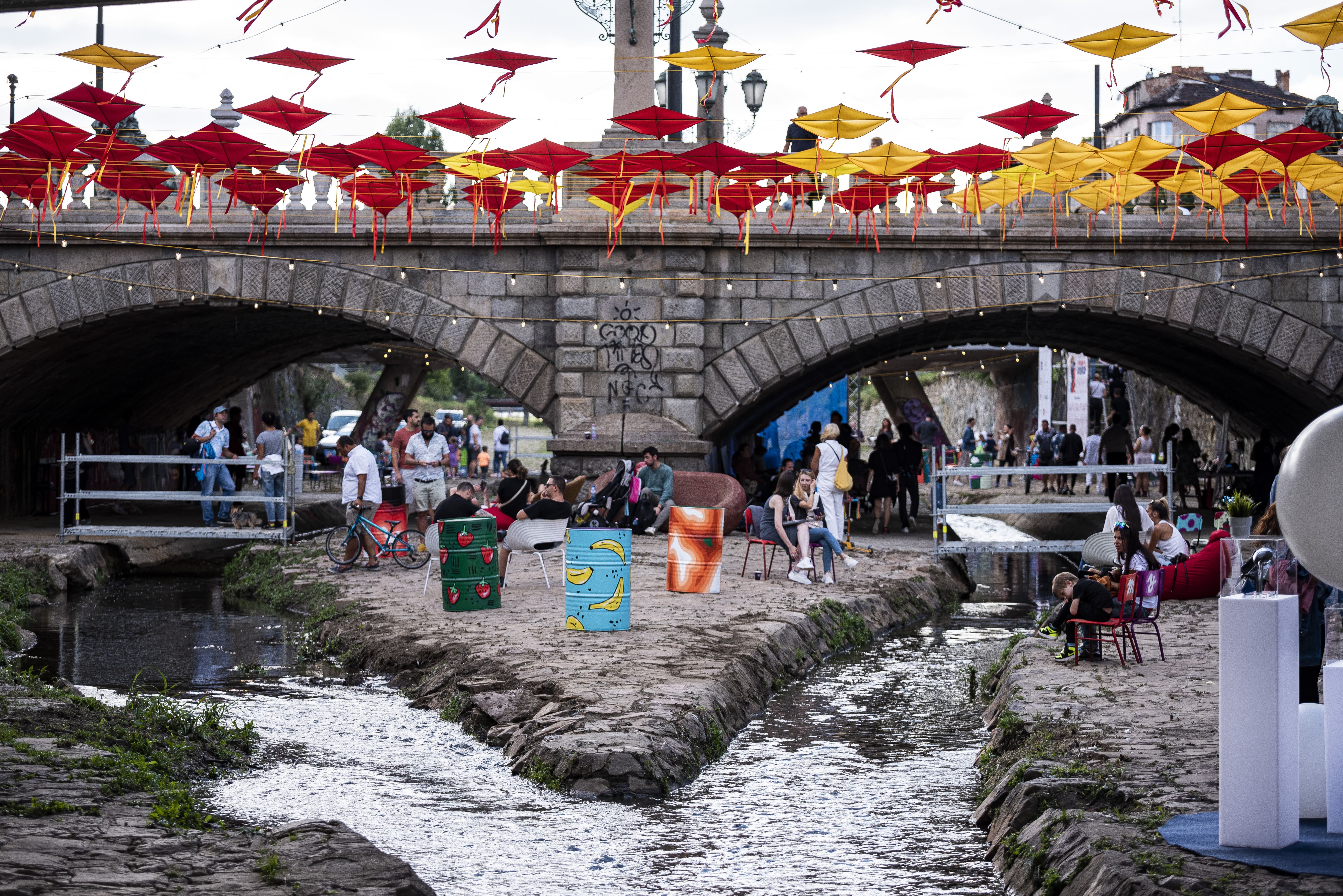
The methodology (outlined in an attached diagram) follows a structured process - from stakeholder mapping and site selection, through collective design, high-visibility interventions and media activation, to institutional alignment and policy impact. It targets undervalued spaces - such as polluted urban rivers - and rapidly reimagines them through collectively designed interventions and site-specific art. Within weeks, with the help of volunteers and partners, inaccessible areas become active public spaces, attracting thousands of visitors. These transformations act as powerful advocacy tools. Architectural interventions, cultural events and national media campaigns recode places in the public imagination - from invisible problems into desirable urban assets - generating pressure and legitimacy for institutional action. The initiative has engaged over 80,000 visitors at single events, reached over 1 million people annually, and activated a wide network of stakeholders.
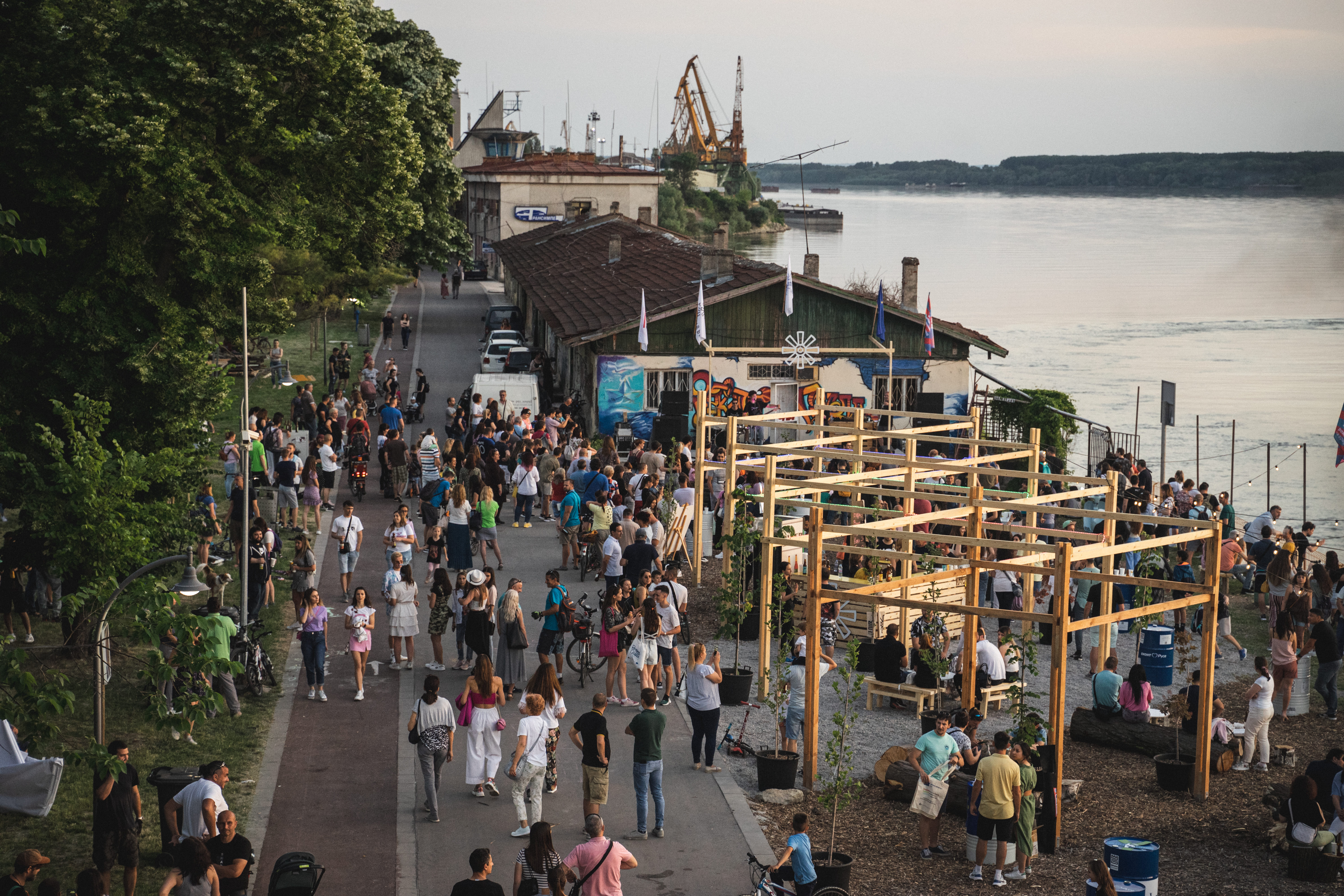
It has driven political action on cleaning sewage overflows, improving river conditions and urban ecosystems. It triggered new municipal investments in riverfront public parks in Sofia, emerging linear park connections between the mountain and the city, NEB-aligned urban strategies and investment focus for the riverfront in Gabrovo, and policy and strategic shifts in Ruse for activating its Danube waterfront. Collective Landscapes proves that small, community-driven actions can unlock large-scale transformation - offering a replicable model for other European cities.
Collective Landscapes is a methodology we developed while working on our longstanding campaign for urban rivers - first Rivers of Sofia, then scaled to the national platform Rivers of the City.
We were confronted with the way Sofia, Bulgaria’s capital, ignored the natural heritage of its 33 rivers, allowing them to turn into open sewers. The problem had been worsening for decades, with more sewage and waste dumped into rivers, alongside lack of maintenance and long-term vision.
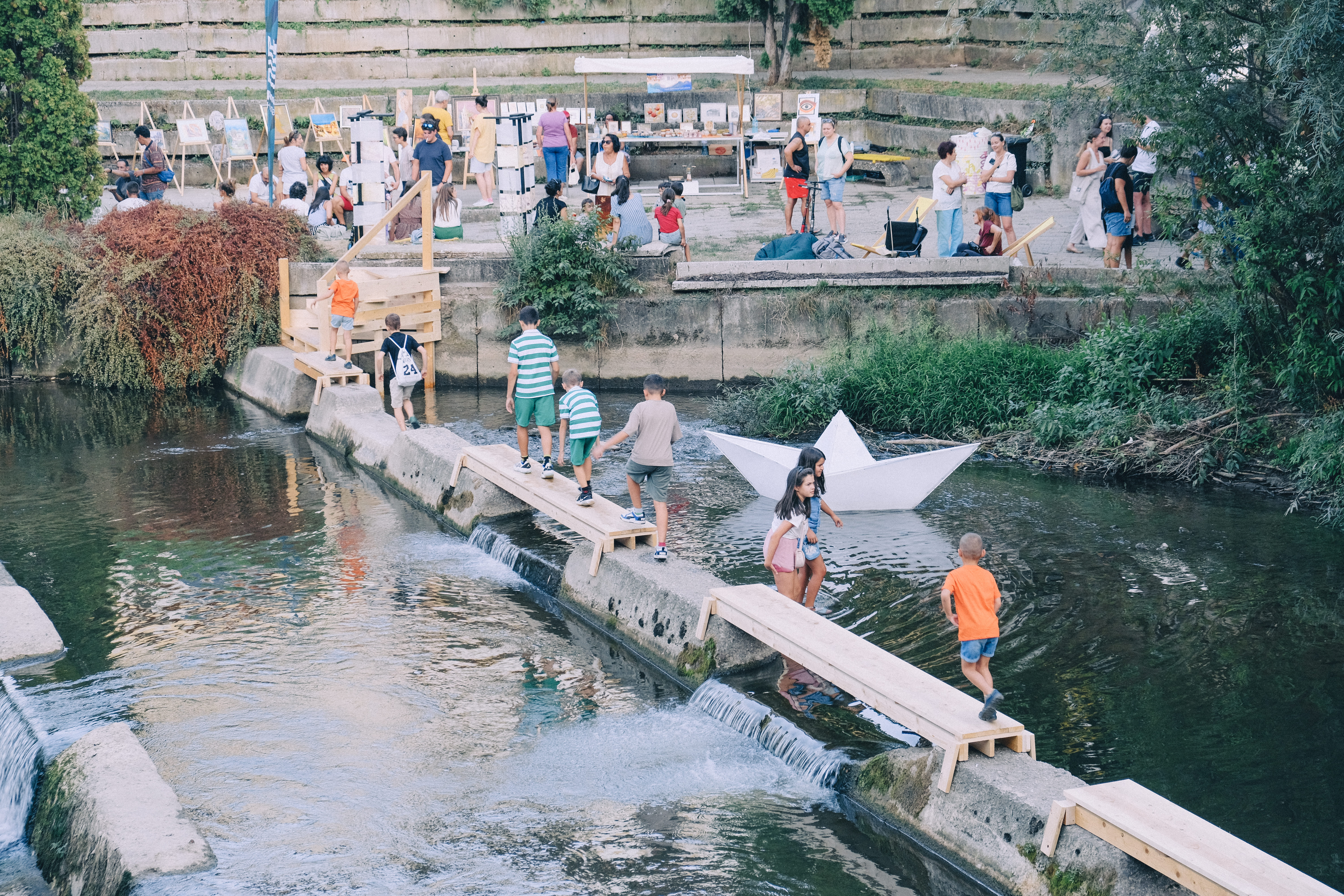
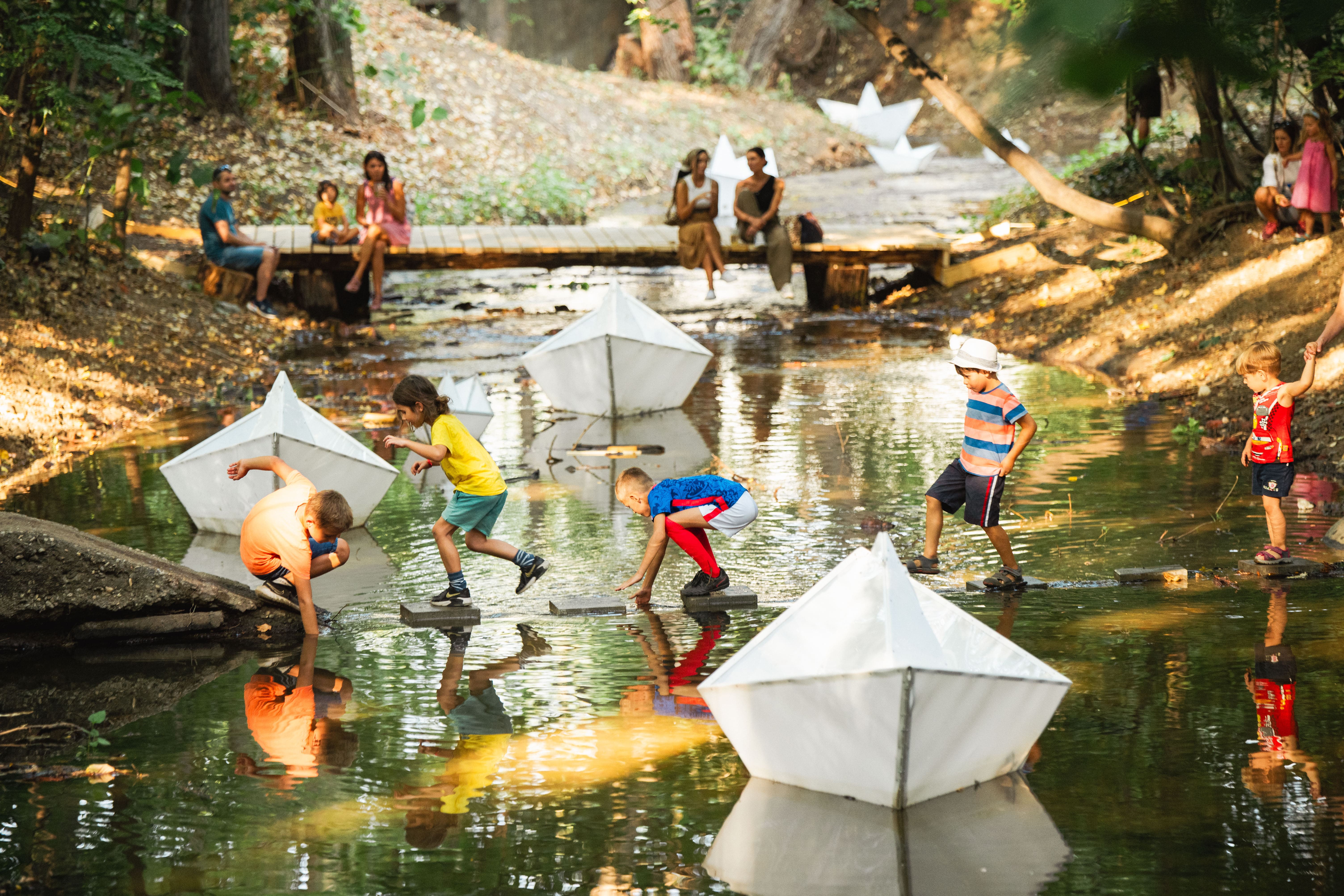
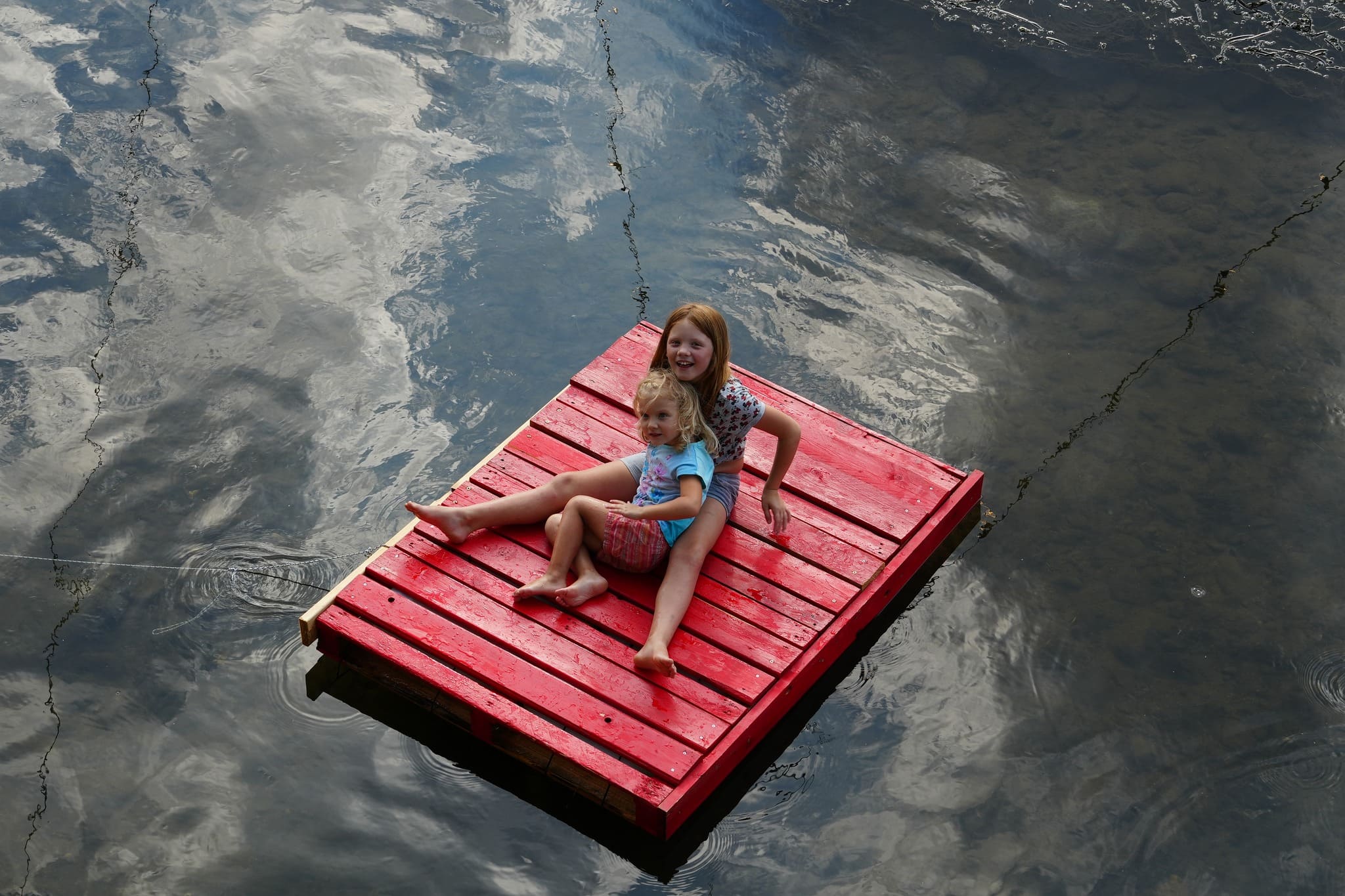
A large-scale problem like this can seem intractable. However, we used limited resources creatively. Most importantly, we built a strategic community around a shared vision for urban rivers. In 2020, we began interventions along their banks, using collective designs, communication campaigns and public events to reimagine some of the most polluted, neglected urban areas as cultural destinations. While the rivers’ problems are complex, we achieved improvements within weeks: modular stairs and bridges enhanced accessibility, and citizens rediscovered the rivers.
Over the years, Rivers of Sofia grew into one of the country’s most popular cultural platforms. The initiative built a strong network of volunteers, experts, institutions and commercial partners. The narrative of positive transformation proved widely attractive to the public and key stakeholders - effectively pushing decision-makers to act.
Institutions were engaged through conferences, workshops and memorandums, alongside tactical placemaking interventions. This led the municipality to translate proposals developed with our expert network into policy, shaping a vision for Sofia as a city defined by water. We have scaled this approach to 6 cities and are now applying it to another issue: the lack of quality public spaces in peripheral neighbourhoods through “Living Neighbourhoods (Ж.К. Живи квартали)”.
We have shown the method works across different urban contexts, and now aim to see it applied across different EU territories.
Participation
Bottom-up
Urbanism
Hacking
Methodology
Collective Landscapes is a methodology for sustainable, grassroots urban change. It builds momentum by engaging communities affected by urban challenges to co-create solutions through light, low-cost pilot interventions, using minimal construction, recycled materials and artistic creativity. These temporary transformations demonstrate new possibilities, generate public support and build multi-level coalitions around a shared vision for the city.
Dozens of community members participate in design sprints, while thousands experience the results through events at transformed sites. This creates a strong sense of ownership, ensuring that both spatial interventions and resulting policies are socially grounded and widely supported. Coalitions of nonprofits, local authorities, businesses and experts then contribute resources and expertise to scale these solutions at city level.
This approach is sustainable because it is not dependent on a single funding source, institution or political cycle. It grows organically, reinforcing solutions generated on the ground and supported across sectors. Collective Landscapes addresses environmental, social and cultural sustainability simultaneously.
In environmental terms, Rivers of Sofia contributed to the cleanup of 121 sewage overflow points, significantly improving water quality, urban biodiversity and public health, while reducing CO₂ emissions by redirecting wastewater to treatment facilities. Socially, the methodology creates inclusive processes where communities shape their environment. Culturally, it activates local identity through art and design, empowering creators and strengthening belonging.Collective Landscapes enables sustainability principles to inform urban policy by shifting agency from capital-driven development to community-led priorities. In doing so, it offers a scalable pathway for more resilient, inclusive and environmentally responsible cities across Europe.
Collective Landscapes is exemplary in the way it uses art and design as the main tools for urban change. The principle is to identify the most neglected, undesirable sites in the city, which represent deeply entrenched issues – and show their potential for beauty, motivating both communities and policymakers to care for them. The stories of rundown places blooming with innovative design, and the before-and-after images that show beauty restored, are drivers of communications success.
We do not emphasise on issues, but on communicating solutions via our main channels. We strategically demonstrate the possible beauty, showing the city in a new light – with more space for site-specific art and joy. The momentum this generates allows us to then motivate decision-makers to prioritise solutions. The core of the methodology are urban interventions that transform places following local communities’ dreams. Turning these dreams into designs that inspire awe, wonder, and pride in our shared places is what catalyses long-term change.
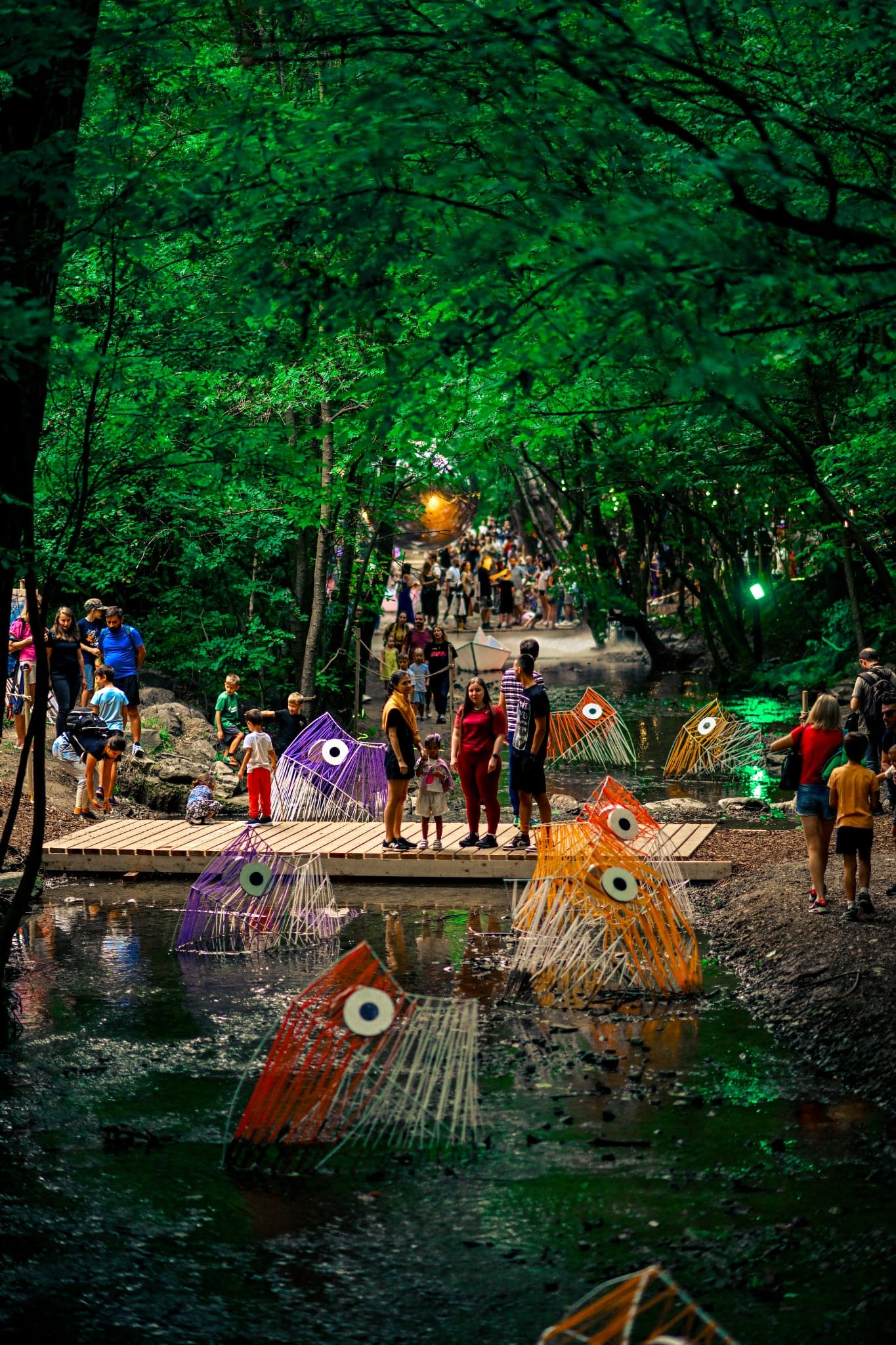
For instance, in the Rivers of the City campaigns across 6 cities, riverbanks are opened for public use and filled with site-sensitive design that highlights the natural beauty of a place. At the Rivers of Sofia last year, a nationwide competition for site-specific art led to installations that draw attention to the water, the vegetation around it, and the microscopic life within it. Subtle lighting turned the river itself into a showpiece as it got dark. Since then, the city’s mayor – who last year signed a memorandum pledging care for the rivers – has launched a macro planning strategy to connect urban districts and surrounding extra-urban areas via the rivers, as well as a public consultation about new public spaces and infrastructure improvements around one of the rivers. Collective Landscapes creates more beauty in our shared spaces with hands-on design work, and uses that to drive bold policy that would make more beautiful cities.
Collective Landscapes is inherently an inclusive process, offering a framework for bottom-up urban change that transforms grassroots initiatives into policy. The methodology is built around design sprints, where affected communities - representing diverse stakeholder groups - co-create solutions. These ideas are tested through small-scale pilots, activated by public events and amplified through communication, demonstrating their value and building support for citywide implementation. Urban priorities are set from below, validated by experts and translated into action by local authorities.
This inclusive approach is exemplified in Rivers of Sofia. Community members, artists, experts, media and institutions collaborated to reimagine neglected riverbanks through collective design and temporary interventions. Previously inaccessible and polluted areas were transformed into active public spaces, attracting thousands and engaging a wide spectrum of society. Through this radical inclusion of stakeholders, public and media, the process generates visible public demand - creating positive pressure that institutions cannot ignore.
Collective Landscapes advances “design for all” by creating a clear pathway from community ideas to policy implementation. It enables inclusive governance by ensuring that those most affected by urban issues actively shape their solutions.
The methodology is currently applied to in-between building spaces in peripheral residential neighbourhoods, addressing the lack of quality public space. At the same time, it is highly adaptable and replicable across a wide range of European urban challenges and contexts - from accessibility and housing to environmental transformation. By turning participation into tangible outcomes, Collective Landscapes empowers communities to create more equitable and resilient urban environments.
Collective Landscapes involves stakeholders at different levels. On the ground, members of affected communities work in facilitated design sprints to propose transformations of pilot sites that represent complex urban problems. They lead the process with their ideas, alongside experienced architects and urbanists. Facilitators ensure experts empower community members to give practical shape to their ideas, without imposing ready-made solutions. This way, locals lead site transformation and define solutions that can be scaled to the city level.
We also involve civil society organisations as horizontal partners to implement the Collective Landscapes method in their contexts. Especially in cities outside our hometown Sofia, we empower local actors to utilise the method. Our core advice remains consistent: build an alliance around your urban cause. We provide partners with the written methodology (attached to this application) and support them in applying it. In Ruse, Veliko Tarnovo, Stara Zagora and Troyan, for example, we have been involved for one to three years to directly lead campaigns for revitalising riverside areas — facilitating design sprints, organising events and recruiting partners. After this initial period, we cede leadership to local NGOs to continue the process, while remaining available as advisors.
On additional levels, we engage business and media partners, as well as a pool of experts. Each site transformation is implemented with corporate partners who provide funding and co-brand elements of the project in context-sensitive ways, while traditional media amplify the campaign to broad audiences. These partnerships add momentum to advocacy efforts. In parallel, we regularly convene expert groups of urbanists, civil engineers and architects to advise on technical implementation and legal frameworks, responding to the needs of local communities.
Collective Landscapes begins with empowering community members to build pilot versions of their dreams in targeted urban interventions, and continues with involving stakeholders at all levels. Independent experts validate community-generated ideas and translate them into technical projects and policy proposals – for instance, in the case of Rivers of Sofia, our expert advising group created a legal proposal outlining how the municipality can administer the land adjacent to urban rivers. Meanwhile, visual and spatial artists, decorators, and lighting designers work to implement community visions and to give them a distinctive form that locals recognise and delight in.
We enter into direct dialogue with local policymakers to advocate for solutions devised via Collective Landscapes to become the norm – for instance, clean accessible rivers, hyperlocal community and cultural spaces, or IOT flash flood warning systems. The methodology allows the activists to position as trusted partners that have legitimacy and broad support, and represents grassroots interests while offering expert solutions. We scale this approach to the national level, and already it is active in cities where creative site transformations serve to shift narratives of how those cities should develop - in our case: by prioritising public access to rivers and river restoration.
On the European level, we are also actively working to popularise this approach so that we can make progress on society’s most complex issues. Our organisation is a co-founder of the New European Bauhaus on the Danube, a NEB Lab initiative where we share our hands-on methodology with higher-level partners across the whole Danube Region and disseminate them via conferences, summer schools, and pilots in cities outside our country. For instance, in the international project D.Dance Alliance, we facilitate community-led site transformations in 5 cities in the Western Balkans, demonstrating the method’s potential on EU level.
Collective Landscapes brings together all the fields that play into making a well-functioning city: community organising, architecture and design, the arts, urbanism, civil engineering, media, policy, environmental science.
The method begins with identifying an urban issue and hotspot sites that exemplify the issue. Then, community workers organise locals, utilising best practices from the field like trusted messengers and active listening. At design sprints, community members representing different social groups join a facilitated process with architects and designers, on an equal footing, to develop design proposals. Artists work with the architects and community members to give form to their visions.
Building on this community and design work, an advising group of urbanists and civil engineers with policy experience work on city-level proposals that scale the ground-level solutions from pilot sites. They determine ways goals like accessible rewilded rivers could become reality citywide, and the funding models and new governance structures that this would entail.
The method involves environmental science, as well, if it is applied to urban nature. In the case of rivers, our campaign involved a research project in 2024-2025 that gathered original data on one of the rivers, following its entire length within the city and collecting samples to measure levels of pollution and map their sources. In an innovation leap, a mobile app was adapted for mapping rivers whose beds have moved – for a fraction of a typical survey’s cost. This data informed policy proposals that respect community needs and urban nature’s condition. Finally, experienced advocates present all this to municipal decision-makers – leading to the mayor signing a memorandum supporting the campaign for rivers.
Collective Landscapes is a project implemented by residents, artists, architects, researchers, urbanists, engineers, with the goal of solving urban issues that transcend disciplines.
9. Collective Landscapes is sustained through a diversified financial model combining partnerships, self-generated revenue and public funding. While we have leveraged public funding and donations, the model increasingly operates independently of them.
At its core is a multi-level, symbiotic partnership model with the private sector. Businesses act as active stakeholders, aligning their advertising, marketing, CSR/ESG and HR budgets with tangible urban impact.
The high visibility and aesthetic quality of our interventions - transforming neglected spaces into vibrant public destinations - create unique opportunities for brands to position themselves meaningfully. We have developed "sponsorship packages" offering site-specific co-branding and communication campaigns where companies gain authentic exposure while contributing to public value.
Our projects also enable corporate volunteering, engaging employees in purpose-driven actions such as cleaning polluted river areas. These initiatives are often funded through employer branding and internal engagement budgets, creating a win-win model for businesses, communities and the environment.
In neighbourhood projects, we apply in-kind and barter partnerships: companies provide materials or services in exchange for creative, context-sensitive visibility.
Events and festivals generate additional revenue through temporary uses of space, including partnerships with mobile vendors and local producers.
This hybrid model - combining public interest, private engagement and self-generated income - ensures flexibility, scalability and reduced dependence on single funding sources, while strengthening advocacy through active corporate support. We regularly organise workshops with other activists across Bulgaria and EU to share this model and scale its impact.
We are currently adapting and transferring Collective Landscapes to other cities across Bulgaria through workshops with other urban activists, while sharing it internationally particularly within the New European Bauhaus on the Danube NEB Lab initiative and network.
The methodology is highly transferable at multiple levels: from building stakeholder alliances, to delivering cost-effective, high-impact design interventions, to organising events that combine site-specific art with broad media and public appeal, and facilitating design sprints where residents and experts collaborate as equal partners. Our business model - integrating advertising and private-sector engagement - also offers a scalable funding approach. In addition, with our expert community we have developed practical tools, such as adapting a mobile app for mapping riverbeds and urban elements, which strengthen advocacy through site-specific data-driven insights.
Translating six years of practice into a coherent methodology enables replication across diverse contexts. We believe that combining strategic urban interventions with advocacy can accelerate meaningful change on Europe’s most pressing challenges - from social division and affordability to environmental degradation.
Our key insight is that even the most complex urban issues can be unlocked by starting with imaginative, community-led and visually compelling transformations, supported by positive communication. These interventions shift perception, activate public engagement and turn what once seemed impossible into clear policy priorities.
Collective Landscapes demonstrates that small, hopeful actions on the ground can catalyse large-scale change - capturing attention, mobilising communities and driving long-term urban transformation.