Enhancing Circularity, Sustainability, and Innovation
Compartiment Sharing Station
Compartiment Sharing Station: Helping communities to borrow more and buy less
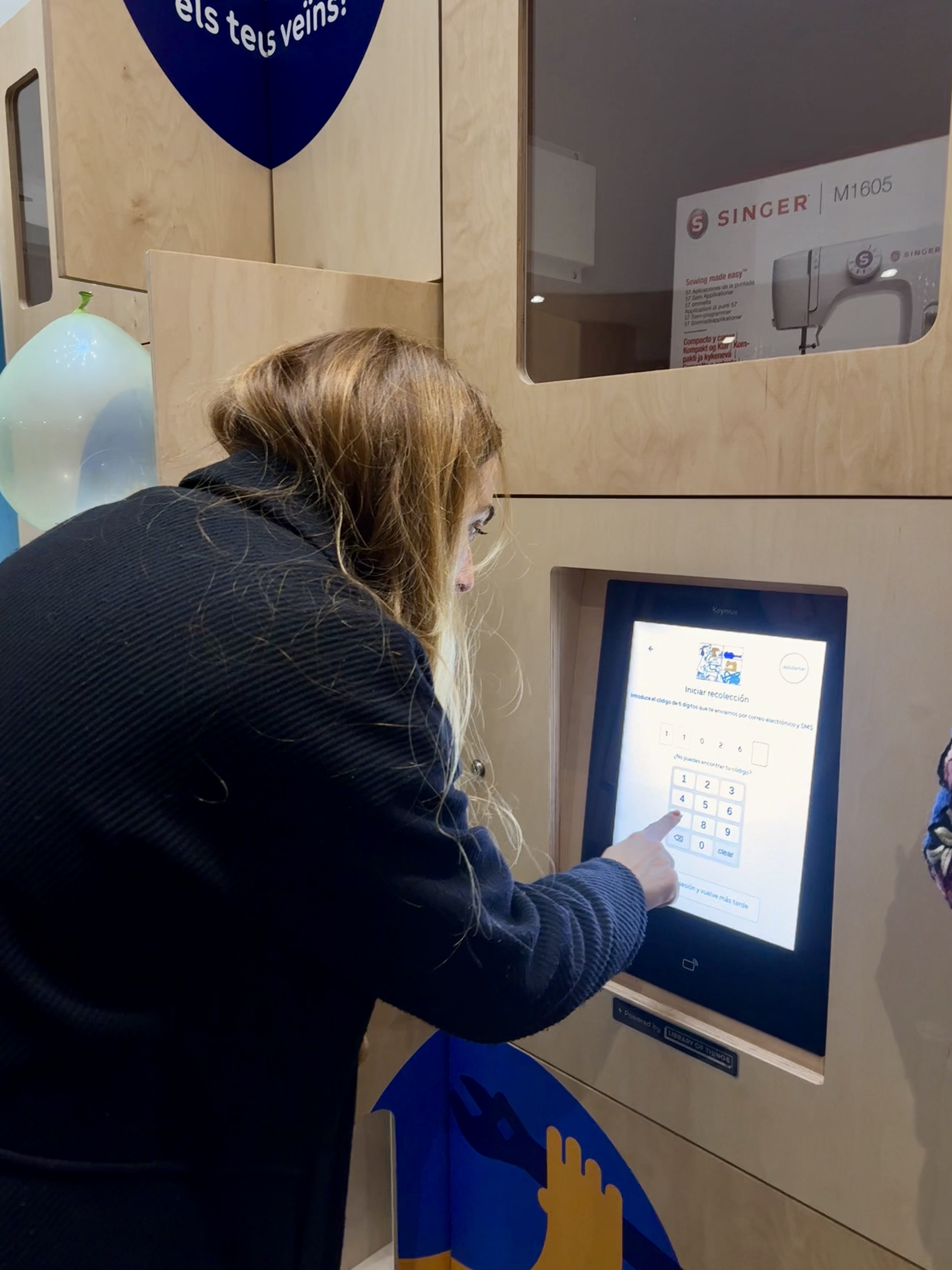
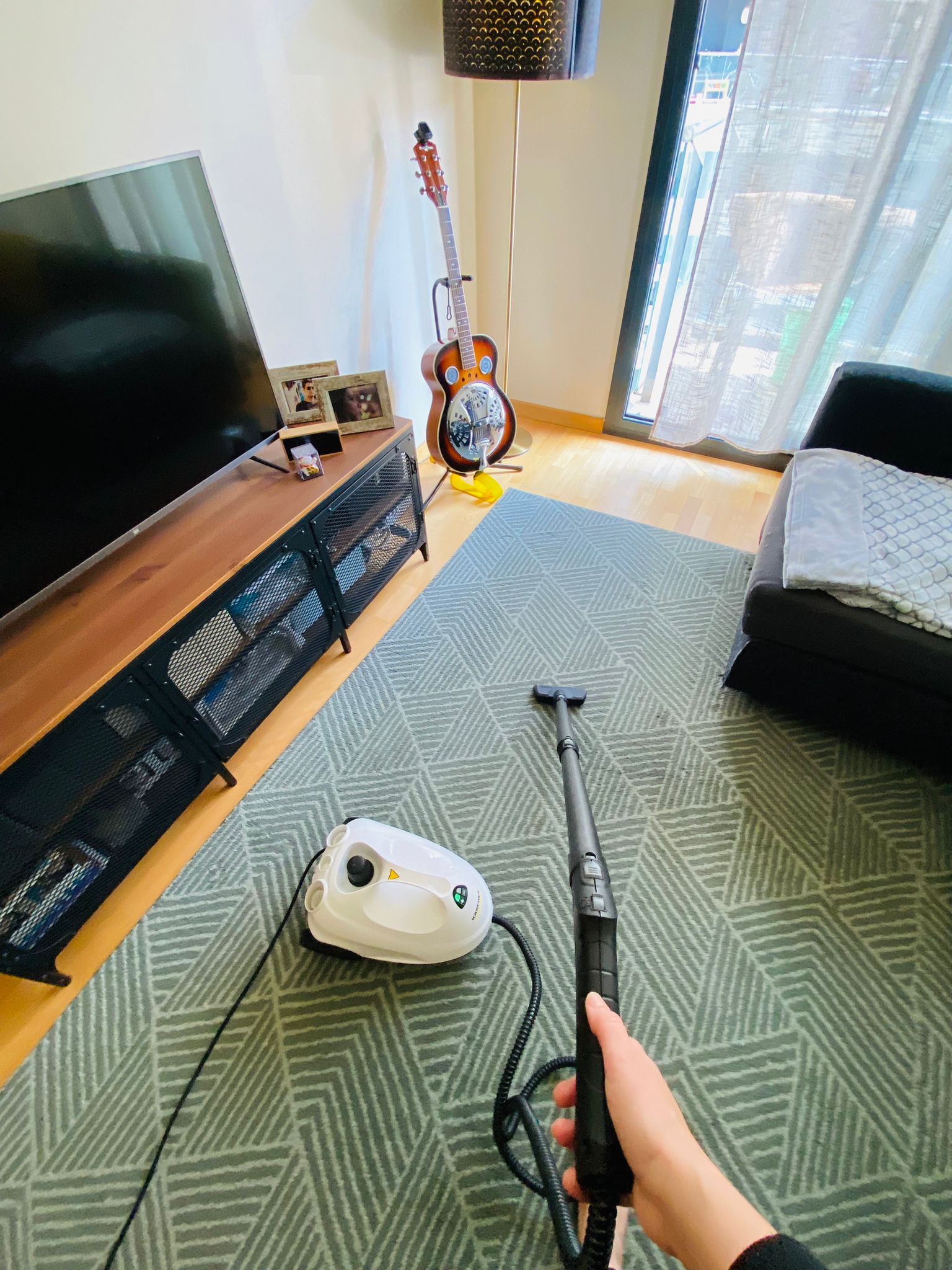
What if you could borrow a drill, a vacuum cleaner or a sewing machine from your building lobby - any time of day, for free? Compartiment is a self-service sharing station we installed in a Barcelona apartment building, giving residents easy access to everyday items. Part circular economy initiative, part community builder, it is proving that item sharing can be as easy as buying - and is already inspiring a growing movement of sharing stations across Europe.
Spain
Local
Barcelona, La Sagrera
Mainly urban
It involves a physical transformation of the built environment (hard investment)
Yes
2025-02-20
No
No
No
Organisation
Sharing practical tools and everyday items with neighbours is an age-old marker of mutual support, safety and trust. But with buildings and neighbourhoods across Europe becoming increasingly anonymous, it's a practice that many children born today may never experience. Compartiment set out to change this.
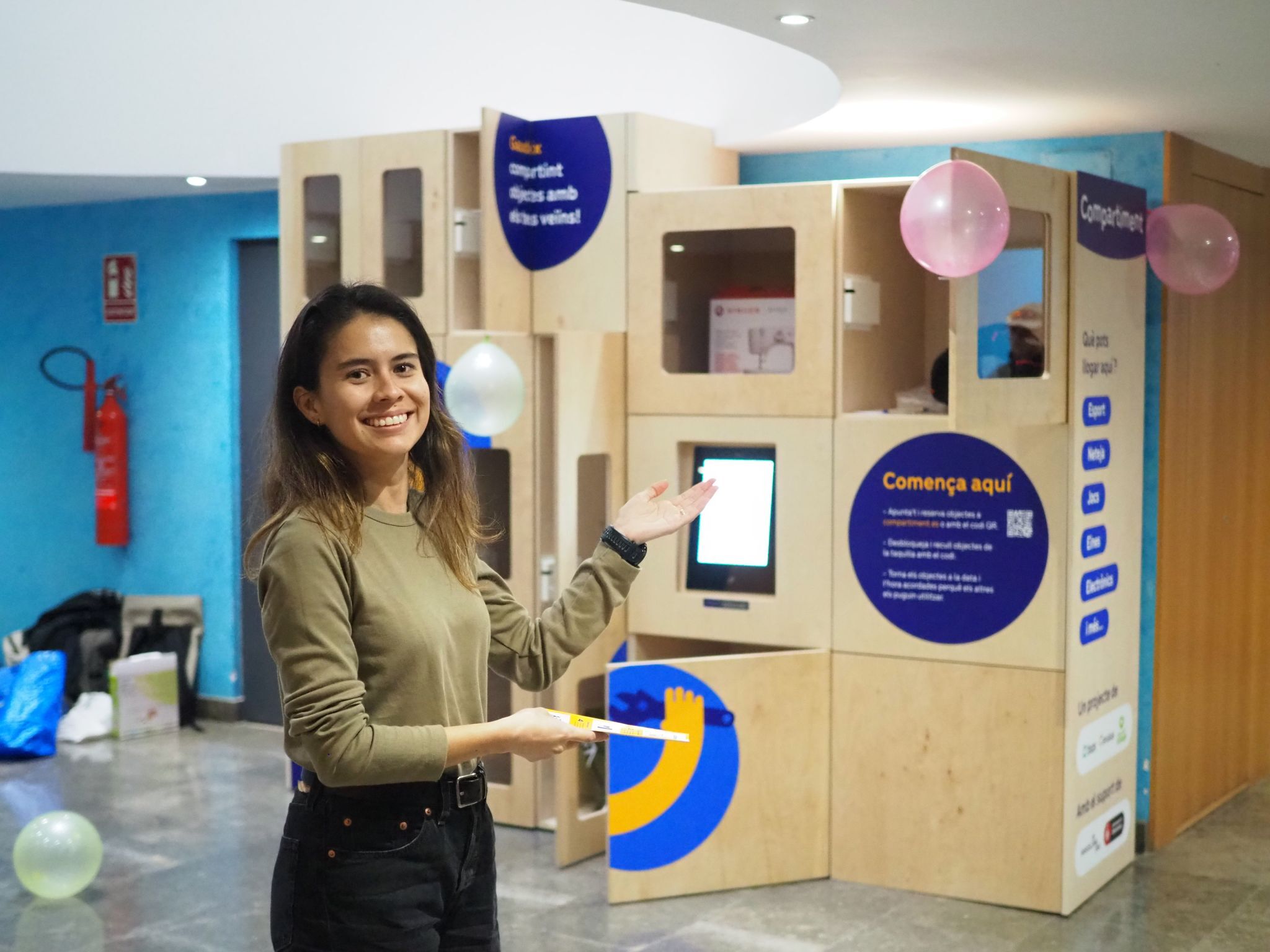
Launched in February 2025 in a Barcelona apartment building, Compartiment is a free, self-service sharing station where residents can borrow everyday items - from a sewing machine and vacuum cleaner to board games and more. Its primary beneficiaries are the residents of the apartment building, with housing providers and municipalities across Europe identified as key secondary audiences for replication.
Its objectives were threefold: to prove that sharing stations can support the circular economy by changing residents' consumption habits; to improve residents' quality of life through more affordable access to everyday goods and a renewed sense of community; and to develop a replicable model for housing providers and municipalities across Europe.
Since launching, half the building's residents have signed up, with a core of regulars returning weekly. Feedback shows the station is already having a tangible impact: helping people save money and space, and fostering a renewed sense of community by increasing interactions between neighbours and transforming the lobby into a shared extension of the home.
Learnings from Compartiment fed directly into the EU-funded Digital Kiosks project, now rolling out 22 sharing stations across eight European cities - turning a single pilot into a continent-wide movement, and proving the model works at scale. Above all, the project shows how sustainability and community can grow hand in hand. By sharing resources, residents interact more with neighbours, care more for shared goods, and rebuild the social fabric that underpins resilient cities.
Compartiment grew out of our team's broader mission: helping society shift from linear consumption to circular use. Our ambition is to make borrowing everyday items as easy as buying them. Sharing stations - self-service lockers where people can borrow everyday items - are one key tool in turning this vision into a reality. Just as going to your local parcel locker to pick up a package has become a familiar part of our consumption routine, why not transform this habit into a sustainable practice? For this to happen, sharing infrastructure needs to become as visible, accessible, and second nature as parcel lockers have recently become.
Our hometown of Barcelona gave us the perfect place to test that idea. Small apartments leave little room for occasionally used items, while tourists and short-stay visitors rarely travel with bulky equipment - a sharing station felt like an obvious practical response to both. But rather than simply advise others on how to do this, we wanted to build and live the experience ourselves, from the ground up.
Development followed a hands-on, co-design process: working with local housing provider Cevasa, we identified a suitable location and sharing station provider, collaborated with building residents to design the station and select the right items, then launched and marketed it ourselves. This end-to-end experience was deliberate - first-hand knowledge would be essential for credibly advising municipalities, housing providers, and other organisations wanting to replicate the model.
Our original vision included a publicly accessible station for Barcelona's wider community, but municipal restrictions meant this wasn't possible. Rather than a setback, this pushed us to think bigger: lessons from Compartiment fed directly into the EU-funded Digital Kiosks project, now bringing sharing stations to public-facing locations across eight cities in North-West Europe - and proving the concept is ready to scale.
Circular economy
Sharing and reuse
Sustainable consumption
Urban innovation
Community co-design
Environmental: Europe's circular economy strategy has long prioritised recycling - but this alone is insufficient. The real gains lie further up the chain: in reducing goods produced and reusing items for longer. Every rental at a sharing station is a product not bought, a resource not extracted, emissions not generated. Studies have found that one in two rentals prevents a purchase, and that if Lyon's one million residents each rented just one item per year, over 58,000 tonnes of CO2 equivalent would be avoided. Sharing stations make the most impactful R-strategies - refuse, reduce, reuse - practical and accessible in everyday life.
Social: Loneliness is one of Europe's fastest-growing public health challenges. Sharing stations offer an unexpected antidote. When neighbours share the same drill or pasta maker, they build connections with formerly anonymous neighbours. In Compartiment's case, this has already happened: one resident began offering sewing lessons so her neighbours could make the most of their communal machine. This virtuous cycle quietly rebuilds the trust and reciprocity that modern urban life has eroded.
Cultural: The shift from ownership to access is already underway - platforms like Vinted and Getaround have shown that people embrace shared goods when the experience is easy and convenient. Sharing stations extend this logic into physical, local spaces, helping make borrowing instinct rather than a last resort - a key behavioural shift the circular economy requires.
Economic: Sharing stations give everyone access to high-quality items - power tools, specialised kitchen equipment, outdoor gear - that many households couldn't otherwise afford, reducing financial pressure on lower-income residents.
Why it's exemplary: Most sustainability measures ask people to give something up. Compartiment does the opposite: it gives people more access, more space, more community - while delivering genuine environmental benefit.
Aesthetics were a deliberate consideration from the start. Compartiment uses Library of Things lockers - chosen in part for their design quality. Crafted from natural wood with clean, considered lines, the station feels like a design piece rather than a utility fixture. This matters: given our team's ambition to make item sharing as easy and normal as buying, we need more sharing stations, and for people and cities to want them, they need to be beautiful. Research in environmental psychology also shows that people take greater care of beautiful, well-designed spaces, and a sharing station depends on that care.
That care runs deeper than aesthetics. The station was co-designed with residents, who were invited to choose the items stocked in their own building. This process did something quietly powerful: it gave people a shared stake in a shared space. The lobby - typically somewhere you pass through - became a place residents had shaped together, extending the feeling of home beyond the private apartment into a new, collective sphere. That sense of ownership carries through to how people treat the items too - residents care for what they chose, knowing their neighbours are relying on the same things.
This also distinguishes sharing stations from parcel lockers now common in public spaces. Those belong to the linear model: you buy, you collect, the item is yours. A sharing station operates on an entirely different logic - you borrow, you use, you return, someone else does the same. That circularity changes your relationship to the object and to the space itself.
Sharing stations, at their best, transform overlooked spaces into living infrastructure that reflects the values, needs and priorities of the people who use them. Imagine that logic extended to workplaces, municipal buildings, parks and libraries: spaces filled with stations designed with beauty and community in mind, becoming anchors for a new kind of urban life.
Sharing stations are, at their core, an inclusion tool. Compartiment is free to use and stocked exclusively with high-quality items - a deliberate choice that ensures durability and also means residents can access goods they might not otherwise afford. A good drill, a pasta maker, a specialised kitchen appliance: these become available to everyone in the building, regardless of income.
Physical accessibility was also considered from the outset. During the co-design process, we investigated the specific disability-related needs of the residents, which were incorporated into the station's placement and setup to ensure it was fully usable by all members of the community.
Communication and usability were also designed with accessibility in mind - the borrowing process was made as simple and frictionless as possible, with clear instructions and an intuitive interface that is clear to residents of all ages. This thinking has since been formalised: accessibility is now one of the core guiding principles of the Digital Kiosks project, shaping how all 22 stations across eight cities are being designed and deployed.
Beyond access to goods, sharing stations point toward a new societal model - one where quality of life is measured not by what you own, but by what you can access. This shift is already visible in car and home-sharing platforms, which have opened up experiences previously out of reach for many. Sharing stations extend this logic further, into everyday life - making high-end household tools and appliances, as well as sports and leisure equipment (like skis in the case of some Digital Kiosks sharing stations) accessible to all.
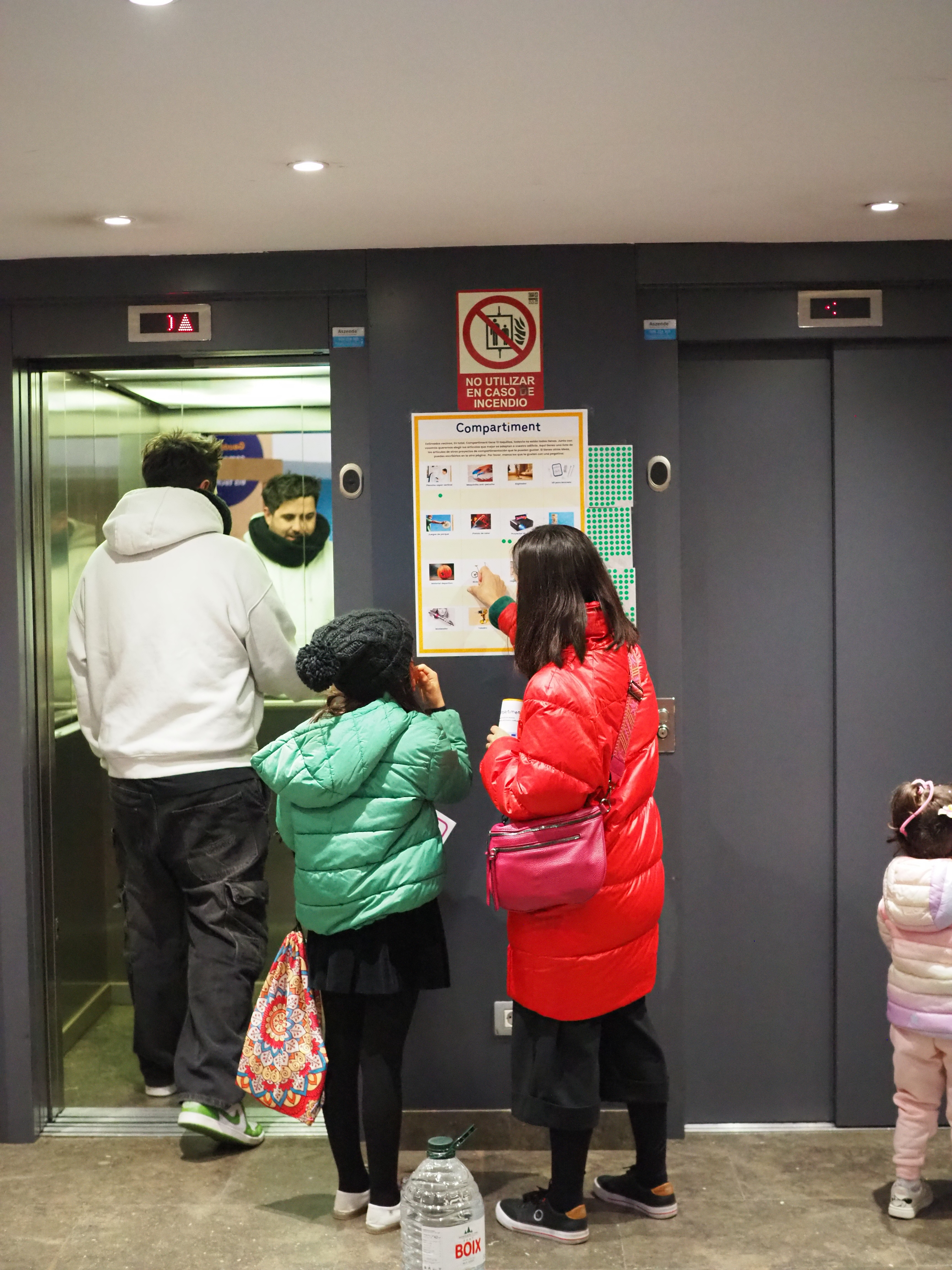
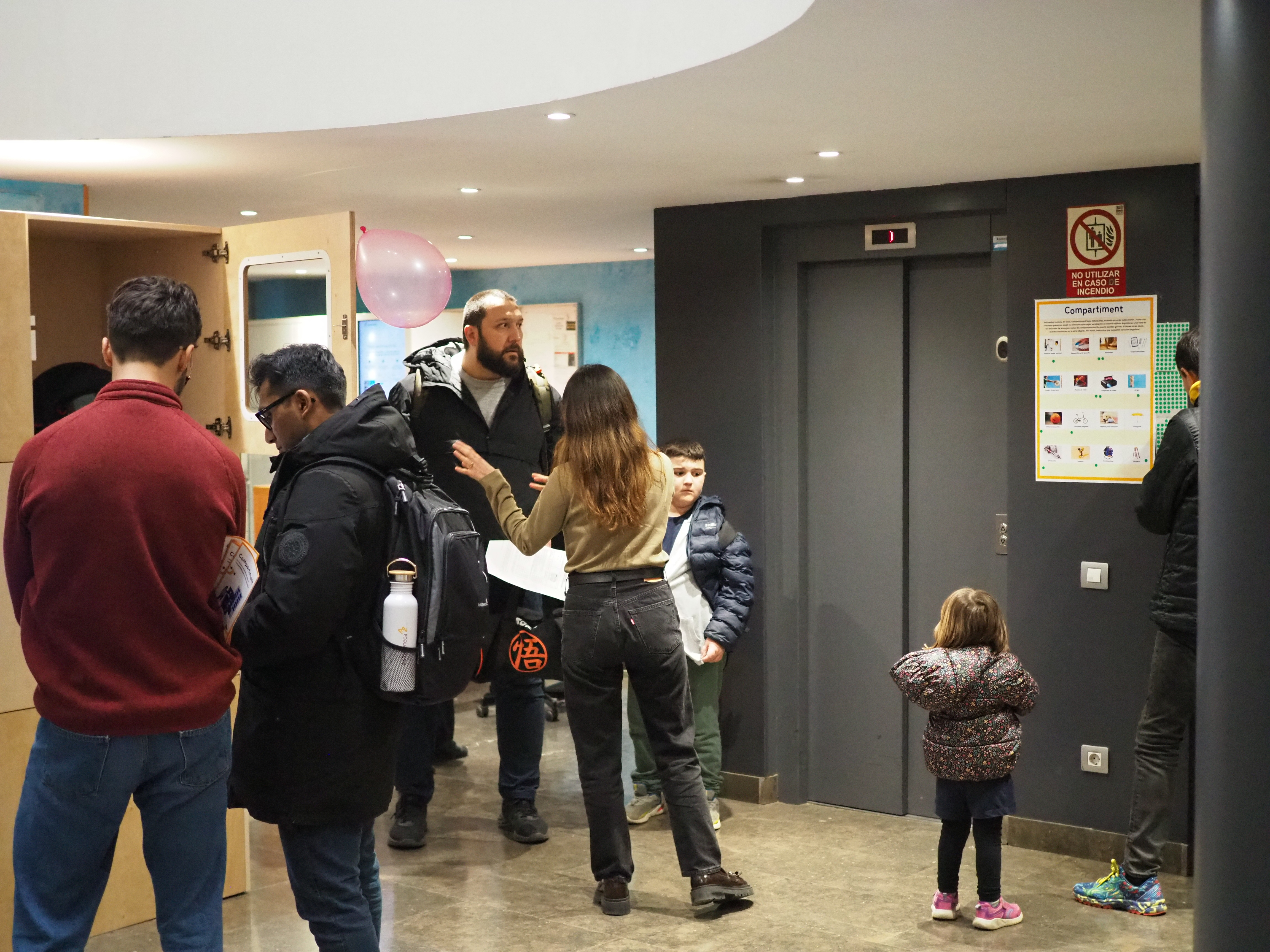
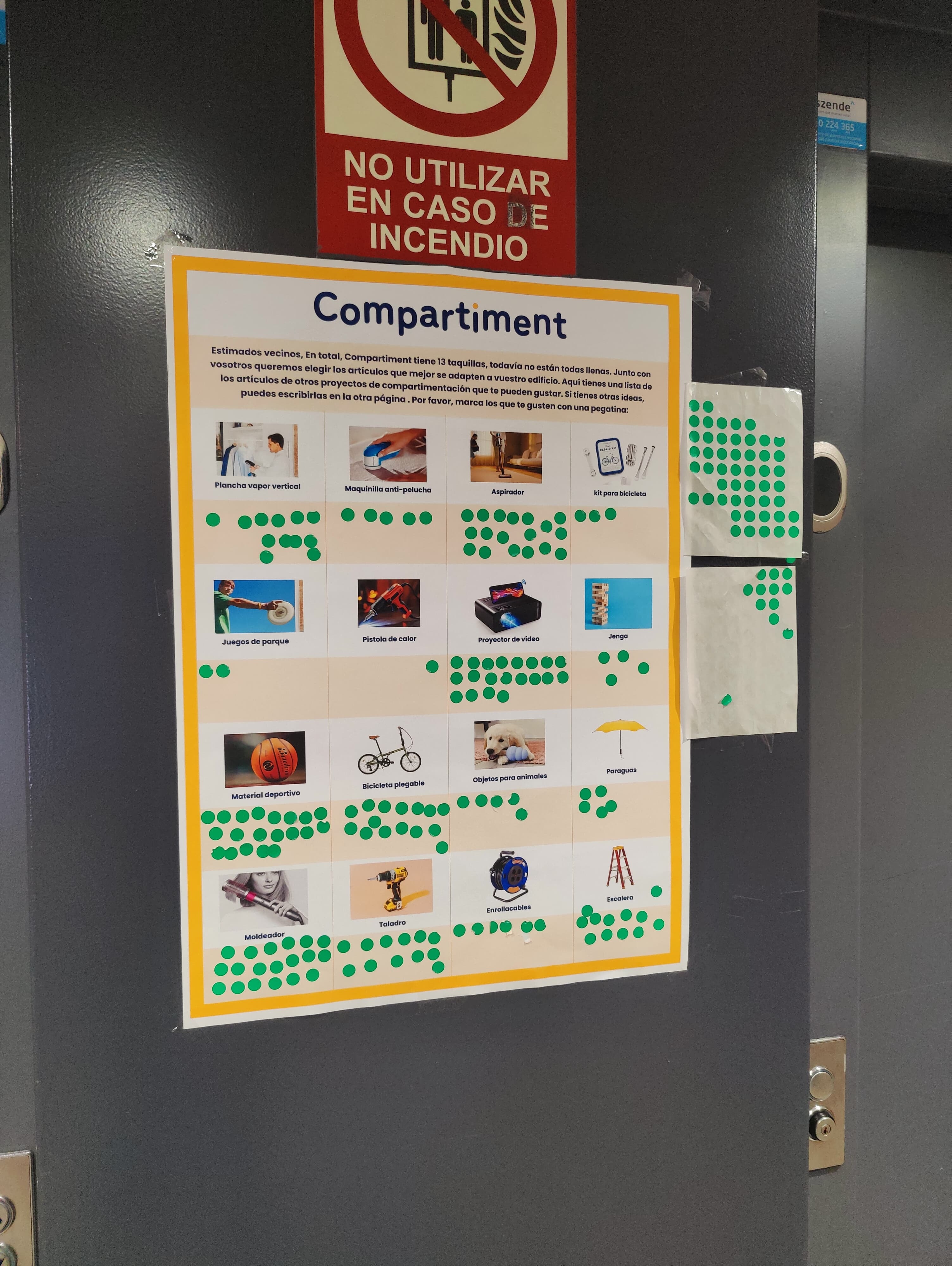
Compartiment was shaped together with the people who would ultimately use the service. While we began by selecting a set of items based on what had worked well in other European contexts, we quickly opened the process to residents themselves. Through simple mechanisms, inviting suggestions and setting up posters where people could vote with stickers, we made it easy for everyone to share their needs and priorities. Placed in common areas and supported by an in-person session, this approach generated a wide range of inputs and helped surface not only popular items, but also more diverse needs that might otherwise have been overlooked.
Co-creation did not stop there. As the service was introduced, we stayed in close contact with users, continuously gathering feedback through everyday channels like WhatsApp conversations. This allowed us to respond quickly to practical challenges, adapting how items were stored, transported, or communicated about. Small improvements, such as adding wheeled boxes for heavier equipment, made the service more usable and inclusive over time.
We are now deepening this process by speaking both with frequent users and those who have not made use of the service yet. These conversations are helping us refine the service design, adjust the selection of items, and improve how the service is presented, ensuring it becomes increasingly relevant and accessible to a wider group of residents.
The project was developed through a mix of local collaboration and wider European exchange, with each partnership adding distinct value at every level.
At the neighbourhood level, we worked closely with Cevasa, the building's housing provider, combining their knowledge of residents and the building with our own approach to service design. This grounded the project in its local context while allowing responsibilities and resources to be shared effectively - and gives us a trusted local partner for future expansion.
At the city level, we connected with Barcelona's broader circular and sharing economy ecosystem through an event that created space for collective reflection on new models of consumption beyond the Compartiment project. We also partnered with Rezero, a zero-waste advocacy organisation, to explore how sharing stations could be scaled across the region - bringing policy knowledge and advocacy networks that our team alone couldn't access.
Beyond Barcelona, the project benefits from European-level expertise and exchange. Our sharing station hardware and software is provided by Library of Things, a pioneering UK-based sharing initiative whose experience informed both our setup and our approach. We are also sharing Compartiment's learnings through the Access Economy Alliance, Europe's first network advancing the circular economy through access-based services, which we manage. This allows insights to travel between cities like Amsterdam, London and Paris where similar approaches are being tested.
Finally, the EU-funded Digital Kiosks initiative - rolling out 22 sharing stations across eight cities with six municipalities, a housing provider and a repair shop - shows how a neighbourhood pilot like Compartiment can directly inform policy and practice at European scale.
Compartiment draws on a range of disciplines, each playing a concrete role in shaping a service that fits naturally into everyday life.
At its core is service design - used to rethink how shared resources can become part of daily routines rather than feel like an added effort. This was closely informed by the social sciences: understanding how people build trust, adopt new habits, and relate to shared spaces was essential to designing a service that residents would actually use and care for.
Urban planning and housing expertise shaped how we thought about the physical placement and integration of the station - not as a utility fixture bolted onto existing infrastructure, but as a considered addition to a communal space with its own social life.
Creative practices played an equally important role. Working with designers, we developed a visual identity and communication approach that makes the service feel approachable and relevant - lowering the barrier to first use and helping residents understand the concept at a glance.
Environmental science and circular economy research underpinned our broader framing, grounding the project in evidence around consumption patterns, resource use, and the upstream gains of reuse and reduction over recycling.
Finally, digital technology allowed us to bring the concept to life without building from scratch. By partnering with Library of Things, a UK-based provider, we adapted existing tools to the local context - combining technical reliability with the flexibility a community-driven service requires.
The business model is still evolving alongside the service itself. For now, access remains free, allowing residents to become familiar with the concept while we explore, together with them, what forms of payment would feel acceptable and fair. Rather than imposing a model upfront, we are testing different possibilities,from pay-per-use, to monthly memberships, to integrating the service directly into rental costs.
At the same time, we are working to reduce operational costs as the service matures. Continuous improvements in how the system functions, both technically and logistically, are making it more efficient and less costly to maintain. This creates conditions for a lightweight model in the future, where costs could be shared between users and the housing provider, or embedded within the overall management of the building. We are also exploring to what extent different community members would be interested in maintaining the service themselves directly.
Rather than fixing a solution too early, the focus has been on building usage and learning from real behaviour. The business model is therefore being co-created, shaped by both residents and partners, and will emerge as the service becomes more established.
Replication was central to Compartiment's purpose from the very beginning. We didn't launch a sharing station simply to serve one building - we launched it to prove a model that could be applied to residential buildings, public spaces, and community hubs across Europe. Our broader ambition is a continent where sharing is as easy as buying, which means sharing stations need to be accessible everywhere, and launching them needs to be straightforward for any organisation that wants to try.
Every step since has been oriented toward that goal. The learnings from Compartiment fed directly into the EU-funded Digital Kiosks project, which was designed to test how the model transfers across different organisational contexts - six municipalities, a housing provider, and a second-hand and repair shop are all deploying sharing stations across eight cities in North-West Europe. Each brings different constraints, communities, and operational realities, making the project a rich testbed for replication.
The most tangible output of this process is the Sharing Station Toolkit (soon to launch) - an end-to-end guide for anyone wanting to launch and run their own station. Modelled on the clarity of an IKEA manual, it covers the sharing station concept and its benefits, how to design and deploy a station, an overview of available providers, and a guide to ongoing operations and community engagement.
Together, Compartiment, Digital Kiosks, and the Toolkit form a replication ecosystem: a proof of concept, a scaling mechanism, and a practical resource - ready for any city, organisation, or community that wants to take the next step towards a society where sharing becomes as easy as buying.