Strengthening Local Democracy and Inclusion
Unconquered
Unconquered: Expanding a Veteran Nature-Based Healing Space in Rural Ukraine
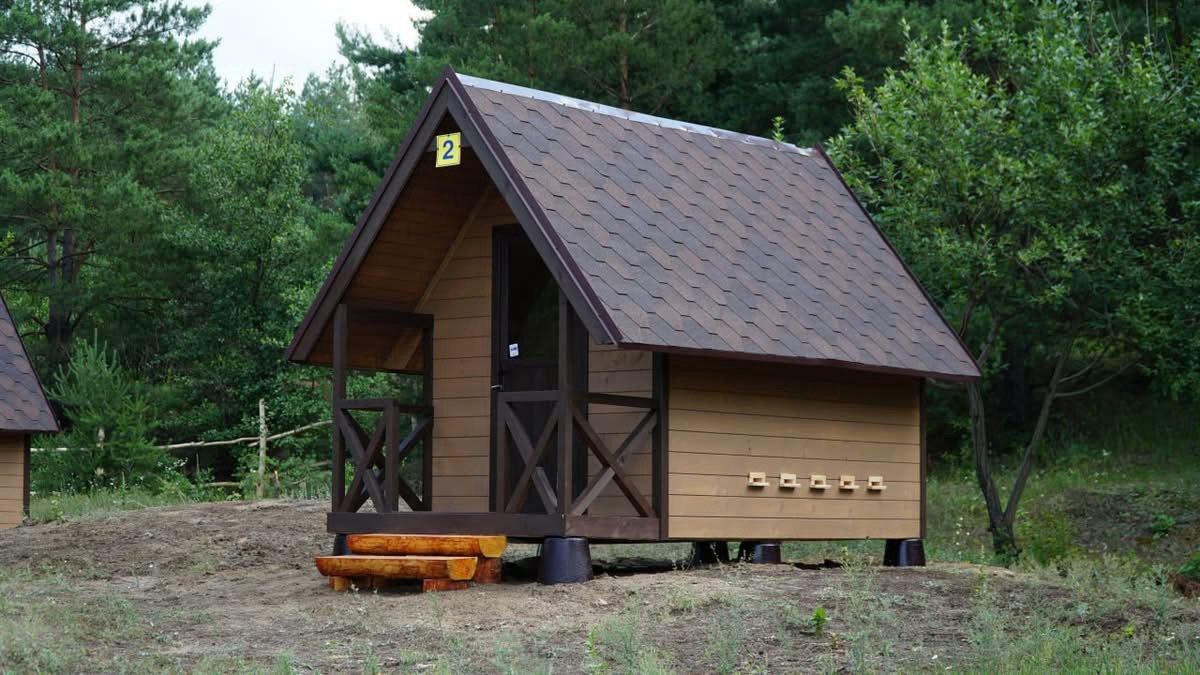
The “Unconquered” veteran space is a community-led healing and recreation area located in a forest near Naraivka village (Vinnytsia region, Ukraine). Created by veterans and local residents, it combines apitherapy houses, nature-based recovery, and community events for veterans and their families.
With NEB support, we aim to expand the space by installing modular accommodation, a children’s playground, and a workout area, transforming it into a fully functional, inclusive, and sustainable hub.
With NEB support, we aim to expand the space by installing modular accommodation, a children’s playground, and a workout area, transforming it into a fully functional, inclusive, and sustainable hub.
Ukraine
Local
Narayivka village (Vinnytsia region, Ukraine). And 12 more villages of the Krasnopilka territorial community.
Mainly rural
It involves a physical transformation of the built environment (hard investment)
Yes
2025-12-25
No
No
Yes
Organisation
The Veterans’ Space “Unconquered” (“Neskoreni”) is an established initiative created by veterans, volunteers, and the Krasnopilska community in response to the challenges of war. Located in a forest area near a water reservoir, it provides a space for recovery, calm, and social connection.
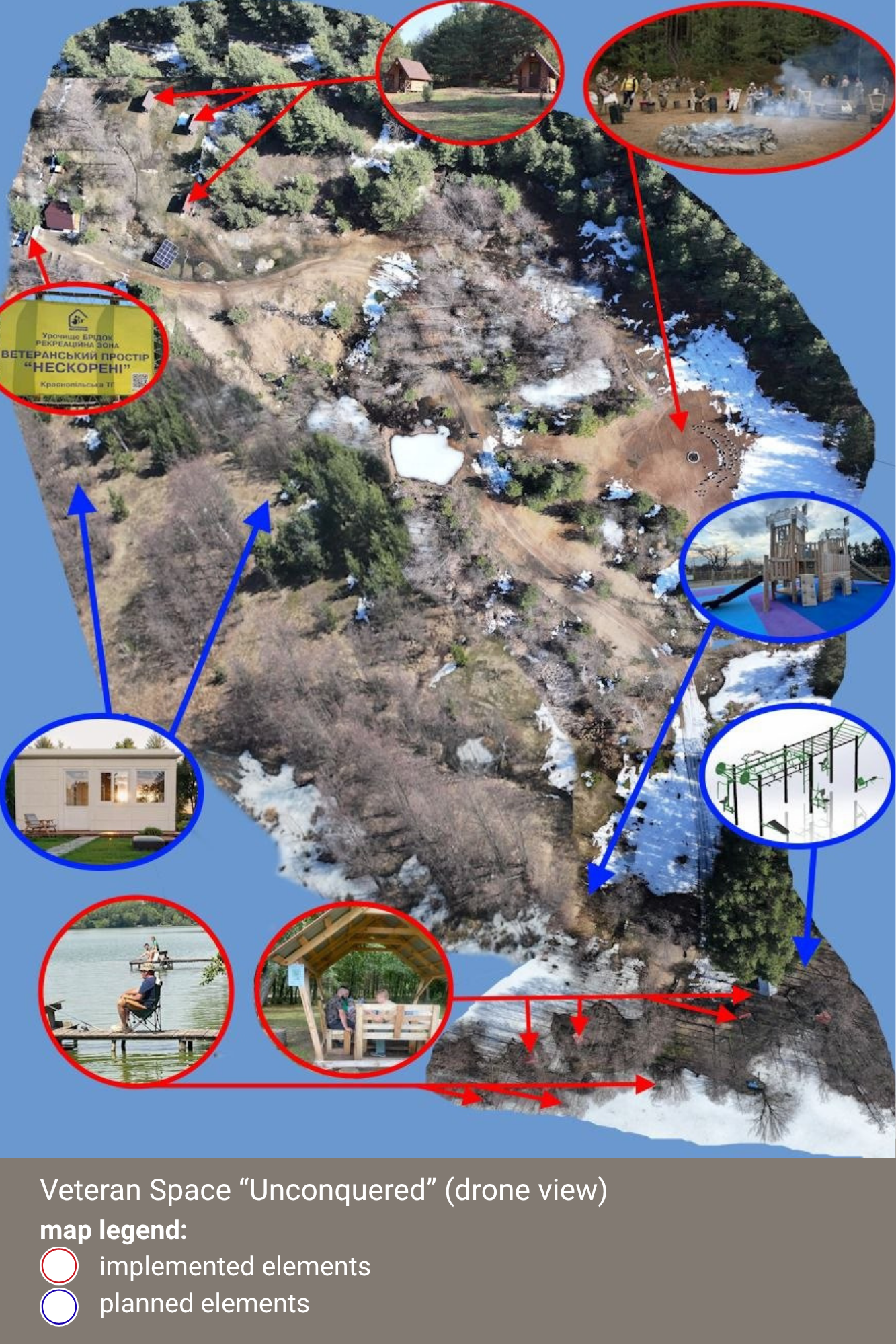
The initiative began as a grassroots response to veterans’ need for a safe, informal environment and has grown into a functioning public space uniting local authorities, civil society, businesses, and veterans. Existing infrastructure includes api-houses (one accessible), a 5 kW solar power plant, water supply, an administrative building, recreation areas, fishing spots, a volleyball court, and outbuildings.
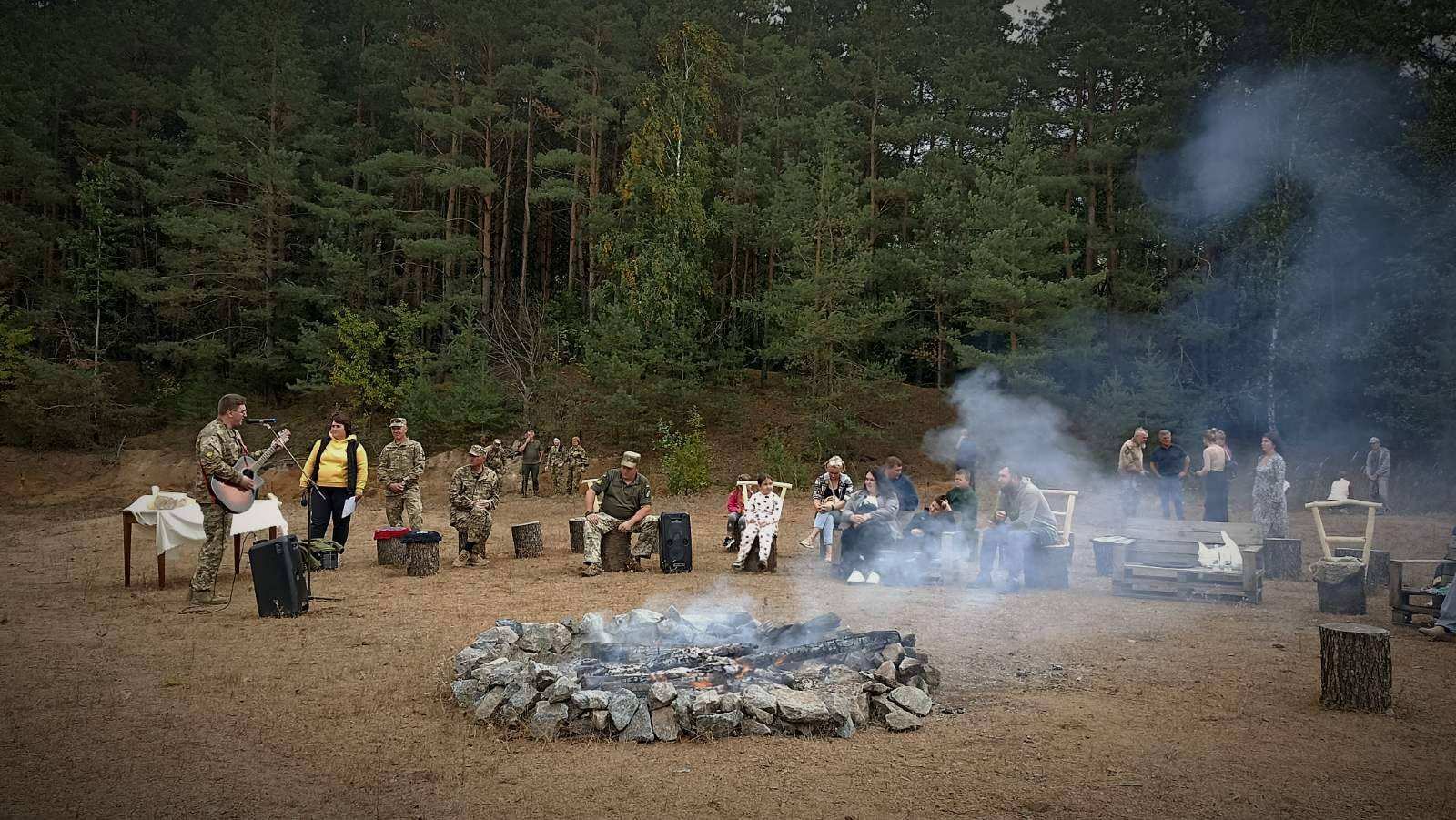
The space hosts relaxation days for families of fallen and missing soldiers, art therapy, workshops, psychological support, apitherapy, and community events such as “Veterans’ Bonfire”. It also provides an inclusive job for a veteran with disability, supporting reintegration.
The project demonstrates strong community self-organization and cross-sector cooperation under wartime conditions.
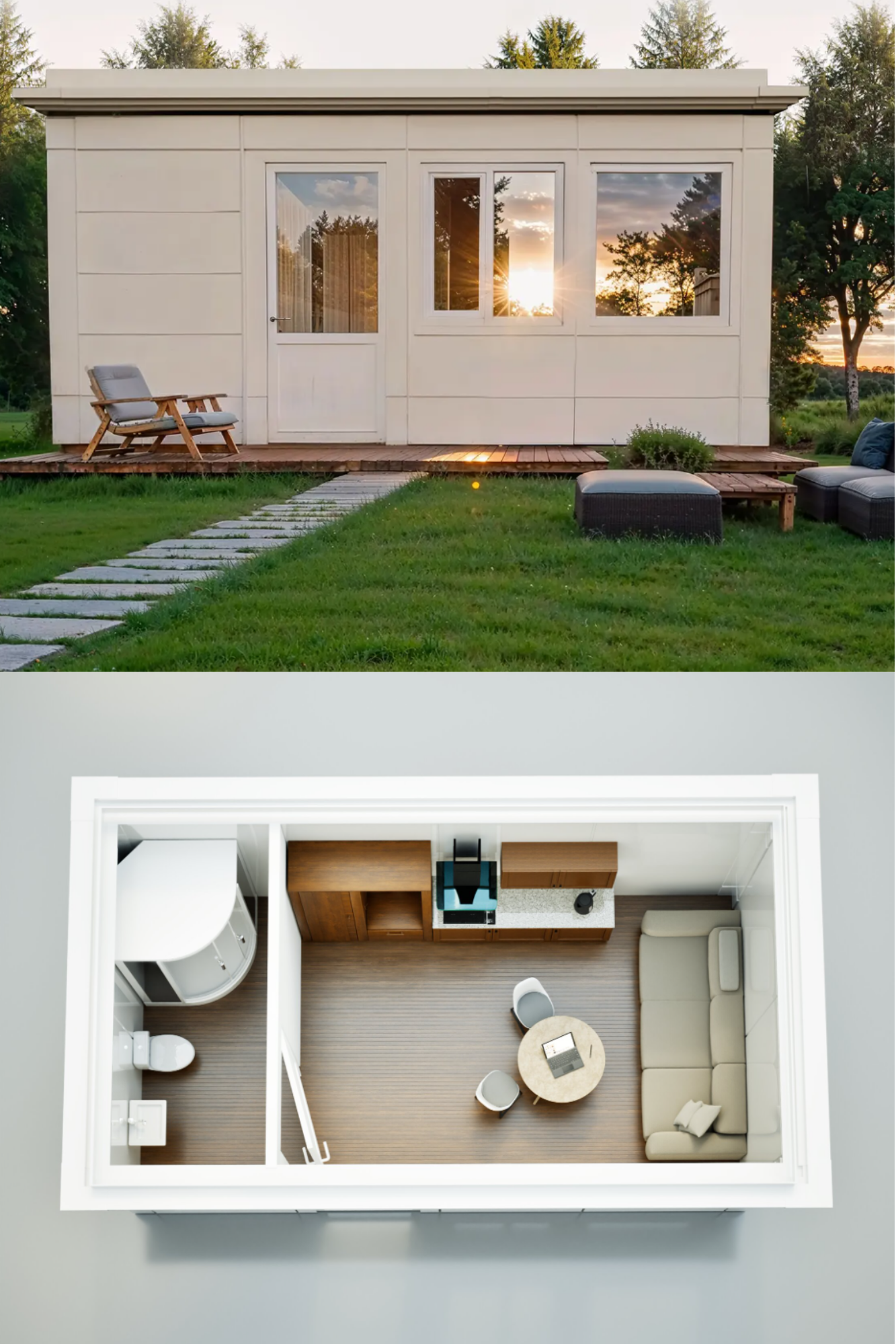
The next step is to transform the space into a full recovery environment for longer stays. This includes installing two modular houses with sleeping areas and sanitary facilities, allowing overnight stays, which are currently not possible due to the remote location.
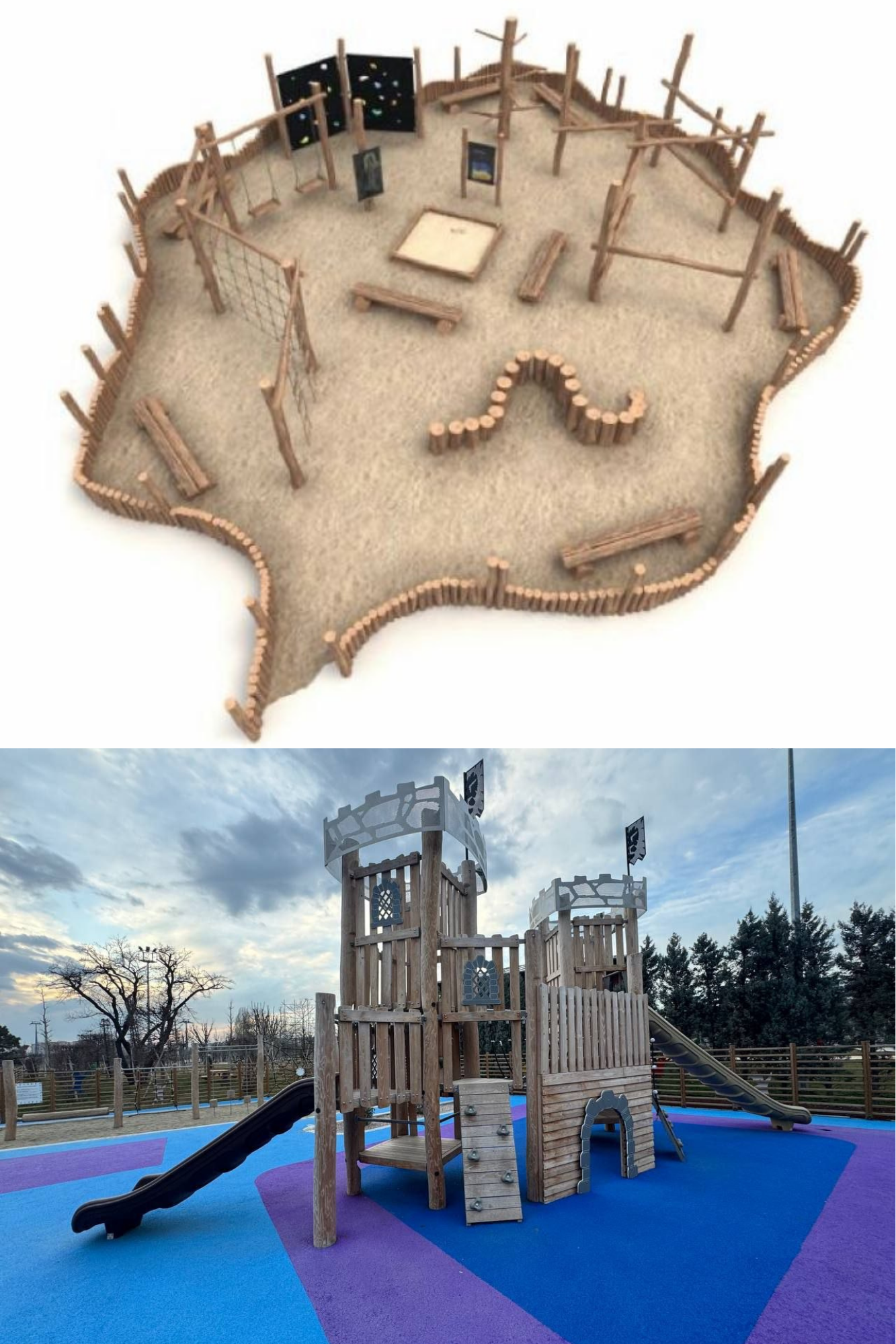
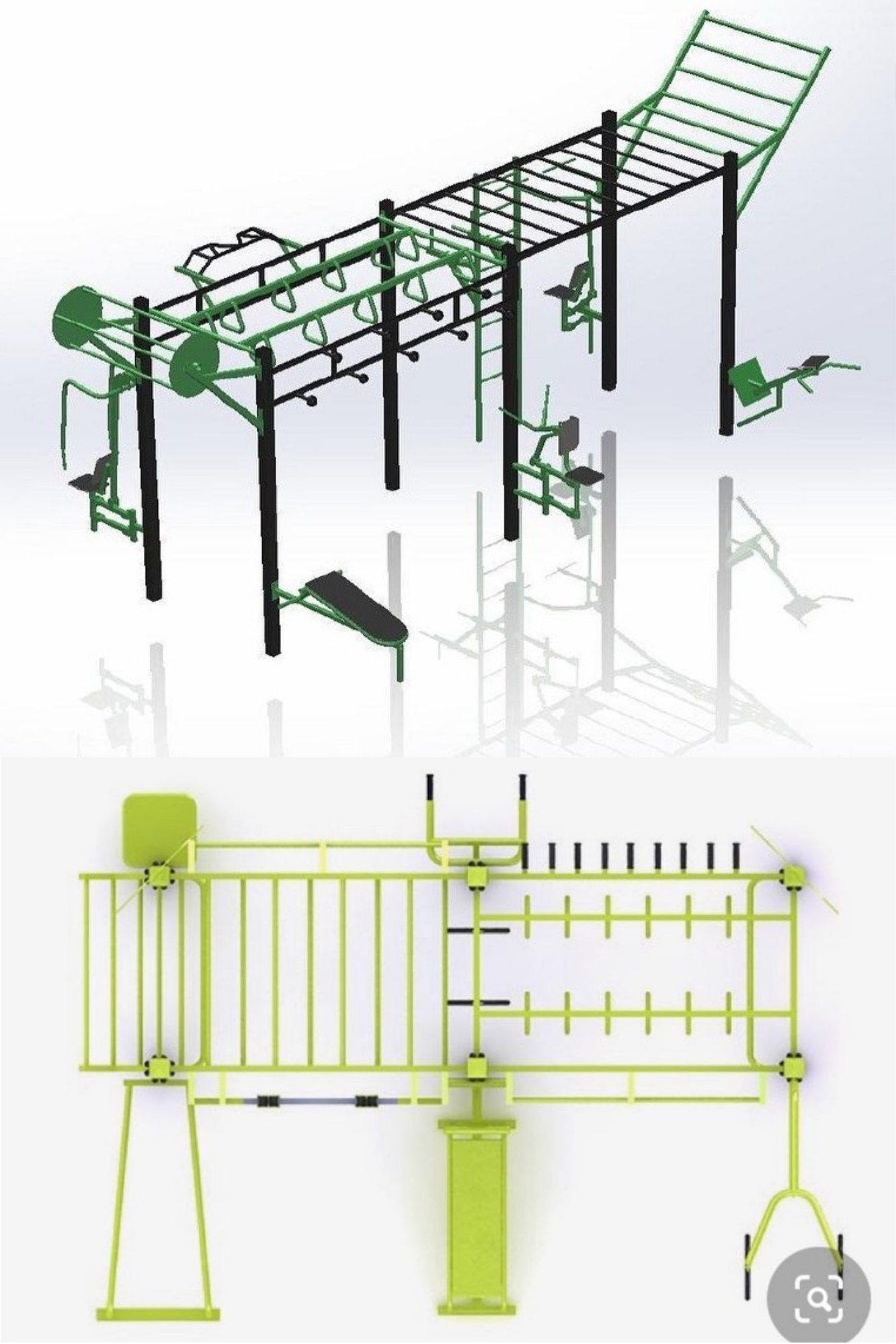
A children’s playground is planned, as veterans often visit with families. The space already hosts activities for children of fallen, missing, and prisoners of war, and this will be expanded. A workout area will also support physical rehabilitation.
These improvements will enable longer stays, deeper recovery, and stronger social cohesion.
The project emerged in response to the needs of veterans in the Krasnopilska community during the full-scale war in Ukraine. Veterans, together with volunteers, initiated a safe, non-formal space for recovery, communication, and inclusion. What began as a grassroots initiative evolved into a collective effort involving local authorities, businesses, and residents.
Implementation was step by step, relying on volunteer work and community contribution. The land was allocated, and the space was gradually equipped with essential infrastructure, including energy, water access, and basic facilities. Special attention was given to nature-based development, using the forest and water environment without disturbing ecological balance.
The space now hosts relaxation days, therapeutic workshops, and informal gatherings, revealing a strong need for long-term recovery opportunities. It has evolved into a functioning veterans’ space with growing social impact and a symbol of resilience and community-led recovery.
Implemented projects:
“Mother Nature’s Remedies” – recreation and cultural leisure spaces (UAH 100,000; CF “MHP – Community”).
“Api-Sleep” – installation of three api-houses (UAH 323,900; Spilnofond, USAID, CF “MHP – Community”).
“Light for the Unbroken” – 5 kW solar power plant (UAH 327,000; DIXI GROUP, CF “MHP – Community”).
Inclusive workspace for the administrator (UAH 70,000; State Employment Service).
veteran recovery
community resilience
nature-based solutions
social inclusion
participatory design
The project is rooted in respect for the natural environment and aims to minimize environmental impact while maximizing human recovery through nature.
The space is located in a forest and developed with a clear principle: to integrate into the landscape rather than transform it. All infrastructure is placed with consideration for ecosystem preservation.
Concrete sustainable solutions already implemented include: a 5 kW solar power plant providing renewable energy; use of existing natural infrastructure without major alteration; use of natural materials in site development.
Future development will: rely on modular buildings that require minimal construction impact; avoid deforestation or terrain alteration; promote nature-based recovery practices.
The project combines human rehabilitation with environmental responsibility, creating a model of sustainable coexistence between people and nature.
The project creates not only infrastructure, but a meaningful emotional and cultural experience for people affected by war.
Its aesthetic quality comes from the combination of: a natural environment (forest, water, silence); simple, thoughtful design solutions; authentic human interaction.
The space is based on: preserving natural beauty; using natural materials; creating open communal areas for gathering and dialogue.
The experience provides: a sense of safety and acceptance; opportunities for both solitude and community; shared activities that build belonging.
Elements such as the “Veterans’ Bonfire”, workshops, and informal meetings form new cultural practices that connect tradition with contemporary needs.
Future improvements will deepen the experience by enabling longer stays and stronger emotional connection to the space.
Inclusion is a core principle of the project, both physically and socially.
The space ensures accessibility through: an inclusive api-house adapted for wheelchair users; employment of a veteran with disability; open access for veterans, active soldiers, families of fallen and missing persons, and local residents.
The project promotes: social integration of veterans; support for vulnerable groups; intergenerational interaction; barrier-free participation.
Planned infrastructure (living modules, playground, sports area) will further enhance inclusion by enabling family stays; addressing diverse needs; reducing social isolation.
The project creates an open, safe, and supportive environment where everyone has a place.
The project was developed through active participation of veterans, volunteers, local authorities, businesses, and community members.
Veterans initiated the idea and continue to shape its development. The community contributed labor, resources, and ideas during implementation.
The project is community-driven, and its activities are co-created with beneficiaries. This participatory approach ensures relevance, ownership, and long-term sustainability.
The project brings together local self-government, civil society, and private sector stakeholders.
The Krasnopilska Village Council supports and coordinates the initiative, ensuring alignment with local development strategies. NGOs and community actors provide expertise, coordination, and implementation.
This multilevel cooperation increases impact, ensures sustainability, and strengthens trust between stakeholders.
The project integrates multiple fields:
- social work and psychology;
- environmental sciences;
- architecture and spatial design;
- community development;
- rehabilitation practices;
- arts and cultural activities.
This interdisciplinary approach allows the project to address complex challenges of recovery, combining physical, emotional, and social dimensions.
The project operates through a hybrid, community-based model that combines public support, local partnerships, and in-kind contributions, ensuring long-term financial sustainability.
The core of the model is strong local ownership. Krasnopilska Village Council provides institutional support, basic maintenance, and integration of the space into community development strategies. At the same time, the project actively relies on contributions from local businesses, civil society, and volunteers.
A significant part of the infrastructure has already been created through community effort and partnerships. For example, the water well was installed on a voluntary basis with the support of local contributors. The pond was stocked with fish thanks to cooperation with a local fishing enterprise and entrepreneurs. Many elements of the space were developed through donated materials, services, and volunteer work.
This approach reduces operational costs and strengthens community engagement and responsibility for the space.
Additional sustainability is ensured through project-based funding, including grants and donor support, which enable further development. In the future, the project foresees the introduction of extended programs (multi-day stays, workshops, rehabilitation activities), which may include partial cost-recovery mechanisms while maintaining accessibility for vulnerable groups.
The combination of public support, local partnerships, volunteer contributions, and external funding creates a resilient and adaptable financial model. It allows the project not only to function over time, but also to grow organically based on community needs and available resources.
The project demonstrates a highly transferable and replicable model of community-based recovery that can be adapted to other regions, especially in post-crisis and rural contexts.
Key scalable elements include:
- Community-driven approach – the project is initiated and developed by beneficiaries themselves (veterans), ensuring relevance, ownership, and long-term sustainability. This bottom-up model can be replicated in other communities.
- Use of natural environments – the integration of forests, water, and landscape into recovery processes provides a low-cost, effective, and adaptable solution that can be applied in different geographical settings.
- Modular infrastructure – the use of small-scale, modular, and non-invasive structures (such as api-houses and planned residential units) allows flexible and affordable replication without large capital investment.
- Participatory governance model – cooperation between local authorities, civil society, businesses, and volunteers creates a governance structure that can be transferred to other municipalities.
- Integrated recovery methodology – combining psychosocial support, nature-based practices, physical activity, and community interaction offers a holistic model adaptable to various beneficiary groups.
- Inclusion practices – accessible infrastructure, employment of veterans with disabilities, and family-oriented programming provide a framework for inclusive development.
The project’s main strength lies in its adaptability: it does not require highly specialized infrastructure or resources, but rather strong community engagement and coordination.
As a result, the model can be scaled horizontally across other Ukrainian communities and internationally in regions facing similar social challenges, contributing to resilient, inclusive, and community-led recovery systems.