The Healing Hill: Tășnad’s Urban Garden
The Healing Hill: Tășnad’s Urban Garden
"What if a forgotten hillside became the heart of a city? Tășnad Urban Garden is more than a park; it’s a living masterpiece. We’ve transformed a degraded slope into a 4-hectare sanctuary where 16 unique 'outdoor salons' invite you to rediscover nature through scent, color, and silence. From vibrant sports areas to secret gardens for bees and butterflies, this zero-irrigation oasis is where our community grows together. Vote for a greener, more beautiful Tășnad!"
Romania
"Perched on Tășnad's iconic 'Cat's Hill' (35 Lăcrămioarelor St.), our Urban Garden turns a legendary local slope into a modern green haven. It’s where heritage meets innovation, right in the heart of our town."
Prototype level
Yes
Yes
Yes
Yes
ERDF : European Regional Development Fund
For the proposed project, the financing contract No. 7/20.02.2024 has been signed. The funding program is the North-West Regional Programme 2021–2027, Policy Objective 2: A greener, resilient, low-carbon Europe moving towards a zero-carbon economy by promoting the transition to clean and fair energy, green and blue investments, the circular economy, climate change mitigation and adaptation, risk prevention and management, and sustainable urban mobility. Priority 3: A region with environmentally friendly localities. Specific Objective 2.7: Strengthening actions for the protection and conservation of nature, biodiversity, and green infrastructure, including in urban areas, as well as reducing all forms of pollution.
No
136642: Oras Tasnad (RO)
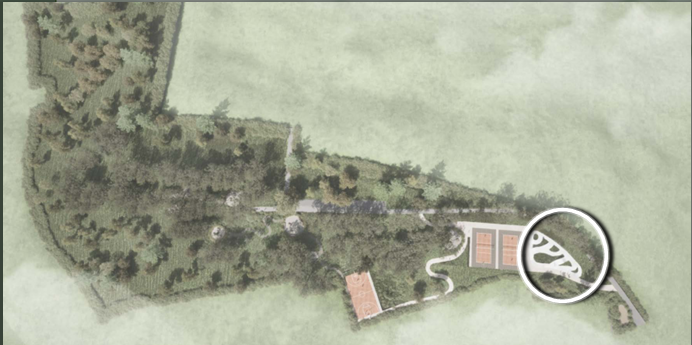
General objective: Establishing and developing an urban garden in the city of Tășnad on an area of 41,494 square meters, with the aim of improving ecosystem services.
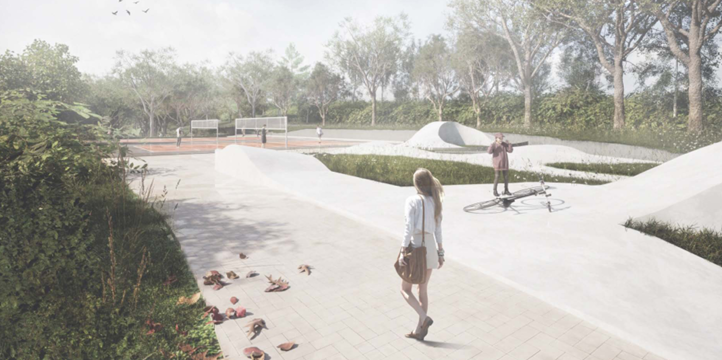
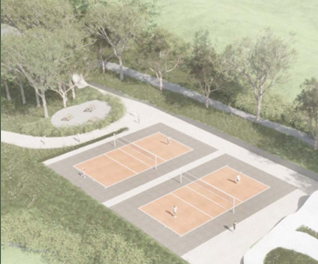
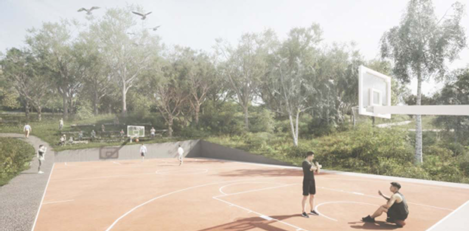
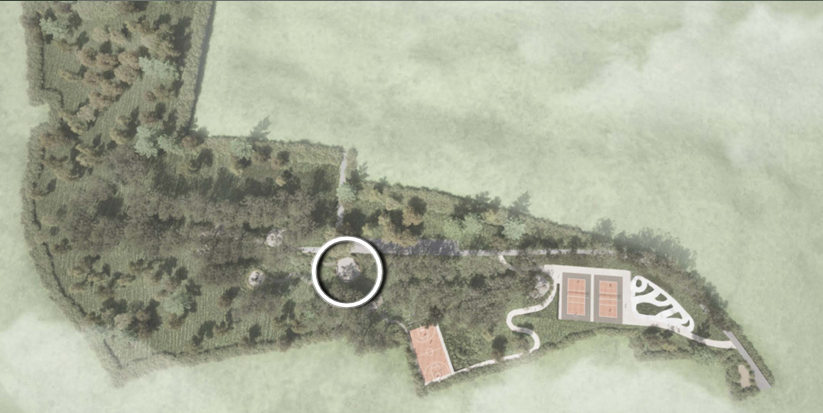
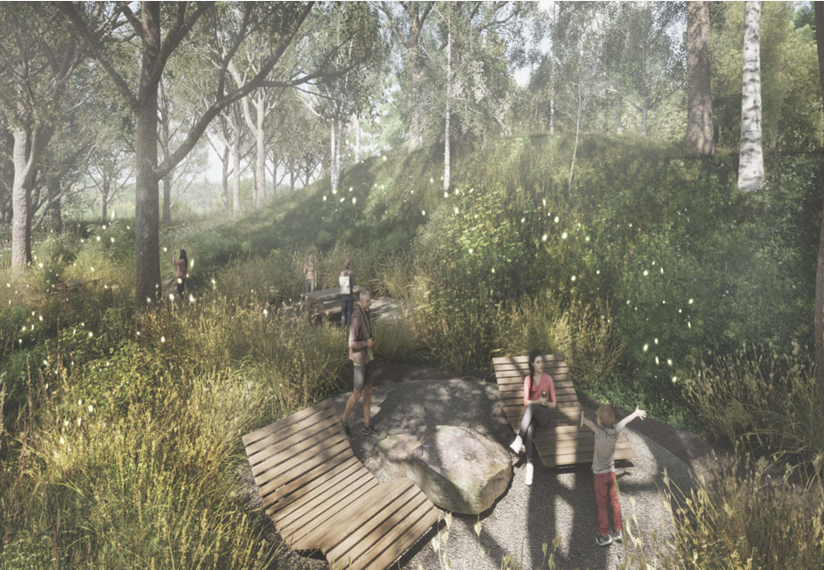
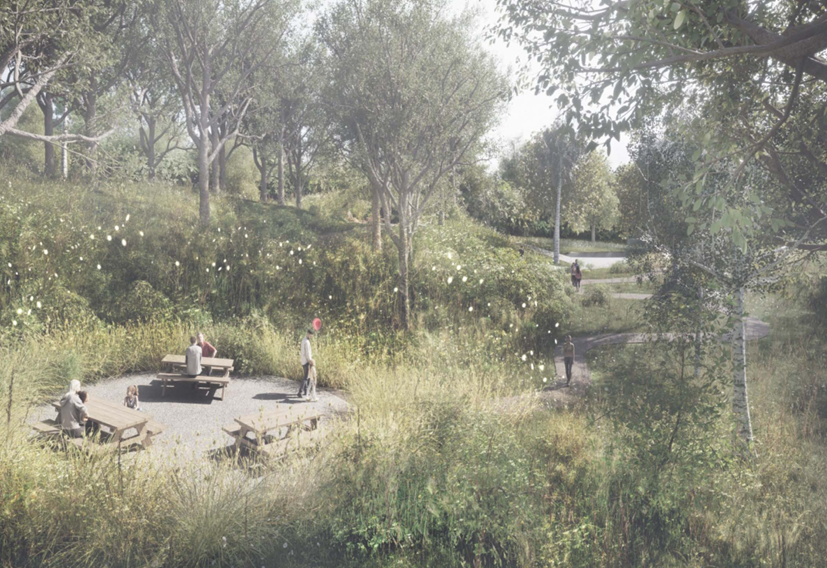
The Urban Garden is organized into three main areas: one equipped with playgrounds for children, teenagers, and young people; one that includes a basketball court bordered by a small natural amphitheater; and, last but not least, 16 themed “lounge-clearings.”
Target group(s): As a result of the implementation of the investment, the target group is represented by the general population within the Tășnad Administrative-Territorial Unit (ATU), including visitors to the area, as well as public and private stakeholders, all of whom benefit from improved environmental management at both regional and local levels.
According to data provided by the National Institute of Statistics, the most recent figures regarding the resident population in 2022 in the Tășnad ATU indicate a total of 9,076 inhabitants.
Specific objective: Strengthening actions for the protection and conservation of nature, biodiversity, and green infrastructure, including in urban areas, as well as reducing all forms of pollution
Expected results: Preparation of the necessary documentation for the proposed project, execution of works for the development of the urban garden, and its equipment and outfitting.
Green spaces
Biodiversity
Community
Sustainability
Recreation
The “The Healing Hill: Tășnad’s Urban Garden” initiative has as its main objective the creation of a sustainable green space that contributes to improving quality of life and protecting the environment. The project aims to rehabilitate a degraded area and transform it into a functional urban ecosystem that supports biodiversity and reduces the impact of climate change.
Among the key objectives are increasing the area of landscaped green spaces, improving air quality, reducing the urban heat island effect, and ensuring efficient stormwater management. At the same time, the initiative promotes non-motorized mobility and easy access to recreational spaces for all categories of users, including people with disabilities.
The implementation of these objectives is achieved through the development of diverse green areas, the planting of climate-adapted vegetation, the creation of relaxation and play spaces, and the integration of nature-based solutions. The project complies with European standards regarding green infrastructure and sustainable urban development.
The exemplary nature of the initiative lies in its integrated approach, which combines urban regeneration with environmental protection and social inclusion, offering a replicable model for other urban communities aiming to become greener, more resilient, and more livable.
The “The Healing Hill: Tășnad’s Urban Garden” initiative aims to create a public space that is both aesthetically appealing and functionally effective, offering a pleasant and memorable experience for all users. The proposed design emphasizes the harmonious integration of natural and built elements, the use of diverse and climate-adapted vegetation, and the creation of promenade paths, relaxation areas, and social spaces that encourage spending time outdoors.
An important objective is to highlight local identity and stimulate community interaction by developing spaces capable of hosting cultural, educational, and recreational activities. Playgrounds, green areas, and urban furniture are designed to meet the needs of different age groups and to create a friendly and inclusive environment.
These objectives are achieved through a coherent and accessible design that prioritizes comfort, safety, and the quality of public space. Attention is given to details such as lighting, materials used, and the relationship between open and planted areas, contributing to a high-quality urban experience.
The exemplary nature of the initiative lies in the way aesthetics are combined with functionality and social inclusion, resulting in a space that not only looks good but is actively used and valued by the community, becoming a local benchmark for best practices in urban design.
The “The Healing Hill: Tășnad’s Urban Garden” initiative has as a key objective the creation of an inclusive, accessible, and open public space for all social groups. The project ensures free access and facilitates the use of the space by people of all ages, including persons with disabilities, by integrating “design for all” principles (accessible pathways, adapted urban furniture, safe and easy-to-use areas).
Another important objective is to stimulate social cohesion and community participation by creating spaces that encourage interaction, shared activities, and citizen involvement in urban life. The urban garden thus becomes a meeting place for the community, contributing to reducing inequalities in access to quality public spaces.
These objectives are achieved through careful functional planning, diversification of facilities (play areas, relaxation zones, promenades), and compliance with national and European accessibility standards.
The exemplary nature of the initiative lies in its inclusive and equitable approach, offering a model of urban space that responds to the needs of all users and promotes a more united, active, and open community.
Within the “The Healing Hill: Tășnad’s Urban Garden” initiative, the involvement of citizens and civil society represents an essential element in ensuring the project’s relevance and sustainability. The local community has been identified as the main beneficiary, and its needs have shaped the proposed functions by aligning the project with expectations regarding recreation, social interaction, and leisure spaces.
Throughout the development process, the local administration has promoted openness to dialogue and public information, encouraging community interest and support for the transformation of the area. The space is designed to facilitate active use by citizens and to allow the organization of community, educational, and recreational activities.
The impact of this involvement is reflected in the creation of a space adapted to the real needs of users, fostering a sense of belonging and responsibility toward the urban environment. Citizens are not only beneficiaries but also active users of the urban garden, contributing to social dynamics and the continuous use and enhancement of the space.
The exemplary nature of the initiative lies in its community-oriented approach and in promoting a participatory model of urban development, where public space is designed for and together with people, strengthening social cohesion and civic engagement.
Within the “The Healing Hill: Tășnad’s Urban Garden” initiative, stakeholder involvement takes place at multiple levels, ensuring a coherent and integrated approach.
At the local level, the public administration plays the main role in initiating, coordinating, and implementing the project, ensuring its alignment with community needs and urban development strategies. At the same time, citizens and local actors (institutions, organizations) contribute indirectly through the use and enhancement of the created space.
At the regional level, the structures responsible for managing the North-West Regional Programme 2021–2027 provide support through funding, monitoring, and evaluation, ensuring compliance with eligibility criteria and sustainable development objectives.
At the national level, the legislative framework and public policies in the fields of urban development, environmental protection, and accessibility establish the standards that guide project implementation.
At the European level, the initiative is supported through cohesion policy and objectives related to the green transition, biodiversity, and green infrastructure, which underpin the funding programme.
The added value of this multilevel involvement lies in combining financial resources, expertise, and a strategic framework, resulting in a project aligned with European standards, adapted to local needs, and capable of generating long-term benefits for the community.
The “The Healing Hill: Tășnad’s Urban Garden” initiative reflects an interdisciplinary approach, integrating several key fields essential for the development of a sustainable and high-quality urban space. These include urbanism and spatial planning, landscape architecture, civil engineering, environmental protection, ecology, as well as social fields such as sociology and public administration.
Specialists from these areas collaborated throughout the design and implementation process to ensure a balance between functionality, aesthetics, and sustainability. For example, architects and landscape designers worked together to configure green spaces and pathways, while environmental experts contributed to the selection of nature-based solutions and the integration of biodiversity. Engineers ensured the technical feasibility and durability of the works, while the public administration coordinated the process and ensured compliance with regulations.
The interaction between these fields was complementary, based on collaboration and the exchange of expertise, contributing to the development of an integrated solution. The added value of this process lies in delivering a coherent project adapted to the local context, which simultaneously addresses environmental, social, and functional requirements, offering a model of best practice in sustainable urban development.
The innovative character of the “The Healing Hill: Tășnad’s Urban Garden” initiative lies in its integrated approach to urban regeneration, combining nature-based solutions with the social and functional needs of the community. Unlike traditional green space developments, the project goes beyond simple planting and aesthetics, creating a multifunctional urban ecosystem that delivers environmental, social, and economic benefits.
The initiative introduces modern design principles such as green infrastructure, biodiversity enhancement, natural stormwater management, and the reduction of the urban heat island effect. At the same time, it promotes inclusion through accessible design and spaces adapted to all categories of users.
The innovative aspect is also reflected in the transformation of a degraded area into an active, vibrant space that encourages community interaction and responsible use of public space. Through this approach, the project becomes a replicable model of sustainable urban development, aligned with current European standards and objectives.
The methodology used within the “The Healing Hill: Tășnad’s Urban Garden” initiative is based on an integrated and phased approach, specific to sustainable urban regeneration projects. The process began with an analysis of the local context and the identification of community needs, followed by the definition of the project’s objectives and spatial functions.
During the design phase, the principle of nature-based solutions was applied, integrating elements of green infrastructure, biodiversity, and sustainable resource management. The design was developed to ensure universal accessibility, functionality, and a high-quality aesthetic experience.
Project implementation is carried out in accordance with national and European standards, through the coordination of multidisciplinary teams and continuous monitoring of progress. Long-term sustainability criteria are also taken into account, both in terms of space maintenance and the impact on the environment and the community.
This methodological approach ensures project coherence, efficient use of resources, and the capacity to generate lasting benefits, while also providing a replicable model for similar initiatives.
The “The Healing Hill: Tășnad’s Urban Garden” initiative includes a series of elements that can be easily replicated or adapted in other localities, regardless of their size. First of all, the integrated approach to urban regeneration—based on transforming degraded land into multifunctional green spaces—represents a model applicable in numerous urban contexts.
The methodology used—combining community needs analysis, interdisciplinary design, and the integration of nature-based solutions—can be transferred as a best practice. In addition, the principles of inclusive design and universal accessibility can be replicated to ensure that spaces are usable by all categories of beneficiaries.
Technical elements such as the development of diverse green areas, the creation of recreational spaces, and the implementation of solutions for stormwater management and biodiversity enhancement are easily adaptable depending on the local context.
Last but not least, the lessons learned regarding stakeholder coordination, the use of European funding, and alignment with sustainability standards provide a valuable framework for other public administrations. Thus, the initiative can serve as a replicable model of sustainable urban development, delivering tangible benefits for diverse communities.
For the development and implementation of the “The Healing Hill: Tășnad’s Urban Garden” initiative, phased activities are planned, including the execution of landscaping works, vegetation planting, the development of recreational infrastructure (paths, playgrounds, relaxation areas), as well as the integration of nature-based solutions for water management and biodiversity enhancement. Subsequently, monitoring, maintenance, and activation activities will be carried out through community, educational, and recreational events.
The values and principles of the New European Bauhaus (NEB) have been integrated from the design phase by promoting sustainability (green infrastructure, ecological solutions), aesthetics (coherent design, attractive and harmonious space), and inclusion (accessibility for all categories of users, community-oriented space).
Key steps for further implementation include completing the works in accordance with quality standards, continuously engaging the community in the use and activation of the space, ensuring sustainable maintenance, and assessing the impact on the environment and quality of life. Additionally, the initiative aims to strengthen its educational and replicable character, in line with NEB principles, in order to become a model of best practice in sustainable urban development.