Arts, Culture, and Heritage as Drivers of Change
Railscapes
Railscapes
Railscapes is a three-year, community-driven contextual design project transforming an abandoned sawmill in Švenčionėliai into a vibrant cultural hub. Lithuanian designers Vytautas Gečas and Vladas Suncovas reactivated the site through design interventions, inspired by the aesthetics of Lithuanian railways. A bar on rail tracks, an outdoor pizza oven, and playful movable seating foster gatherings, linking industrial heritage with social life and collective creativity.
Lithuania
Local
Švenčionėliai
It addresses urban-rural linkages
It involves a physical transformation of the built environment (hard investment)
Yes
2025-10-30
No
No
No
Organisation
Railscapes is a three-year, community-led contextual design initiative that has transformed an abandoned sawmill in Švenčionėliai into a lively cultural and social hub in a rural town. Rooted in the site’s railway heritage, the project combines artistic practice, design, and community participation to activate an industrial space through adaptive reuse.
The project reactivates the site’s industrial heritage through design interventions that generate meaningful collective experiences and a strong sense of the place. By reusing existing rail infrastructure and working with durable, adaptable elements, the project minimises material use and extends the lifecycle of the site, demonstrating a circular and resource-conscious approach.
At its core, Railscapes is a participatory process: local residents actively co-designed, and used the interventions - from the mobile BarCoupé to the communal pizza oven and movable seating structures. These elements have enabled accessible cultural activities, intergenerational exchange, and new forms of living together.
The project has already delivered tangible impact: a previously abandoned site now hosts regular public gatherings, cultural events, and informal social use, strengthening community cohesion and local identity.
In the long term, Railscapes acts as a replicable model for culture-led regeneration of post-industrial heritage. It demonstrates how small-scale, adaptive interventions can catalyse systemic change - transforming underused spaces into dynamic, community-governed environments while contributing to broader cultural and environmental transitions.
Once part of Lithuania’s railway industry, the sawmill site has stood unused for decades. Through a series of small-scale interventions created over three summers in collaboration with local residents, the designers reactivated the space with mobile furniture built on the same rail tracks that once served the sawmill.
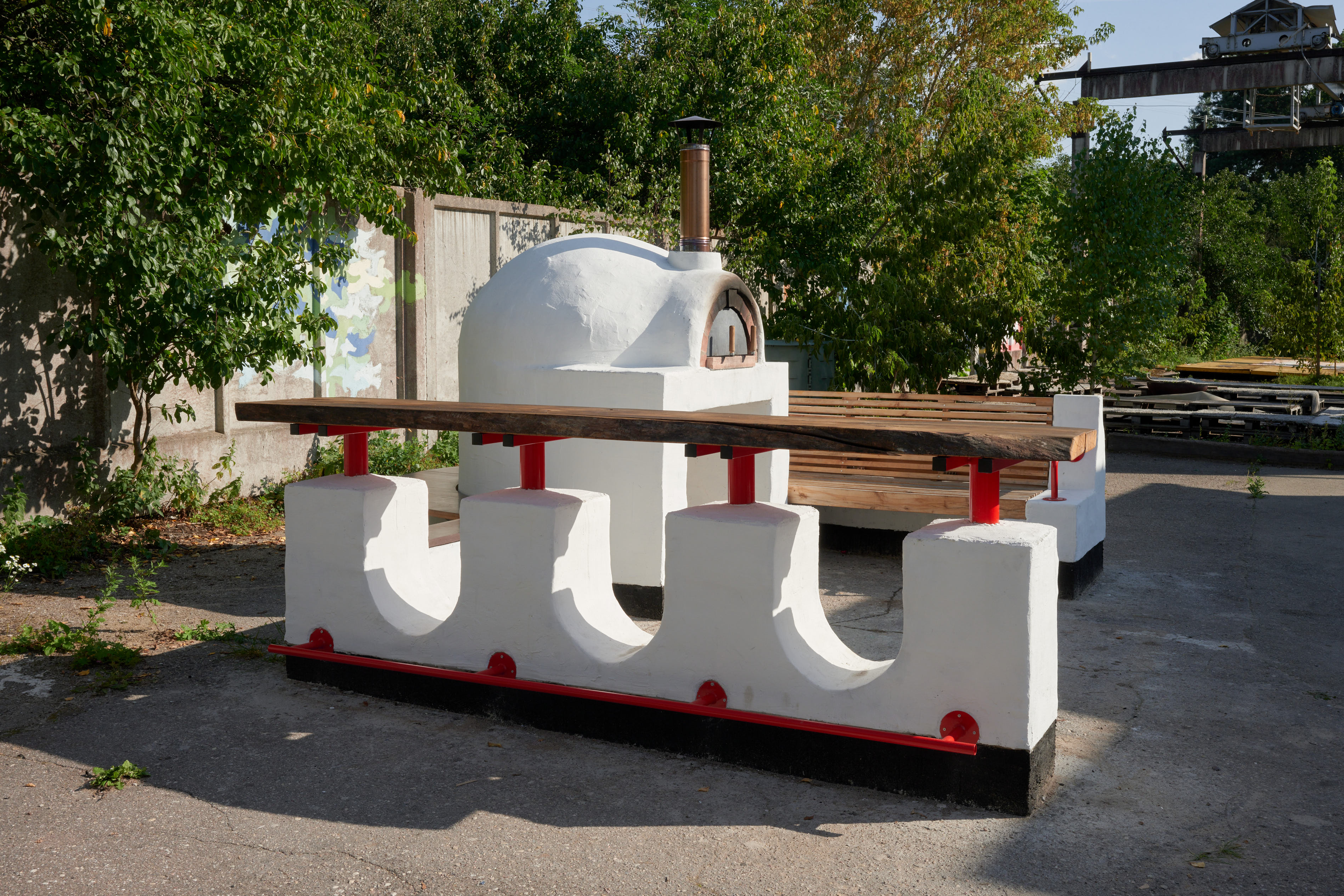
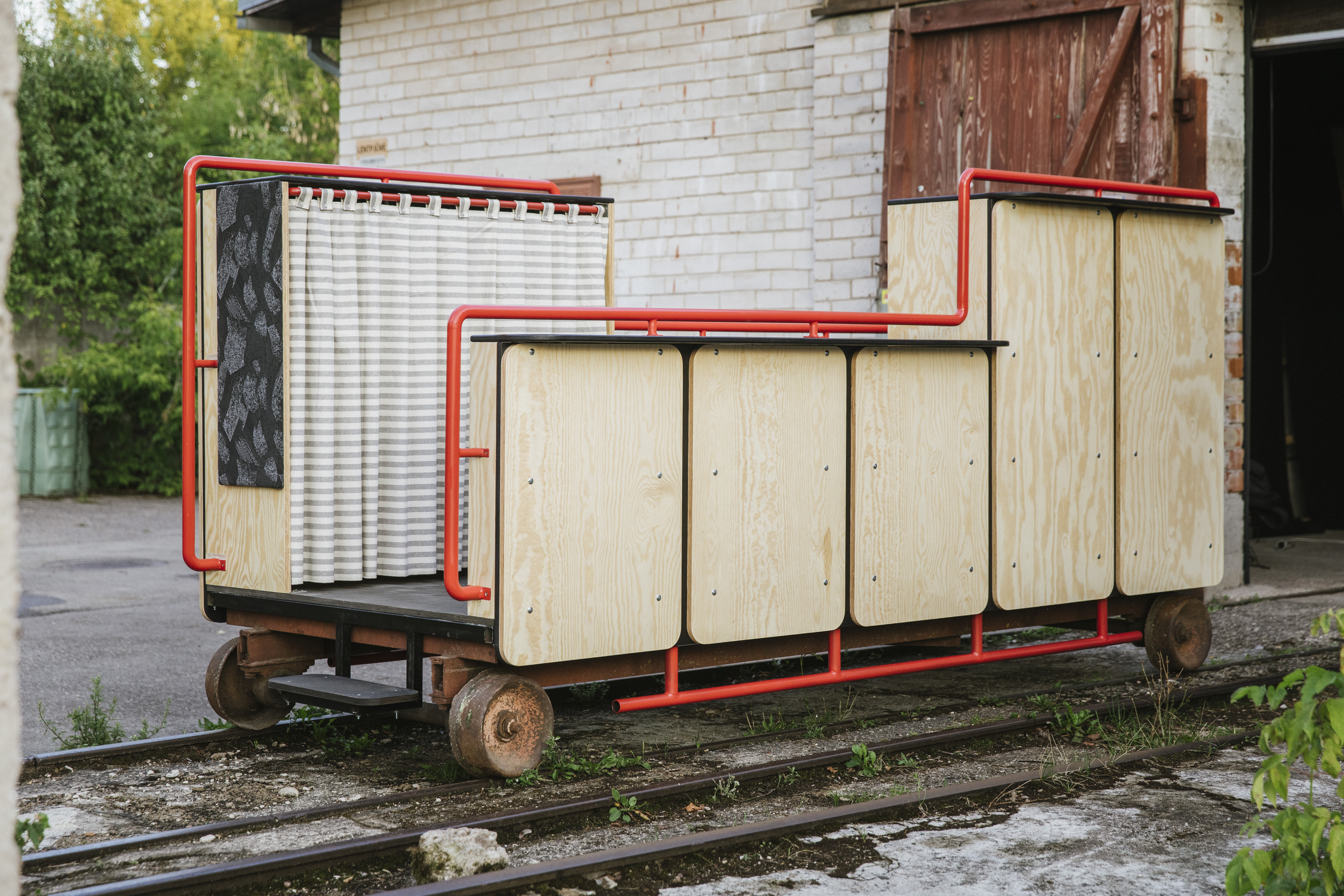
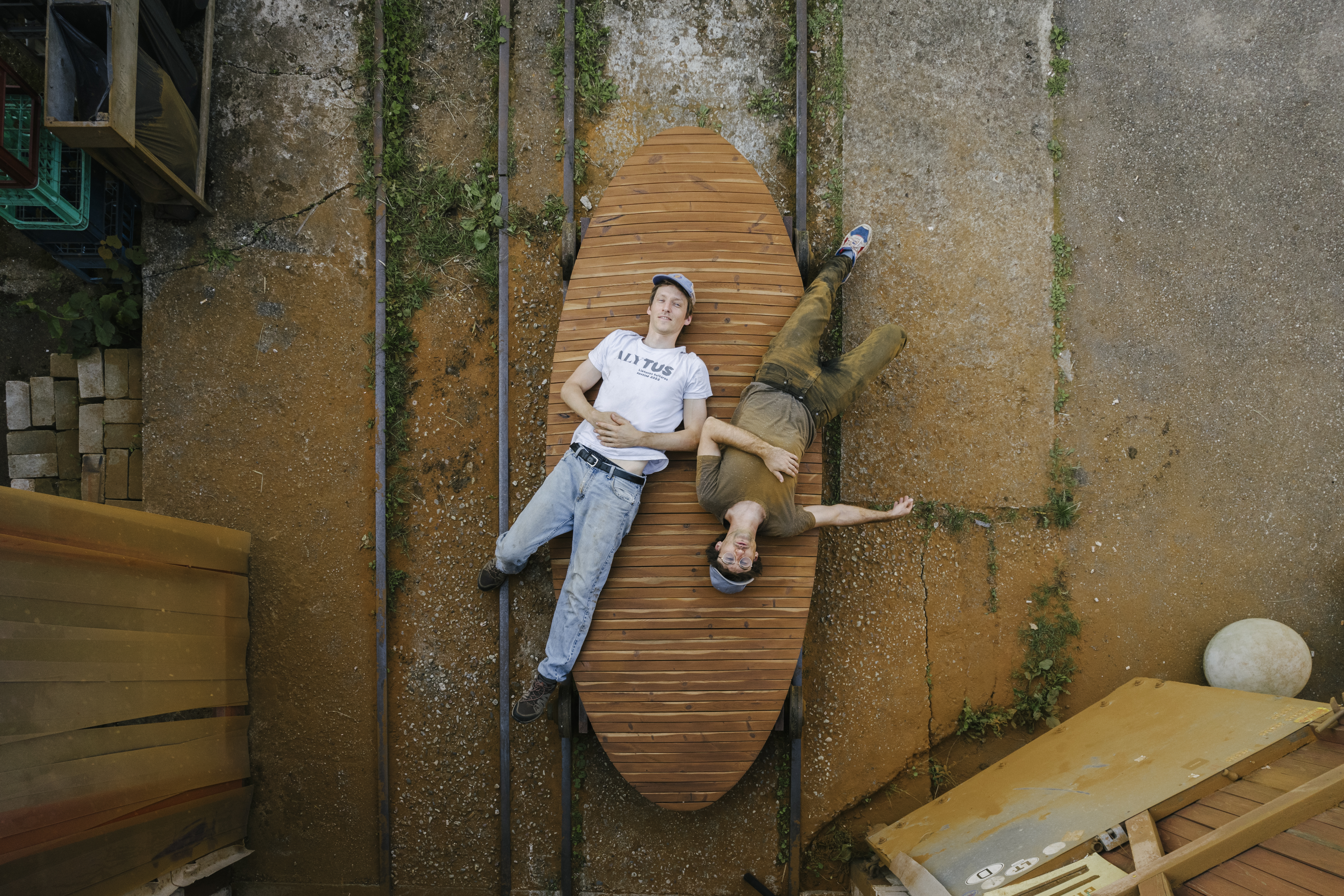
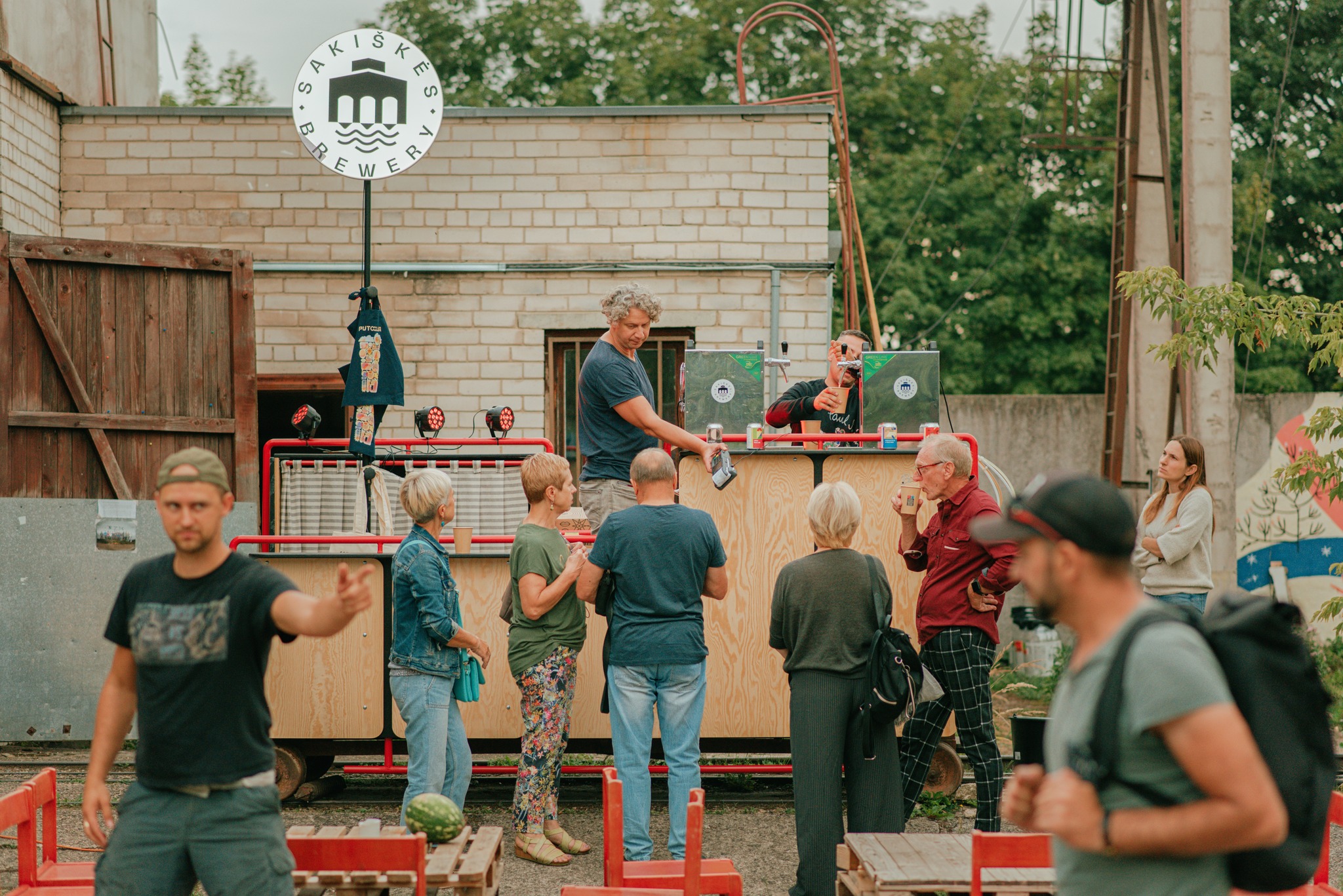
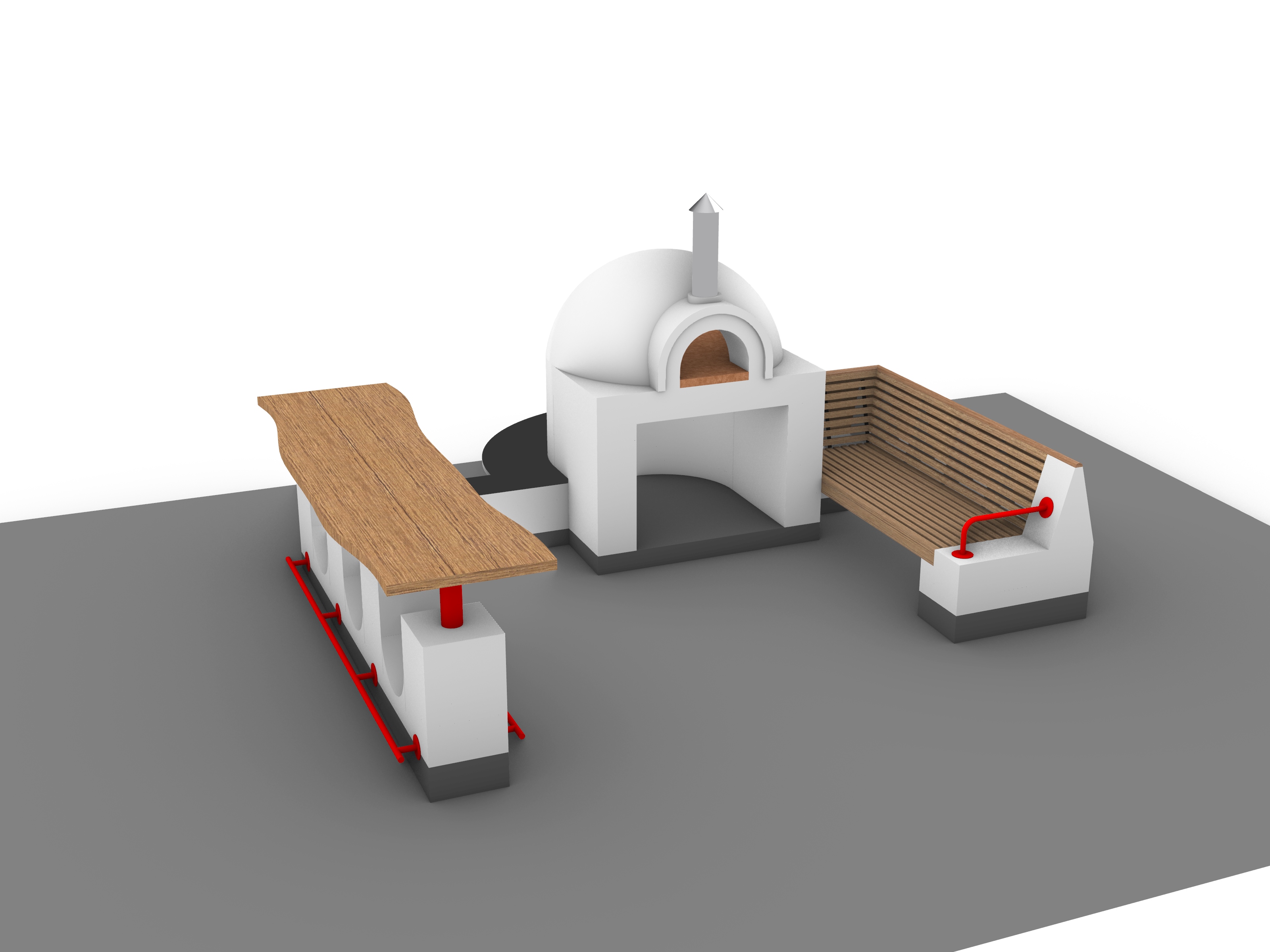
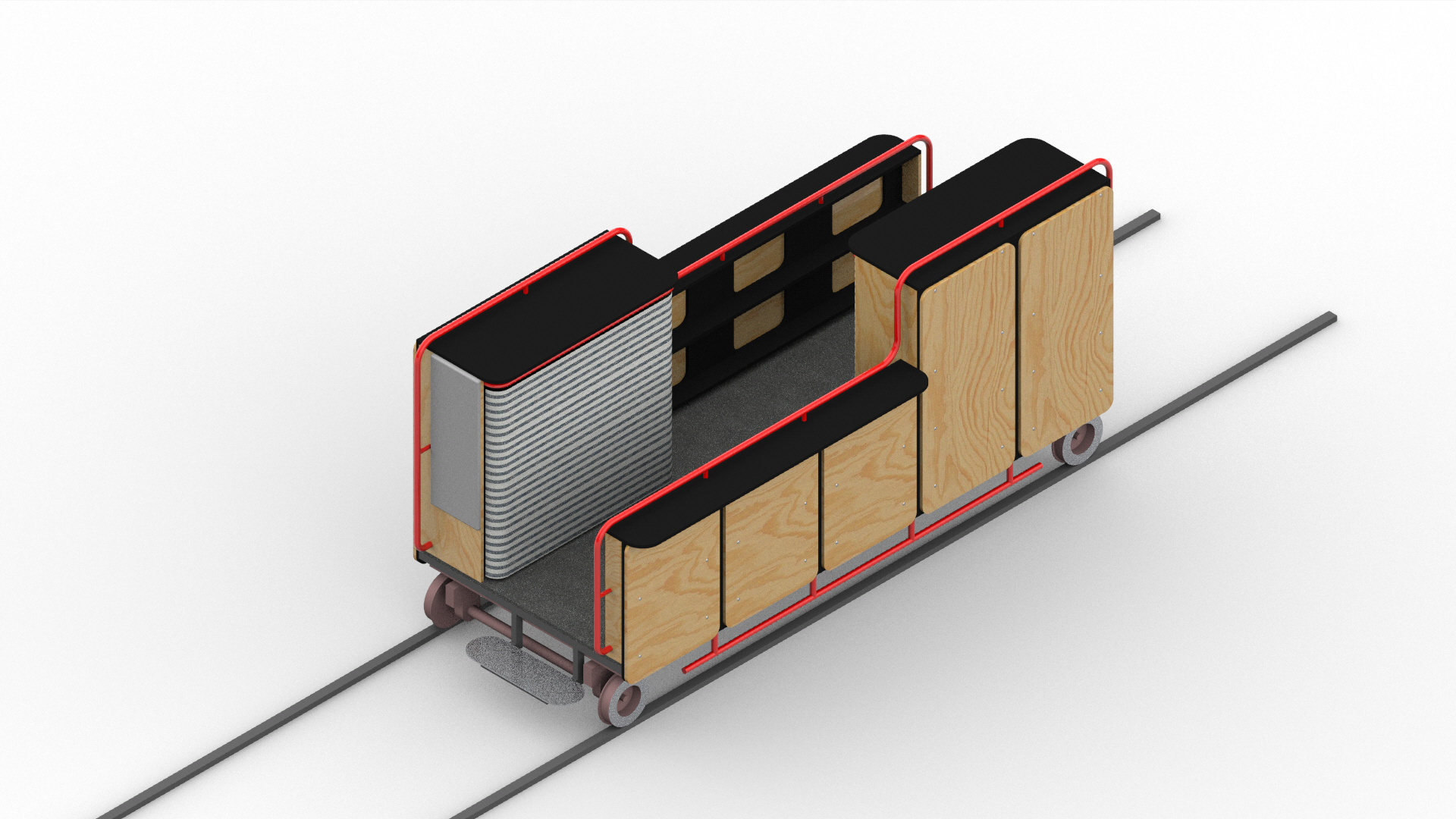
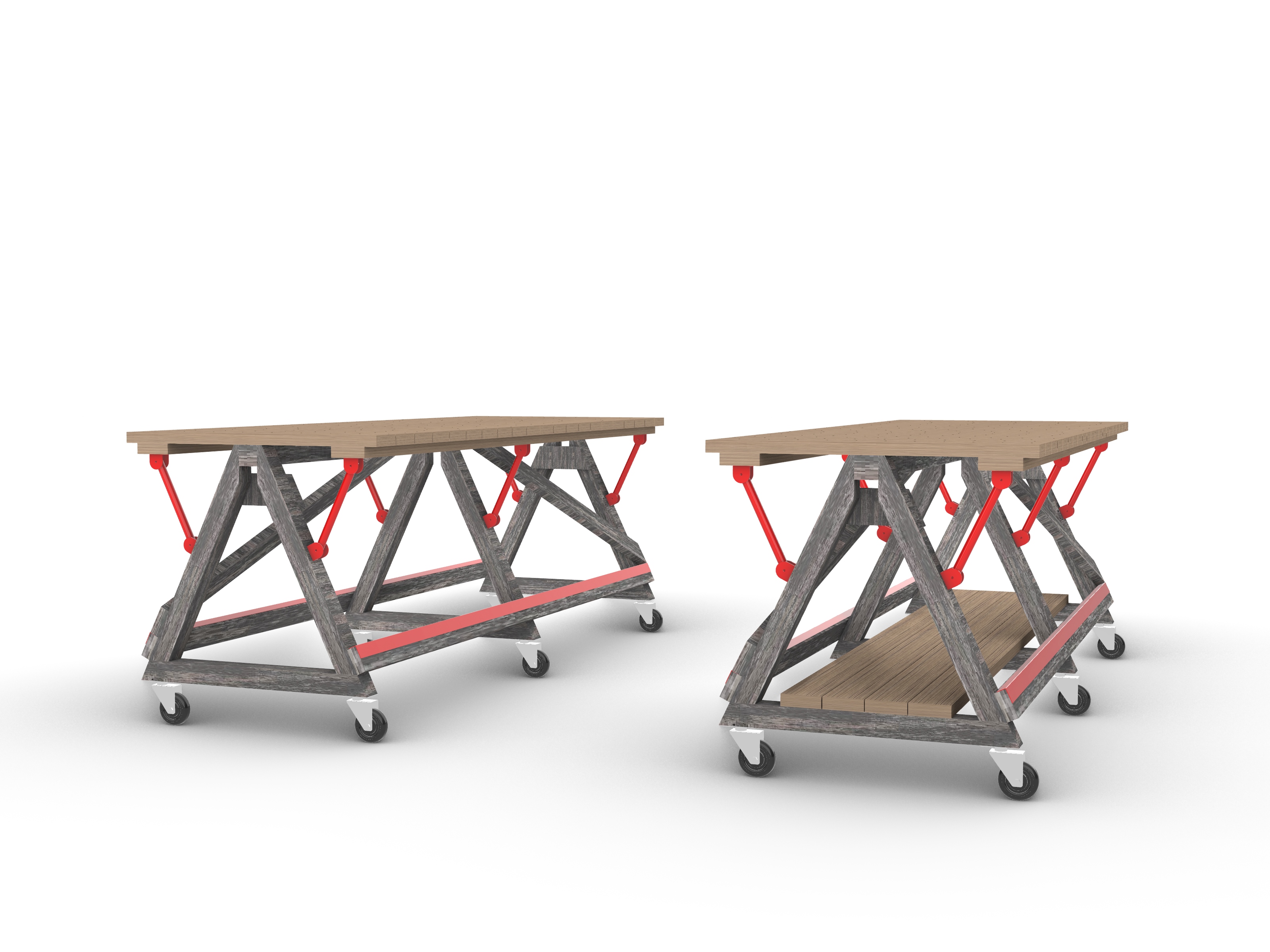
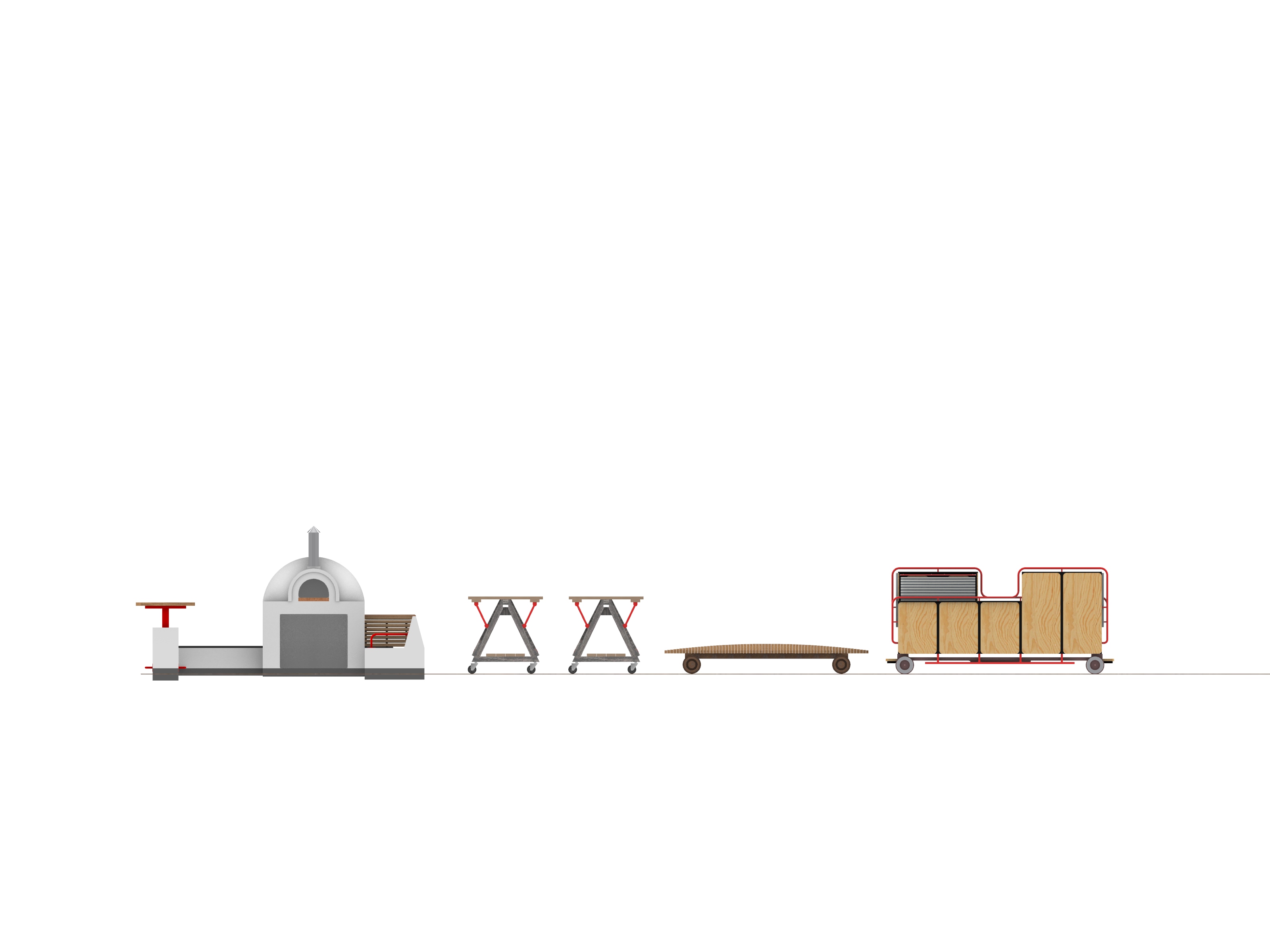
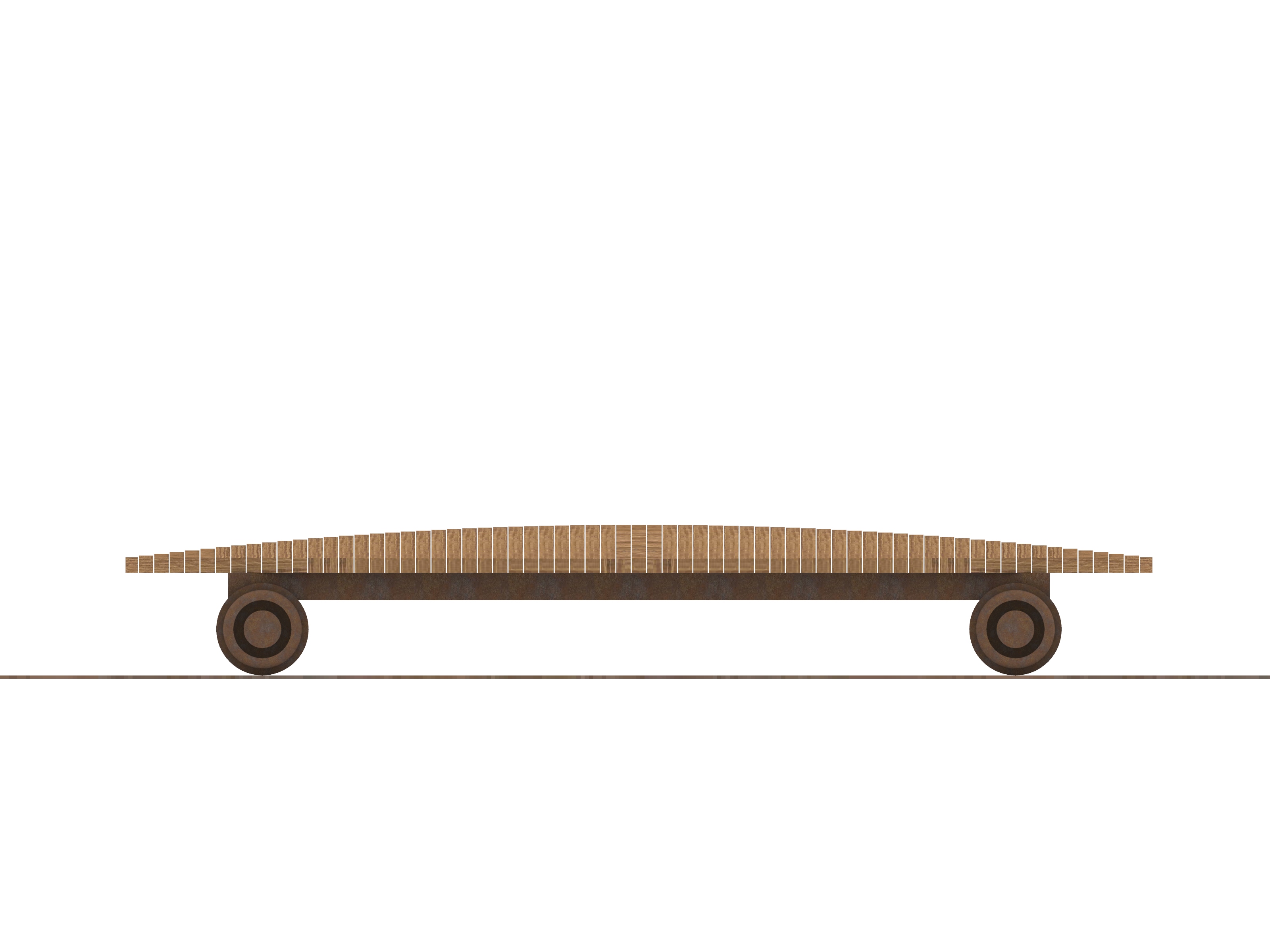
The first installation, BarCoupé, is a mobile bar that slides along the tracks, used during public gatherings both indoors and outdoors. The following year, the designers returned to build a pizza oven, expanding the project’s cultural dimension, using food as a tool for inclusion and social exchange, attracting diverse groups and strengthening social bonds. In the project’s final phase, a collection of movable seating structures and tables was added, including a skateboard-shaped “island” that children like to push along the rails. The pieces, characterized by their railway-inspired shapes and red metal accents, create a playful yet coherent aesthetic that connects the sawmill’s industrial past with its revived cultural role.
Railscapes reflects a practice of contextual and social design, where objects are not static artefacts but active tools for participation and place-making. By engaging with local memory and material context, designers turned a forgotten site into a dynamic landscape of movement, community, and collective creativity.
Contextual regeneration
Circular adaptive reuse of heritage
Creative place-making
Participatory co-creation
Inclusive social engagement
Railscapes addresses sustainability primarily through the adaptive reuse of an abandoned industrial site, demonstrating how existing infrastructure can be repurposed to reduce environmental impact. Instead of new construction, the project builds upon the sawmill’s original railway system, using it as a functional and conceptual backbone for mobile interventions. This approach extends the lifecycle of the site, minimises material consumption, and avoids resource-intensive development, aligning with principles of repair, reuse, and low-impact design.
The project also promotes durability and adaptability through movable, modular elements - such as the BarCoupé, seating structures, and tables - which can be reconfigured, repaired, and reused over time. By working with simple construction methods and locally available materials, Railscapes reduces waste and encourages maintenance and long-term use rather than replacement.
Beyond materials, Railscapes promotes a cultural shift toward sustainability by turning a neglected site into a shared space that values reuse over consumption. Through active involvement in building and maintaining it, the community fosters collective environmental care.
The project uses modest resources to create strong social and cultural impact, showing the efficiency of small-scale, community-driven interventions. Railscapes is exemplary in sustainability by combining reuse, participation, and adaptability into a circular, low-impact approach that supports long-term, community-led development.
Railscapes enhance everyday life by transforming an abandoned industrial site into a vibrant, engaging environment that invites people to interact, and experience their surroundings in new ways. Rather than imposing a fixed visual identity, the project builds on the existing character of the sawmill and surroundings - its rail tracks, materials used in the interior of the trains, and spatial qualities - reactivating these elements through thoughtful, human-scale design. This approach creates a strong connection between past and present, allowing users to experience heritage as a living, evolving part of their environment.
The aesthetic of Railscapes emerges from both form and use. Mobile structures such as the BarCoupé, the pizza oven, and the railway-inspired seating and tables introduce playful movement, flexibility, and visual coherence. Their distinct yet simple design language - defined by functional forms and red metal accents - creates a recognizable identity while remaining open to adaptation. The project engages multiple senses: movement along the tracks, the atmosphere of shared meals, and the changing configurations of space all contribute to a rich, collective experience.
Railscapes fosters belonging by making community members co-creators who build, use, and maintain the space together, strengthening attachment and long-term care. This shared authorship strengthens emotional attachment and encourages long-term stewardship of the site.
Railscapes can be considered exemplary in terms of aesthetics because it goes beyond visual appeal to create meaningful, inclusive experiences. It connects people to place through culture, memory, and interaction - demonstrating how design can generate beauty as a lived, collective condition that evolves over time.
Railscapes promotes inclusion by transforming a previously inaccessible and unused industrial site into a welcoming space for all members of the community. The project removes both physical and social barriers by introducing flexible, human-scale interventions that invite spontaneous use - whether for events, everyday gatherings, or informal play. The open layout, movable elements, and absence of fixed programming allow people of different ages, backgrounds, and abilities to engage with the space in their own ways.
Railscapes relies on low-cost, locally sourced materials and simple construction methods, ensuring that both the creation and use of the space remain accessible. Activities are informal and low-threshold, enabling broad participation without financial barriers.
At the governance level, the project follows a participatory model in involving local residents. This co-creation process empowers the community, fosters shared responsibility, and supports a sense of ownership that extends beyond the project’s timeframe. It also ensures that the space reflects diverse needs and perspectives rather than a top-down vision.
Railscapes encourages new societal models based on cooperation, shared resources, and collective care. Intergenerational interaction is central - children, families, and older residents all find ways to use and shape the environment, including playful elements like the movable “island.”
The project can be considered exemplary in terms of inclusion because it integrates accessibility, affordability, and participatory governance into a cohesive system. It not only provides equal access to a public space but also empowers people to actively shape their environment, fostering long-term social cohesion and inclusive community life.
Railscapes is grounded in a hands-on participatory process, where local residents were actively involved in all phases. Community members collaborated with the designers to shape interventions, contributing local knowledge, skills, and feedback. Rather than being passive users, they acted as co-creators, helping build elements such as the mobile bar, pizza oven, and seating structures.
This process evolved from consultation to co-development: ideas were tested in real time, adapted through use, and refined collectively. The impact has been significant - participation fostered a strong sense of ownership, increased social cohesion, and ensured that the space responds to real local needs. It also empowered residents to take initiative, supporting long-term stewardship and continued activation of the site.
This process evolved from consultation to co-development: ideas were tested in real time, adapted through use, and refined collectively. The impact has been significant - participation fostered a strong sense of ownership, increased social cohesion, and ensured that the space responds to real local needs. It also empowered residents to take initiative, supporting long-term stewardship and continued activation of the site.
The project is primarily rooted at the local level, engaging residents, artists in residence, local creatives, and informal community networks in a place-based process. At the same time, it connects to broader cultural and professional contexts through the involvement of designers and the dissemination of the project within national and international design discourse.
Local stakeholders played a central role in implementation and use, while the designers acted as facilitators linking grassroots action with wider cultural narratives on regeneration and design. This horizontal and vertical exchange adds value by positioning a small-scale local initiative within a broader framework of cultural innovation, increasing its visibility, relevance, and potential for replication.
Local stakeholders played a central role in implementation and use, while the designers acted as facilitators linking grassroots action with wider cultural narratives on regeneration and design. This horizontal and vertical exchange adds value by positioning a small-scale local initiative within a broader framework of cultural innovation, increasing its visibility, relevance, and potential for replication.
Railscapes integrates multiple disciplines, including design, architecture, craftsmanship, and the arts, combined with social engagement and informal community knowledge. The project bridges professional expertise with local, non-academic knowledge - residents contribute practical skills, spatial understanding, and cultural memory.
This collaboration results in solutions that are both technically feasible and socially meaningful. The blending of creative design, construction practices, and participatory methods enables a holistic approach, where spatial, cultural, and social dimensions are addressed simultaneously.
This collaboration results in solutions that are both technically feasible and socially meaningful. The blending of creative design, construction practices, and participatory methods enables a holistic approach, where spatial, cultural, and social dimensions are addressed simultaneously.
Railscapes operates on a low-cost, resource-efficient model based on incremental development and reuse of existing infrastructure. Initial implementation relied on modest funding, combined with in-kind contributions such as volunteer labour and locally sourced materials.
Financial sustainability is supported through flexible use of the space: elements like the mobile bar (BarCoupé) and events can generate small-scale revenue, while the adaptable infrastructure allows for diverse cultural and social activities with minimal maintenance costs. The project’s simplicity and durability reduce long-term expenses, while its community ownership model supports ongoing care without reliance on continuous external funding.
Financial sustainability is supported through flexible use of the space: elements like the mobile bar (BarCoupé) and events can generate small-scale revenue, while the adaptable infrastructure allows for diverse cultural and social activities with minimal maintenance costs. The project’s simplicity and durability reduce long-term expenses, while its community ownership model supports ongoing care without reliance on continuous external funding.
Railscapes offers a highly transferable methodology based on small-scale, participatory, and adaptive interventions. Key replicable elements include the reuse of existing infrastructure, the creation of movable and modular design objects, and the cumulative, community-driven development process.
The project demonstrates how underused or post-industrial sites can be reactivated through low-cost, high-impact actions that prioritise local identity and participation. Its approach can be applied in diverse contexts - urban or rural - where communities seek to transform neglected spaces into shared cultural environments.
Beyond physical solutions, the project’s emphasis on co-creation, flexibility, and long-term adaptability provides a scalable model for inclusive, culture-led regeneration.