Strengthening Local Democracy and Inclusion
LABIC Barreiro Velho
LABIC Barreiro velho - Laboratório de inovação comunitária
LABIC Barreiro Velho is a community innovation lab designed for citizen participation, collective learning, and the collaborative production of projects that improve communal life in the historic center of the city of Barreiro, known as "Barreiro Velho".
Portugal
Local
Barreiro
Mainly urban
It involves other types of transformations (soft investment)
Yes
2021-11-06
Yes
PRR
No
No
Individual
LABIC Barreiro Velho is a community innovation lab aimed at citizen participation, collective learning and collaborative production of projects that improve common life in the historic city center of Barreiro, known as “Barreiro Velho”. Abandoned for decades, it suffers from a lack of urban hygiene and degradation of its buildings and public spaces, facing a scenario of stigmatization, cultural conflicts (mostly between old residents and the gypsy community), difficulty in accessing resources and information and a lack of spaces to strengthen the social fabric. Aimed at local residents, it involved a network of partners (academia, public, private and citizens) to build a joint vision and had the following specific objectives: (1) Map the territory's assets: skills, knowledge, experiences, services and available physical spaces (such as vacant lots and unoccupied premises); (2) Promote spaces for dialogue on topics of common interest, where diverse voices could be heard; (3) Mobilize networking, connecting institutional support and local skills; (4) Create contexts and actions that connect people, motivate the sharing of knowledge and experiences and build quality human interactions; and (5) Activate community innovation projects (PIC), creating opportunities for developing autonomy and technical, personal and collective skills. As a result of this process, 7 PICs were developed: Community Library; Repair Café; Playing in the Neighborhood; Gypsy women's group “Romis do Barreiro Velho”; Reactivating the Barreiro Sports Group; Mega Barbecue and EcoLab. These initiatives have made it possible to: create low-cost solutions that value local resources and encourage reuse; experiment with cleaner, more beautiful, safer and more inclusive public spaces; reactivate abandoned first floors and urban voids (formerly garbage dumps) by transforming them into areas for socializing, leisure and play that respect local diversity, its cultural dynamics and restore a sense of belonging
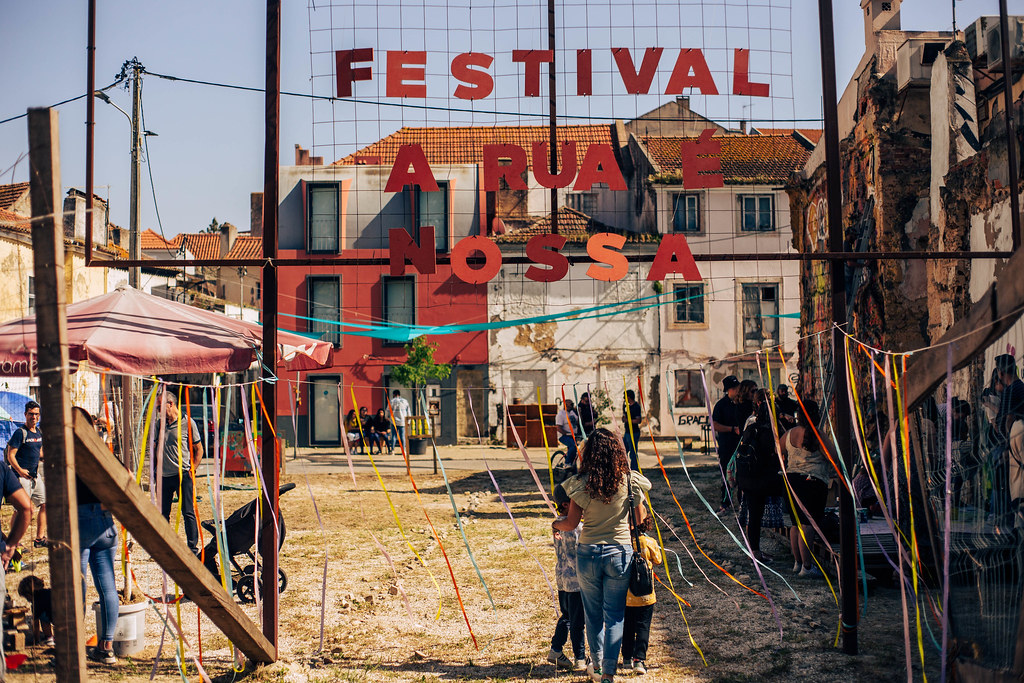
The emergence of LABIC is directly linked to the Healthy Neighborhoods Program, created in Portugal amid strong social challenges worsened by the COVID-19 pandemic. Beyond health impacts, the crisis intensified issues such as social isolation, economic fragility, and lack of cohesion in vulnerable areas. The program responded by funding projects that promote quality of life, social inclusion, and the enhancement of public spaces. Barreiro Velho's application was approved in May 2021, marking the beginning of LABIC and recognizing local problems such as urban decay, aging buildings, and weak connections between residents. Despite its strong historical identity, the neighborhood lacked dynamism and shared social spaces. LABIC emerged as a participatory response, based on co-creation and direct community involvement in identifying problems and building solutions. It operates as a "living laboratory," fostering collective learning, knowledge sharing, and social innovation, aiming to strengthen community autonomy. The project launched with a public presentation in 2021, engaging residents and local organizations, and emphasizing participatory methods, dialogue, and shared governance. This approach led to initiatives such as "Arranja-me um Café," promoting repair and knowledge exchange; "Brincadeiras no Bairro," activating public spaces with intergenerational activities; and the revival of "Os Ciclistas," encouraging sports and social interaction. The festival "A Rua é Nossa" stood out for mobilizing the community and reactivating urban space. Developed through a network of associations, collectives, institutions, and the municipality, LABIC strengthened its impact. Beyond activities, it reshaped residents’ relationship with the neighborhood, fostering participation, trust, and belonging. In short, exemplifies community innovation, showing that social transformation is more effective through dialogue, collaboration, and collective action.
Community Innovation laboratory
Collaboration
Revitalization of Public Spaces
citizen participation
urban experimentation
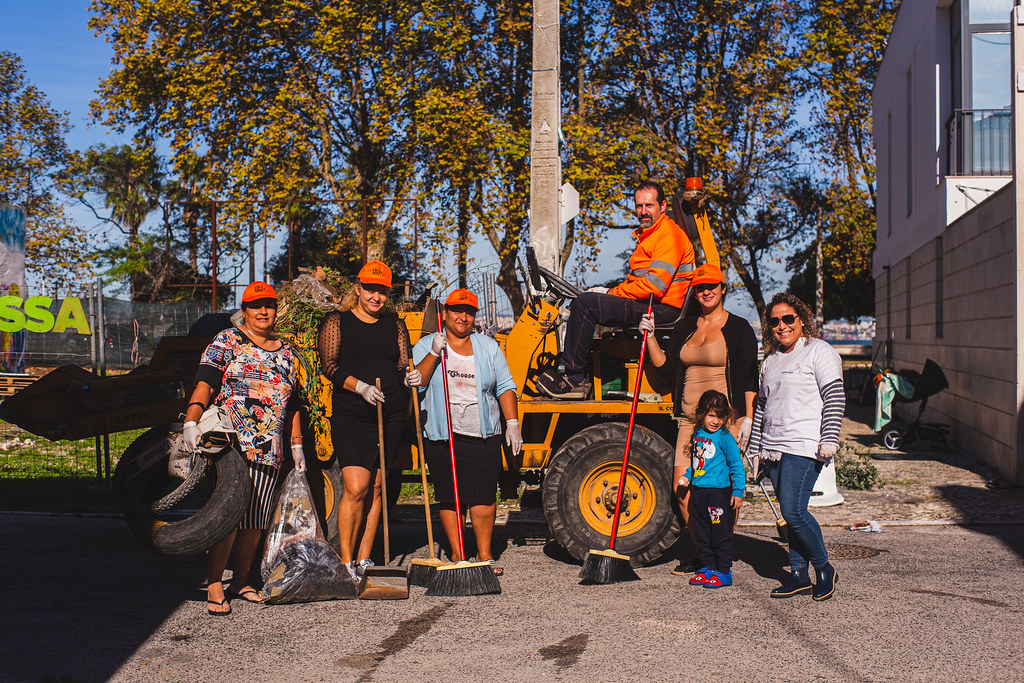
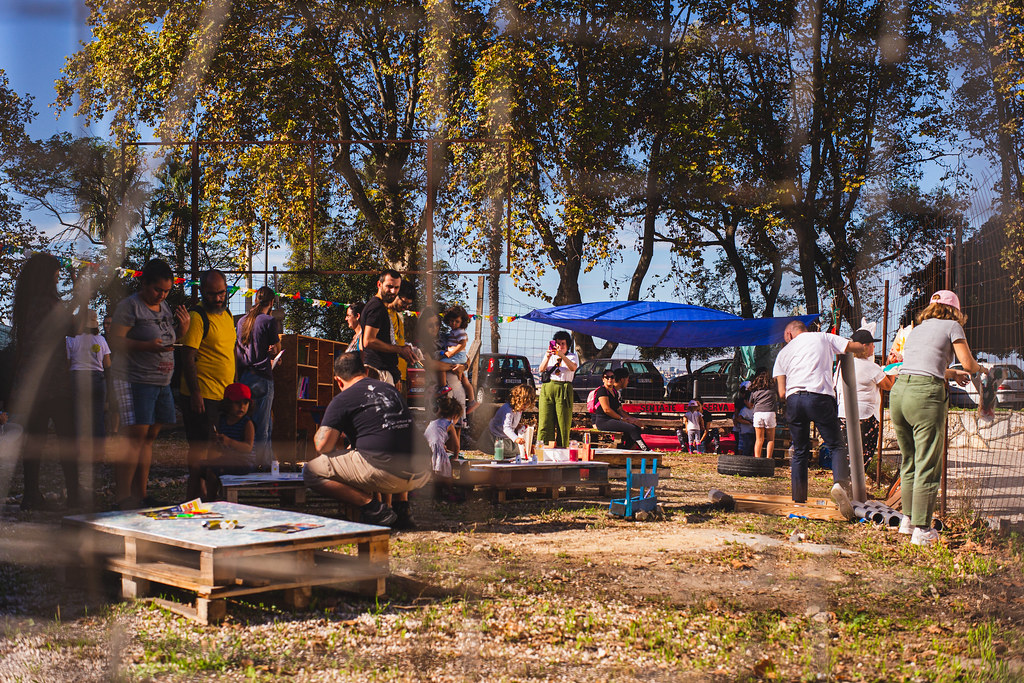
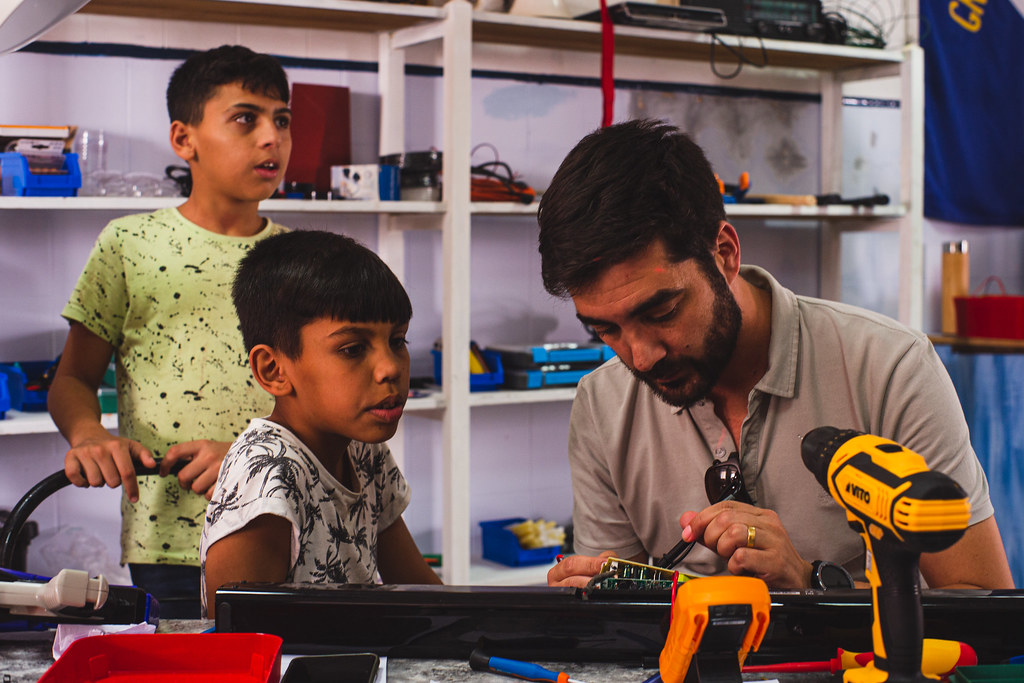
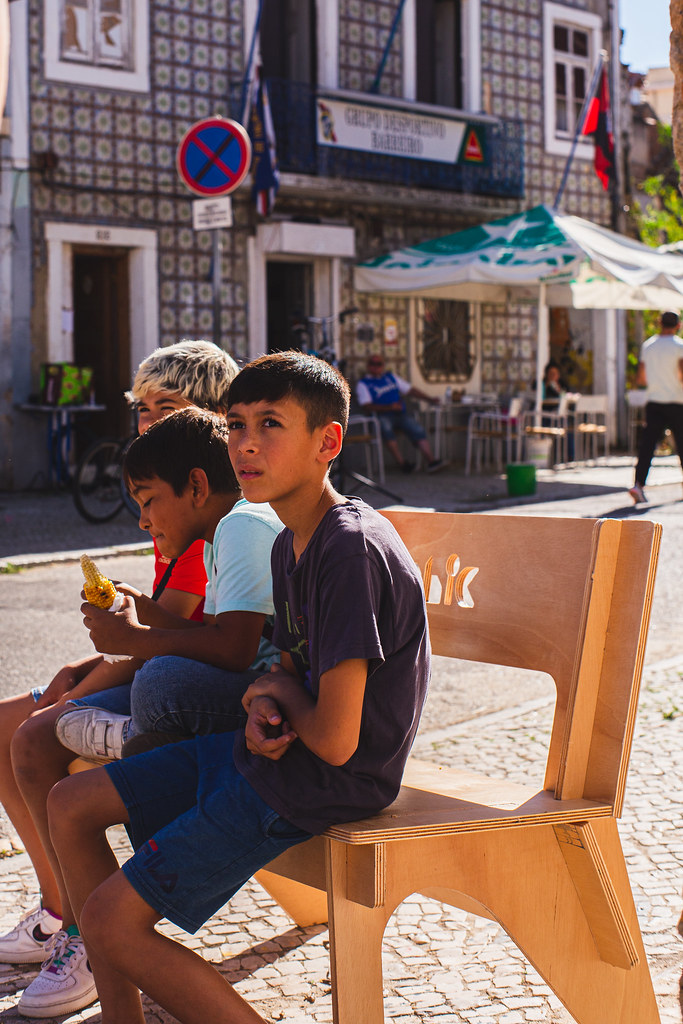
Through the creation of spaces for dialogue, cleaning and environmental awareness actions, tactical urbanism actions and the development of CIPs, the project aimed to promote sustainable practices in the neighborhood. In terms of solutions for public spaces, priority was given to quick and low-cost solutions that would allow the use of accessible materials and make rapid changes without the need for large financial investments, such as closing a street to traffic, building recycling points or installing small-scale vegetation. These actions prioritized the reuse of abandoned materials and structures, seeking to reduce the environmental impact and optimize the use of local resources. Some of the materials used were collected from clean-up activities (carried out with the local community in urban voids) and transformed into street furniture. Other materials were used by the CIP “Playing in the neighborhood” to build ephemeral play structures that occupied an urban void. CIP such as the "Repair Cafe" and “EcoLab” joined forces to promote the circular economy and environmental awareness. By activating an abandoned ground floor, a self-managed community space was created where residents bring damaged objects (such as household appliances and bicycles) to be repaired with the help of volunteers and low-cost technologies for recycling plastic. In addition to promoting reuse, they encourage learning and the exchange of knowledge. CIP “Community Library” occupied another unoccupied ground floor and encouraged the sharing of books, promoting more conscious consumption and strengthening the collaborative economy. CIPs worked together, in a logic of sharing knowledge, resources and spaces, collaborating directly with the network of partners, ensuring that the projects were executed within a vision of the future for the territory. In this way, they contributed to a change in the behavior of those involved, and built a new repertoire of healthier and more sustainable solutions
The aim was to promote an aesthetic and sensory experience that would enhance the collective identity of the territory. In phase I (Identify and map) awareness was raised about the historical and cultural heritage of this place through the memories and stories of the inhabitants. A historical itinerary was created on the streets of the neighborhood, where information about the historical and cultural heritage was posted and excerpts of filmed conversations (Door to Door Conversations) that emotionally connected residents to the territory. In the subsequent phases, an ongoing process of co-creation was carried out, intentionally designed to involve the communities. Participants were encouraged to contribute their skills and knowledge, share knowledge and tools, and develop solutions together for their neighborhood. Contexts and actions were created that increased opportunities for meaningful social interactions and collective experiences among people from different backgrounds and perspectives. The Street is Ours Festival was one of the results of Phase II, an event co-created by residents through workshops that allowed them to question and reimagine their way of life through various solutions that guaranteed their physical and mental well-being, such as the construction of urban equipment, the transformation of an urban void into a play space, the experimentation of more beautiful, safe and inclusive streets or the creation of a neighborhood cultural program. Both this experience and the creation of the PICs in Phase III, aroused positive emotions and rich sensory experiences contrary to the existing stigmatization of a degraded neighborhood. The creation of projects that improve the image of the neighborhood created new bonds between people and the place where they live, developed new collective memories and reinforced the sense of belonging. All aesthetic choices, such as the use of colors, shapes and materials, resulted from the co-design processes developed
Labic sought to involve all citizens, regardless of gender, racial or ethnic origin, religion, age or sexual orientation. The inclusion of underrepresented communities, such as the romani community, was promoted through a mediation process combined with local associations, resulting in the formation of specific groups such as the PIC “Romis do Barreiro Velho”. The project offered: free and open training to all, focused on collaboration and the development of participants’ autonomy and skills; access to different resources (such as physical tools, financial support, information and a network of partnerships) and; mentoring for the development and execution of their ideas. Design and production workshops, training in Romani culture, inspiration sessions with similar projects, were structured to accommodate different learning rhythms and needs. The learning spaces and resources provided were designed to be accessible to all, including those with different levels of cognitive and psychological capacity, involving spaces and mechanisms for conflict mediation. In this sense, the activities were mostly carried out in public spaces or easily accessible collective spaces (such as local associations) at different times, ensuring that all interested citizens could participate. Anyone could join and leave at any stage of the process, allowing for different types and levels of involvement. Through weekly and biweekly meetings, working groups (WG) were formed that managed themselves to implement their ideas, using a network of partnerships that helped to create a collective support system, where communities felt more represented and involved. The opportunity to develop projects together promoted a culture of sharing, solidarity and greater understanding of cultural differences (as in the case of the stigmatized Romani people in this territory), contributing to the experimentation of a new way of living together.
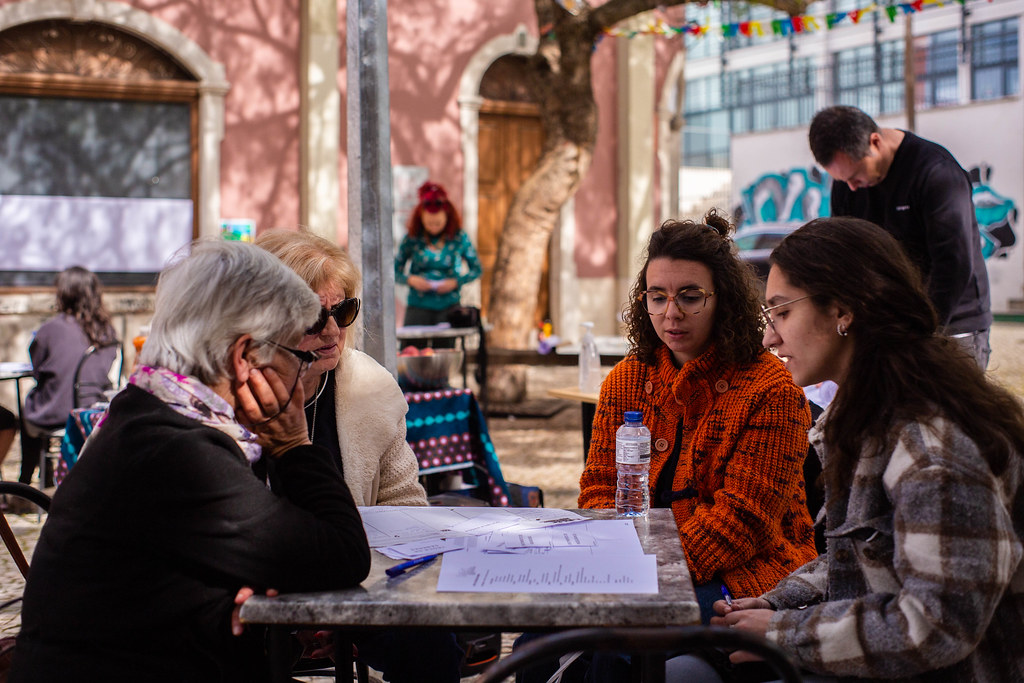
At the first level, public consultations were carried out to understand the needs and expectations of the community, using focus group sessions, interviews (Door-to-Door Conversations) and collaborative mapping sessions in the public space (Exploratory Phase and Phase I). At a second level, regular collaborative sessions were created with partners to create strategies to promote citizen engagement (Phase I and II). At a third level, sessions open to the public (Conversations in the Agora) were held on topics of common interest, creating bridges for dialogue between citizens and institutions (Phase II). And at a fourth level, a continuous co-creation process began that allowed citizens to become agents of change. Through a first public call (PC), working groups (WG) made up of citizens were formed to co-create the “The Street is Ours Festival”, which connected neighbors, encouraged the sharing of knowledge and experiences and mobilized joint action (Phase II). Through a second PC, the PICs were developed (Phase III). Combining co-creation and co-production workshops, training workshops and community assemblies (Phase IV), opportunities were created for the development of autonomy and technical, personal and collective skills. The communication channels used sought to ensure that all interested parties had access to clear and transparent information about the project's objectives, activities and results. This communication took place digitally (website, social media and WhatsApp); information panels in busy areas of the neighborhood to reach those without internet access; and periodic face-to-face meetings, where the flow of information occurred in such a way as to create a space for the information to feed the dialogue. The website was created under free licenses and functions as a documentation platform for the entire process and its results, allowing it to be replicated in other territories.
LABIC was funded by a participatory government program called “Bairros Saudáveis” and brought together a set of partnerships in a collaboration network: public university (doctoral researchers and students from ISCTE-IUL); local public authorities (sectoral departments such as urban hygiene, social intervention, urbanism and culture); local associations (social, cultural and sports), local commerce (restaurants and cafes). By adopting a place-based approach, we sought to connect networks, people and institutions that operated in the territory to build a common vision, and through tactical actions, jointly contribute to the revitalization of the territory. At the local level, collaborative sessions with the network made it possible to identify work synergies, clarify the role of each partner, debate ideas and create a joint action plan that values local social and human capital, using co-design, mapping and strategic design tools. This plan made it possible to support the involvement of an informal network of citizens in designing and experimenting with solutions to become active parts of the process. In order to promote the transmission of knowledge between similar projects, exchange opportunities were created at regional level (such as Fablab Lisboa and Rês do Chão), national level (such as Melgaço PopUp, VivaLAB and Circular Economy Portugal) and international level (like Labic Novale and Silo - Arte e Latitude Rural). The exchange with Rés do Chão resulted in a proposal for territory that won an honorable mention in the Tactical Urbanism Now! competition. (attached). The connection with academia allowed access to studies, tools and methods that strengthened the solutions developed, increasing the impact of the intervention. At a global level, by connecting with people, networks and institutions with similar purposes, it was possible to contribute to a broader discussion about how we design and live in urban space, involving the people who inhabit it
The creation of the collaboration network allowed from the beginning to involve a diversity of disciplines (from architects, sociologists, psychologists, artists, social intervention technicians, etc.) who worked together to build a common vision for the territory (interdisciplinary approach) that would be close to the daily practice of citizens and their situated knowledge (indisciplinary approach). In an operational way, this network acted in the creation of an enabling ecosystem for citizen innovation processes (providing it with resources, actors, methods and interactions), allowing local communities to become the main agents of change and to be involved in the creation of new knowledge about the territory. The transformation of the urban void no. 12 (formerly a garbage dump) initiated in phase II involved: the private sector (temporary provision of land), local government (cleaning and logistical support), civil society, researchers, architects and citizens (participation in the co-creation process) and local mediators working with underrepresented communities. They played a fundamental role in connecting with the local community, thus forming an indisciplinary ecosystem that integrated formal and informal knowledge to achieve a common goal, the creation of a safe, beautiful and inclusive community space. In the following phases, through capacity-building workshops supported by mentors from similar projects (who could contribute their experience to the development of PICs) and the integration of horizontal governance models (with the support of researchers from ISCTE-IUL), it was possible to support citizens in creating their own narratives to improve the public space and their life together. Throughout the process, the role of the coordination of ISCTE-IUL architect-researchers (residents of Barreiro) also contributed to the interconnection between global and local challenges involving academic and non-academic partners.
LABIC's business model is based on a hybrid logic, combining public funding, institutional partnerships, and community initiatives, ensuring sustainability in the medium and long term. In an initial phase, the project was funded by the Healthy Neighborhoods Program, allowing its implementation and the development of the first activities. This support was essential to create the foundations of the laboratory, test participatory methodologies, and mobilize the local community. After this phase, LABIC's sustainability depends on the diversification of funding sources and the work of each project. The possibility of applying to national and European public programs related to social innovation, culture, territorial cohesion, and community development remains, as well as partnerships with the municipality, local associations, academic institutions, and cultural organizations. In parallel, the projects develop activities that can generate complementary revenue, such as workshops, training, cultural events, and capacity-building actions, with paid registrations or voluntary contributions. Initiatives like "Get Me a Coffee" can evolve into circular economy models, with small contributions or service provision. The project also values collaborative financing, such as donations, crowdfunding, and community contributions, including the loan of urban spaces, reinforcing the feeling of belonging and shared responsibility. It is important to emphasize that LABIC does not follow a profit-driven logic, but rather a social impact model. Its sustainability rests on the ability to maintain an active network, mobilize resources, and adapt to funding opportunities, ensuring the continuity of activities and the strengthening of the local community.
The methodology was designed to be open, inclusive and replicable (proposals emerge from the community together with the mapped network of stakeholders), and can be transferred and replicated to different contexts, territories and beneficiary groups. The laboratory typology uses an open and flexible process, where mistakes are allowed, testing and adjustments are made, consuming few resources and contextualized to local needs, with the capacity for adaptation, allowing it to be transferred to different contexts. Participatory diagnosis (identification of the problem, challenges and opportunities), mapping of stakeholders (who has an impact and who is impacted by the problem) and co-creation of a common vision (what we are going to contribute to) are key elements for defining and articulating actions (in a holistic way), and can be replicated in any (local) context, contributing to a global movement, where communities thrive through collaboration, accessibility and participation in their design, towards more resilient and people-centered cities. To have participatory cities, it is necessary to empower and train people so that they can participate in informed decisions. To this end, it is essential to create open spaces for dialogue, to bring together different types of knowledge and to deconstruct preconceived concepts so that we can imagine fairer and more sustainable futures. At LABIC, training spaces have been created, collaborative design tools have been used, and open calls have been held that can be transferred to other projects and contexts. The activation of urban voids is another process that can be transferred to other places, as they are expectant spaces that can be used for the common good while they have no other use by the owner. In this way, we promote the life of the public space, to the detriment of garbage and the unhealthy environment, valuing the places where we live