Enhancing Circularity, Sustainability, and Innovation
MESH CIty
MESH City - designing cities for people
MESH City is a digital tool that helps cities design more inclusive, livable and sustainable urban environments. By making social values such as accessibility, safety, movement and opportunities for human interaction visible and measurable, it supports better decisions early in the planning process. Developed and tested in real projects in Malmö, MESH City transforms complex urban challenges into clear, actionable insights—helping shape cities where people can connect, thrive and belong.
Sweden
Local
Malmö
Mainly urban
It involves a physical transformation of the built environment (hard investment)
Yes
2025-05-22
No
No
No
Organisation
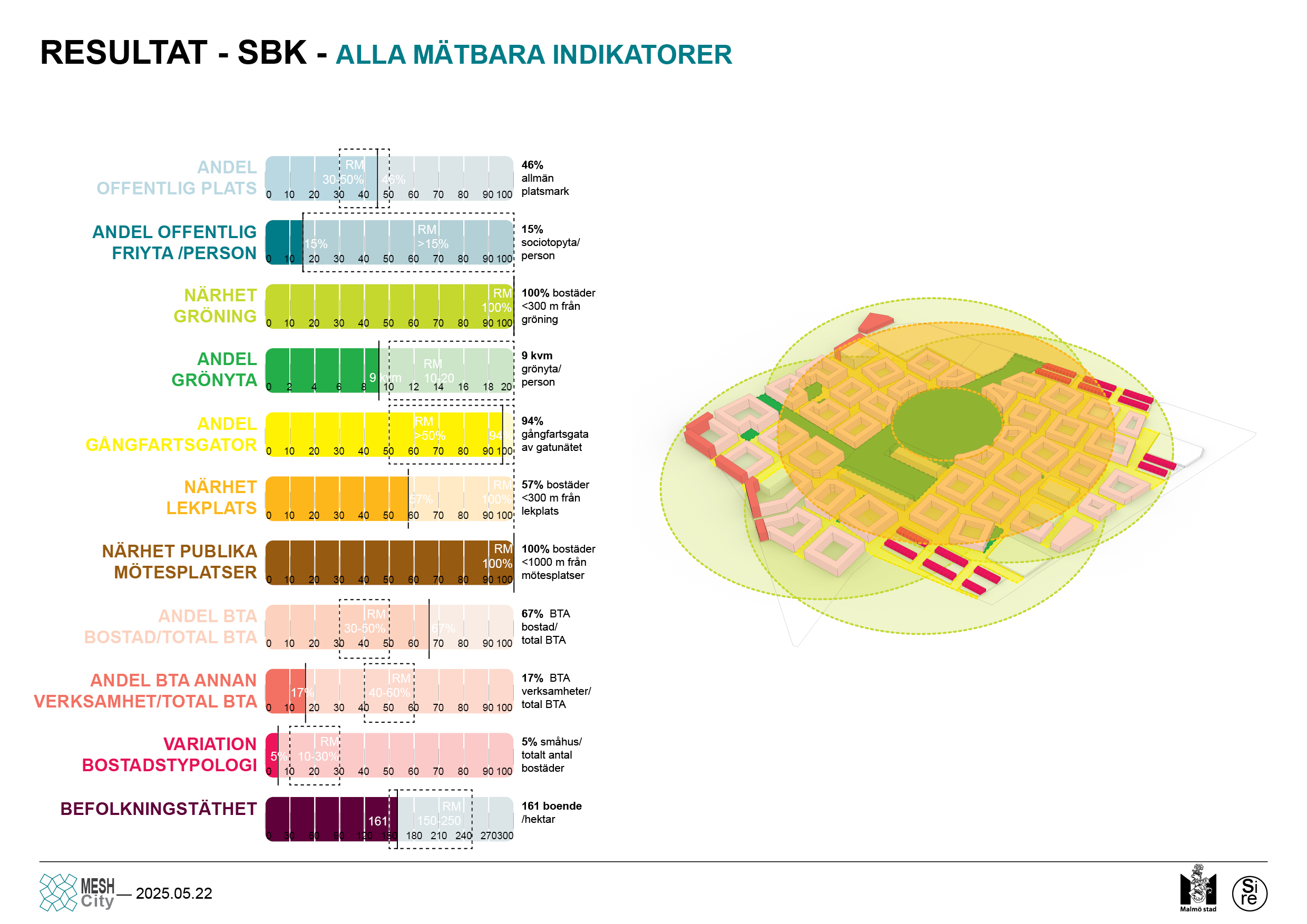
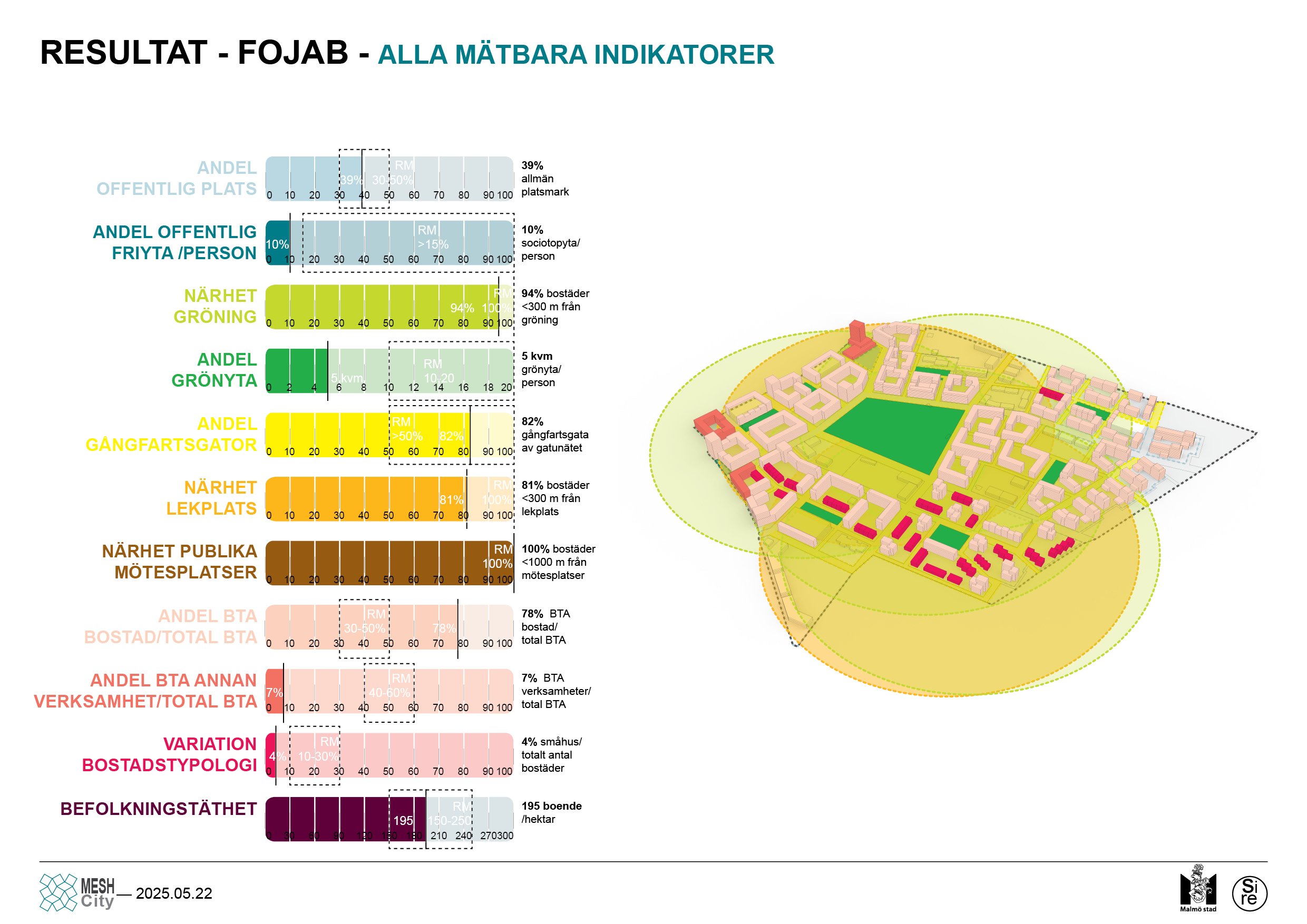
The Jägersro project in Malmö represents an early and applied use of MESH City within a real municipal planning process. As part of Malmö’s comprehensive plan (FÖP Jägersro), the project explored how future urban structures can better support social sustainability through digital analysis and design.
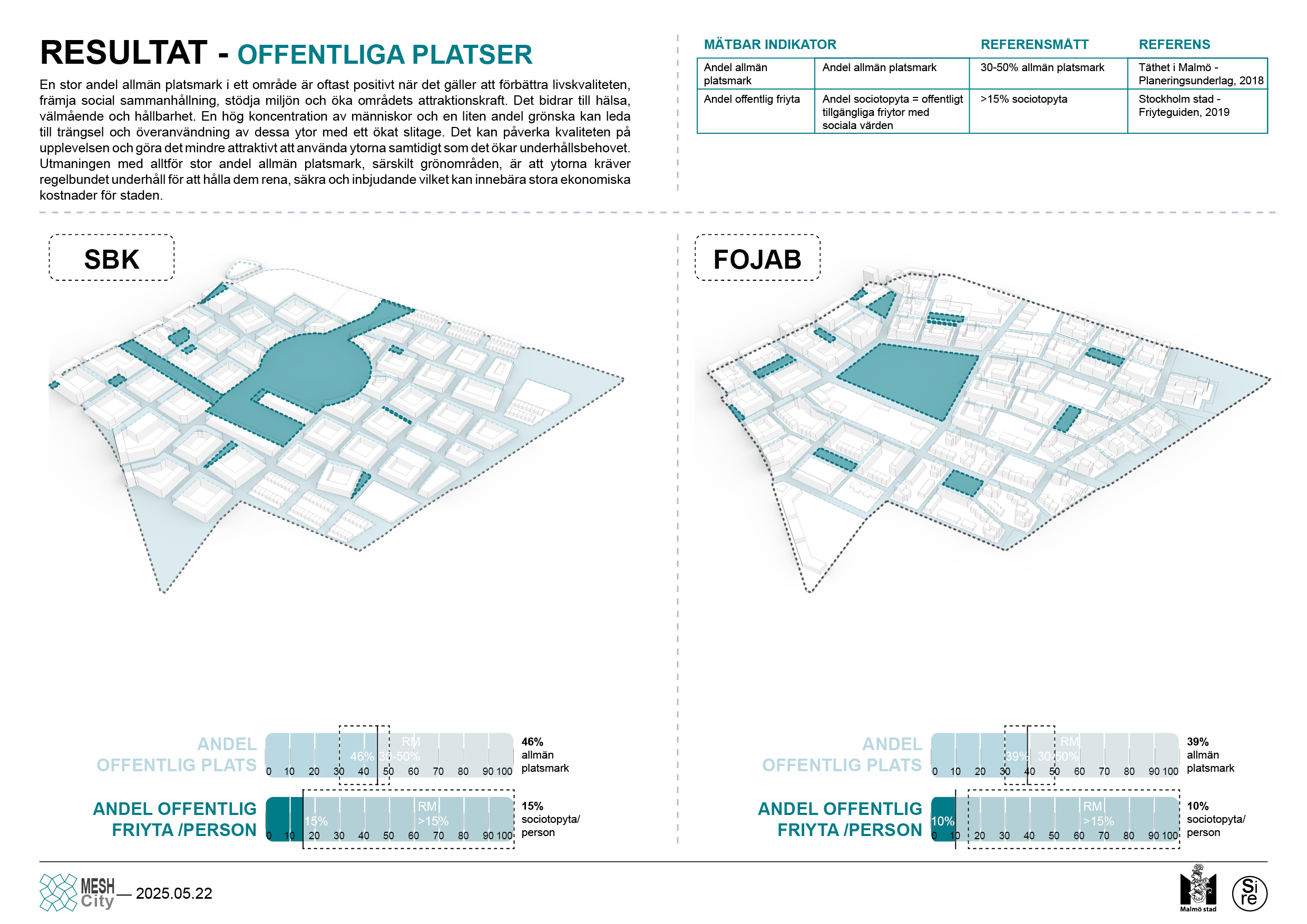
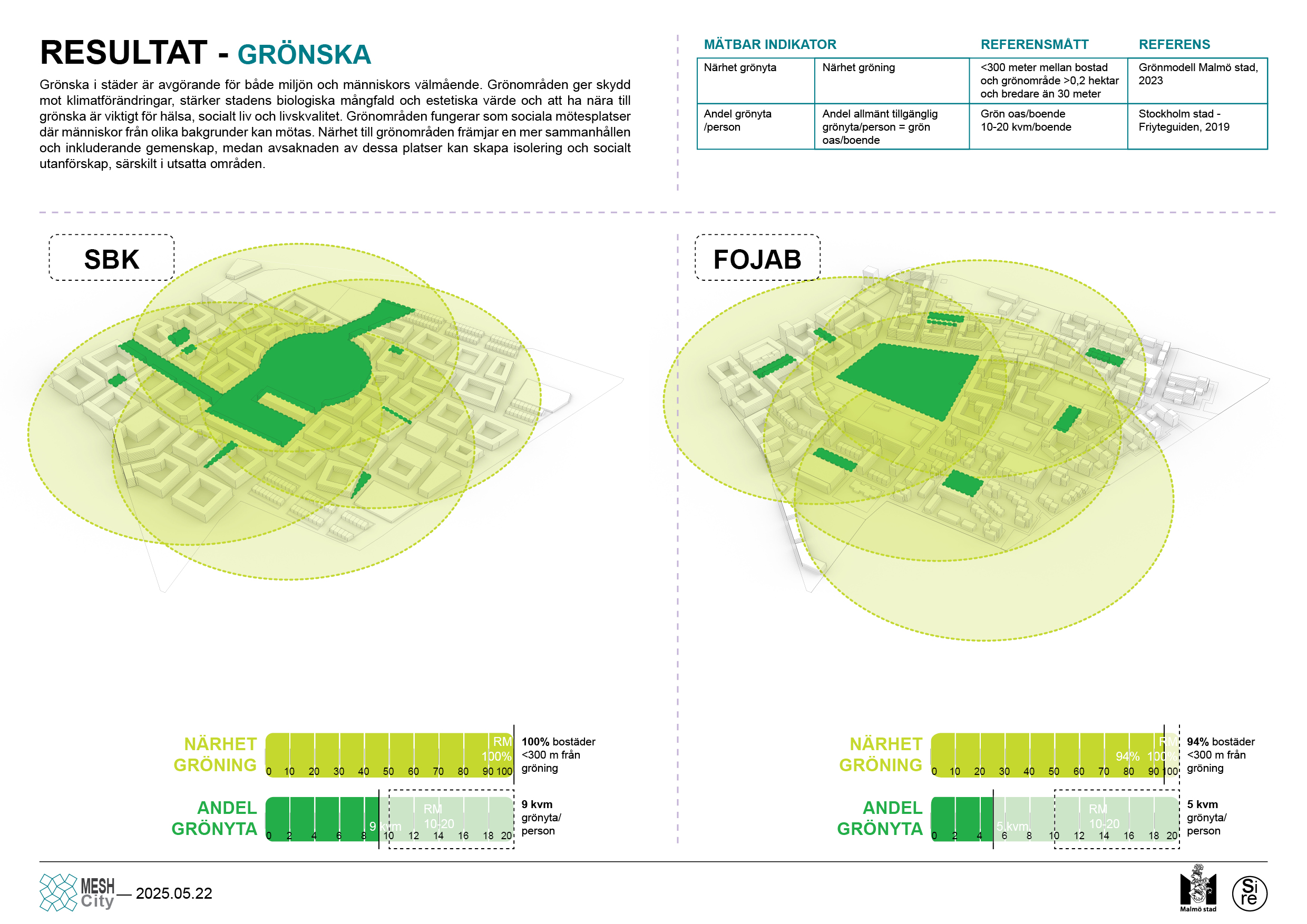
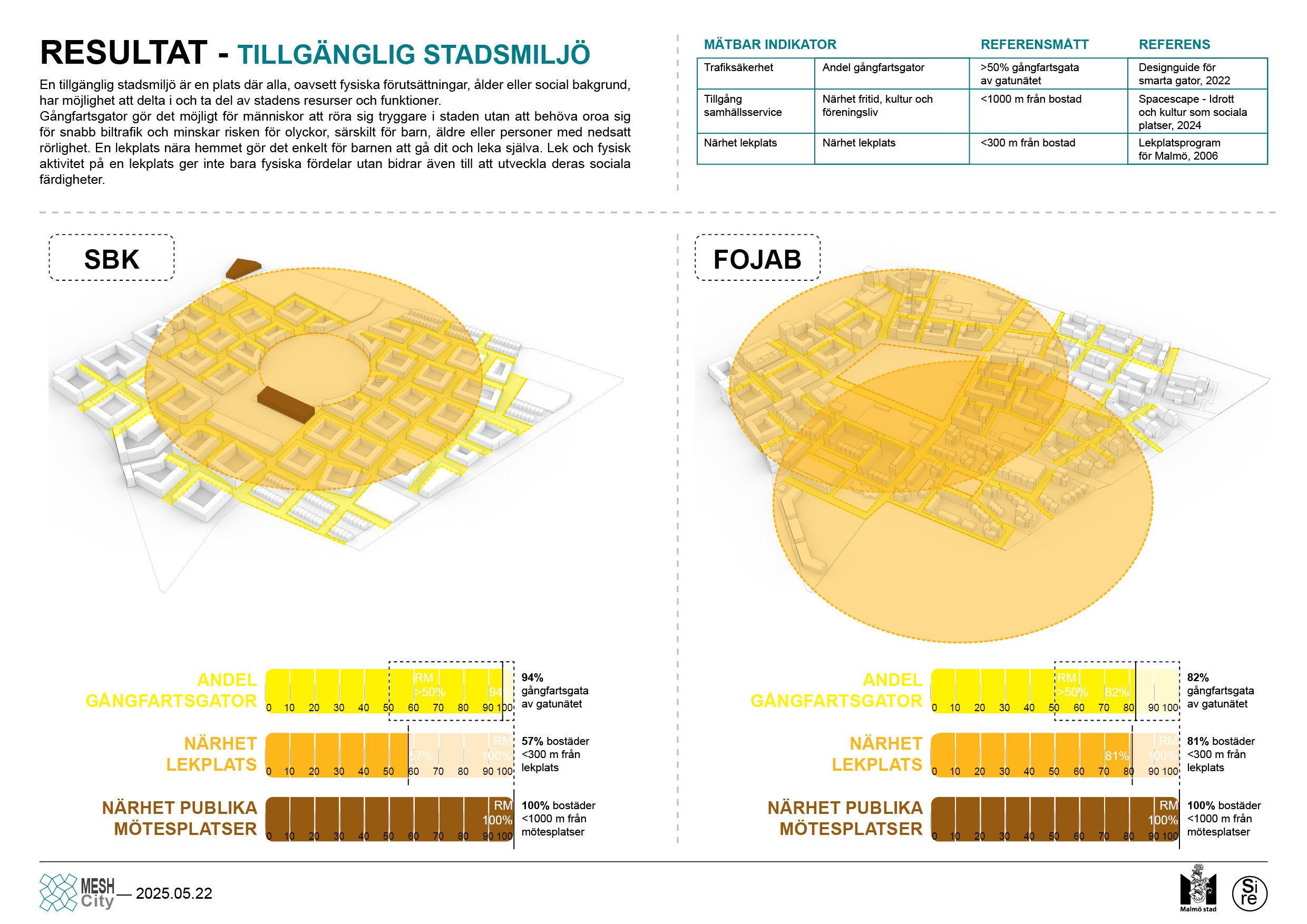
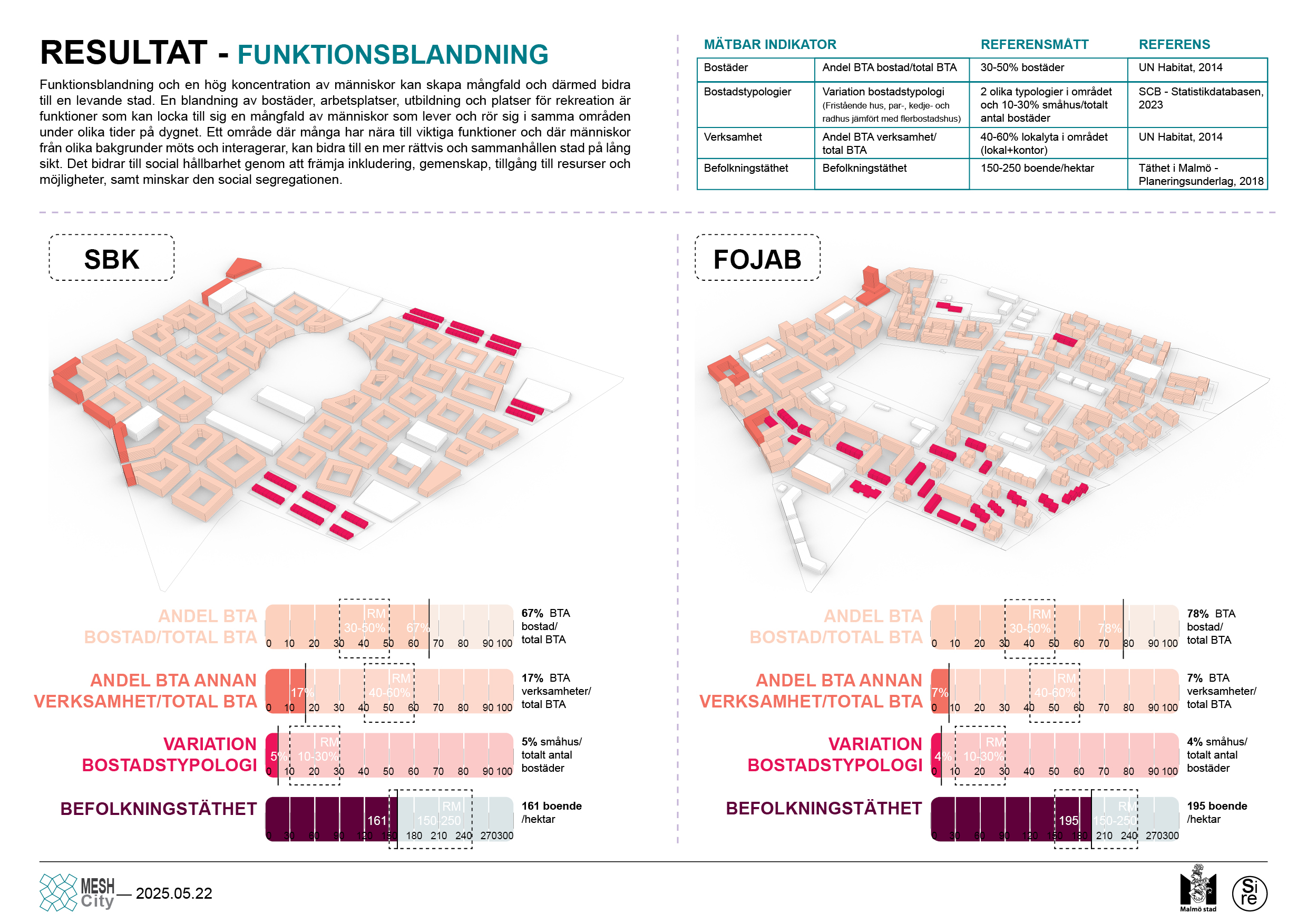
Using MESH City, different urban development scenarios were analysed to understand how spatial configurations influence accessibility, connectivity, and opportunities for social interaction. The tool made it possible to compare alternative layouts and identify how changes in the built environment can affect movement patterns, proximity to services, and the quality of public spaces.
A key result of the project is that social sustainability was introduced as a more concrete and operational parameter in early-stage planning. The analysis supported dialogue between Malmö City, developers, and other stakeholders, enabling more informed and evidence-based discussions about how to design inclusive and connected urban environments.
The project also demonstrated how digital tools can bridge research and practice by translating complex social data into clear and actionable insights for planners. This strengthens decision-making processes and creates a shared understanding between different actors involved in urban development.
In the long term, the Jägersro project contributes to a shift in how cities approach planning and development. By embedding social sustainability into the core of the planning process, it supports the creation of more inclusive, safe, and vibrant urban environments. The methodology developed through the project has strong potential to be scaled and applied in other cities, both in Sweden and internationally, contributing to more socially sustainable urban development on a broader scale.
The story of MESH City begins with a fundamental challenge in urban development: cities are often designed and evaluated based on technical and economic parameters, while social dimensions—such as inclusion, safety, and opportunities for interaction—are harder to define, measure, and integrate into decision-making.
The idea emerged from years of work in architecture, urban development, and real estate, where the gap between research on social sustainability and its practical application became increasingly clear. MESH City was developed to bridge this gap by translating knowledge about social values into a practical tool for urban design and analysis.
The project was implemented through close collaboration between practitioners, municipalities, and researchers. Development started with a plug-in for the 3D software Rhino, made possible through support from Almi. This enabled urban designers to analyse spatial structures and test design scenarios within their existing workflows.
After the Rhino plug-in was developed, an early pilot project was carried out in Rosengård, Malmö. This step tested the method in a real urban context and provided insights into how spatial structure influences social dynamics in a socio-economically complex area. The pilot helped refine both the analytical approach and the relevance of the tool.
The next step in the development was a web-based solution, supported by funding from Formas within Smart Built Environment, which increased accessibility and usability for a broader group of users. MESH City has since been applied in projects such as Jägersro in collaboration with Malmö City, where it supported analysis of how different urban layouts affect social sustainability. The tool continues to be developed through iterative testing, workshops, and dialogue with planners, developers, and other stakeholders.
Today, MESH City functions as both a digital tool and a methodology for more evidence-based and socially conscious urban development.
Social sustainability
Urban design innovation
Evidence-based planning
Inclusive public spaces
Digital urban analysis
MESH City addresses sustainability by integrating social, environmental, cultural, and economic dimensions into early-stage urban planning. While many processes prioritise technical and economic aspects, MESH City makes social sustainability measurable and actionable, enabling cities and developers to design more inclusive and resilient urban environments.
The tool analyses how urban form influences accessibility, mobility, safety, and opportunities for social interaction. By comparing different design scenarios, it supports solutions that promote walking, cycling, and public transport, thereby contributing to reduced environmental impact. At the same time, it helps create connected neighbourhoods that encourage social interaction and strengthen community cohesion.
Culturally, MESH City supports place-based development by visualising how spatial structures shape human experience. This allows planners to better understand local context and create environments that reflect and enhance the identity of a place.
Economically, the tool improves decision-making by providing evidence-based insights early in the planning process, reducing uncertainty and costly changes later. It supports more efficient use of resources and better alignment between long-term sustainability goals and development outcomes.
MESH City is exemplary in terms of sustainability because it bridges research and practice and operationalises social sustainability in a clear, visual, and practical way. It enables stakeholders to make informed, balanced decisions and supports a more integrated approach to urban development.
By combining environmental, social, and economic perspectives in one tool, MESH City contributes to more sustainable, inclusive, and future-oriented cities.
MESH City contributes to aesthetics by linking the physical form of the city with how people experience and use urban spaces. It helps designers and planners create environments that are not only functional, but also pleasant, meaningful, and engaging in everyday life.
By analysing spatial structures, MESH City highlights how elements such as street networks, block structures, and public spaces influence movement, visibility, and the quality of human interaction. This enables the design of streets, squares, and neighbourhoods that feel intuitive, human-scaled, and inviting—qualities that are central to a beautiful urban environment.
The tool supports the creation of places that foster a sense of belonging by making it easier to design spaces where people can meet, stay, and participate in everyday life. By visualising different design options, it encourages dialogue between stakeholders and helps align decisions with the needs and experiences of people who will use the place. This participatory and transparent approach contributes to a stronger sense of care and ownership of the built environment.
In the long term, MESH City supports urban development that balances structure, function, and human experience. It helps ensure that new neighbourhoods are not only efficient and sustainable, but also visually coherent, diverse, and rich in spatial qualities that people enjoy and value.
MESH City can be considered exemplary in terms of aesthetics because it integrates visual design, spatial analysis, and human experience into a single approach. It enables the creation of cities that are both analytically well-founded and emotionally engaging—where beauty is not an afterthought, but a core part of the planning process.
MESH City contributes to inclusion by making social and spatial impacts of urban design visible and understandable early in the planning process. By analysing how different urban structures influence accessibility, movement, and the distribution of public spaces and services, the tool supports the creation of environments that are more accessible and equitable for all groups in society.
The tool helps identify barriers in the built environment—such as limited connectivity, lack of safe routes, or uneven access to public functions—and enables planners to test alternative solutions that improve accessibility for pedestrians, cyclists, and public transport users. This supports more inclusive and affordable mobility systems, reducing dependence on private cars and increasing access to opportunities for people of different socio-economic backgrounds.
MESH City also promotes inclusive governance by supporting dialogue between municipalities, developers, researchers, and civil society. By visualising different design scenarios and their social impacts, it creates a shared understanding and a more transparent decision-making process. This enables more stakeholders to participate in shaping urban development, strengthening democratic planning processes.
The tool is grounded in a “design for all” approach, where inclusivity is not treated as a separate objective, but as an integral part of spatial design. It supports the development of urban environments that are usable, accessible, and welcoming for diverse groups, including children, elderly people, and individuals with different physical and social needs.
MESH City can be considered exemplary in terms of inclusion because it operationalises social accessibility and equity in a practical and scalable way. It bridges the gap between abstract social goals and concrete design decisions, enabling cities to create more inclusive, fair, and accessible environments in both the short and long term.
MESH City promotes participatory urban development by enabling structured dialogue between citizens, municipalities, developers, and other stakeholders in early planning stages. While the tool itself is technical, it supports participatory processes by making complex spatial and social relationships visible, understandable, and comparable.
Through visualisation of different design scenarios, MESH City provides a shared platform where stakeholders can discuss trade-offs and opportunities based on clear, evidence-based insights. This supports more informed and inclusive discussions, where non-experts can engage with planning questions on equal footing with professionals. In this way, the tool helps lower barriers to participation and makes complex planning processes more accessible.
The project has been applied in real-world contexts, including pilot projects in collaboration with Malmö Stad, such as the planning work in FÖP Jägersro. These applications have shown how digital tools can support collaborative planning processes and improve dialogue between stakeholders. The insights generated have contributed to more grounded and transparent decision-making.
MESH City also builds on iterative development, where feedback from users, practitioners, and collaborators informs the continued improvement of the tool. This ensures that it remains relevant, usable, and aligned with the needs of those involved in urban development.
The impact of this participatory approach is twofold. First, it strengthens planning outcomes by incorporating diverse perspectives and local knowledge. Second, it contributes to more democratic and transparent processes, where stakeholders feel heard and involved.
MESH City can be considered exemplary in terms of participatory principles because it combines digital innovation with collaborative methods, creating new ways for stakeholders to co-create more inclusive, sustainable, and well-informed urban environments.
MESH City has been developed and applied through collaboration across multiple governance levels, enabling integration between local needs and broader policy and research agendas.
At the local level, municipalities and planning departments have been key partners. Through pilot projects such as in Malmö Stad (FÖP Jägersro), the tool has been tested in real planning processes, where it supported analysis and dialogue in early-stage urban development. Local stakeholders contributed with contextual knowledge, planning requirements, and feedback that directly informed the development and refinement of the tool.
At the regional and national level, collaborations with research and innovation programmes, including funding from Formas and Vinnova, have enabled the development of MESH City within a broader innovation ecosystem. These actors have supported the advancement of methods, validation of approaches, and alignment with national priorities in sustainable urban development and digitalisation.
At the European level, MESH City is positioned within frameworks such as the New European Bauhaus and DUT (Driving Urban Transitions), where it aligns with shared goals around sustainability, inclusion, and participatory governance. Engagement with these frameworks provides access to knowledge exchange, cross-border collaboration, and opportunities to scale the solution across contexts.
The added value of this multilevel engagement is significant. It ensures that the tool is grounded in local practice and aligned with national and European policy objectives. It also enables continuous learning, validation, and adaptation across contexts, increasing robustness and scalability. By linking local implementation with broader governance structures, MESH City supports coherent and integrated urban development processes.
This multilevel approach is central to ensuring that MESH City can contribute meaningfully to systemic change in urban planning.
MESH City is built on a transdisciplinary approach that combines architecture, urban design, engineering, social sciences, and digital technologies. This integration is essential to understanding and addressing the complex challenges of urban development, where spatial, social, and technical aspects are deeply interconnected.
Architecture and urban design form the foundation of the project, providing knowledge about spatial structure, form, and the design of built environments. This is combined with engineering perspectives, particularly within infrastructure and spatial analysis, to understand how physical systems support urban functionality and connectivity.
Social sciences play a key role in defining and analysing social sustainability. Concepts such as accessibility, social interaction, inclusion, and spatial justice are translated into measurable parameters, enabling a deeper understanding of how urban form affects people’s everyday lives.
Digital technologies are central to MESH City, enabling the translation of these interdisciplinary insights into a practical tool. Through data analysis, visualisation, and parametric modelling, complex relationships between urban structure and social outcomes can be explored and communicated in a clear and accessible way.
The project is also influenced by research and innovation processes, where iterative development, prototyping, and testing have been used to bridge theory and practice. This ensures that the tool is grounded in both scientific knowledge and real-world application.
The transdisciplinary approach allows MESH City to connect different fields of knowledge into a unified system for urban analysis and decision-making. By combining these disciplines, the project creates new ways of understanding and shaping cities, supporting more informed, inclusive, and sustainable urban development.
The business model behind MESH City is a hybrid model combining project-based revenue, public funding, and scalable digital services.
In the early stages, the development of MESH City has been supported by competitive public funding from organisations such as Formas, Vinnova, and Almi. These grants have enabled the development of the core technology, including a fully functioning plug-in for Rhino and a web-based MVP, as well as validation through pilot projects in collaboration with public sector actors such as Malmö Stad.
Going forward, MESH City will generate revenue through a combination of licensing, consultancy, and project-based collaborations. Municipalities, developers, and planning organisations can access the tool through a subscription or licensing model, while tailored analyses, implementation support, and training services provide additional revenue streams.
The scalability of the web-based platform allows for efficient distribution to multiple users and markets without significant marginal costs. This enables MESH City to grow sustainably as adoption increases across cities and regions.
In addition, participation in European programmes such as DUT and Horizon Europe creates opportunities for co-financing of further development, pilot implementations, and international scaling. These collaborations also strengthen the tool’s relevance and increase its market potential across different national contexts.
The combination of public funding in the development phase and a clear path toward commercialisation ensures that MESH City can achieve long-term financial sustainability. The model supports continuous development, adaptation, and scaling, while maintaining alignment with public sector needs and societal impact goals.
MESH City is designed to be transferable and scalable across different geographies and sectors, as its core components are based on general principles of urban analysis rather than place-specific solutions.
The central methodology for analysing the relationship between urban form and social sustainability is transferable. It is based on universal spatial principles such as accessibility, connectivity, and proximity to services, which are relevant in different types of cities and can be adapted to local planning systems, data availability, and regulatory frameworks.
The digital platform is also scalable. The Rhino plug-in is fully functional, and the web-based MVP enables broader use across organisations and geographies. The modular structure allows the tool to be adapted to different datasets, planning processes, and user needs.
The methods and workflows are another key transferable element. This includes scenario analysis, visualisation, and support for dialogue between stakeholders. These approaches can be integrated into existing planning processes in municipalities, consultancies, and real estate development.
Lessons learned from pilot projects, such as those in Malmö City (FÖP Jägersro), provide concrete examples of how the tool can be applied in practice. These insights can be shared and adapted for implementation in other cities and countries.
MESH City is also relevant beyond urban planning, including in real estate development, infrastructure planning, and regional planning, where spatial analysis and decision support are essential.
The combination of a generalisable methodology, a scalable digital platform, and practical workflows makes MESH City well suited for transfer and implementation in different European contexts.