Arts, Culture, and Heritage as Drivers of Change
"Garagen Companions"
"Garagen Companions" - Insights into the hiStories of the Garage Campus
The project “Garagen Companions” guides you through the hidden stories of Chemnitz’s former tram depot, the Garage Campus. Visitors can discover the site’s past through personal stories, artistic interventions, and design objects – experiencing how history, present, and future come together in a vibrant cultural space shaped by its community.
Germany
Local
Chemnitz
It addresses urban-rural linkages
It involves other types of transformations (soft investment)
Yes
2025-12-31
No
No
No
Organisation
„Garagen Companions” is a European cooperation project by Garagen-Campus e.V. (Chemnitz, Germany), Bureau Ruimtekoers (Arnhem, Netherlands) and German designer Luca Ortmann. It provides insights into the history and stories of the Garage Campus, an old tram depot and intervention space of the European Capital of Culture Chemnitz 2025.
Since 2021, the depot of Chemnitz’s local transportation service (CVAG) has been transformed into a new cultural hub with local, regional, and international appeal – the so-called Garage Campus. Many people have been involved in the development process, and more and more are interested in helping to co-create the space.
The Garage Companions project also gives former employees of the former depot the opportunity to see themselves as part of the ongoing story and to provide insights into their previously hidden stories about the site and its past. Their personal perspectives and the linking of their stories strengthen the connection between the history, present, and future of the place.
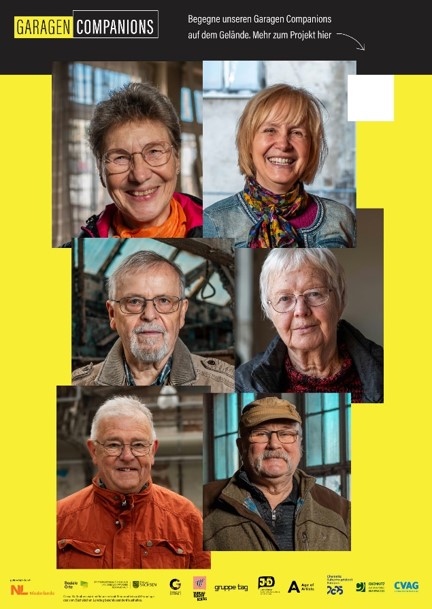
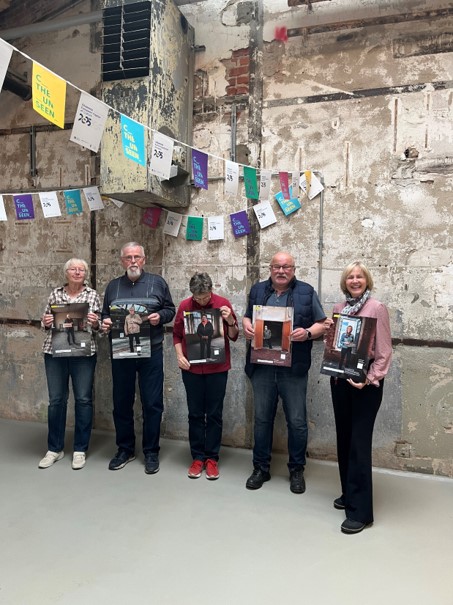
Launched in 2024, the social design process used creative and participatory methods to collect and translate these stories into tangible interventions. Six Garage Companions are now represented across the site through portrait photographs and QR-coded audio stories, placed at their former workplaces.
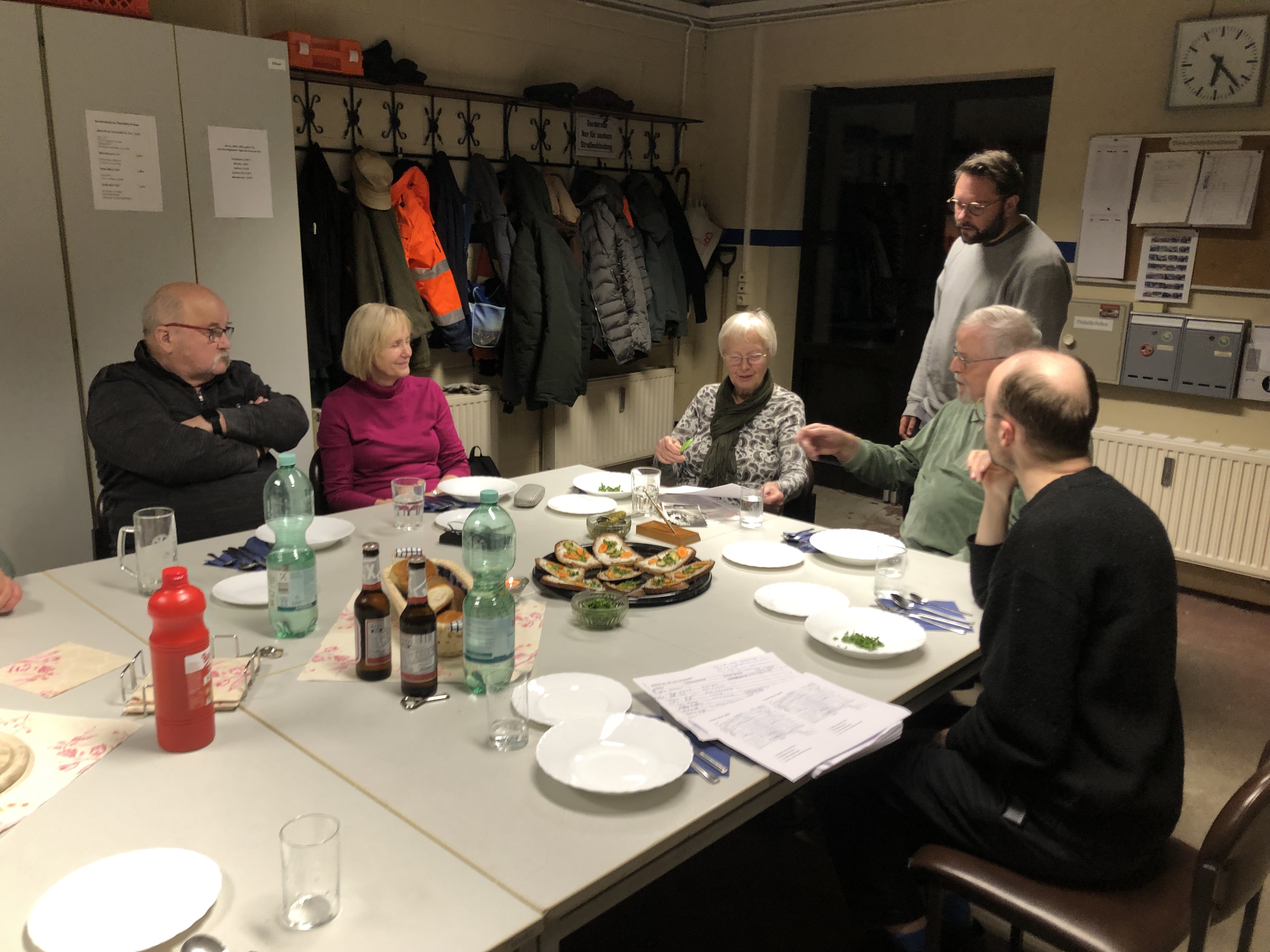
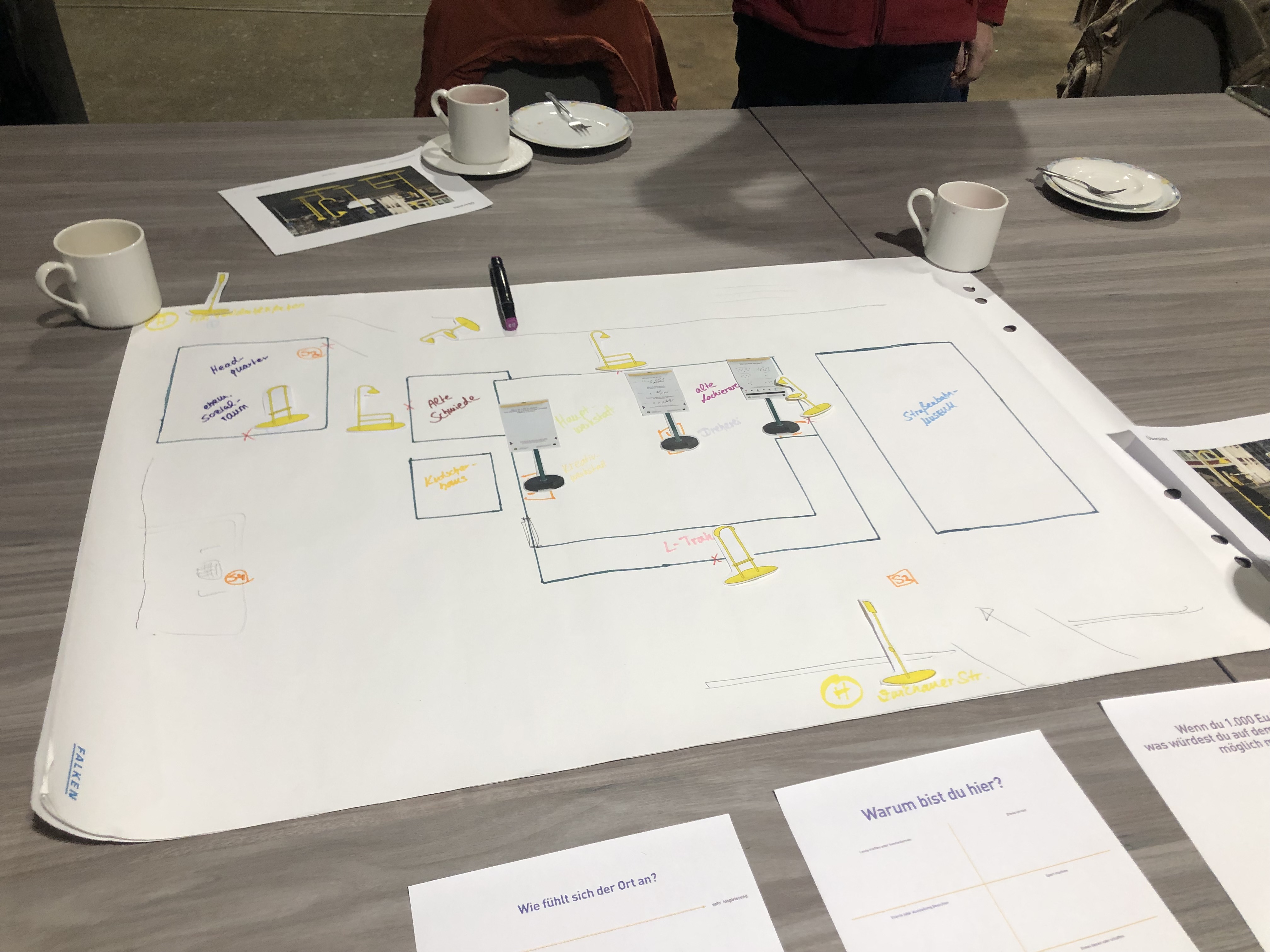
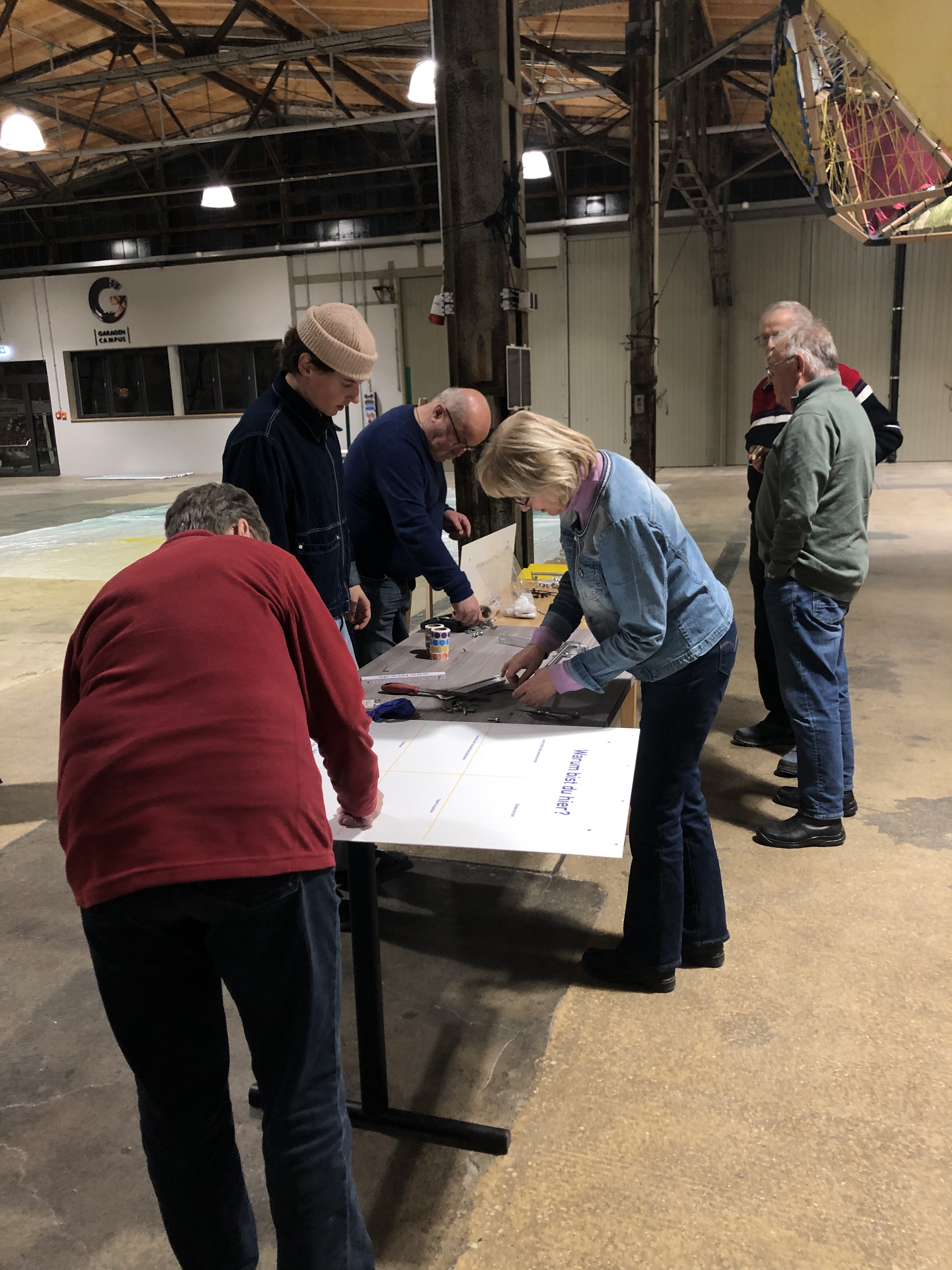
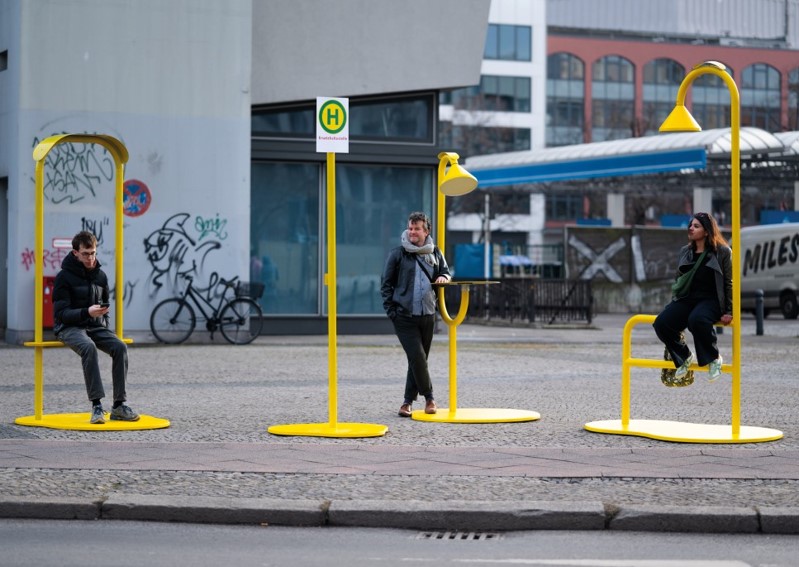
In 2025, the project entered its next phase: Regular meetings have strengthened community bonds and together with Luca Ortmann, modular “design stops” were developed to set up on the site. As places of inspiration the stops invite visitors to sit down, look at the information boards, listen to stories, linger and engage in conversation.
The Garage Campus becomes a stage where the stories of former employees are made visible through art and design - beyond 2025, in line with the motto “C the Unseen!” By combining participation and aesthetics, the project fosters social cohesion, a sense of belonging, and long-term cultural value.
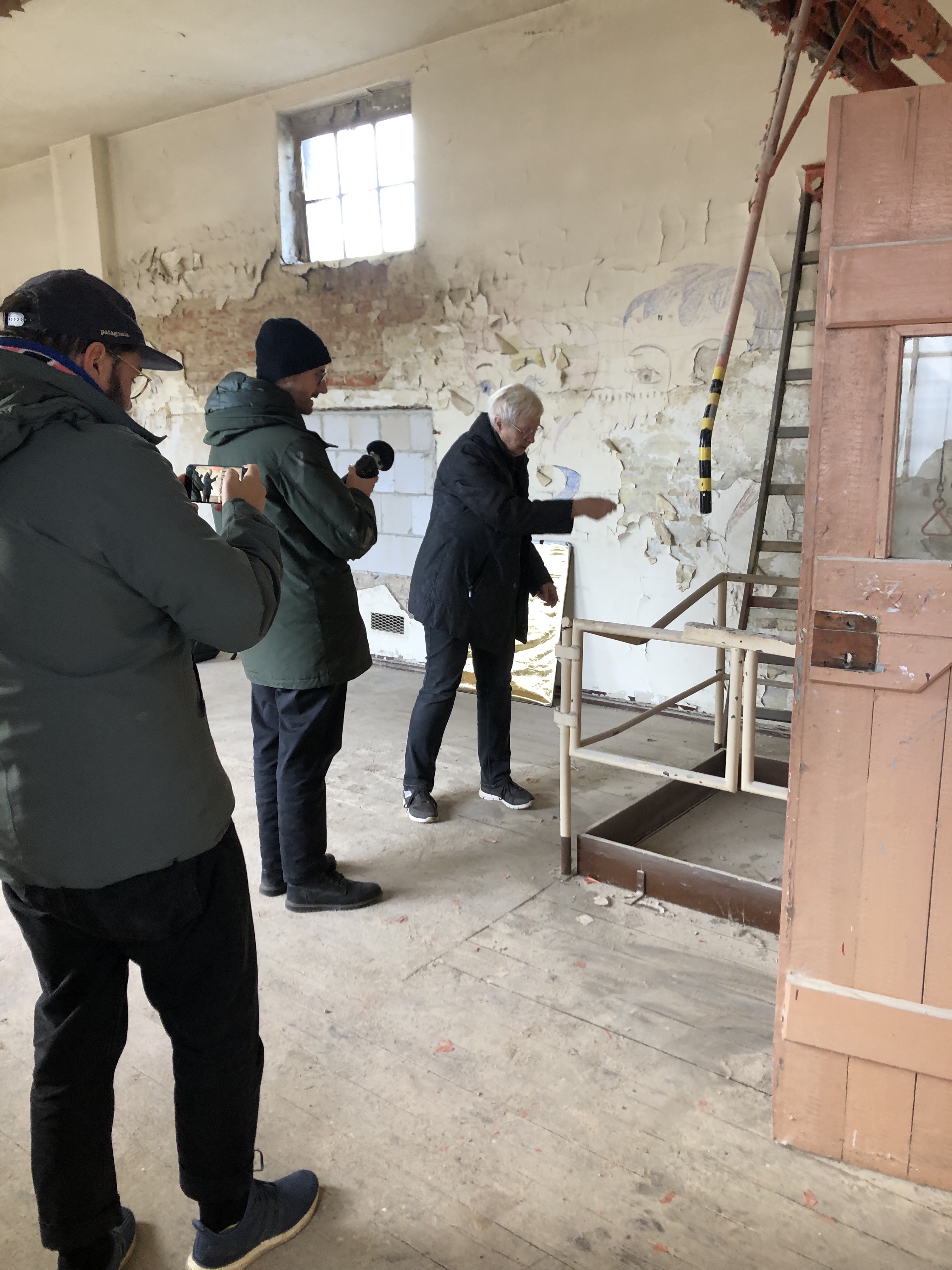
The idea for “Garagen Companions” emerged during a retirement party 2023 at the Garage Campus, where it became apparent that many former employees of the former depot still had strong connections to the site and stories worth sharing. The project began with Karla, who recounted her work in sign painting, inspiring the team to document and creatively present these personal narratives.
Also in 2023, a visit to the Dutch Design Week initiated the connection to Bureau Ruimtekoers, whose approach to social design and participation strongly resonated with the project’s ambitions. A first joint meeting in Chemnitz in spring 2024 marked the starting point of the German-Dutch collaboration.
At that time, the former tram depot was already undergoing transformation into a cultural hub as part of Chemnitz 2025. The project built on this process by focusing on the people behind the site and their lived experiences, using storytelling as a starting point for engagement.
Through artistic research, interviews, workshops, and co-design sessions, participants’ stories were collected and translated into site-specific interventions. A transdisciplinary team (including social designers, artists, photographer, community manager and product designer) worked closely with the Companions to develop formats that connect stories with space.
This process resulted in info boards with portrait photographs and QR-coded audio stories, and modular design stops placed at former workplaces across the site. The ongoing exchange fostered a strong sense of community: participants formed friendships, continued meeting regularly, and encouraged others to join. In 2025, one Companion began leading guided tours, bringing the stories into direct dialogue with visitors.
The final inauguration and celebration was deliberately scheduled during Europe Week 2026, as a conscious sign of continuing European collaboration beyond the European Capital of Culture year 2025.
Participatory space transformation (activating the site through inclusive, co-creative reinterpretation of its heritage)
Building a sustainable social infrastructure (fostering long-term relationships, ownership, and community engagement)
Inclusive community co-creation (empowering underrepresented groups as active agents in shaping cultural narratives)
Connecting past, present, and future (linking historical narratives with contemporary use and future visions of the site)
Simple, clear and artistic interventions (creating accessible and aesthetically strong formats to communicate stories)
“Garagen Companions” addresses sustainability through a resource-conscious, low-impact approach to transforming an existing industrial heritage site. By contributing to the adaptive reuse of a former tram depot into the Garage Campus, the project reduces material consumption, construction-related emissions, and land use, while extending the lifecycle of existing infrastructure instead of relying on new construction.
It applies principles of circularity and eco-design through minimal, modular, and reversible interventions. Elements such as information boards and “design stops”- which also function as modular places to sit and relax - are designed for durability, adaptability, and disassembly, enabling reuse, repositioning, and long-term maintenance with minimal resource input. This reduces waste and supports efficient material cycles over time.
Following a principle of “doing more with less,” the project enhances spatial quality through targeted, lightweight additions rather than resource-intensive construction. Low-tech, energy-efficient solutions, such as QR codes and audio format, minimise operational energy demand while ensuring accessible and scalable communication.
Beyond its environmental dimension, the project contributes to cultural sustainability by preserving and activating intangible heritage. By linking personal memories of former depot employees to specific locations, it creates a living archive connecting past, present, and future.
The project combines adaptive reuse, circular thinking, and low-resource design with participatory cultural activation. It offers a transferable model for climate-conscious regeneration of underused sites across Europe.
The project transforms the Garage Campus into an emotionally and culturally resonant space that highlights the unique character of the former tram depot. Human-centered, place-based design interventions create immersive experiences connecting visitors to the site’s (personal) history, present, and future.
Portrait photographs and audio stories on strategically placed boards embed former depot employees’ narratives where they originally worked, generating layered experiences that foster reflection, curiosity, and a sense of belonging. Everyday movement across the site becomes moments of discovery, cultural engagement, and emotional connection.
The modular “design stops,” painted bright yellow, are visually striking highlights in combination with the information boards in the depot’s industrial context. Serving as places to sit, listen, and engage, their bold color makes them stand out, generating positive emotions and inviting lingering, social interaction, and playful exploration. Their materiality, scale, and placement harmonize with the site while asserting presence, transforming ordinary passages into memorable experiences. The on-site tram association responded enthusiastically, planning to contribute ideas and participate in future design actions.
By involving former employees in co-creation, the project adds a relational dimension to aesthetics: beauty emerges visually, socially, and culturally through shared authorship and the visibility of diverse life stories.
Overall, “Garagen Companions” illustrates how storytelling, participatory design, and site-specific interventions can create meaningful, high-quality experiences that enhance connection to place, support cultural engagement, and integrate aesthetic and emotional value for visitors and the local community.
The project addresses inclusion by ensuring that the Garage Campus is accessible and engaging for all. From the beginning, former tram depot employees, who are retirees, have been actively involved, sharing their personal stories and experiences. Intergenerational moments naturally emerged as some participants brought their grandchildren, schools expressed interest in future cooperation, and the locally based tram association engaged with the project, showing interest in its development.
The Garage Campus site is fully barrier-free, including accessible sanitary facilities, allowing people with reduced mobility to visit the “Garagen Companions” project comfortably.
Accessibility for the project is addressed through low-threshold, multimodal formats – for all generations. The information boards and design stops are freely accessible and open to all, with no entrance fees or prior knowledge required. They allow visitors to engage according to their preferences and abilities, including those who may face barriers to traditional cultural formats. The design stops provide welcoming, low-threshold spaces where visitors can sit, pause, and interact, supporting social encounters across generations and encouraging a sense of belonging. In a next step, the audio stories will also be translated into English to overcome language barriers and reach broader audiences.
Through its German-Dutch collaboration, the project integrates diverse cultural perspectives and participatory practices, contributing to a broader understanding of inclusion in a European context.
By combining accessible, low-threshold, and flexible interventions, the project offers opportunities for social interaction and exemplifies inclusion as a guiding principle. The project helps the Garage Campus creating a cultural space where both older and younger generations can connect, participate, and feel welcome.
The development of the Garage Campus is based on a participatory approach, with citizens and local communities actively involved as co-creators. Central to the “Garagen Companions” project are the former tram depot employees, whose stories and knowledge of the site provide unique insights that shape its transformation and ensure future development builds on heritage and values.
The participatory process began with listening and trust-building. Using social design methods, the project team (community manager, social designer, artists) created an inclusive environment (always with coffee and cake) that empowered participants and valued their contributions. Storytelling exercises, interviews or prototyping translated personal experiences into tangible outcomes: audio recordings and portrait photographs, formed the basis for the ongoing artistic interpretation.
The former employees had no prior connection to cultural production, yet their experiences directly shaped content and design. Their role extends beyond storytelling: they participated in workshops, co-design sessions, and regular meetings where spatial interventions were jointly developed. These gatherings allowed the Companions to form friendships, creating a small, active community that starts to encourage other former employees to join. In 2025, one Companion began leading guided tours, making the group and their stories publicly visible, fostering intergenerational dialogue, trust, and collective ownership.
The participatory approach strengthens social cohesion and ensures the site’s transformation is rooted in lived experience. Participants become ambassadors, actively contributing to the project’s visibility, while building lasting capacities for participatory culture contributing to a sustainable social infrastructure.
“Garagen Companions” operates through a multilevel governance framework connecting local, regional, national, and European actors.
At the local level, former depot employees, local communities (e.g., the tram association), and the Garage Campus initiative are actively involved, ensuring the project reflects lived experiences and local knowledge.
At the city and regional level, stakeholders such as the local transportation service and site owner CVAG, the non-profit consultancy Age of Artists gGmbH, the tram museum as anchor tenant, the municipality and the department ECoC Chemnitz 2025 contributed to the process. This alignment enables integration into broader urban and cultural strategies and supports long-term embedding of the project within city development, while fostering cross-stakeholder networking.
A Germany-wide network of professional artists and designers enriched co-creation with diverse disciplinary perspectives, strengthening the quality and impact of the interventions.
At the European level, collaboration with Bureau Ruimtekoers (Netherlands) brought international perspectives, social design methodologies, and participatory practices. Learning from comparable projects reinforced a shared approach: empowering people, connecting disciplines, and narrating stories through art, culture, and design. Supported by the Dutch Embassy, the transnational partnership enhanced the quality, relevance, and transferability of the participatory approach.
The multilevel engagement adds value by combining grassroots involvement with institutional and international support. It fosters knowledge exchange, strengthens visibility, and ensures authenticity, making the project a transferable model for inclusive, culturally rooted, and sustainable urban regeneration across Europe.
“Garagen Companions” is inherently transdisciplinary, integrating expertise from multiple fields to create a holistic and inclusive approach. Central to the project is community work and social design, supported by a social design expert, theater specialist and community manager/cultural education expert, which provide the framework for engaging communities and translating their lived experiences into tangible art interventions.
Local actors, particularly former depot employees and community members, are active partners whose knowledge and memories from the work on the tram depot form the foundation of the project. Professional artists and designers brought complementary expertise: a photographer documents personal stories and made people visible through portrait photographs, an audio & visual artist produces audio stories and layout for the information boards and a young product designer contributes to the modular design stops. This combination of disciplinary perspectives—spanning social design, community work/ cultural education, performing arts, visual arts, audio production, layout, and product design—ensures interventions are both culturally meaningful and spatially engaging.
Architecture and urban development are reflected in the adaptive reuse of the industrial heritage site. Digital technologies, such as QR codes and audio formats, enable accessible and layered storytelling, bridging generational and social differences – from the neighborhood child playing at the site to a tram expert from the tram association. The co-creation process connects expert knowledge with lived experience, fostering intergenerational dialogue and inclusive design solutions.
“Garagen Companions” is based on a hybrid, non-profit-driven business model combining public funding, international support, and long-term cultural value creation. The project was realised through initial funding from the Dutch Embassy and local cultural funding within the framework of Chemnitz 2025 (European Capital of Culture).
A key challenge was the institutional context: during the early phase, no formal operating organisation for the Garage Campus existed. The association Garagen-Campus e.V. was only established in 2024, and access to EU funding was not yet possible due to its recent foundation.
Despite this, the project successfully mobilised international partnerships and flexible funding sources, demonstrating adaptability and financial resilience.
Financial sustainability is ensured through integration into the long-term development of the Garage Campus. The project’s outputs - information boards, QR-based audio stories, and modular design stops - are durable, low-maintenance, and adaptable, generating lasting value without significant ongoing costs.
The project also creates future revenue opportunities, including guided tours, educational programmes or formats, and collaborations with cultural and educational/academic institutions. Its strong narrative identity enhances the site’s attractiveness and supports the operation of the Garage Campus.
Increased visibility through alignment with the New European Bauhaus would further strengthen recognition at EU level and support future collaborations and funding opportunities for the development/professionalisation of the project.
“Garagen Companions” demonstrates potential for transfer and replication, as its core elements are designed as a flexible and adaptable system. At its core is a clearly structured social design methodology that can be applied in different contexts: engaging local stakeholders and communies as co-creators, collecting lived experiences, and translating them into spatial and artistic/cultural interventions. This process can be replicated in various settings, particularly in the transformation of underused or heritage sites.
A key transferable component is the hybrid storytelling infrastructure. The combination of low-cost physical elements (portrait-based information boards) with digital tools (QR-coded audio stories) provides an accessible and scalable format for making local knowledge visible. This system can be easily adapted to different cultural contexts, communities/ target-groups, languages, and locations without requiring complex technology.
The modular “design stops” further enhance scalability. As adaptable, low-resource interventions, they can be reproduced and modified in form, material, and placement to respond to local needs, while consistently creating spaces for beauty, inspiration, interaction, reflection, and dialogue.
Beyond physical outputs, the project offers transferable process knowledge: methods for trust-building, participatory governance, and long-term community engagement. These approaches support the empowerment of local communities and can be applied across diverse social and spatial contexts.
The international collaboration model also strengthens replicability, demonstrating how cross-border partnerships and shared methodologies can be adapted locally.
Overall, the project provides a framework that combines low-cost implementation, participatory processes, and adaptable design, making it highly transferable to different European contexts and communities.