Enhancing Circularity, Sustainability, and Innovation
(Re)Vestir Cascais
{Empty}
(Re)Vestir Cascais is a strategic environmental initiative by Cascais Municipality, implemented by Cascais Ambiente, promoting the collection and circular reuse of textiles. It uses traceable bags and smart bins to ensure transparency, allowing citizens to follow items’ journeys. Supported by a mobile app and the Climaborough project, it measures impact and fosters engagement, with strong potential for replication in other municipalities.
Portugal
National
Mainly urban
It involves other types of transformations (soft investment)
Yes
2026-01-31
Yes
Horizon2020 / Horizon Europe
No
No
Organisation
(Re)Vestir Cascais aims to develop an innovative system for managing used textiles, combining traceability, citizen participation and circular economy principles. Addressing the environmental impact of textile waste, the project introduces simple and transparent solutions for responsible disposal, transforming an everyday action into an active contribution to sustainability.
The model is based on three pillars. First, technology: traceable bags and a mobile application allow citizens to register donations, track items and understand their environmental impact, supported by a real-time dashboard.
Second, infrastructure: a municipal network of dedicated bins, supported by a local service provider, ensures efficient collection, sorting, reuse and recycling.
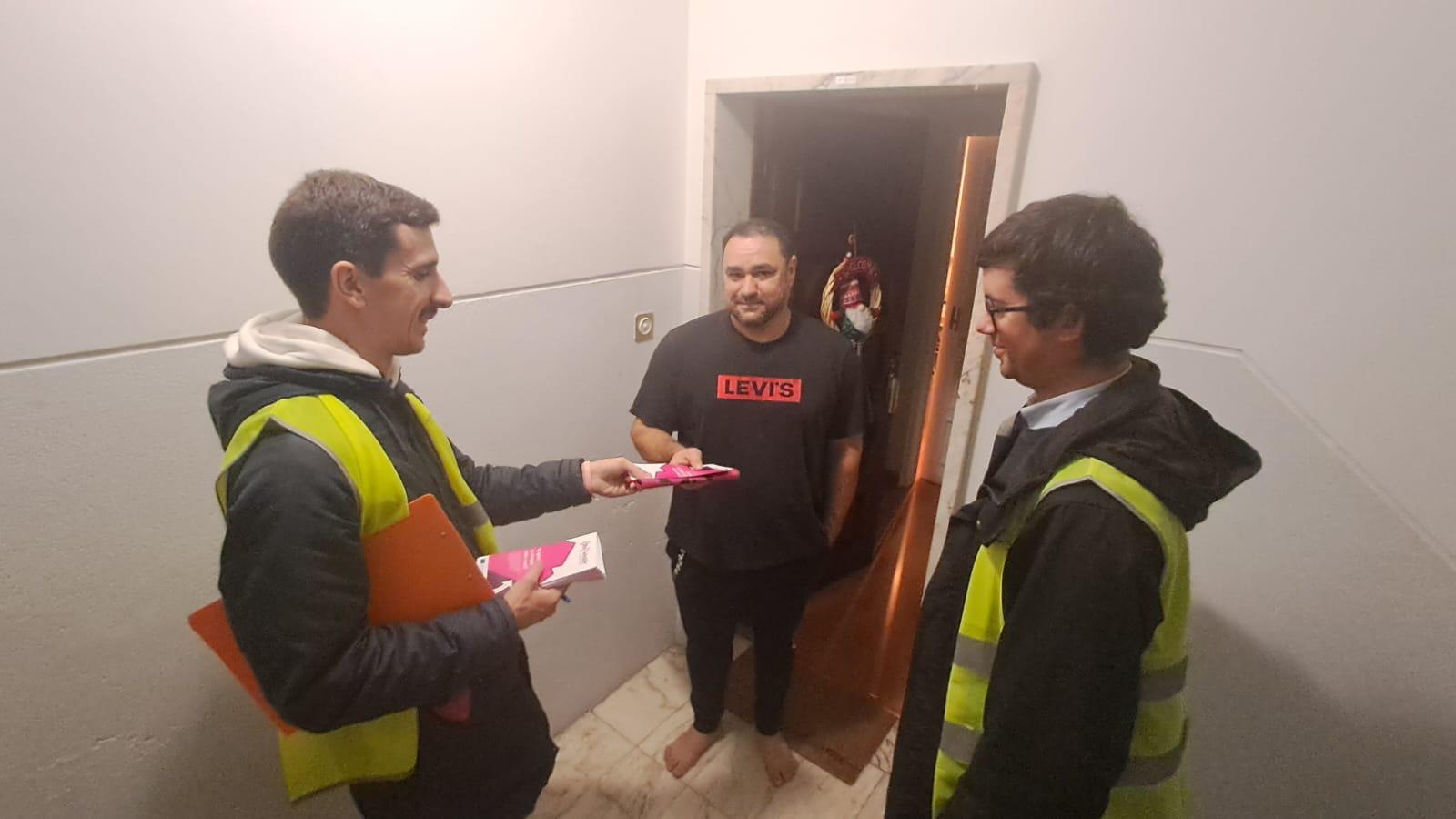
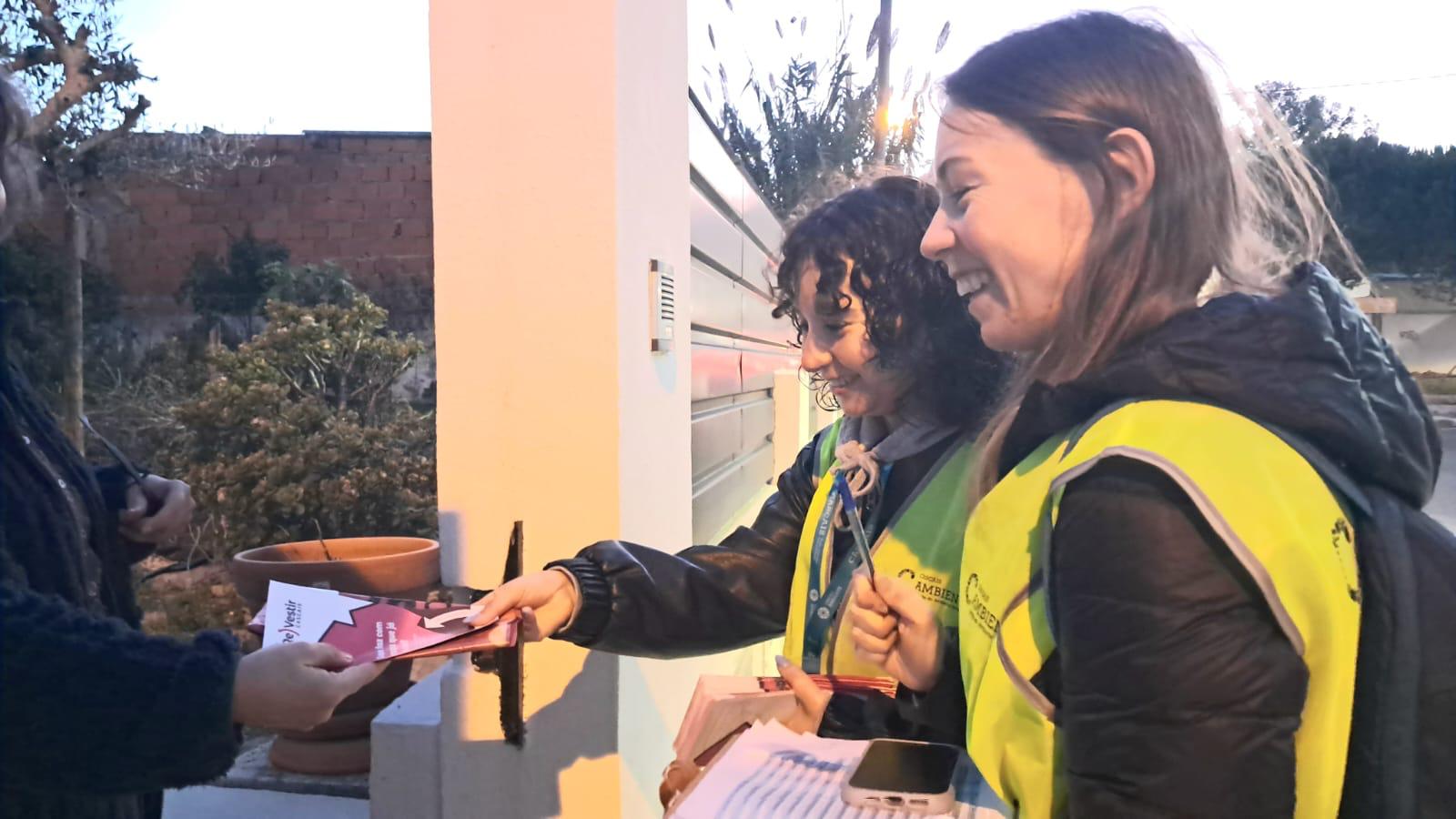
Third, citizen science: door-to-door campaigns engage the community, gather feedback and support continuous improvement, ensuring a participatory and replicable approach.
The project follows the textile journey from donation to sorting, extending product lifecycles and reducing landfill waste, while promoting sustainable consumption and environmental literacy.
Its effectiveness is demonstrated by current results: over 4,100 items collected; more than 960 kg of textiles recovered (over 696 kg for reuse and 257 kg for recycling); more than 2,630 direct contacts through campaigns, reaching over 3,190 households; around 500 active app users; and collaboration with local and international partners in operations and IT development.
The integration of technology and community engagement creates a scalable and transferable model suitable for both urban and rural contexts, contributing to SDGs 1, 4, 10, 11, 12 and 17.
(Re)Vestir Cascais was created in response to the growing environmental impact of textile waste and the lack of transparent, accessible systems for its proper management at local level. Recognising that textile disposal is often a routine act with little awareness of its consequences, Cascais Municipality, through Cascais Ambiente, set out to transform this behaviour into a conscious and traceable contribution to sustainability.
The project was developed within the European Climaborough framework, combining local operational capacity with international technological expertise. From the outset, the aim was to design a system that was not only environmentally effective but also simple and engaging for citizens.
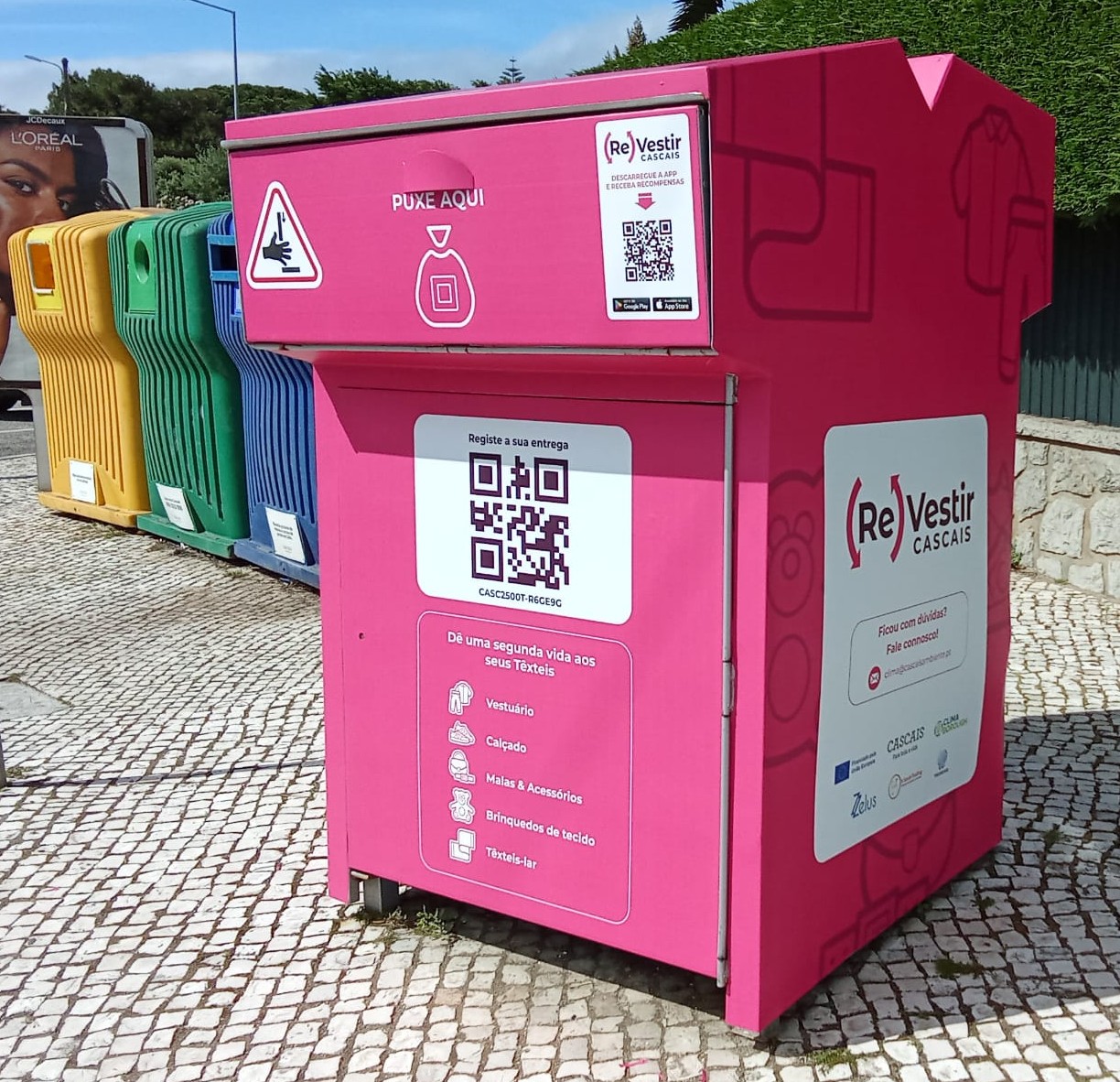
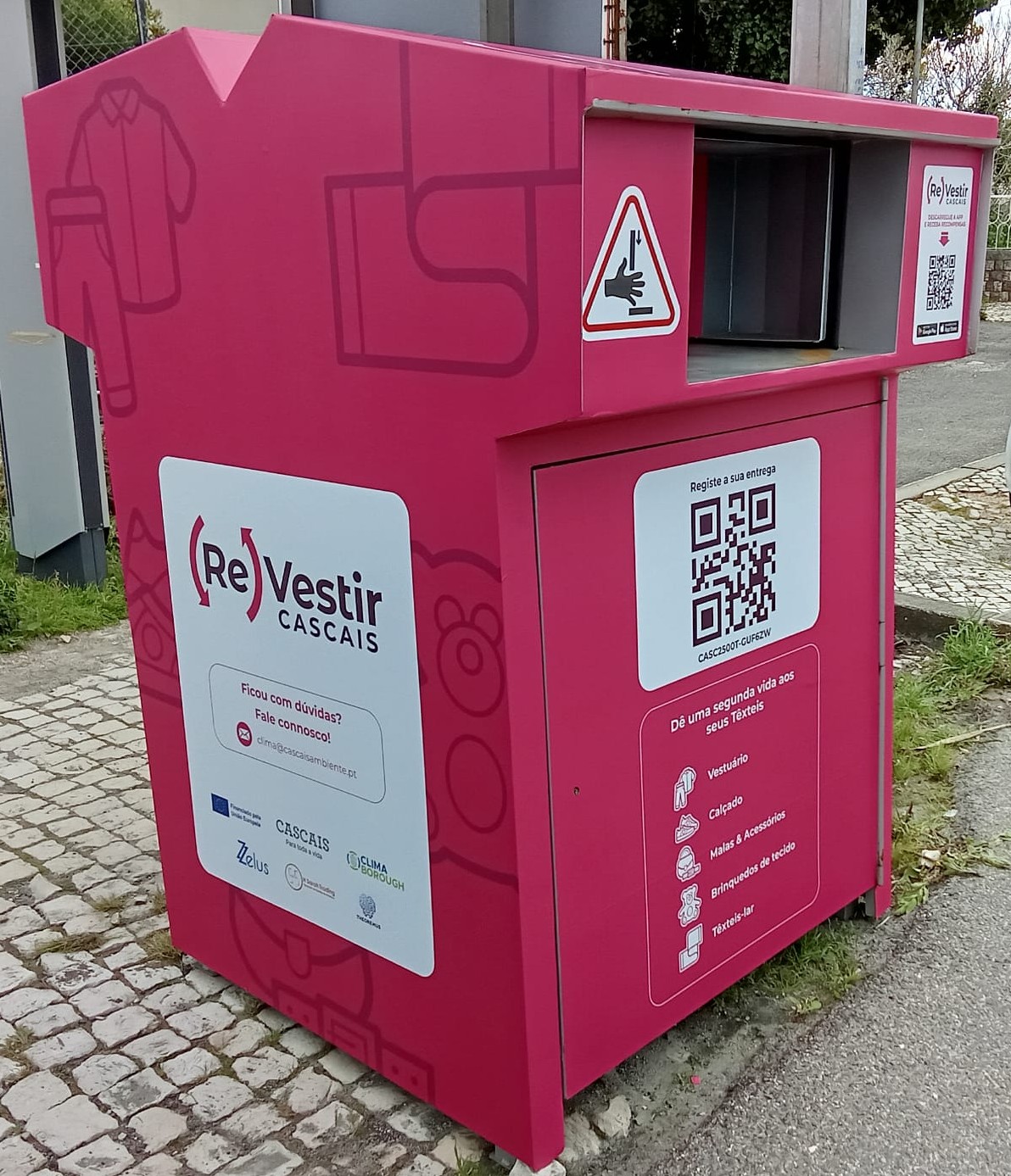
On the ground, implementation began with the creation of a dedicated infrastructure: a municipal network of textile collection bins and the distribution of traceable bags. These tools were supported by a mobile application, allowing users to register donations, follow the journey of their items and understand their environmental impact.
A strong emphasis was placed on community engagement. Door-to-door campaigns played a key role in introducing the project, raising awareness and encouraging participation, while also collecting feedback to refine the system. This citizen-centred approach ensured that the solution was both practical and responsive to local needs.
Operationally, a local partner manages the collection and sorting of textiles, directing items towards reuse or recycling and ensuring materials remain within the value chain for as long as possible. In parallel, digital tools provide real-time data, supporting transparency and informed decision-making.
By combining technology, infrastructure and citizen involvement, (Re)Vestir Cascais was implemented as a pilot with the ambition to test, learn and create a scalable model that can be replicated in other municipalities, contributing to more sustainable and circular textile management systems.
Circular Economy
Traceability
Citizen Engagement
Textile Waste
Sustainability
(Re)Vestir Cascais addresses environmental, social, and economic challenges through a systemic approach to textile circularity. Environmentally, it reduces textile waste sent to landfill by promoting reuse, repair, and redistribution, directly contributing to lower greenhouse gas emissions and resource consumption. The project introduces accessible collection infrastructure and optimised logistics, ensuring that textiles are reintegrated into the value chain instead of discarded.
Socially, it fosters behavioural change by raising awareness about sustainable consumption and empowering citizens to actively participate in circular practices. It also strengthens social cohesion by redistributing clothing through local organisations, supporting vulnerable groups and reinforcing solidarity networks.
Economically, the project supports the development of local circular ecosystems, engaging municipalities, social sector actors, and private stakeholders. It creates opportunities for green jobs and new service models linked to repair, reuse, and sorting activities.
What makes (Re)Vestir Cascais exemplary is its integrated and scalable model: it combines infrastructure, education, governance, and partnerships to create long-term systemic change. Rather than addressing textile waste in isolation, it reshapes local systems and behaviours, aligning with European climate goals and circular economy strategies.
(Re)Vestir Cascais contributes to making everyday life more beautiful by transforming how textile waste is perceived and experienced in public space. The project introduces well-designed, visually appealing collection points that are integrated into the urban landscape, making participation intuitive and engaging rather than purely functional.
Beyond infrastructure, aesthetics are embedded in the experience of the project. Workshops, repair sessions, and community events celebrate creativity, craftsmanship, and storytelling, reconnecting people with the value of clothing. This approach shifts mindsets from disposable consumption to care, creativity, and emotional attachment.
The project also enhances neighbourhood identity by activating public spaces through community-led initiatives, fostering a sense of belonging and shared responsibility. By making sustainability visible, tangible, and attractive, it encourages citizens to engage not out of obligation, but out of pride and connection.
(Re)Vestir Cascais is exemplary in demonstrating that circular solutions can be both functional and inspiring. It shows that aesthetics are not an add-on, but a key driver of behavioural change, helping to create urban environments that are not only more sustainable, but also more meaningful, inclusive, and enjoyable.
Inclusion is a core principle of (Re)Vestir Cascais, ensuring that circular solutions are accessible, affordable, and beneficial to all. The project provides free and widely distributed textile collection points, making participation easy regardless of socioeconomic background.
It actively addresses social inequalities by redistributing collected clothing through local social organisations, supporting vulnerable communities and ensuring access to essential goods. In this way, environmental action is directly linked to social impact.
The project promotes inclusive governance by involving a wide range of stakeholders—citizens, NGOs, social institutions, and local authorities—in its design and implementation. Co-creation processes ensure that diverse perspectives are considered, leading to more responsive and equitable solutions.
(Re)Vestir Cascais also encourages new societal models based on sharing, repairing, and collective responsibility, moving away from individualised consumption patterns. It creates opportunities for community participation and empowerment, particularly for groups that are often excluded from environmental initiatives.
Its exemplary nature lies in its ability to combine circular economy principles with social justice, ensuring that the transition to sustainability is fair, inclusive, and widely accessible.
Participation is central to the design and implementation of (Re)Vestir Cascais. Citizens, community groups, and civil society organisations are actively engaged through awareness campaigns, workshops, repair events, and co-creation activities. Their involvement goes beyond consultation—they contribute to shaping solutions, testing approaches, and improving the system over time.
Local organisations play a key role as intermediaries, helping to mobilise communities, identify needs, and ensure that solutions are relevant and inclusive. Citizens are also empowered as ambassadors of change, spreading awareness and influencing behaviours within their networks.
This participatory approach has had a tangible impact on the project’s effectiveness. It has increased trust, improved usability of collection systems, and strengthened long-term engagement with circular practices. Feedback loops have enabled continuous improvement, ensuring that the project evolves in response to real needs.
(Re)Vestir Cascais demonstrates that meaningful citizen involvement is essential for achieving systemic change. By embedding participation at all stages, it creates a sense of ownership and shared responsibility, which is critical for the long-term success and scalability of circular initiatives.
(Re)Vestir Cascais is built on strong collaboration across multiple governance levels, ensuring alignment between local action and broader policy frameworks. At the local level, the municipality leads implementation, coordinating infrastructure, operations, and community engagement.
At the regional and national levels, the project aligns with waste management strategies, circular economy policies, and social inclusion frameworks, ensuring coherence and regulatory support.
At the European level, participation in initiatives such as Climaborough enables access to funding, knowledge exchange, and innovation networks. These connections bring added value by integrating best practices, fostering peer learning, and positioning the project within wider climate neutrality ambitions.
Stakeholders across these levels—including public authorities, private sector actors, NGOs, and academic institutions—contribute with complementary expertise, resources, and perspectives.
The added value of this multilevel governance approach lies in its ability to bridge policy and practice. It ensures that local solutions are informed by broader strategies, while also generating insights that can feed into higher-level policymaking. This interconnected approach strengthens impact, scalability, and long-term sustainability.
(Re)Vestir Cascais adopts a transdisciplinary approach, integrating knowledge and methods from multiple fields to address complex challenges. Environmental sciences inform waste reduction and circularity strategies, while social sciences and behavioural insights guide citizen engagement and behaviour change.
Design plays a key role in creating user-friendly and attractive collection systems, while education and communication strategies support awareness and long-term cultural change. Digital tools enhance data collection, monitoring, and optimisation of operations.
The project also incorporates elements of social innovation, working closely with community organisations to address social needs and create inclusive solutions. In addition, creative practices such as repair workshops and upcycling initiatives bring artistic and cultural dimensions into the project.
This combination of disciplines enables more holistic and effective solutions, addressing not only the technical aspects of textile waste, but also the social and cultural dimensions of consumption.
(Re)Vestir Cascais is exemplary in demonstrating how transdisciplinary collaboration can lead to more resilient, adaptable, and impactful solutions, capable of driving systemic change in complex urban contexts.
(Re)Vestir Cascais is based on a hybrid and resilient business model that combines public investment, partnerships, and long-term value creation. Initial funding is secured through municipal budgets and European programmes, supporting the development of infrastructure, pilot actions, and innovation activities.
Operational sustainability is achieved by integrating the project into existing municipal waste management systems, optimising logistics and reducing disposal costs. Additional value is generated through partnerships with social organisations and private sector actors, creating opportunities for shared services and resource efficiency.
The project also creates indirect economic benefits, such as job creation in sorting and reuse activities, as well as reduced environmental and social costs associated with textile waste.
Over time, the model can evolve to include new revenue streams, such as extended producer responsibility schemes, collaborations with brands, or circular service models.
What makes the model sustainable is its ability to combine environmental impact with economic efficiency and social value. By embedding circular practices into local systems and fostering strong partnerships, (Re)Vestir Cascais ensures long-term viability and scalability.
(Re)Vestir Cascais has strong potential for replication and transferability across different contexts. Its methodology is modular and adaptable, combining key elements such as accessible collection infrastructure, stakeholder partnerships, citizen engagement strategies, and data-driven management tools.
The governance model—based on collaboration between municipalities, social organisations, and private actors—can be applied in other cities, regardless of size or socioeconomic context. The project also generates valuable insights and tools, including communication strategies, behavioural approaches, and operational frameworks, which can be easily adapted.
Participation in European networks further supports scalability by enabling knowledge sharing, peer learning, and dissemination of best practices.
Importantly, the project is designed to be flexible, allowing adaptation to local needs, cultural contexts, and regulatory environments. This ensures that it can be effectively implemented in diverse settings.
(Re)Vestir Cascais is exemplary as a scalable solution because it goes beyond a single intervention, offering a replicable model for systemic change in the textile sector, aligned with European climate and circular economy objectives.