Enhancing Circularity, Sustainability, and Innovation
Stream Restoration Pilot
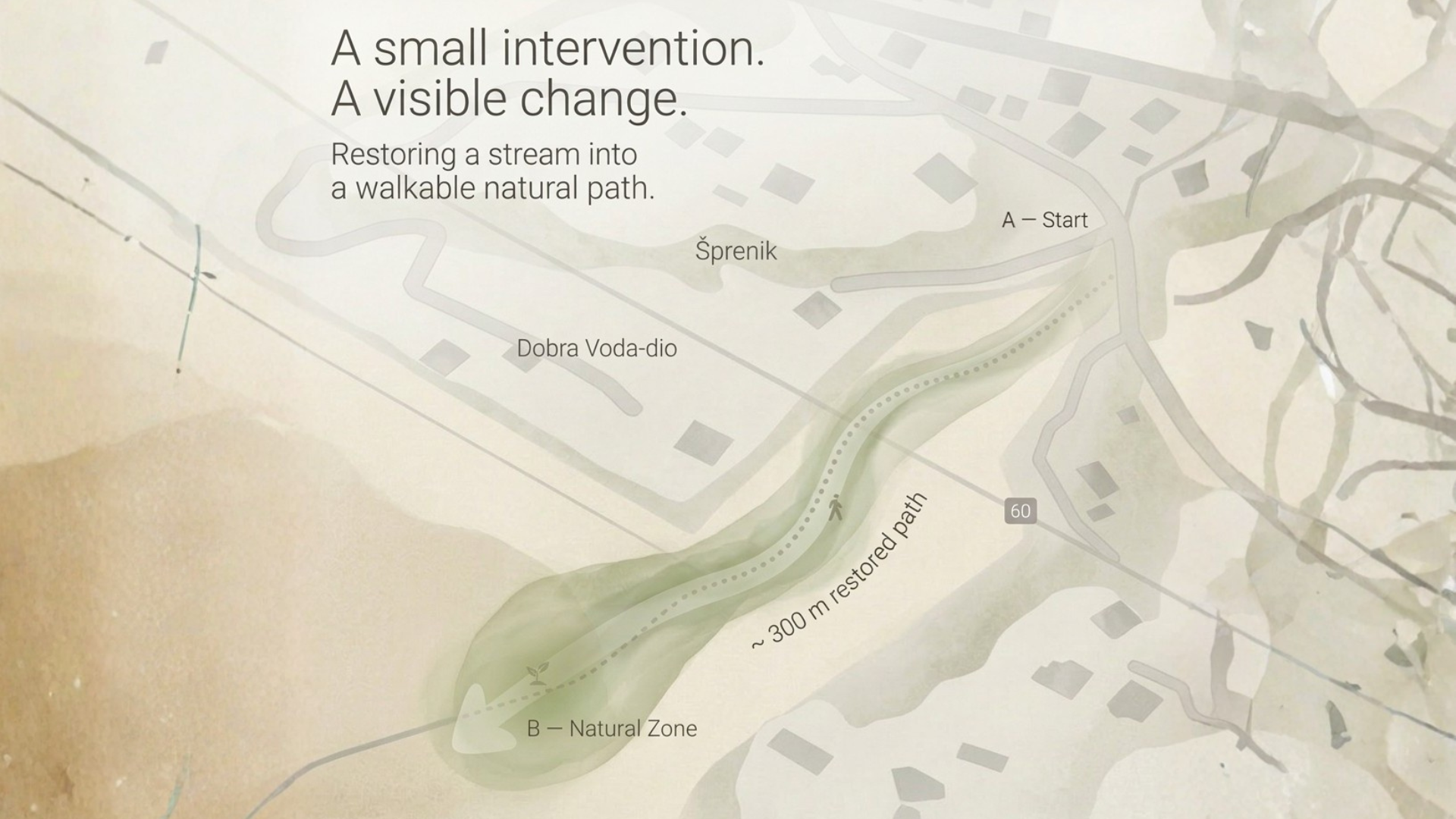
Pilot Stream Restoration Zone (300m), Dobra Voda, Montenegro
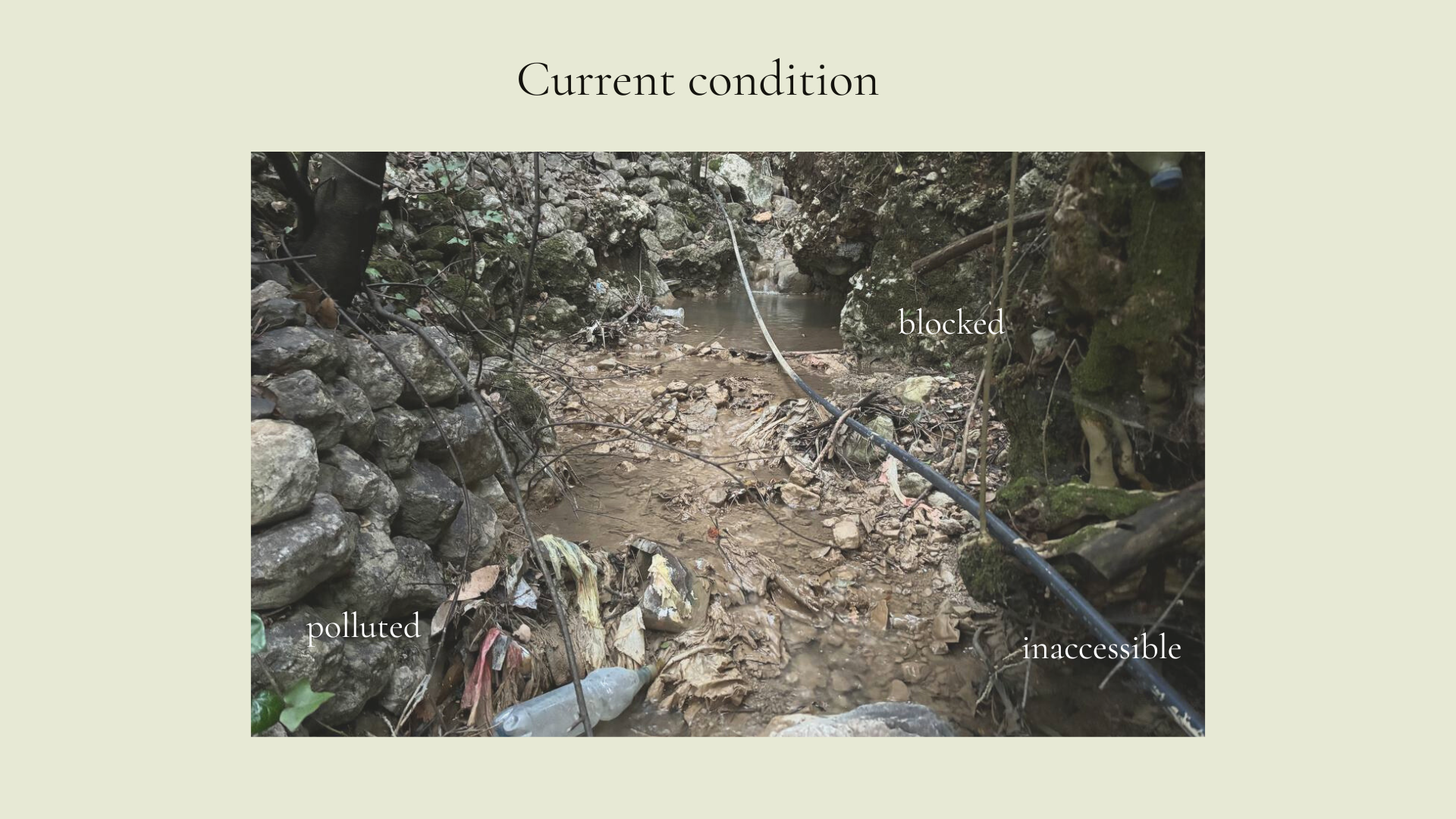
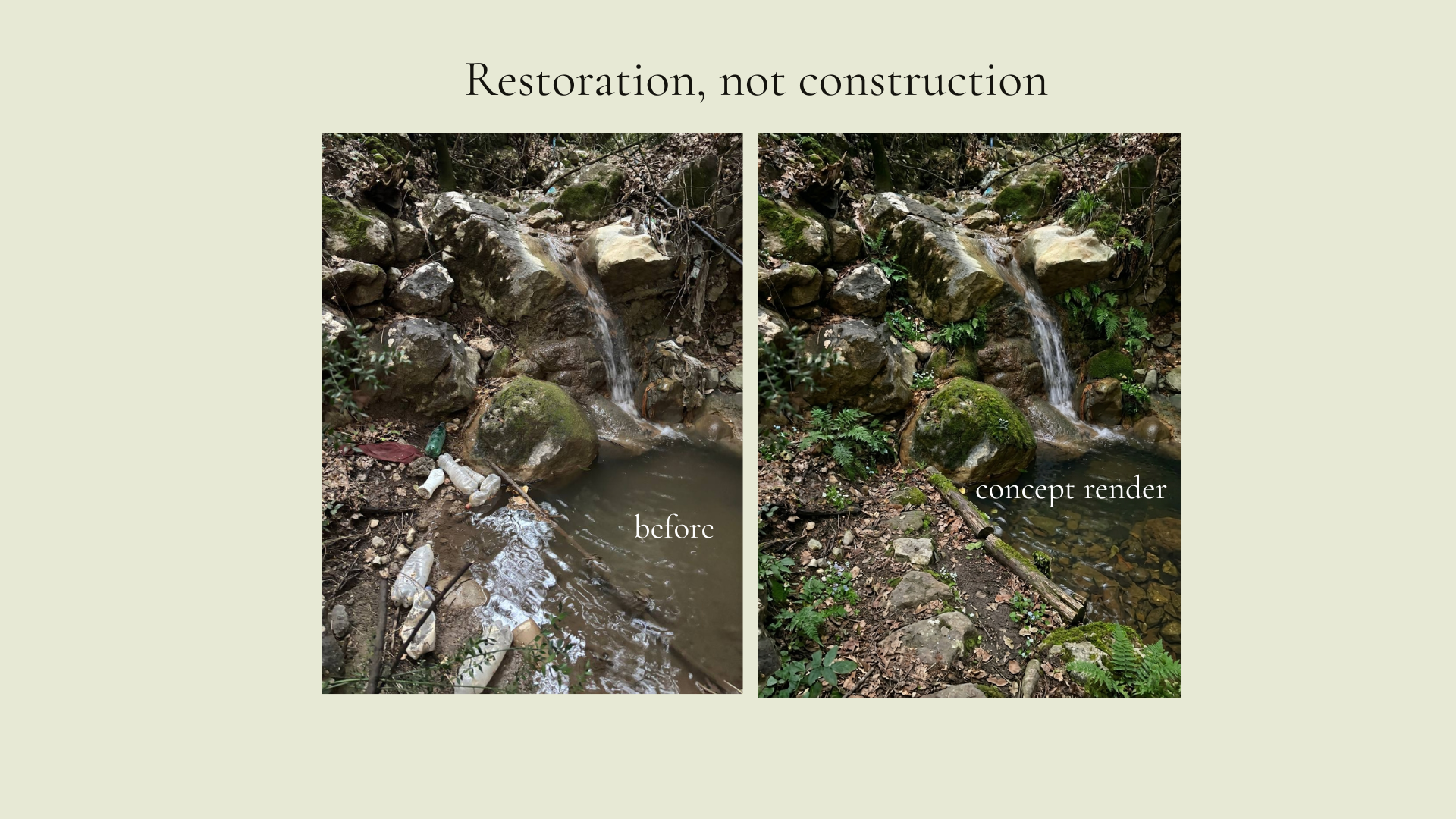
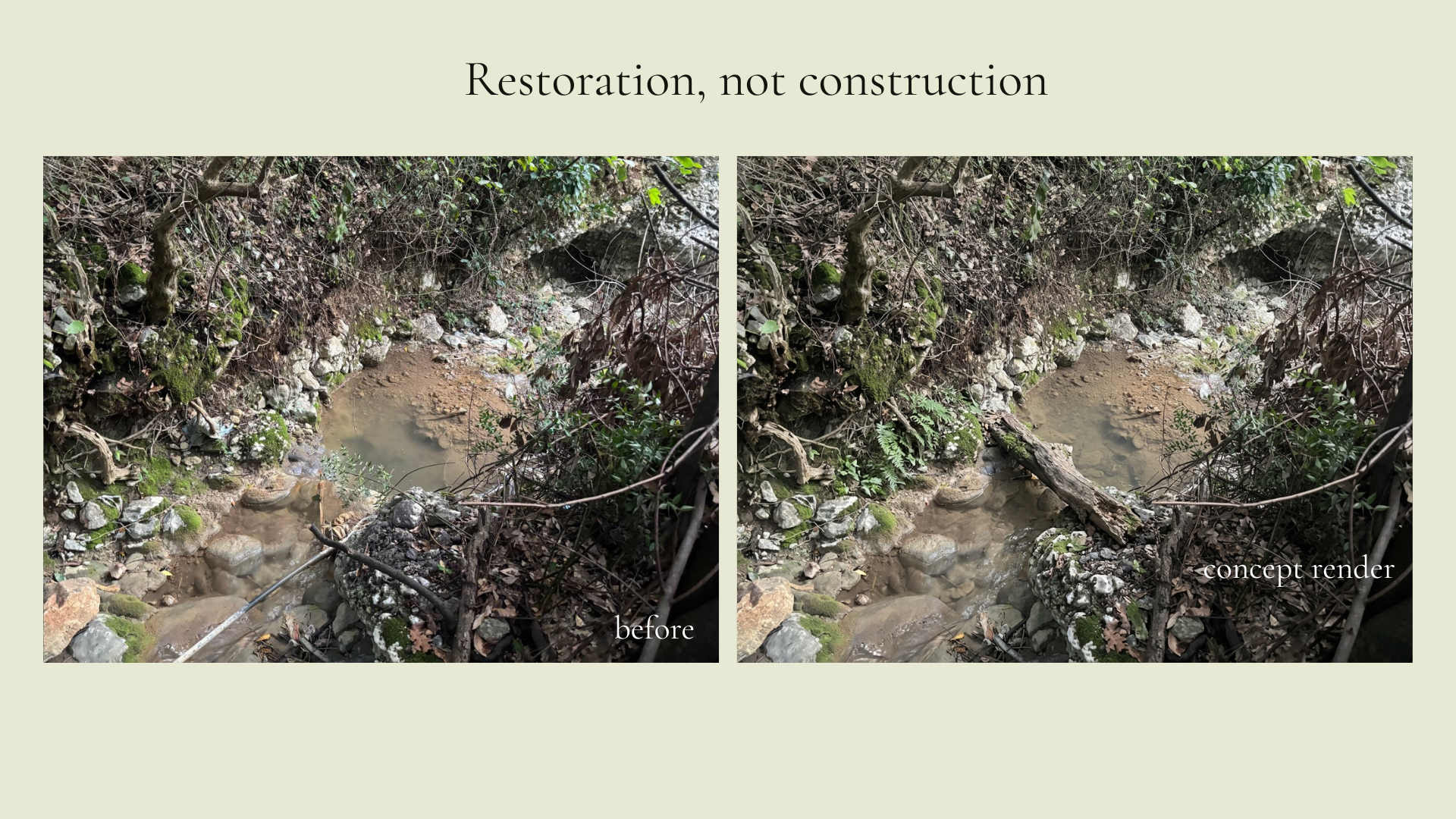
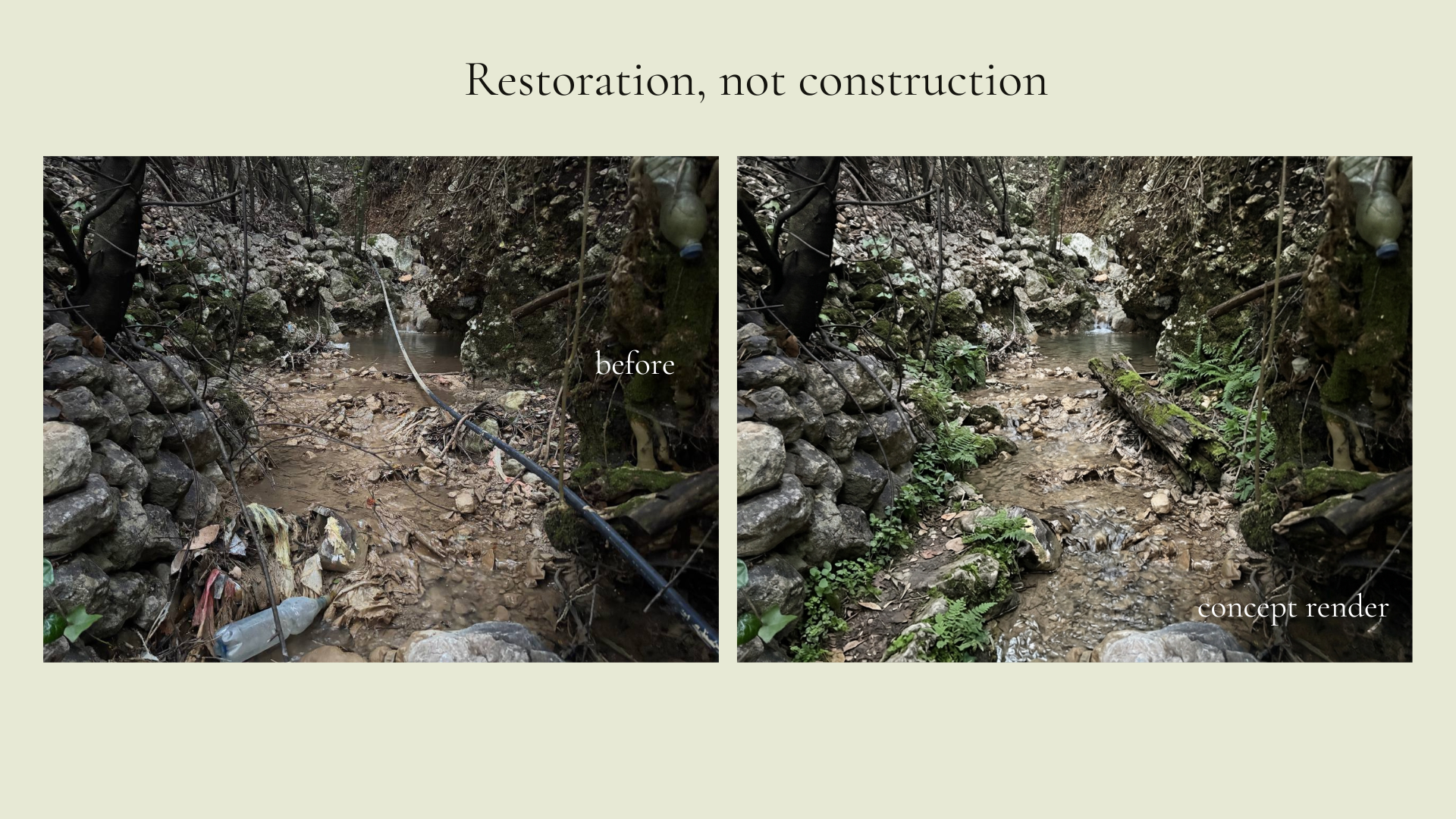
A polluted stream in Dobra Voda, Montenegro is transformed into a clean, accessible, and ecological public space.
The project introduces a 300-meter pilot restoration zone combining full clean-up, nature-based solutions, and a low-impact walking path.
Designed as a replicable model, it demonstrates how small-scale interventions can restore ecosystems, improve everyday life, and strengthen water resilience with community support.
Montenegro
Local
Public stream corridor (parcel 2703), Dobra Voda, 85000 Bar, Municipality of Bar, Montenegro
Mainly rural
It involves a physical transformation of the built environment (hard investment)
Early concept
No
No
Yes
Individual
Our project is about bringing life back to a small, forgotten stream in Dobra Voda, Montenegro. This stream is not just water; it’s a piece of history, always there on old maps, flowing into the beautiful Adriatic Sea. Right now, it’s a bit sad – overgrown, with some trash, and no easy way to walk along it. We want to change that.
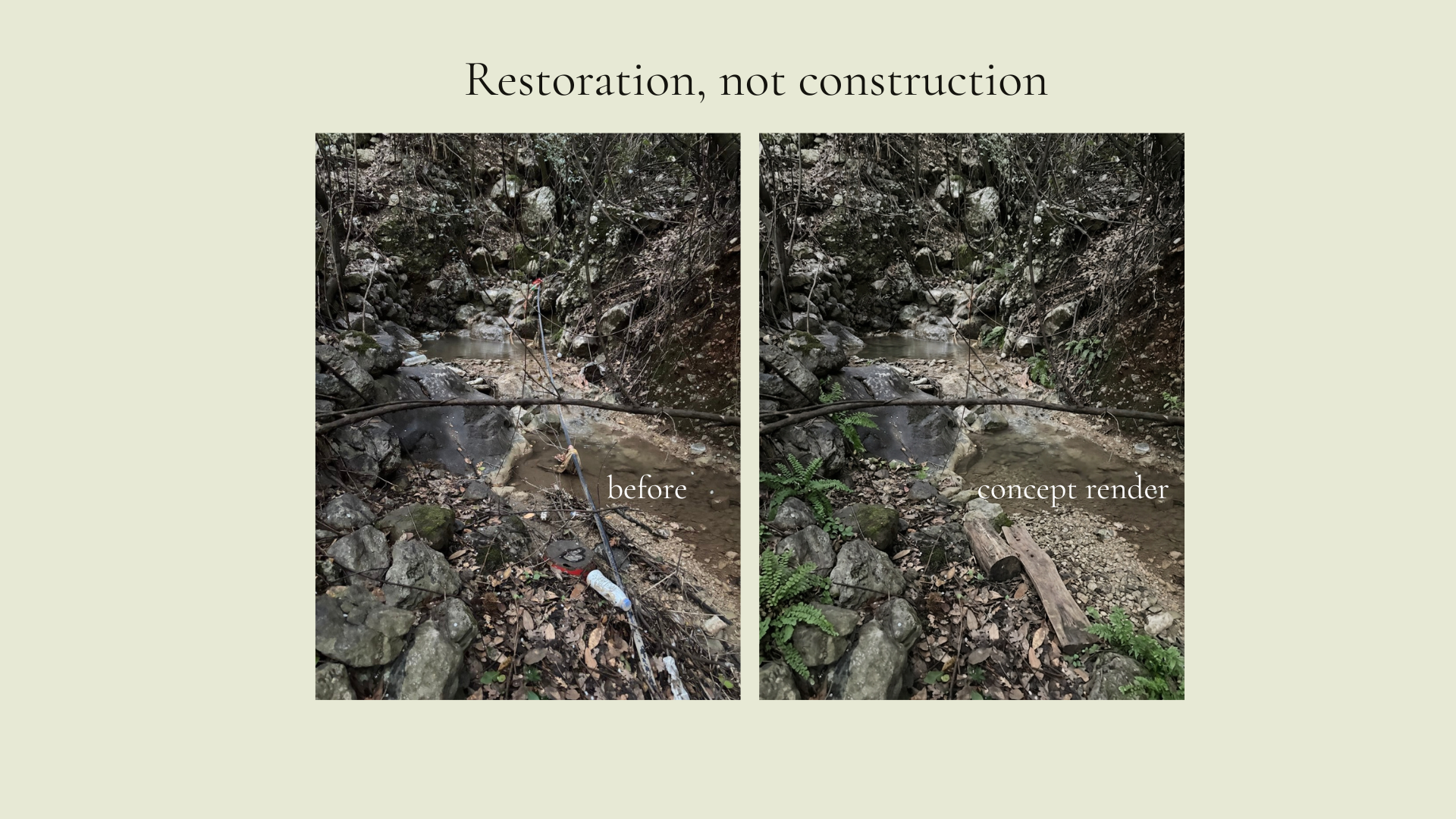
We plan to create a low-impact public pathway through the olive groves, following the stream. It’s not about building something new and big. It’s about cleaning, stabilizing, and adding just a few stone steps made from local rock, following circular and nature-based principles. No concrete, no heavy machines. Just nature, enhanced.
This will make the area accessible again, improve water resilience, help nature thrive, and give people a quiet place to connect with our land and sea. It’s a replicable model for small-scale ecological restoration, activating local circular value chains. We believe this small change will make a big difference for our community and visitors.
The idea for this project grew from seeing something precious being lost. This stream, it’s always been here, a natural connection to the sea. But over time, it became neglected, almost invisible. People couldn’t walk along it safely, and its beauty was hidden by waste.
We felt a strong need to restore this historical link, to give our community and guests a way to experience this unique landscape again. We started by just looking at the place, really understanding its natural flow and what it needed. Then, we talked with local people, heard their memories and hopes for the stream.
We realized that the best way was to work with nature, not against it. So, we developed a plan for minimal intervention, using only what the land gives us – local stone, natural shapes. It’s a project born from love for our place and a desire to share its quiet beauty, making it accessible for everyone.
Nature-based solutions
Heritage
Water resilience
Restoration
Low-impact infrastructure
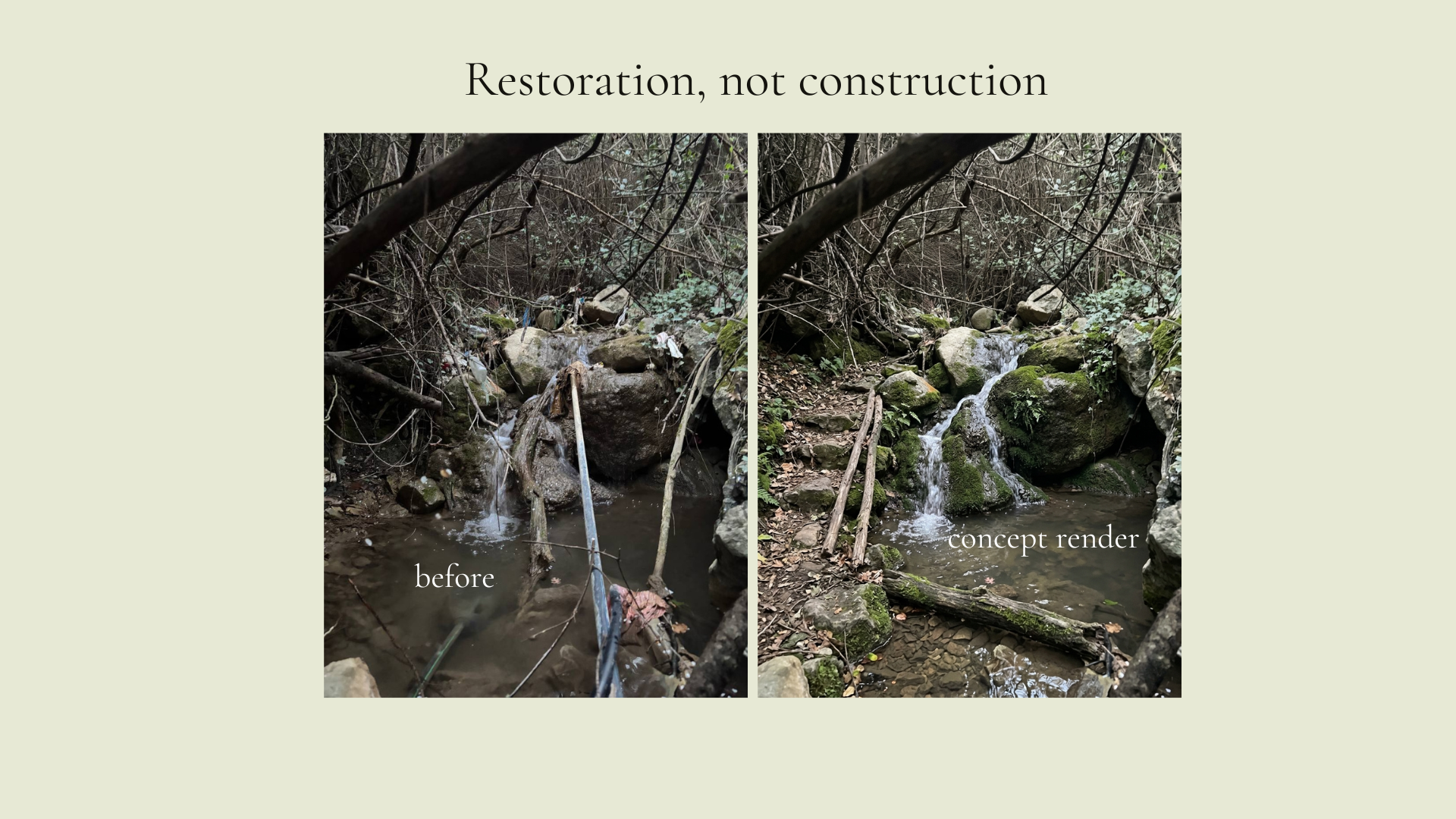
Sustainability is at the heart of what we do. We tackle environmental problems by bringing our neglected stream back to life. This means better water quality, less erosion, and more biodiversity. We don’t build new things; we restore.
Our approach is circular: we use local stone, found right here, so there’s no need for long transport. We avoid concrete and heavy machines, choosing methods that are gentle on the land and can be easily reversed. This makes our project truly resource-efficient.
Socially, we create a free, open space for everyone, strengthening community bonds. Economically, it’s a low-cost project that brings long-term benefits, like supporting local eco-tourism. It’s a simple, but very effective way to live better with nature and for people.
For us, beauty is about authenticity. We don’t want to change the stream’s character; we want to reveal it. Imagine walking among old olive trees, hearing the water, feeling the moss on the stones. This is our beauty.
We use natural materials – stone, wood, earth – so the path feels like it has always been there. It blends into the landscape, almost disappearing into the vegetation. Light is treated as a subtle atmospheric layer, not just for seeing. Large parts of the space stay in shadow, keeping that natural contrast and depth.
This creates a special atmosphere, a sense of discovery. It makes you care for this place, because its beauty is so real and untouched, without losing its wild character.
Our project is for everyone. It creates a new public space that is completely free and open. We designed it with different entry points and varied path levels, so it’s welcoming for families with children, older people, and even tourists who want to explore.
We adapt to the natural terrain, making it accessible without rigid rules. This means more people can enjoy it. Affordability is key – it’s a non-commercial space where people can just be, without pressure to buy anything.
We also involve local people in everything. They help with cleaning, collecting materials, and will be part of looking after the path. This gives them a real sense of ownership and pride. It’s about making sure everyone feels welcome and can connect with nature, no matter their age or ability. This is how we build a stronger, more open community.
Local people have been part of this project from the very start. We didn’t just plan it; we talked to them, listened to their ideas and concerns. Our concept grew from observing how people use the area and from local knowledge.
We involve residents in clean-up actions, making them active participants in bringing their stream back to life. They will also help us collect local stone and other materials. This informal stewardship is very important. When people help build something, they care for it more.
Participation is not just a formal step; it’s an ongoing process, building trust and strengthening community ties. It creates a shared responsibility for our beautiful place. Their input makes the project real and meaningful.
This project brings together different levels of our community and government. At the local level, we work closely with the municipality of Bar (Opština Bar), who supports us with public funding. We also partner with local businesses and community groups.
This ensures the project meets local needs and has strong support from the ground up. We are also talking with regional environmental agencies and looking into European programs for grants. This multi-level approach is important because it combines local knowledge and passion with official support and resources.
It helps us make sure the project is well planned, well-funded, and has a long-term future, benefiting everyone from local residents to wider regional goals. It’s about working together for a common good.
Our project is a mix of many different types of knowledge. Landscape architects help us design the path to fit perfectly into nature. Hydrologists and environmental scientists advise us on how to clean the stream and protect its ecosystem. Circular design principles guide our material choices.
Social scientists and community experts help us understand how people will use the space and how to involve the community best. We also use sensory design to think about how the path feels – the sounds, the textures, the light. Digital tools, like renders, help us visualize the “before” and “after.”
It’s like many different experts are sitting at one table, sharing their ideas. This way, we create a solution that is not just beautiful, but also good for nature and good for people, touching all important aspects.
Our project is designed to be financially smart and sustainable. We keep costs low by using local materials, especially stone found right on site. This also means less money spent on transport. We rely on simple, labor-based construction methods, which can create local jobs.
For funding, we combine support from the municipal budget (Opština Bar) with ecological grants and potentially EU programs. We also see big potential in eco-tourism. The restored path will attract visitors who appreciate nature and quiet beauty. This can bring indirect economic value to local guesthouses, cafes, and small shops.
We also plan guided nature walks and educational workshops. Community involvement helps reduce maintenance costs. Our hybrid model ensures the project is affordable to build and maintain, creating value for the community and the environment without relying on huge investments.
This project is a model that can be used in many other places. It’s simple, adaptable, and uses resources that are available everywhere. The way we approach low-impact ecological restoration – cleaning natural areas, using local materials, and integrating paths into existing nature – can be easily copied.
There are many similar neglected streams and natural corridors in rural and peri-urban areas across the Western Balkans. Our methodology, which focuses on working with what is already there and involving the community, is very practical. The phased implementation model means projects can start small and grow over time.
It shows that you don’t need big budgets or heavy construction to make a positive change. We hope our project in Dobra Voda will inspire other communities to take similar small, but powerful steps to restore their local natural heritage.
The implementation is structured as a phased, realistic process focused on delivering a tangible pilot within the first year.
Phase 1 (0–3 months): First, we will do detailed mapping and get all necessary permissions. We will also focus on engaging with all local stakeholders, making sure everyone is on board and understands the plan. We will also start documenting our process and communicating with the public.
Phase 2 (3–6 months): This is when the real work starts. We will organize community clean-up actions to remove waste from the stream. We will also begin the ecological restoration, stabilizing the banks and encouraging native plants.
Phase 3 (6–9 months): Here, we will build the path. This means carefully placing the irregular stone steps, integrating them into the natural terrain. No heavy machines, just skilled local hands.
Phase 4 (9–12 months): In the final phase, we will install the minimal, soft lighting using wooden bollards. We will also enhance the vegetation along the path and officially activate the space for public use, perhaps with a small local event. We will continue documenting and communicating our results, and also start soft activation through community involvement. This ensures the path is ready for everyone to enjoy.