Arts, Culture, and Heritage as Drivers of Change
ATELIER DES MARBRES
ATELIER DES MARBRES - From heritage to creation
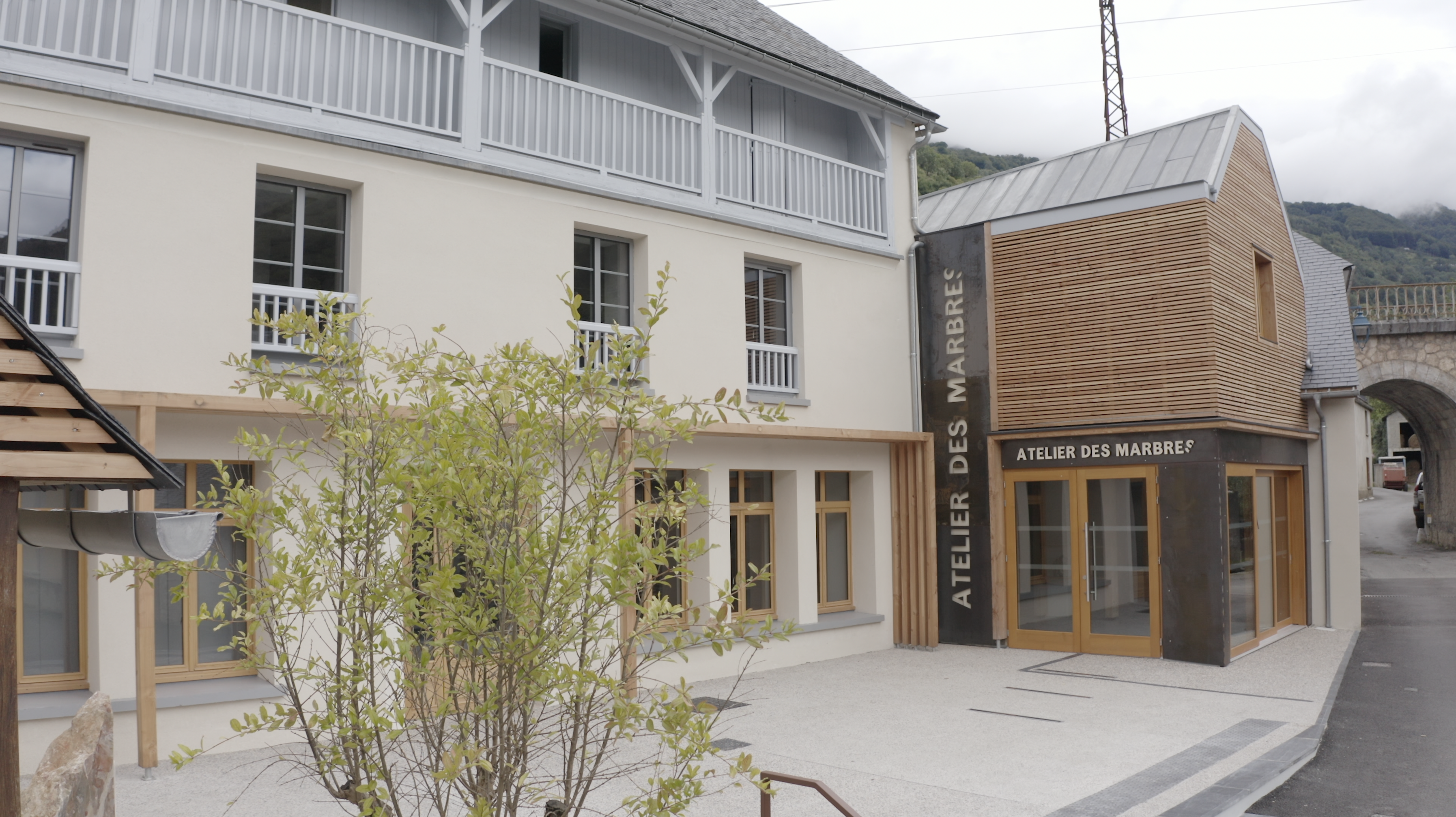
Located in a small village in the French Pyrenees, Atelier des Marbres is a place where heritage meets design. Housed in a former school, it hosts designers in residence and invites residents and visitors to rediscover local marble through new uses. Through its residencies, mediation tools, marble collection and convivial café, it brings this heritage back to life and recreates a shared space in a rural context.
France
Regional
Local (village of Ilhet, Occitanie region, France), with regional and cross-border cooperation dynamics
Mainly rural
It involves a physical transformation of the built environment (hard investment)
Yes
2024-10-12
Yes
ERDF : European Regional Development Fund
No
No
Organisation
Atelier des Marbres was born out of a simple observation: despite a marble quarrying history spanning several centuries, the Pyrenean region(and particularly the village of Ilhet) has not benefited from the added value associated with marble processing and design. While marble extraction(particularly “Opéra Fantastico” marble)has greatly contributed to the region’s international reputation, the stages of processing, design and commercialisation have historically taken place outside the region, especially in Carrara, Italy.
In response to this situation, the municipality of Ilhet launched a project in 2020 aimed at reclaiming its marble heritage, raising awareness of it, and bringing it back to life within a contemporary dynamic. By mobilising local stakeholders, the project uses design, innovation and knowledge transmission as levers to reactivate this heritage locally and explore new uses for it. Opened in 2024 in the former village school, renovated using local materials, Atelier des Marbres is now a vibrant space managed by an association. It hosts design residencies, workshops, events and mediation activities, and fosters interactions between residents, artisans, designers and visitors. In a village of 120 inhabitants with no shops or services, it recreates an essential space for social life and community interaction. The project follows a circular economy approach by valorising waste generated from marble extraction: up to 80% of blocks, currently considered non-exploitable, are reinterpreted through design to become contemporary and accessible objects, opening up new economic opportunities. In the long term, Atelier des Marbres aims to structure a marble sector at the scale of the Pyrenees and the Occitanie region by relocalising creation and transformation processes, developing new uses, and strengthening economic, cultural and social dynamics in rural areas. The project thus proposes a replicable model for the valorisation of local resources through design.
In response to this situation, the municipality of Ilhet launched a project in 2020 aimed at reclaiming its marble heritage, raising awareness of it, and bringing it back to life within a contemporary dynamic. By mobilising local stakeholders, the project uses design, innovation and knowledge transmission as levers to reactivate this heritage locally and explore new uses for it. Opened in 2024 in the former village school, renovated using local materials, Atelier des Marbres is now a vibrant space managed by an association. It hosts design residencies, workshops, events and mediation activities, and fosters interactions between residents, artisans, designers and visitors. In a village of 120 inhabitants with no shops or services, it recreates an essential space for social life and community interaction. The project follows a circular economy approach by valorising waste generated from marble extraction: up to 80% of blocks, currently considered non-exploitable, are reinterpreted through design to become contemporary and accessible objects, opening up new economic opportunities. In the long term, Atelier des Marbres aims to structure a marble sector at the scale of the Pyrenees and the Occitanie region by relocalising creation and transformation processes, developing new uses, and strengthening economic, cultural and social dynamics in rural areas. The project thus proposes a replicable model for the valorisation of local resources through design.
The Atelier des Marbres project emerged from an initiative led by the municipality of Ilhet in response to a dual challenge: the decline of social spaces and services in this rural village of 120 inhabitants, and the invisibility of an exceptional marble heritage. Despite more than four centuries of exploitation, marble from Ilhet—particularly “Opéra Fantastico”, used in prestigious buildings worldwide (Opéra Garnier, Versailles, Empire State Building)—remains largely unknown, with few links between its uses and its territory of origin.
More broadly, the richness of Pyrenean marbles remained underexplored, with no local dynamic to reveal their potential or generate cultural, economic and touristic benefits.
In response, the municipality launched a strategic reflection in 2020 to imagine a project capable both of restoring a central role to this emblematic resource and of recreating a social hub within the village. Supported by a consulting organisation (AMO), TED Conseil, the project was built around design as a lever to diversify the uses of marble, as well as to foster innovation and local development.
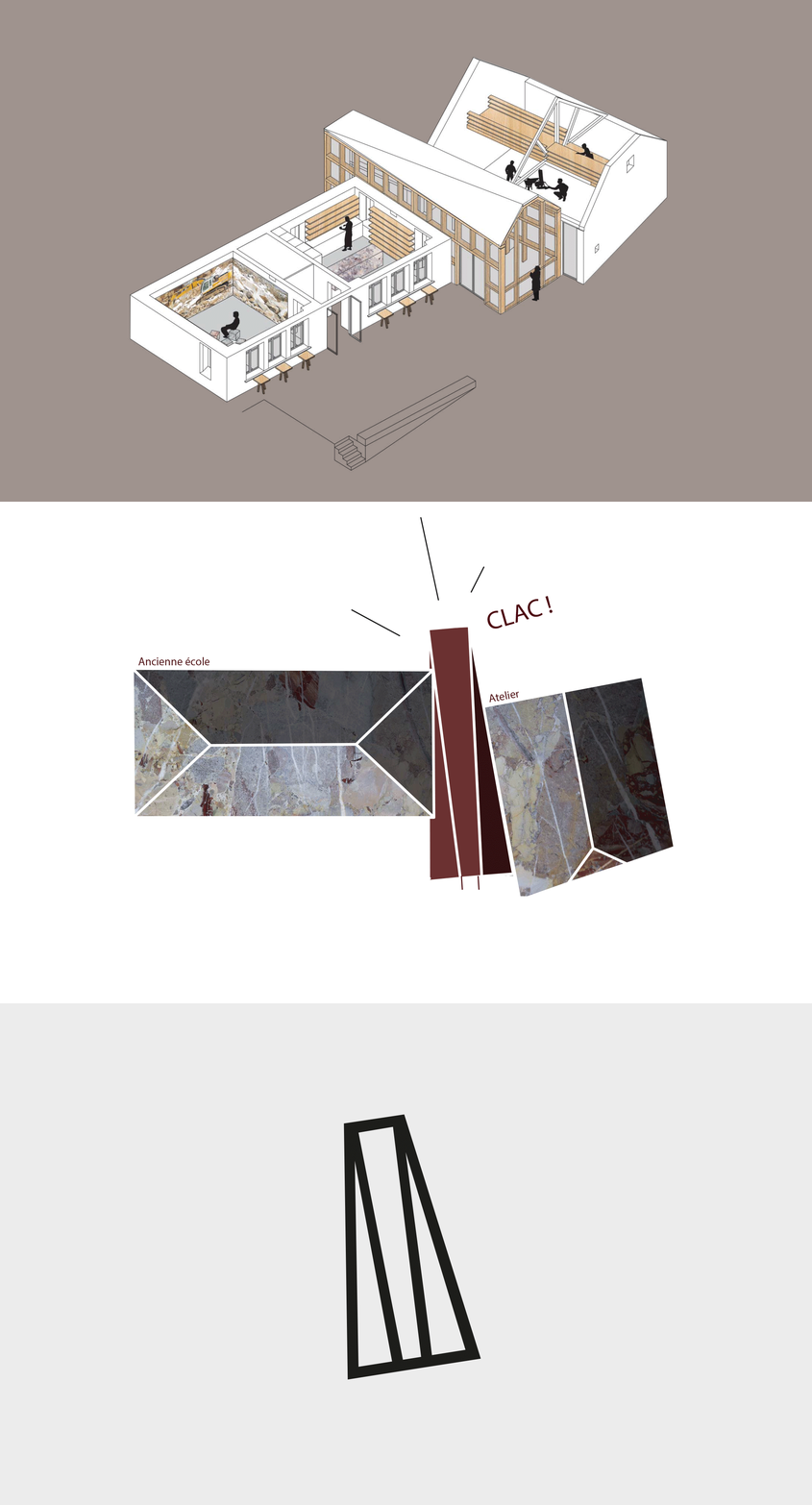
The decision to rehabilitate the former village school, closed for several years, emerged as an opportunity to bring a central building back to life while creating a space dedicated to creation, transmission and social interaction. The project was developed in collaboration with local stakeholders—architects, designers, public authorities and local craftspeople— with particular attention paid to the use of local resources.
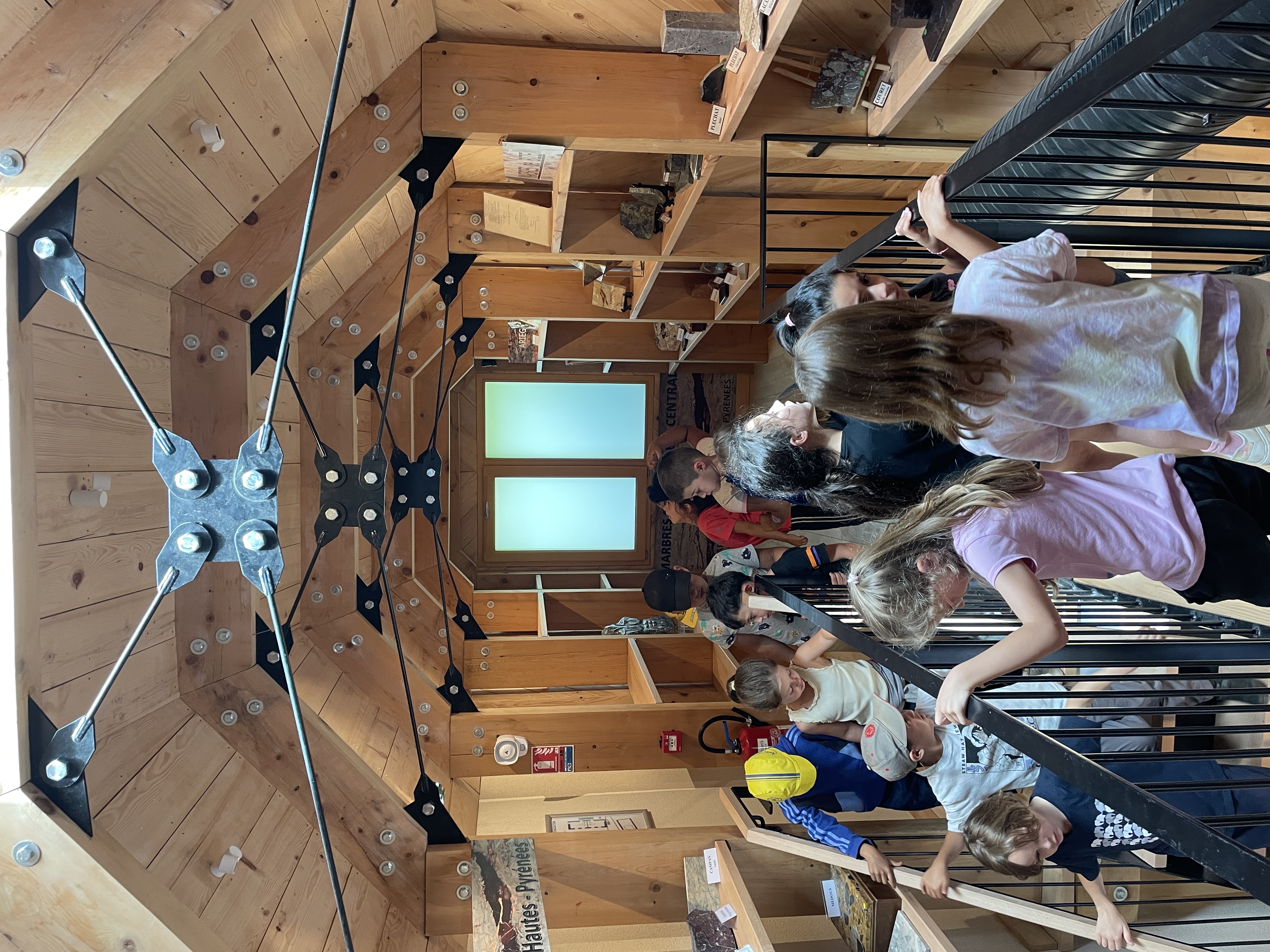
After four years of development, design and construction, Atelier des Marbres opened in autumn 2024. It now offers a design residency programme (whose jury is chaired by designer Patrick Jouin), a marble collection showcasing the diversity of Pyrenean marbles, innovative mediation tools, and a convivial space open to all: the Café des Marbres. The project continues to grow through an expanding network of partners and activities.
Design
Cultural Heritage
Circular Economy
Rural Development
Local Ressources
The Atelier des Marbres project is rooted in a strong approach to the valorisation of local resources, both in the rehabilitation of the building and in the activities developed on site. The former village school was renovated using locally sourced materials, particularly timber sourced directly from the commune, thereby valorising local forest resources. The work was carried out by local craftspeople, following a logic of sobriety and reduced environmental impact.
A central dimension of the project lies in its circular economy approach. Today, only around 20% of the marble extracted from the local quarry is used in traditional high-value markets, while the remaining 80% is considered waste and largely underutilised. The Atelier des Marbres addresses this challenge by transforming these overlooked materials into resources for creation. Designers in residence are encouraged to work with these blocks, exploring new uses and producing contemporary objects close to the extraction site.
By doing so, the project contributes to reducing material waste, limiting transport flows and encouraging more sustainable modes of production. It also supports the relocalisation of value creation, fostering new economic opportunities linked to local resources.
Beyond environmental aspects, the project also addresses social and cultural sustainability by revitalising a rural territory, strengthening local identity and building long-term cooperation between stakeholders from the marble, design and cultural sectors.
The Atelier des Marbres contributes to making everyday life more beautiful by transforming a former abandoned school into a carefully designed, welcoming and meaningful place at the heart of the village. Particular attention was paid to architectural quality, the use of local materials and the integration of the building within its environment. The quality of this renovation has been recognised at the regional level, with the project receiving the 2025 Regional Wood Construction Award in the “Interior Design” category.
Located in the centre of Ilhet, the project has helped to requalify and revitalise this part of the village. The renovation of the building, combined with improvements to the surrounding public space, contributes to recreating a sense of centrality and shared space, reinforced by the presence of the nearby stream and the natural landscape. Together, these elements form a coherent and harmonious environment that enhances the quality of life for residents and visitors.
Inside, the project combines design, heritage and contemporary creation through residencies, exhibitions and mediation tools, offering new aesthetic experiences and perspectives on marble. By making design accessible in a rural context, the Atelier des Marbres contributes to redefining the relationship between people, materials and place.
The project fosters a strong sense of belonging and care for the place, by reconnecting inhabitants with their heritage and by creating a space that is both functional, inspiring and rooted in its territory.
Located in a rural village of 120 inhabitants, the Atelier des Marbres was designed as an open, accessible and inclusive space, responding to the absence of shops, services and social venues. By rehabilitating the former school in the centre of the village, the project restores a shared place for everyday life and community interaction.
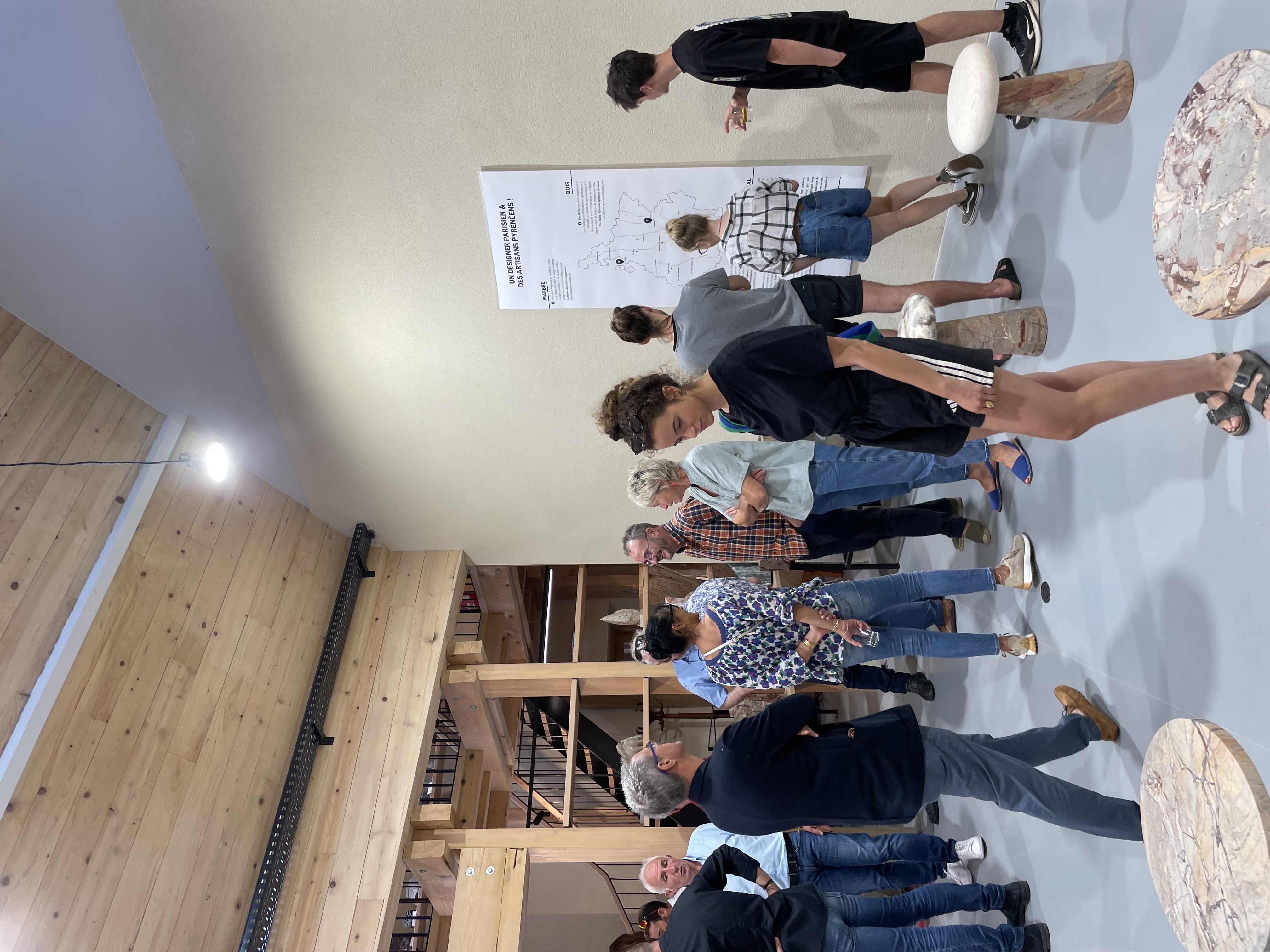
The Café des Marbres plays a central role as a space for meeting and exchange, open to all, fostering dialogue between residents, designers, artisans, visitors and tourists. The Atelier is also conceived as a flexible space that can be used by inhabitants, local associations and stakeholders to host meetings, events and collective initiatives, encouraging local appropriation.
The project promotes inclusive governance, as the municipality has been directly involved at all stages, and continues to participate in the life of the project alongside the association managing the site. Residents are also encouraged to initiate activities and contribute to the programming, reinforcing a participatory dynamic.
Free access for all audiences helps remove economic barriers and ensures inclusive access to culture, design and heritage in a rural context. In this way, the project proposes an inclusive model that strengthens social cohesion, encourages diversity of uses and supports new forms of shared cultural spaces.
The Atelier des Marbres project is based on strong involvement of local stakeholders at all stages of its design and implementation. Initiated by the municipality of Ilhet, it was conceived from the outset as a project serving the territory and its inhabitants. The municipal council played a central role in defining strategic orientations and continues to be actively involved in the life of the site.
Residents have also been progressively involved, particularly through the uses of the space. The Atelier des Marbres was designed as an open and flexible place, able to host local initiatives (meetings, events, activities), thus encouraging its appropriation by the community.
The Café des Marbres plays a key role in fostering participation, by creating an informal space for encounters and exchanges between residents, designers, craftspeople and visitors. Residencies and events also enable direct interactions between the public and creators.
This participatory dynamic helps strengthen social ties, encourages local initiatives and ensures the long-term anchoring of the project within its territory.
The Atelier des Marbres project is above all rooted in a strong local foundation, led by the municipality of Ilhet, which initiated and drove the project. Members of the municipal council played a central role in defining strategic orientations and in decision-making throughout the design, investment and implementation phases.
During its implementation phase, the project was supported by several public authorities (the Hautes-Pyrénées Department, the Occitanie Region, the Aure Louron intermunicipal authority), as well as the French State, which contributed to funding the construction and development works that enabled the site to open in 2024.
Since its opening, the site has been managed by the Atelier des Marbres association, created in 2024, which brings together qualified members and representatives of the municipality. This organisation ensures continuity between public leadership and operational management, while fostering an open and evolving governance model.
The association is gradually developing a network of partners at different scales, working with local stakeholders (public authorities, craftspeople, schools), regional organisations (notably through support schemes and recognition such as the Regional Wood Construction Award), and broader cooperation initiatives, such as the cross-border POCTEFA PUMP project aimed at structuring a marble sector at the scale of the Pyrenean massif.
This articulation between stakeholders and scales strengthens the coherence of the project, enables the pooling of expertise and gives broader scope to an initiative deeply rooted in a rural territory.
The Atelier des Marbres project is based on a transdisciplinary approach, bringing together multiple fields of knowledge and expertise. It combines design, architecture, craftsmanship, heritage, cultural mediation and environmental issues.
Design plays a central role as a driver of innovation and a means of renewing the uses of marble. It interacts with traditional craftsmanship related to material transformation, as well as with the architectural approach implemented in the rehabilitation of the building.
The project also integrates mediation and knowledge transmission through interactive tools and educational activities, combining scientific, historical and cultural perspectives on marble.
This cross-disciplinary approach fosters new forms of creation, cooperation and innovation, by breaking down boundaries between disciplines and connecting local stakeholders.
The business model of Atelier des Marbres is based on a progressive strategy aimed at achieving, by 2028, an autonomous operation no longer dependent on exceptional public funding.
The current phase (2024–2027) corresponds to a start-up period, supported by public funding (municipality of Ilhet, Hautes-Pyrénées Department, Occitanie Region, State), enabling the project to be structured and its economic model to be consolidated.
The project also mobilises European funding, notably through the LEADER programme, to support the development of the Café des Marbres and related activities, with the aim of making it a true place for social life.
In the medium term, the model is based on a diversification of resources. A significant share of revenue will come from sponsorship (foundations and private companies) and partnerships, particularly to fund design residencies. The Atelier des Marbres project also relies on broader cooperation dynamics, notably through the European Interreg POCTEFA PUMP project, which contributes to the financing of part of its activities.
The development of own-source revenues is also a key lever: café, shop, workshops and events, venue rental, publishing rights, as well as the tourist rental of the "Maison des designers".
This hybrid model, combining public funding, own-source revenues, private partnerships and cooperation projects, aims to ensure the long-term financial sustainability of the site while supporting its development over time.
The Atelier des Marbres project proposes a replicable model for the valorisation of local resources in rural areas, based on design, heritage enhancement and innovation.
Several elements of the project can be transferred to other territories. First, the approach of reactivating an underutilised local resource (in this case marble, particularly blocks considered as waste) through design constitutes a replicable lever in many contexts where raw materials or know-how remain locally underexploited.
The hybrid model of the site, combining a creative residency, a place for visitors and a convivial social space, can also be adapted to other rural areas facing the disappearance of places for social life and interaction. The rehabilitation of an existing building at the heart of the village contributes to this logic of local revitalisation.
The project methodology, based on strong territorial anchoring, the involvement of local stakeholders and cooperation between disciplines (design, craftsmanship, heritage, culture), is also transferable. It makes it possible to develop projects tailored to local specificities while fostering innovation.
Finally, the hybrid economic model, combining initial public funding, private partnerships, own-source revenues and cooperation projects, can inspire other initiatives seeking to develop sustainable cultural and creative projects in rural contexts.
Through these different aspects, Atelier des Marbres offers an adaptable and inspiring model for other territories wishing to enhance their local resources, strengthen their attractiveness and recreate social and economic dynamics.