Enhancing Circularity, Sustainability, and Innovation
SOLAR SOLIDARITY Solar Purchasing Groups
FAZZCLUB Solar Purchasing Groups (Italy 2009–2012) – civic MODEL for solar access
The FAZZCLUB MODEL enabled hundreds of households to access rooftop photovoltaics in a coordinated, affordable and transparent way. Through public assemblies, independent guidance and collective negotiation, it reduced complexity, mistrust and costs, turning solar adoption into a safe and accessible process for ordinary families.
Italy
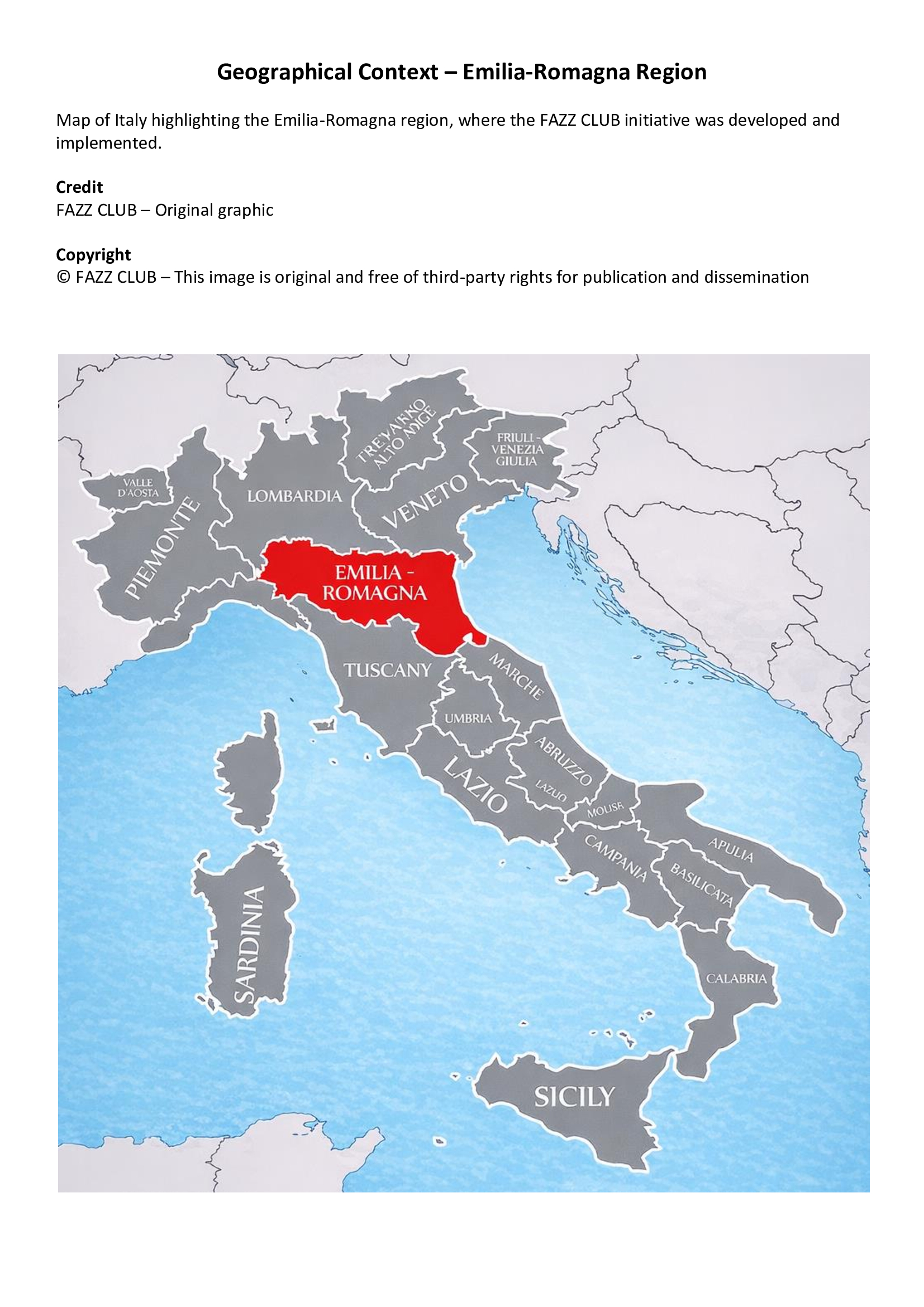
Regional
EMILIA ROMAGNA
It addresses urban-rural linkages
It involves other types of transformations (soft investment)
Yes
2012-12-31
No
No
No
Organisation
PROBLEM / OPPORTUNITY
Many households were interested in photovoltaics but blocked by complexity, lack of transparency and weak bargaining power.
PROJECT PURPOSE
To enable access to rooftop photovoltaics through a non-profit CIVIC MODEL based on clear information, trust and collective action.
BENEFICIARIES
Households and citizens, especially those lacking technical knowledge or market negotiation capacity.
CONCRETE OBJECTIVES
a) Simplify Access To Photovoltaics
b) Improve Transparency And Quality Of Offers
c) Reduce Risk And Uncertainty
d) Strengthen Citizens’ Bargaining Power
RESULTS ACHIEVED
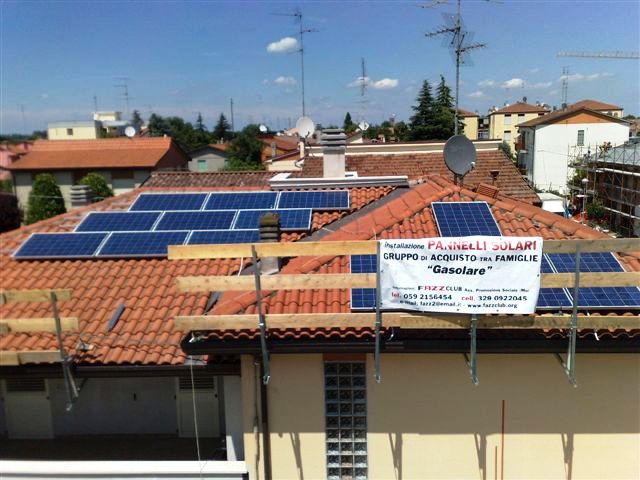
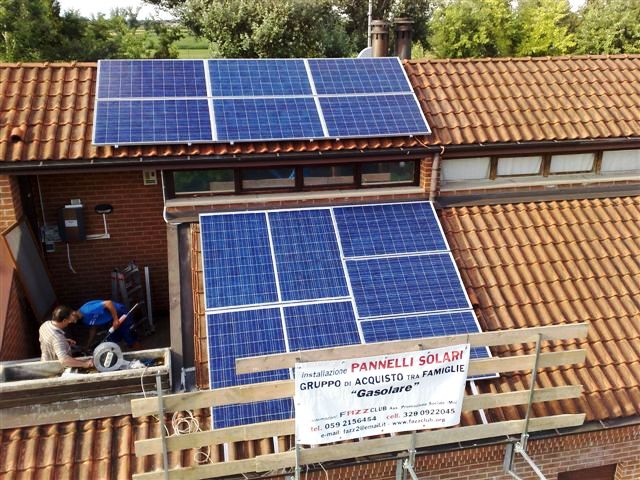
95 public assemblies, 941 households involved, 335 systems installed, 1,306 kWp total capacity.
EVIDENCE and DATA
~1.57 GWh/year produced; ~350 tons CO₂/year avoided; ~5,000 tons over 15 years.
TRANSFORMATIVE CHARACTER
Organisational innovation: shifting from individual decisions to a coordinated, replicable and scalable civic process.
ORIGIN of THE IDEA
The project emerged from direct observation of a widespread barrier: households interested in photovoltaics but unable to navigate incentives, offers and technical complexity.
WHO WAS INVOLVED and WHO DECIDED
FAZZ CLUB designed and coordinated the process as an independent civic actor.
Households actively participated, contributing questions, needs and informed decisions.
PROJECT PHASES
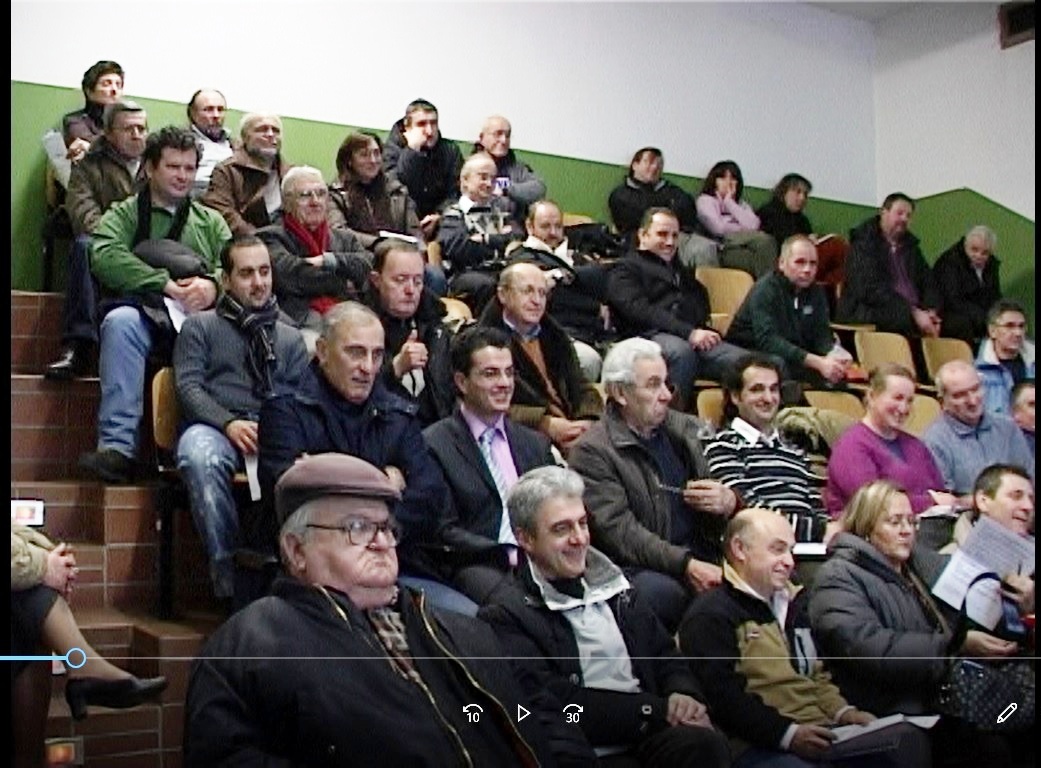
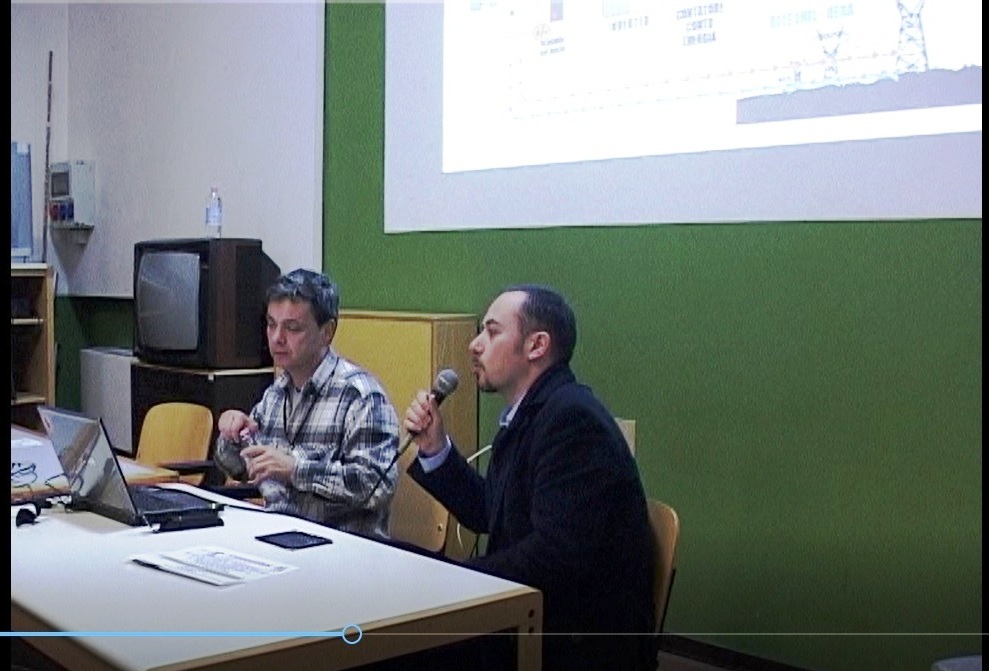
a) Public Information Assemblies
b) Collection Of Household Needs
c) Transparent Comparison Of Installers
d) Selection And Implementation Of Systems
TOOLS and METHODS USED
a) Accessible Public Meetings
b) Simplified And Clear Language
c) Structured Comparison Of Offers
d) Aggregation Of Demand
e) Non-Profit Trust-Based Mediation
WHY the METHOD WORKED
It reduced complexity and uncertainty while increasing understanding, trust and decision-making capacity.
1. CITIZEN-LED ENERGY TRANSITION → An Active And Participatory Transition Driven By Citizens, Not Passively Adopted
2. COLLECTIVE SOLAR ACCESS → Organised And Shared Access To Photovoltaics, Not Individual And Fragmented
3. CIVIC SOCIAL DESIGN → Designing Social Processes That Improve People’s Lives Through Collective Organisation
4. TRUST-BASED MARKET MEDIATION → An Independent Civic Actor Protecting Citizens And Rebalancing Market Relationships
5. REPLICABLE COMMUNITY MODEL → A Transferable System That Can Be Adapted And Implemented Across Different Territories
SUSTAINABILITY OBJECTIVES
To accelerate the adoption of renewable energy by making photovoltaics accessible, understandable and widely implementable for households.
CONCRETE ACTIONS
a) Organisation Of Public Assemblies
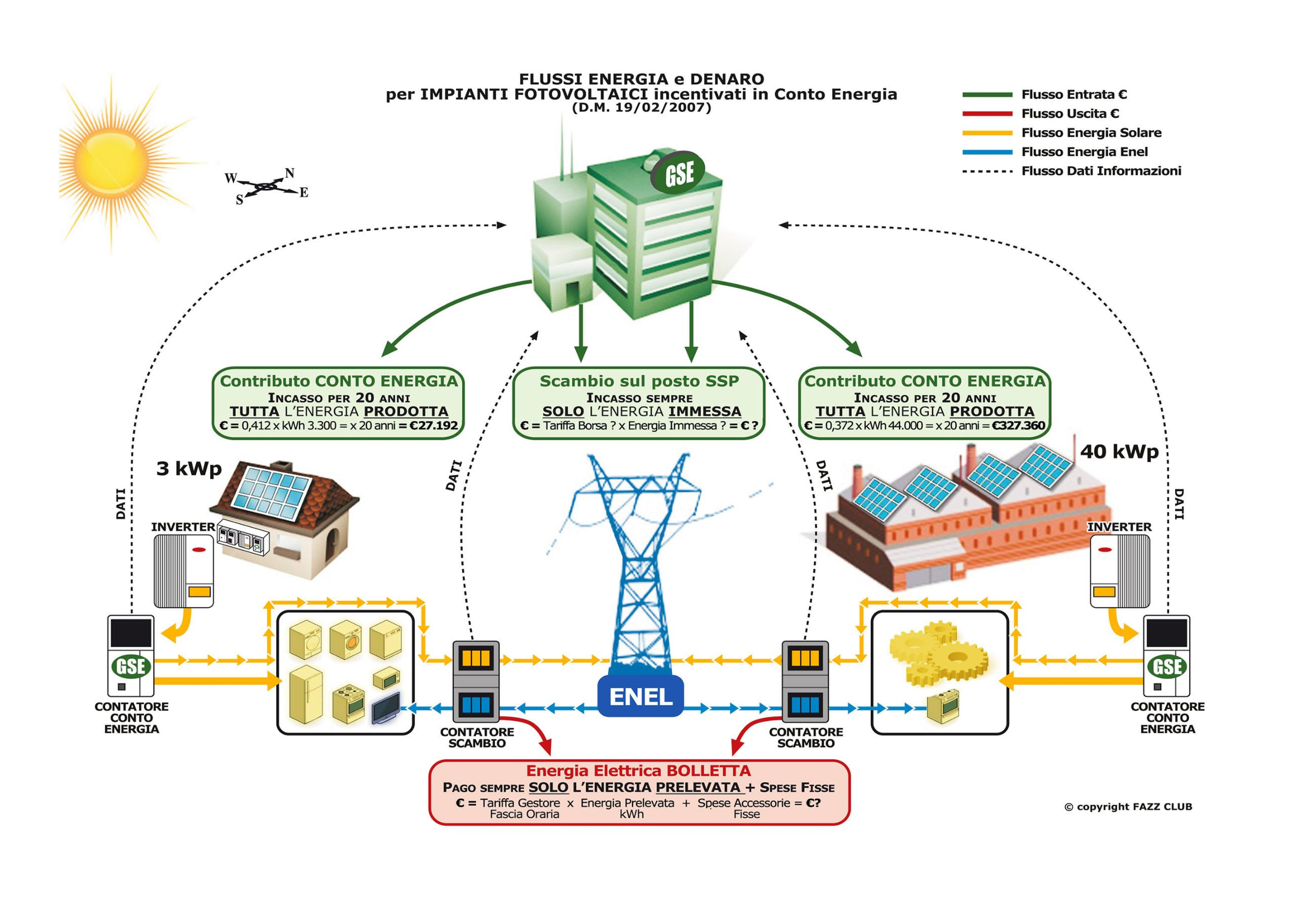
b) Clear Information On Incentives And Technologies
c) Transparent Comparison Of Installers
d) Aggregation Of Demand To Facilitate Access
EVIDENCE of EFFECTIVENESS
95 Public Assemblies, 941 Households Involved, 335 Systems Installed, 1,306 Kwp Total Capacity.
ENVIRONMENTAL IMPACT
~1.57 Gwh/Year Produced; ~350 Tons CO₂/Year Avoided; ~5,000 Tons Over 15 Years.
WHY it IS EXEMPLARY
The project shows that sustainability depends not only on technology, but on accessible, transparent and collective processes.
INNOVATIVE and LASTING VALUE
A replicable organisational MODEL that reduces barriers, builds trust and enables a stable and scalable energy transition.
IMPROVEMENT of QUALITY of LIFE
The MODEL project transformed a complex and stressful experience into a clear, shared and reassuring process, improving decision quality and everyday well-being for households.
DESIGN CHOICES and APPROACH
The MODEL is Based On Social Design Principles Prioritising Simplicity, Clarity And Accessibility: Public Assemblies, Understandable Language And Transparent Comparison Of Offers.
WELL-BEING and COMFORT
Households Gained Greater Confidence In Their Decisions And Improved Economic Comfort Through More Informed And Advantageous Choices.
SOCIAL INTERACTION and SENSE of BELONGING
Public Assemblies Fostered Connections Among Citizens, Encouraging Exchange Of Experiences And Strengthening Community Ties At Local Level.
RELATIONSHIP with the TERRITORY
Collaboration With Local Authorities (Civic Halls, Public Spaces) Reinforced The Link With The Territory And Trust In Institutions.
WHY it IS EXEMPLARY
The Project Shows That “Beauty” Can Emerge From Fair, Understandable And Shared Processes That Restore Trust, Dignity And A Sense Of Belonging.
TYPE of INCLUSION PROMOTED
The Project Enabled Operational Inclusion By Making Photovoltaics Accessible To Households Often Excluded Not By Income, But By Lack Of Knowledge, Trust And Decision-Making Capacity.
CONCRETE TOOLS USED
a) Open And Free Public Assemblies
b) Translation Of Technical Complexity Into Understandable Language
c) Transparent Comparison Of Offers
d) Aggregation Of Demand To Reduce Costs And Risks
e) Independent Non-Profit Mediation
BENEFITS DEMONSTRATING INCLUSION
941 Households Involved And 335 Systems Installed Show That Non-Expert Citizens Were Able To Effectively Access The Market And Complete The Investment.
WHY it IS EXEMPLARY
The Project Introduces An Inclusive Model Based On Capability And Understanding, Not Only Economic Access, Reducing Cognitive And Relational Barriers And Enabling Active Citizen Participation.
WHO WAS INVOLVED
Households, Citizens, Local Communities, Public Amministrations, And Territorial Actors, With FAZZ CLUB Acting As An Independent Facilitator.
IN WHICH PHASES
From The Initial Information Phase To Final Decision-Making And Implementation.
MODES of INVOLVEMENT
a) Open Public Assemblies
b) Direct Interaction Among Citizens
c) Collection Of Needs, Doubts And Priorities
d) Shared Evaluation Of Offers
REAL POWER of INFLUENCE
Citizens Were Not Passive Recipients But Decision-Makers: Final Choices Emerged From Collective Discussion, Influencing Selection Criteria, Offer Quality And Implementation Processes.
IMPACT on PROJECT QUALITY
Active Participation Improved Transparency, Trust And Decision Quality, Reducing Errors And Information Asymmetry.
WHY it IS EXEMPLARY
The Project Demonstrates That Participation Is Not Symbolic Consultation, But A Structured Process Generating Better And Tangible Outcomes.
ACTORS INVOLVED at DIFFERENT LEVELS
a) Local Level: Households, Citizens And Communities
b) Territorial Level: Installers And Market Operators
c) Institutional Level: Municipalities And Regional Authorities
d) Associative Level: Environmental Organisations (E.G. Wwf, Legambiente)
CONCRETE ROLES of ACTORS
a) Citizens: Active Participation And Final Decision-Making
b) Fazz Club: Coordination, Mediation And Transparency Guarantee
c) Local Authorities: Patronage, Provision Of Public Spaces And Communication Support
d) Associations: Dissemination And Awareness Through Their Networks
ORGANISATION of COOPERATION
Cooperation Was Structured Around A Coordinated Civic MODEL, Where Each Actor Contributed Complementary Roles Without Overlap Or Conflict Of Interest.
ADDED VALUE of MULTILEVEL COOPERATION
a) Increased Credibility And Trust Among Citizens
b) Broader Participation Through Territorial Networks
c) More Effective Dissemination Of Information
d) Improved Coordination Between Demand And Supply
WHY it MATTERS
The Project Shows That Cooperation Between Citizens, Institutions And Civil Society Can Concretely Improve The Effectiveness Of The Energy Transition.
DISCIPLINES INVOLVED
a) Civil And Electrical Engineering
b) Regulatory And Incentive Frameworks
c) Economic Analysis
d) Communication
e) Social Design And Civic Organisation
HOW they WORKED TOGETHER
The FAZZ CLUB SOCIAL DESIGN MODEL Integrated These Disciplines Into A Single Operational Process, Translating Technical Knowledge Into Understandable Decisions For Citizens.
ORGANISATION of COLLABORATION
FAZZ CLUB Coordinated Experts, Citizens And Market Actors In A Structured Way, Avoiding Fragmentation And Making The Process Clear, Accessible And Replicable.
ADDED VALUE
The Integration Of Technical Expertise And Civic Organisation Enabled Non-Expert Citizens To Carry Out Complex Projects In An Informed Way.
WHY it IS EXEMPLARY
The FAZZ CLUB SOCIAL DESIGN MODEL Was The Key Enabler: It Made Possible, At Scale, A Process Previously Fragmented And Difficult, Turning It Into A System Replicable Anywhere.
BUSINESS MODEL
The project is based on a non-profit model: FAZZ CLUB does not sell systems but organises and coordinates the process.
LONG-TERM SUSTAINABILITY
The MODEL is Sustainable Over Time As It Requires Limited Costs And Relies On Replicable Activities: Organisation, Information And Coordination.
REVENUE STREAMS
Activities can be supported by:
a) Participant Contributions
b) Coordination Services
c) Partnerships Or Institutional Support
MAIN COSTS
a) Organisation Of Public Assemblies
b) Communication And Information
c) Operational Coordination
No significant infrastructure investment is required.
SCALABILITY
The MODEL is Highly Scalable As It Is Based On A Replicable Organisational Process Rather Than
Physical Assets.
ECONOMIC INNOVATION
It Creates Value By Reducing Market Inefficiencies, Improving Transparency And Decision Quality.
WHY it IS COMPETITIVE
The Project Shows That A Civic, Non-Profit Approach Can Activate Distributed Investments And Generate Large-Scale Economic And Environmental Impact.
WHAT is TRANSFERABLE
The FAZZ CLUB SOCIAL DESIGN MODEL:
a) Public Assemblies
b) Accessible Information
c) Aggregation Of Demand
d) Transparent Comparison Of Offers
e) Independent Civic Mediation
WHAT is REQUIRED to REPLICATE IT
a) A Credible And Independent Local Actor
b) Organisational And Communication Skills
c) Access To Technical Expertise (Even External)
d) Cooperation With Local Authorities And Territorial Networks
WHAT REMAINS CONSTANT
a) Process Structure
b) Principles Of Transparency And Independence
c) Active Role Of Citizens
d) Coordinated Approach
WHAT is LOCALLY ADAPTABLE
a) Regulatory Frameworks And Incentives
b) Market Actors And Suppliers
c) Communication Channels
d) Social And Territorial Context
WHY it IS SCALABLE
The MODEL is not based on infrastructure but on an organisational process: lightweight, transferable and applicable across different contexts.