Strengthening Local Democracy and Inclusion
FRACTAL
FosteRing green infrAstruCTure in the ALps
The FRACTAL project aimed to enhance alpine communities involvement in implementing Green
Infrastructure (GI) locally. Using a bottom-up approach, it integrated GI into education through workshops,
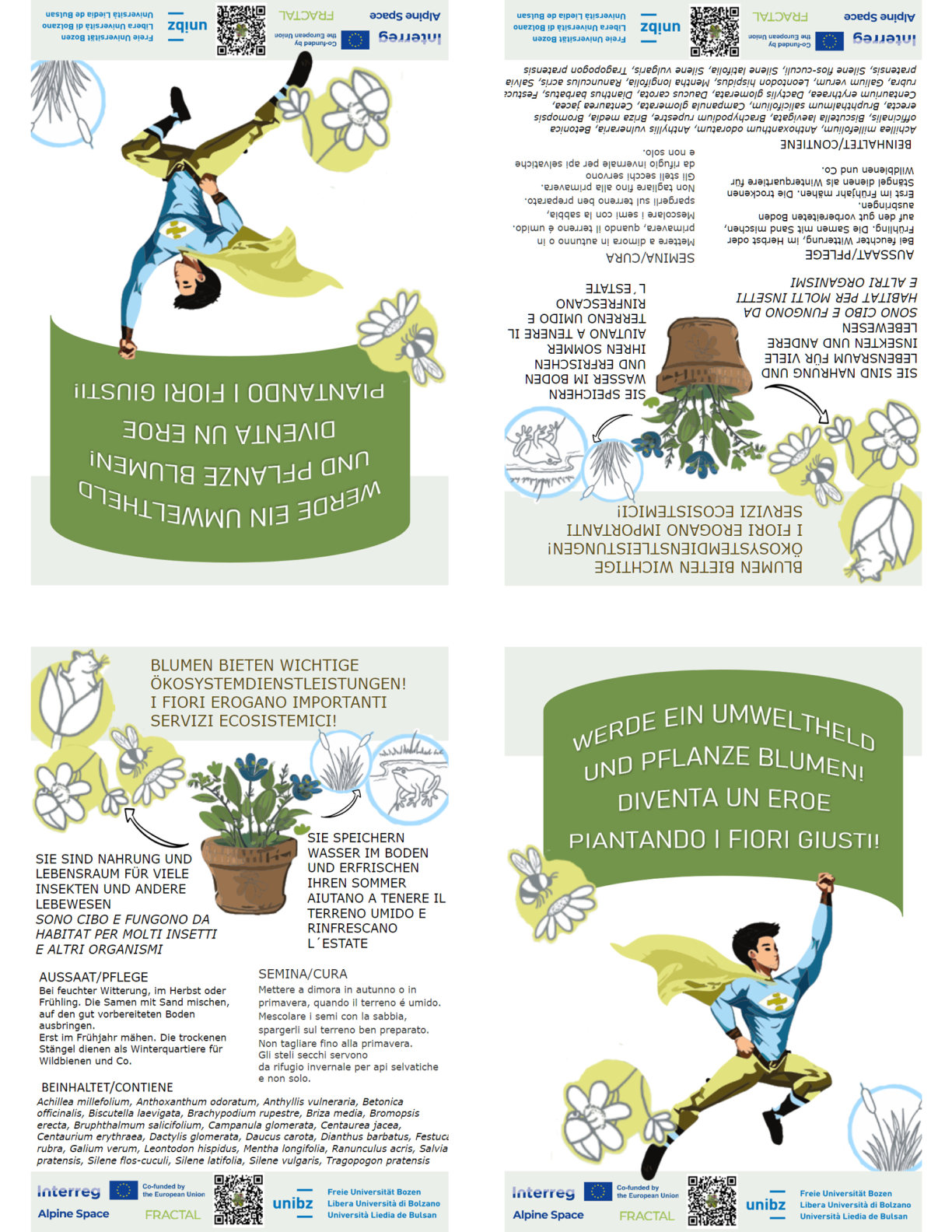
summer camps, and festivals. FRACTAL produced an innovative educational toolkit with infographics, a
board game, a booklet, and a silent movie. Thanks to the engagement of local stakeholders, a GI Pact with a
set of GI-based solutions was co-developed and signed by several public administrations.
Italy
Regional
The project was implemented in South Tyrol and Trentino (Italy), in Burgenland (Austria), and in the Triglav National Park, part of the Gorenjska (Upper Carniola) and Goriška regions (Slovenia).
Mainly rural
It involves other types of transformations (soft investment)
Yes
2024-09-30
Yes
ERDF : European Regional Development Fund
No
No
Individual
The Alps harbour a fragile mosaic of natural, agricultural and peri-urban areas where ecosystem connectivity is under pressure from land fragmentation and climate change. Fragmented ecosystems lose the capacity to deliver the services alpine communities depend on clean water, pollination, climate buffering, biodiversity. Green Infrastructure (GI), networks of natural and semi-natural elements delivering ecosystem services, is one of the most cost-effective responses, yet its uptake in small alpine municipalities remains scattered for want of locally owned knowledge and governance tools.
FRACTAL (FosteRing green infrAstruCTure in the ALps) is an Interreg Alpine Space project (April 2023 – September 2024), led by the Free University of Bolzano/Bozen with Triglav National Park (SI), the National Institute of Biology Slovenia, and Wirtschaftsagentur Burgenland GmbH (AT). Its twin objectives are: standardise GI planning requirements at municipal level through a participatory process; and develop an innovative educational toolkit for primary-to-secondary school pupils across three national school systems.
Key results:
• GI Pact: 10 municipalities across Italy, Slovenia and Austria signed, committing to time-bound GI actions; 23 entities endorsed. The first local-scale transalpine GI pact.
• Toolkit: animated film (YouTube), illustrated booklet "Sky and Scrab", cooperative FRACTALgame, and infographic — all in 4 languages (IT/DE/SI/EN), accessibility-designed.
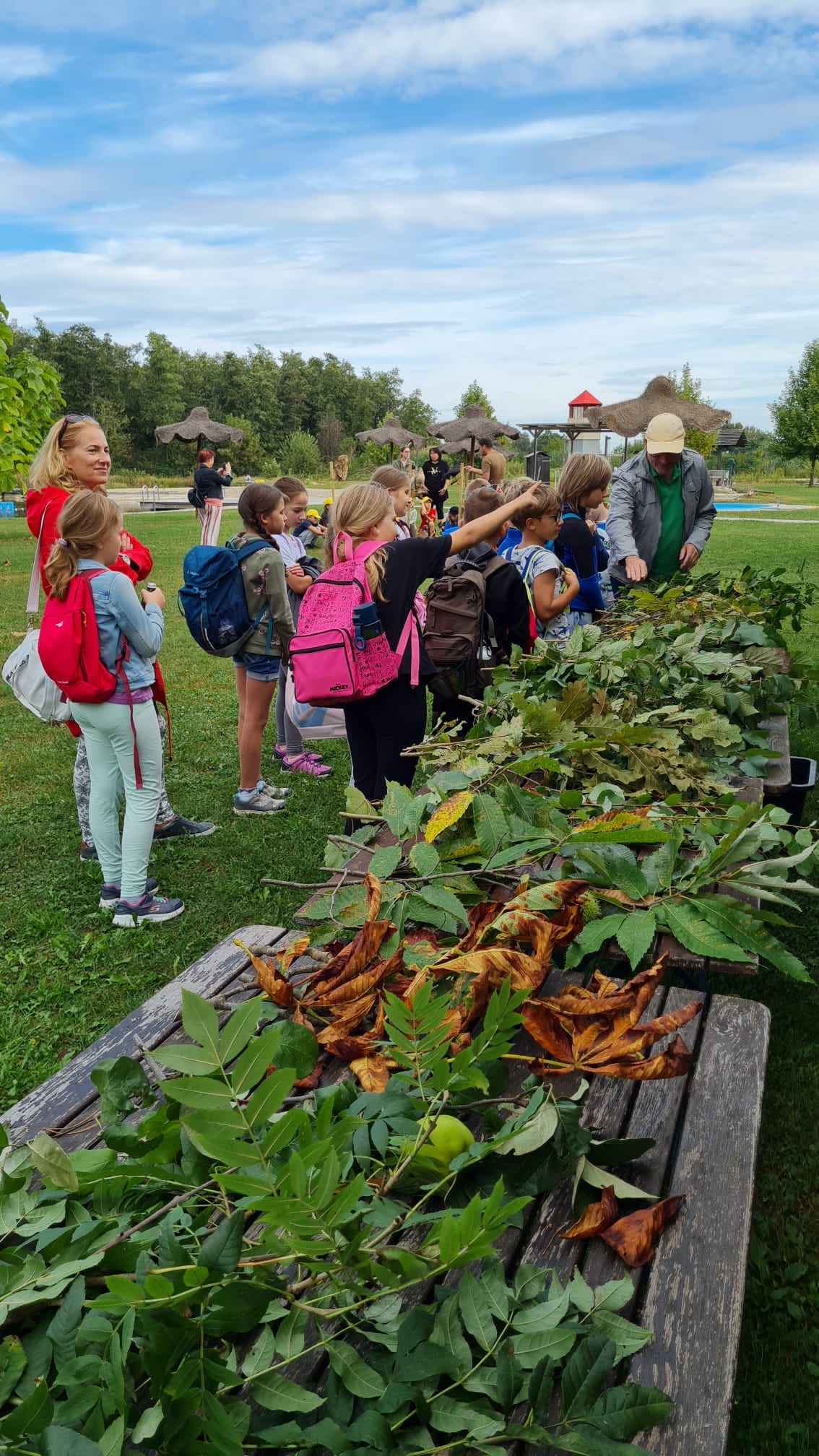
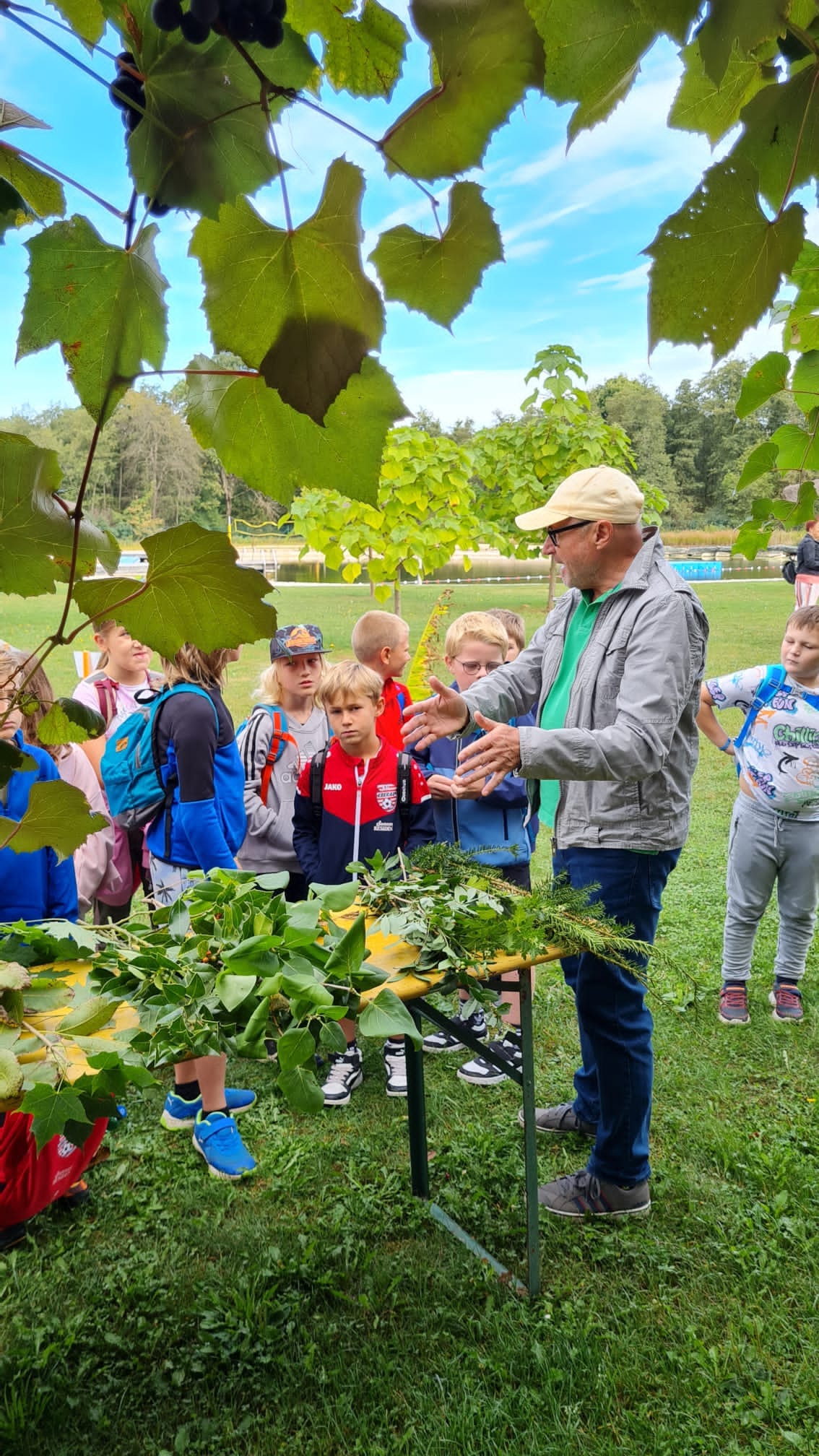
• Outreach: ~1,000 participants in educational camps, GI planting Days and three Regreen Festivals.
FRACTAL demonstrates that governance and educational tools for nature-based solutions can be co-created by small mountain communities and travel beyond the initiating consortium. The toolkit is already embedded in university curricula and distributed to schools and research institutes across Europe.
FRACTAL emerged directly from LUIGI, a 14-20 Interreg Alpine Space project, which had produced governance and educational frameworks for GI. The team at the Free University of Bolzano recognised that the critical gap was not further research but the translation of knowledge into locally owned commitment and classroom-ready materials.
The project unfolded in two parallel streams. In the governance stream, partners in Italy, Austria and Slovenia identified key local stakeholders through landscape analyses and interviews. Facilitated workshops then invited farmers, associations, municipal officers, nature park representatives and citizens to map current GI practices and collectively envision futures for their territories. This process surfaced concrete actions, from sustainable meadow mowing to pollinator-friendly planting, and embedded them in locally adopted GI Pacts. A common transnational methodology was used throughout, with deliberate local adaptation: species in the educational booklet were chosen for their ecological and symbolic resonance in each country; character names were localised.
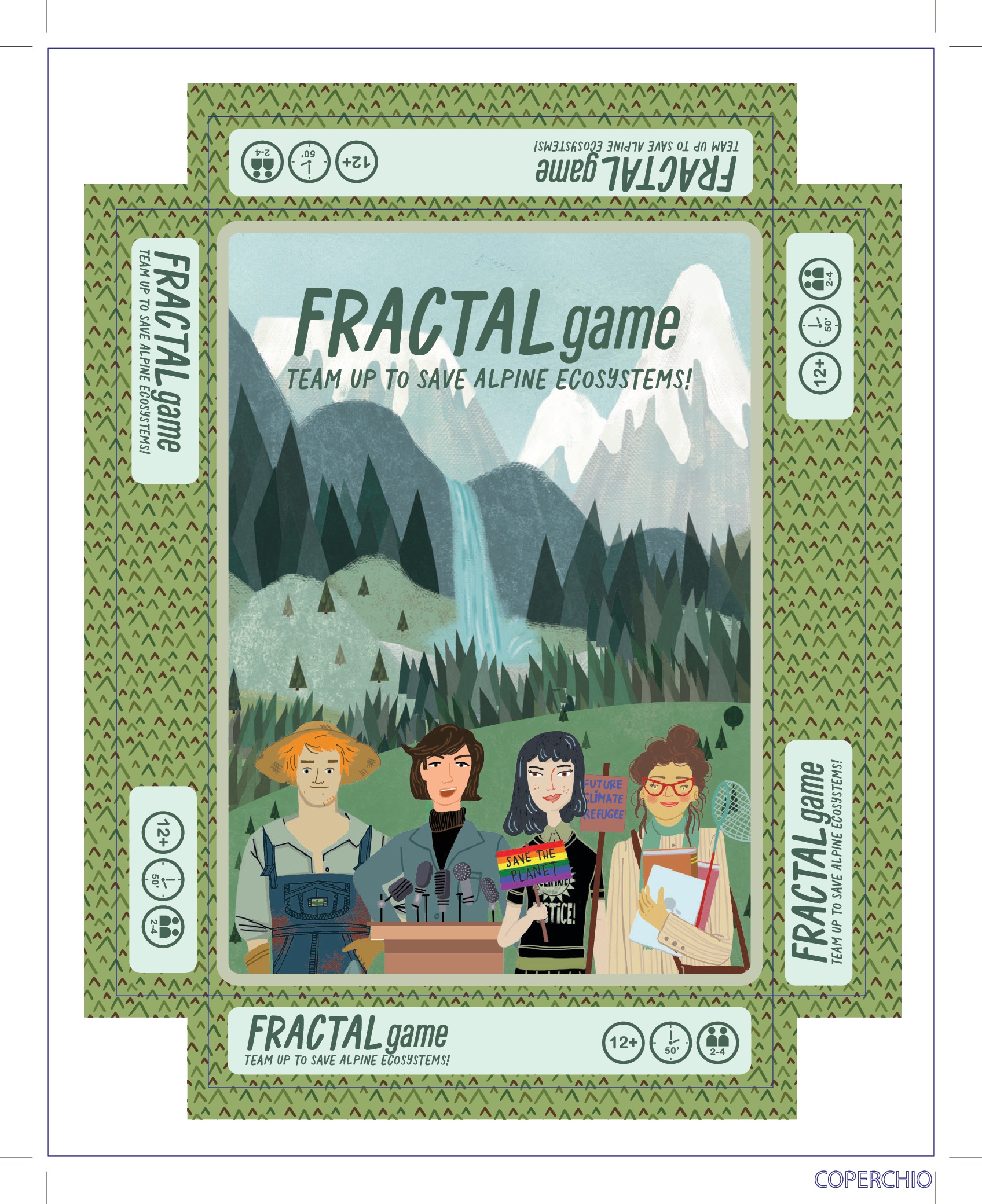
In the education stream, materials were developed cooperatively across national teams. The FRACTALgame was designed for formal and non-formal settings; the booklet was field-tested with pupils; the mute film was produced language-independently for use anywhere.
Among the key milestones was the first GI Day in Kohfidisch, Burgenland (November 2023), where 35 students and volunteers planted ~110 trees and shrubs, creating a "phenomenon hedge" the school will tend for years. Central to the project's approach were the participatory workshops that led to the co-creation of the GI Pact, which was produced in English as a transferable template, then adapted to each country's context. In Italy, two two-day stakeholder workshops were held before a formal signing event on 13 April 2024; the Regreen Festival in Trentino (19–21 July 2024) hosted a further signing alongside events.
green infrastructure
nature-based solutions
communities co-design of the green infrastructure pact
education for sustainability
communities co-planning of their territory
FRACTAL pursued three sustainability objectives: embedding GI into municipal planning to reverse declining ecological connectivity; creating a durable knowledge base outlasting the funding period; and shifting target groups from passive recipients of biodiversity information to active ecosystem stewards.
Environmentally, the project promoted GI solutions serving biodiversity (habitat restoration, fragmentation reduction) and climate adaptation (temperature regulation, flood attenuation, pollination support for local agriculture). The GI Pact, signed by ten municipalities, commits signatories to specific nature-based measures, turning project outputs into ongoing practice. The municipality of Bohinj, for example, banned lawn mowing in May 2024 to protect early-season pollinators — a policy directly stimulated by FRACTAL's participatory process.
Social and economic sustainability is built into the open distribution model: all toolkit materials are freely downloadable in four languages, printable at no cost, and already distributed to research institutes across Europe. The FRACTALgame has been embedded in the Biology Education curriculum at the Free University of Bolzano, distributed to researchers, municipalities, libraries and schools across Europe and beyond, and presented at the IALE 2025 European Landscape Ecology Conference, ensuring broad institutional anchoring.
What makes FRACTAL exemplary is the combination of bottom-up ownership and scientific rigour: Pact commitments emerged from communities themselves and produce actionable local plans. This was achieved within an 18-month window and a budget of €445,786 — an exceptional ratio of reach to resource.
FRACTAL understood that persuading communities to care for their landscape depends not only on scientific argument but on emotional experience — on making the invisible ecosystem visible and beautiful.
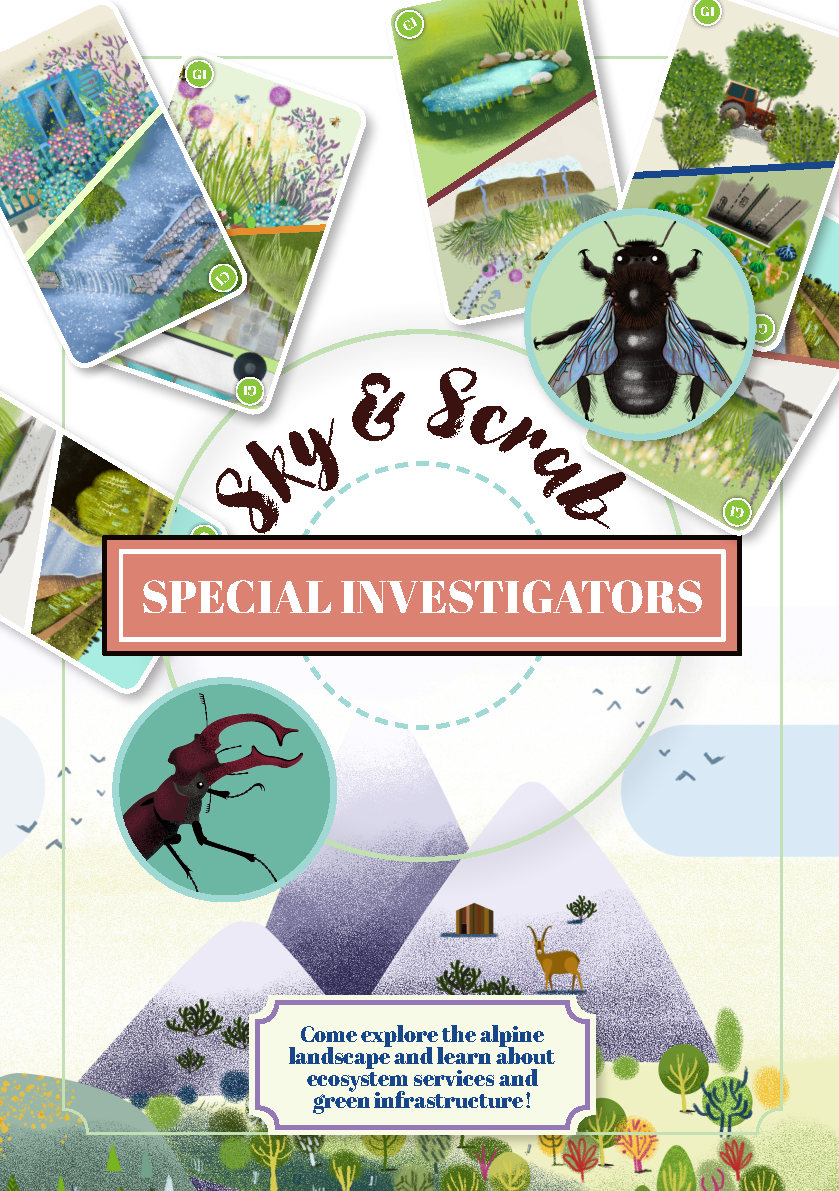
The illustrated booklet "Sky and Scrab – Special Messengers" translates ecosystem science into a visual narrative: two alpine species guide readers through alpine habitats. Artwork evokes each partner country's flora and fauna, reinforcing local identity and belonging. Teachers reported that the characters became reference points for discussing nature in and around school.
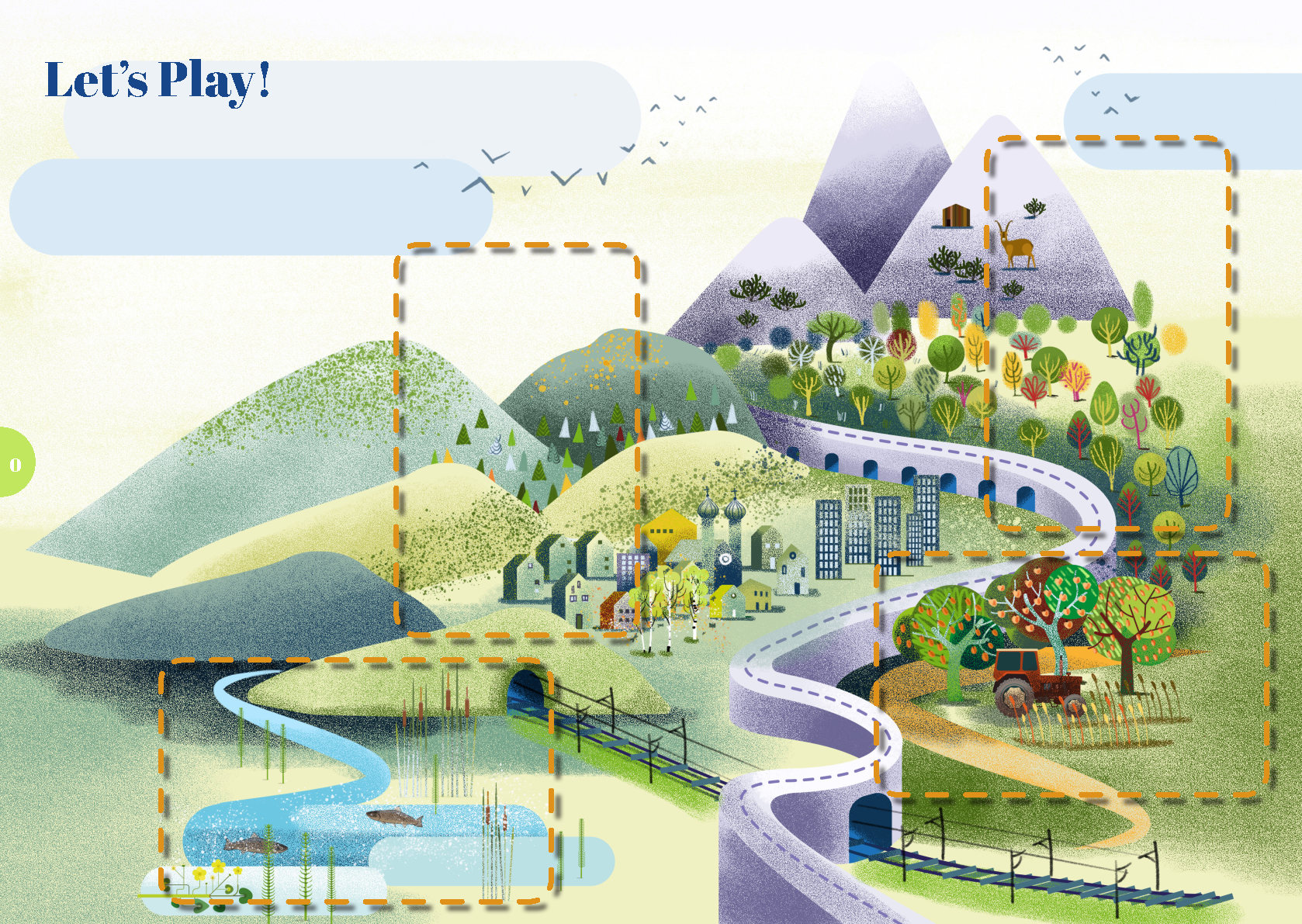
The FRACTALgame extends this into a game world: illustrated cards representing five alpine ecosystems use colour, iconography and tactile play to make biodiversity tangible. The cooperative mechanic — players work together to save the Alpine ecosystems — places interdependence at the centre of the experience.
The animated film (freely available on YouTube) extends this aesthetic into moving image: combining animation, entertainment and education, it communicates the value of GI without language barriers, reaching audiences far beyond the project's geographic scope.
The GI Days produced the most literal transformation: in Kohfidisch, ~110 native trees and shrubs created a "phenomenon hedge" — a living sensory space pupils and families can enter, observe across seasons, and cultivate.
The Regreen Festival in Trentino extended FRACTAL into cultural programming: a film screening, pollinator exhibition, immersive cooking sessions using wild herbs, and a forest walk on GI deepened participants' sensory relationship to alpine landscapes.
FRACTAL is exemplary in aesthetics because it rendered governance and science beautiful: the toolkit makes the Alpine ecosystem legible, lovable and actionable for audiences from primary-school children to municipal administrators.
All materials are freely available at: https://multilab.projects.unibz.it/fractal-en/
FRACTAL's inclusion objectives spanned social, educational, intergenerational, linguistic and governance dimensions. The project was designed to reach groups systematically excluded from biodiversity policy: rural communities treated as peripheral; farmers and beekeepers whose land-use decisions shape ecosystems but who rarely participate in policy design; and children, future stewards of alpine landscapes rarely involved in governance.
In the educational stream, inclusion was built into every product. Materials were translated into four languages (Italian, German, Slovenian, English), enabling adoption across three national school systems with distinct curricula. The booklet was developed with accessibility considerations for students with dyslexia and colour-blindness. Species were chosen for their local resonance in each country, celebrating the distinctive ecological identity of each territory rather than a homogenised depiction of nature.
In the governance stream, the participatory process was explicitly designed as an inclusive mechanism. Stakeholder mapping sought out not only formal actors (municipalities, nature parks) but civil society: small farms, beekeeping associations, volunteer networks, schools. Facilitated workshops used accessible methodologies — scenario development, practice mapping, group deliberation — enabling participation regardless of technical background. The result was a pact collectively authored by communities themselves, not a top-down policy document.
The open distribution model is itself an inclusion instrument: no school needs a budget to access, print and use the FRACTALgame or booklet. The film on YouTube removes a further barrier. The teacher guide enables adoption by educators with no prior environmental science expertise.
FRACTAL is exemplary in inclusion because it positioned mountain communities as authors of their own ecological futures, giving them tools and formal recognition of their existing GI practices.
Participation was the structural backbone of FRACTAL. Citizens, farmers, beekeepers, municipal administrators, nature park managers, teachers, and community associations were involved across all main project activities.
In the governance activity, stakeholder involvement moved through several stages. The process began with targeted interviews to identify locally significant GI practices and co-define what was valuable, feasible and regionally relevant. Facilitated workshops then brought together heterogeneous groups to develop shared future scenarios for their territory and select which GI commitments to include in their local pact. This was not consultation but co-authorship: the content of each local GI Pact was determined by the participating community, not imposed by the consortium.
Participation had measurable outcomes. The municipality of Bohinj adopted a mowing restriction during spring 2024 as a direct result of its engagement in the participatory process. The ten municipal signatories committed to defined, time-bound GI actions. The 23 endorsing entities (including associations, schools and small farms) demonstrate that participation extended well beyond formal governance actors into civil society.
Schoolchildren participated in testing the FRACTALgame and the booklet gamification materials before finalisation, providing feedback that shaped the final products. Summer camps and GI Days made children active agents of landscape change: held over two consecutive summers, involving over 100 children in Italy alone and many more across Slovenia and Austria; 35 students from MS Kohfidisch physically planted the trees that now form a hedge their school will tend for years.
The Regreen Festivals operated as participatory cultural events: workshops on solitary bees, ecofeminism, biophilia and beekeeping were co-facilitated with local associations and expert guests, creating spaces of shared knowledge production rather than one-directional transmission.
FRACTAL engaged actors at local, regional, national and European scales. At the European level, FRACTAL was presented at two EUSALP Action Group 7 meetings on Ecological Connectivity (May 2023 and November 2024) and at Interreg Central Europe ReCo partnership meetings, where the absence of GI educational materials made the toolkit particularly well received. The project aligned with the EU Green Infrastructure Strategy (2013), the European Green Deal, the EU Biodiversity Strategy for 2030, and contributed to Specific Objective 1.2 of the Interreg Alpine Space Programme.
At the local level, ten municipalities and 23 civil society entities across Italy, Austria and Slovenia signed or endorsed the GI Pact, committing to concrete nature-based actions. Nature parks (Naturpark Weinidylle, Raab-Örseg Goricko and Geschriebenstein/Irottkő in Burgenland; Triglav National Park in Slovenia; and partner valleys in Trentino) provided institutional and territorial anchoring for the participatory process and outreach events.
At the regional level, the project operated within the Trentino, Southern Burgenland and Bohinj Lake area frameworks. Wirtschaftsagentur Burgenland ensured GI was framed not just as environmental policy but as a regional development tool.
At the national level, the educational toolkit was translated and pedagogically adapted for Italian, Austrian and Slovenian school curricula. The Free University of Bolzano's decision to embed the FRACTALgame in its Biology Education programme represents lasting institutional uptake.
The added value of multilevel engagement was twofold: legitimacy, local bottom-up commitments grounded in European frameworks; and scalability, the English-language GI Pact template and open-access toolkit give any region the infrastructure to replicate the model independently.
FRACTAL was inherently transdisciplinary: its objectives required environmental science, education science, game design, visual communication, facilitation, governance, and community development.
The consortium assembled this range institutionally. The Free University of Bolzano contributed pedagogical, sociological and ecological expertise, ensuring educational materials met rigorous learning design standards. The National Institute of Biology Slovenia contributed ecological and biological science such as species selection, ecosystem service assessment, and biodiversity data with a focus on pollinators. Triglav National Park contributed practical conservation expertise and territorial knowledge. Wirtschaftsagentur Burgenland contributed regional development and stakeholder engagement skills, and as a LUIGI partner, expertise in that project's deliverables and outputs.
Disciplinary integration was visible in every toolkit product. The FRACTALgame was co-designed by ecologists and educators, with mechanics validated for pedagogical soundness across school levels and non-formal contexts. The booklet required collaboration between narrative writing, scientific accuracy review and illustrative design. The infographic applied data visualisation expertise to complex ecosystem service data.
In the governance stream, the participatory process drew on social science facilitation, landscape ecology, and communication design. The GI Pact template required legal and administrative knowledge adapted across three national systems.
The result: a governance instrument that is locally owned but scientifically grounded, and educational materials that are aesthetically compelling, pedagogically sound, and ecologically accurate.
FRACTAL was funded as an Interreg Alpine Space small-scale project: total budget €445,786, of which €334,339.50 (75%) from the ERDF and €111,446.50 from national public co-financing and no private funding.
The project was designed so that its primary outputs (the educational toolkit, GI Pact template, illustrated booklet, board game and film) require no ongoing revenue to function. All materials are freely available, digitally distributed at no cost. The FRACTALgame is printable: any school or community worldwide can download, print and play it, removing financial barriers to uptake entirely.
Ongoing costs are absorbed institutionally rather than generating revenue dependencies. The Free University of Bolzano has embedded the FRACTALgame in its Biology Education curriculum, covered within normal teaching budgets. Digital hosting of project materials on the Alpine Space website and Triglav National Park's project page is maintained within each organisation's operating budget.
Revenue generation potential lies in consultancy and training spin-offs: the participatory methodology for the GI Pact process could be offered as a service to regions or programmes seeking nature-based governance instruments, and the toolkit could be further developed — new ecosystem modules, digital interactive versions — with project or institutional funding.
The most significant scalability contribution is the template model: the GI Pact template is in English, publicly available and explicitly designed for regional adaptation. The methodology report is similarly public. Any region with willing partners can replicate the FRACTAL approach without the consortium's involvement: a genuinely disruptive feature for participatory conservation governance.
FRACTAL was designed with transferability as an explicit output objective. The GI Pact template is the clearest expression: an adaptable instrument in English, structured so that any regional team can adopt the participatory process and produce their own locally specific pact.
The most transferable elements are:
• The educational toolkit (booklet, FRACTALgame, infographic, film): freely downloadable in four languages, already used by schools and research institutes outside the project region. The board game is printable and self-contained.
• The GI Pact participatory methodology: stakeholder mapping, interviews and facilitated workshops can be adapted to any mountain or rural bioregion with similar fragmentation challenges.
• The transnational co-design model: developing materials jointly across national education systems while maintaining local adaptations is applicable to any multinational project addressing shared ecological challenges.
Replication requires ecological expertise, educational expertise, facilitation capacity, and municipal or nature park partners willing to take governance ownership. FRACTAL demonstrates these can be assembled with a modest budget.
What may need adaptation: species content, governance framing (the Pact's legal standing varies across national systems), and language. Language barriers are partly addressed by design: most game components are language-free, and FRACTALgame cards are in English only, stimulating language learning and limiting translation costs.
The model is relevant wherever communities are asked to engage with nature-based solutions without the institutional infrastructure or technical language to do so. FRACTAL shows the bottleneck is not scientific knowledge but locally owned language, commitment and tools, and that these can be built collaboratively, inexpensively, and beautifully.