Enhancing Circularity, Sustainability, and Innovation
WeWilder: A place at the table for each
Bringing everybody at the table in the bison rewilded country for common benefits
The rewilding of the bison has sparked the beginning of a rural economy in the mountains of the Banat region in Romania. But it was only through the tireless efforts of the team that spent countless hours in participatory consultations with the locals and multidisciplinary teams that a project like WeWilder put stellar nature experiences in motion and generated even more initiatives, which culminated in the birth of a cooperative for local produce. It is all abou offering a place at the table.
Romania
Regional
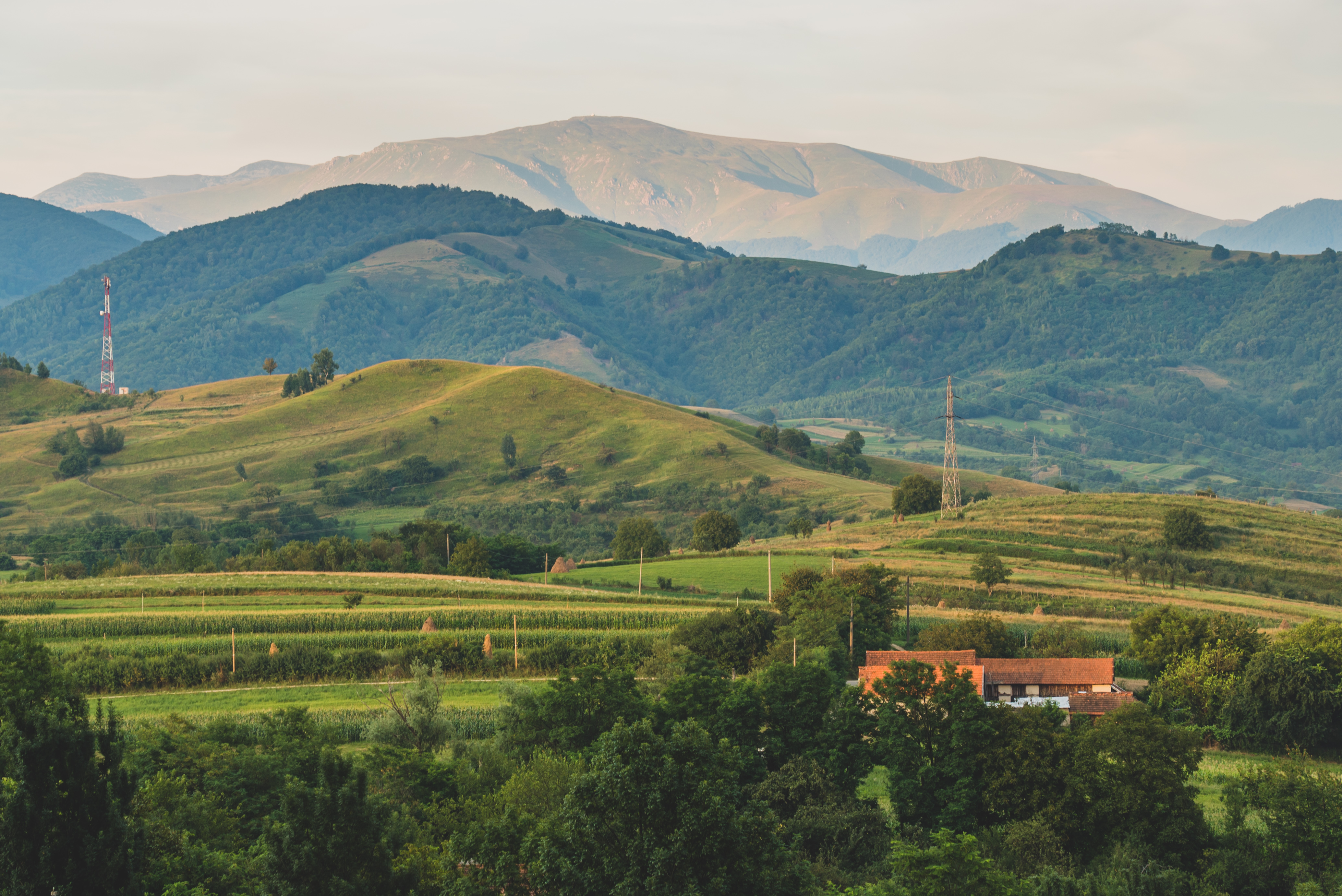
Banat - South Western Carpathians
It addresses urban-rural linkages
It involves other types of transformations (soft investment)
Yes
2026-02-27
Yes
LIFE - 2022 LIFE22-NAT-NL-LIFE-with-Bison/101114088
No
No
Organisation
WeWilder is a place, a culture and an organisation working at the base of Tarcu Mountain in Romania in three rural communities to generate an eco-economy and rekindle trust and unity in the local community and offer an example for other landscapes and regions for how nature can be the engine for long term wellbeing. In our case, the spark for this mission were the bison, part of an ample rewilding initiative we are a part of, started a decade ago; the free roaming bison are the poster child for our deep work to restore nature and humans’ relationship to all life on Earth. Concretely, we are weaving projects for locals (humans and wildlife) to thrive (SDG’s: 8, 11, 12).
We built the WeWilder Campus, (2020-2022), that engaged a number of 333 workers and volunteers. 25% of the 450 k euro of the budget of the building went to locals who supplied produce and food.
We were part of a 5 joint ventures that were aimed to boost initiative and local capacity. The most prominent one is MuMA Hut, that was nominated for a Mies van der Rohe award.
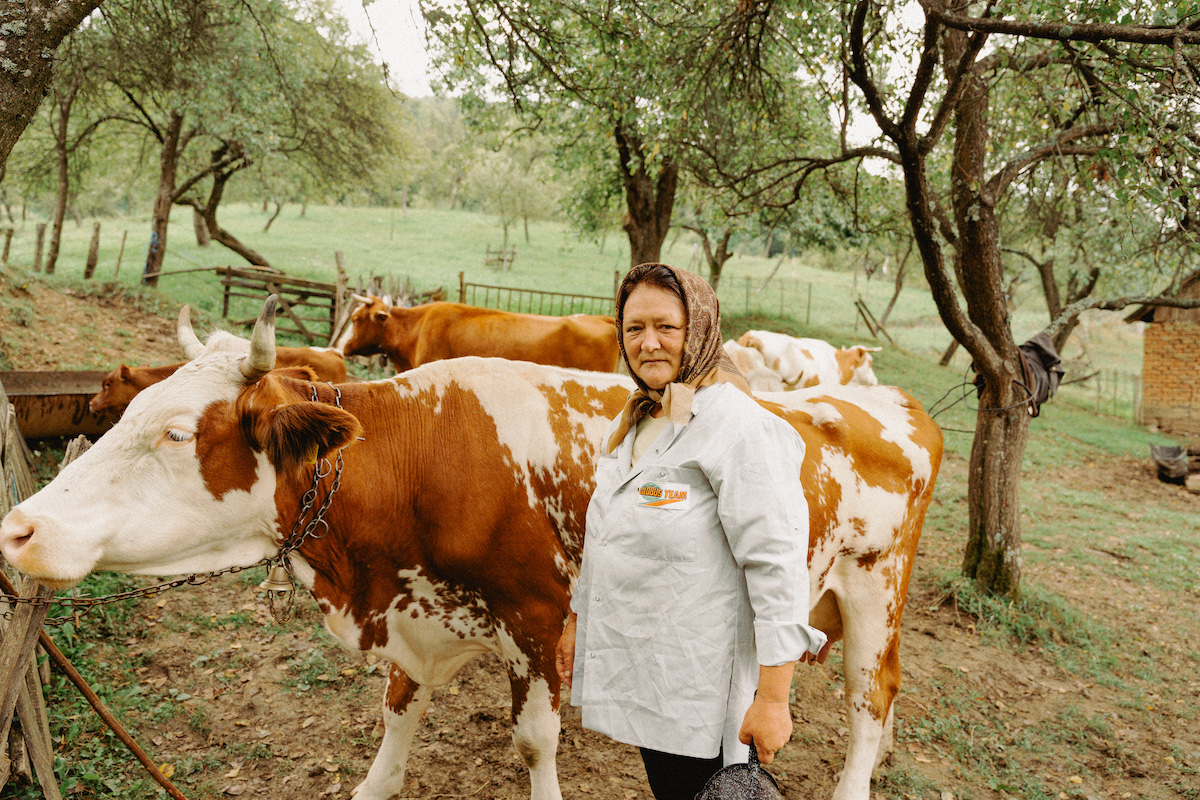
Further, the demand for produce to offer as prepared food to guests, created a network of 100 farmers and set in stone the promise for a true local economy and short acquisition chain. This great start gave us the impetus to start a local cooperative with a mixed profile: dairy and vegetables, that is now in the first year of functioning, with restaurants as strategic clients.
Together with community members, we set up a group meeting monthly, called Flourishing Hills. Our example was recognized by being included in the Regenerative Tourism examples held at the European Parliament in January 2026.
Our vision for the future is to encourage people to stay active in agriculture, thus being a key vector as custodians of nature and biodiversity. This can be replicated at national level in other eco-destinations and we already have promising results.
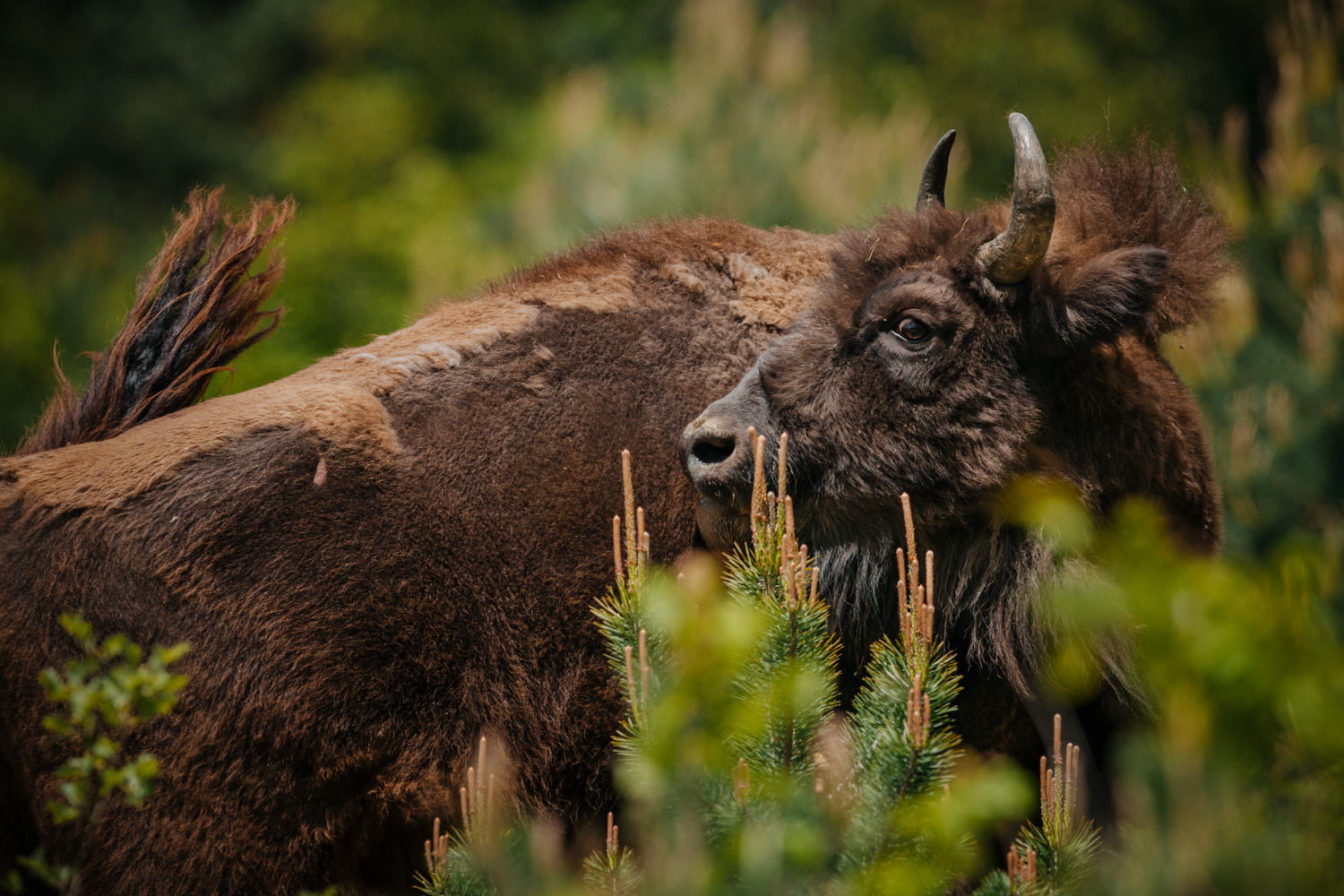
On 17 May 2014, 17 bison from breeding centers in Europe, seeded the comeback of this keystone species in the South Western Carpathians. The European bison are thriving here, really helping rewild. Back then, on the night of the first transport at the community celebrations, locals asked: “the bison are finally here, what’s next?”.
Thus, members of the WWF team created the WeWilder Association, an agile instrument that works on one hand as a local tourism agency and organizes every logistic aspect on the ground, but also as a capacity builder for the entire community.
We turned the key to the engine by means of ecotourism, as a starting point, and by no means a goal.
At first, we have organized wilderness journeys and farm experiences with no infrastructure, just locals’ houses offered as accommodations and their abilities to cook a family kind of meal.
We’ve now grown to a network of 100+ small farmers and are incubating local enterprises in the WeWilder Campus and Community Hub.
Through patching up together financing sources from companies, grants and WWF, the team was able to build the Campus, a compliment to vernacular architecture from an aesthetic point of view.
Now, the campus hires 7 staff and generates 75k eur/year for small-scale farmers. It has sparked trust for a local coop to come to life, in a context where locals fear association due post-communist trauma.
Our NGO, the WeWilder association, was created as a social enterprise, with a mission to create jobs and economic opportunities at the local level.
Since the official opening in October 2022 to today, we have hosted over 1000 guests wanting to discover nature, at least 5 retreats/year aiming to discover sustainable practices and strategies, a few wilderness discovery workshops and at least three programs dedicated to developing local competencies and products, supported by Flex Foundation, US Embassy and LIFE European Commission program.
Nature-Based Regeneration
Inclusion & Generational Trust
Emotional Belonging through Aesthetics
Empowered Participation
Transdisciplinary Weaving
In the first place, our project started from a deep environmental concern related to the ecological importance of the bison as a keystone species, and its role in restarting ecological processes. Through repeated introductions and natural births since 2014, the population reached around 250 individuals. Its effect is recognizable against plant variability, since it carries seeds in the fur, bird wellbeing, since they can use the fur for nests, amphibians, for the holes created by the heavy steps and pathways created for smaller mammals.
We’ve come to experience first hand the role the bison play in the ecosystem and made us ask ourselves: how can humans be a keystone species for all life on Earth?
We developed ecotourism experiences, bringing guests in the community which increased the demand for accommodation in sustainable dwellings, as well demand for traditional food and more interest in the traditional practices. We targeted people who appreciate ecotourism in its core.
Increasing the demand in these 3 directions (sustainable accommodation, local sourced food and traditional practices) is helping us shape the way the community is developping.
Increasing the demand on local sourced produce is giving us an important leverage in the relation with the local farmers. We developed a local cooperative with the farmers and we try to shape the way they do farming to be better for the ecosystem.
And by including the local practices in the ecotourism experiences we give the chance to the locals to get to know people from abroad, lots of times changing a bit their mindset and keep the traditional practices alive, giving a boost to the cultural identity of the community.
Furhermore, at the WeWilder Campus, we are setting the example with the policy of buying only local produce, using ecological detergents, having zero single use plastic policy, being zero-waste as much as possible in the kitchen and experimenting with compost.
With this, we have the opportunity to set a standard of taste in the area, where traditional materials and aesthetics are set aside for kitsch and bling.
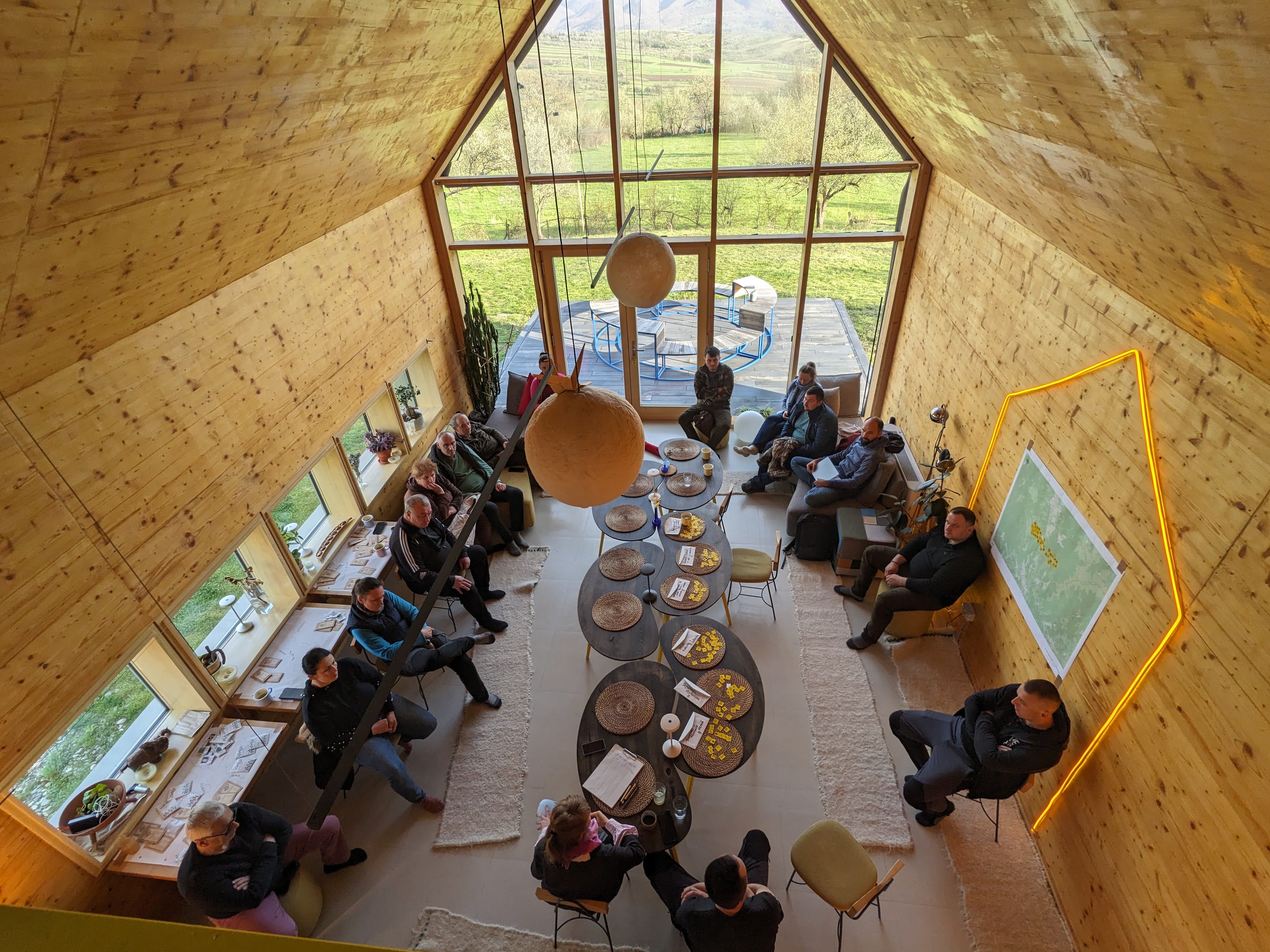
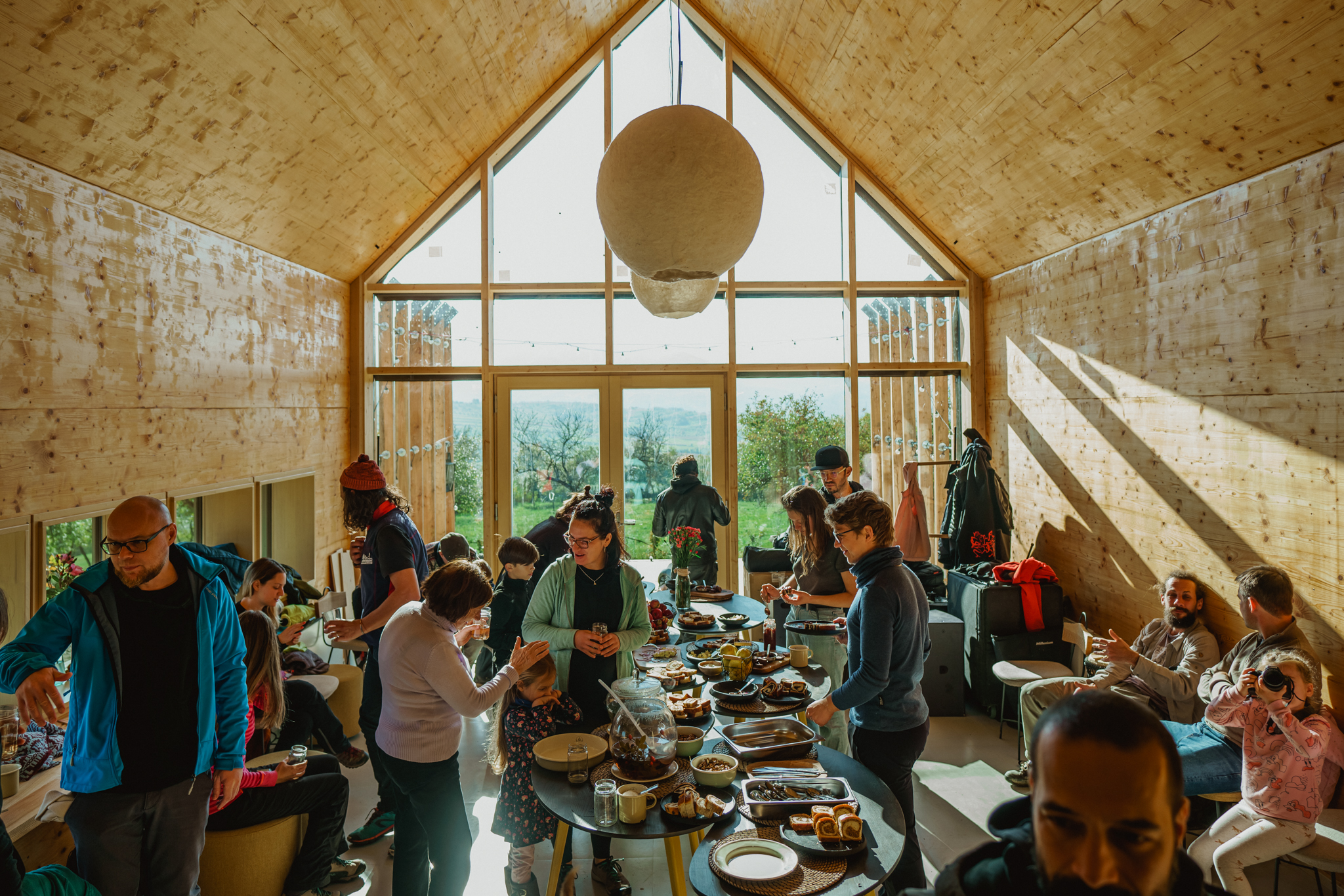
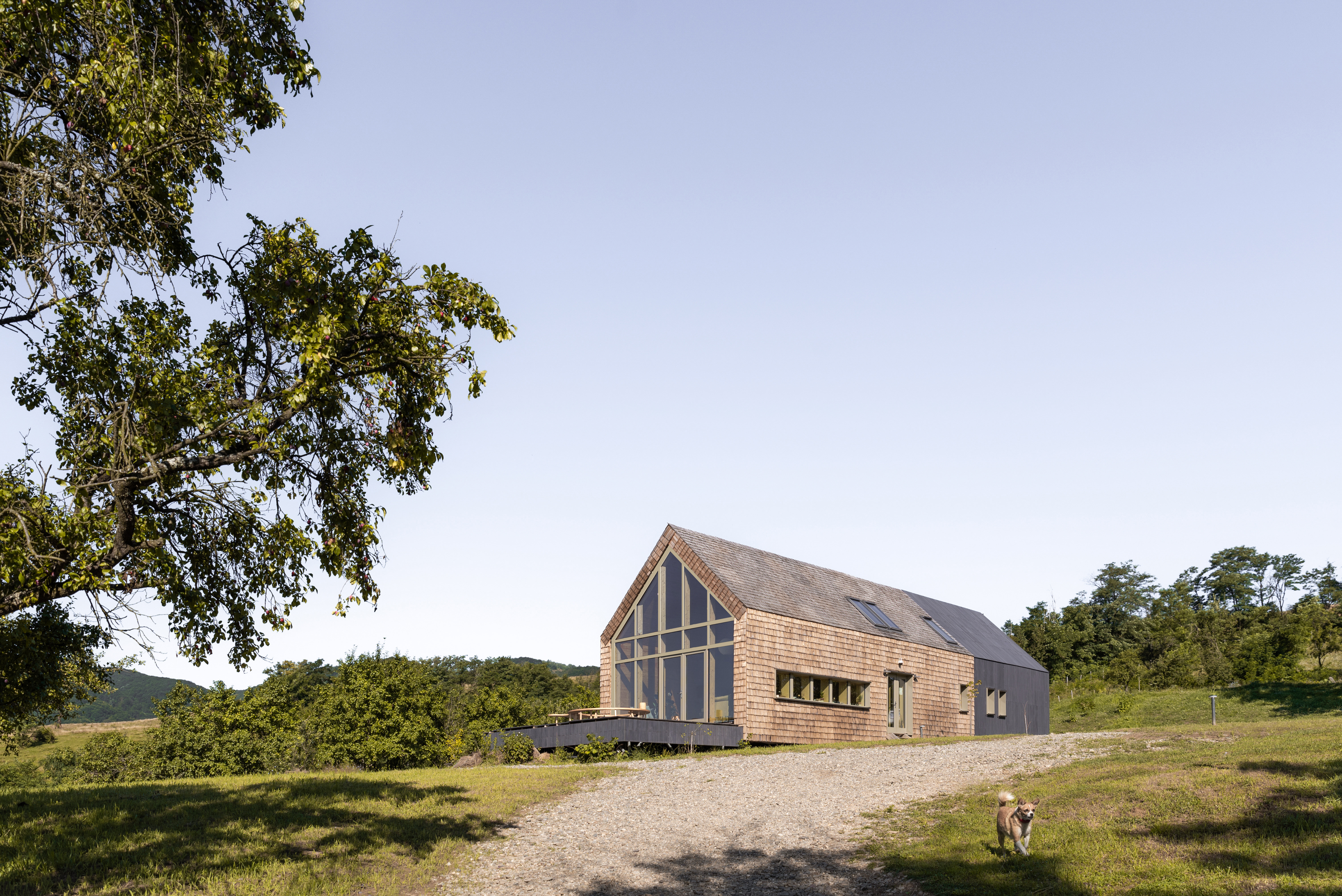
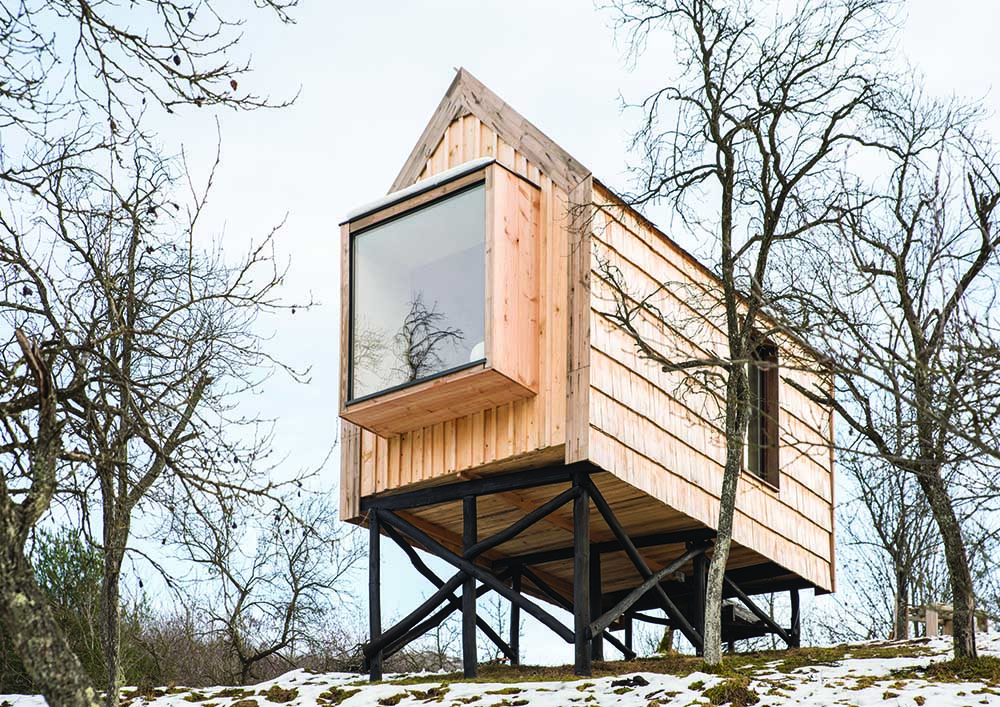
The WeWilder Campus is making a notable appearance in the landscape with the Fairy, the main building of the campus and the three tiny houses. They are all inspired by the vernacular local barns and are built entirely out of wood and levitating above the ground on screws foundation.
We have used quality materials and embedded local culture with accents like wool carpets and the lamp shades made of wool. The shape is a reminder of a barn, a shape familiar in the area for hundreds of years. Locals were shocked that we are using the kind of carpets that they threw away, or worse, burnt.
Some of the members of the community already opened accommodations such as SubMagrin or MuMA Hut, where traditional and natural materials are used. The village notices that what is old is sought after and gradually changes their mind towards what is valuable.
We are paying attention to the aesthetic aspect in all our experiences, since we believe that from preparing a small picnic and writing the menu by hand or putting on a traditional tablecloth with the right lighting, we are telling the story of the landscape. We are happy to see that our local collaborators have learnt the set-up and are digging for treasures in their cupboard, like Dosia, our chef, whose mother Anastasia is great at embroidering.
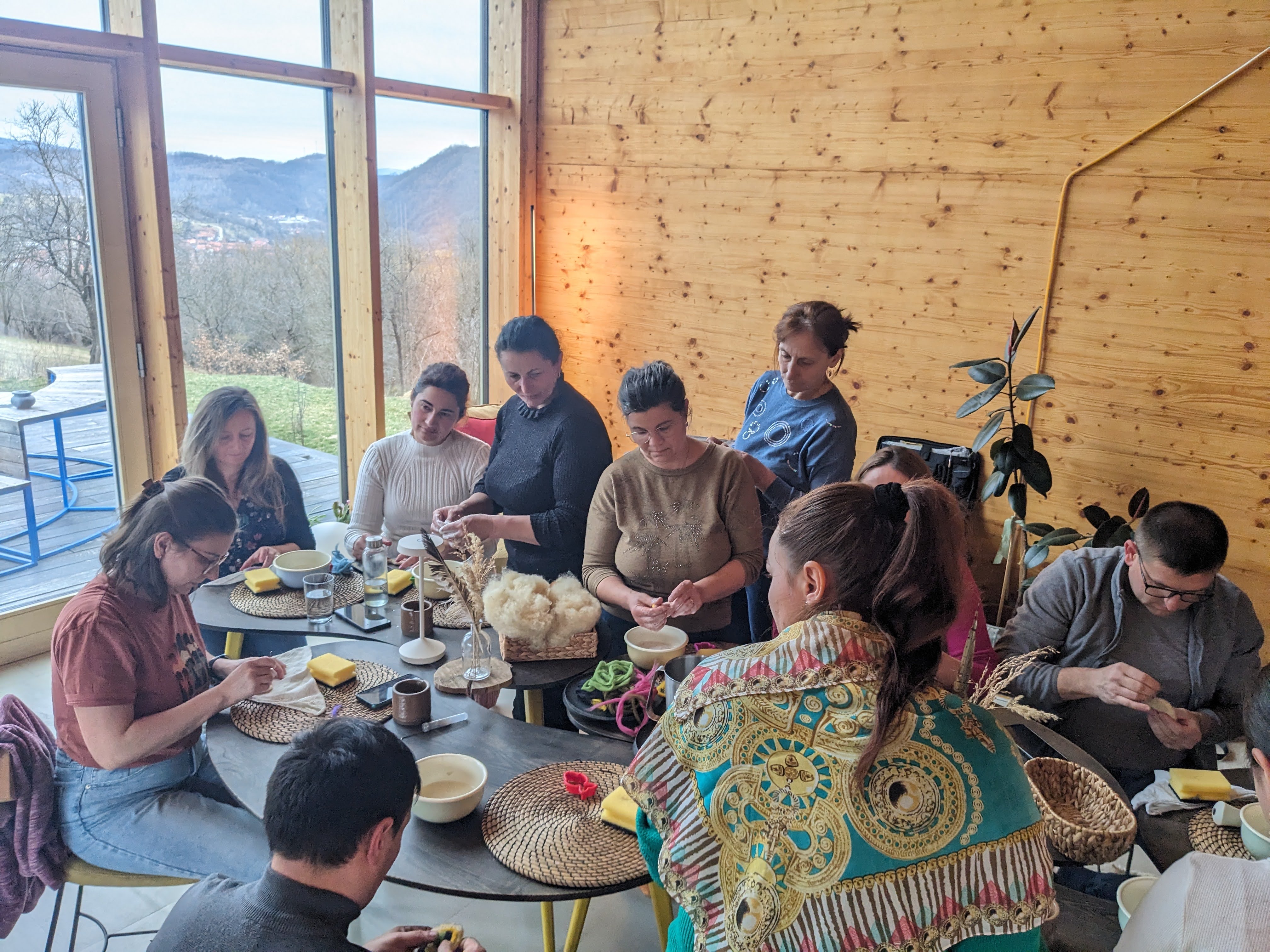
We are continuing this work at the WeWilder Campus by collaborating also with craftsmen and creators from the region, and all elements like plates made by the Lun brand or soaps made by Doda Natural are in use. The guests can buy the goods off a small shop, thus contributing to the ecosystem.
We are using aesthetics as a curatorial concept not only for the visual and material aspect, but also as taste in food and craft drinks, and also in the auditory sense, by making use of the beneficial aspects of silence and the wind.
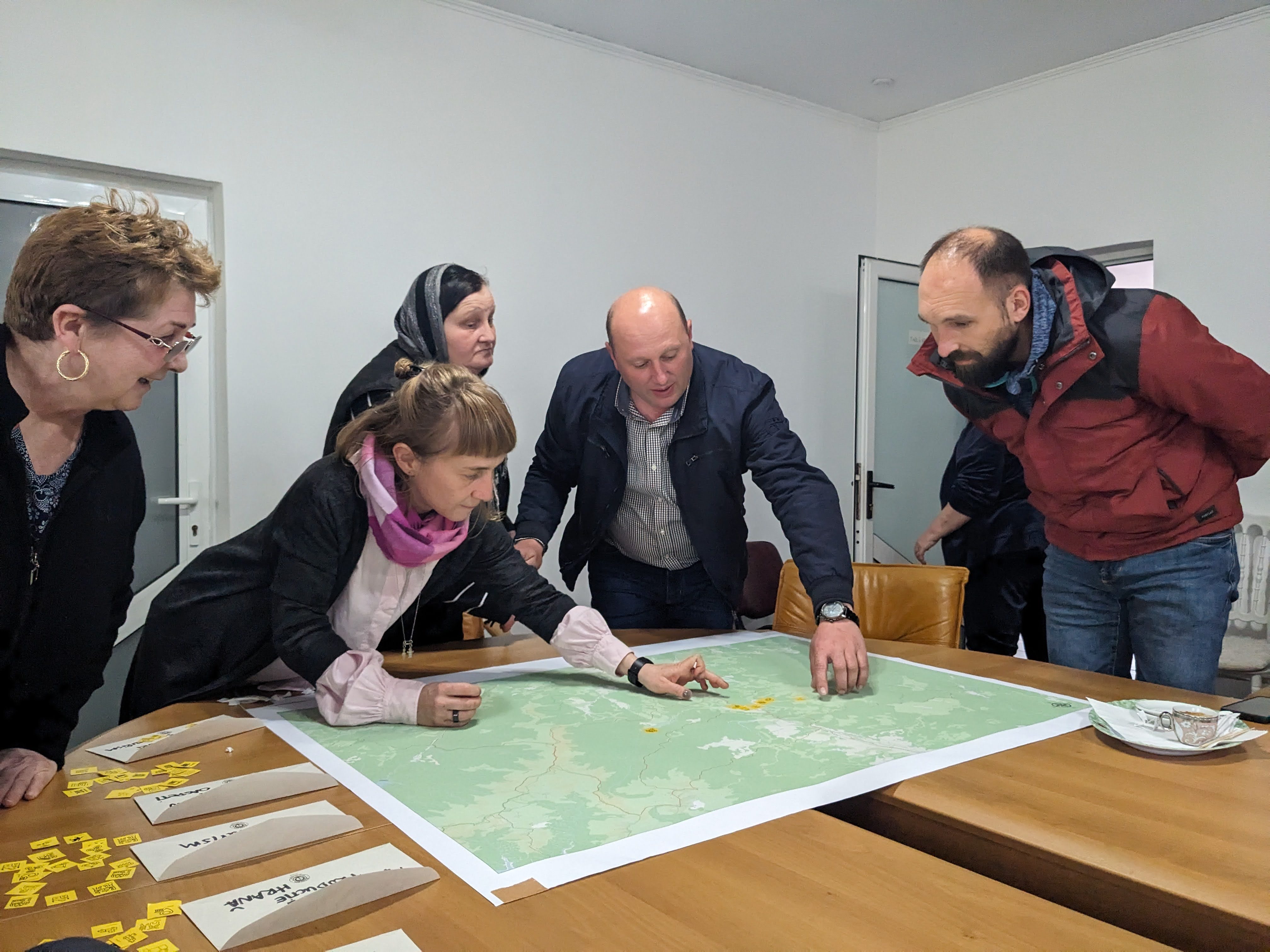
Since the first bison exemplaries arrived in the community, our team spent countless hours visiting locals, being accepted at family meals and drinking rakia, with the purpose to find out what are the wishes of the people and their potential. We have been there to paint houses turned into accommodations, and gave the locals trust by providing the first guests, interns for bison studies.
Organizing local brunches, everybody was invited to participate with locally prepared goods and over 50 locals contributed at these local events and over 200 people attended, including at the opening of the WeWilder Campus.
Our inclusive practices showed a great level of attention towards women in the community, whom we considered the backbone of the local farms, but also potential entrepreneurs and we developed together foraged drinks made of chicory, tomato flavoured salt and pickles in whey.
We had a special attention to kids as we established a local Tracking Academy that took around 50 children on the field for one year, once a week.
We listened to the wise villagers by collecting oral histories in the village for the project, where photographer Maria Hansen made portraits of villagers with interesting stories about their nicknames. Also, we collected all recipes with the help of chef Noemi Hugel and included them in our repertoire.
WeWilder is an organisation led by a 75% women management team and is hiring both men and women, out of which at least one senior. We are holding a residency program each summer, where young volunteers can learn on the ground the basics of hosting and sustainable practices.
The municipality of Armeniș has been a strategic partner of the bison rewilding initiative from the beginning, offering the land for the initial bison enclosure before the release. When building the WeWilder Campus, the municipality was active in suggesting the proper site and helping out with connecting to utilities.
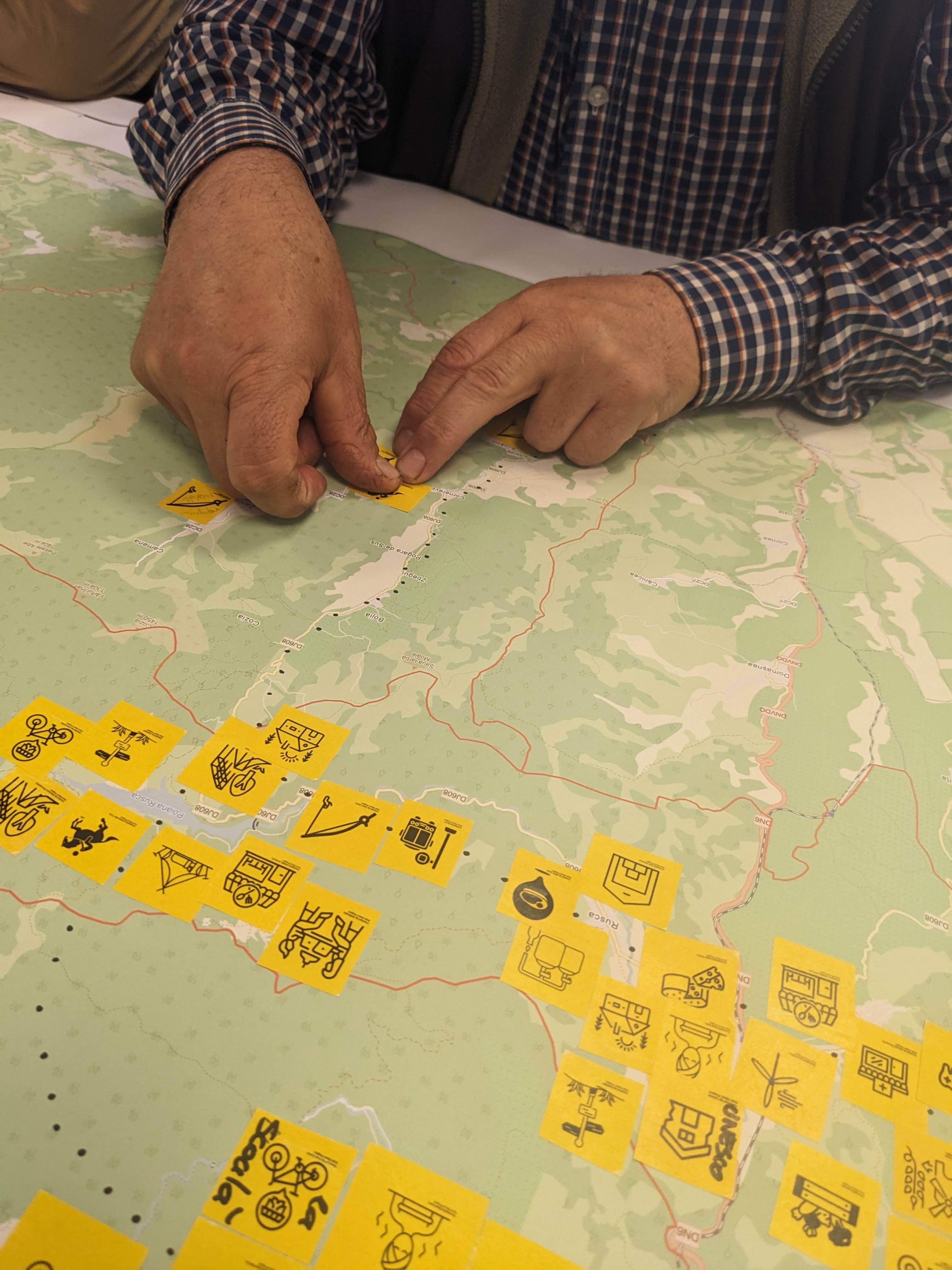
Our work continued together with the municipalities of Armeniș, Teregova, Cornereva and the NGOs Rewilding Europe, Rewiding Romania, WWF Romania and ICDCRM (The Institute for Hunt and Game Ressources) in a LIFE-backed project, that has the aim to develop the local community and increase co-existence between humans and bisons. Thus, we work together to discover the local assets, stimulate entrepreneurship and create together an eco-destination, a certification recognized by the Ministry of Tourism in Romania. Through these synergies and collective actions, we are putting the area on the global map. Countless media channels from all over the world, including The Guardian, National Geographic and New York Times have covered our story, naming it a project of hope, especially in its component of inclusiveness of the local community.
During 2025, a round table with the Ministry of Transport and the Road Authority (CNAIR), organized by WWF Romania and WeWilder, convinced the first to move the path of a projected high-way from Armenis farmland with the argumentation of the total economic value of the area (TEV), with a study made by Dalberg consultancy. This amounts to cca 25 mil euro annually in direct and indirect use-value.
Our participation at the opening of the exhibition Regenerative Tourism in Europe at the European Parliment, that included WeWilder as a best practice example, opened the opportunity to showcase our work to Romanian MPs Daniel Buda and Nicu Ștefănuță (VP of the EP) with the intention to open a European level hearing about how local initiatives like ours can generate jobs, retention of the young and keep income at local level.
Making nature the economic choice and having nature at the centre of the table is in our view the only business model for long-term resilience. The web of life is a myriad of relations, collaboration and exchanges. We take inspiration from nature in our entrepreneurial ventures as we laid the foundation by discovering talents, assets, liveliness in the community and nudged locals to strengthen their skills and bring a family business to life, that by design gives something back to nature and the community.
Even from the eaves of our project, we worked with multi-disciplinary task forces to design the ecotourism services, communications plan and go on the field and contribute to reseach about bison. Two task-forces comprising of 7 members were able to start two of the accomodations.
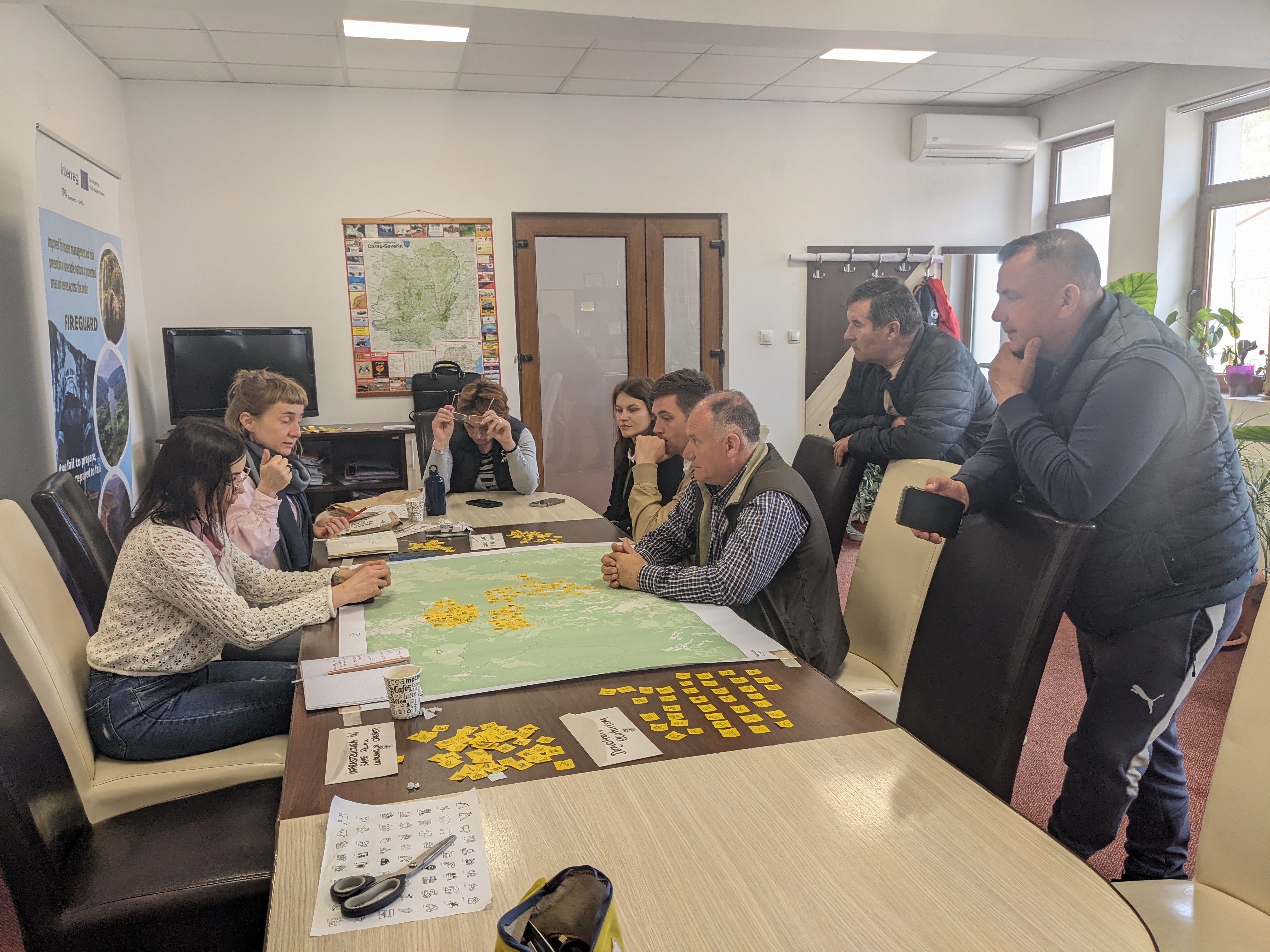
Building the WeWilder campus, it was by using Design Thinking facilitated by certified specialist Tudor Juravlea that brought forward what we needed the campus to be. We had members of the community present near NGO people, architects and marketing people. All throughout the building process, we co-created with a team of 5 architects the becoming of the campus.
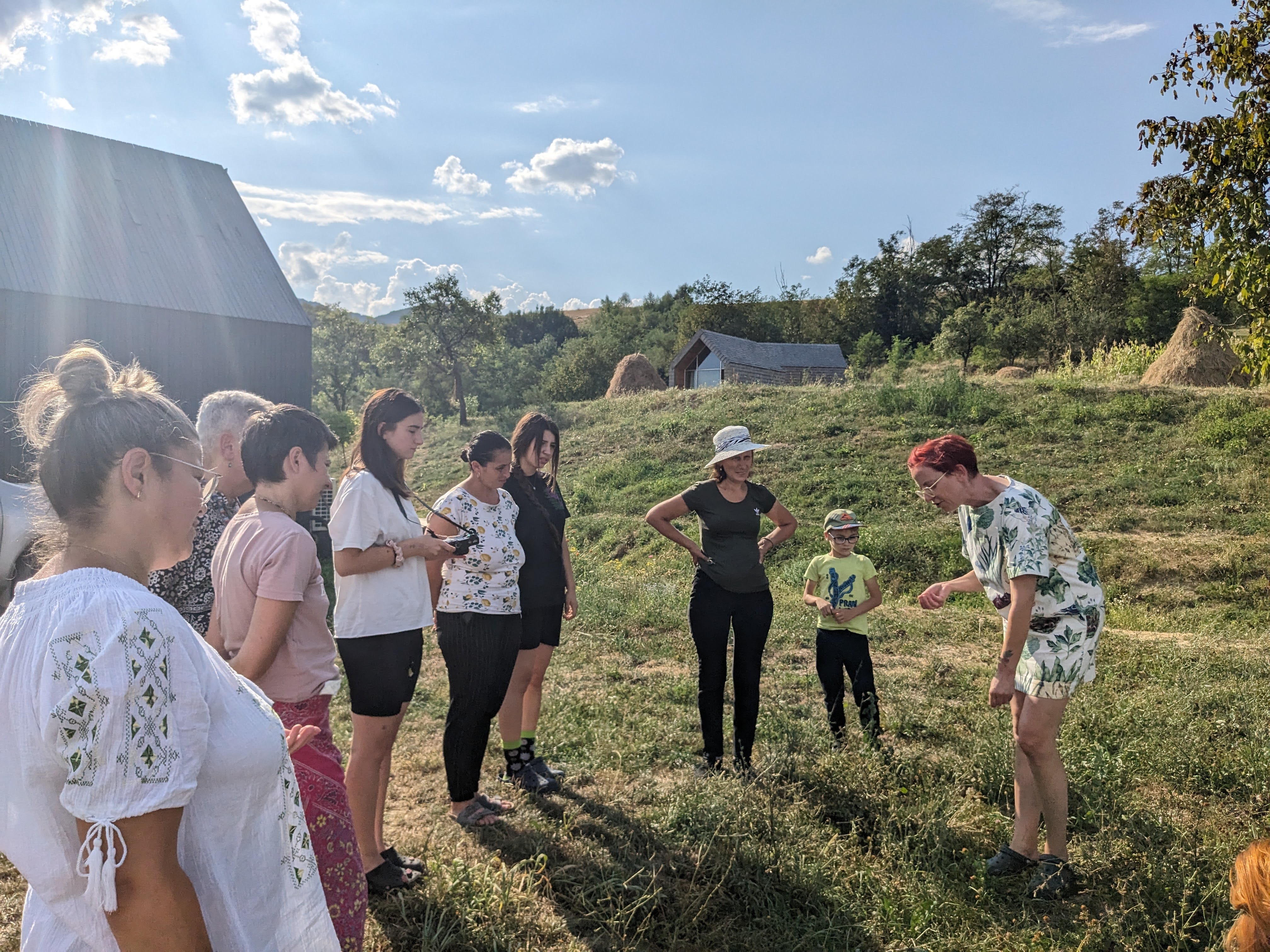
We are continuing by collaborating with system thinkers like Charley Thorncroft from School of Systems Change or Claudiu Butacu from local Efden as advisors. We are organizing workshops to learn about the technology of perma-agriculture and climate resilience. We also take locals in experience exchanges so they can see best practices with their eyes and instill inspiration and solutions in their minds.
Whenever we organize retreats, it is always with an educational penchant, so we come in contact with ideas and methodologies, but also become a platform for their seeding through our channels and network.
Our ecotourism operation is a close cooperation and integrates nature knowledge and appreciation into each and every initiative, hand in hand with locals. In terms of revenue flow, every product or service gives back 10% to community or conservation projects and creates a fund that further nurtures local development (education - the citizen science ‘Tracking Academy’ for the young covers the costs of multi-species design in the new infrastructure that comes to life).
WeWilder Campus financial model, in its function as a mother-ship, is a hybrid split between revenues generated in the current economic model, visitors or customers paying the services that bring them learning, leisure or nourishment, and revenues from grants, donations and sponsorships. The latter are vital investments supporting nature-positive practices to mature, the research that makes the case for nature and its services, which are not priced into our economy, and supports the quality positive impact of the local initiatives and local restoration of ecosystems, the base of our economy.
This hybrid model is able to support a team of 7 employees, the functioning of the WeWilder campus and the activity that concentrates around building the capacity in the local community. Our impact is now spread out in three rural communities, working with over 100 farmers and generating business for other accommodations and leisure businesses. In the future, our model will be transferable by strengthening our role as a knowledge hub and working in multi-partner projects supported by partners we are exploring now such as RAF (the main backer of eco-destinations) and Via Transilvanica (the route that unites rural Romania).
In our umbrella role, we’ve also tapped into financial capital (EIB) as low-bureaucracy capital for the campus and also distributed micro-loans for community businesses. The return we expect is contribution to the nature-community fund and the stability of a diverse local supply chain.
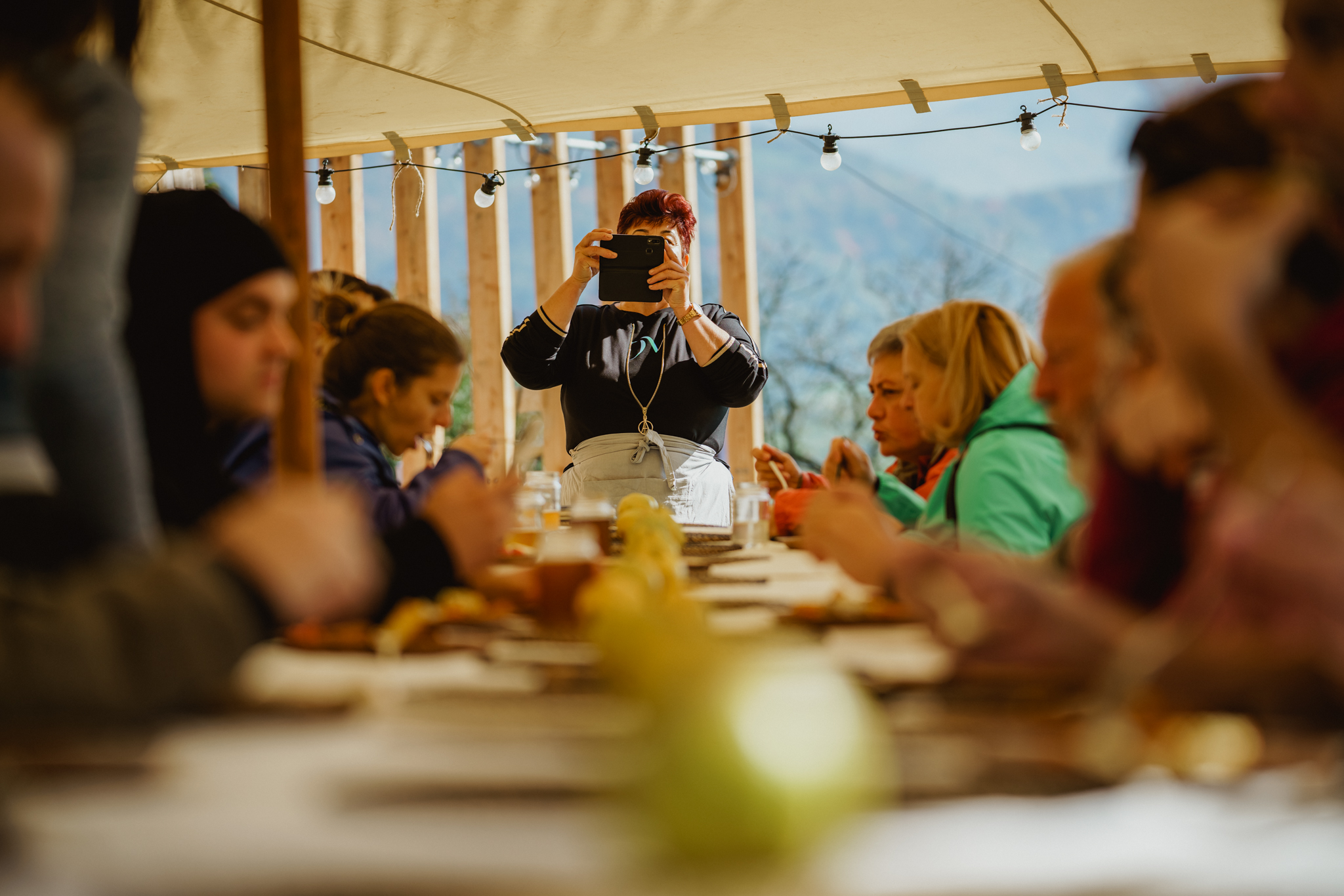
In community projects where we bring people together around a shared ideal, our go-to “process”, “technology” and method we’ve leaned on is a big table.
We started with meals and time around family tables in the village. Then, sparking off a small idea at family dinner—like restoring an old farmhouse—the table grew: an old woodboard over wooden barrels, neighbours joined after we borrowed one, offering more. Visitors came too: scientists eager for rewilding trails, city folk longing for lost nature.
We set tables on blankets in high mountains, or behind fresh haystacks on wild meadows where locals are keystone via traditional land use. As ideas grew and the community expanded, we ‘formalised’ this ancient ritual of sharing food around the table in infrastructure projects (TARA; MuMA, WeWilder Campus—over 600 community meals), using co-design: experts, young pros, locals together, building social infrastructure.
Co-creation is hype and hard, but it’s that big table moment nourishing team, relationships, project, and ideal. Our ‘secret sauce’ at tables: always embody the ideal—in sauce, table cloth, craft drink, deco. For eco-economy reviving nature, community, prosperity—we show, don’t tell. Pushing craft/quality economy? We use craft goodies, lay old-farm table cloth, jar wildflowers for beauty as we discuss pasture restoration and foods from meadows. This is the journey to our big table at WeWilder Campus (a modular string of beans). Time together, build together and ultimately a community space can bring to life anything imagined by the community everywhere.
We have already started to share our best practices within the COOP network supported by the Civica Foundation and we are working on scaling to established eco-destinations of Romania the means to support local development with good food offered for tourists, restaurants and beyond, thus saving the traditional landscapes with the love for good food.