Enhancing Circularity, Sustainability, and Innovation
Kitchen Vessel for Used Cooking Oil
Upcycled Kitchen Vessel Based on PET Jars to Collect and Filter Used Cooking Oil
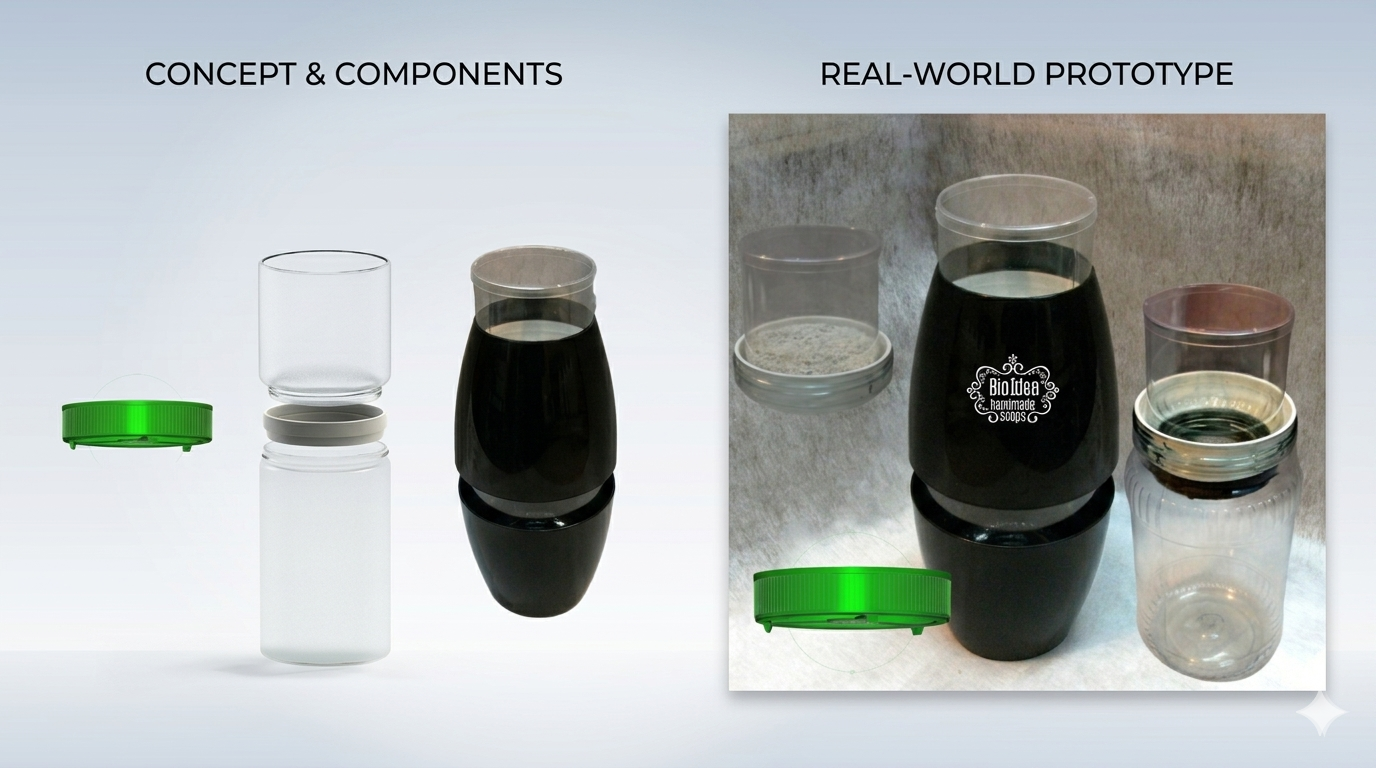
This upcycled kitchen vessel helps households collect and filter used cooking oil through a simple modular design based on PET jars, a sieve coupling and zeolite. Compact and easy to use, it keeps oil out of drains, supports cleaner wastewater systems, and turns everyday household habits into local circular action through reuse, prevention and community learning.
Serbia
Local
The project was implemented at local and inter-local level in the City of Belgrade and the Municipality of Sjenica, and is designed to be transferable to other communities in Serbia
It addresses urban-rural linkages
It involves other types of transformations (soft investment)
Yes
2021-10-01
No
No
No
Organisation
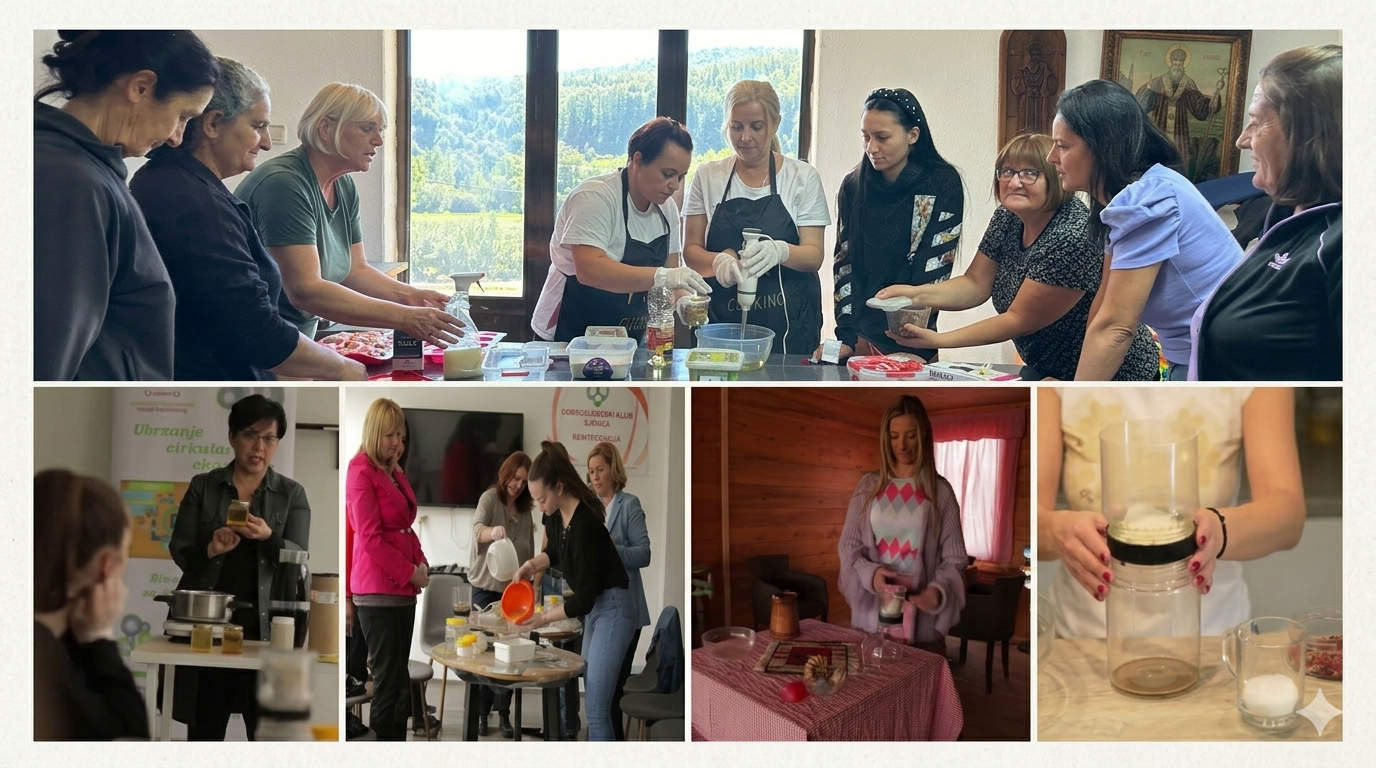
The project developed and implemented an upcycled kitchen vessel for collecting and filtering used cooking oil at household level. Designed as a compact, functional and modular object for everyday kitchen use, the vessel combines PET jars, a locally developed sieve coupling and refined zeolite, which helps reduce frying odours and makes oil storage practical and stable. Implemented in Belgrade and Sjenica, the project produced and distributed 2,000 vessels, refined 200 kg of zeolite, organised 27 workshops, trained 100 women from vulnerable groups in soap making, digital literacy and related entrepreneurial practices, and collected 1,400 litres of used cooking oil. Beyond the object itself, the project changed household habits by showing that used cooking oil can be kept out of drains and wastewater systems and treated as a controlled local resource rather than waste. Its long-term impact lies in three areas: reducing environmental pressure from improper oil disposal, introducing a low-cost and transferable circular design solution for households, and strengthening women’s access to skills, resources and small-scale green entrepreneurship. By connecting practical design, circularity, community learning and local value creation, the project offers a replicable model for prevention-based everyday sustainability.
The project emerged from a simple local problem with large environmental consequences: in Serbia, used cooking oil from households is mostly invisible in waste management systems and often ends up in drains, sewers and landfills. BIO IDEA developed the project as a prevention-based response, building on its social franchise experience in circular entrepreneurship and on the idea that household waste oil can become a useful local resource rather than pollution. The concept was shaped around an everyday kitchen object: a compact vessel that makes oil collection practical, acceptable and easy to integrate into domestic life.
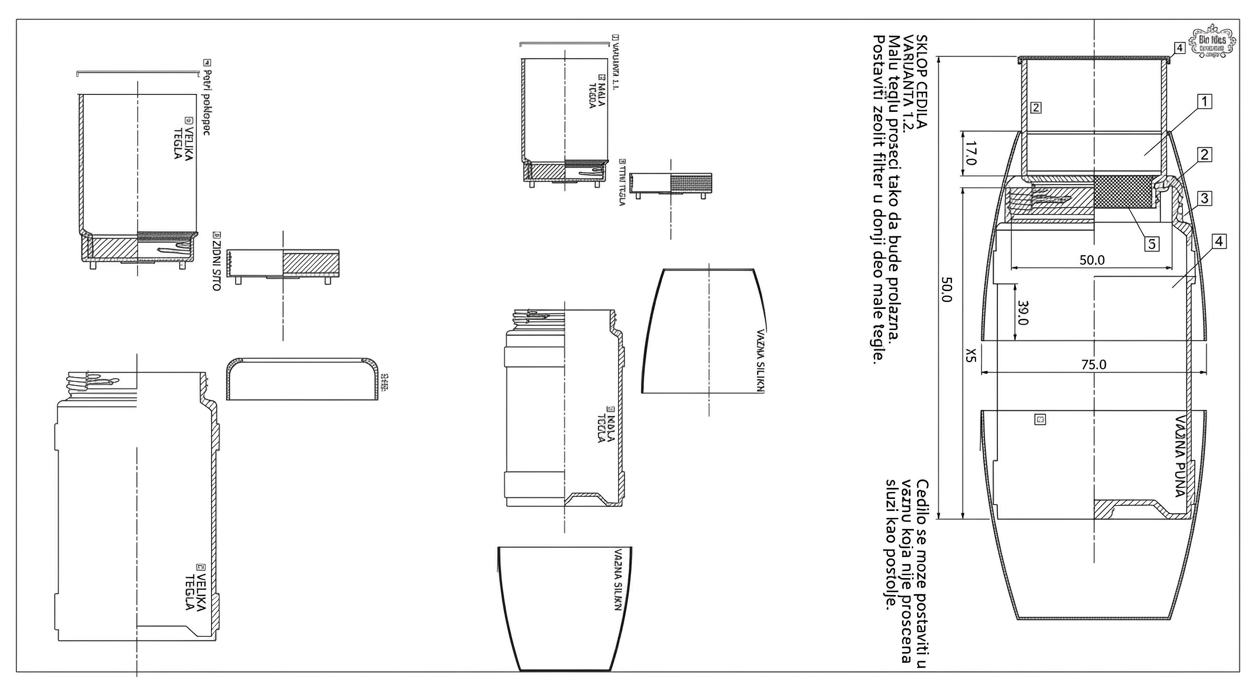
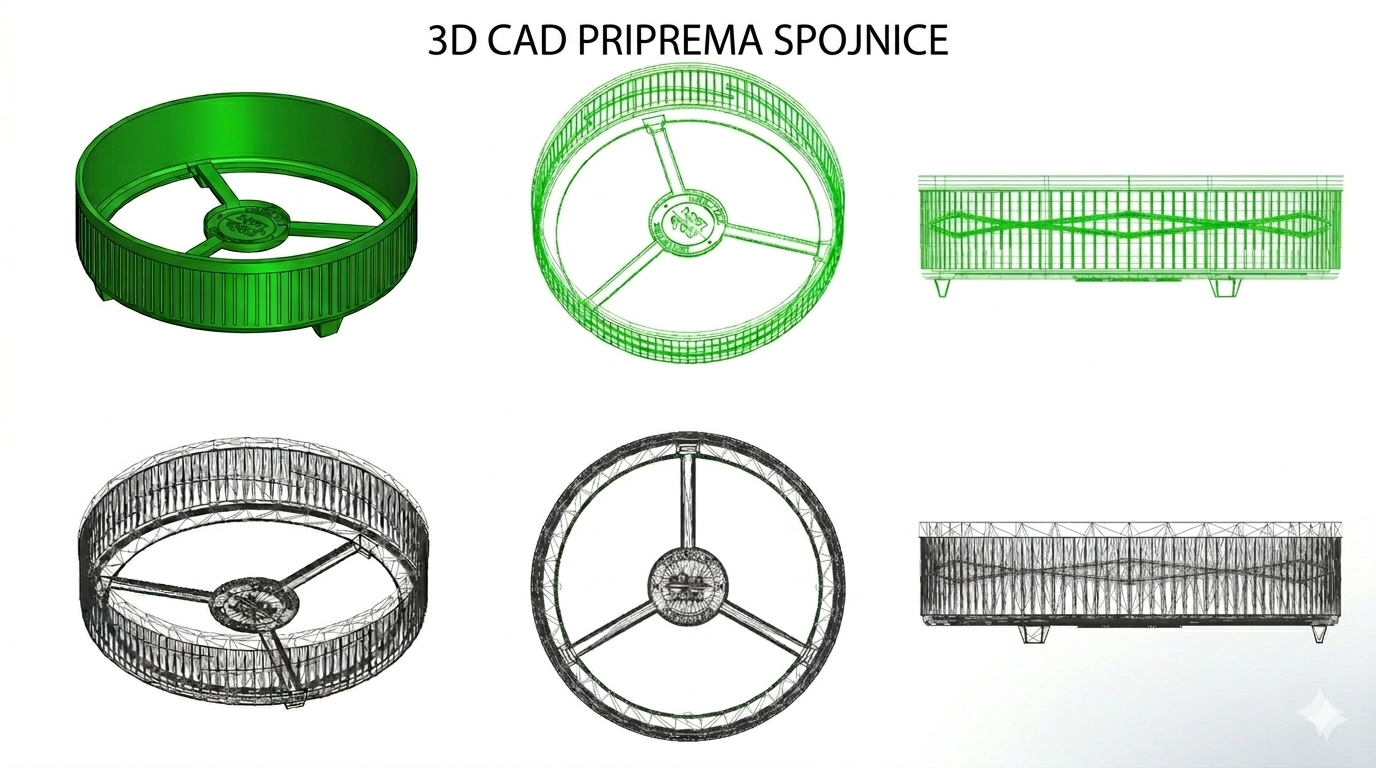
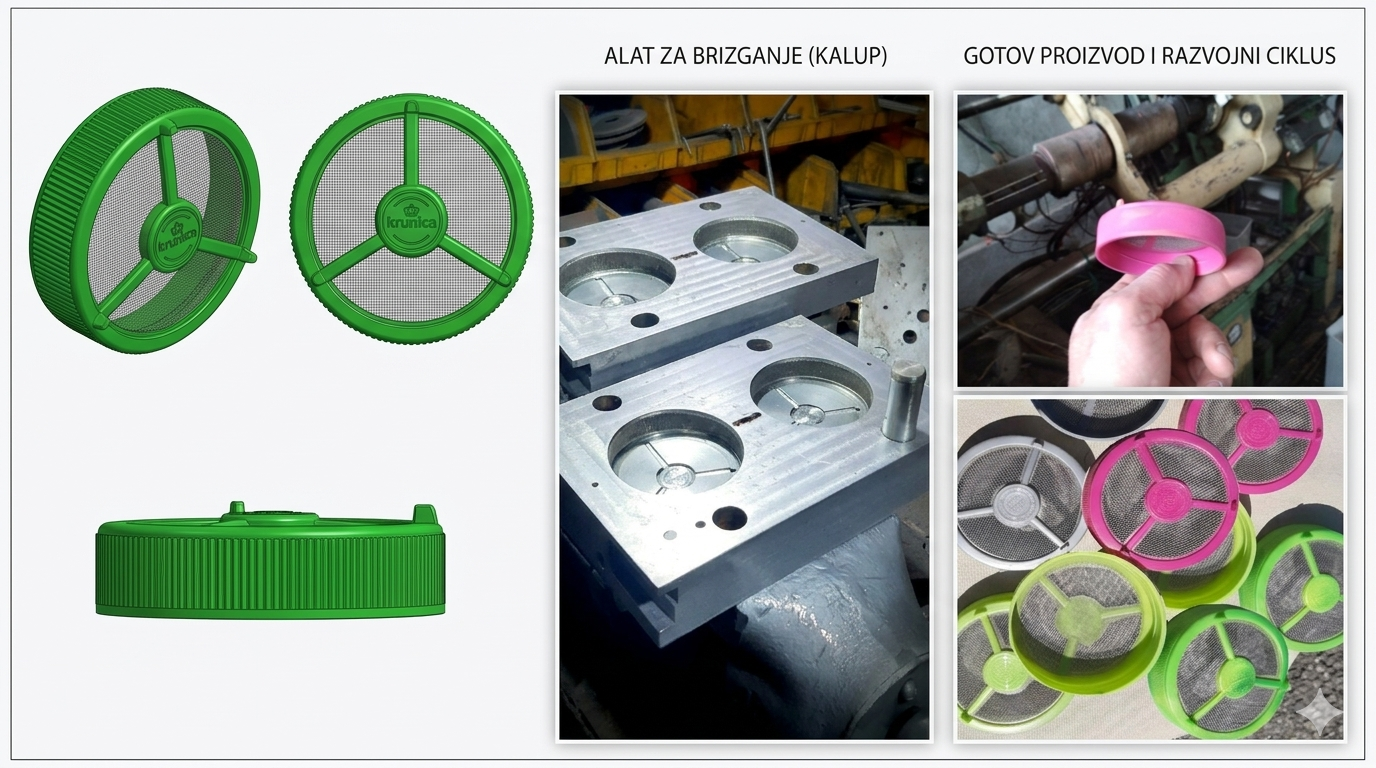
Implementation started with research, design and prototyping. BIO IDEA worked with students, designers and technical experts to improve the functionality, environmental performance and visual identity of the vessel. A 3D model of the coupling was developed, a specific cutting tool was prepared, zeolite was refined as an odour-absorbing filter, and the modular system was tested so that it could work with jars and reusable packaging elements available in households. The final solution combined PET jars, a sieve coupling and zeolite into a stable, modern and multifunctional kitchen vessel.
On the ground, the project was implemented in Belgrade and Sjenica through production, distribution, training and community activation. More than 2,000 vessels were assembled and distributed, workshops were organised in both locations, and women from vulnerable groups were trained in soap making, digital literacy and entrepreneurial skills. This connected household behaviour change with local knowledge-sharing and new economic opportunities. The project showed that circular design can begin in the kitchen: through a small, well-designed object that changes habits, keeps oil out of wastewater systems and links everyday practice with community-based reuse and prevention.
circular economy
upcycling
household design
used cooking oil
women-led entrepreneurship
The project is exemplary in terms of sustainability because it applies the waste hierarchy where it matters most: inside the household. It introduces an upcycled, modular kitchen vessel based on PET jars and reusable packaging elements, combined with a locally developed sieve coupling and a zeolite filter, to prevent used cooking oil from reaching drains, sewers and landfills. In this way, a problematic household waste stream is transformed into a controlled local resource. The design is low-cost, compact, multifunctional and based on replaceable elements, which extends its useful life and makes it easy to reproduce, repair and adapt. The project also demonstrated measurable environmental results: 2,000 vessels and 2,000 filter couplings were produced, 200 kg of zeolite were refined, 2,000 households were engaged, and 1,400 litres of used cooking oil were collected. Its sustainability is also social and economic. Through 27 workshops, 100 women from vulnerable groups gained skills in circular production and entrepreneurship, while 1,700 households reported a 30% reduction in the consumption of conventional hygiene products. Beyond a single product, the project builds a culture of prevention, reuse and local value creation. It shows how everyday household design can reduce pollution, support resource efficiency, strengthen women-led green livelihoods and create a transferable model for community-based circular economy.
In this project, aesthetics is inseparable from function. The vessel was conceived as an everyday kitchen object that households would want to keep visible and use, rather than as an improvised waste container. Project documentation describes it as functional, compact, stable and suitable for placement on kitchen surfaces, while its protective outer part uses smooth reduced contours and a basic colour palette. The design was explicitly linked to a modernist approach inspired by Bauhaus principles, so that the vessel could find its place in contemporary kitchens. Labels, instructions and packaging were also designed as part of the overall visual identity and user experience.
Its aesthetic value is also social. Young designers, students and mentors worked on improving the vessel’s form, environmental performance and visual communication, while the cylindrical cardboard packaging was conceived as environmentally friendly, multifunctional and almost diploma-like: a visible sign that the household had adopted a new circular practice. This gave the object recognisability, dignity and educational value, especially for the main target group of women responsible for household nutrition and hygiene.
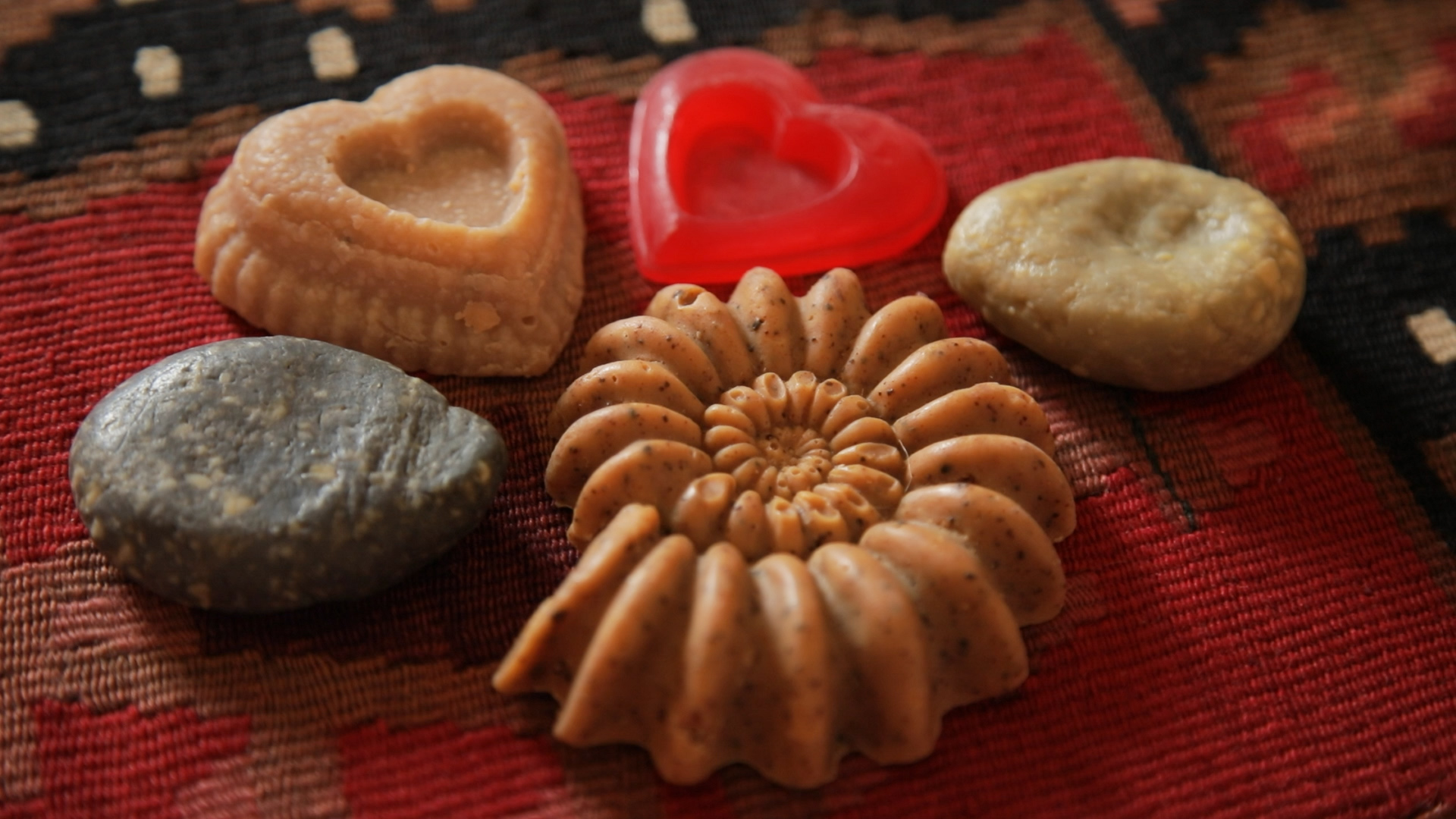
In everyday life, the project makes kitchens more beautiful by replacing an unpleasant and hidden waste practice with a calm, clean and understandable ritual of care. It helps households see used cooking oil not as something dirty to discard immediately, but as a resource that can be stored well, reused locally and transformed into soaps and candles for household use. In the longer term, this creates a sense of belonging and care by linking the home, the local community and circular production through one well-designed object. The project is exemplary in terms of aesthetics because it combines visual clarity, usability, emotional acceptance and circular behaviour change in a form that people can easily integrate into daily life.
The project is exemplary in terms of inclusion because it lowers several barriers at once: cost, access to knowledge, distance from opportunity, and exclusion from entrepreneurship. The vessel was distributed free of charge, workshops were organised free of charge, and the solution was designed from affordable, replaceable elements that can be used in different household contexts. The project combined direct and online support so that knowledge on oil collection, soap making, digital literacy and zero-waste practice could reach both urban and rural users, including people outside the two main implementation sites.
Inclusion was also social and gender-responsive. The project focused especially on women from vulnerable groups, including unemployed women, women in remote rural households and women with limited access to formal employment. In total, 27 free workshops were organised and 100 women from vulnerable groups gained practical skills, while women in Sjenica initiated a cooperative and several participants entered mentoring and small-scale business pathways. This turned beneficiaries into active local actors rather than passive recipients.
The project also promoted an inclusive societal model. It relied on free transfer of know-how, mentoring, publicly shared manuals and videos, and cooperation with local associations, schools, public utility actors and community partners. Young people, including students and youth in difficult financial circumstances, were involved in design, assembly, logistics and communication, with mentoring support. In this way, the project linked household practice, community solidarity and access to green livelihoods across age, gender and local context. It is exemplary because it shows that circular design can be accessible, affordable and socially empowering at the same time.
This project was participatory not because people were consulted once, but because citizens became co-implementers. Households in Belgrade and Sjenica were directly involved in using the vessel, collecting used cooking oil, attending free workshops, and sharing the practice with neighbours, relatives and friends. By the mid-point of implementation, 800 households had received containers, and these households encouraged at least 400 additional households to join. Across the whole project, 2,000 containers were distributed and 27 free workshops were organised, so participation was built into everyday use rather than limited to one-off events.
Women from vulnerable groups had a particularly strong role. A total of 100 women acquired practical knowledge in soap making and entrepreneurial skills; five women in Sjenica launched the BIO TERA social cooperative initiative, and three young women entered a mentoring programme for social entrepreneurs. Participation also shaped delivery itself: previously trained women from Sjenica were engaged as local assistant trainers, while young people and students contributed to design, assembly, logistics, digital support and communication, with mentoring from BIO IDEA and expert partners.
Civil society participation was active as well. The project worked through BIO IDEA’s network, local associations, community partners and public outreach, and it supported free transfer of know-how through manuals, videos and workshops. The impact of this involvement was concrete: households changed disposal habits, local activism increased, women moved from beneficiaries to local initiators, and the project generated self-started uptake in other communities beyond the initial sites. The project is exemplary in participatory terms because it turned a household environmental problem into a shared practice of learning, mutual support and community-led circular action.
The project’s multilevel governance was strongest at the local and national levels, with broader regional and European relevance. At local level, implementation was rooted in Belgrade and Sjenica: households used the vessel and joined training activities, PUC Vrela Sjenica supported the field office and workshop space in Sjenica, and the City Center for Social Entrepreneurship of Belgrade provided equipped space for education and outreach. Local fairs, associations and community-based distribution helped turn the project from a single product into a shared local practice.
At national level, BIO IDEA coordinated the model, while the Institute of General and Physical Chemistry in Belgrade supported research and development of the filter and product solution, Eco Era contributed environmental impact measurement and monitoring, and additional mentors, trainers and youth cooperatives strengthened business modelling, technical preparation, communication and implementation. National media visibility and online workshops also helped the project travel beyond the two main locations and reach participants from other parts of Serbia.
The wider governance value of the project lay in its ability to connect bottom-up local action with policy and scaling discussions. The project documentation explicitly linked the work to Agenda 2030, the European Green Deal and the Circular Economy Action Plan, while awareness-raising activities and panel conferences involved institutions such as the Ministry of European Integration and other civil society actors.
The project is transdisciplinary because it was conceived and implemented as more than a product. It brought together industrial and product design, mechanical engineering, architecture, chemistry, environmental practice, adult education, digital literacy, communication, social entrepreneurship and community-based social innovation. The vessel itself was developed through design research on users, technical drawings, 3D modelling of the coupling with a sieve, prototype testing, production tools, visual identity work and packaging design. At the same time, its environmental performance was considered through the use of zeolite filtration, the reduction of pollution from used cooking oil, and the broader logic of upcycling and waste prevention.
The implementation phase was equally cross-disciplinary. The project combined practical training in soap making and raw materials, environmental awareness and climate risk, digital literacy, entrepreneurial skills, gender equality, mentoring and public communication. Students and young professionals from industrial design, mechanical engineering, architecture and graphic design contributed to design and technical preparation, while mentors and experts supported chemistry, economics, law, psychology, journalism and community work. This made the project both technically credible and socially grounded.
What makes the project exemplary is precisely this integration of knowledge fields. The vessel was not developed as an isolated design object, but as part of a circular system that links household practice, environmental protection, learning, business development and community empowerment. In that sense, the project shows how transdisciplinary collaboration can turn a small kitchen object into a tool for behaviour change, local circular economy and women-led green entrepreneurship.
The project started with donor support, but its long-term business model is mixed and circular rather than grant-dependent. At its core is a low-cost, modular kitchen vessel that can be produced, distributed and further branded as a marketable product. Project documentation explicitly foresaw the innovative vessel as a product to be placed on the market, with potential branding partnerships, including with large edible oil producers, in order to finance future production cycles. Its simple design, replaceable elements and multiple functions make it suitable for repeated use, maintenance and scale-up.
The second revenue layer comes from the resource stream the vessel creates. By enabling households to collect and filter used cooking oil, the project generates an input for handmade soap production within the BIO IDEA social franchise. The business plan foresaw the production and sale of soaps through BIO IDEA’s franchise sales channels, a physical point of sale in Shopping Mall Stadion, and an online store. The project also linked this to training, mentoring and franchise expansion, so that households and women from vulnerable groups could move from simple household reuse toward small-scale green entrepreneurship.
The model is financially sustainable over time because it combines several mutually reinforcing elements: product sales, value-added soap sales, knowledge transfer, mentoring, and network growth through the BIO IDEA social franchise. The project was designed not to depend on one single income source or on producing large quantities for profit alone, but to create a repeatable local circular economy model in which households save money on hygiene products, new micro-entrepreneurs enter the network, and BIO IDEA expands its sales and partnership base. During implementation, the organisation also increased its visibility.
The project has strong transferability because it combines a simple household product with a repeatable circular methodology. Several elements can be replicated independently or as a full model: the modular kitchen vessel itself; the coupling with a sieve that fits standard jars; the use of zeolite as a low-cost filter; the household collection process; the workshop methodology; the manuals and digital learning materials; and the mentoring pathway that links household practice with women-led green entrepreneurship. The project documentation explicitly states that the vessel is modular, that its elements are replaceable and multifunctional, and that the coupling was designed to fit standard jars, making the system easy to adapt in different local contexts.
Its transfer potential is also social and organisational. BIO IDEA designed the project to strengthen the capacity of its social franchise for repetition and scaling, and to enable similar organisations and communities to adopt the same model. The reports show that the system was developed so that households could independently assemble a container from jars after direct or online training, while the broader methodology included free workshops, local assistant trainers, shared know-how, and a pathway from household use to small-scale soap production and entrepreneurship. This makes the model relevant not only for urban and rural households, but also for CSOs, social enterprises, schools, local utilities and municipalities interested in prevention-based waste management and green livelihoods.
The project is transferable to other geographies because it does not depend on complex infrastructure or high-cost technology. It uses widely available materials, simple tools, local training and a strong behaviour-change component. It is transferable to other sectors because the same logic can support circular household education, local green entrepreneurship, social inclusion programmes.