Enhancing Circularity, Sustainability, and Innovation
Resonanzraum STOA169
Resonanzraum STOA169 – From Architecture to Resonance
Resonanzraum STOA169 is a participatory sound-art project that engaged the existing STOA169 hall of 121 artist-designed pillars in rural Bavaria through listening, drawing, writing, movement, and sound. Through intuitive drawing, poetic micro-texts, geometric score-making, and collective resonance practices, participants translated their encounter with the site into a shared cultural experience of dialogue, perception, and inclusion.
Germany
Local
Polling, Bavaria, Germany
Mainly rural
It involves other types of transformations (soft investment)
Yes
2025-10-24
No
No
No
Individual
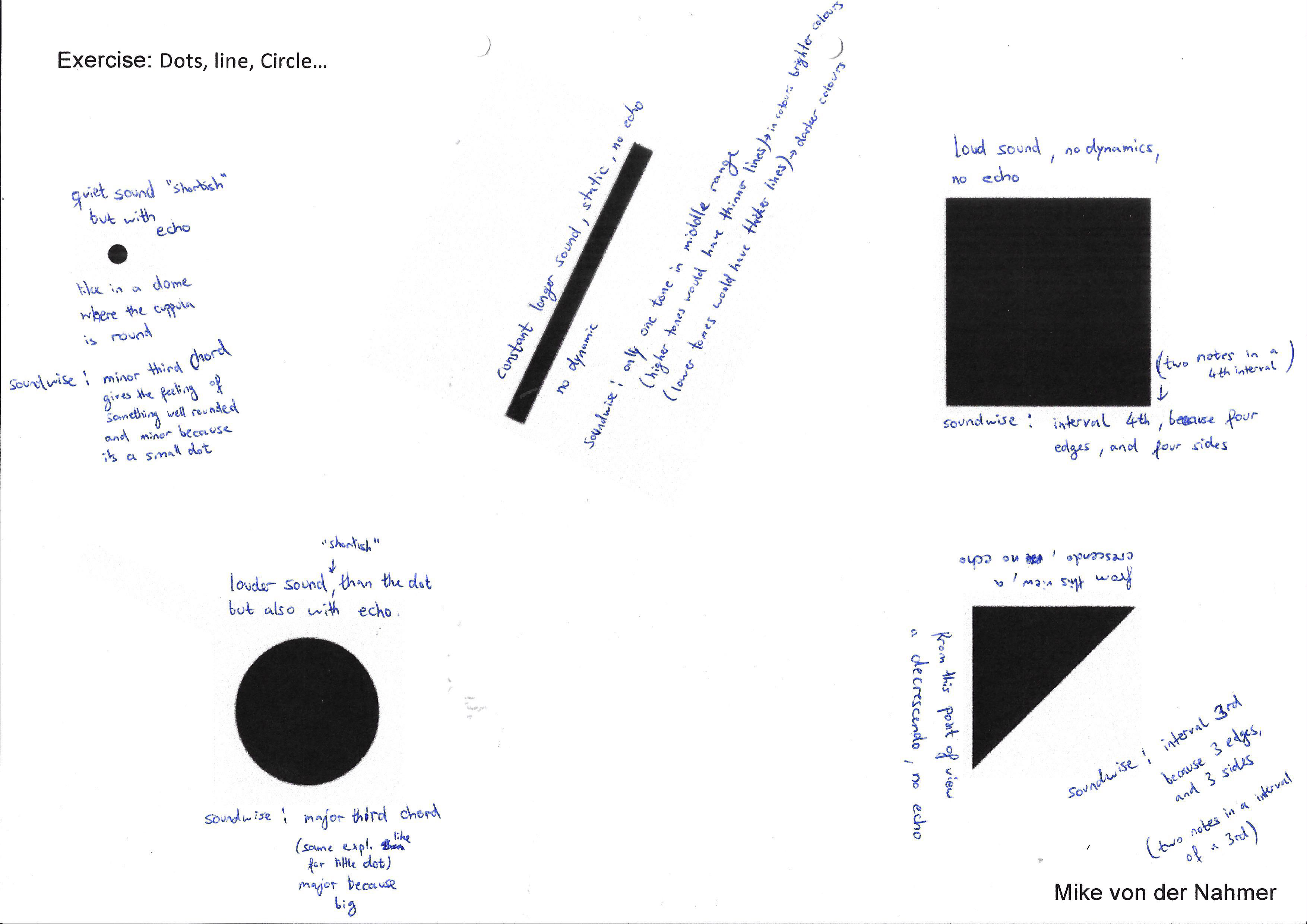
Resonanzraum STOA169 is a completed transdisciplinary sound-art project developed by Mike von der Nahmer in response to the existing STOA169 pillar hall in Polling, Bavaria. Rather than creating the architecture itself, the project created participatory ways of encountering it: through intuitive writing, intuitive drawing, geometric score-making, movement, voice, and resonance-based feedback. The project treated the hall not as a static object to admire, but as a site to be listened to, answered, and collectively interpreted.
Its already achieved results include a structured workshop format, participant-generated texts, drawings, word events, resonance-image chains, and a documented archive of reflections and artistic responses. A second layer of the project translated selected pillars into sound sketches and musical resonance fragments, always making clear that the pillars themselves were pre-existing artworks and that the project’s contribution lay in activating new relationships to them. The result was not a single finished artwork, but a new cultural practice: architecture became something participants could hear, draw, speak, and embody together.
The long-term impact lies in the methodology. Resonanzraum STOA169 developed a low-threshold, transferable way of engaging cultural sites through perception and co-creation. Its methods can move into schools, universities, and other public contexts without requiring specialist knowledge, expensive infrastructure, or prior musical training. In that sense, the project created both an immediate local transformation and a durable pedagogical and cultural toolset for future use.
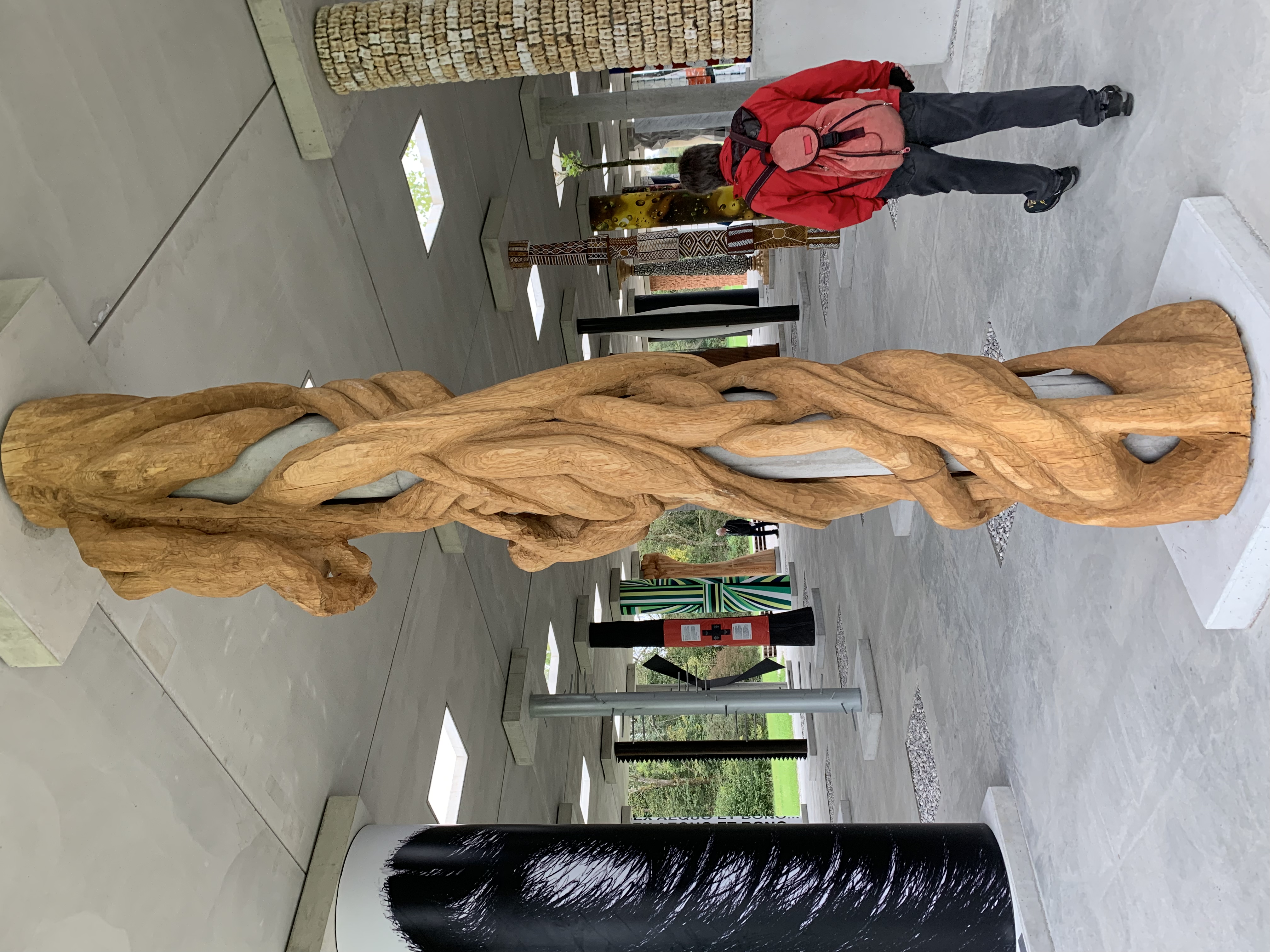
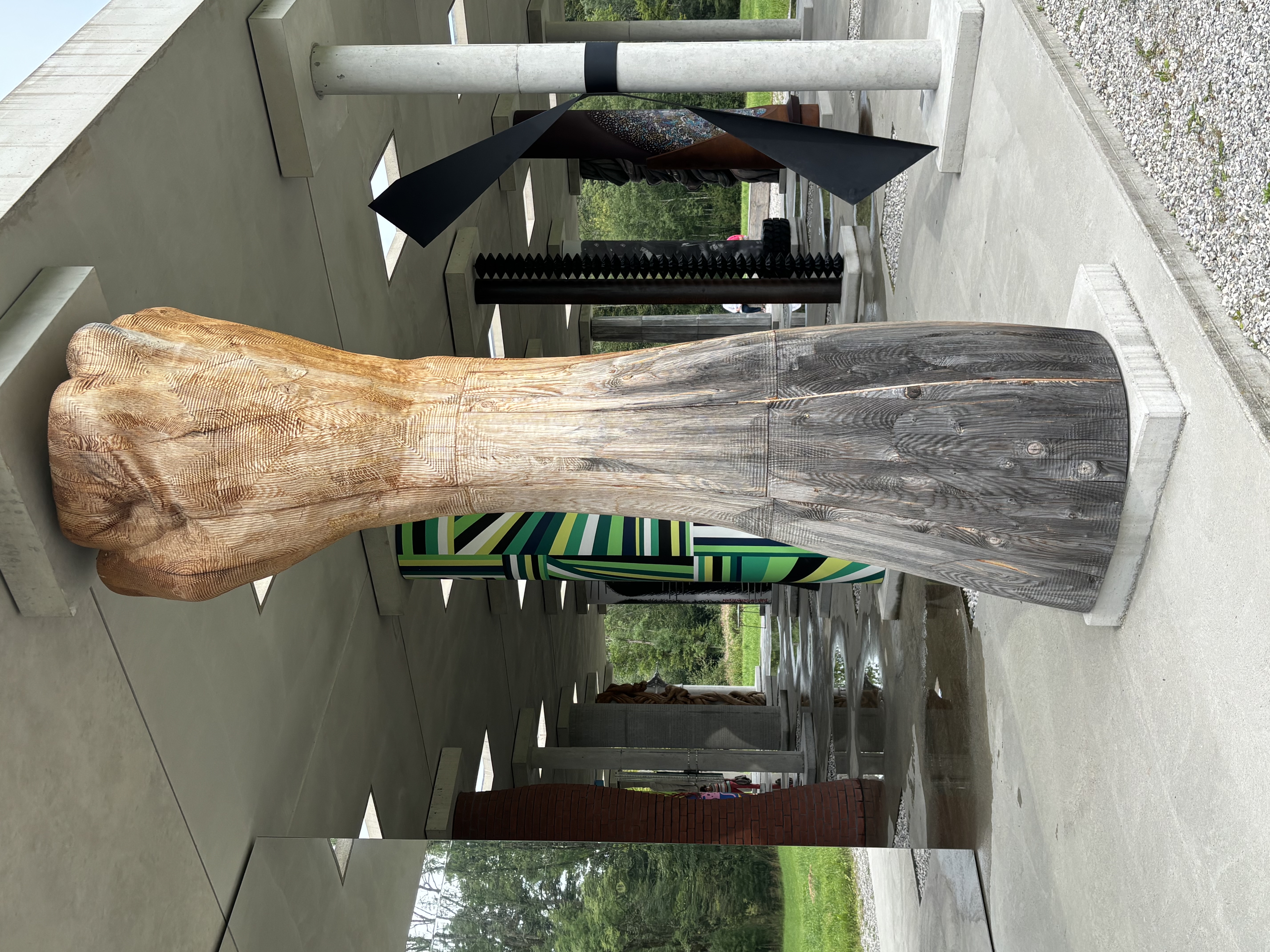
The project began with a simple but radical question: how can an existing hall of 121 artist-designed pillars be experienced not only visually, but also through resonance? STOA169 already brought together diverse artistic voices under one roof. Resonanzraum STOA169 emerged as a response to that site: not to redesign it, but to open it through artistic practice and collective perception. The core idea was to transform spectators into participants and to turn the encounter with the pillars into a shared act of listening, drawing, writing, moving, and sounding.
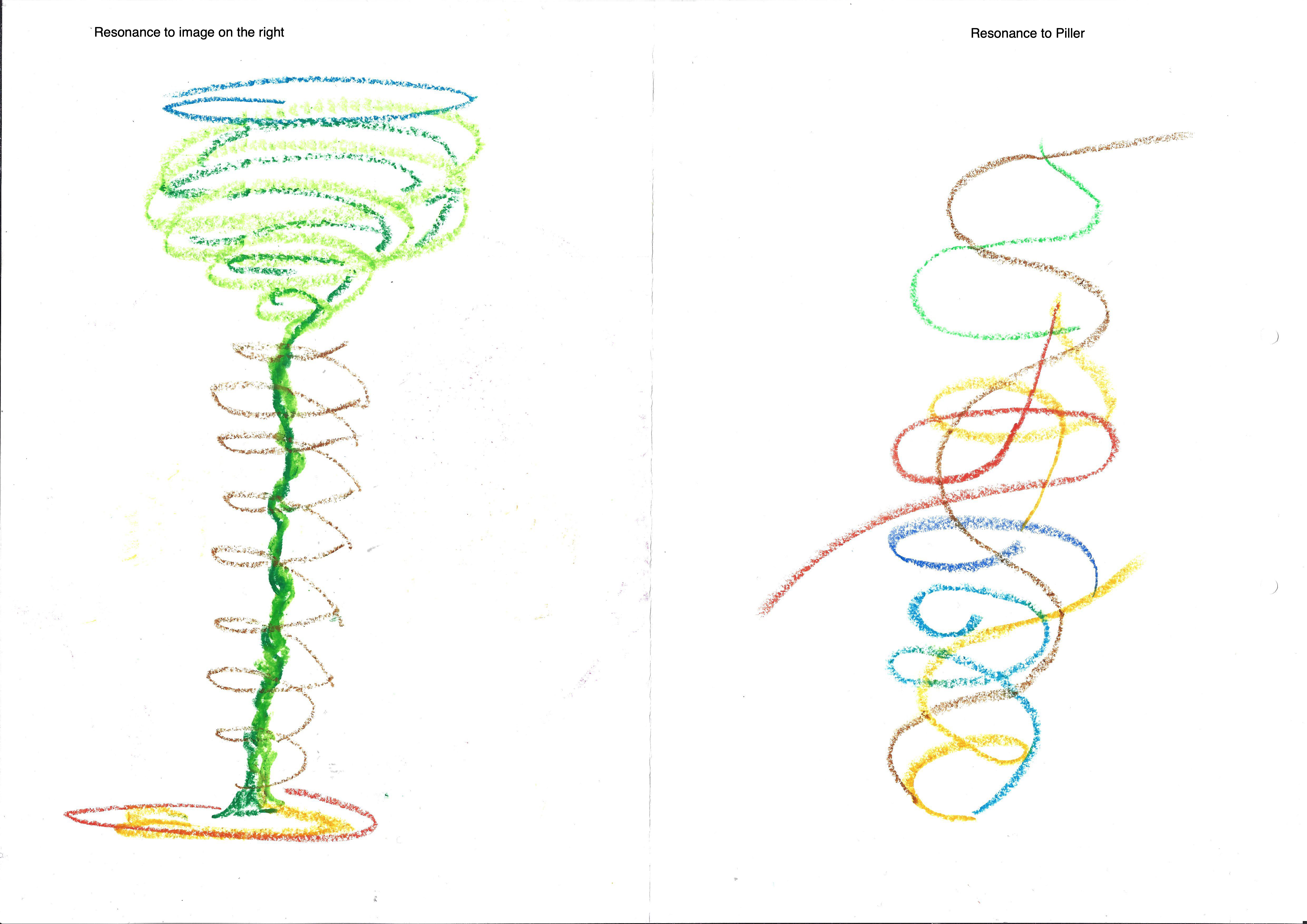
Implemented in Polling in 2025, the project was led by Mike von der Nahmer in cooperation with Prof. Dr. Wolfgang Stark and supported by Amateurmusikfonds / BMCO / BKM. Workshops brought together participants from different backgrounds and invited them to respond to the existing pillars through simple but precise methods: intuitive writing, intuitive drawing, resonance-image chains, geometric translation into sound, and feedback as resonance rather than judgment. This made the site accessible without simplifying it. Participants did not need to be musicians or visual artists to contribute meaningfully.
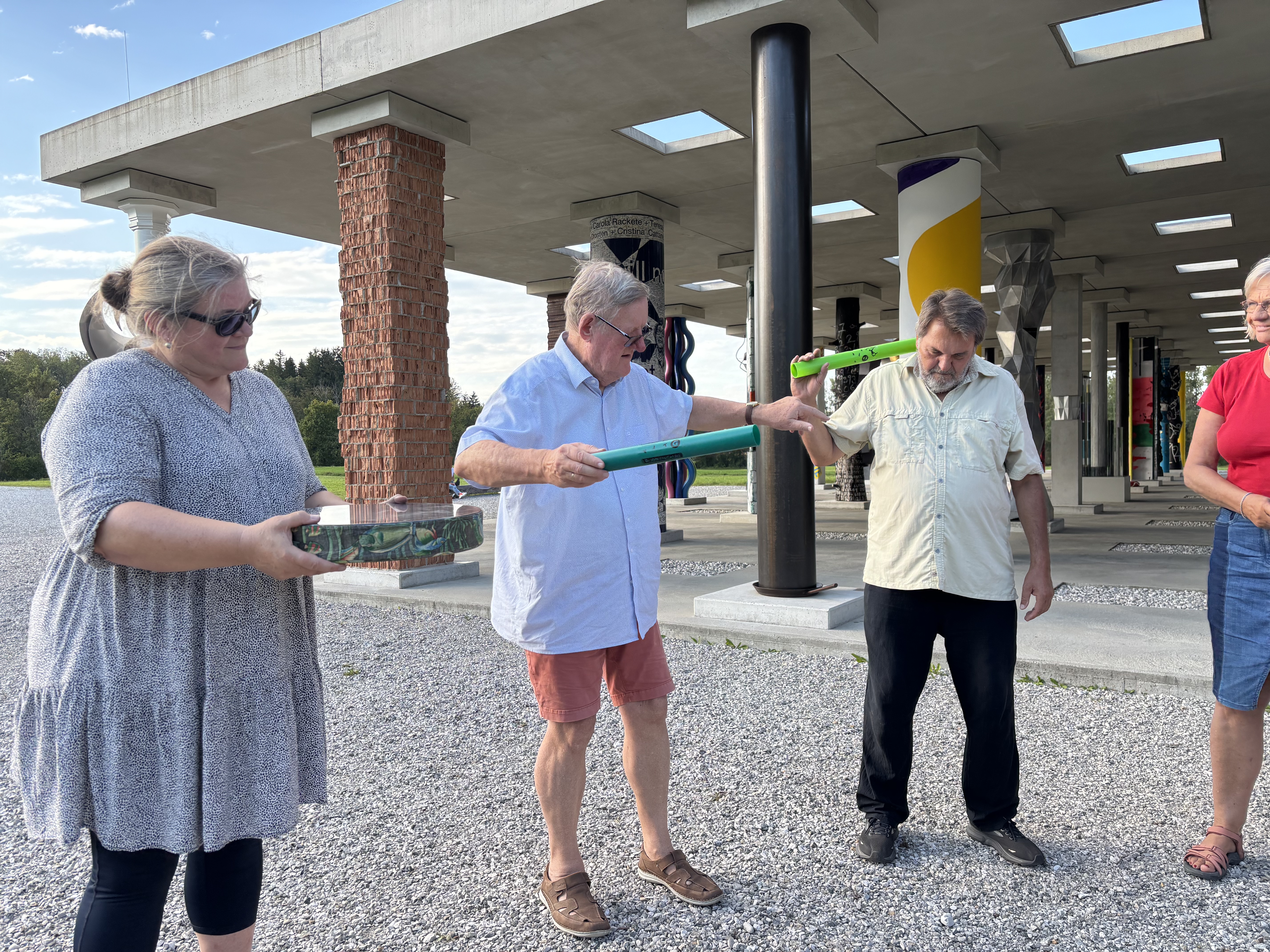
On the ground, the project unfolded as a sequence of embodied encounters with the site. Participants moved through the hall, chose pillars, created visual and textual responses, and developed collective sonic and performative miniatures from those encounters. The process was documented in reports, workshop materials, and a resonance catalogue. What emerged was a living archive of site-based cultural interpretation: a project in which architecture remained intact, while the ways people related to it changed profoundly.
Cultural heritage activation
Participatory sound art
Intuitive drawing/writing
Rural inclusion
Transdisciplinary education
Resonanzraum STOA169 addresses sustainability first by working with what already exists. Instead of building new infrastructure, the project activated an existing cultural site in rural Bavaria through low-resource, low-threshold artistic methods: paper, pencils, voice, movement, listening, and simple forms of notation. Its environmental approach is therefore not based on construction, but on adaptive cultural use: deepening the public life of an existing place rather than adding new material consumption.
The project also responds to social and cultural sustainability. It shows how a rural cultural site can become a long-term resource for public encounter, artistic education, and collective reflection. Participants were not passive consumers of culture; they became co-authors of a shared archive. This strengthens the cultural durability of the site and creates forms of engagement that can continue beyond the original workshop period. The extensive documentation and the resulting archive make the work reusable rather than one-off.
Finally, the project’s sustainability lies in transferability. The methods developed in STOA169 can be reused in schools, cultural institutions, and other public sites with minimal resources. This creates a sustainable model of cultural activation: small-footprint, repeatable, and rooted in perception, care, and shared responsibility for place.
Resonanzraum STOA169 contributes to beauty by changing how people experience an existing place. The project did not add decoration to the STOA169 hall; it made its atmosphere, difference, silence, and plurality more perceptible. Through drawing, writing, sound, and movement, participants entered into a slower, more attentive relationship with the site. Beauty here became lived experience: a form of heightened perception and meaningful encounter, not just visual admiration.
The project also created a strong sense of belonging. STOA169 is a hall in which each pillar keeps its own identity while sharing one roof. The project translated that condition into a social and aesthetic experience. People encountered the site through their own bodies and memories, then shared those experiences with others. The result was an atmosphere of care, attention, and resonance in which the place became emotionally and culturally inhabited.
Its exemplary aesthetic dimension lies in showing that a cultural site can become more beautiful not by being altered physically, but by being activated relationally. Resonanzraum STOA169 made a pre-existing work newly experienceable through collective artistic response.
The project was designed to be accessible without requiring specialist training. Participants did not need prior musical knowledge, artistic expertise, or technical skills. The methods were intentionally low-threshold and multi-modal: one could enter through words, lines, gestures, breath, rhythm, or listening. This allowed different types of participants to contribute meaningfully through their own strengths and perceptions.
Inclusion also shaped the project’s social structure. Feedback was organized not as critique, but as resonance: describing what one perceived, asking questions, and responding without judgment. This created a safer and more generous space for participation, especially for people who might otherwise feel excluded from contemporary art or music contexts. The workshop thus modeled a more inclusive way of sharing authorship and cultural interpretation.
The project is also inclusive in geographic terms. It activated a rural site and treated rural cultural life not as peripheral, but as a place of innovation, encounter, and public value. Its methods are affordable and portable, which increases their potential for wider access beyond major urban institutions.
Participation was the core of the project. People were not invited merely to visit STOA169, but to engage it actively. They moved through the hall, selected pillars, created texts and drawings, responded to one another’s images, translated geometric forms into sound, and contributed to collective performative outcomes. The project’s results were generated with participants, not simply presented to them.
Their role was therefore substantive and creative. Participants shaped the archive through their own perceptions, memories, and responses. Workshop outputs became part of the project’s documented results and informed later sonic and poetic translations. The impact of this involvement was twofold: the project became richer and more plural, and participants experienced the site as something they could answer rather than merely observe.
Their role was therefore substantive and creative. Participants shaped the archive through their own perceptions, memories, and responses. Workshop outputs became part of the project’s documented results and informed later sonic and poetic translations. The impact of this involvement was twofold: the project became richer and more plural, and participants experienced the site as something they could answer rather than merely observe.
The project connected actors at several levels. At the local level, it engaged the STOA169 site in Polling and involved participants directly in the artistic process. At the project level, it was led by Mike von der Nahmer in cooperation with Prof. Dr. Wolfgang Stark and in collaboration with local cultural actors including Klangkunst im Pfaffenwinkel e.V. At the national level, it was supported through Amateurmusikfonds / BMCO / BKM, which enabled the project’s implementation and documentation.
The added value of this multilevel constellation was clear: local specificity met broader cultural support. The project remained rooted in one rural place while benefiting from professional collaboration and public cultural funding structures. This made it possible to create a high-quality, place-based artistic process with broader relevance.
The added value of this multilevel constellation was clear: local specificity met broader cultural support. The project remained rooted in one rural place while benefiting from professional collaboration and public cultural funding structures. This made it possible to create a high-quality, place-based artistic process with broader relevance.
Resonanzraum STOA169 is transdisciplinary by design. It brings together architecture, sound art, writing, drawing, movement, pedagogy, cultural facilitation, and reflection. The project does not treat these as separate layers but as interacting languages through which a site can be experienced and interpreted. Architecture becomes audible, drawing becomes a form of listening, and writing becomes a notation of atmosphere.
The design and implementation also combined different knowledge fields: artistic practice, education, group process, resonance theory, and site-responsive cultural work. The project created a shared field where non-specialist knowledge and embodied perception were as important as artistic or academic expertise. This is one of its strongest NEB qualities: the site was opened through multiple disciplines without losing coherence.
The design and implementation also combined different knowledge fields: artistic practice, education, group process, resonance theory, and site-responsive cultural work. The project created a shared field where non-specialist knowledge and embodied perception were as important as artistic or academic expertise. This is one of its strongest NEB qualities: the site was opened through multiple disciplines without losing coherence.
The submitted project was implemented through public cultural funding, with support from Amateurmusikfonds / BMCO / BKM. This made it possible to develop and complete the workshops, documentation, and artistic outputs in 2025.
Its long-term financial sustainability lies less in a single commercial product than in a reusable methodology. The project generated workshop formats, documentation, and educational structures that can be adapted for future partnerships with schools, universities, cultural institutions, and other sites. Future iterations can therefore be supported through a mix of workshop fees, institutional partnerships, public cultural funding, and educational commissions. The project is financially light in implementation because its core tools are simple, portable, and low-cost.
This makes the model sustainable over time: one completed site-based project has produced a methodology that can continue to generate cultural, educational, and social value in new contexts without requiring major infrastructure investment.
The most transferable elements of Resonanzraum STOA169 are its methods. Intuitive writing, intuitive drawing, resonance-image chains, geometric translation into sound, and resonance-based feedback can all be adapted to other cultural sites, schools, universities, community projects, and interdisciplinary learning contexts. These methods do not depend on STOA169 alone; they are structured ways of helping people enter into dialogue with place, form, and one another.
The project also produced a reusable body of material: workshop structures, logs, visual outputs, poetic fragments, and an archive exceeding 600 pages. This makes replication practical, not merely theoretical. The approach can be transferred to other geographies by changing the site, but keeping the logic: observe, respond, translate, share, and document. It can also be transferred across sectors, including arts education, heritage mediation, community building, and interdisciplinary teaching.
A further step is already emerging from the project’s afterlife: the documentation is informing educational adaptation for broader use. That future phase is not presented here as completed, but it demonstrates that the project has generated the kind of robust methodology that can continue to grow beyond its original site.