Enhancing Circularity, Sustainability, and Innovation
Planting with neighbours
Greening Gent’s streets: One Neighbour at a Time
“Planten met Buren” is a free programme by the city of Ghent and the NGO Gents Milieu Front, turning sealed pavement into green façade gardens Residents invite neighbours; the project provides materials, labour and plants. Collective planting days build social cohesion and ownership. The tiered model scales engagement and rewards collective action. Since 2023, over 1,600 Ghent residents have participated, thus addressing climate adaptation, biodiversity and community cohesion
Belgium
Local
Ghent, Belgium
Mainly urban
It involves a physical transformation of the built environment (hard investment)
Yes
2025-12-31
No
No
No
Organisation
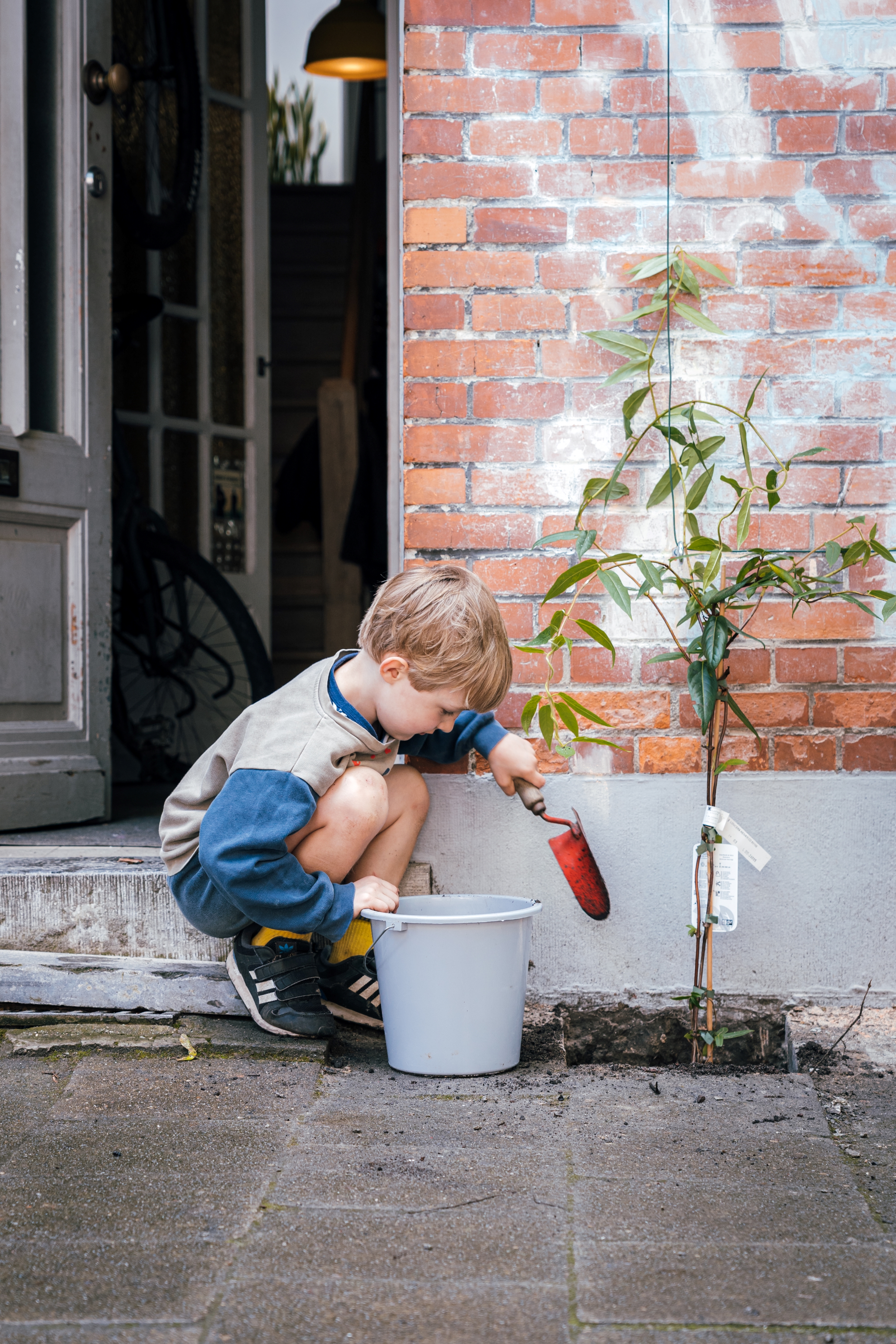
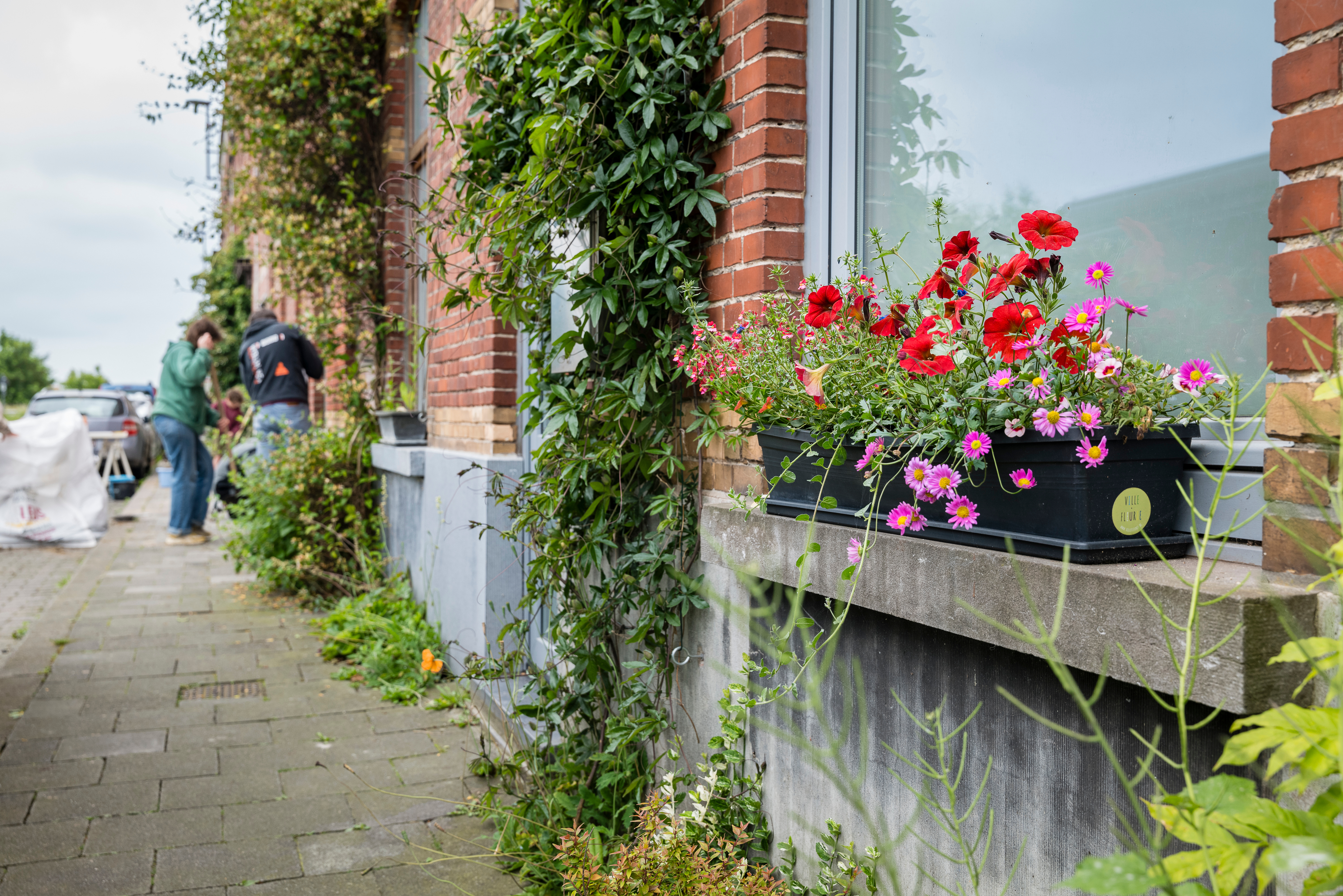
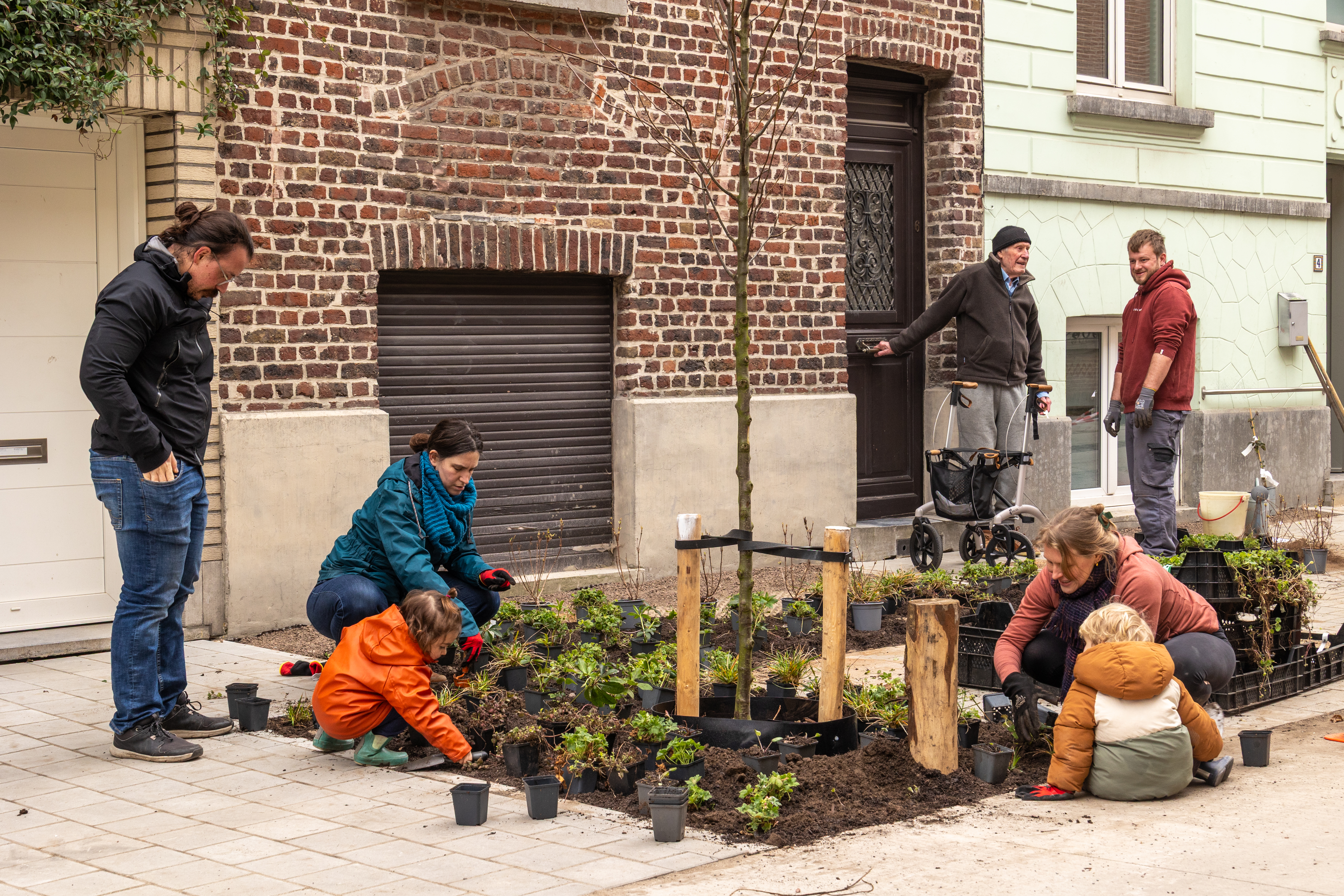
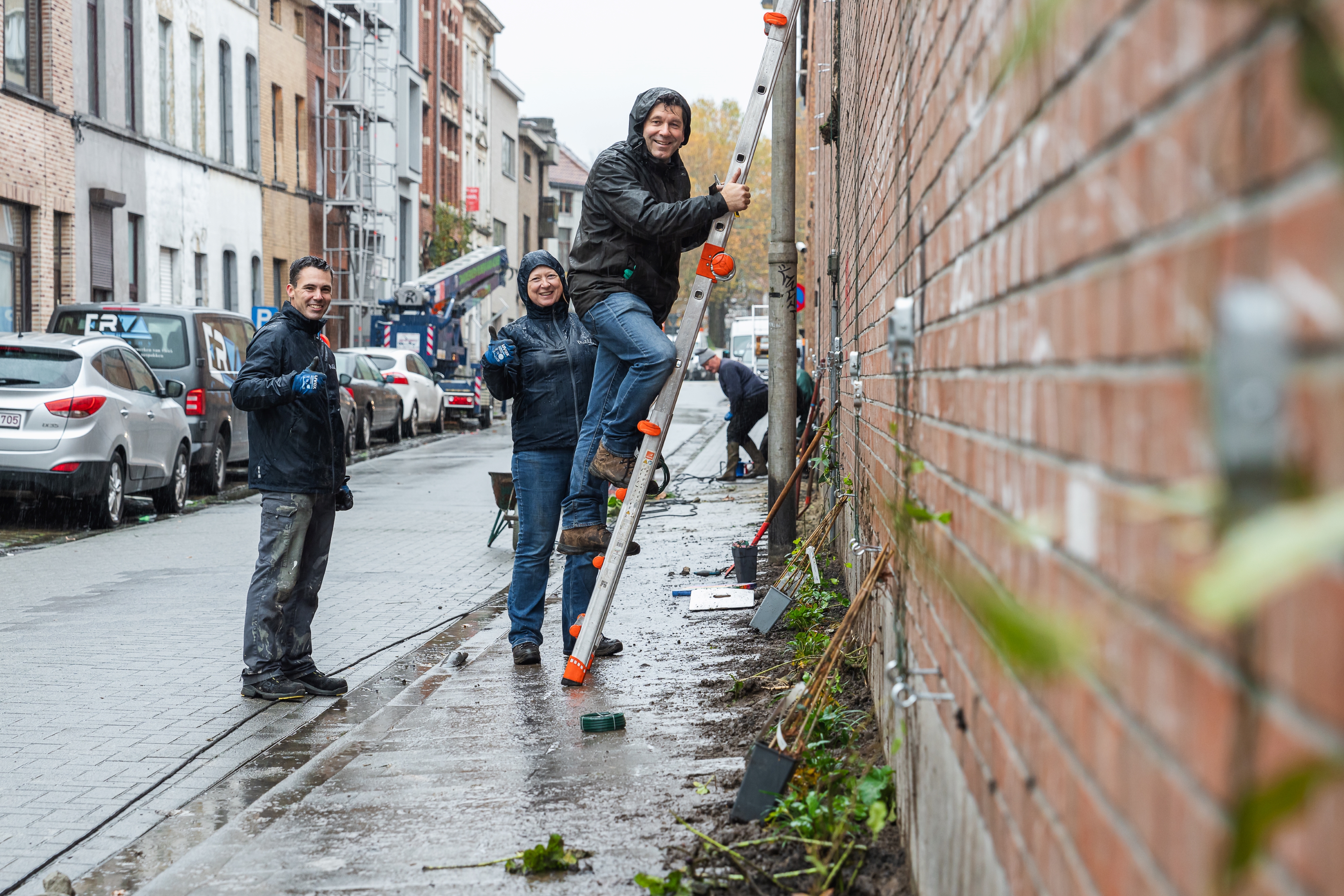
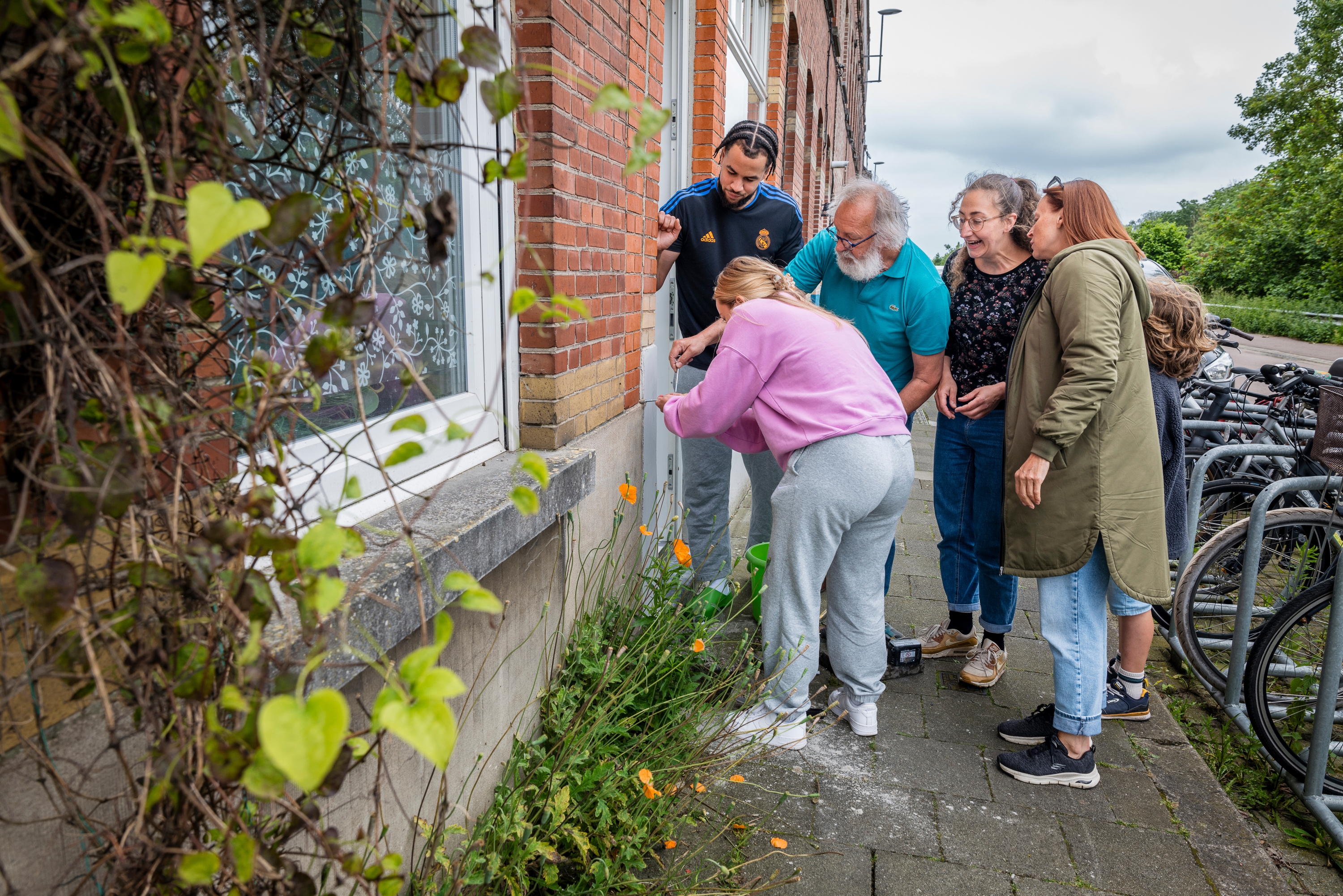
Launched in 2023 by the City of Ghent and NGO Gents Milieu Front (GMF), Planten met buren (Planting with neighbours) transforms sealed pavements into living, green facades gardens through a free, community-led programme. Residents invite their neighbours, choose their plants and join a shared weekend planting day- the more neighbours participate, the richer the support package. Three participation tiers (Light, Standard, All-in) scale collective action and create a positive street dynamic that inspires further greening.
Results are concrete and growing: In 3 years time, 1600 façade gardens were installed, desealing 700m2 of pavement. resulting in over 220 greener streets. A survey of participants showed 98% satisfaction and 94% would recommend the programme; 30% reported that their façade garden directly inspired neighbours to green their own houses.
An independent 2024 student study assessed the programme’s impact. Field study and in-depth interviews confirmed that the vast majority of gardens remained alive and well-maintained. Beyond greening, the study documented tangible social cohesion benefits: residents feel safer, help each other maintain their gardens and spark new connections between people.
The long-term impact is systemic. In Ghent, 70% of all sealed surface lies on private land- making residents behaviour change essential to the city’s goal of desealing towards a climate resilient city in 2030. Beyond de-sealing, the programme reduces urban heat island effects, improves rainwater infiltration, support biodiversity, and strengthens neighbourhood social cohesion. Its low-cost, replicable model – proven across all 25 Ghent districts- offers a blueprint for cities across Europe seeking inclusive, community-driven climate adaptation.
Ghent's streets tell a familiar urban story: decades of paving-over left residents with grey, heat-prone facades and little connection to their neighbours or the neighbourhood. The City of Ghent and NGO GMF recognised early on that the barrier to greening was never a lack of goodwill — it was a combination of practical obstacles. Residents didn't know where to start, lacked tools or physical ability, feared cost, or simply didn't know their neighbours well enough to act collectively. Removing those barriers, all at once, became the founding principle of Planten met Buren.
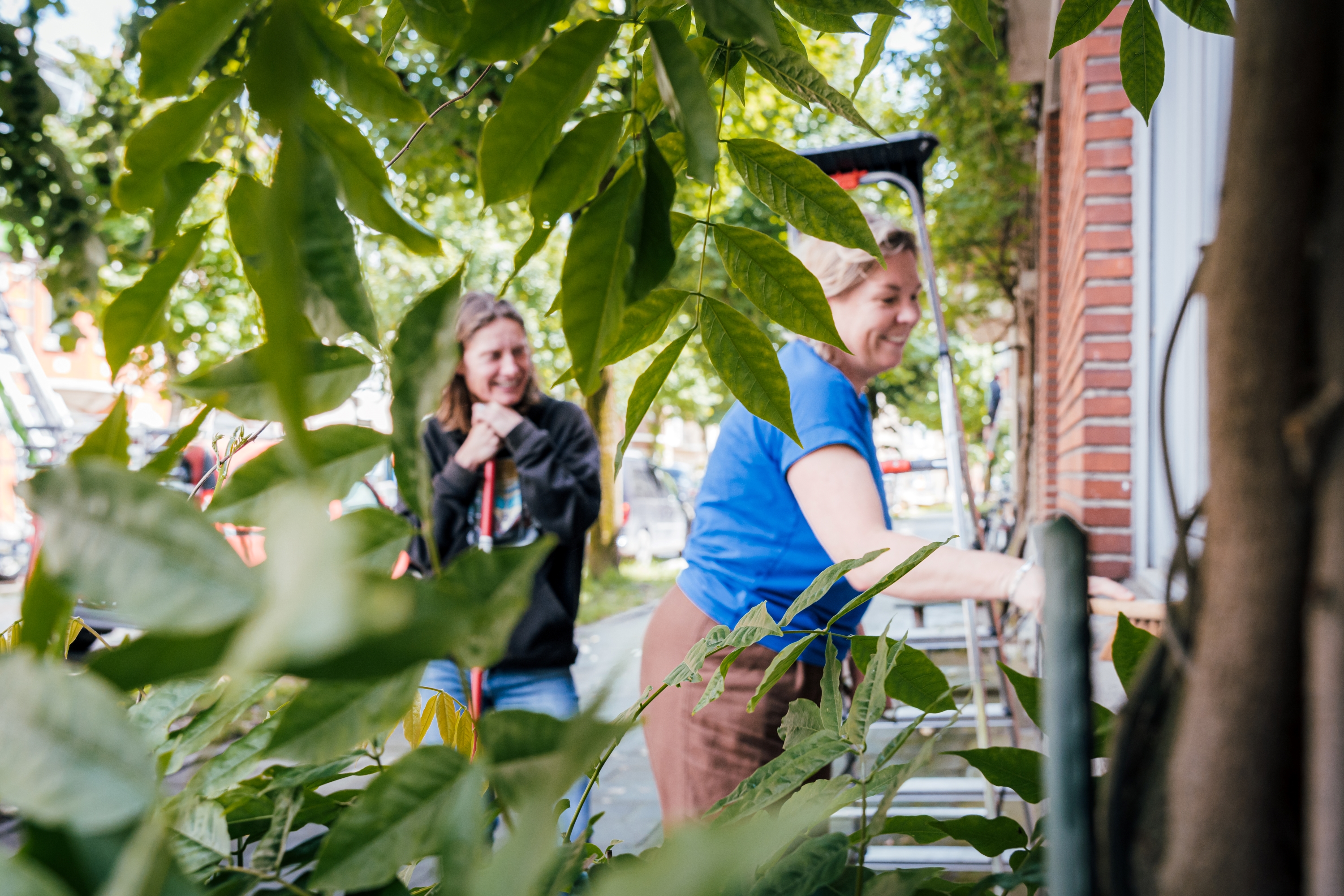
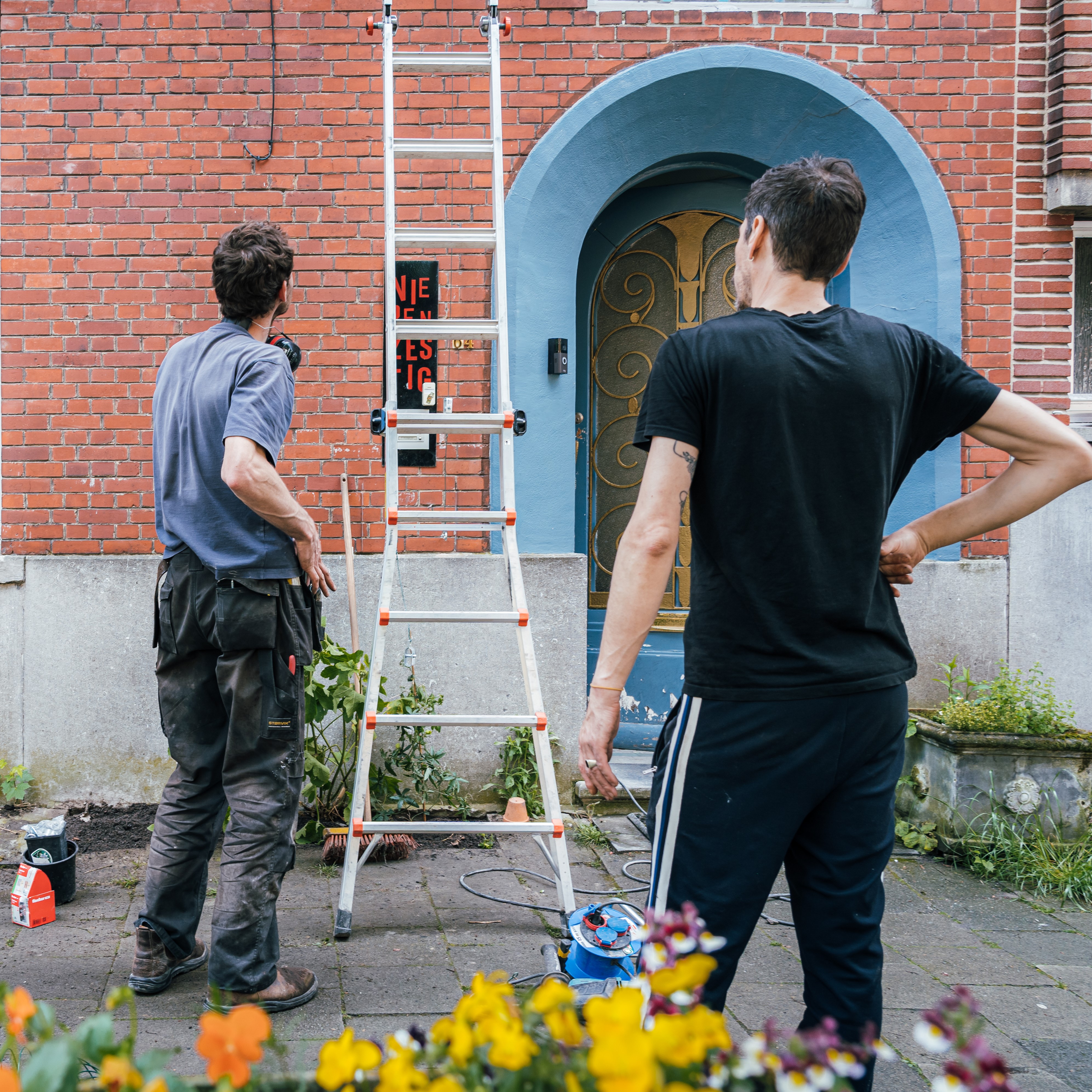
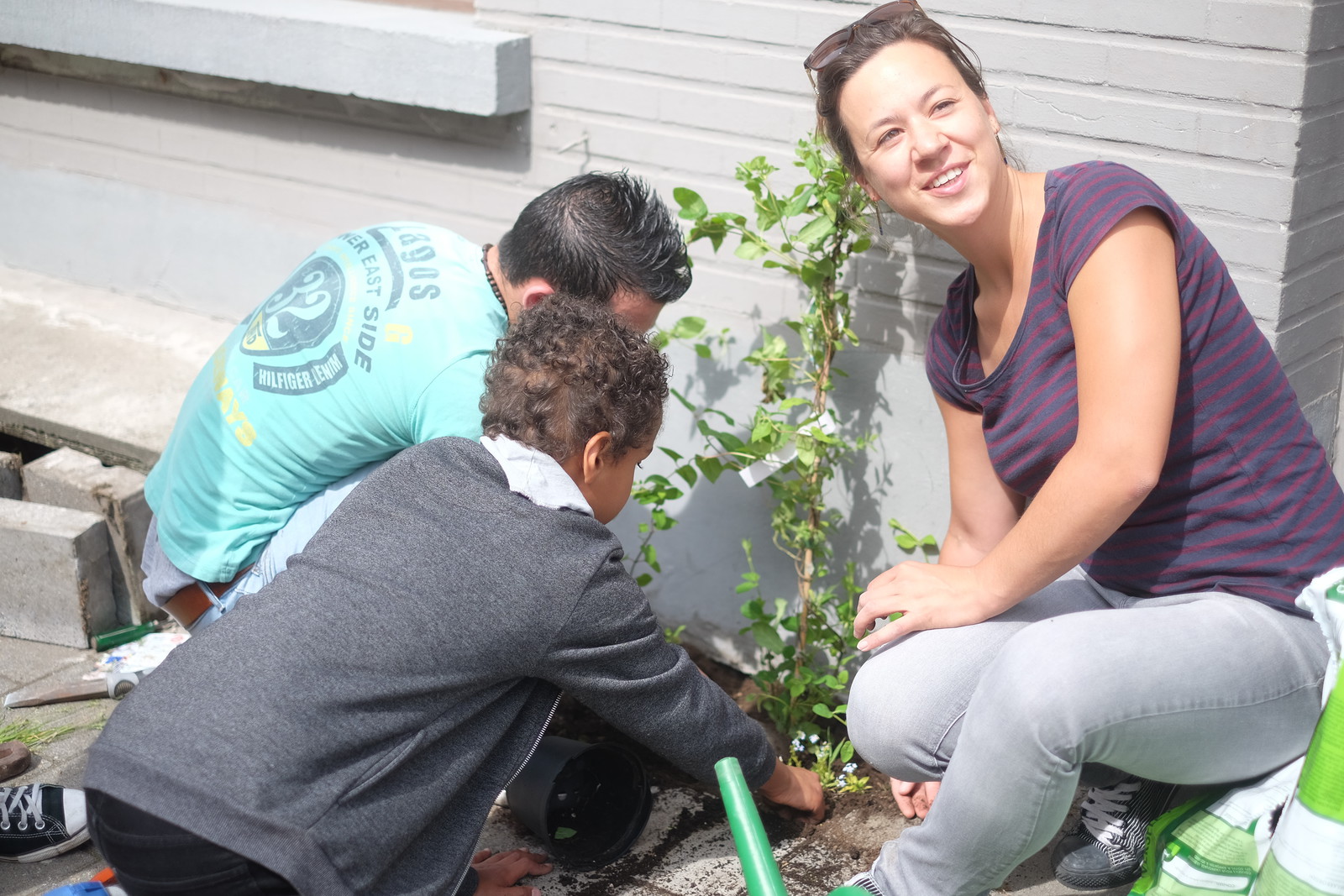
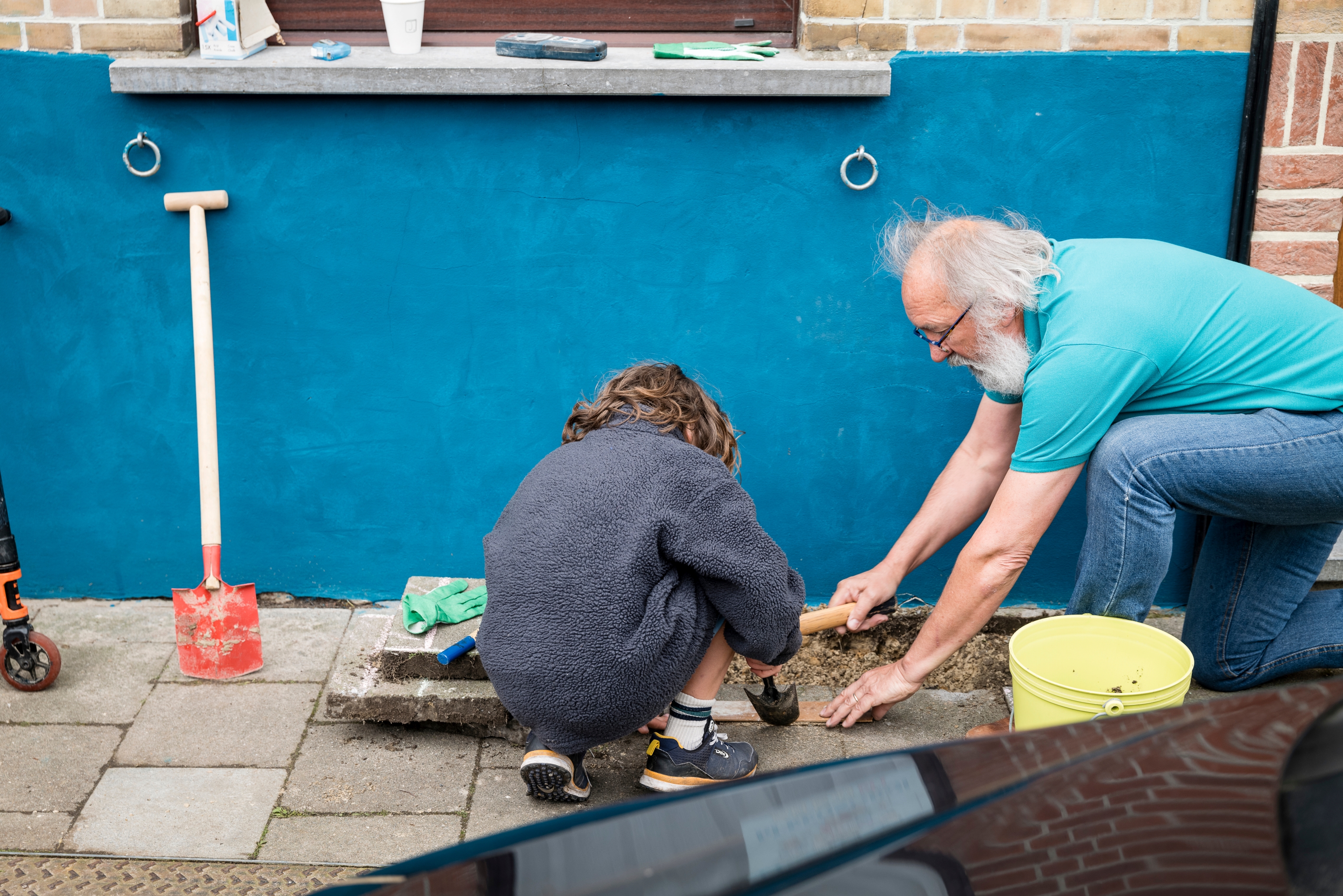
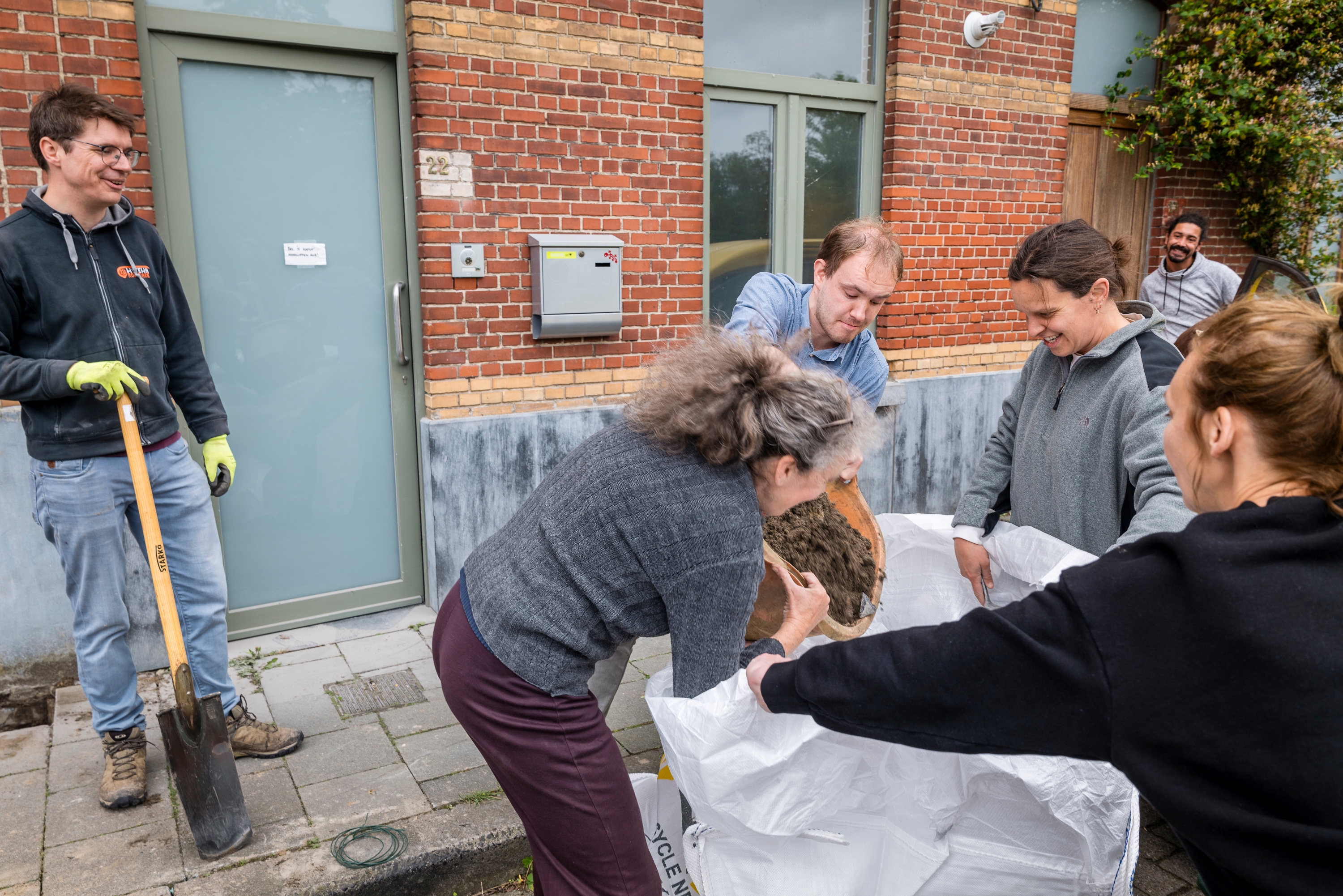
The programme evolved through deliberate iteration. It launched in 2022 with individually installed facade gardens — a proven success, but one that left an important dimension untapped. GMF and the City of Ghent asked a harder question: how do we make greening a collective act? Through community engagement and field learning, we redesigned the programme around residents as ambassadors, empowering neighbours to invite neighbours and culminating in a shared weekend planting day where residents work side by side with volunteers to break out tiles and plant together. This co-creative model became the heart of the programme: shared physical effort creates shared ownership, and shared ownership creates lasting commitment. Greening infrastructure, it turns out, is also social infrastructure.
The tiered model, from two to up to ten neighbours, was developed to meet residents where they are, rewarding collective action progressively without excluding less-connected streets.
The programme continues to grow. Building on the lessons of each phase, Planten met Buren is now expanding into a third phase: extending the offer beyond street facades to include side and rear garden walls, and introducing trees for front and back gardens. What began as a single intervention is becoming a comprehensive neighbourhood greening programme, one street, one planting day, one conversation between neighbours at a time.
Climate Adaptation
Nature-based solutions
Community co-design
Social inclusion
Citizen empowerment
Planten met Buren addresses one of the most pressing environmental challenges facing dense European cities: the dominance of sealed, impermeable surfaces in residential areas. In Ghent, 70% of all sealed surfaces lies on private land – beyond the reach of public infrastructure investment alone. The programme targets this directly, turning privately owned pavement into facade gardens at no cost to the residents.
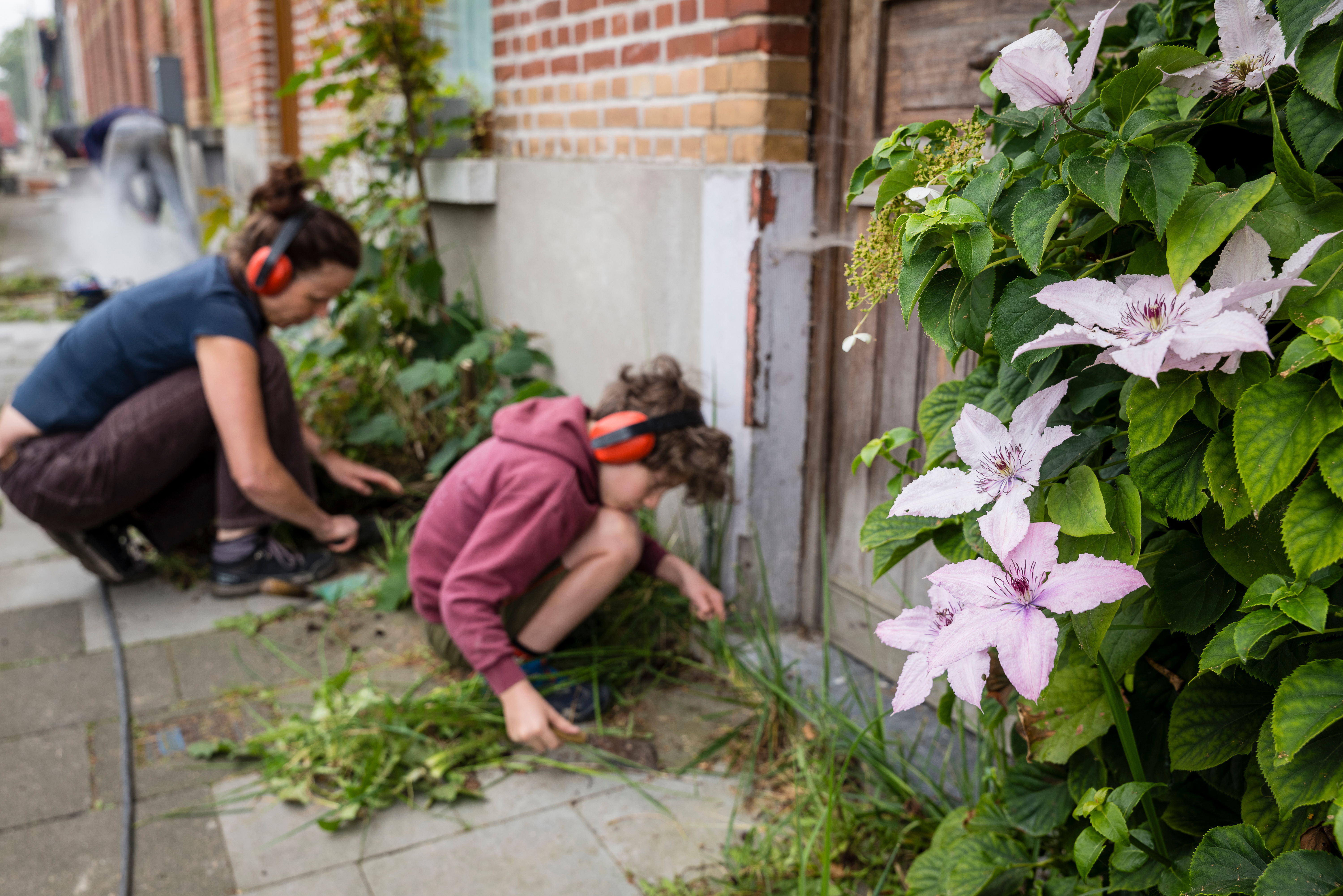
Each façade garden replaces concrete with soil and vegetation, delivering a cluster of measurable environmental benefits: it increases rainwater infiltration, reducing surface run-off and relieving pressure on the sewer system during heavy rainfall. Vegetation cools the immediate environment through transpiration and shade, thus countering the urban heat island effect that makes neighbourhoods increasingly uncomfortable during heatwaves. Façade greenery introduces habitat for pollinators, birds and insects, contributing to urban biodiversity at street scale. The programme's plant selection prioritises native, low-maintenance species suited to the local climate, maximising ecological value while minimising the need for irrigation or replacement. All transport by the Façade Garden Brigade is done by cargo bike, eliminating vehicle emissions from the installation process entirely.
Social sustainability is equally embedded in the model. The programme is entirely free of charge, ensuring that greener, cooler streets are not a privilege of wealthier neighbourhoods. By absorbing all costs the programme actively counters the environmental inequality that typically concentrates urban greening in areas that need it least. Renters are explicitly included through a supported owner-consent process, extending access to some of the city's most economically vulnerable residents. What makes Planten met Buren exemplary is its systemic approach to behaviour change: community co-creation produces more durable outcomes than top down planting.
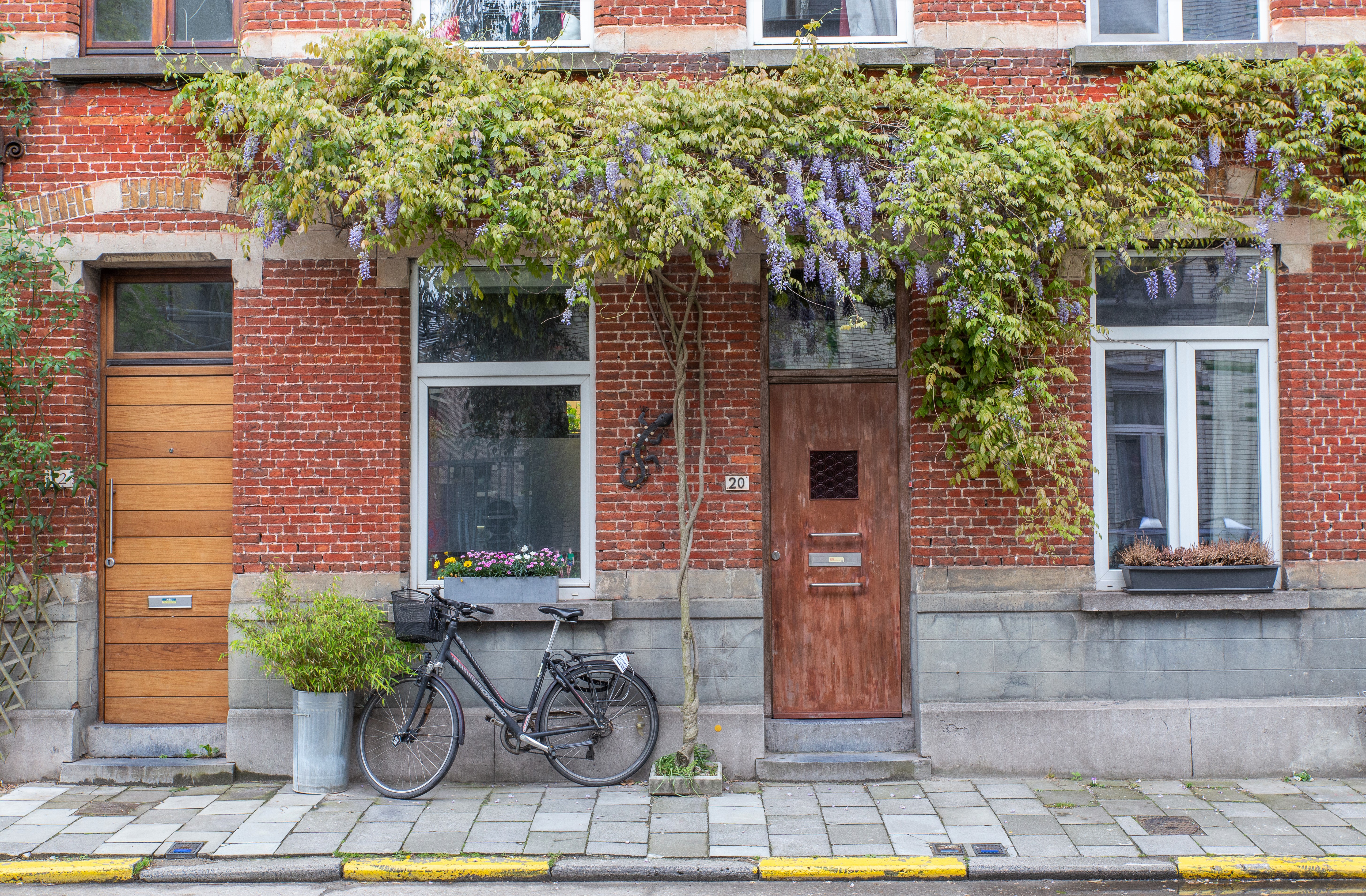
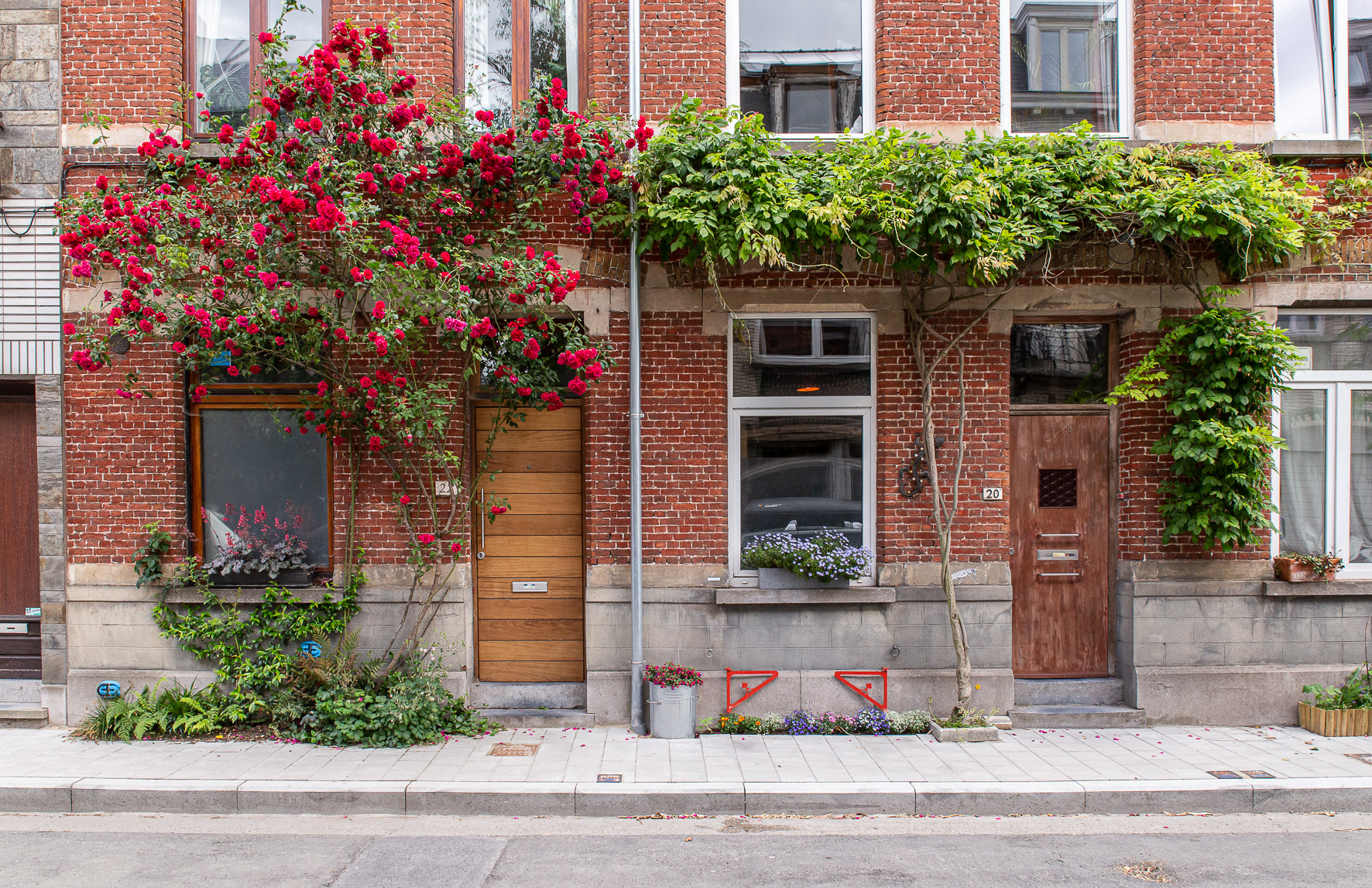
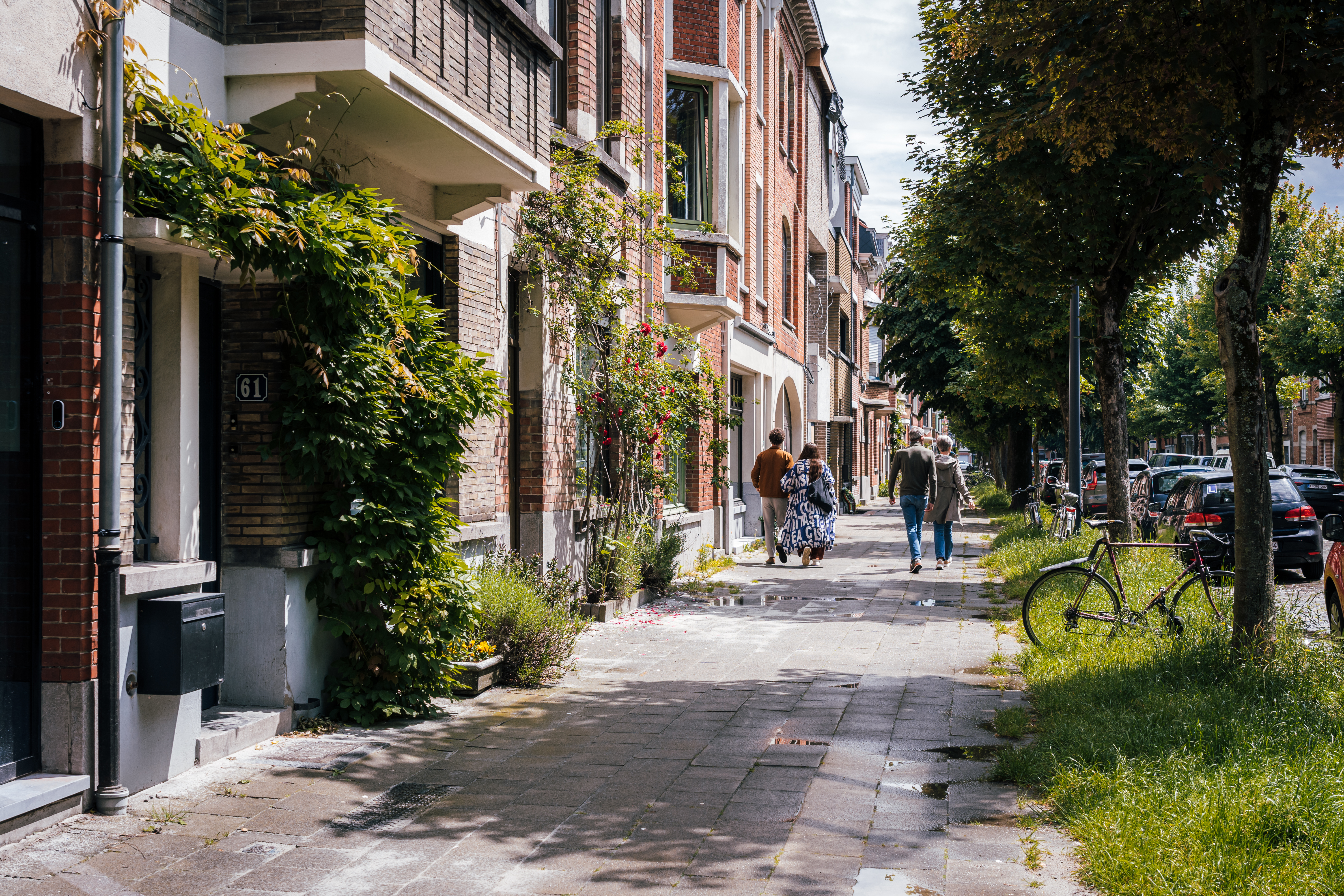
Planten met Buren begins with a simple but powerful observation: a street lined with flowering facades gardens looks and feels fundamentally different from paved edge tot edge. The transformation – from grey uniformity to living, seasonal colour – is experienced daily by everybody who lives in, walks through, or passes by the street. The aesthetic impact is immediate, visible and shared.
The programme gives residents genuine agency over the beauty of their own frontage. Participants selects their own plants from a curated guide, choosing colours, textures and climbing species that reflect their personal taste while contributing to a collective streetscape. This combination of individual expression within a shared framework is what distinguishes Planten met Buren from standardised municipal planting: no two streets look the same, and each garden carries the personality of the household behind it.
The co-creative planting day creates a moment of collective pride and a shared story. Residents consistently report that they enjoy coming home more, that their street feels more welcoming, and that the gardens make them want to spend more time outside. The participants survey confirmed that the most widely felt effect of a façade garden is simply that people find their street more beautiful.
In the longer term, façade gardens create a sense of ownership and belonging that outlasts the planting day itself. Neighbours help each other with maintenance and take pride in a shared green corridor that they built together.
The everyday care – watering, pruning, tending in full view of the street – is a quiet but powerful form of community cohesion, and a visible sign that residents feel ownership over their shared environment. Beauty is not only an outcome, but also a social practice that strengthens belonging and care for place.
Inclusion is not a secondary feature of Planten met Buren — it is the structural foundation on which the entire programme was built. Every design decision was made with one question in mind: who might be left out, and how do we prevent that? The most fundamental measure is cost. The programme is entirely free of charge, removing the financial barrier that typically concentrates urban greening in wealthier neighbourhoods. In a city where access to green space correlates closely with income, a free programme reaching all districts actively counters environmental inequality. Materials, labour, plants and guidance are all provided, a resident needs nothing but willingness and a pavement wide enough to dig. Renters, who make up a significant proportion of residents in Ghent's denser neighbourhoods and are often among the most economically vulnerable, are explicitly included. A template letter for obtaining owner consent turns tenancy from an exclusionary barrier into a practical step. The programme belongs to all residents, not only homeowners.
The tiered model addresses social inclusion at street level. By making the Light formula available with just two participating neighbours, the programme ensures that less socially connected or more transient communities are never excluded simply because collective action is harder to organise. Every street has an entry point. The co-creative planting day brings together residents of different ages, backgrounds and physical abilities in a shared, visible act of neighbourhood improvement. The All-In formula includes a neighbourhood aperitif, a convivial ritual that frames greening as celebration rather than obligation, lowering the threshold for those who might otherwise feel civic participation is not for them. An independent study confirmed that facade gardens consistently generate new social contact between residents who had not previously spoken, proof that inclusive design produces genuinely more connected neighbourhoods.
The tiered model addresses social inclusion at street level. By making the Light formula available with just two participating neighbours, the programme ensures that less socially connected or more transient communities are never excluded simply because collective action is harder to organise. Every street has an entry point. The co-creative planting day brings together residents of different ages, backgrounds and physical abilities in a shared, visible act of neighbourhood improvement. The All-In formula includes a neighbourhood aperitif, a convivial ritual that frames greening as celebration rather than obligation, lowering the threshold for those who might otherwise feel civic participation is not for them. An independent study confirmed that facade gardens consistently generate new social contact between residents who had not previously spoken, proof that inclusive design produces genuinely more connected neighbourhoods.
Participation in Planten met Buren is not a consultation phase or a communication strategy, it is the mechanism by which the project functions at all. Without residents actively recruiting their neighbours, there is no project. This peer-to-peer mobilisation model places citizens at the very origin of each intervention, rather than at the receiving end of a municipal decision.The process begins with a resident choosing to act. They register, receive invitation cards, and take personal responsibility for engaging their street. This act of reaching out to neighbours is itself a form of civic participation that many residents describe as the first time they have meaningfully connected with the people living next to them. The city and GMFprovide the scaffolding; the community provides the energy.
On the planting day, participation becomes physical and collective. Residents work side by side to break out tiles, prepare soil and plant together. This shared labour is a deliberate design choice: co-creation builds ownership in a way that a professionally installed garden never could. Residents who plant with their own hands maintain with their own hands and the independent study confirmed that co-created gardens remain alive and well-tended after installation, directly linking participatory process to long-term sustainability outcomes. Civil society is embedded in the programme's governance as well as its delivery. GMF, as a local environmental NGO, is not a contractor but a genuine co-designer, bringing deep community networks, ecological expertise, and a volunteer pool that enables the programme to scale during peak planting seasons. Their relationships with residents, neighbourhood associations and local stakeholders ensure that the programme remains grounded in community.The result is a programme in which citizens are simultaneously initiators, co-designers, implementers and long-term stewards — a genuinely participatory model from first invitation to final bloom.
On the planting day, participation becomes physical and collective. Residents work side by side to break out tiles, prepare soil and plant together. This shared labour is a deliberate design choice: co-creation builds ownership in a way that a professionally installed garden never could. Residents who plant with their own hands maintain with their own hands and the independent study confirmed that co-created gardens remain alive and well-tended after installation, directly linking participatory process to long-term sustainability outcomes. Civil society is embedded in the programme's governance as well as its delivery. GMF, as a local environmental NGO, is not a contractor but a genuine co-designer, bringing deep community networks, ecological expertise, and a volunteer pool that enables the programme to scale during peak planting seasons. Their relationships with residents, neighbourhood associations and local stakeholders ensure that the programme remains grounded in community.The result is a programme in which citizens are simultaneously initiators, co-designers, implementers and long-term stewards — a genuinely participatory model from first invitation to final bloom.
The projects succeeds because it aligns action across several governance levels with each level removing a different barrier to neighbourhood greening.
At the neighbourhood level, residents and street communities are the initiators and implementers of each intervention. Local community workers support outreach, help identify suitable streets, and connect the programme to existing neighbourhood dynamics and social networks. This hyper-local presence ensures the programme reaches communities where collective action needs the most encouragement.
At the city level, the Department of Environment and Climate of the City of Ghent coordinates the programme, manages the partnership with GMF, and integrates Planten met Buren into Ghent's broader climate adaptation strategy. The city's communication channels, permitting frameworks and public infrastructure planning provide the institutional backbone without which the programme could not operate at scale across all 25 districts.
GMF bridges the city’s institutional and community levels, bringing NGO independence, deep neighbourhood relationships, ecological expertise and a flexible volunteer network that institutional delivery alone could not replicate. Their co-designer role ensures the programme remains responsive to community needs rather than administrative cycles.
At the regional level, the Flemish Local Energy and Climate Pact (LEKP) has provided the initial funding mechanism, channelling regional climate investment directly into neighbourhood-scale action. This regional framework embedded the programme within Flanders' wider goal of de-sealing and the 3/30/300 green norm for urban greenery access. At the European level, Planten met Buren directly embodies the ambitions of the European Green Deal — in particular its Biodiversity Strategy, which calls for greening urban spaces, and its climate adaptation agenda,which identifies de-sealing and nature-based solutions as essential responses to urban heat and flooding.
Planten met Buren is, at its core, a transdisciplinary programme, not by design ambition alone, but by practical necessity. Greening a city's residential streets requires simultaneously understanding ecology, behaviour, social dynamics, urban infrastructure and community organising. No single discipline holds all of those keys, and the programme's effectiveness reflects the genuine integration of multiple fields of knowledge.
Environmental science and urban ecology underpin the core intervention. The plant selection guide was developed with ecological expertise, prioritising native species that maximise biodiversity value, require minimal irrigation and suit the microclimate. The choice to de-seal pavement rather than simply add planters reflects an evidence-based understanding of soil hydrology, rainwater infiltration and urban heat dynamics. Landscape architecture and spatial design shape how each garden is conceived and installed. The typologies, mini, medium and maxi, respond to varying pavement widths, building orientations and resident preferences, ensuring aesthetic quality across highly varied street contexts.
Social work and community development are embedded in the mobilisation model. The peer-to-peer invitation structure, tiered incentive design and co-creative planting day draw on principles of community organising, collective and behaviour change research.
Urban planning expertise inform permitting frameworks, pavement removal protocols and integration with the city's stormwater and green infrastructure planning. Environmental communication and graphic design make the programme accessible across diverse communities. Together, these disciplines are not layered on top of each other — they are woven into every planting day, every garden, conversation between neighbours.
Planten met Buren is built on a deliberately lean financial model that maximises community impact per euro of public investment. Its long-term sustainability rests on three interlocking pillars: targeted public funding, structured volunteerism, and the co-creative participation of residents themselves.The programme receives approximately €135,000 per year from the City of Ghent. Initial support was channelled through the Flemish Local Energy and Climate Pact (LEKP).The programme is now continued through the city’s budget for climate adaptation. This public investment covers the operational costs of GMF's coordination, the labour, materials, plants and logistics. Crucially, all transport is done by cargo bike, keeping operational costs low while eliminating vehicle emissions. The programme is free to participants precisely because this public subsidy absorbs all delivery costs — ensuring that financial sustainability at the programme level never comes at the cost of inclusion at the community level.Volunteerism significantly extends the programme's reach beyond what the core budget alone could achieve. GMF maintains a flexible volunteer pool that is mobilised during peak planting seasons, enabling to respond to surges in demand without requiring proportional increases in staffing costs. This volunteer infrastructure is itself a product of the programme's community embeddedness.
The third pillar is co-creation itself as a financial mechanism. By involving residents directly in the physical installation of their gardens, the project converts community time and energy into programme capacity. Residents who co-plant are also residents who self-maintain,reducing the long-term cost of upkeep and ensuring that the city's investment in each garden compounds over time rather than depreciating.
At approximately €135,000 per year, the programme delivers over 1,600 participants, and measurable environmental impact, a return on public investment that few can match
Planten met Buren is highly replicable. Its core components require no proprietary technology, no specialist infrastructure and no exceptional institutional capacity: only a willing municipality, a community partner, and residential streets with pavements worth greening. That makes the model relevant to many dense European cities.
The transferable elements of the model are both structural and cultural. Structurally, the programme offers a complete, field-tested blueprint: an online registration system, a peer-to-peer neighbourhood invitation mechanism, a curated plant selection guide, a tiered incentive model that scales collective action, and a co-creative planting day format. Each of these components can be adopted wholesale or adapted to local context: a smaller city might deliver the brigade model through a neighbourhood association rather than an NGO; a city with different pavement typologies might adjust the garden size categories; a region with different climate conditions would adapt the plant guide accordingly.
Culturally, the programme's most transferable insight is its approach to behaviour change: remove all barriers simultaneously, make participation social rather than individual, and reward collective action progressively. This logic is not specific to Ghent, it responds to universal dynamics of urban community organising.
Transfer is already underway. A significant number of Flemish cities have expressed concrete interest in the Planten met Buren model and are actively exploring how to implement it in their own context. GMF and the City of Ghent have engaged in knowledge-sharing conversations with these cities, sharing methodology, operational learnings. The programme's documentation is available for adaptation. This emerging network of cities adopting and adapting the model is perhaps the strongest evidence of its replicability: not a theoretical claim, but a process already in motion,scaling Ghent's innovation into a broader movement