Enhancing Circularity, Sustainability, and Innovation
Revolta: Closing the Urban Organic Loop
Revolta: A replicable model for decentralised, community-led organic waste circularity
Every day in Catalonia (Spain), tonnes of municipal organic waste from Barcelona and nearby cities end up incinerated due to high levels of improper sorting. Revolta changes this. Since 2021, Tarpuna's community composting network has turned urban organic waste into clean compost for local farmers, engaging hundreds of citizens in closing the loop themselves. A proven, replicable model showing that a regenerative way of managing our city-waste is possible.
Spain
Local
Barcelona
It addresses urban-rural linkages
It involves other types of transformations (soft investment)
Yes
2022-12-31
No
No
No
Organisation
Barcelona and its surrounding municipalities face a structural challenge: the centralised collection of organic waste produces compost heavily contaminated with microplastics and foreign materials, while a significant share ends up incinerated. The root cause is not only infrastructure — it is cultural: citizens are disconnected from the consequences of how they sort their waste.
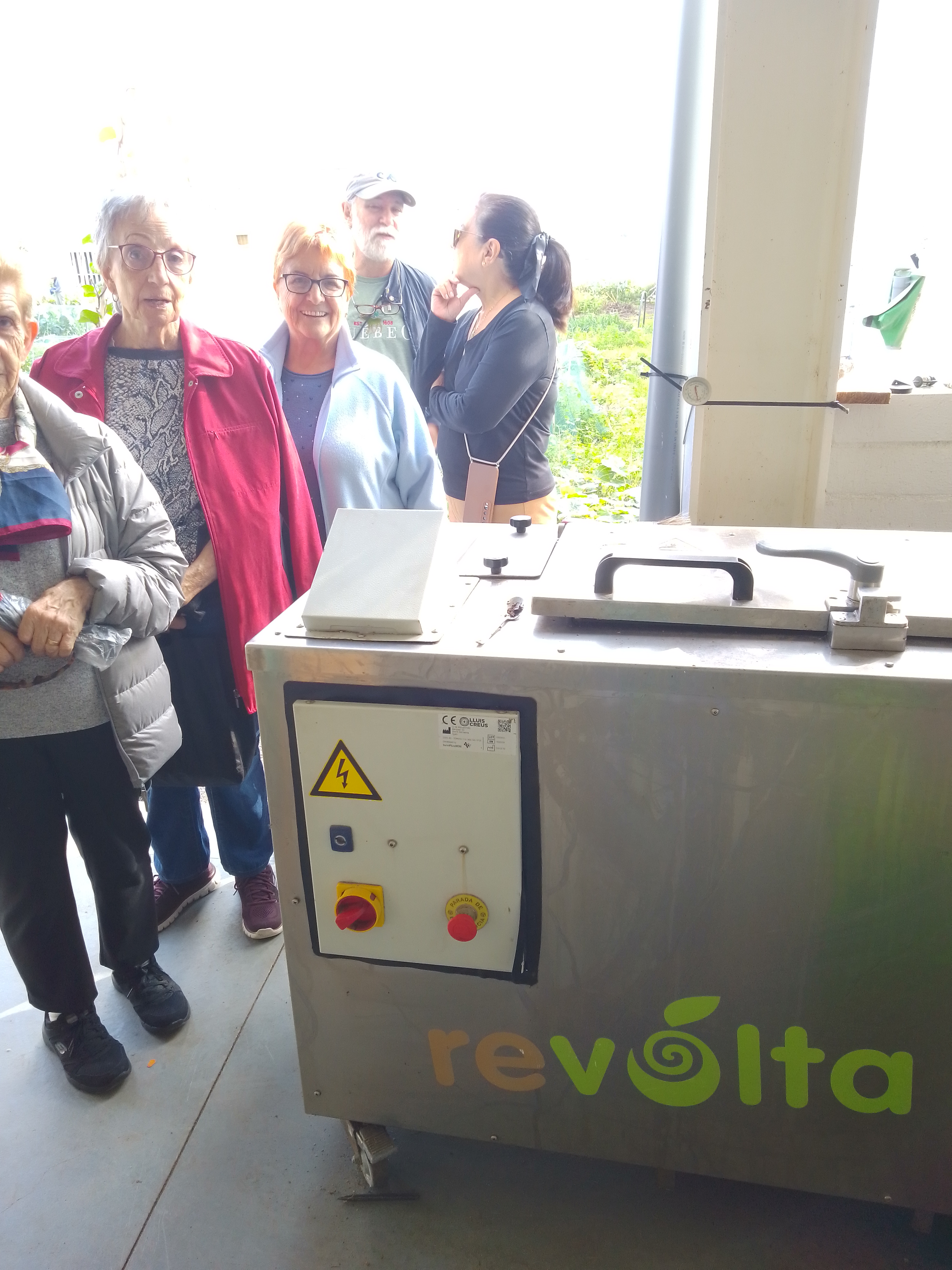
Revolta was created in 2021 by Tarpuna, a social cooperative based in Catalonia, to respond to this gap. The project deploys a network of decentralised pre-composting nodes using the VAK-15 machine, which desiccates and stabilises organic matter, reducing volume and weight by 80%. Each node is embedded in a community — a school, an urban garden, a neighbourhood hub — and becomes a space for hands-on environmental education, behavioural change, and citizen empowerment.
Target groups include schoolchildren and teachers, neighbourhood residents, a local ecological farmer who receive the resulting pre-compost, and municipalities seeking scalable circular economy solutions.
Since 2021, Revolta operates in 5 active nodes in Barcelona. A 2022 environmental quantification report validated the model's greenhouse gas savings compared to centralised treatment. Four editions of the Master Composter course have trained citizen experts who self-manage nodes and mentor new ones.
Revolta's transformative potential lies in its replicability: a low-cost, community-led model that any municipality or civic organisation can adopt, proving that regenerative urban waste management is not a future aspiration — it is already happening.
Revolta emerged from a concrete diagnosis: despite growing awareness about organic waste, centralised collection systems across Catalan cities were producing compost heavily contaminated with microplastics and foreign materials. A significant share of organic waste kept ending up incinerated. Something structural needed to change.
Inspired by the Korean Oklin composting model, Tarpuna co-developed an improved prototype with a local manufacturing company, introducing structural changes that increased hygienisation capacity, reduced odour, and made the machine suitable for schools, urban gardens and neighbourhood hubs respecting European norms. This collaboration produced the VAK-15 — a pre-composting machine that desiccates and stabilises organic matter, reducing volume and weight by 80%. Today, Tarpuna works with two local manufacturing companies producing further improved models V1 and V2, ensuring continuous technological refinement grounded in real field experience.
The first nodes launched in 2021 in Barcelona, in close collaboration with Espai Ambiental SCCL and the UPC School of Agriculture. From the start, each node was co-designed with its host community — teachers, neighbours, urban gardeners — who defined activities, protocols and governance. This participatory methodology was not incidental: it was the engine of the project.
In 2022, an independent environmental quantification report validated the model's greenhouse gas savings and replicability, consolidating Revolta as an evidence-based system.
Today Revolta is a living network sustained by trained citizen composters, institutional partnerships, and a replicable low-cost model connecting urban communities to local ecological farmers.
Circular economy
Community composting
Decentralised waste management
Citizen empowerment
Urban-rural regeneration
Barcelona generates thousands of tonnes of municipal organic waste daily. The centralised collection model, despite years of public investment, continues to produce compost contaminated with microplastics and heavy metals — a structural failure rooted in citizen disconnection from the waste cycle. A significant portion of this organic fraction still ends up incinerated, generating unnecessary greenhouse gas emissions and losing valuable nutrients that local soils urgently need.
Revolta addresses this failure directly. Its network of 5 active pre-composting nodes in Barcelona — located at 2 schools, an orchard on the rooftop of a local market, a urban garden in the city centre and an hotel — intercepts organic waste before it enters the centralised stream, processing it through the VAK-15 machine, which desiccates and stabilises matter, reducing volume and weight by 80% and eliminating pathogens. The resulting compost is either used locally when a local orchard is available, or transferred to a collaborating ecological farmers in the nearby Maresme area, closing a circular loop from urban waste to living agricultural soil.
The environmental impact independently documented by Inèdit confirmed that Revolta's decentralised model reduces carbon emissions by 86.3% in the base scenario, and no less than 49% even under the most conservative assumptions. The compost produced meets Grade A quality standards — making it suitable for certified ecological agriculture, something that centralised systems consistently fail to achieve due to contamination of municipally collected urban organic waste.
What makes Revolta exemplary in sustainability terms is the combination of three ambition levels: it repurposes waste that would otherwise be lost; it closes the material loop between city and farm; and — most distinctively — it drives a paradigm shift, transforming waste management from an invisible municipal service into a visible, community-owned regenerative practice.
At first glance, a pre-composting machine in a school courtyard or urban garden may not seem like an aesthetic proposition. But Revolta's beauty lies not in its form — it lies in what it activates: a profound shift in how citizens perceive, experience and relate to the organic matter that flows through their daily lives.
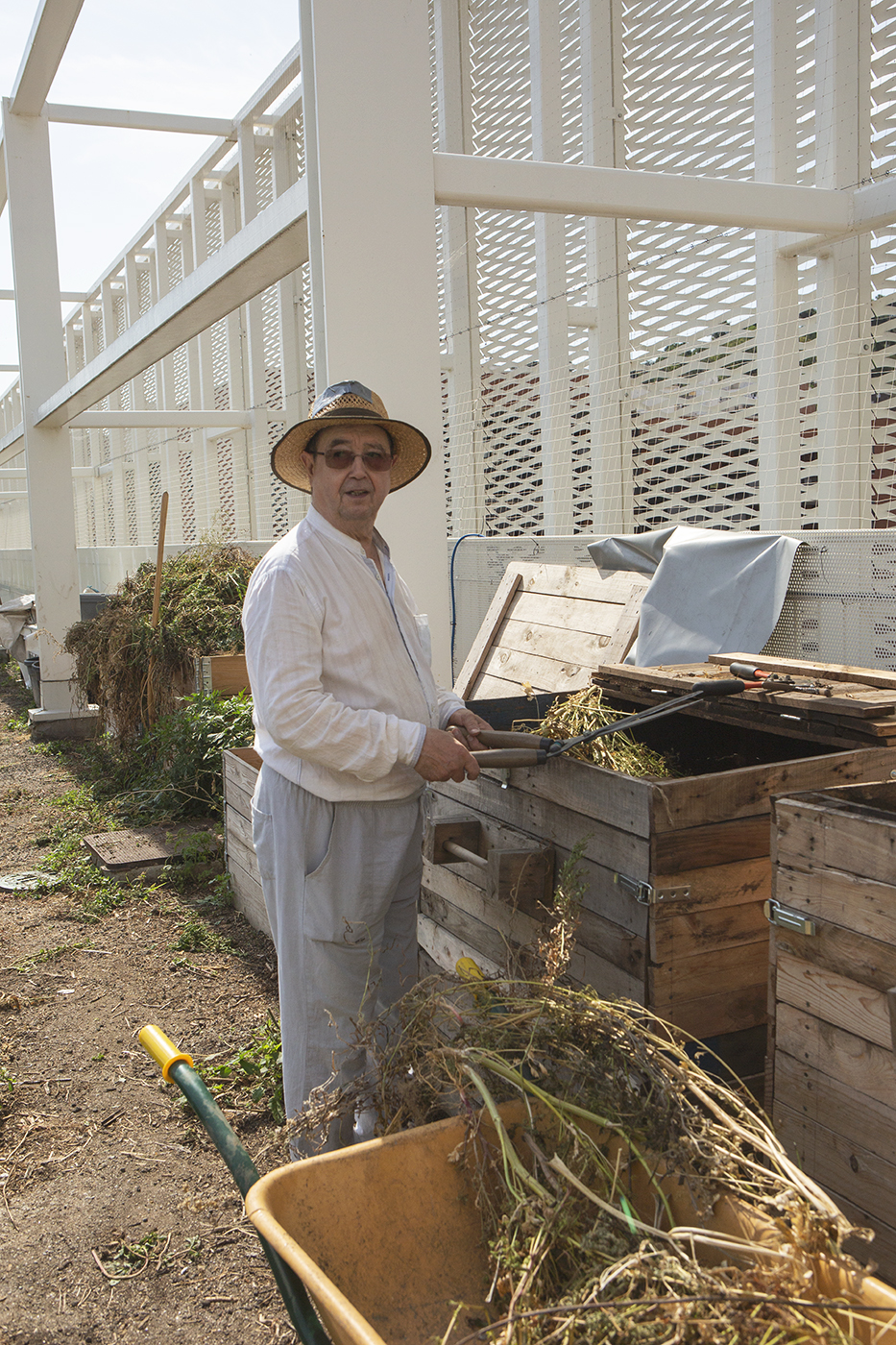
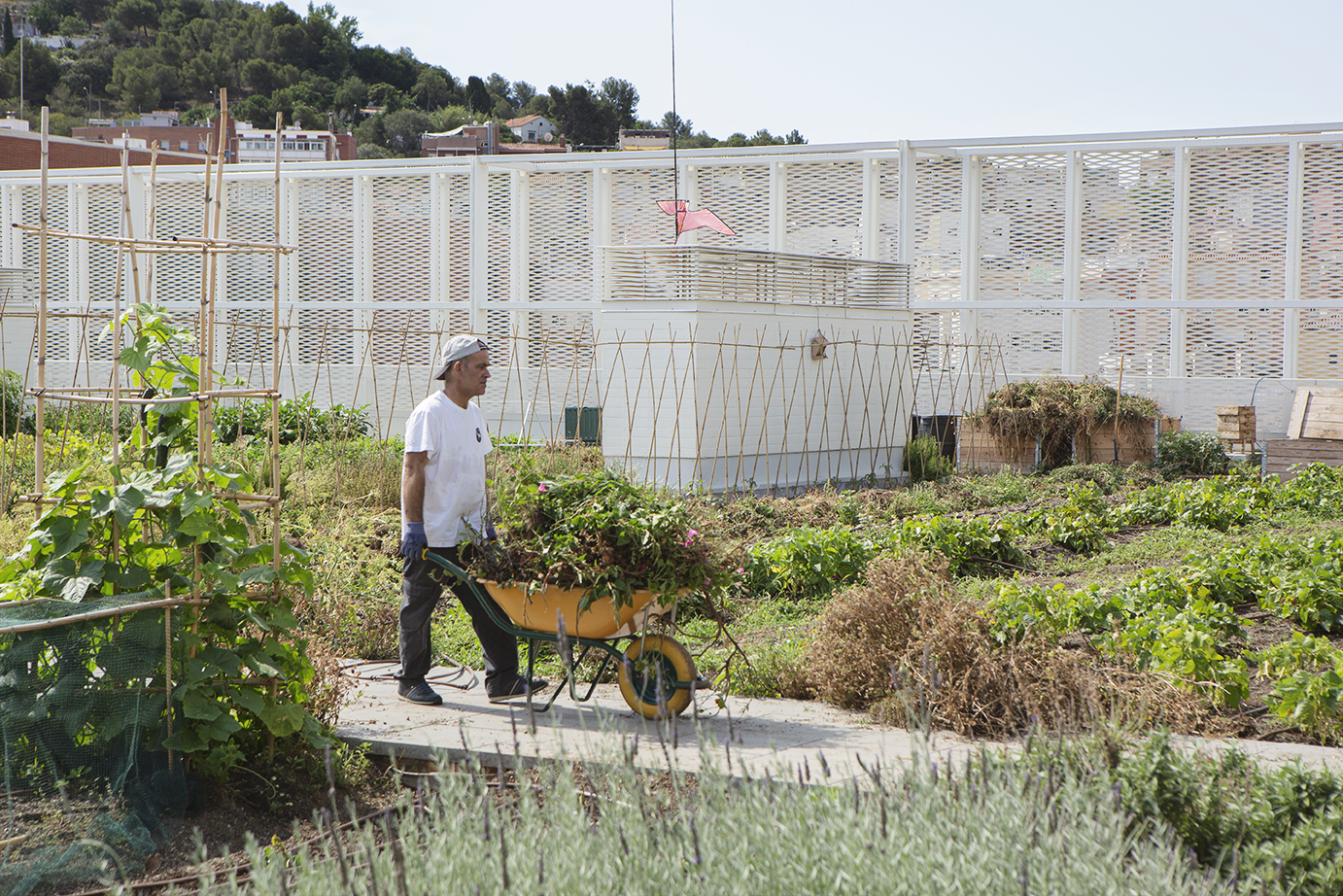
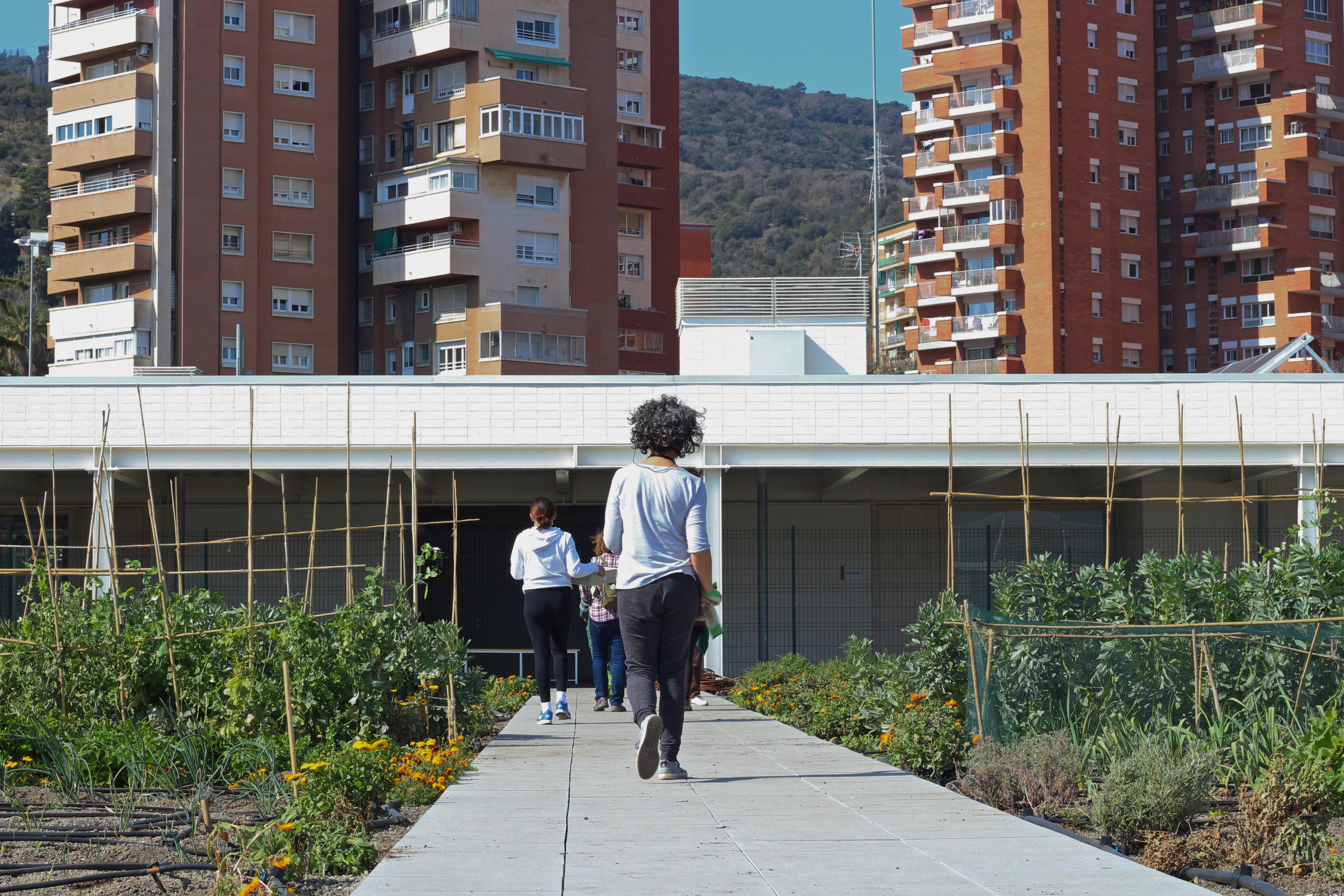
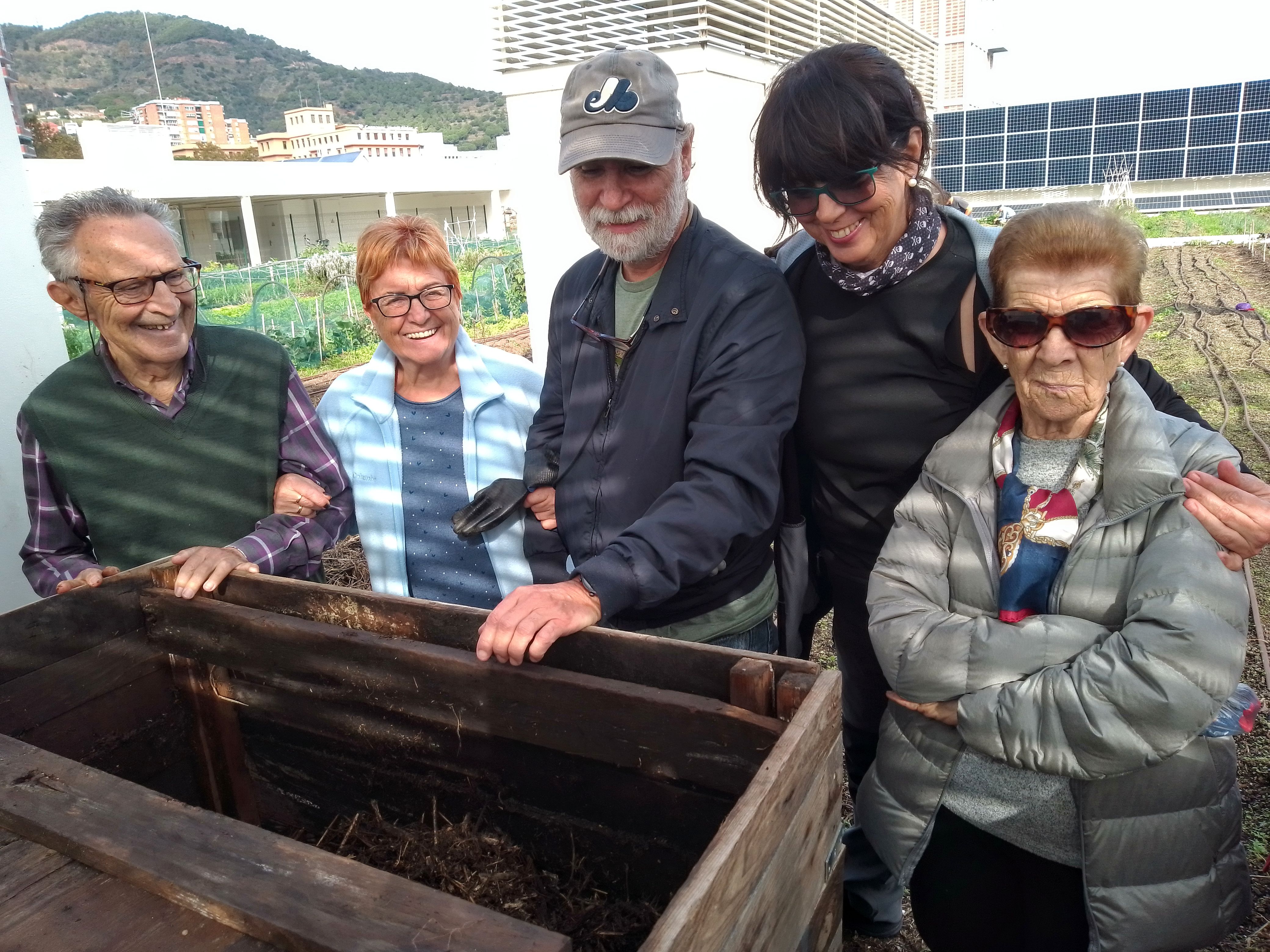
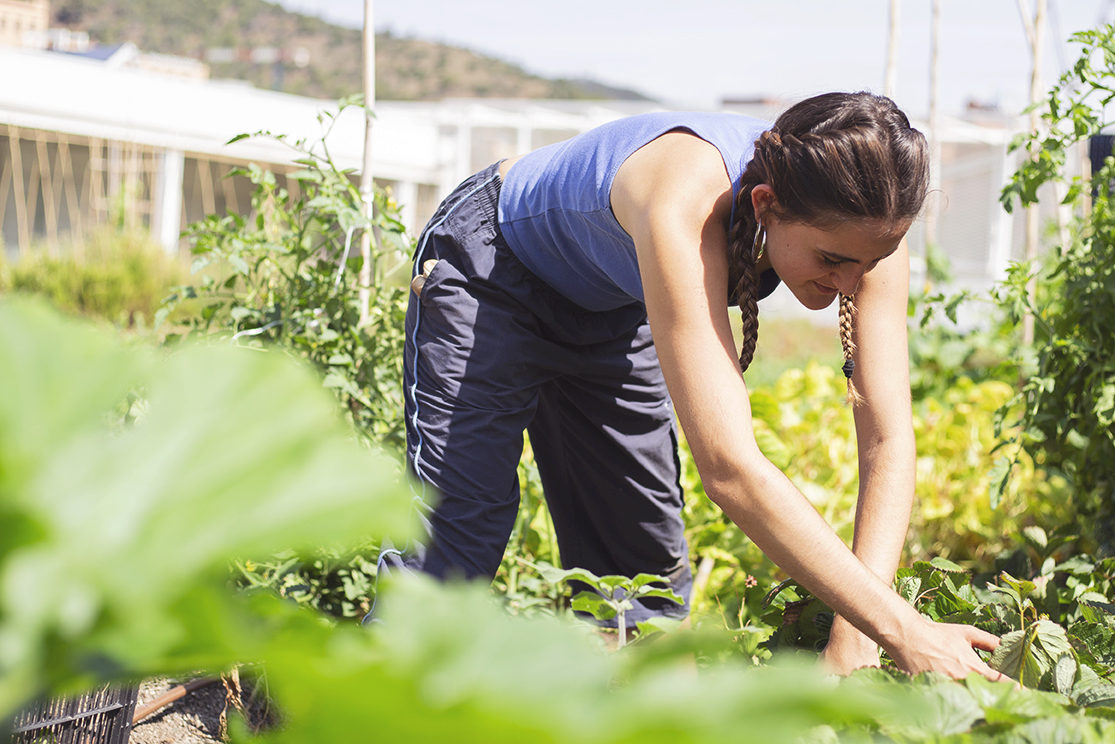
Each Revolta node transforms a previously invisible and often unpleasant aspect of urban life — waste — into a tangible, meaningful, community-owned resource. The physical act of contributing food scraps and receiving compost in return is a sensory experience that reconnects people with natural cycles from which urban life has long disconnected them. Participants — schoolchildren, neighbours, teachers — report a new awareness of their role in the urban metabolism, and a sense of pride in their node. One of the most emblematic nodes is the one based in the 1.700 sq metres orchard on the rooftop of the municipal market Vall d'Hebron. Here the Revolta machine allows to transform vegetable-, meat and fish residues from the municipal market as well as home waste from the community of volunteers in pre-compost. This is then added to local garden waste to produce compost which is used to grow vegetables, 50% of which are then donated to a local food bank, while the rest is divided between the volunteers who participate to community cultivation. Market vendors during their breaks sometimes walk upstairs to enjoy the garden and contemplate the flowers, the peaceful green space and the beauty of the circular project to which they also belong.
At its deepest level, Revolta integrates a new cultural value: that waste is not waste — it is a resource that belongs to the community. This reframing of the everyday relationship between citizens and their organic matter is a lasting aesthetic and cultural contribution, generating a growing movement of trained citizen composters who carry this new vision into their neighbourhoods, schools and social networks.
Revolta is inclusive by design. Its nodes are embedded in the everyday spaces of urban life — school courtyards, community gardens, neighbourhood hubs, municipal markets — making participation accessible to all citizens regardless of age, income, origin or educational background. There are no entry requirements, fees or prior knowledge needed: the only condition is the willingness to engage with one's own organic waste.
The project deliberately prioritises communities and territories that face greater social and environmental challenges. In Barcelona, nodes have been established in diverse neighbourhoods with significant immigrant populations and intergenerational communities.
Inclusion extends to governance: each node is co-managed by its community, with local groups defining activities, protocols and priorities. This shared ownership model ensures that inclusion is not merely participatory — it is structural. The Master Composter programme further consolidates this by training citizen experts who become autonomous node managers, creating lasting capacity within communities rather than dependency on external expertise.
At its most transformative level, Revolta challenges a deeply ingrained social model: the idea that waste management is someone else's responsibility. By making organic waste a shared community asset — one that generates food, compost and social bonds — Revolta builds new ways of living together, where environmental responsibility and social cohesion reinforce each other.
The project was designed to allow citizens to move from being passive generators of waste to becoming active agents in its management. At the design phase, each new node is co-created with its host community. Before any machine is installed, Tarpuna works with local groups — neighbourhood associations, school teachers, urban gardeners, kitchen responsibles— to map needs, define activities, establish protocols and identify local champions. This co-design process ensures that each node reflects the specific context, culture and priorities of its community, rather than imposing a standardised model from above.
During implementation, community members take on active operational roles: collecting and processing organic waste, monitoring machine performance, welcoming new participants, and organising educational activities. The two school nodes involve around 500 people including teachers and students. At the Germanetes association node, 70 people signed up — 26 are regularly active — and the node also receives organic waste from three nearby school kitchens and a local farmers' market, demonstrating how one node can catalyze the interest of more actors in producing clean organic waste. The Mandarin Oriental hotel node is operated by kitchen personnel and represents the only case where the user pays for the machine — proving the model's viability beyond the civic sector.
During implementation, community members take on active operational roles: collecting and processing organic waste, monitoring machine performance, welcoming new participants, and organising educational activities. The two school nodes involve around 500 people including teachers and students. At the Germanetes association node, 70 people signed up — 26 are regularly active — and the node also receives organic waste from three nearby school kitchens and a local farmers' market, demonstrating how one node can catalyze the interest of more actors in producing clean organic waste. The Mandarin Oriental hotel node is operated by kitchen personnel and represents the only case where the user pays for the machine — proving the model's viability beyond the civic sector.
Revolta operates across multiple scales simultaneously, connecting grassroots community action with municipal policy, academic research, professional expertise and regional agricultural systems. This multi-level architecture is not incidental — it is what makes the model robust, credible and scalable.
At the local level, the five active nodes in Barcelona anchor the project in diverse urban contexts: Associació Germanetes and the Vall d'Hebron municipal market garden represent community and civic society; Escola Els Llorers and Escola Nou Patufet bring the educational sector; and the Mandarin Oriental Hotel introduces the private hospitality sector. This diversity of host organisations — civil society, schools, a municipal market and a five-star hotel — demonstrates that Revolta's model is adaptable to radically different institutional contexts within the same city.
At the local level, the five active nodes in Barcelona anchor the project in diverse urban contexts: Associació Germanetes and the Vall d'Hebron municipal market garden represent community and civic society; Escola Els Llorers and Escola Nou Patufet bring the educational sector; and the Mandarin Oriental Hotel introduces the private hospitality sector. This diversity of host organisations — civil society, schools, a municipal market and a five-star hotel — demonstrates that Revolta's model is adaptable to radically different institutional contexts within the same city.
Revolta could not exist within a single discipline. Its design, development and operation sit at the intersection of environmental science, agricultural engineering, education, social innovation, industrial manufacturing and public policy — and it is precisely this convergence that makes the model work.
The technical core of the project was developed through close collaboration between Tarpuna, two local manufacturing companies who co-engineered the VAK-15 machine and its improved V1 and V2 models, and INEDIT — an independent environmental research firm whose life-cycle assessment validated the model's greenhouse gas savings of between 50% and 80% compared to centralised treatment. The UPC School of Agriculture and the Official College of Agricultural Engineers of Catalonia contributed agronomic expertise, ensuring that the composting process meets Grade A quality standards for certified ecological agriculture.
Environmental management knowledge was provided by Espai Ambiental SCCL, a specialist cooperative that co-designed the operational protocols and delivers the Master Composter training programme alongside Tarpuna. This programme itself is an interdisciplinary endeavour — combining environmental science, adult education methodology and community organising into a single citizen-facing curriculum.
The Revolta project was launched with grants from the Barcelona City Council and the Generalitat de Catalunya, through the ARC and the Department of Labour, funding the pilot trials and the launch of the "Revolta't Barcelona" network. In 2022, it won the Bithabitat Foundation Award. Private sector revenue has since been added, notably through a service contract with the Mandarin Oriental Hotel. All income has been managed by Tarpuna, covering operational expenditure and equipment amortisation.
Financial sustainability relies on two streams: expanding services to private entities, and securing formal recognition and payment from the City Council for the collection carried out and its civic awareness impact. A meeting with the City Council is currently scheduled to address this.
The main capital investment is the pre-treatment unit (~€15,000), plus electrical installation and protective cover where required. Operational costs include electricity and the maintenance and collection service for processed waste surpluses, transported to a certified organic farm where they mature and are used as compost.
The model requires public authority collaboration, as waste management falls within their remit. Cost studies show that decentralised management achieves comparable costs to centralised systems but with significantly greater ecological efficiency. The core value proposition lies in four areas: emissions reduction, compost quality, promotion of local agriculture, and citizen awareness.
The project has already been replicated in Mataró, with three active collection points and two more planned. Key barriers include competition for urban space, behavioural change in low-awareness communities, and regulatory constraints.
The innovation is disruptive: it proposes decentralised, community-led waste management that connects urban communities with local organic farming — both urban allotments and nearby farmers who collect the processed organic material.
The project has the potential to serve as a model and source of inspiration, as it addresses a challenge common to virtually all urban environments. It proposes a solution specifically designed for urban settings, where the majority of the population in Western countries is concentrated and where organic waste management is both most difficult to solve and generates the greatest environmental impact.
The project is readily transferable in terms of technology, as the Revolta pre-treatment unit is adaptable to a wide range of operational conditions. However, we believe the most compelling aspect lies in the community organisation and engagement model, and in the proposed approach to waste management through integration with local agriculture.
The most critical partnerships required for replication relate to the fields of waste management and agroecology. In most countries, as in our own, these two domains remain largely disconnected. It is therefore essential that those responsible for waste management recognise the opportunity that decentralised management represents for adding value to local agriculture.
Adaptation to local contexts must take into account three key considerations: the regulatory framework governing waste management, which may present a significant constraint; the state of local and organic farming, which must be open and willing to incorporate composting activities on its land; and, finally, the urban fabric, as suitable spaces must be made available for carrying out the pre-treatment process.