Enhancing Circularity, Sustainability, and Innovation
AFTER MATTER
Crafting the Future from the Fragments of the Past
AFTER MATTER explores repurposing cellulose fibers from fashion waste into retail interiors and installations. With textile production creating 1.2B tons of CO₂ and 100M tons of waste yearly, it responds to overproduction and lost value. Blending craft and concept, it contrasts speed with slowness, and automation with handwork, transforming discarded cotton and linen into translucent, structural forms that reimagine waste as creative potential.
Spain
Local
Barcelona, Capellades
It addresses urban-rural linkages
It refers to other types of transformations (soft investment)
Prototype level
No
No
Yes
Individual
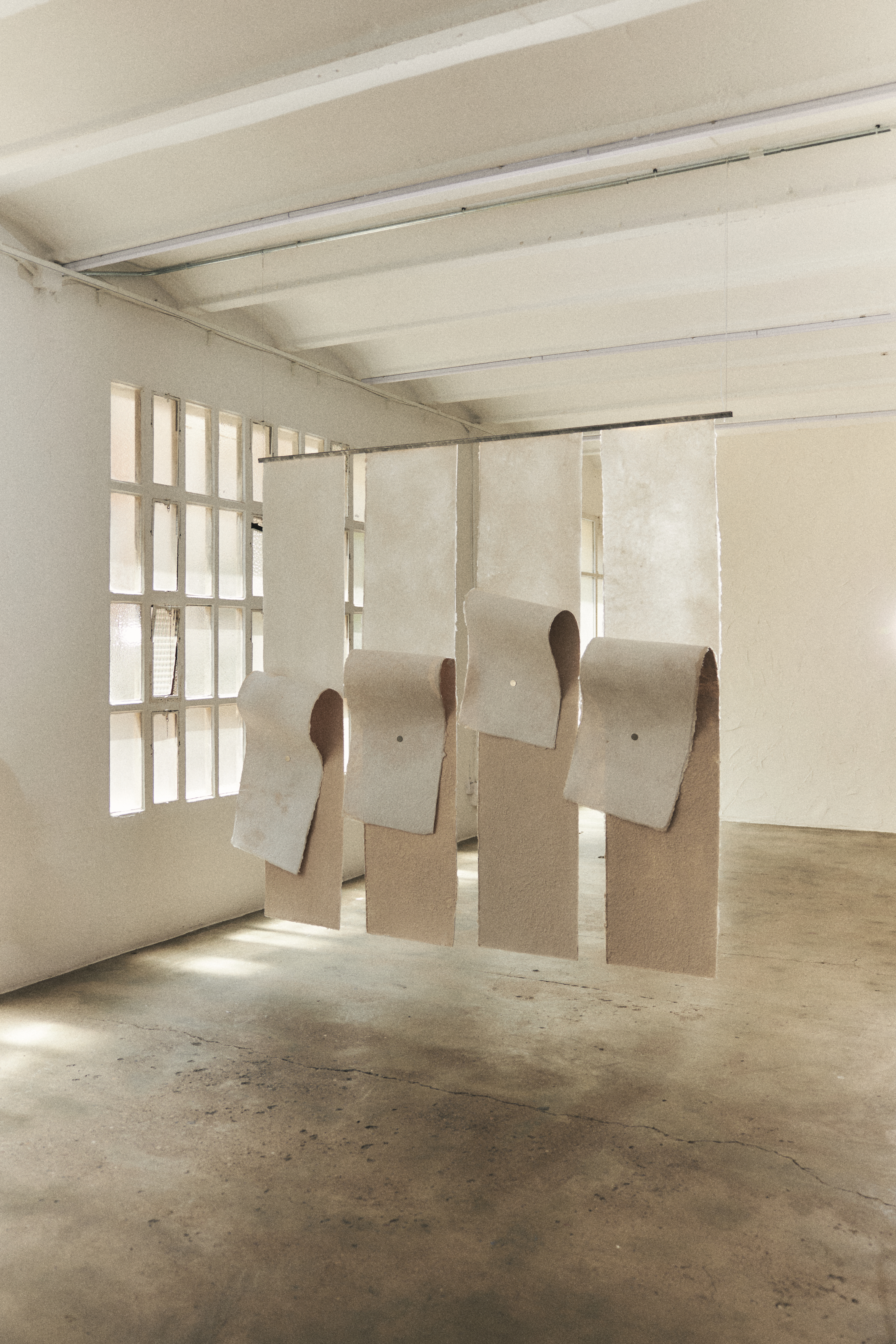
AFTER MATTER transforms textile waste into translucent, structural materials for retail and spatial installations. Using discarded cotton and linen, it applies papermaking techniques to create tactile surfaces that diffuse light and form immersive environments. Prototypes demonstrate applications in scenography, partitions, and lighting, while embedding data (e.g. CO₂ savings) through subtle watermarking. The project redefines waste as both material and narrative, merging function with artistic expression.
The concept emerged from the environmental impact of fashion waste and a desire to recover its lost value. It evolved through hands-on experimentation: shredding, pulping, and forming fibers into sheets, balancing strength, translucency, and irregularity. The process embraces imperfection and slowness, combining craft knowledge with material research and iterative prototyping.
The concept emerged from the environmental impact of fashion waste and a desire to recover its lost value. It evolved through hands-on experimentation: shredding, pulping, and forming fibers into sheets, balancing strength, translucency, and irregularity. The process embraces imperfection and slowness, combining craft knowledge with material research and iterative prototyping.
The project emerged from confronting the environmental impact of fashion waste and the loss of material value embedded in discarded textiles. Seeking alternatives, the process began with hands-on experimentation—shredding, pulping, and reforming cotton and linen fibers—guided by iterative prototyping to balance translucency, strength, and texture.
A pivotal moment came with a first direct encounter with traditional papermaking in a museum context. Engaging with unfamiliar tools, techniques, and terminology opened a new material and conceptual direction, transforming initial curiosity into a defined methodology rooted in craft. This experience shaped the project’s philosophy, linking material transformation with cultural memory and slowness.
As development progressed, scale became a critical challenge. Moving from small samples to fiber surfaces of over two meters required rethinking both process and structure. This shift led to the activation of existing research connections and the creation of new collaborations, particularly for structural systems and lighting integration. These partnerships enabled the transition from material experimentation to immersive spatial installations.
The project continues to evolve through a combination of craft practice, material research, and collaborative development, positioning making not only as a technical process but as a critical and narrative act.
Craft revival
Waste revalorization
Material innovation
Circular economy
Light and spatial design
The concept diverts textile waste from landfill and reduces reliance on virgin materials. It makes embodied carbon visible, turning waste into long-lasting design elements. Improvements such as closed-loop water systems and process optimization address resource use. Socially and culturally, it revives craft knowledge and promotes circular thinking. It is exemplary in linking environmental impact with storytelling, making sustainability measurable, visible, and experiential.
-AFTER MATTER promotes sustainability across environmental, social, cultural, and economic dimensions. Environmentally, it diverts textile waste from landfill, reduces reliance on virgin materials, and makes embodied carbon tangible through watermarking. Socially, it engages audiences in multisensory experiences, fostering reflection on consumption and care for materials, while promoting collaborative creation between brands, artisans, and institutions. Culturally, it revives ancestral papermaking techniques, integrating craft into contemporary design and preserving heritage. Economically, it opens scalable avenues for sustainable production through installations, exhibitions, and product lines. By combining material reuse, craft revival, and systemic collaboration, the project exemplifies a holistic, regenerative model of sustainability.
-AFTER MATTER promotes sustainability across environmental, social, cultural, and economic dimensions. Environmentally, it diverts textile waste from landfill, reduces reliance on virgin materials, and makes embodied carbon tangible through watermarking. Socially, it engages audiences in multisensory experiences, fostering reflection on consumption and care for materials, while promoting collaborative creation between brands, artisans, and institutions. Culturally, it revives ancestral papermaking techniques, integrating craft into contemporary design and preserving heritage. Economically, it opens scalable avenues for sustainable production through installations, exhibitions, and product lines. By combining material reuse, craft revival, and systemic collaboration, the project exemplifies a holistic, regenerative model of sustainability.
The concept transforms discarded textiles into immersive, sensorial environments that engage sight, touch, and emotion, creating spaces that are both functional and poetic. Translucent, textured surfaces diffuse soft, non-directional light, fostering calm, meditative atmospheres that encourage slow movement, reflection, and bodily awareness. Subtle embedded messages—such as watermarked information on material origin and carbon savings—invite quiet discovery, connecting viewers to the history and environmental story of the materials.
These installations cultivate a sense of belonging and care by turning overlooked waste into shared cultural experiences, bridging communities, brands, and audiences around circular design values. Celebrating imperfection and tactile richness encourages mindfulness, appreciation for craftsmanship, and a deeper attention to surroundings, enhancing everyday experiences and long-term engagement with the space.
The project is exemplary in aesthetics because it fuses ancestral craft techniques with contemporary design, producing spatial forms that are visually striking, emotionally resonant, and socially meaningful. It demonstrates how sustainability and artistry can coexist, reshaping perceptions of material value while enriching communal and individual experience.
The project makes sustainability tangible and emotionally engaging through multisensory experiences—touch, light, and spatial immersion—allowing diverse audiences to understand environmental issues without technical language. Using low-cost, reclaimed materials enables more accessible and affordable applications in retail and exhibition contexts. Its collaborative model unites brands, artisans, and institutions in shared authorship, fostering cooperative, inclusive systems that move beyond traditional competition. By reframing sustainability as a participatory cultural experience, the project exemplifies inclusion in both practice and impact.
Users, citizens, and stakeholders have been actively involved at multiple stages of the concept’s development. Artisans and craft practitioners contribute hands-on expertise in fiber processing, papermaking, and material formation, shaping the project’s technical and aesthetic outcomes. Designers and architects collaborate on translating material potential into functional, spatial installations, while brands participate in co-creation, aligning environmental storytelling with visual identity. Audiences engage with the installations through multisensory experiences, discovering embedded narratives and carbon-saving data, which informs iterative refinements.
This participatory approach ensures that all stakeholders—whether artisans, designers, brands, or viewers—are both contributors and beneficiaries, fostering a shared sense of ownership and responsibility. Their engagement has enriched the project by integrating diverse perspectives, enhancing cultural relevance, and strengthening the social and environmental impact of the installations. By creating feedback loops across skill sets, professional domains, and public interaction, the project exemplifies collaborative, inclusive design that connects technical innovation with lived experience.
This participatory approach ensures that all stakeholders—whether artisans, designers, brands, or viewers—are both contributors and beneficiaries, fostering a shared sense of ownership and responsibility. Their engagement has enriched the project by integrating diverse perspectives, enhancing cultural relevance, and strengthening the social and environmental impact of the installations. By creating feedback loops across skill sets, professional domains, and public interaction, the project exemplifies collaborative, inclusive design that connects technical innovation with lived experience.
The project engages stakeholders across multiple levels. Locally, it collaborates with artisan studios and material labs for production and experimentation. At a regional and national level, it connects with cultural institutions, museums, and design platforms for exhibitions and visibility. At a broader level, it aligns with European sustainability agendas and funding opportunities. This layered engagement enhances knowledge exchange, supports scalability, and positions the project within a wider ecosystem of circular design and cultural innovation.
AFTER MATTER operates at the intersection of design, architecture, material science, craft, environmental studies, and art. It combines traditional papermaking knowledge with contemporary spatial design and sustainability research. Technical aspects such as life cycle analysis, fiber processing, and lighting systems intersect with artistic exploration and sensory experience. This transdisciplinary approach enables innovation, bridging scientific understanding with cultural expression.
The business model is based on a hybrid of cultural production, design services, and collaborative partnerships. Revenue streams include commissioned installations for museums, galleries, and brands; co-branded exhibition campaigns; and participation fees. Additional funding comes from research grants and sustainability-focused programs. Future scalability includes licensing the material and process to designers and institutions, as well as developing sellable products such as lighting systems and architectural panels. Financial sustainability is supported by combining cultural value with commercial applications and strategic partnerships.
Several elements of the concept are highly scalable: the material innovation (cellulose-based sheets), the production process (which can be optimized through industrial shredding, improved beating systems, and standardized moulds), and the collaborative model. The methodology—transforming local textile waste into spatial design—can be replicated in different regions using locally sourced materials. The concept can also expand into various applications, from installations to permanent architectural elements, making it adaptable across contexts and industries.
In the year following the application, the project will focus on refining material performance and scaling production processes, including testing industrial equipment and reducing resource consumption through closed-loop systems. It will seek partnerships with cultural institutions, brands, and sustainability initiatives to realize new installations and exhibitions. Communication efforts will expand through media, academic collaborations, and public programming. At the same time, the project will explore product development and licensing opportunities, ensuring broader adoption and long-term impact.