Enhancing Circularity, Sustainability, and Innovation
COMPLUVIUM
Pavilion 2nd Edition "La Forêt Monumentale"
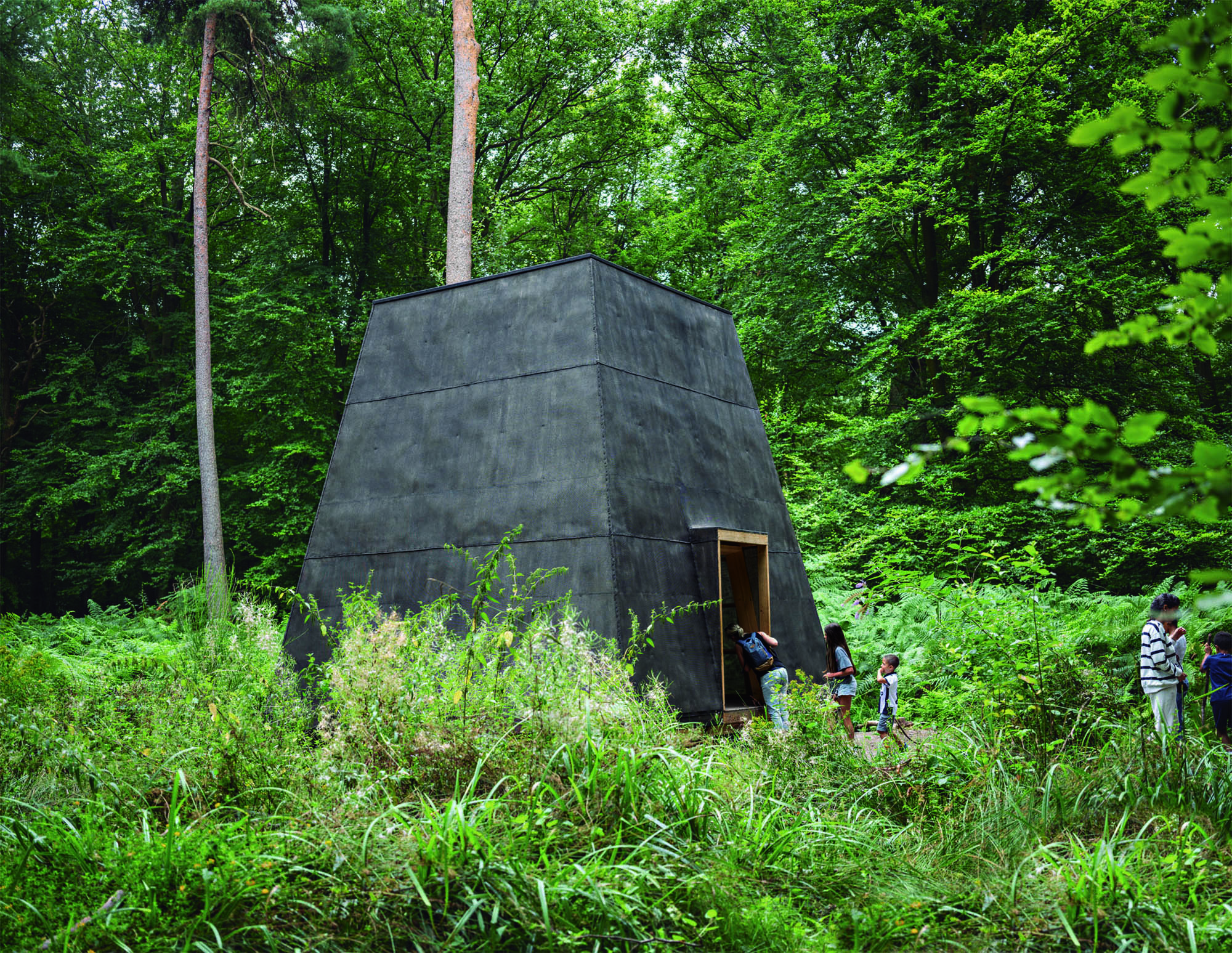
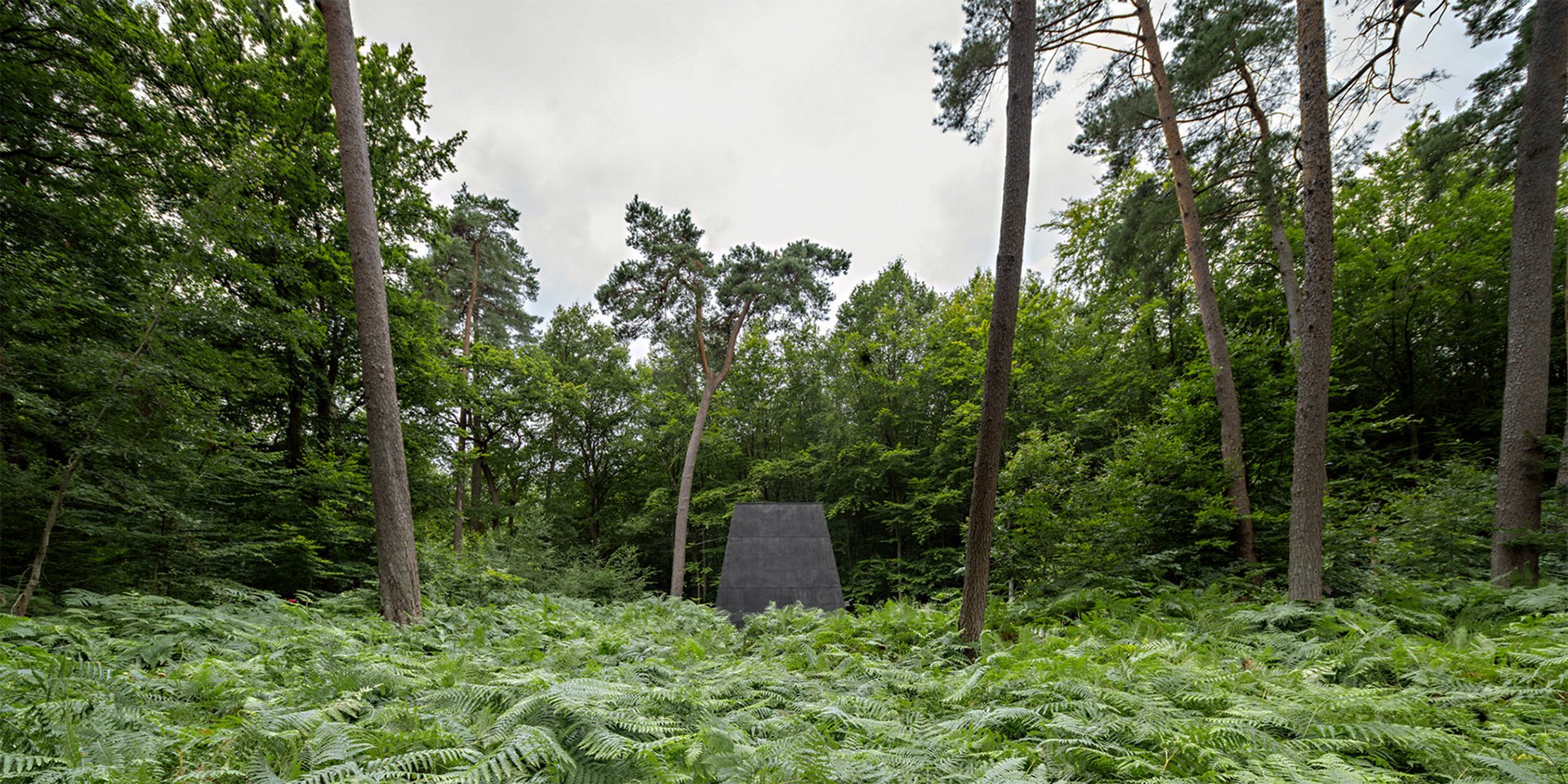
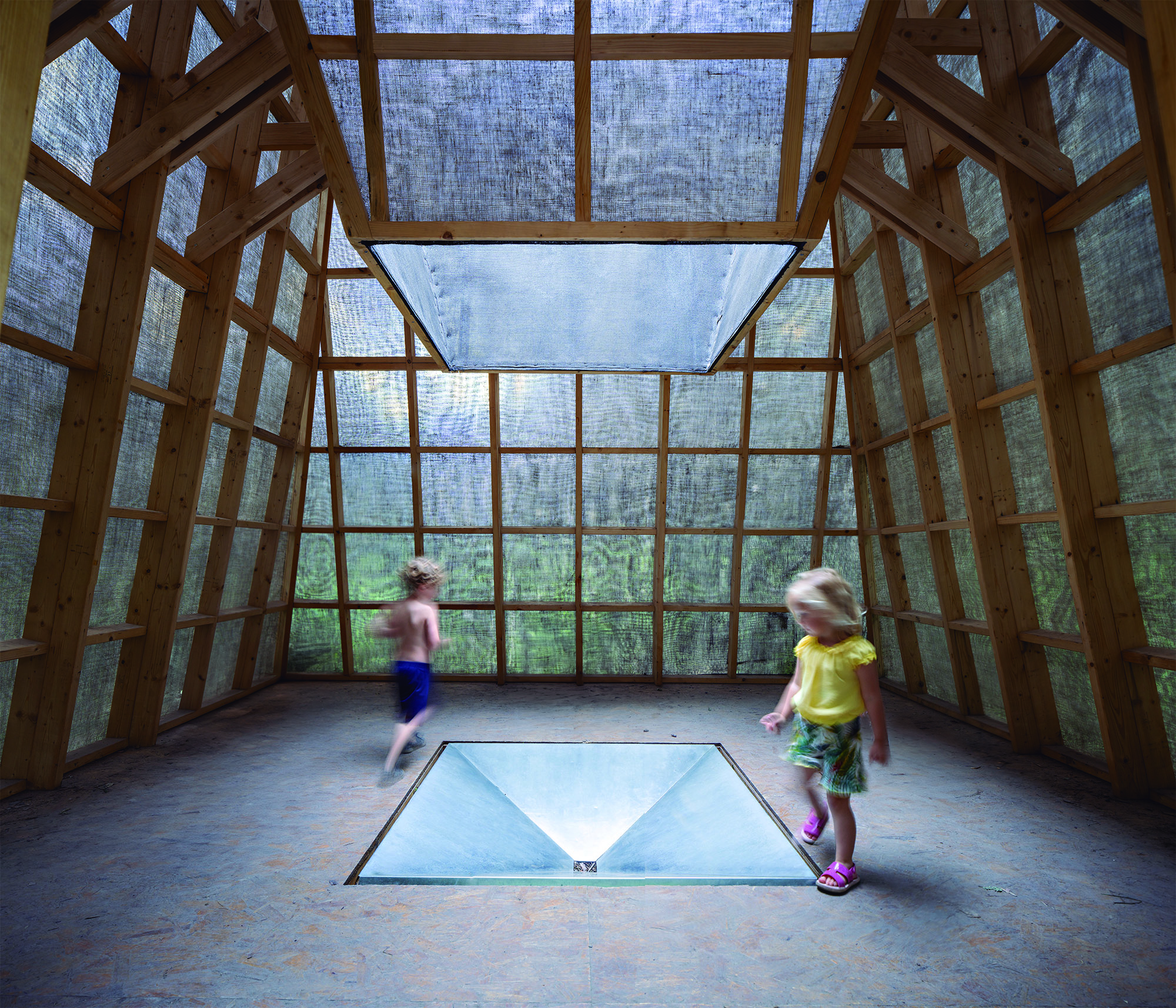
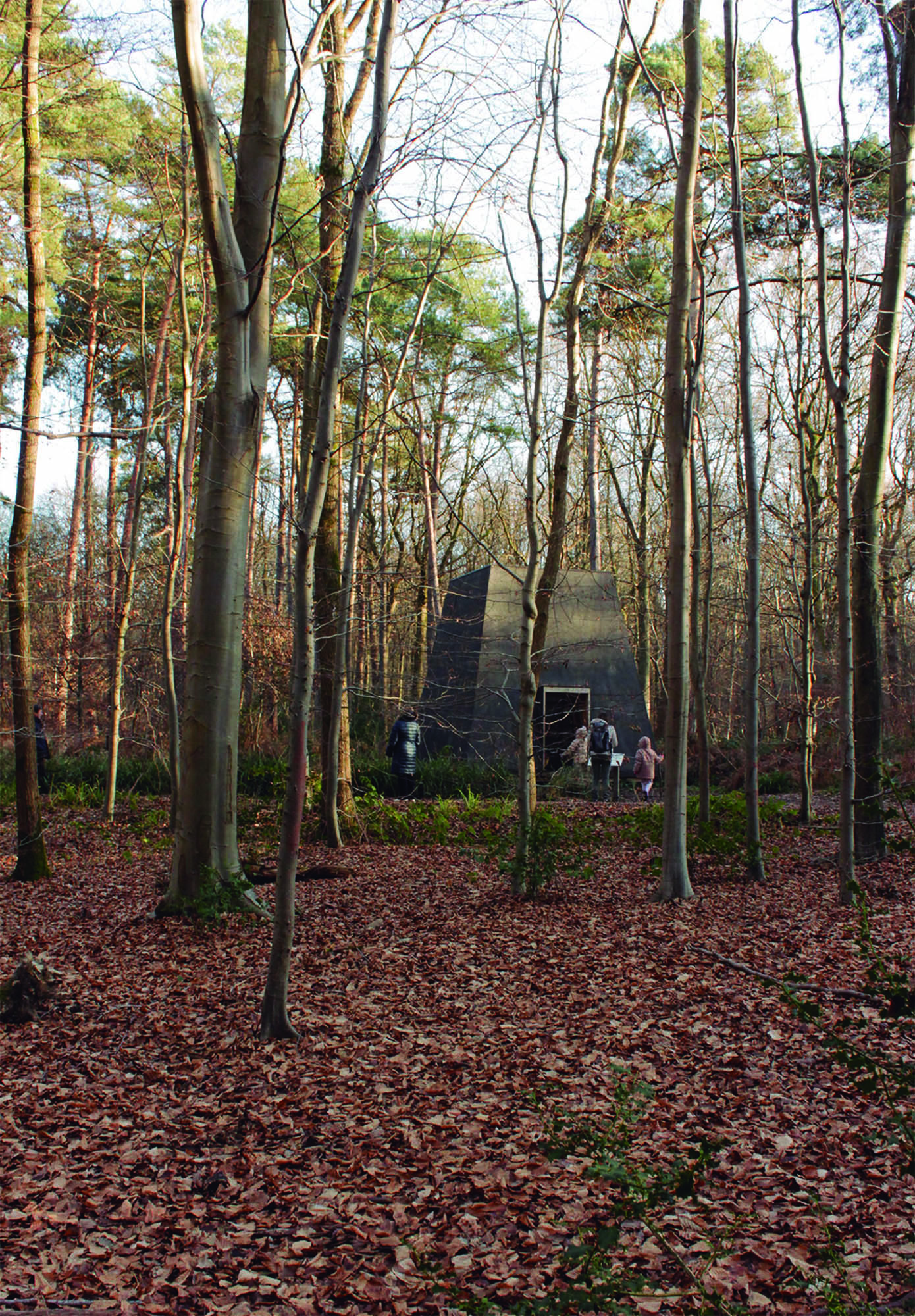
COMPLUVIUM is an allegory to water. A ‘spatial artefact’ designed to make us aware of the presence of water in the forest. A shelter FOR water where climate, environment and ancient traditions converge, establishing a conscious relationship between territory, architecture and memory. Its geometry contrasts with the natural environment, but at the same time, the subtle use of locally made linen skins, fibreglass and French pine wood, allows it to blend into the landscape.
France
Regional
Métropole Rouen Normandie, France
It addresses urban-rural linkages
It involves a physical transformation of the built environment (hard investment)
Yes
2024-06-28
No
No
Yes
Organisation
COMPLUVIUM is a temporary pavilion located in the Roumare state-owned forest, as part of the 2nd edition of the biennial festival ‘La Fôret Monumentale’, promoted by the Métropole Rouen Normandie in collaboration with the National Forest Office (ONF) with the aim of creating a 4km walking route with 13 artistic-architectural interventions. It was inaugurated in June 2024 and will remain in the forest until September 2026, when it will be given a second life in another new location.
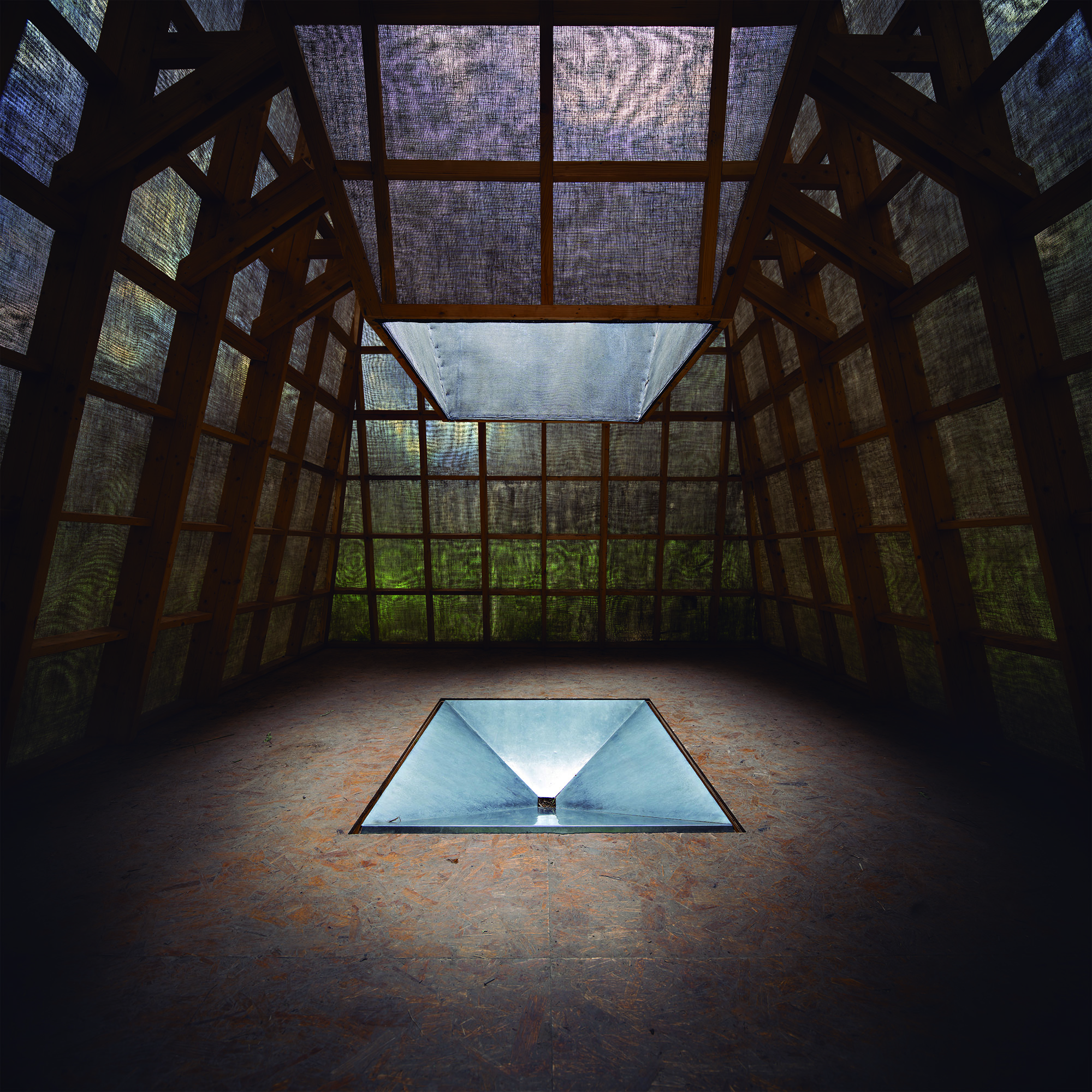
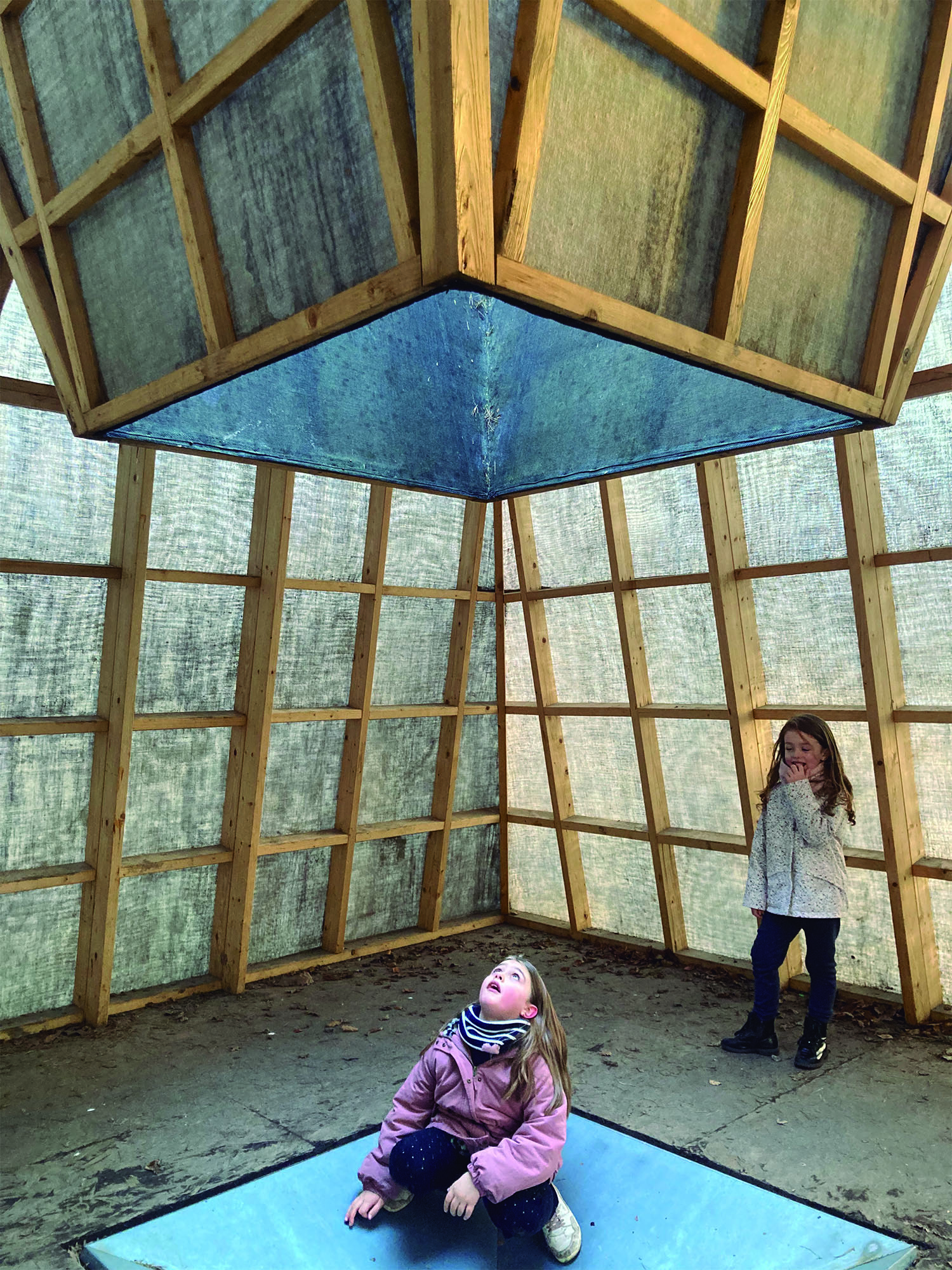
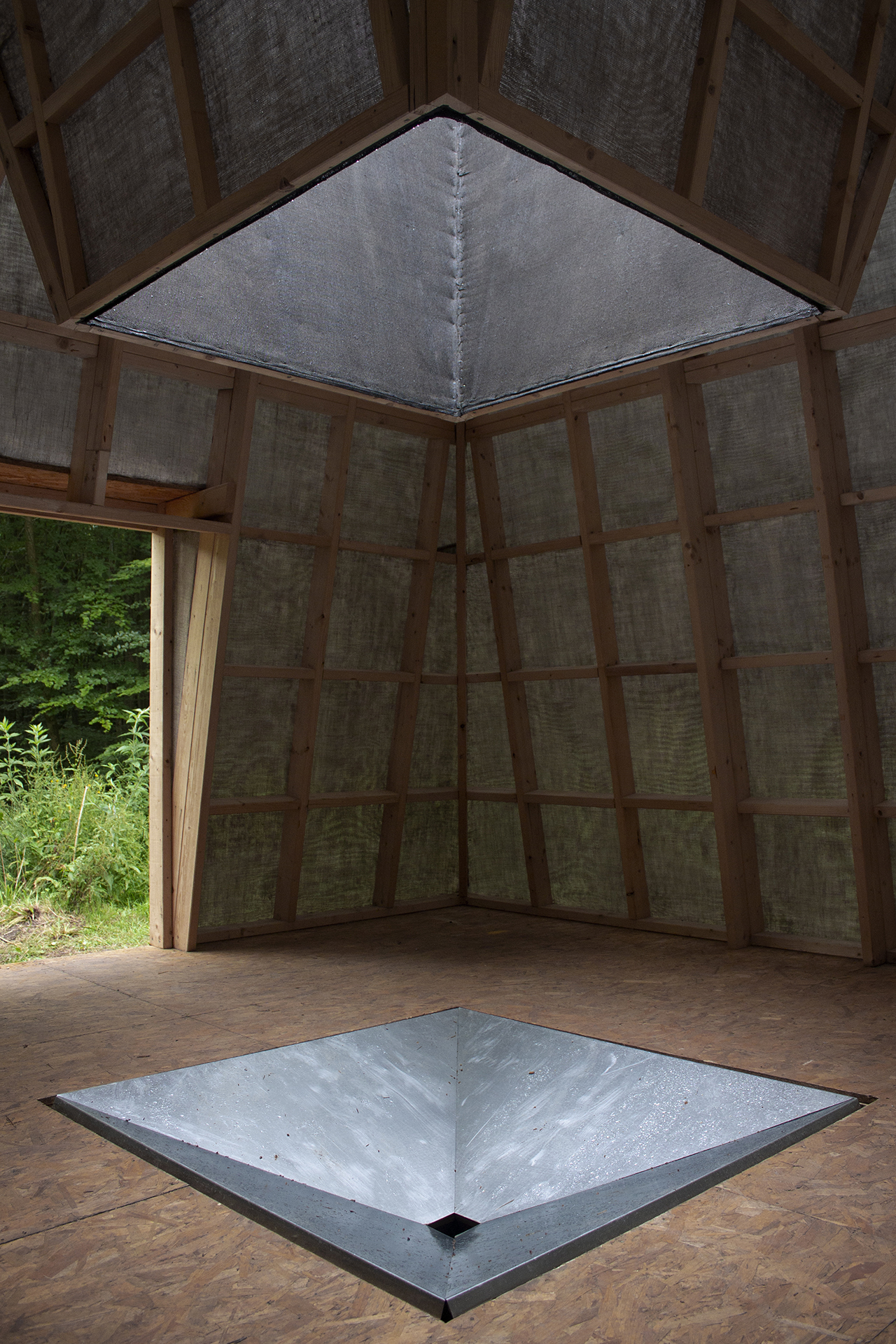
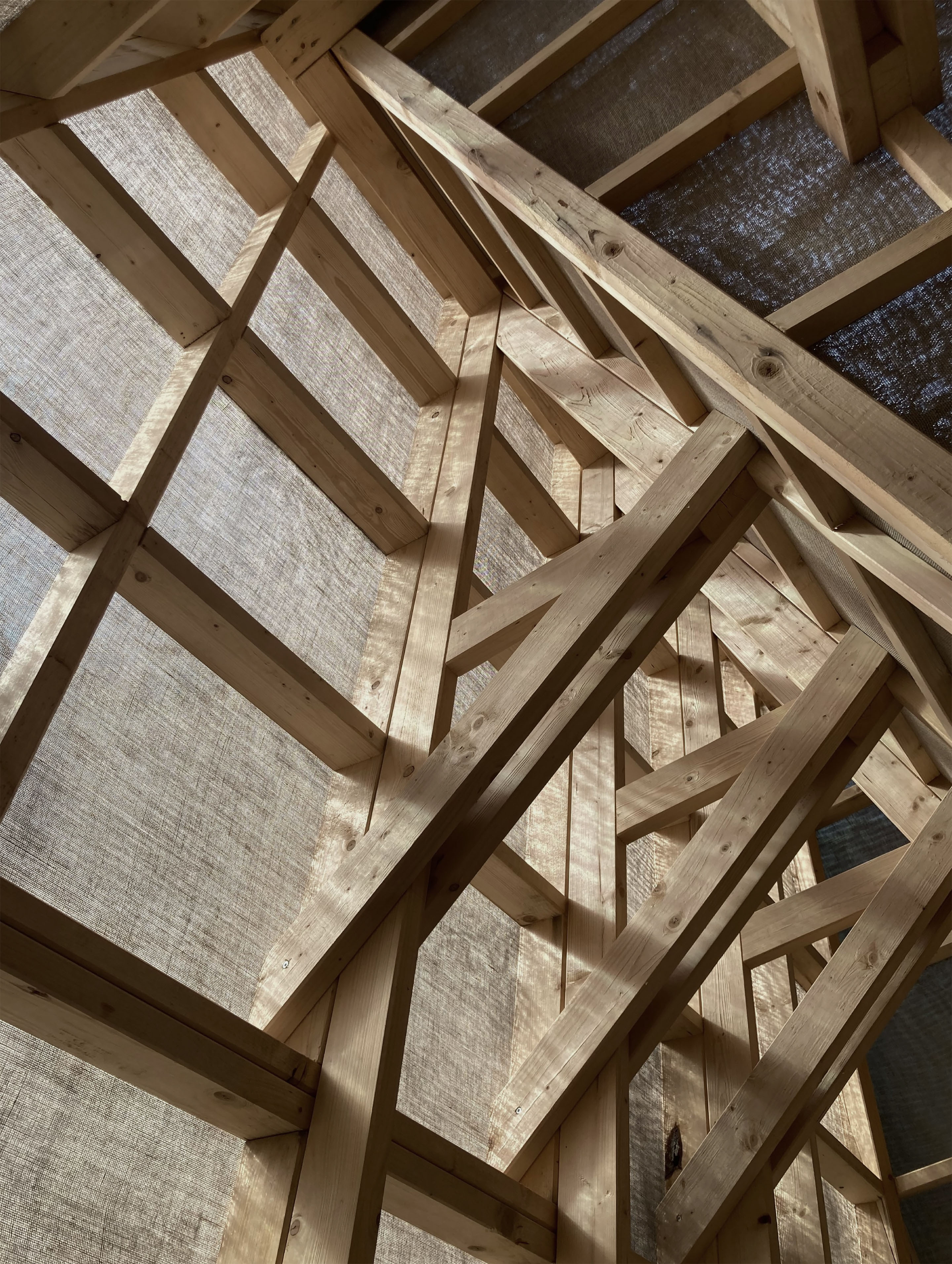
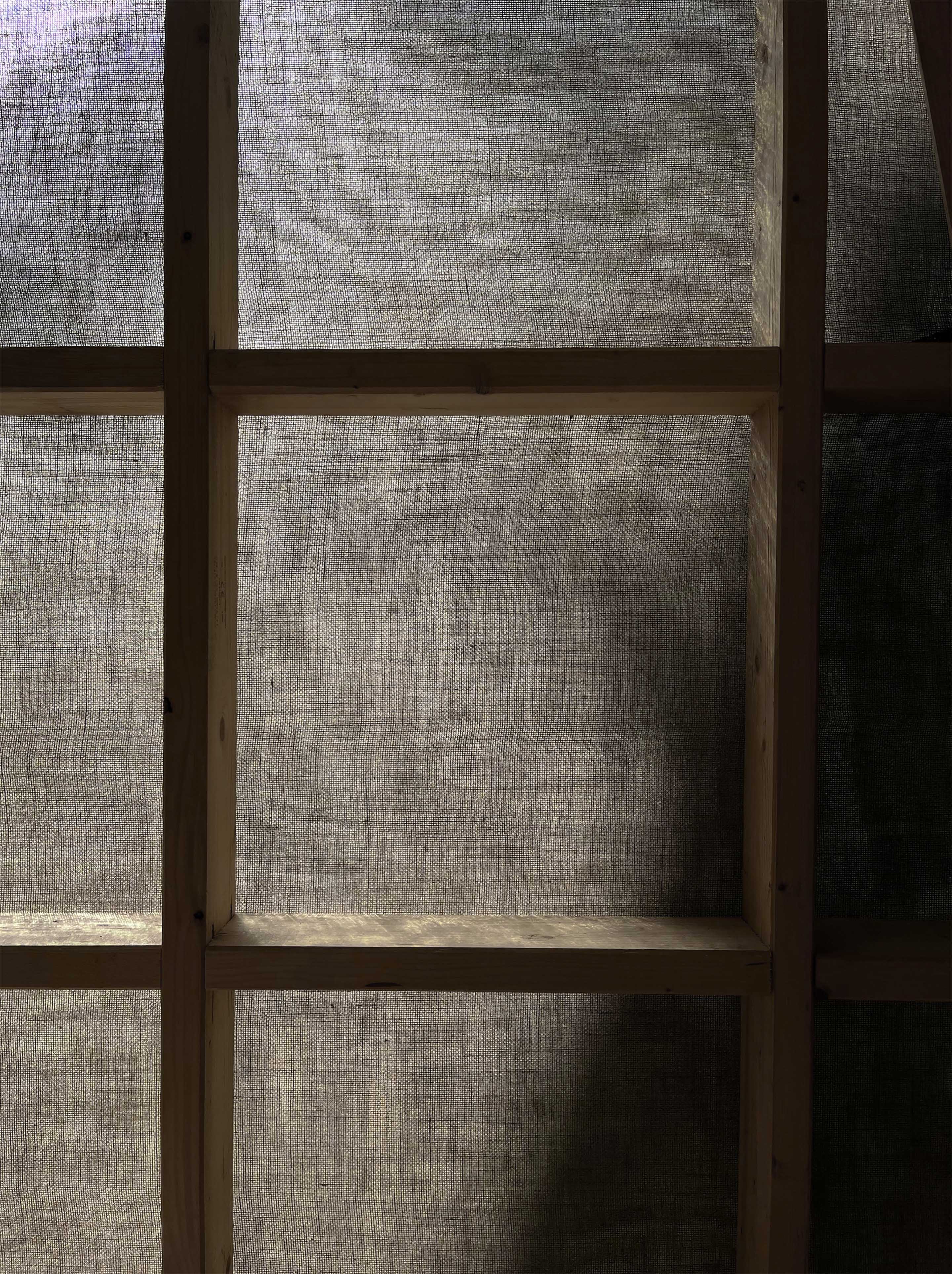
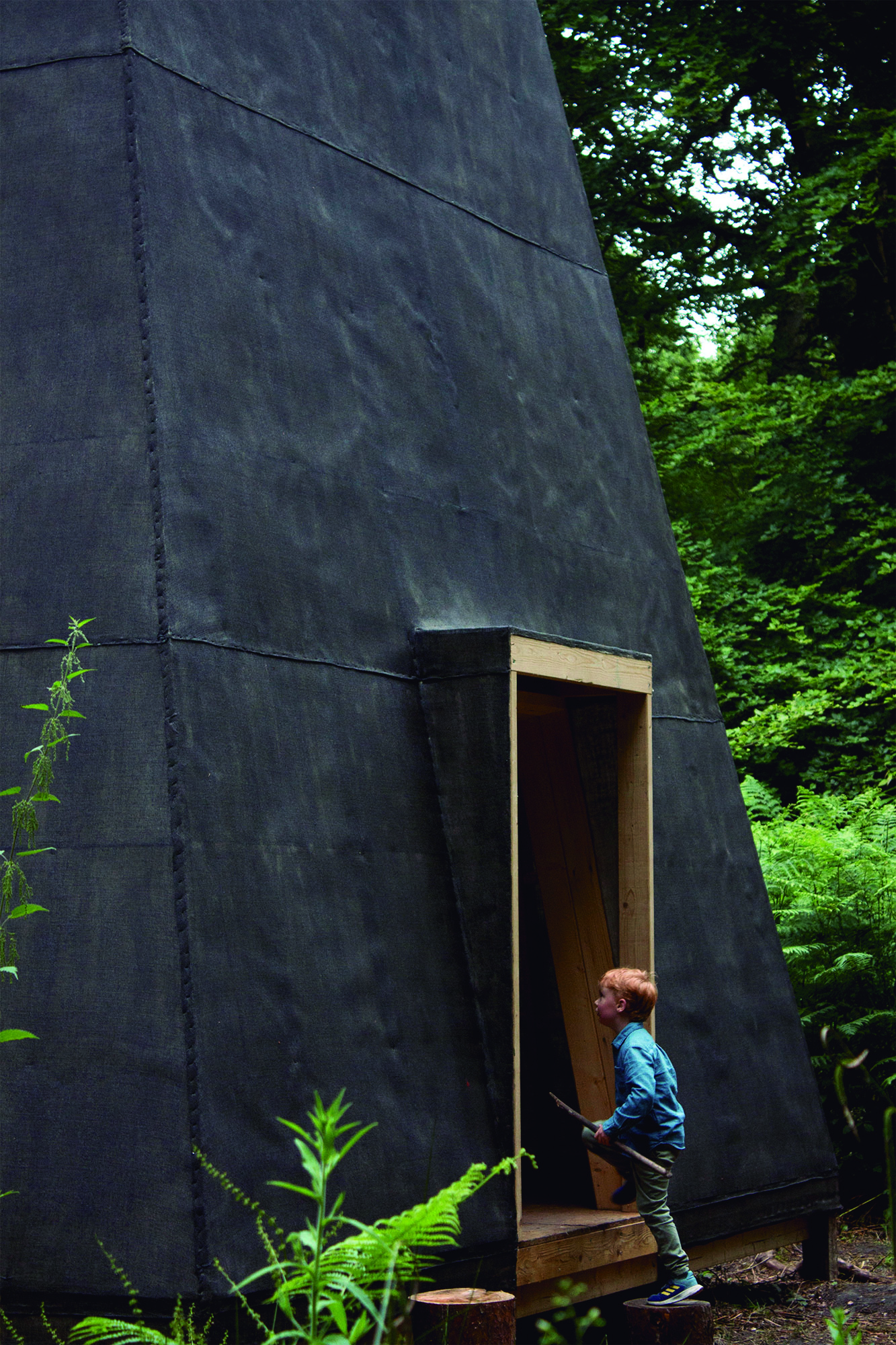
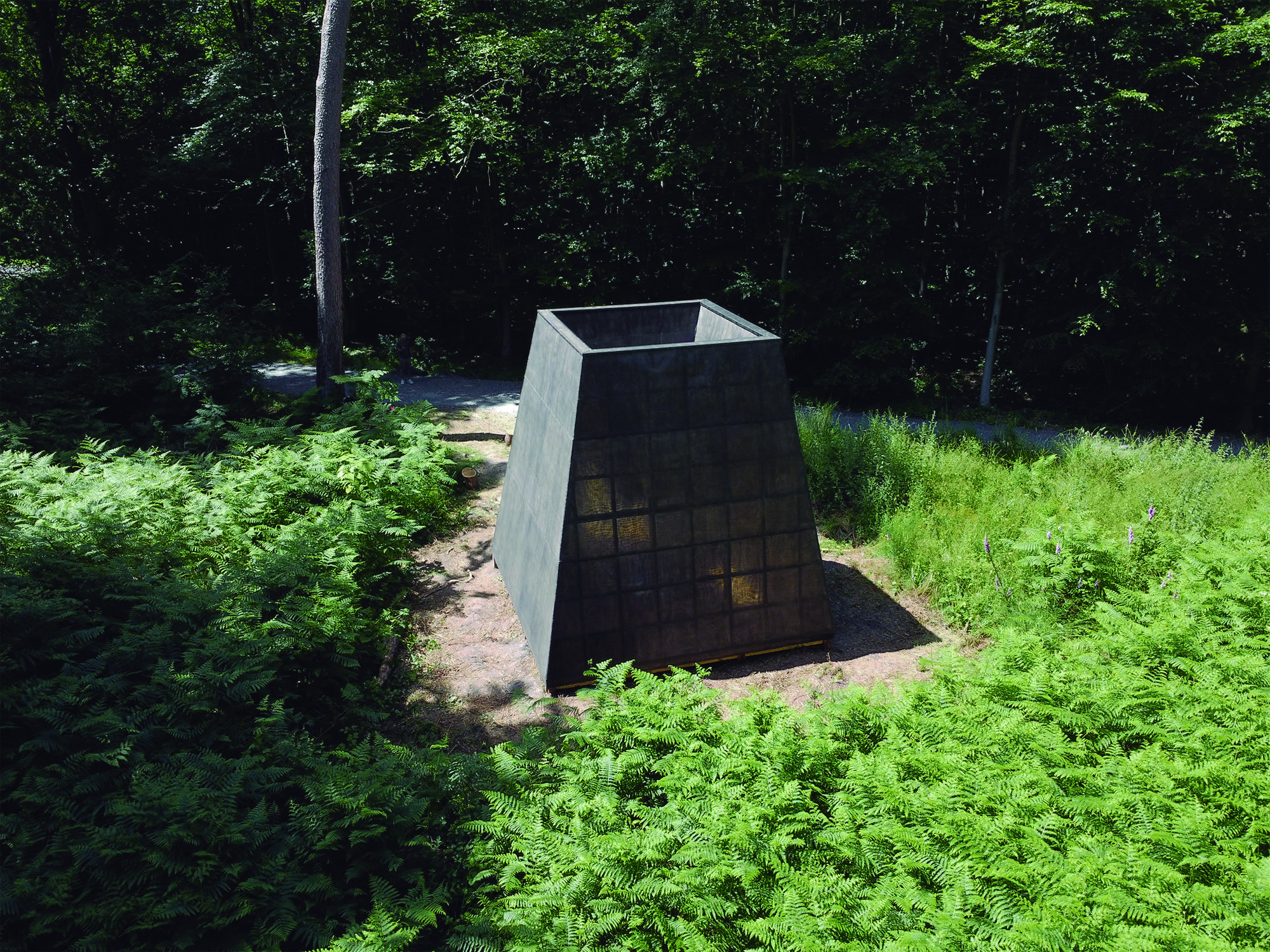
COMPLUVIUM stands as an allegory to water, seeking to highlight the main climatic condition of this territory: the heavy rainfall that abounds for a large part of the year. It is a ‘spatial artefact’, which appears defined by a geometry that contrasts with the natural surroundings, but at the same time, ends up subtly disappearing in the landscape through its materiality: Normandy linen, forming the exterior and interior ‘skins’ of the pavilion, highlighting the local manufacture through the work of a sixth-generation family business; a fiberglass and resin membrane, allowing light to pass through but providing a waterproof layer; and a French pinewood structure.
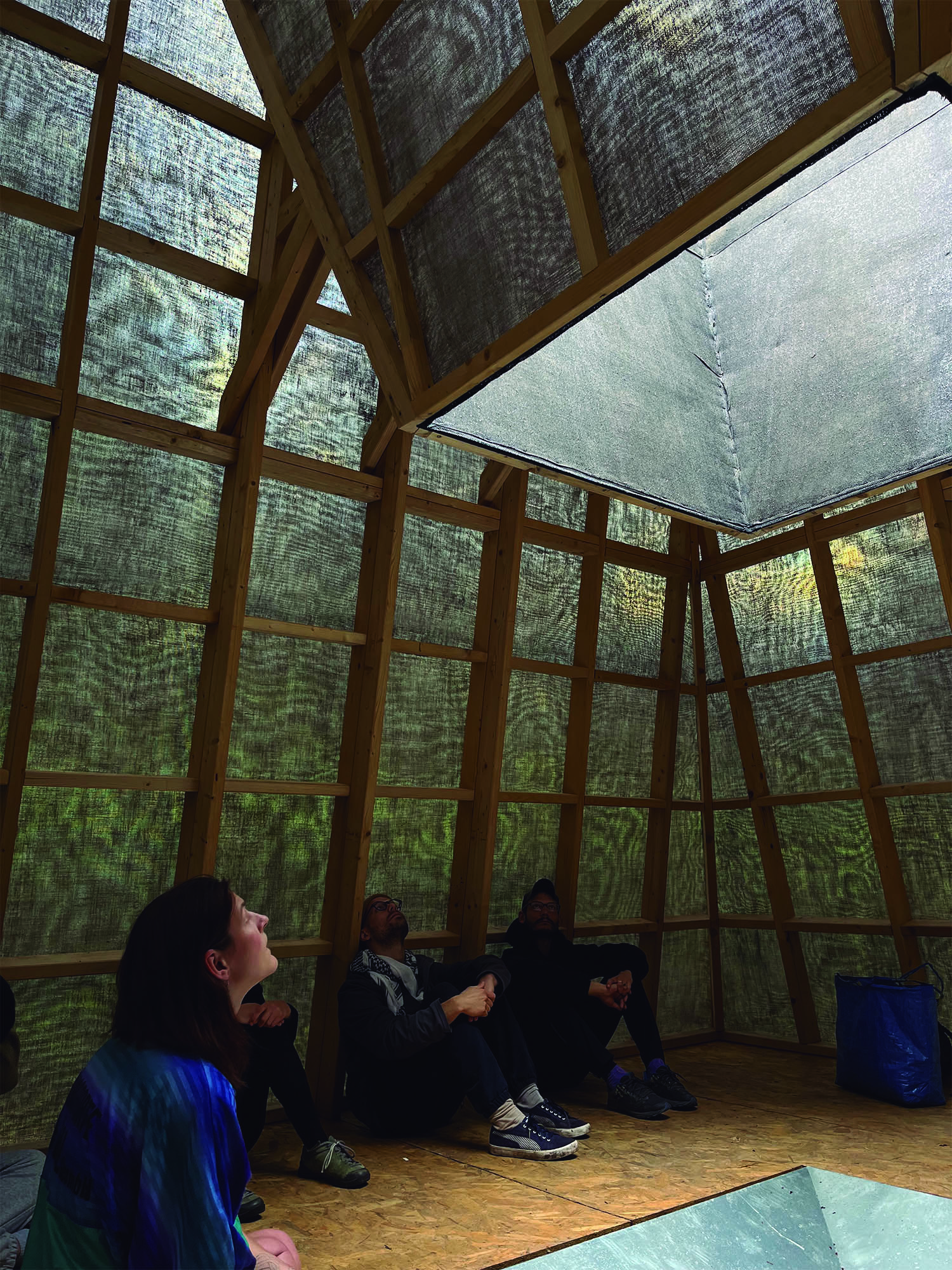
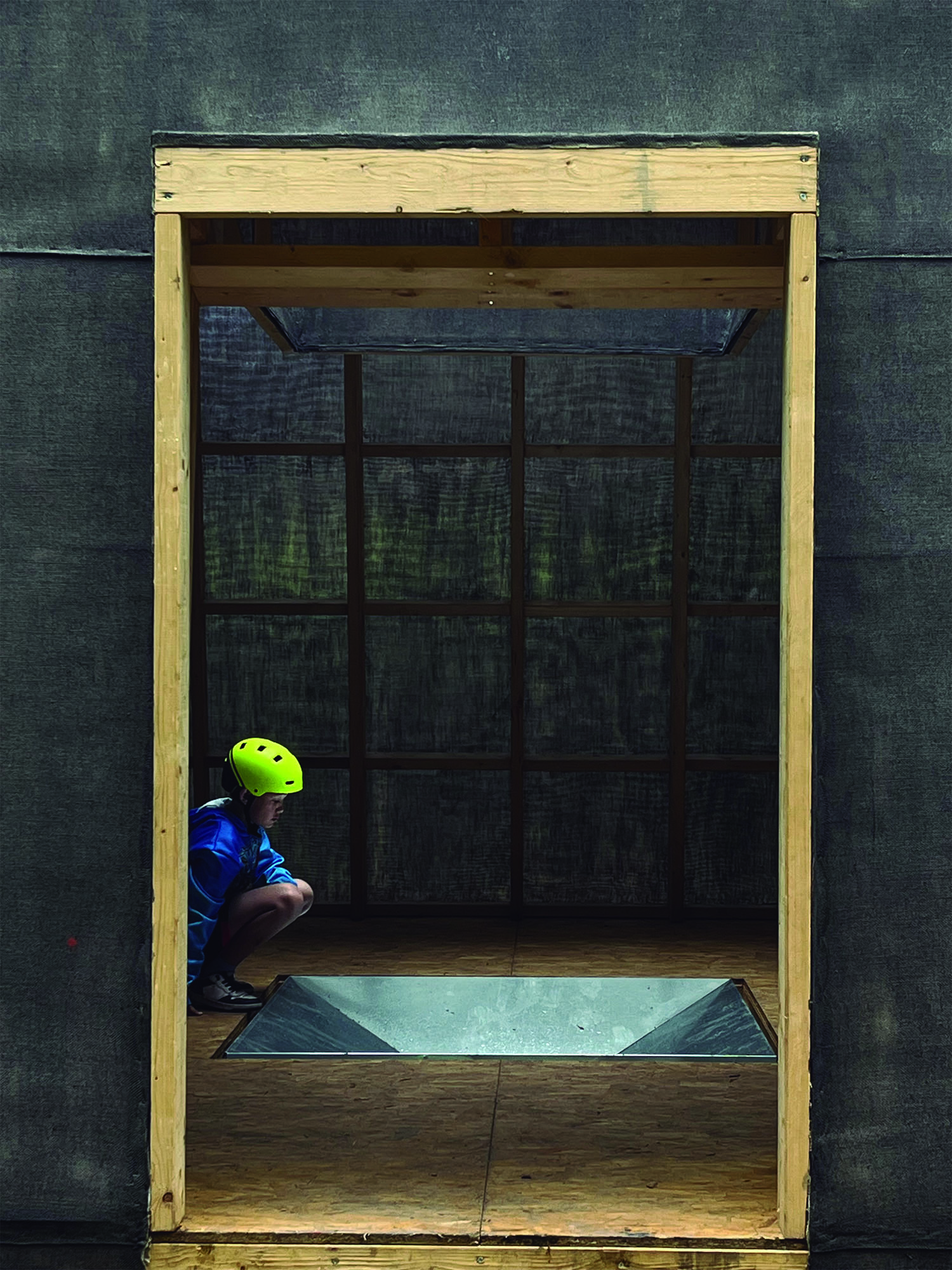
These materials give spatial form to the main goal of the pavilion, to create a spatial experience capable of making us aware of the presence of water in the forest, thus sublimating its own material condition. Instead of protecting FROM water, the pavilion builds a shelter FOR it, transforming an ‘ordinary’ and everyday event into an ‘extraordinary’ one, where architecture acts as the necessary support for the simple, but profound act of contemplation. A ‘temple’ for water.
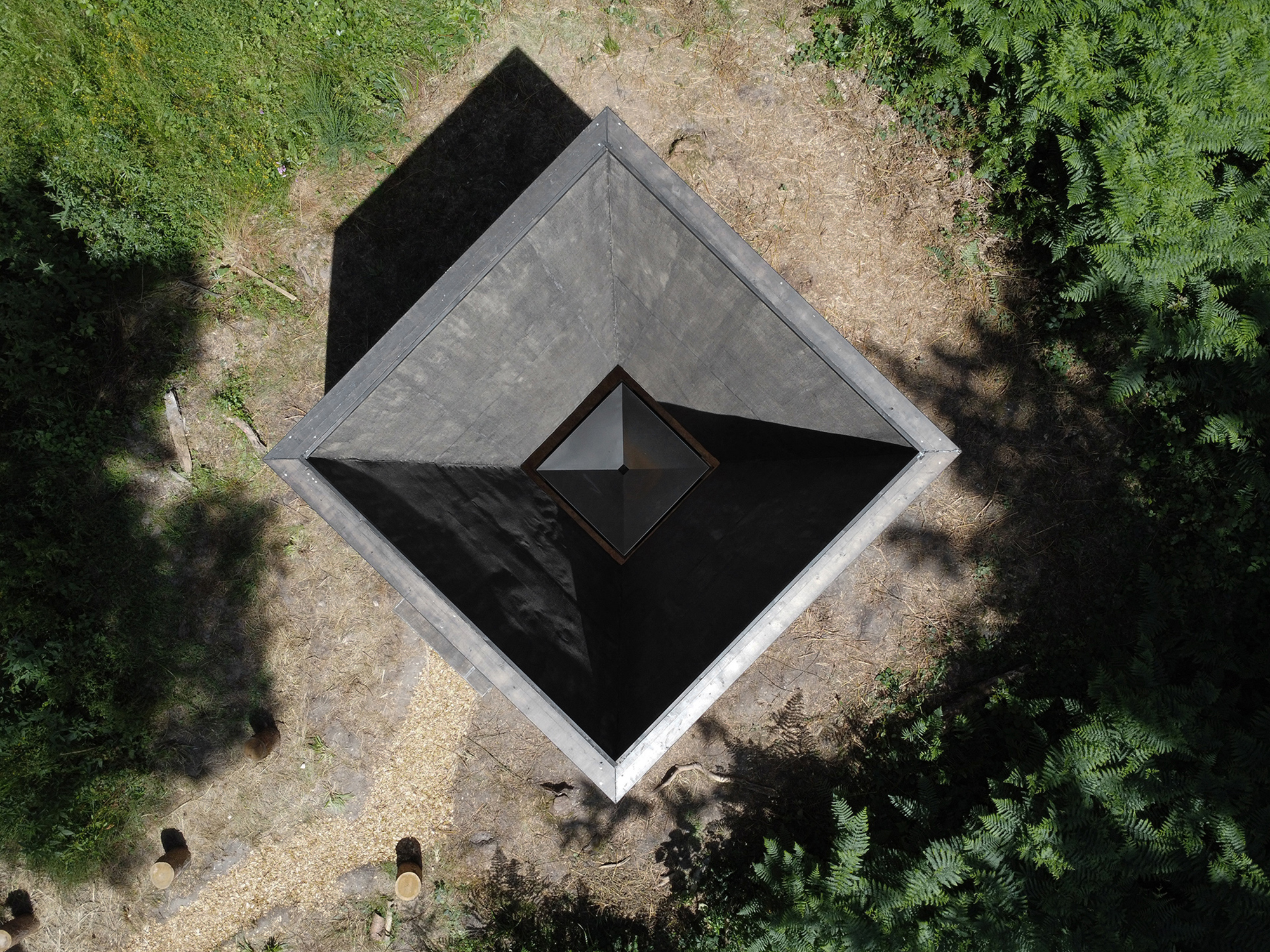
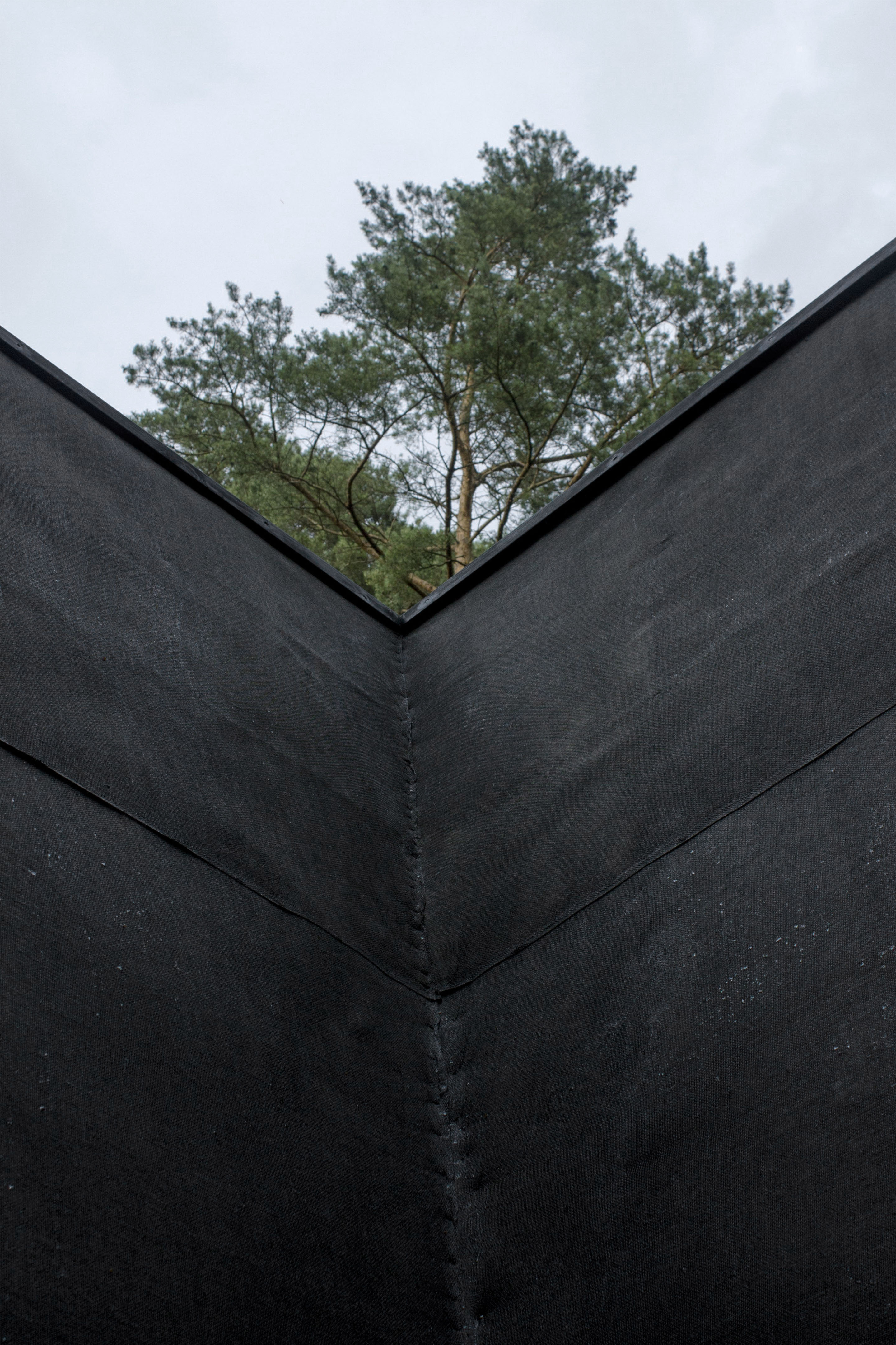
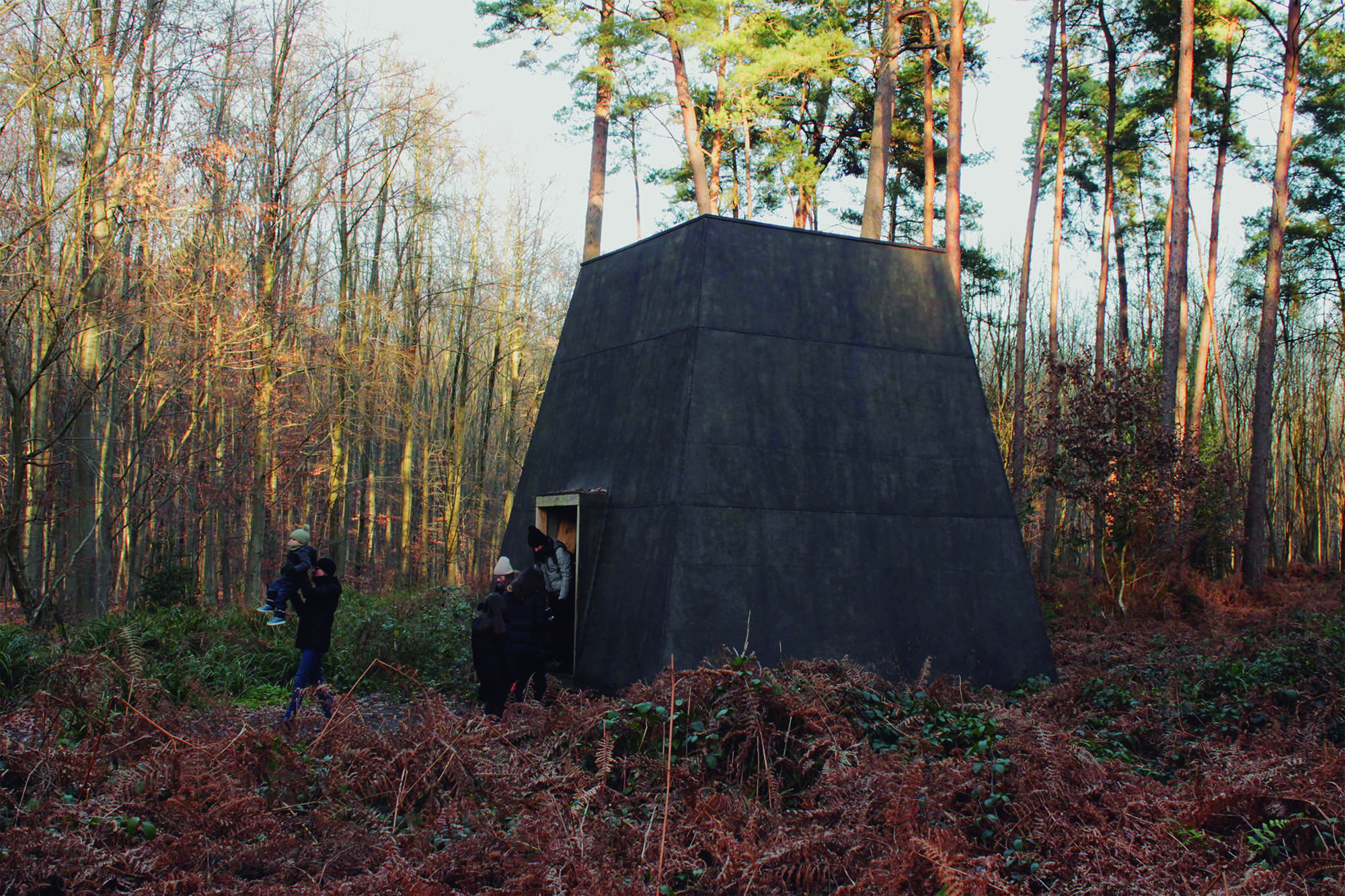
COMPLUVIUM, built with a budget of €25,000, is defined by a virtual cube of 5x5x5 m3, with its roofs sloping inwards, thus resolving a space that acts as a water collector and refuge at the same time. Climate, environment and building traditions converge here, thus establishing a conscious relationship between territory, architecture and memory.
The project was commissioned by the festival as an invitation to P + S Estudio de Arquitectura to create a temporary pavilion in this public natural environment classified as ‘Forêt d'Exception’.
In the initial designing process, we understood that the approach should respond, in first place, to the natural context, highlighting the pre-existence of this environment through the presence of architecture, so we had to work out which was the most present natural element in the forest, beyond the obvious vegetation, and how could we establish an allegory of this element. This is how water (rain, as the main climatic condition in this territory) emerged as the main material to work with, and the simple gesture of collecting it on a spatial support as the main architectural decision. In this regard, both historical and vernacular references (as the Roman atrium or the Diola houses in Senegal) helped us to define the final design.
At the same time, another key purpose was to establish a direct relationship with local identity. This concern was addressed through a material investigation: the choice of linen as the main envelope material. The Normandy region has been marked by a long tradition of linen production, so there was an excellent opportunity to explore new possibilities with a material that was already recognisable in the collective imagination and 100% local in terms of production.
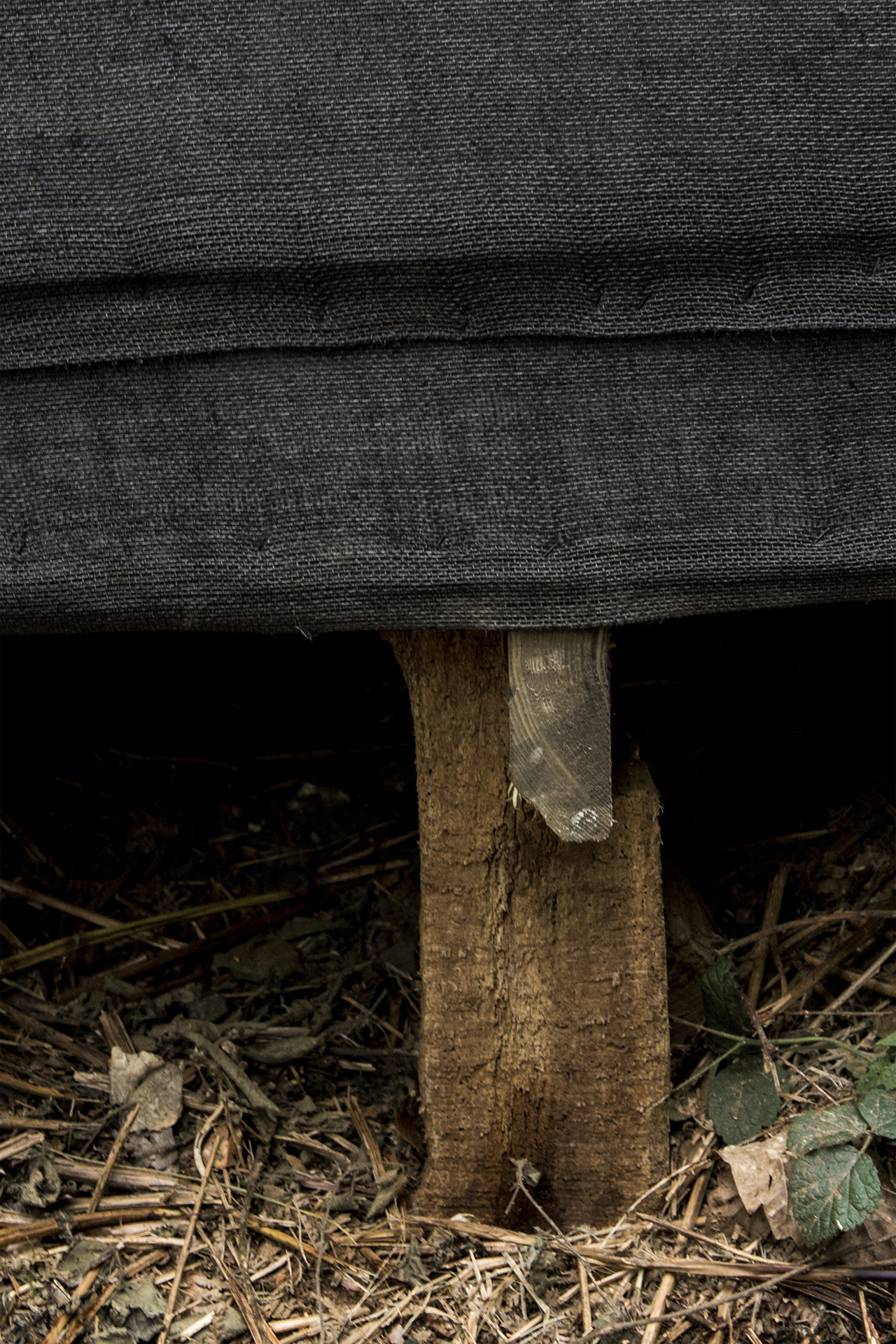
Based on that initial material decision, we began researching on how to ensure the linen could withstand the climate for a long period of time while creating a waterproof interior space. This led to the final covering solution with three layers: black stained linen, fibreglass with resin, and waterproofed natural linen.
In addition, the French pinewood structure, also established a direct dialogue with the ‘à colombage’ houses (half-timbered typology), referring directly to Normandy's architectural heritage and cultural identity, reviving local traditions through innovation.
Allegory to water
Water collector
Bio-based materials
Local heritage
Vernacular kwoledge
COMPLUVIUM was defined under three fundamental principles in terms of sustainability, showing an exemplary model of application understanding the concept in its broadest meaning:
1. Material Sustainability: The choice of materials had to be respectful of the natural environment of Roumare, since it is a natural space that has 4,000 hectares of forest classified as ‘Forêt d'Exception’, a public natural environment that has several hiking trails and a wide variety of protected wildlife. Therefore, with the use of materials such as wood and linen, in addition to paying tribute to the constructive memory of the region, and more so fiberglass, all of them environmentally friendly bio-based materials, it was possible to ensure a 100% reversible and low-impact action for the forest.
2. Socio-cultural Sustainability: The preservation of the traditions and cultural values of the social environment where we operated was also a fundamental goal. A concrete action to achieve this was to work with the linen material, incorporating the active participation of a family factory in the region (Tissage du Ronchay, in Luneray), which has been dedicated to the production of linen since 1900, being today, the sixth family generation to preserve this tradition that is already part of the cultural memory of this area of Normandy.
3. Energy Sustainability: Building in the middle of the forest meant having to minimise the use of resources as much as possible, whilst also reducing the carbon footprint of the construction. To do this, prefabrication was chosen, from the wooden structure, which was executed entirely in the workshop of the local carpenter who assembled the work, to the fiberglass and linen pieces; therefore, the entire execution required only a transfer of materials to the forest, only two operators, the carpenter and an assistant, and without auxiliary means, since the elements of the structure themselves served, provisionally, for the construction of scaffolding.
COMPLUVIUM contributes to extolling the value of the natural environment where we were intervening and to making us aware of its necessary care, so the architecture acts as a silent object, which appears simply as the support to make us conscious about the importance of the presence of water (rain) in the forest. A space for the contemplation of water, which allows us to demonstrate that with only 25 m² and as small budget, it is possible to open a scenario that invites us to observation and reflection, where architecture, territory and nature can work together as a tool for discussion, close to citizens.
In this sense, the project contribution to beauty acquires a symbolic, almost primitive meaning, where an ‘ordinary’ event, such as the rain that feeds the forest, can be transformed into an ‘extraordinary’ one, thanks to a simple and measured action of architecture, contributing to an idea of ‘beauty with meaning’, where the used resources are minimal, with only three building materials, but the impact can be so powerful that it allows citizens to observe how water becomes a valued and visible element.
In this sense, the project contribution to beauty acquires a symbolic, almost primitive meaning, where an ‘ordinary’ event, such as the rain that feeds the forest, can be transformed into an ‘extraordinary’ one, thanks to a simple and measured action of architecture, contributing to an idea of ‘beauty with meaning’, where the used resources are minimal, with only three building materials, but the impact can be so powerful that it allows citizens to observe how water becomes a valued and visible element.
The festival offers visitors the chance to discover monumental artworks in the forest. As such, this project aims to provide access to a public space and a shared natural resource within the local area through art and architecture. The forest acts as a vital green lung for the city and its surrounding region and serves as a geographical link connecting socially diverse neighborhoods, thereby seeking to connect residents with the beauty and benefits of their immediate environment. In turn, this public space, accessible to all, offers a new way of facilitating access to culture and art for the widest possible audience, including those who are most socially and economically disadvantaged.
COMPLUVIUM, working as a spatial artefact intended to facilitate a spatial experience, comes to life within the landscape—and through it—when it rains. From that moment on, it becomes possible to connect with the natural environment of the forest in an inclusive way, as it requires nothing more than the act of contemplation. For the region’s inhabitants who come to visit the pavilion, this contemplation can generate a simple sensation that leads to the identification of a characteristic of their natural environment, by highlighting something as ordinary as the rain—which often goes unnoticed in daily life—to open up a possible reflection on the Normandy region, the landscape and the environment.
COMPLUVIUM, working as a spatial artefact intended to facilitate a spatial experience, comes to life within the landscape—and through it—when it rains. From that moment on, it becomes possible to connect with the natural environment of the forest in an inclusive way, as it requires nothing more than the act of contemplation. For the region’s inhabitants who come to visit the pavilion, this contemplation can generate a simple sensation that leads to the identification of a characteristic of their natural environment, by highlighting something as ordinary as the rain—which often goes unnoticed in daily life—to open up a possible reflection on the Normandy region, the landscape and the environment.
The project of ‘La Forêt Monumentale’ has had an active citizen participation, involving the local communities and residents of the Roumare forest environment, many of them belonging to vulnerable neighbourhoods or at social risk. Fostering a sense of belonging with the interventions in their forest was essential from the beginning.
In this regard, the COMPLUVIUM pavilion was presented, one year before its implementation, to the representatives of the civil organizations involved, as well as to the official bodies of the Métropole Rouen Normandie and the National Forest Office, thus achieving an active participatory process and community recognition.
One exemplary initiative in this sense was the coordination with a local high school, so that students at social risk could actively participate in the construction process of the artistic interventions in the forest. In the case of COMPLUVIUM, it was Luna, a teenage student who worked with the carpenter as an assistant during the 15 days of assembly in the forest.
These participatory initiatives have also included visiting days, during and after the construction, with students from French nursery, primary and secondary schools, several universities and schools of architecture from other parts of the world; many of them also carrying out workshops and educational activities in relation to water, architecture, territory and nature, as well as linked to the material innovation in the use of linen.
Finally, it is also important to highlight the intention to involve the knowledge and craft of the local family business Tissage du Ronchay and Bertrand Guillermic (the carpenter), as a way of giving public exposure to these valuable works that are part of the Rouen community.
The result of all these actions, can be seen in the success of citizen visits, with more than 400,000 to date, with 6 months left for the end of the event, which allows us to quantify the level of impact of the project on the collective memory.
‘La Forêt Monumentale’, coordinated by the Métropole Rouen Normandie in collaboration with the ONF (National Forestry Office), invites the public to explore a forest which has held the ‘Forêt d’Exception’ label from the organisation since 2015, and highlights the relationship between humans and nature, as well as the impact of climate change on society. This project celebrates the rich forest heritage of the Métropole, which covers a third of its territory. It is also part of a major joint initiative to promote and raise awareness of the three state-owned forests that have been awarded with the ‘Forêt d’Exception’ label.
The ONF has been supporting the Métropole throughout every stage of this project: defining the route and the locations for the artworks, serving on the jury, and overseeing site safety measures.
In addition, around 20 local businesses are sponsoring works to the amount of €100,000. In the case of COMPLUVIUM, it was sponsored by CBA Architectes, an architecture studio implanted in Rouen, and by Espace Libre, a landscape and urban design studio also implanted in the city. The aim of engaging local businesses is a continuation of the work undertaken as part of the local COP21 initiative launched by the Métropole with the signing of the Rouen Agreement in 2018.
Furthermore, one of the festival’s main objectives was to ensure effective collaboration between the artists, builders, and student assistant workers involved in assembling the artworks. Regarding the pavilion, throughout the festival preparations, from the development of the project and the preliminary organization right until its construction, there was genuine collaboration between the various stakeholders, which further emphasized the collaborative nature of the overall project.
‘La Forêt Monumentale’ itself aims to build transdisciplinary and international teams of plastic artists, sculptors, landscape artists, designers and architects. Indeed, the main objective of the organization is to activate an artistic-architectural circuit that can promote the relationship of the inhabitants with the forest and the nearby urban environment, involving in the development of the festival the inhabitants of surrounding neighbourhoods, like students from a local high school collaborating in the construction of the artworks. During the whole construction phase, the carpenter of the pavilion was receiving the help of a student (Luna, as mentioned before), learning and working by his side.
In conclusion, throughout its process, the festival is generating the transmission of knowledges in construction, materials, art, architecture, culture, environment and promoting the growth of sensibility to the territory.
In the same strategy, COMPLUVIUM seeks to foster a dialogue between architecture, nature and the local landscape, for example with the use of locally grown Norman linen and with the French pinewood, situating the creative process within a very specific cultural and artisanal context.
The second edition of ‘La Forêt Monumentale’ has been promoted by the Métropole de Rouen and the ONF, as it has been mentioned before. And particularly, COMPLUVIUM has been funded through the patronage of CBA Architectes and Espace Libre, with a budget for the intervention of €25,000, including the construction and the future dismantling.
The pavilion has showed an interesting success regarding the relation between the small budget and the positive impact it had in multiple ambits and scales. With more than 400,000 visitors to date from various places and a large range of profiles, the pavilion can be considered an actual vector for future revenues, promoting local economy; for example, the familiar business Tissage du Ronchay, a local production that had been losing market share since the beginning of the 2000s, and the local craftmanship of carpentry. In this way, the construction of the pavilion in the context of the festival has been an effective strategy for small and local businesses to gain more visibility in a regional or even international scale, giving them a chance to make these technical, material and craftmanship knowledges get more interest for the public.
Moreover, the two sponsors, who have also chosen to support the festival by investing in the construction of the pavilion, in turn, will benefit from the visibility they gain through the thousands of visitors that COMPLUVIUM receives.
At the end of these two years of festival in the forest of Roumare (2024-2026), the pavilion will be disassembled and transferred to be rebuilt in a new location where it would once again be visited.
So far, this experience allows to demonstrate that with only 25 m² and very few economical and material resources, it is possible to create a space of reflection that shows how architecture can serve as a platform to open the debate about nature and our territories, making it accessible to the general public, and in this particular case, placing water at the heart of the discussion.
Moreover, we believe that such project can be inspiring in the ambit of material innovation, since one of the main challenges of the pavilion, given the pre-established conditions and the constant exposure to rain for at least two years, was the use of natural linen.
COMPLUVIUM is a nomad mechanism that can be easily transportable without impacting or leaving a trace behind it. Indeed, its construction process arises from the conditioning nature of the protected forest itself, since it was not possible to bring big auxiliary elements or electrical machinery there, we thus had to develop a system that could be easily assembled, disassembled and transported without the use of complex scaffolding or tools. At the end, this initial constraint gives us many possibilities of reversibility for the pavilion, that can be transferred easily.
We can imagine the pavilion moving from one place to another, recreating in each situation the possibility of contemplating the rain, given that its sole function is to serve as a support for that spatial experience.