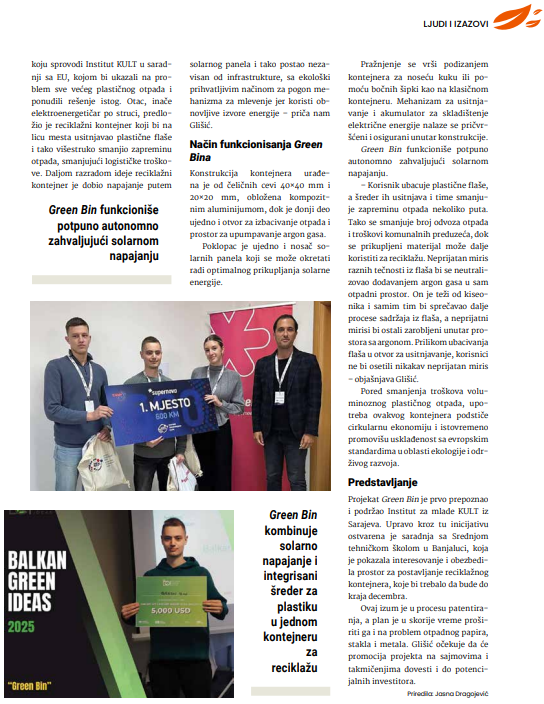
Enhancing Circularity, Sustainability, and Innovation
Green Bin – Solar Recycling Container
Green Bin Solar-Powered Recycling Container for Circular and Climate-Neutral Cities
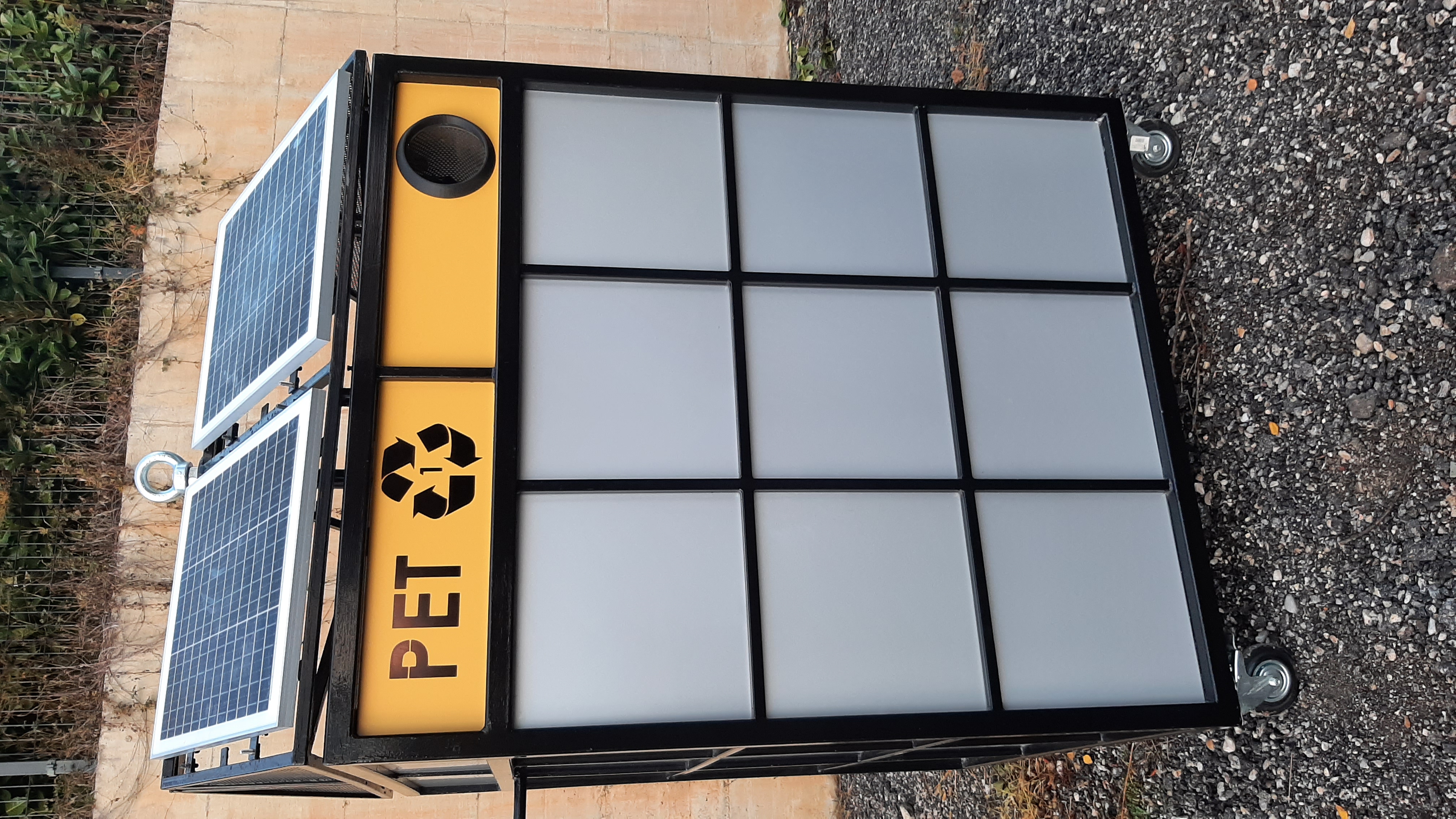
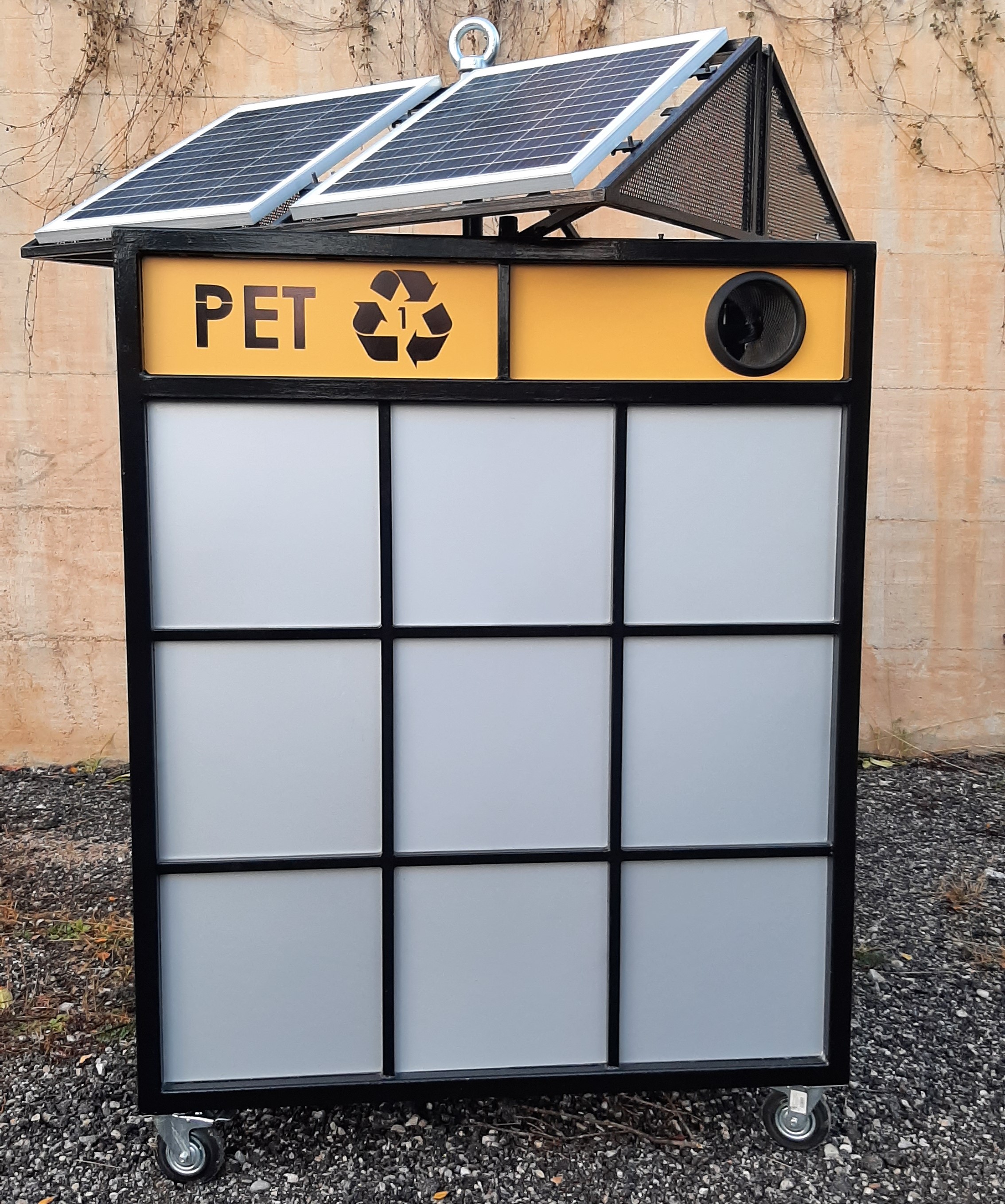
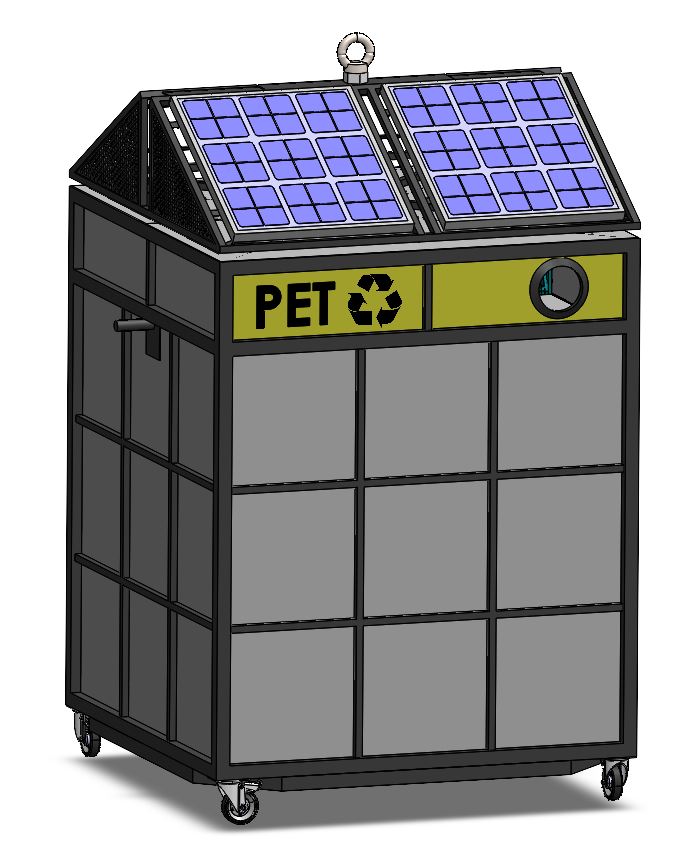
Green Bin is a solar-powered container that shreds plastic bottles at the point of disposal, turning waste into a local resource. By processing plastic into flakes, it reduces waste volume by up to 5 times, significantly lowering collection frequency, CO2 emissions, and operational costs. Independent of infrastructure, it supports circular material use, making sustainable living simple, visible, and accessible to every community.
Bosnia and Herzegovina
National
Mainly urban
It involves a physical transformation of the built environment (hard investment)
Prototype level
Yes
IPA : Instrument for Pre-Accession Assistance
No
No
Individual
Green Bin is a decentralized, off-grid urban micro-processing unit that solves logistical inefficiencies by shredding plastic waste at the point of disposal using a low-voltage, solar-powered mechanism. It transforms bulky bottles into high-density flakes, reducing waste volume by up to 80% and eliminating odors through a unique Argon-gas atmospheric shield.
Overall aim & Target groups
The primary innovation lies in shifting waste management from reactive collection to proactive on-site processing to drastically reduce the carbon footprint and high operational costs of municipal logistics. Our target groups include residents seeking cleaner neighborhoods, municipalities looking to optimize budgets, and local circular economy actors, such as 3D-printing hubs, who gain immediate access to processed raw materials.
Specific objectives & Achieved outcomes
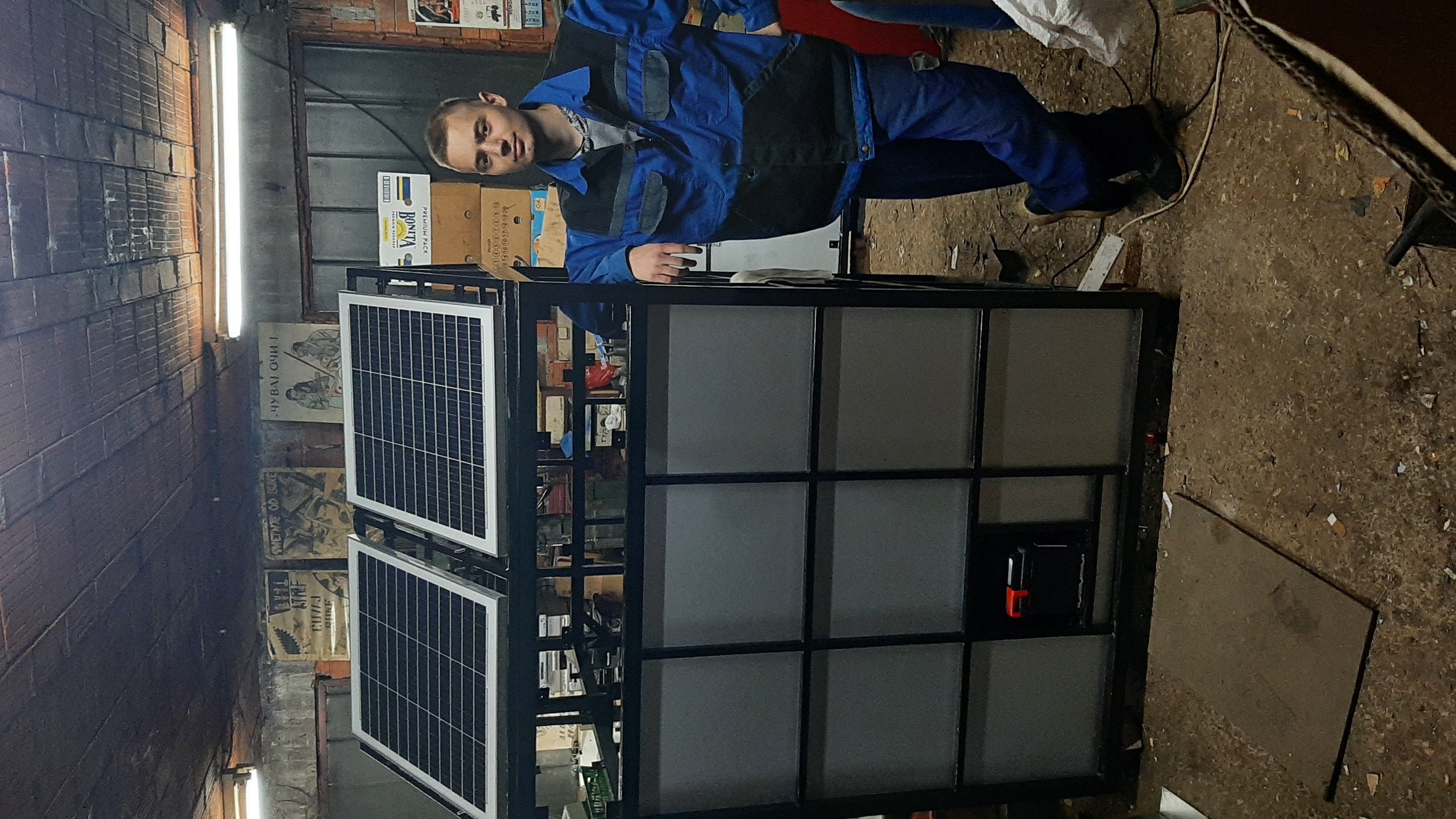
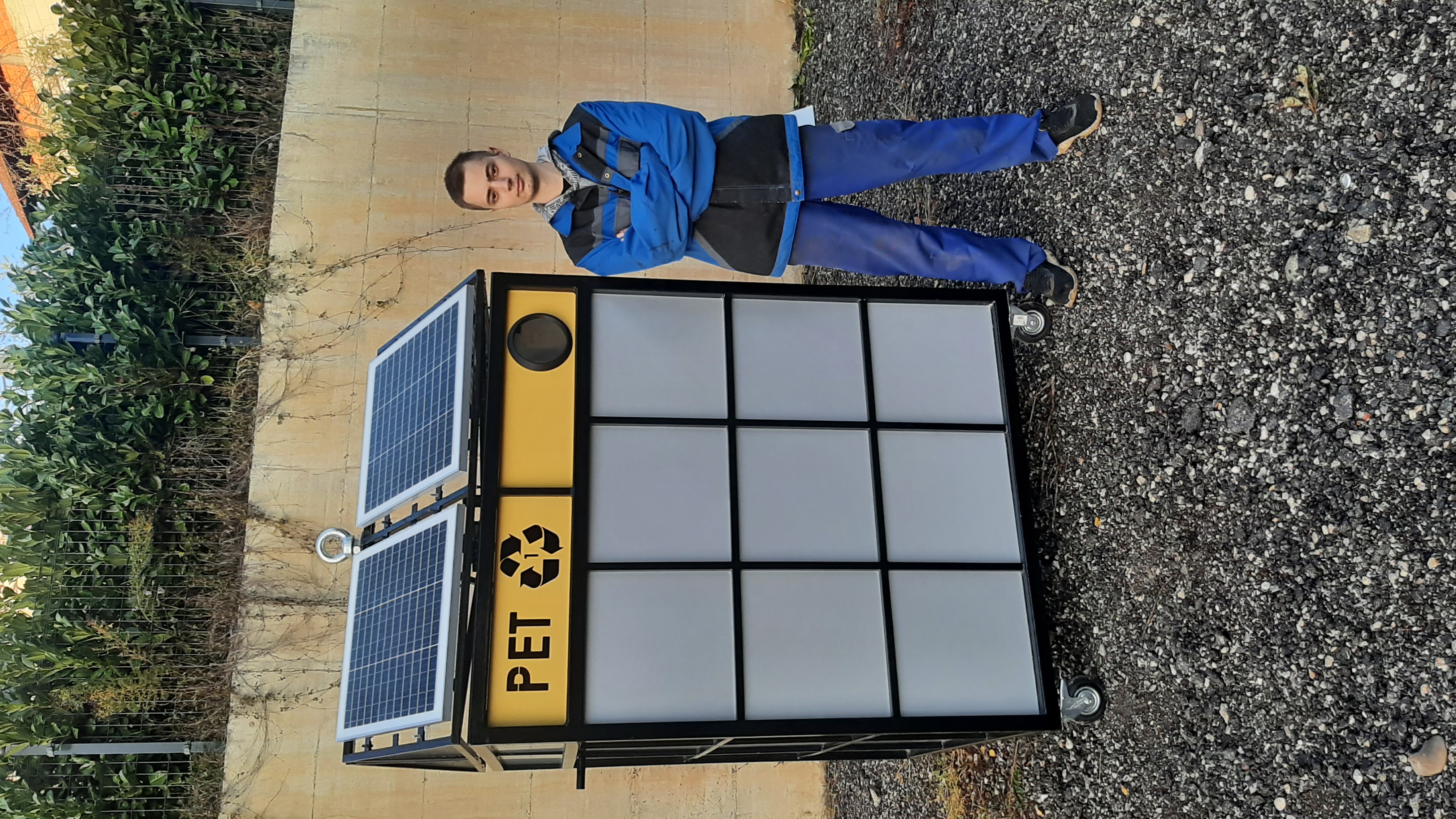
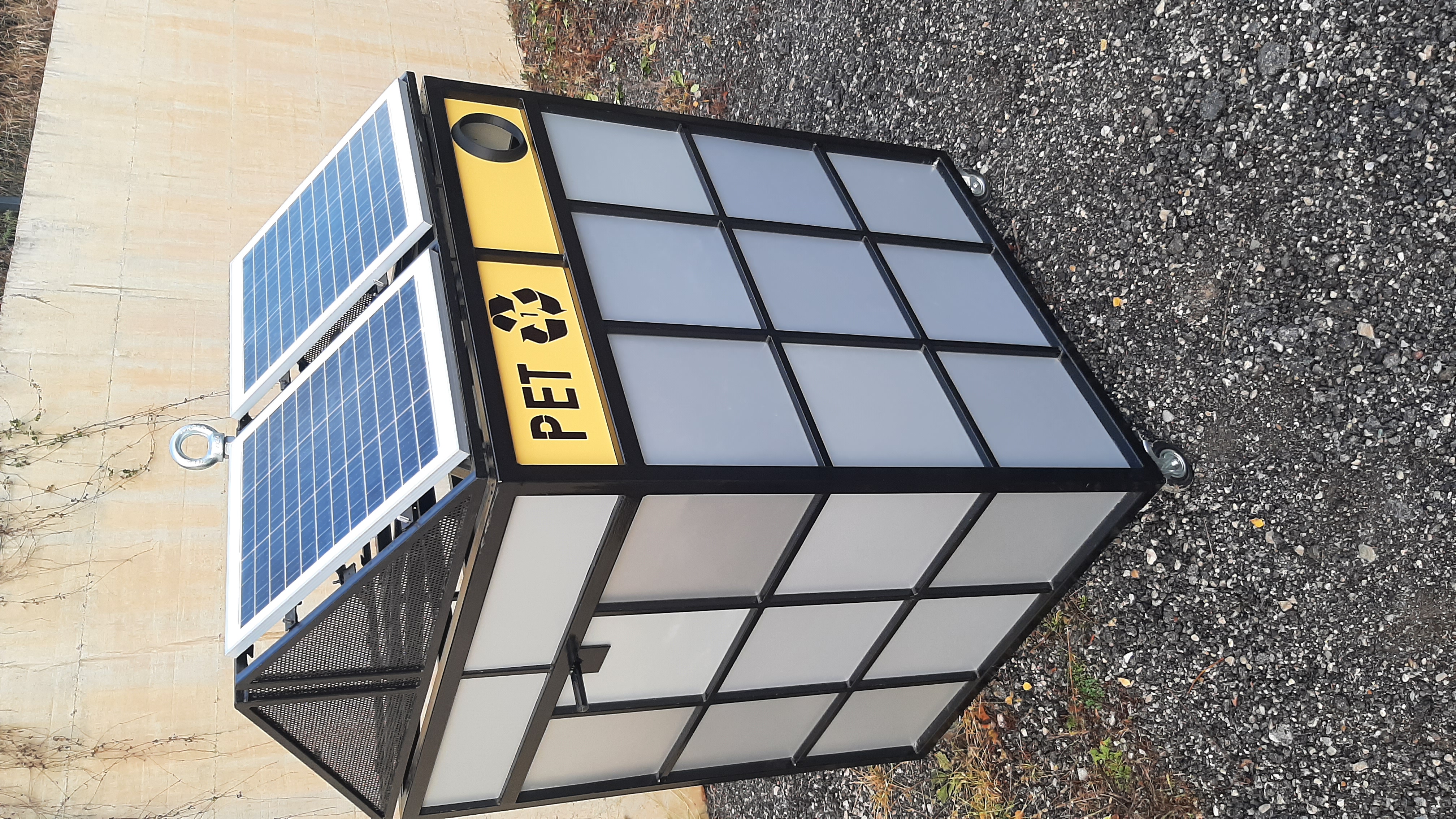
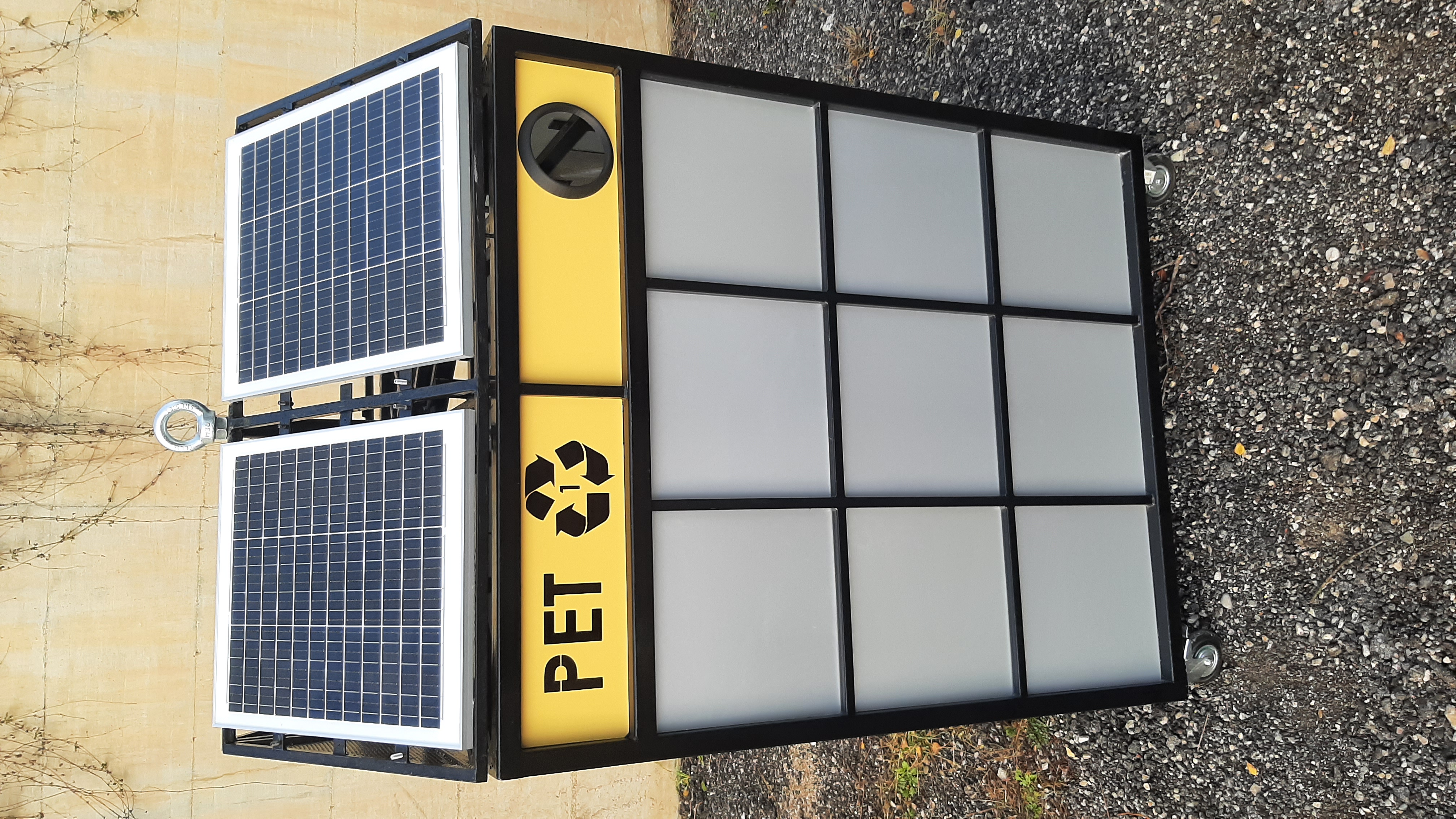
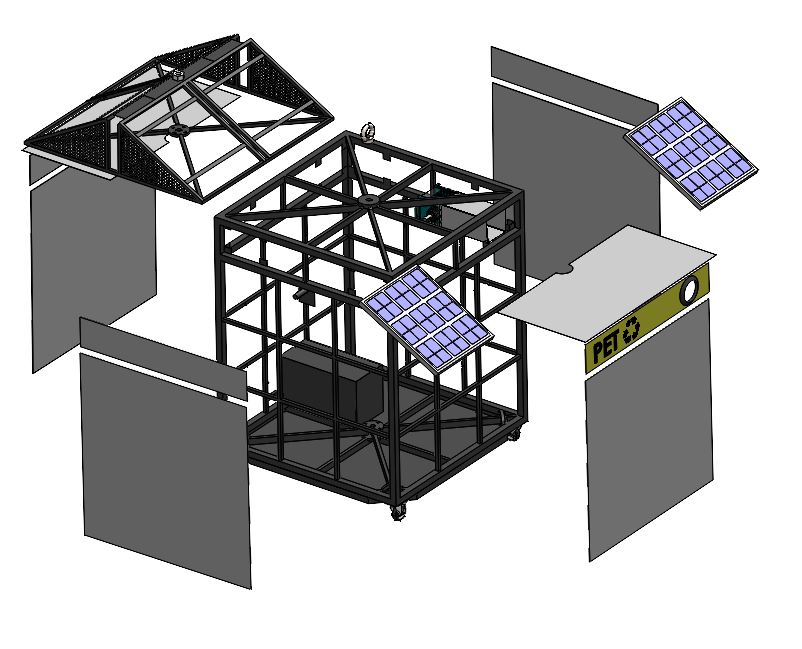
- Structural Development: Completion of the main container housing and the integration of solar PV panels for autonomous operation.
- Technical Design: Finalization of the low-voltage shredding mechanism and waste area.
- Logistical Modeling: Theoretical validation showing that on-site volume reduction can decrease required collection frequency by up to 80%.
A key milestone in our development is the official patent application for the Green Bin waste processing, which protects our unique integration of low-voltage shredding and atmospheric preservation technology.
Transformative potential
Green Bin acts as an "Urban Living Lab" prototype, transitioning from a passive container to an active micro-processing unit. Its transformative potential lies in its ability to change urban metabolic flows, turning a mundane disposal process into a sophisticated, nature-positive experience for climate-neutral cities.
The idea for Green Bin emerged from observing overflowing recycling bins and logistical gaps in my local community. As a mechanical engineering student, I developed a decentralized, solar-powered unit that shreds plastic at the point of origin to bypass the energy-intensive process of transporting low-density waste. By transforming bulky bottles into high-density flakes, Green Bin reduces collection frequency by up to 80%, significantly decreasing CO2 emissions, urban noise, and operational costs while making the system universally compatible with any transport vehicle. Development&Implementation: I transitioned from rigorous engineering calculations to a physical prototype, completing the structural container and its standalone solar PV system. A patent application has been officially submitted to protect the unique shredding mechanism. Strategic Partnerships: We established a communication channel with the City of Banja Luka for real-world testing in a dense urban environment. This pilot project will demonstrate how decentralized shredding optimizes municipal logistics, reduces road wear, and shrinks the city's carbon footprint. The Way Forward: Our roadmap transitions from a single prototype to an integrated urban network via three pillars: Pilot Validation by deploying the first unit in an "Urban Living Lab" to monitor real-time energy and collection data; Digital Integration using IoT sensors for "smart-filling" alerts and dynamic route optimization to cut costs ; and Closing the Local Loop by establishing "Micro-Recycling Hubs" that supply high-purity flakes directly to local 3D-printing SMEs, turning urban waste into a localized economic resource.
Circular economy
Decentralised recycling
Renewable energy
Urban sustainability
Carbon footprint reduction
Market-Driven Circular Economy The Green Bin transforms passive waste into an active market commodity. Instead of disposing of mixed plastic waste, this system generates high-quality, shredded plastic flakes that possess a direct and significantly higher market value in the secondary raw materials sector. Standardized recycling centers prefer pre-processed material because it eliminates the costs associated with primary separation and industrial grinding at their facilities. This approach enables local communities or private operators to generate revenue by selling clean, shredded plastic directly to recyclers—income that was previously inaccessible under traditional waste models.
Financial Self-Sustainability and ROI The investment in the Green Bin is designed as a self-liquidating asset. Through a combination of drastic reductions in operational collection costs and the continuous revenue stream from the sale of processed raw materials, the unit is projected to pay for itself within a few years of operation. Unlike traditional containers, which represent a permanent and rising municipal expense, the Green Bin functions as a decentralized micro-enterprise that generates economic value at the point of waste origin.
Engineering for Longevity The concept is exemplary in terms of sustainability due to its engineered long service life. The structure is robust and specifically adapted for harsh outdoor conditions, focusing on minimal maintenance and high durability of mechanical components. By utilizing standalone solar power, the device operates independently of external energy sources, eliminating energy costs throughout its entire functional lifespan. This longevity directly reduces the need for frequent equipment replacement, conserving resources and upholding the principles of "sustainable design" built to last for decades.
Aesthetic objectives
My goal is to redefine the visual and sensory identity of waste management in urban spaces. I believe that "utility" should not mean "ugly" or "unpleasant." By replacing traditional, often overflowing and malodorous containers with a sleek, high-tech unit, I aim to enhance the everyday quality of our streets. Long-term, my objective is to foster a culture where recycling is seen as a sophisticated, modern act, making our neighborhoods feel more cared for and pleasant to inhabit.
Implementation & Quality of experience
In my prototype, I have integrated functional engineering with a clean, contemporary design:
Visual Transparency: I included a "process window" in the design, allowing citizens to see the mechanical shredding in action, transforming a mundane task into an engaging, educational experience.
Odor Control & Atmospheric Engineering: To ensure a pleasant environment, I designed the unit to be filled with Argon gas. Since Argon is heavier than oxygen, it stays at the bottom of the container, effectively "trapping" unpleasant odors from leftover liquids and sugars inside the bottles. This prevents bad smells from escaping, making the area around the Green Bin consistently fresh.
Sensory Improvement: By shredding plastic and eliminating odors, my concept directly reduces the nuisance of traditional bins, making the neighborhood more peaceful and inviting.
Exemplary character
My project is exemplary because it uses "functional beauty" and advanced engineering to drive behavioral change. It moves away from the "out of sight, out of mind" approach. Instead, it creates a sense of belonging by providing a high-end tool that reflects the community's values of innovation, cleanliness, and environmental care. By making the recycling process visible, elegant, and odorless, I am turning a technical necessity into a meaningful and pleasant part of the urban landscape.
Inclusion objectives
My primary objective is to democratize high-tech recycling by making it accessible, affordable, and intuitive for every member of society, regardless of their age, physical ability, or socio-economic background. I believe that green innovation must not be a luxury reserved for wealthy areas; therefore, I designed a solution that brings advanced circular technology directly to people’s doorsteps, even in neighborhoods with limited infrastructure.
Implementation & Results
In developing the prototype, I strictly followed the "Design for All" principles. To ensure true ergonomic accessibility, I conducted practical measurements:
Intergenerational Design: I measured my 6-year-old brother and used his height as a reference point to set the bottle intake opening. This ensures that even the youngest citizens can participate and learn about recycling through direct action.
Physical Accessibility: I specifically designed the opening height and the approach area to be fully accessible for persons in wheelchairs, ensuring they can easily reach and use the Green Bin without assistance.
Infrastructure Equity: Because the unit is powered by a standalone solar photovoltaic system and requires no grid connection, it can be deployed in underserved suburbs, social housing complexes, or remote parks. This provides high-quality public services to communities that are often left behind by traditional "smart city" upgrades.
Exemplary character
My concept is exemplary because it treats inclusion as a technical specification, not an afterthought. By lowering the physical and systemic barriers to recycling, I am fostering a new societal model where environmental responsibility is a shared, collective experience. My Green Bin is not just a machine; it is a tool for social cohesion that empowers every individual—from a child to a person with a disability—to be an active protagonist in the green transition.
User and Citizen Engagement The development began with direct observation and informal consultations within my local community in Banja Luka. By engaging with citizens frustrated by overflowing recycling points, I identified that the primary barrier to participation was the visible failure of the current collection system. These discussions shifted the project’s focus from a simple storage container to an active processing unit. Feedback from potential users emphasized the need for a "visible and accessible" solution that provides immediate confirmation that their recycling efforts are meaningful.Stakeholder and Professional Collaboration The technical evolution of the concept has been a collaborative effort between academic insight and professional expertise. As a mechanical engineering student, I integrated theoretical calculations with practical craftsmanship by working alongside a professional welder to ensure structural integrity and safety for public use. Furthermore, we have established a strategic communication channel with the City of Banja Luka. This institutional stakeholder engagement is critical for our "Urban Living Lab" approach, where the city provides the real-world environment needed to test municipal waste logistics.The participatory approach was transformative for the Green Bin’s development. Institutional engagement with the City of Banja Luka enabled logistical optimization by integrating smart-filling IoT sensors aligned with municipal routes. This collaboration also led to a significant refinement of ergonomics, ensuring the unit is intuitive and accessible for all urban users. Furthermore, involving citizens and authorities from the start built public trust, proving the project is a reliable, community-centered innovation. To further strengthen this bond, we plan to integrate QR codes on each unit, allowing citizens to scan and receive real-time data on their individual contribution and the total plastic recycled in their neighborhood.
Our implementation strategy actively engages stakeholders across multiple levels to ensure the Green Bin is scalable and regulatory compliant.
At the local level, we cooperate with the City of Banja Luka to align deployment with municipal waste regulations and infrastructure.
Regionally, our participation in the Balkan Green Ideas (BGI) program connects us with sustainability networks for cross-border knowledge exchange.
On a national level, we involve Intellectual Property Institutes through our patent application to meet innovation standards, while at the European level, the project aligns with the EU Green Deal and Circular Economy Action Plan.
The added value of this engagement is a transition from a standalone prototype to a high-level integrated system. Collaboration with city administration ensures logistical feasibility within existing routes, while national patent filing validates technical uniqueness. Furthermore, aligning with European frameworks opens doors for strategic partnerships with EU-based recycling centers that require pre-processed, high-density flakes.
This multilevel approach transforms a local innovation into a replicable model suitable for the broader EUSAIR framework, ensuring both legal stability and long-term investment potential.
Green Bin is a synthesis of four major fields that usually operate in silos. I have intentionally integrated them to ensure the prototype is technically sound, socially inclusive, and environmentally impactful:
Mechanical Engineering: As a student in this field, I applied core engineering principles to design the low-power shredding mechanism. This included calculating torque requirements, material stress for PET processing, and the integration of a standalone solar PV system to ensure energy autonomy.
Environmental Sciences & Ecology: I based the concept on the urgent need for carbon footprint reduction. My research into waste logistics and lifecycle analysis allowed me to quantify how on-site volume reduction directly impacts urban CO2 emissions and circular material flows.
Design & Architecture: I moved beyond pure utility by applying architectural aesthetics to the bin’s exterior. My goal was to create an "urban sculpture" that complements modern cityscapes, using clean lines and high-quality materials to reduce visual clutter and enhance the beauty of public spaces.
Social Sciences & Ergonomics: This discipline was crucial for the "Design for All" aspect. By observing user behavior—specifically measuring a child’s reach and a wheelchair user’s access—I integrated human-centric design into a mechanical product.
The real innovation of my concept lies in the synergy between these fields:
Engineering meets Chemistry: I applied chemical principles by using Argon gas (heavier than oxygen) to solve a mechanical and social problem: the odor of decomposing organic residue in plastic bottles.
Digital Technology meets Sociology: By planning a digital feedback interface (QR codes), I am merging data science with social participation to continuously adapt the hardware based on community needs.
By merging 'hard' engineering with 'soft' design and social sciences, I created a holistic urban solution far more effective than any single-discipline approach.
My business model is based on the "Value from Waste" principle. The Green Bin reduces operational costs for municipalities while generating high-quality industrial feedstock. By shredding plastic on-site, I create a high-density raw material (PET flakes) that is significantly more valuable and cheaper to transport than uncrushed bottles. This turns a logistics burden into a profitable resource stream.
Waste Logistics Savings (B2G): The primary revenue comes from service contracts with municipalities. By reducing collection frequency by up to 80%, cities save massive amounts on fuel, labor, and truck maintenance. A portion of these "avoided costs" forms the basis of my service fee.
Sale of Raw Materials: Unlike traditional bins, Green Bin produces clean, sorted, and shredded plastic. I will sell this high-density material directly to recycling plants or local 3D-printing SMEs, bypassing expensive centralized sorting facilities.
Eco-Branding & Sponsorship: The sleek design and the environmental impact of the unit make it an attractive platform for green branding. Companies can sponsor a bin to demonstrate their commitment to the UN Sustainable Development Goals (SDGs).
Carbon Credits: By quantifying the CO2 emissions saved through optimized logistics and solar-powered processing, I plan to tap into the voluntary carbon market.
To move from prototype to market, I will apply a multi-stage funding approach:
Initial Phase: National and EU green transition grants (e.g., Horizon Europe, EIT Climate-KIC) to fund the first pilot fleet.
Growth Phase: A "Product-as-a-Service" (PaaS) model, where municipalities pay a monthly subscription for the technology and maintenance, rather than buying the units outright. This lowers the entry barrier for smaller cities.
Green Bin addresses the entire value chain: solar autonomy and on-site shredding eliminate the two biggest recycling costs—electricity and transportation.
The Green Bin is designed as a universal solution for urban plastic waste, with several elements that can be easily transferred to different geographies:
Modular Technology: The combination of a standalone solar photovoltaic system and a compact shredder is a self-contained module. It can be integrated into different types of containers or even adapted for other materials like aluminum or paper, making the technology transferable to various waste management sectors.
Infrastructure Independence: Since the unit is 100% off-grid, it can be replicated in any climate or location—from high-density Mediterranean tourist zones to remote Nordic parks—without the need for expensive underground electrical work.
Odor-Control Methodology: My use of Argon gas to suppress odors is a breakthrough that can be replicated in any warm climate where organic residue in plastic traditionally causes public nuisance and health concerns.
The concept extends beyond public street bins:
Private Sector: The system can be transferred to large industrial complexes, shopping malls, or festival organizers who need to manage high volumes of plastic waste on-site to reduce logistics costs.
Educational Institutions: The design serves as a "living lab" for schools and universities, demonstrating circular economy, mechanical engineering, and renewable energy in practice.
Socio-Economic Adaptability: In developing regions or underserved neighborhoods where waste collection is irregular, the Green Bin’s 80% volume reduction can be a life-changing tool for public hygiene.
The key learning from my prototype is that on-site processing is the future of urban logistics. By sharing the data on energy consumption and volume reduction gathered from my pilot phase, this model can be scaled through a "franchise" or "licensing" system, allowing other cities to produce or assemble their own Green Bin units using my patented mechanical specifications.
Phase 1: Technical Optimization & Final Prototype (Months 1–4)
The first four months will be dedicated to moving from my current prototype to a "Pre-Series" model.
Engineering Refinement: I will finalize the integration of the standalone solar PV system with a more efficient lithium-iron-phosphate (LiFePO4) battery storage to ensure 24/7 autonomy even in low-light winter conditions.
Odor-Control Calibration: I will conduct rigorous stress tests on the argon gas containment system to determine the optimal refill frequency and seal durability in varied outdoor temperatures.
Phase 2: The "Urban Living Lab" Pilot (Months 5–8)
I plan to launch a 3-month pilot project in a high-traffic urban zone (e.g., a central university campus or a public park).
Real-world Testing: This phase will track the shredder’s mechanical performance, energy consumption, and the actual volume reduction achieved in a public setting.
Data Collection: I will implement a sensor-based monitoring system to gather data on how quickly the bin fills up, which will be used to calculate the exact logistics optimization percentage for municipal partners.
Phase 3: Promotion & Strategic Partnerships (Months 9–12)
Following the pilot, the focus shifts to scaling and formalizing the business model:
Stakeholder Engagement: I will present the pilot results to municipal waste management companies and environmental ministries to secure "Letter of Intent" (LoI) agreements for a wider rollout.
Dissemination: I will promote the project at regional "Green Tech" and "Smart City" fairs, showcasing the Green Bin as a tangible example of the New European Bauhaus values in action.
IP Protection: I will finalize the full patent process to ensure the shredding-plus-argon methodology is protected before seeking venture capital or EU scale-up grants.
By the end of Year 1, Green Bin will transition from a laboratory prototype to a verified, market-ready urban solution.