Arts, Culture, and Heritage as Drivers of Change
L'Expo de OUF ! (The Crazy Exhibition !)
{Empty}
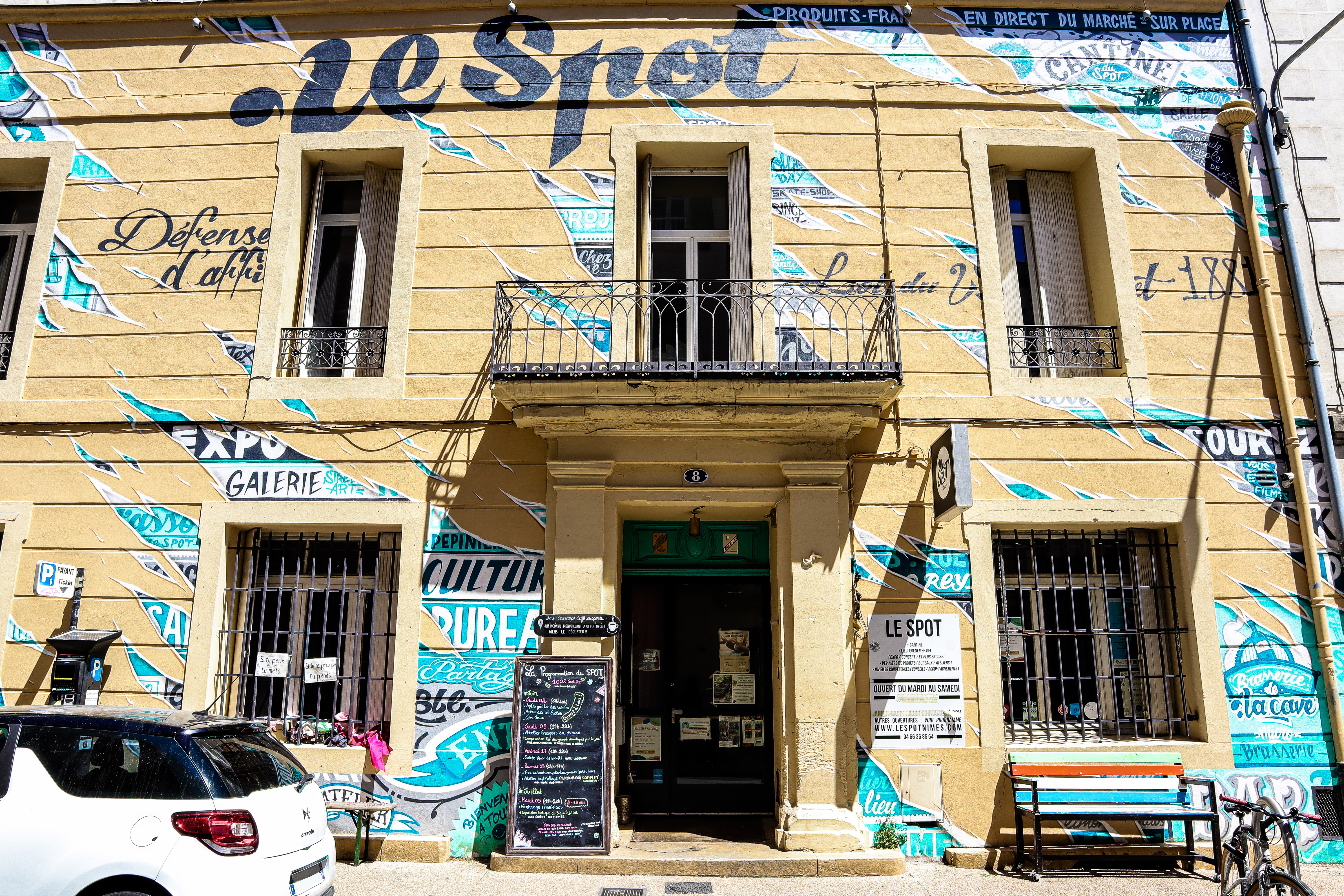
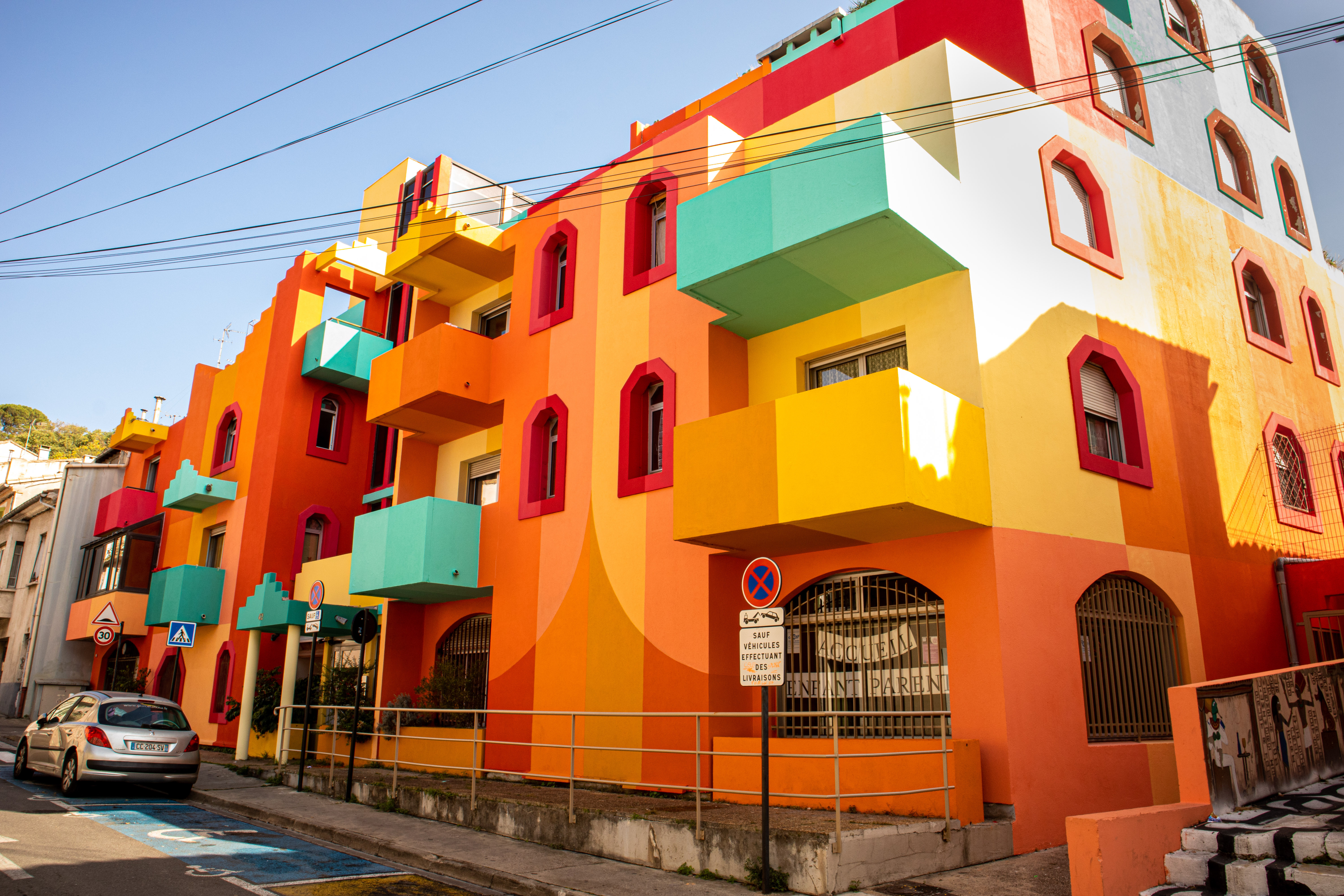
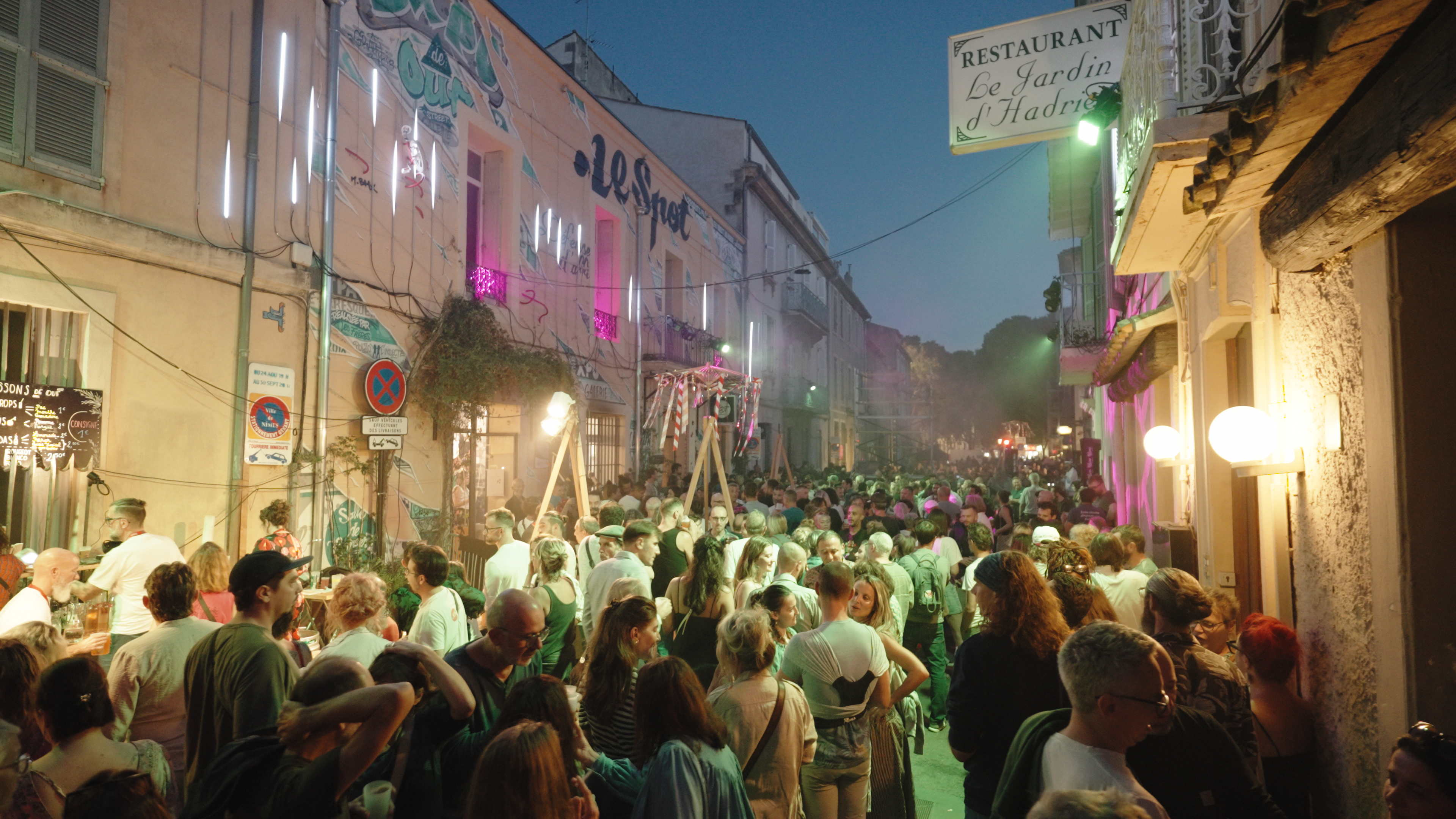
L’Expo de Ouf! transforms the priority neighborhoods of Gambetta and Richelieu into an open-air museum. Led by Le Spot, this social catalyst attracts 20,000 visitors annually, ranking 2nd after the Roma Arena. By involving residents to reclaim public space, it breaks stigmas and fosters pride. Its national influence turns street art into a driver for social mixing and renewal, redefining Nîmes’ identity and appeal.
France
Local
Nîmes
Mainly urban
It involves other types of transformations (soft investment)
Yes
2025-12-20
No
No
No
Organisation
L’Expo de Ouf!: A Model of Social and Cultural Sustainability
L’Expo de Ouf! addresses modern challenges as levers for radical urban transformation. Its excellence lies in a holistic approach to sustainability, rooted in Cultural Urbanism.
1. A Multidimensional Response
Social & Cultural (Cultural Rights): We transform priority neighborhoods into an open-air museum by placing cultural rights at the core. Rather than "dropping" art onto a community, we involve residents based on their unique abilities. This intergenerational approach replaces social exclusion with collective pride and "wild, luminous joy."
Environmental & Urban (Artivism): Committed to Cultural Urbanism, the project invests in ruins and abandoned homes. Instead of demolishing, we physically and symbolically rehabilitate the existing fabric. This art in public spaces acts as an "urban bandage," encouraging the gentle renovation of historic buildings and the reclamation of neglected streets.
Economic (Shifting Paradigms): With 20,000 annual visitors, it is Nîmes’ 2nd most popular attraction after the Roman Arena. We have reversed behavioral patterns: once-avoided "hot" zones are now desirable walking areas. This shift is increasing property values in Gambetta and Richelieu, where moving in is now a viable, rewarding option.
2. Exemplary Sustainability
Territorial Rooting: Le Spot’s permanent presence since 2013 ensures that social bonds between artists and residents sustain the project long-term.
Urban Resilience: By turning shadows into cultural exclamation points, we prove that a city can regenerate from its margins.
National Influence: L’Expo de Ouf! serves as a laboratory for Cultural Urbanism, proving that shared beauty and creative recognition are the foundations of a resilient city.
L’Expo de Ouf!: Origins of a Creative Explosion
To understand L’Expo de Ouf!, one must go back to 2013 and the birth of Le Spot in Nîmes. It began with a group of artists and activists who refused to let their city be defined only by its Roman remains. While the Arena grabbed the spotlight, the neighboring Gambetta and Richelieu districts—Priority Neighborhoods (QPV)—were sinking into institutional neglect and decay.
Artivism and "Tactical Frivolity"
The project was not an official commission but an act of pure artivism. The collective employed "tactical frivolity": beneath a playful, festive exterior lay a sharp political strategy. They used street art as a weapon of "mass re-enchantment" to force the public eye toward what was being ignored. By occupying ruins and abandoned houses with insolence and creativity, they transformed urban shadows into cultural exclamation points, making the invisible impossible to ignore.
A "Wild and Luminous Joy"
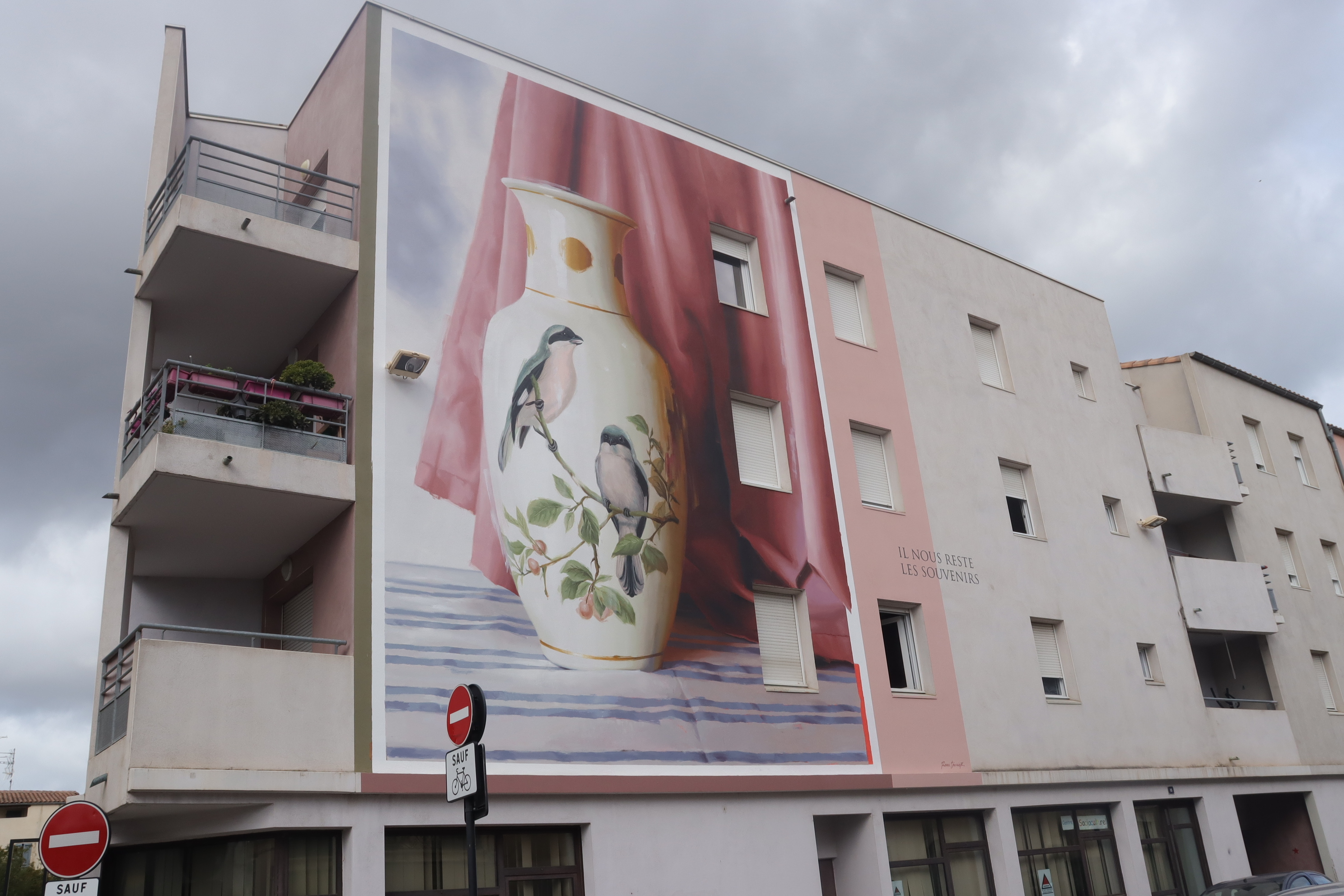
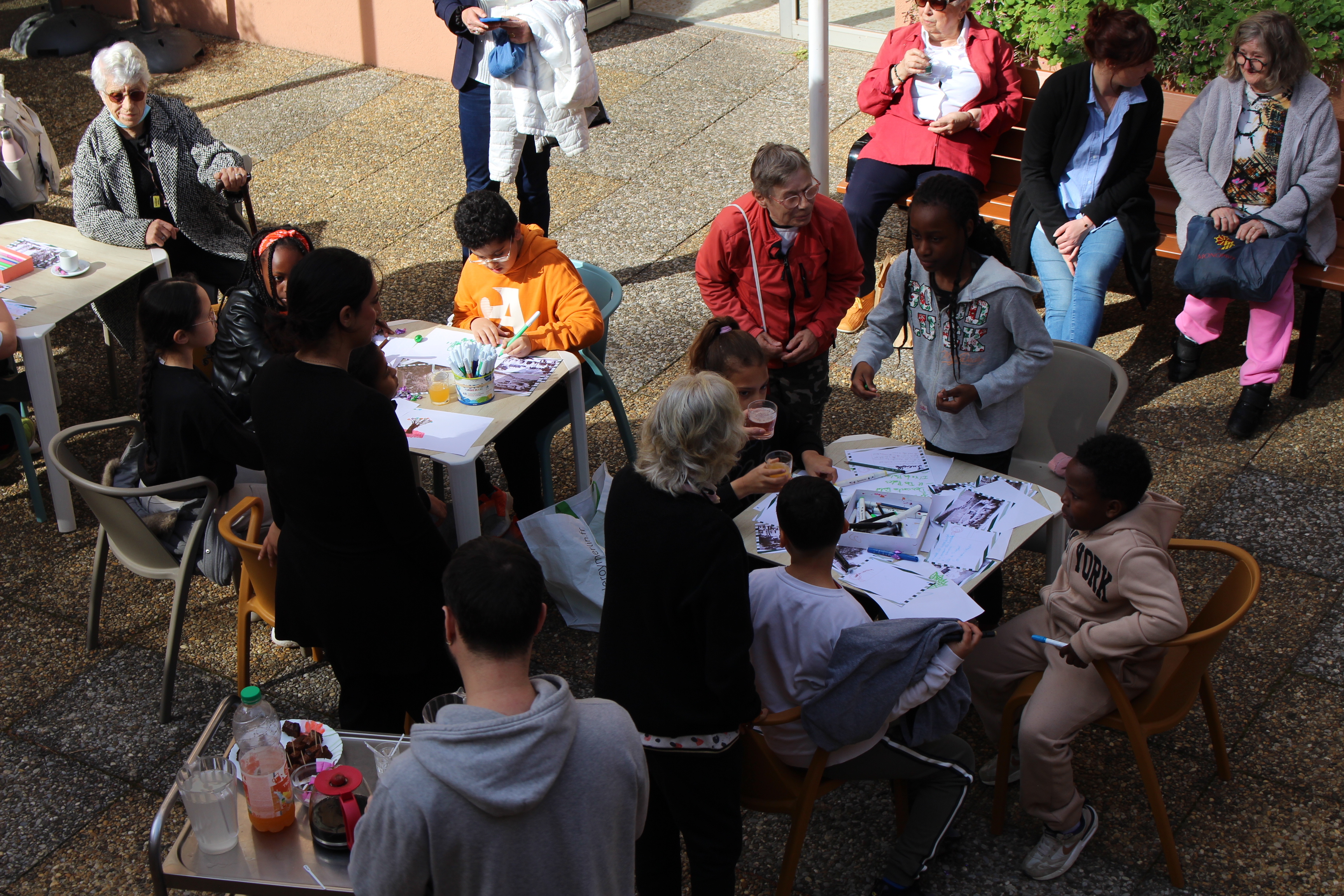
Le Spot became the nerve center of this revolution, driven by a "wild and luminous joy." More than an exhibition, it is a vital explosion that breaks traditional museum codes. The process relies on a deep intergenerational connection: residents become active accomplices, contributing according to their abilities. Neighbors share coffee at the foot of a ladder while a monumental mural breathes life back into a walled-up house. This contagious cheerfulness transforms social exclusion into rediscovered collective pride.
From the Streets to National Influence
What began as a grassroots initiative has evolved into a societal phenomenon. Today, with 20,000 annual visitors, it is Nîmes’ 2nd most popular attraction after the Arena. It has turned a cry of revolt into a national model for urban revitalization, proving that beauty, when shared and built with the community, is the most powerful engine for renewal.
Artivism: The inseparable blend of artistic expression and political engagement, giving a voice back to forgotten neighborhoods.
Tactical Frivolity: A brilliant strategy using humor, color, and celebration as serious tools for urban reclamation.
Cultural Rights : Recognizing each resident’s right to be a protagonist in their own culture and to transform their environment.
Inclusivity & Wild Joy : A collective, intergenerational energy that turns art in public spaces into a vibrant, human project.
Metamorphosis : The transition of a neglected area into a national attraction, proving the power of shared art.
L’Expo de Ouf!: A Model of Social and Cultural Sustainability
L’Expo de Ouf! addresses modern challenges as levers for radical urban transformation. Its excellence lies in a holistic approach to sustainability, rooted in Cultural Urbanism.
1. A Multidimensional Response
Social & Cultural (Cultural Rights): We transform priority neighborhoods into an open-air museum by placing cultural rights at the core. Rather than "dropping" art onto a community, we involve residents based on their unique abilities. This intergenerational approach replaces social exclusion with collective pride and "wild, luminous joy."
Environmental & Urban (Artivism): Committed to Cultural Urbanism, the project invests in ruins and abandoned homes. Instead of demolishing, we physically and symbolically rehabilitate the existing fabric. This art in public spaces acts as an "urban bandage," encouraging the gentle renovation of historic buildings and the reclamation of neglected streets.
Economic (Shifting Paradigms): With 20,000 annual visitors, it is Nîmes’ 2nd most popular attraction after the Roman Arena. We have reversed behavioral patterns: once-avoided "hot" zones are now desirable walking areas. This shift is increasing property values in Gambetta and Richelieu, where moving in is now a viable, rewarding option.
2. Exemplary Sustainability
Territorial Rooting: Le Spot’s permanent presence since 2013 ensures that social bonds between artists and residents sustain the project long-term.
Urban Resilience: By turning shadows into cultural exclamation points, we prove that a city can regenerate from its margins.
National Influence: L’Expo de Ouf! serves as a laboratory for Cultural Urbanism, proving that shared beauty and creative recognition are the foundations of a resilient city.
L’Expo de Ouf! addresses modern challenges as levers for radical urban transformation. Its excellence lies in a holistic approach to sustainability, rooted in Cultural Urbanism.
1. A Multidimensional Response
Social & Cultural (Cultural Rights): We transform priority neighborhoods into an open-air museum by placing cultural rights at the core. Rather than "dropping" art onto a community, we involve residents based on their unique abilities. This intergenerational approach replaces social exclusion with collective pride and "wild, luminous joy."
Environmental & Urban (Artivism): Committed to Cultural Urbanism, the project invests in ruins and abandoned homes. Instead of demolishing, we physically and symbolically rehabilitate the existing fabric. This art in public spaces acts as an "urban bandage," encouraging the gentle renovation of historic buildings and the reclamation of neglected streets.
Economic (Shifting Paradigms): With 20,000 annual visitors, it is Nîmes’ 2nd most popular attraction after the Roman Arena. We have reversed behavioral patterns: once-avoided "hot" zones are now desirable walking areas. This shift is increasing property values in Gambetta and Richelieu, where moving in is now a viable, rewarding option.
2. Exemplary Sustainability
Territorial Rooting: Le Spot’s permanent presence since 2013 ensures that social bonds between artists and residents sustain the project long-term.
Urban Resilience: By turning shadows into cultural exclamation points, we prove that a city can regenerate from its margins.
National Influence: L’Expo de Ouf! serves as a laboratory for Cultural Urbanism, proving that shared beauty and creative recognition are the foundations of a resilient city.
L’Expo de Ouf! is a laboratory for Cultural Urbanism. It turns urban challenges into levers for radical change, fostering a city that is beautiful, sustainable, and inclusive.
Social Impact & Cultural Rights: During the 15-day residency, artists are never alone. Daily breakfasts and drinks at the foot of the murals serve as pretexts for dialogue, co-creating a shared narrative in the present moment. This "wild joy" is communicative: megaphone-guided tours greet every neighbor and passerby, legitimizing everyone’s presence. The opening night reflects this diversity, growing from 400 to 2,000 attendees in 5 years, with a third of the gallery works sold that night.
Environmental Innovation: We experiment with low-impact techniques: producing natural paints and creating art through high-pressure water erasure (using urban soot as a medium). This "urban bandage" approach rehabilitates ruins and abandoned houses through Artivism.
Aesthetic Evolution: Moving beyond 80s street art, we embrace art in public spaces through ceramics, mosaics, and 3D design. This sophisticated "Murals" movement brings art where it is least expected.
Economic Reversal: With 20,000 annual visitors, we have flipped the script on "sensitive" neighborhoods. Gambetta and Richelieu are now desirable areas, positively impacting property values and local pride.
By prioritizing social bonds and permanent engagement via Le Spot since 2013, we prove that shared beauty and creative recognition are the foundations of a resilient city.
L’Expo de Ouf!: A Laboratory for Inclusive Urbanism
L’Expo de Ouf! turns urban challenges into levers for change through Cultural Urbanism—the French counterpart to the New European Bauhaus.
1. Creating Social "Friction" and Joyful Triggers
We design multiple pretexts to bring diverse populations together:
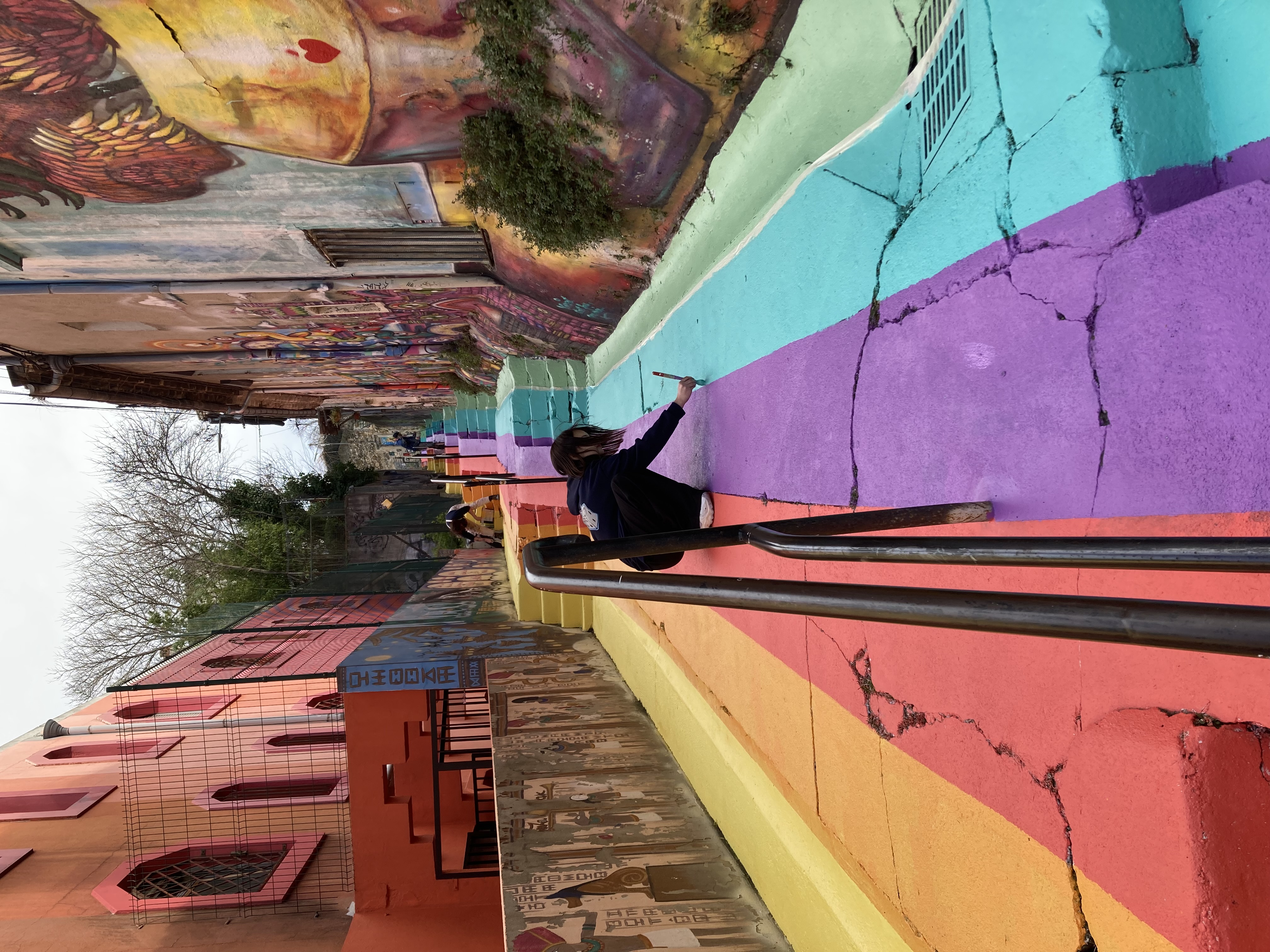
Inclusion through Movement: By painting a neighborhood staircase in LGBTQ+ rainbow colors and routing 14,000 Nîmes Urban Trail runners through it, we create a joyful intersection between sports, local children, and diversity rights.
The Intergenerational "Lighthouse": Artist Maria Orovio lived for 3 months at the Enclos Rey senior residence. Together, they designed a mural that turned this retirement home into a "lighthouse"—a social landmark for the whole district.
Climate & Tactile Accessibility: We joined the global Audubon Mural Project to highlight bird species threatened by climate change. To make these murals accessible to the visually impaired, we created 3D tactile plates. Beyond audio narration, these allow the art to be felt, turning a visual medium into a sensory experience for all.
2. Collective Ownership & Governance
The project is a "Common" managed by the non-profit Le Spot and the cooperative SCIC Les Spots:
Shared Property: Over 150 private owners trust us with their walls. Residents act as "Greeters," sharing the stories of the murals when we are away.
Inclusive Model: Whether through the 15-day residency or the year-round activity of Le Spot (an emblematic Third-Place), everyone participates according to their ability. Our "one person = one vote" cooperative model ensures that residents, artists, and partners co-steer the project.
3. Why it is Exemplary
We have shifted from passive consumption to active contribution. By greeting every passerby with a megaphone and hosting 2,000 people for an inclusive opening night, we prove that shared beauty and creative recognition are the true foundations of a resilient city.
L’Expo de Ouf!: A Laboratory for Creative Cohabitation
Citizen involvement is not an option here; it is the engine of a vibrant Cultural Urbanism rooted in the Le Spot third-place.
1. Co-producing the Urban Narrative
Engagement is based on a reciprocal infusion between the artist and their environment. Over 150 private owners have responded to our "call for walls," turning their facades into collective heritage. During the 15-day residency, the creative process is porous: neighbors participate as they wish (breakfasts at the foot of murals, thematic debates). By living for 3 months in a senior residence, artist Maria Orovio turned elderly residents into the artistic consultants of their own urban "lighthouse."
2. Proof through Use: Art vs. Urban Blight
Our experiments demonstrate a direct impact on city management. By intervening in "hotspots" of illegal dumping, we proved that a mural, combined with persistent human presence, encourages respect. Where an artist expresses themselves, waste recedes. This active design creates a tacit sanctuary for common space through beauty and restored dignity.
3. Shared Governance & Social Resonance
Involvement is institutionalized via the SCIC Les Spots. This cooperative model (one member = one vote) allows residents, employees, and partners to steer the project. In 5 years, the opening night attendance jumped from 400 to 2,000 spectators, reflecting total social diversity. Social organizations now use our trails—including tactile 3D plates for the visually impaired—as open-air textbooks on climate urgency or freedom of expression.
4. A Lasting Impact
By greeting every neighbor with a megaphone, we transform the district into a space of radical hospitality. L’Expo de Ouf! is no longer just an event, but a "Common" where everyone, regardless of age or ability, finds their place to share their joy with others.
Multi-Scalar Governance
L’Expo de Ouf! is a collaborative architecture where every level of governance strengthens project sustainability.
1. Local Level: Co-design & Ownership
Role: This is the heart of the project. Over 150 private owners provide the "canvas," while residents co-author the urban narrative during the 15-day residency (shared breakfasts, debates). The City of Nîmes provides technical and regulatory support.
Added Value: Lasting Social Peace. By involving residents in the design phase (e.g., seniors at Enclos Rey), art becomes a "Common" protected by the community, drastically reducing vandalism and blight.
2. Regional & National Level: Modeling & Attractiveness
Role: The Occitanie Region and Gard Department support the project as a lever for social cohesion. Nationally, we collaborate with Third-Place networks and the Ministry of Culture.
Added Value: Structural Innovation. This support enabled the creation of the SCIC Les Spots, a cooperative where every stakeholder (resident, employee, partner) has a vote. This legal model secures the project's economy and territorial roots.
3. European Level: Standards & Transition
Role: The project aligns with the New European Bauhaus (Beautiful, Sustainable, Together). We integrate global programs like the Audubon Mural Project regarding climate change.
Added Value: Ecological & Universal Excellence. The European framework drives us toward "Green Chemistry" (natural paints) and radical accessibility (3D tactile plates for the blind), turning Nîmes into a European laboratory for social and ecological transition.
Here is the English translation of your transdisciplinary approach, optimized for the 2,000-character limit.
A Transdisciplinary Approach at the Service of the City
L’Expo de Ouf! is far more than an open-air gallery; it is a laboratory where hybrid fields of knowledge intersect to durably transform the urban fabric.
1. Street Arts, Performance, and "Invisible Theatre"
This is the living foundation of our project. We treat Street Art not as static decoration, but as a continuous staging of daily life. Inspired by invisible theatre and performance art, our mediators and artists engage the streets spontaneously. "Megaphone tours" and impromptu interventions at the foot of the murals break the wall between the artwork and the passerby, turning every resident into a spectator-actor in a permanent urban play. Here, joy is used as a political tool for mutual recognition.
2. Social Sciences and Tactical Urbanism
The project is rooted in urban sociology. We study how art modifies foot traffic and strengthens the sense of belonging. Tactical urbanism is activated to reclaim neglected spaces (such as illegal dumping sites) and transform them into living environments. Our SCIC (Cooperative) model represents innovation in the Social and Solidarity Economy, ensuring democratic governance.
3. Environmental Sciences and Inclusive Design
Facing the climate emergency, we integrate Green Chemistry (natural paints) and biodiversity awareness through the Audubon Project. Simultaneously, we apply Design for All principles: accessibility engineering via 3D tactile reproductions (relief plates) allows the visually impaired to "touch" the colors and shapes.
4. Education and Heritage
By intervening on over 150 private facades, we create a dialogue between Nîmes’ historic stone and modern pigments. The neighborhood becomes an open-air classroom for local schools and social workers, addressing citizenship and personal expression through the lens of urban history.
A Resilient Model Facing the Fragility of the "Common"
While L’Expo de Ouf! shows economic maturity, its balance remains precarious. Operating in public space today means facing direct exposure to shifting political paradigms and security-focused urban policies.
1. Fragility in the Face of "Punitive Urbanism"
The project walks a thin line. As many urban policies favor a punitive approach (erasure, surveillance, exclusionary furniture), we offer radical hospitality. This stance makes us vulnerable: an administrative decision or a change in political priorities can, overnight, jeopardize access to walls or financial support. Our model is an act of resistance through beauty, yet it depends on a continuous—and sometimes fragile—dialogue with authorities.
2. The SCIC: A Democratic Shield
To counter this vulnerability, we chose the SCIC (Cooperative) structure. With over 90 shareholders and 200 members, the project is no longer carried by a few individuals, but by a community. This legal framework turns the project into a "Common": it is much harder to dismantle an initiative backed by such a broad citizen base. This is our best insurance against arbitrary political shifts.
3. An Economy of Perseverance
Our budget (€80k–€100k) is optimized but tight. While sponsorship is growing and our own resources (€25k) provide a foundation, public grants (€35k) remain the guarantor of our cultural public service mission. Without this support, the cost of social mediation and mural maintenance—which actually saves the city money in cleaning fees—would become unbearable for the cooperative alone.
4. Art as an Urban Counter-Model
Acknowledging our fragility highlights that public space is a field of struggle. By transforming illegal dumping sites through art rather than sanctions, we prove that trust in residents is more effective than constraint. L’Expo de Ouf! acts as a democratic sentinel: its survival is a barometer of the neighborhood’s social health.
English Version: The "Bespoke" Methodology: Situated Art
L’Expo de Ouf! does not offer a catalog of pre-defined works; it offers a method of intervention adaptable to any context:
Tailored Artistic Response: Every issue (urban decay, isolation, lack of visibility) receives a unique response. We do not "paste" art onto a city; we let it emerge from the existing architecture and landscape.
Local Narrative as Raw Material: Each proposal is built on encounters and stories—both local and personal. This ensures social acceptance and emotional resonance: residents recognize themselves in the work because it speaks to their own walls and lived experiences.
Process Transferability: While the final artwork is unique to Nîmes, the process of empathetic listening and sensitive diagnosis is fully replicable. It is a form of consultation engineering through visual storytelling.
The replicable element is the "Software" (the method), not the "Hardware" (the mural). It follows a 3-step process:
Sensitive Diagnosis: Identifying urban tension points and collecting local narratives.
"Doorstep" Mediation: Engaging private owners and ensuring the artist lives and creates in direct contact with the public to build trust.
Situated Creation: Delivering a bespoke artistic response that fits the architecture and speaks to the people, ensuring long-term respect and maintenance through community pride.