Enablers for New European Bauhaus Transformation
Gaud•e
First Digital Architect
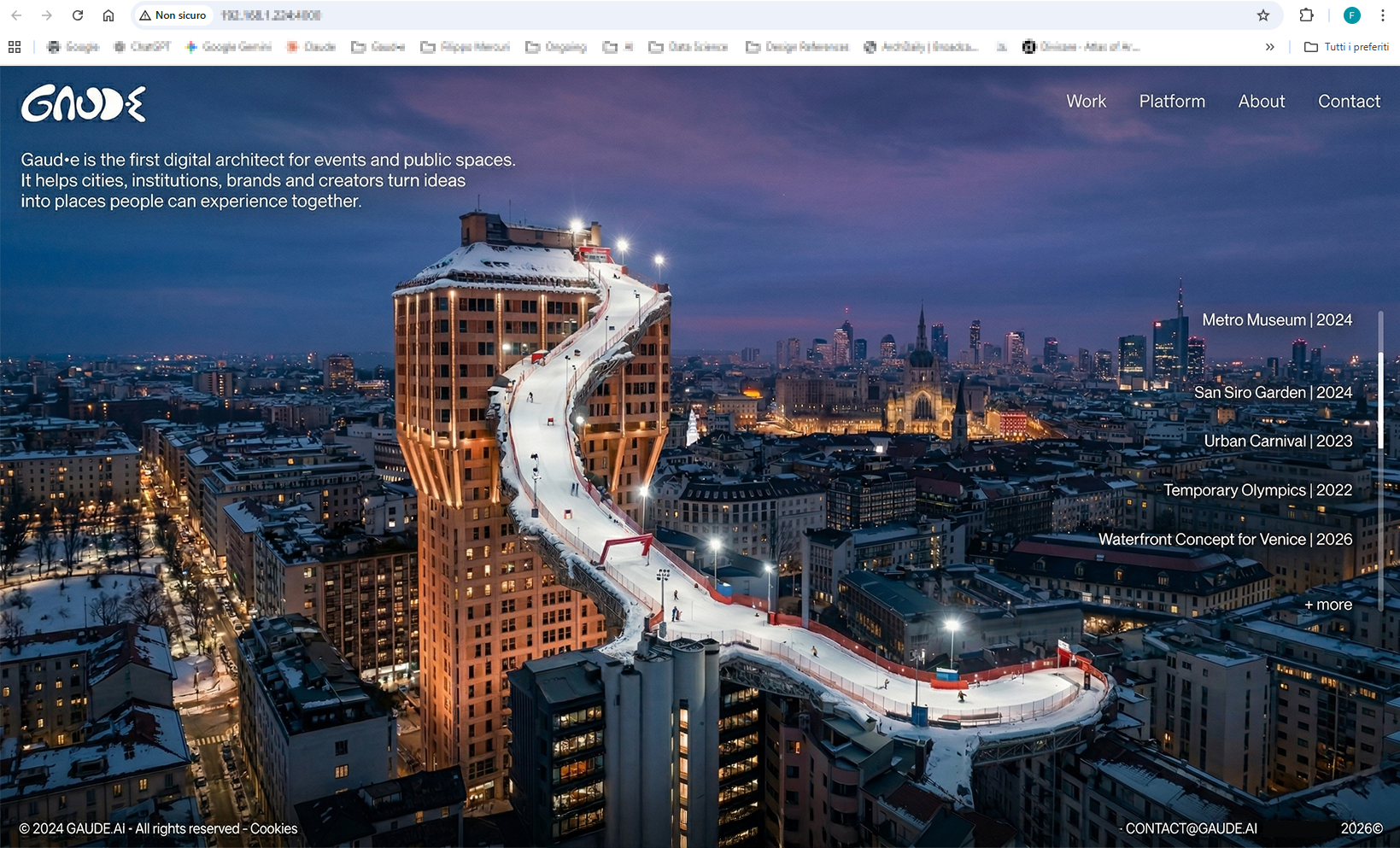
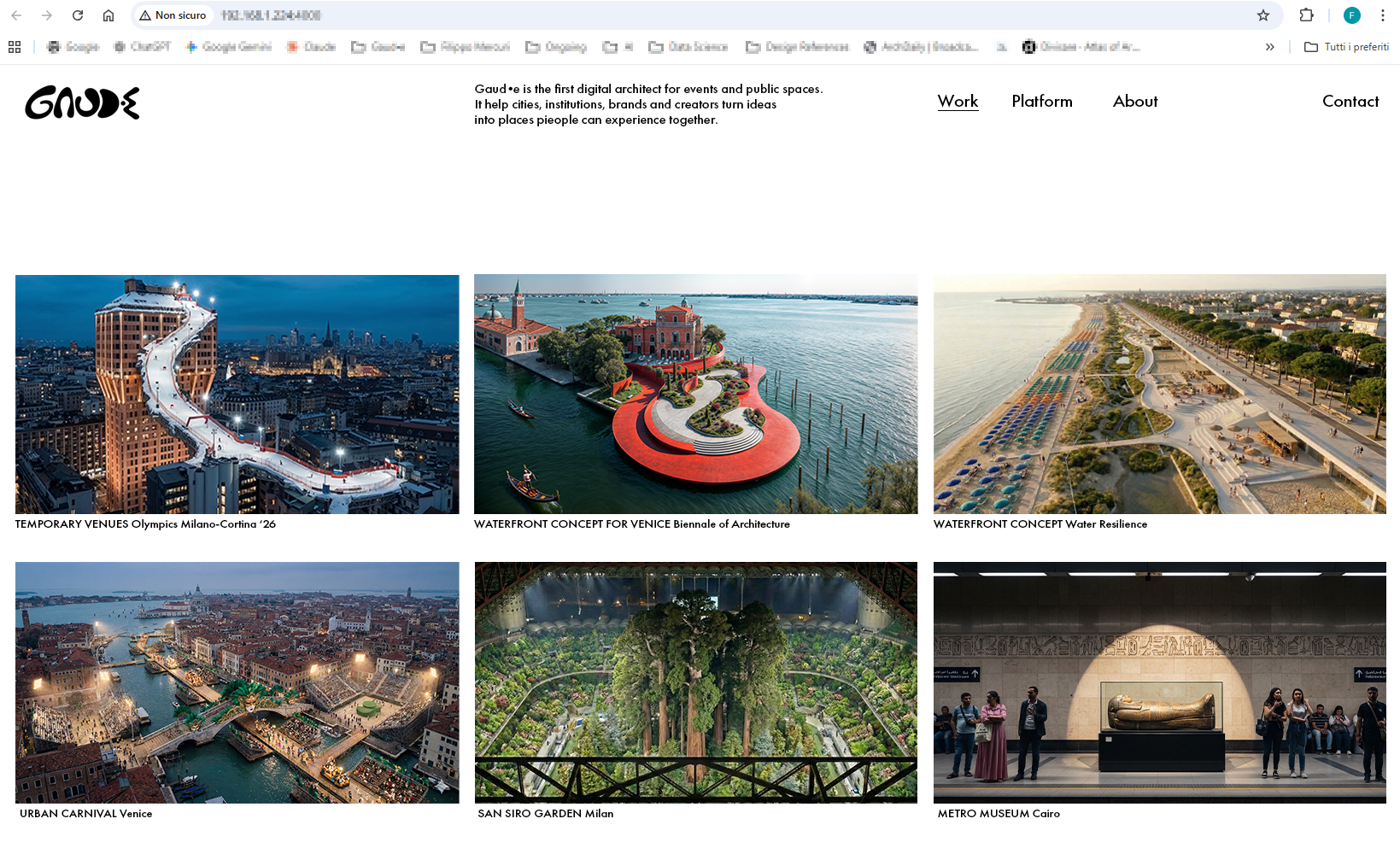
Gaud•e is the first digital architect for events and public spaces. It helps cities, institutions, brands and creators turn ideas into places people can experience together.
Italy
National
It addresses urban-rural linkages
It involves a physical transformation of the built environment (hard investment)
Early concept
No
No
No
Individual
Gaud•e is a platform that helps cities, brands, institutions and creators turn ideas into coherent spatial directions for real events, venues and public spaces. It combines AI-generated imagery with concept structuring logic to make early-stage design faster, clearer and more directly connected to realisation.
AI has made visual creativity widely accessible. It is now easier than ever to imagine, test and visualise spatial ideas. But access to creativity is only the beginning: the real challenge is turning what you imagine into something coherent enough to be developed, communicated and realised. That is the gap Gaud•e is built to close.
Its main objective is to make concept production more useful for real projects. The platform is designed for professionals working on events, installations, temporary venues and public-facing spaces — including cities, cultural institutions, brands, festival organisers and event creators — who need stronger early-stage concepts before entering design development and production.
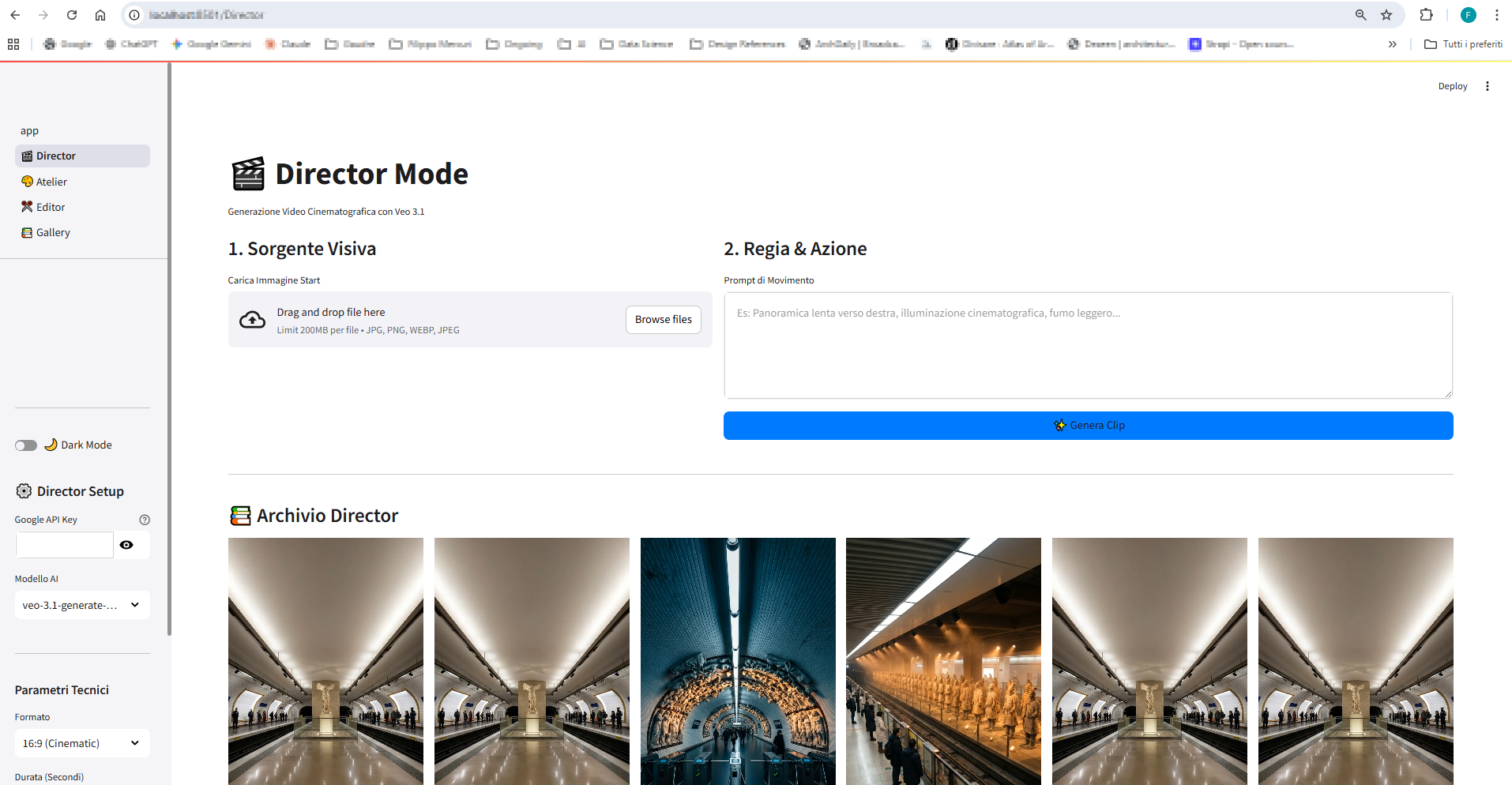
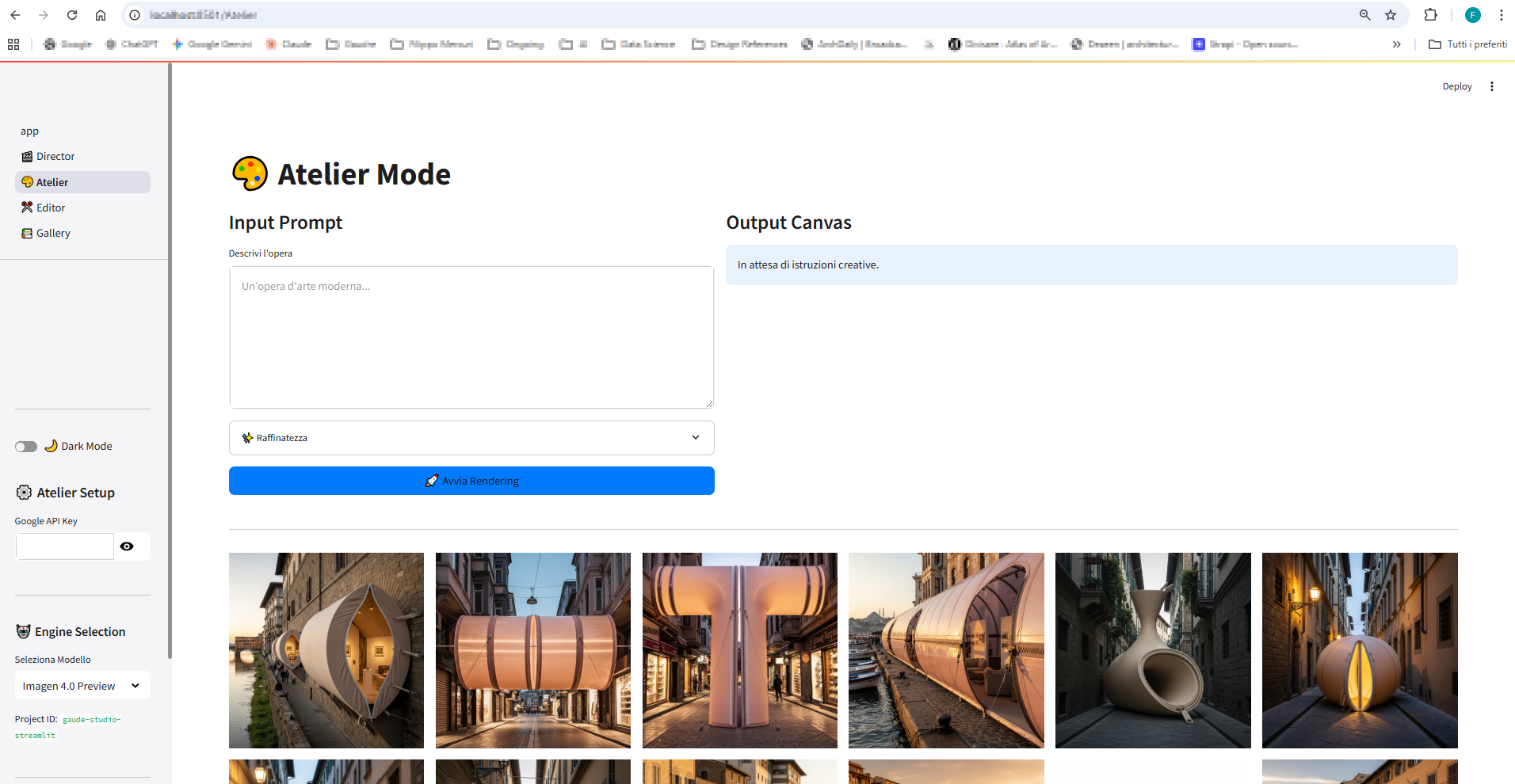
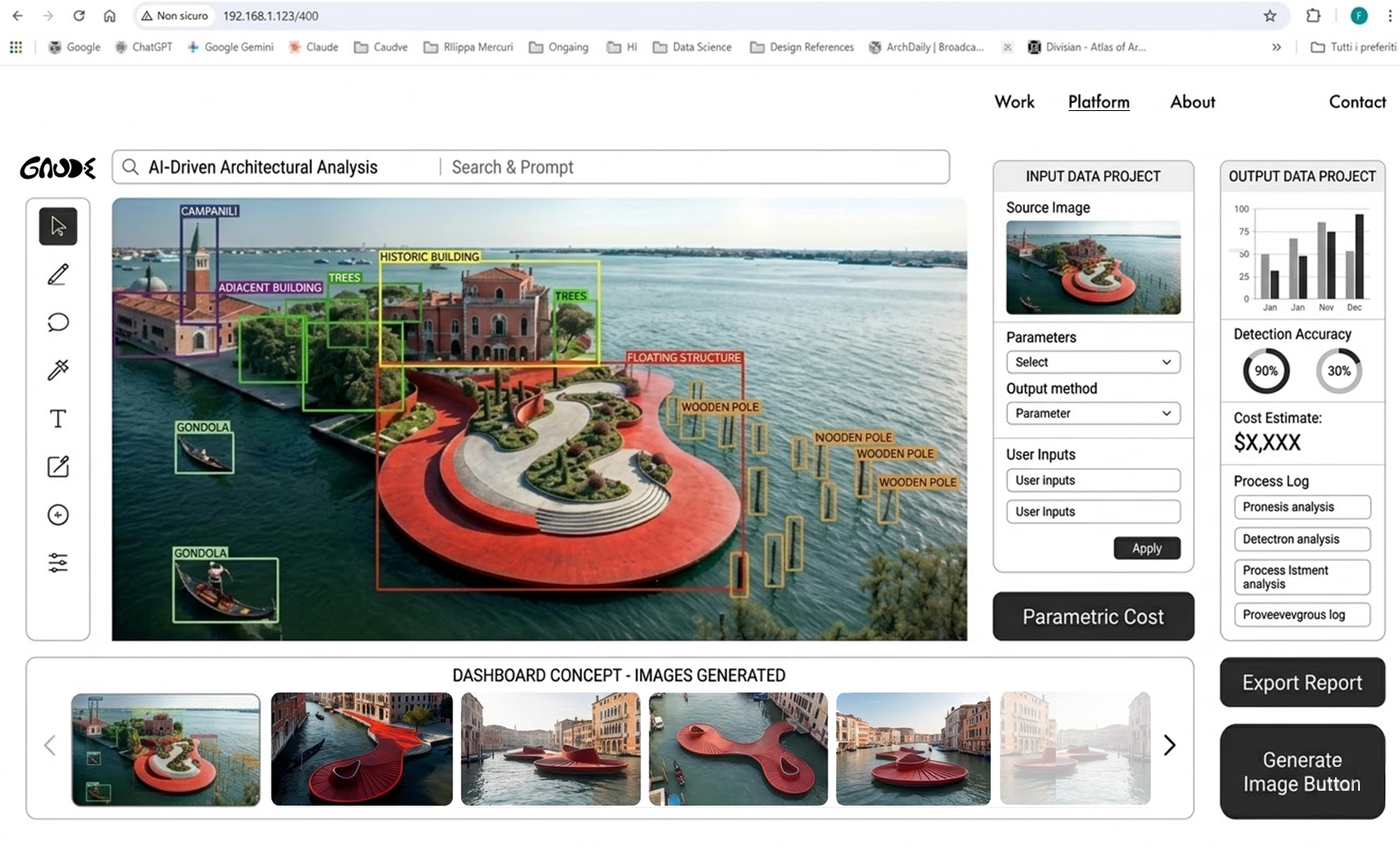
Today, this work already takes place through Gaud•e Studio, a first operational environment where concept images and videos are generated and organised through connected creative tools. It marks the first step toward a broader Gaud•e Platform able to support not only concept creation, but also the wider project development process.
So far, Gaud•e has shown that AI can be used not only to generate images, but to build concepts with stronger consistency, clearer spatial direction and greater practical relevance for real project development.
Its transformative potential lies in redefining AI as a practical design instrument: one that makes concepts easier to develop, communicate and realise — faster than traditional concept building, more coherent than generic image generation, and more directly connected to implementation.
Gaud•e began with a direct observation made by Filippo Mercuri while working on events and temporary spatial projects: the real bottleneck was never generating ideas, but turning them into something clear enough to be realised. That gap — between concept and implementation — became the starting point.
The concept was developed through three phases. The first was exploration: testing AI-generated imagery to understand how quickly spatial scenarios could be visualised and compared. The second was framing: identifying the limits of existing workflows, especially their inconsistency and weak connection to delivery. The third was application: using Gaud•e — already in its initial Studio form — to produce concept studies, visual systems and spatial directions strong enough to support real projects.
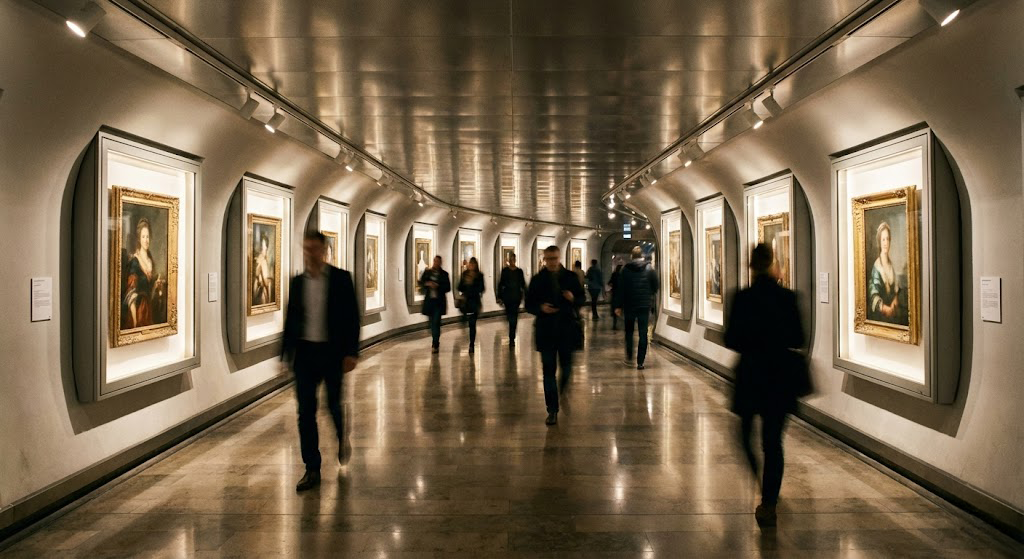
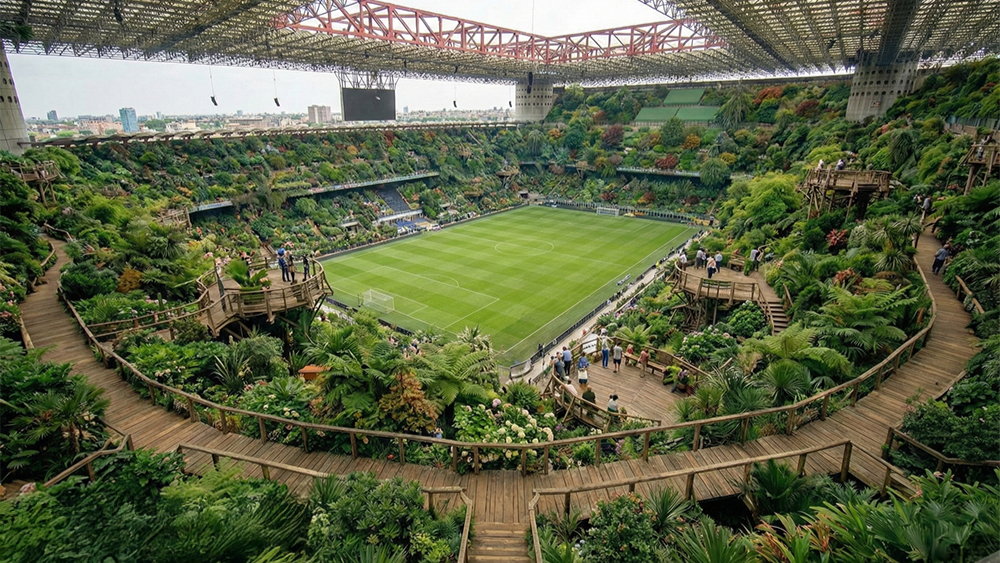
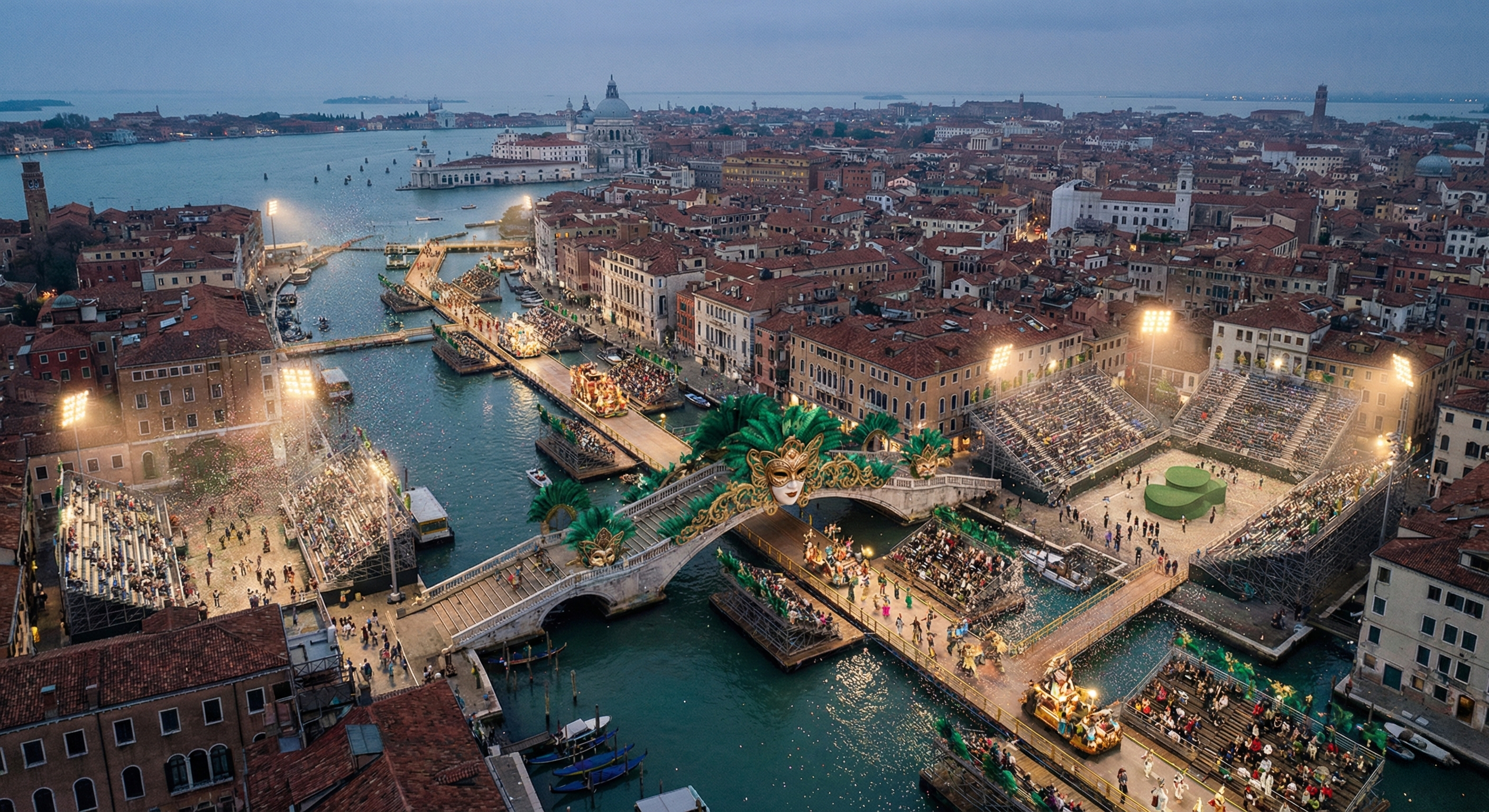
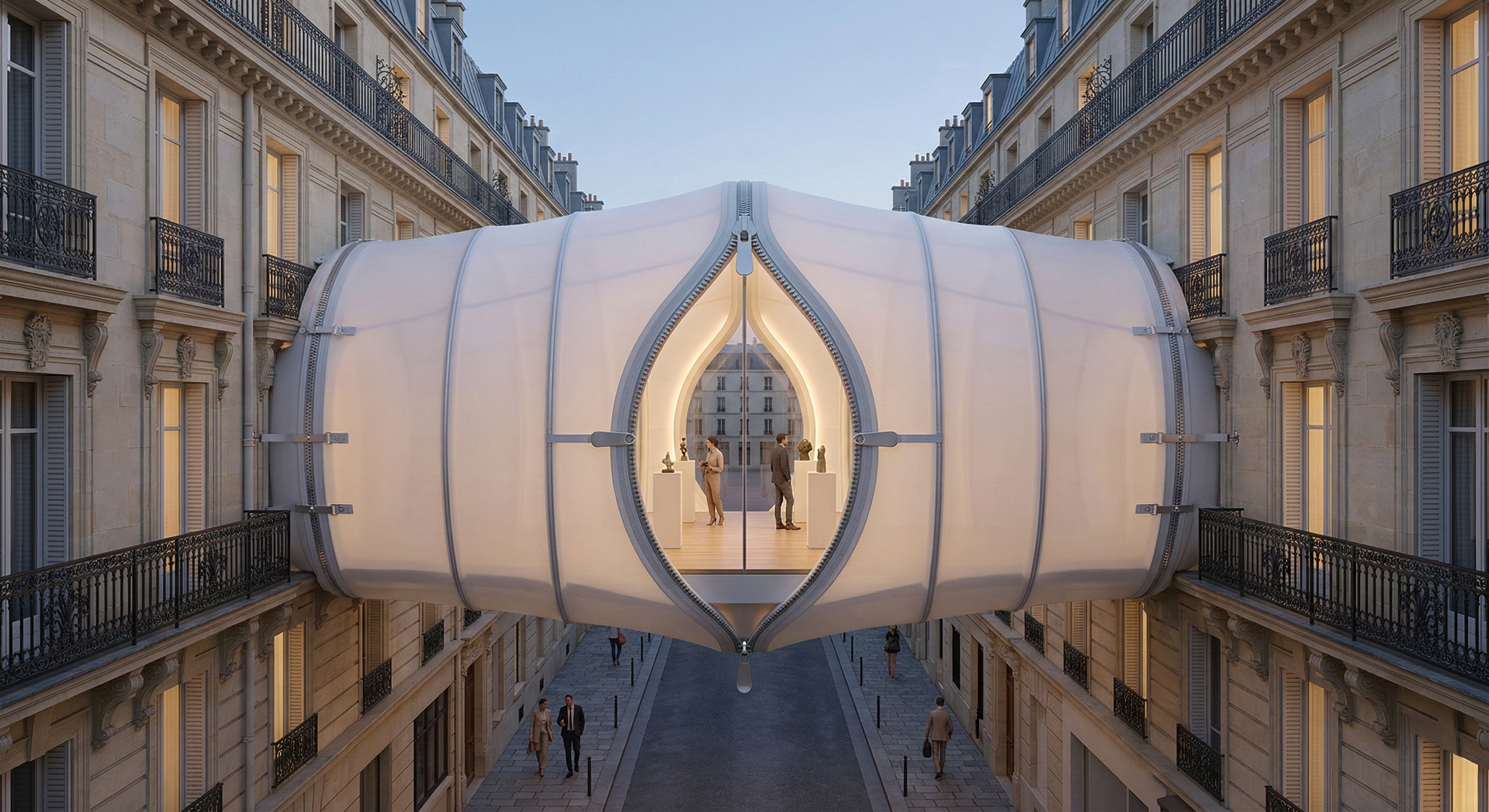
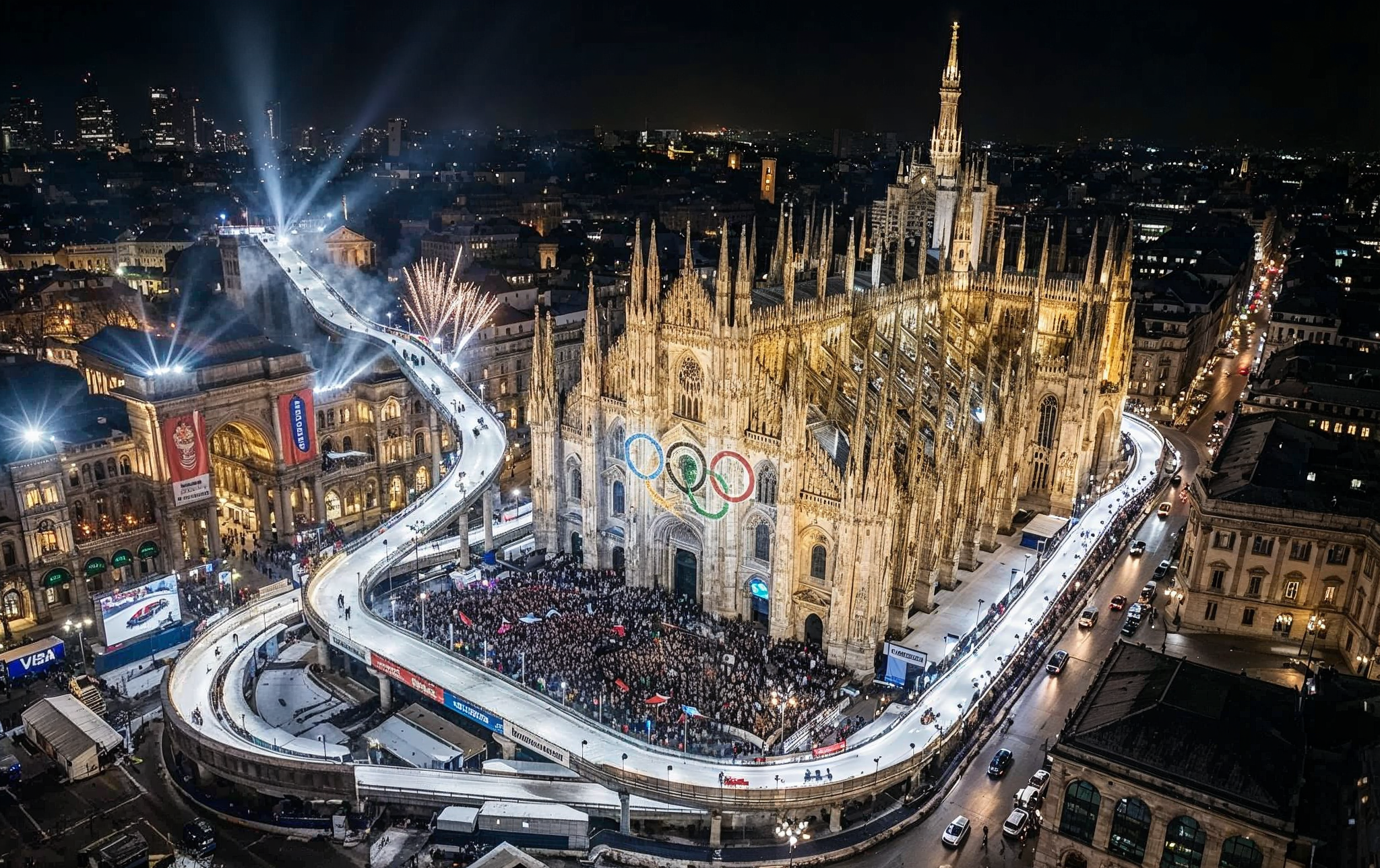
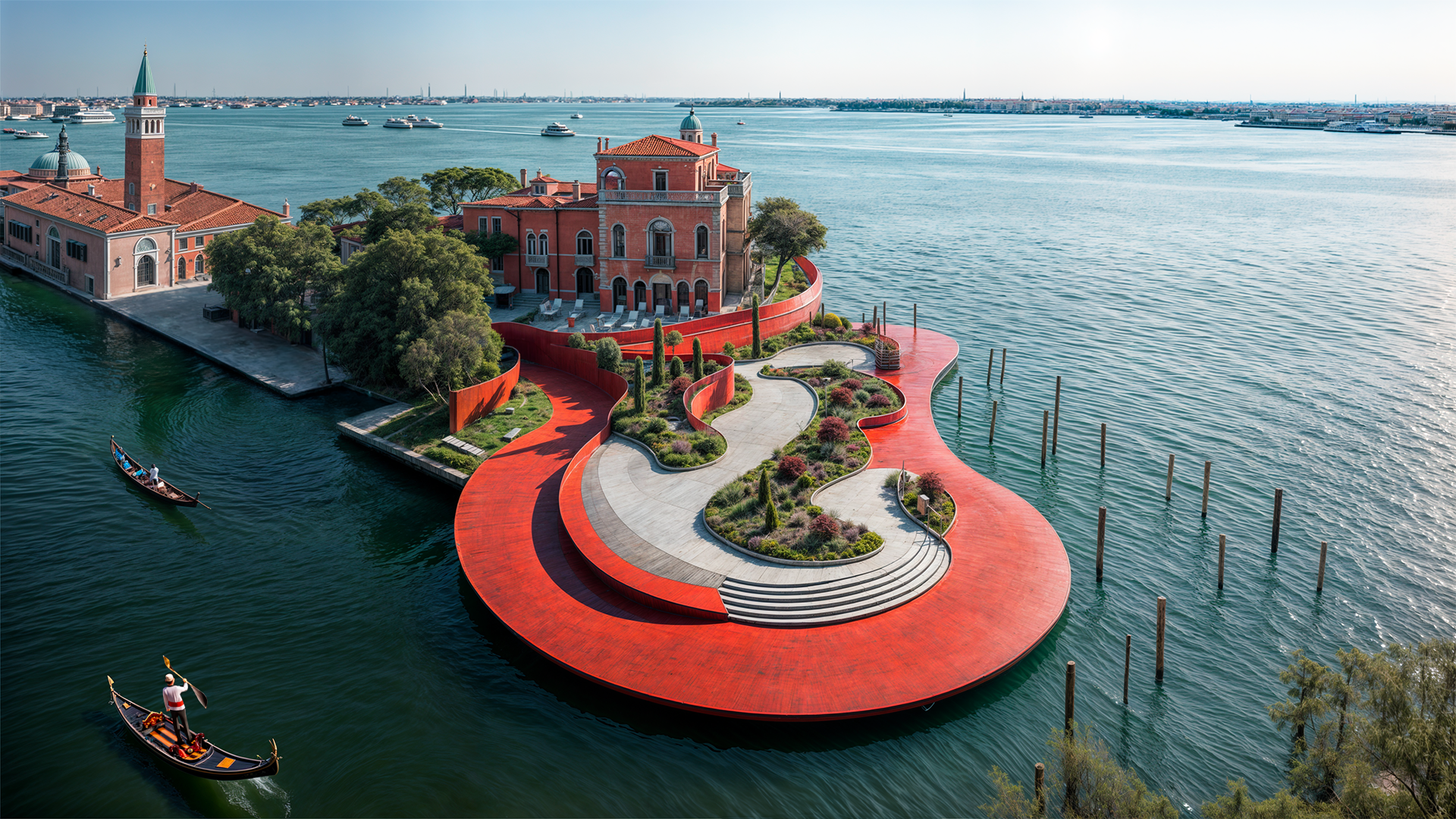
This phase included a range of case studies across different sectors and scales: Temporary Olympics for event infrastructure and temporary venues; Where Does the Sand Go? for coastal resilience and environmental adaptation; San Siro Garden for stadium regeneration through event culture; Metro Museum for cultural programming linked to transport infrastructure; and Zip Capsule for branded and compact spaces tailored to creators, events and private activations. Together, these studies showed that the same method could respond to very different briefs while keeping a coherent design logic.
The main tools used were AI-generated imagery, prompt design, visual selection and scenario comparison — methods that made it possible to move from isolated outputs to coherent concept systems, legible not only visually but also for clients, collaborators and implementation partners.
The next step is to bring this method to a wider audience — developing Gaud•e into a structured professional platform where any organisation with an idea for a space or event can move from concept to realisation with clarity and confidence.
Spatial Concepts
AI-assisted design
Concept-to-realisation
Event Design
Temporary Venues
Gaud•e addresses sustainability by reducing waste in the early phases of design and event development. Many spatial projects produce large amounts of discarded ideas, fragmented references, repeated visual work and inefficient concept cycles before reaching a usable direction. Gaud•e aims to make that phase faster, clearer and more structured, helping clients define stronger concepts earlier and avoid unnecessary redesign, misalignment and resource-intensive trial and error later.
Its sustainability objective is therefore both environmental and economic: to support lighter, smarter project development and to reduce the gap between concept generation and real implementation. This is done by combining AI-generated imagery with concept-building logic, scenario comparison and visual selection, so that early proposals are more coherent and easier to evaluate.
The concept has already shown that AI can be used not only to multiply images, but to organise them into clearer spatial directions with greater practical relevance. This helps teams, partners and clients make earlier decisions, reduce friction in the process and focus resources on concepts that are stronger and more feasible.
Its exemplary character lies in applying sustainability not only to materials or construction, but to the design process itself. Gaud•e promotes a more efficient way of working: less fragmented, less wasteful and more directly connected to real development. In this sense, it proposes a sustainable model of concept production for events, temporary venues and public-facing spaces.
Gaud•e contributes to aesthetics by improving the quality, coherence and cultural depth of the spaces imagined before they are built. Its purpose is not simply to generate attractive images, but to help shape stronger spatial directions for events, venues and public-facing projects — directions that people can later experience as more meaningful, legible and memorable places.
The concept integrates design, visual culture and spatial storytelling. By combining AI-generated imagery with curated concept-building logic, it helps users move beyond generic references and develop places with clearer identity, atmosphere and public presence. This is especially important in projects where temporary spaces, installations or events need to create a strong experience in a short time.
Its aesthetic value also lies in making quality design more accessible at an early stage. Better early concepts can lead to better final spaces: more coherent, more comfortable, more engaging and better aligned with their cultural or spatial context. Through its case studies, Gaud•e has explored heritage settings, waterfronts, venues, infrastructure and branded spaces, showing how different identities can be translated into distinct spatial languages.
Its exemplary character lies in bridging imagination and design quality. Rather than treating aesthetics as surface image-making, Gaud•e uses visual tools to build concepts that are spatially stronger, culturally richer and more capable of becoming places people remember and care about.
Gaud•e promotes inclusion by making concept development easier to access, easier to understand and easier to share among different actors. In many spatial projects, early design is controlled by specialists and communicated through tools that are difficult for clients, collaborators or non-experts to interpret. Gaud•e aims to reduce that gap by creating clearer, more legible concept directions from the start.
Its inclusion objective is therefore professional, spatial and cultural. Professionally, it supports a broader range of users — from brands and organisers to institutions and creators — who need stronger early-stage concepts. Spatially, it helps projects consider public-facing use, accessibility and collective experience from the beginning. Culturally, it translates complex ideas into visual and conceptual forms that more people can discuss.
This is implemented through AI-generated imagery, prompt design, scenario comparison and concept framing. These tools make it easier to compare options, identify stronger directions and build shared understanding across clients, collaborators and implementation partners. The method also supports design-for-all thinking because it helps accessibility, circulation and public use enter the concept phase earlier, rather than being added later.
Its exemplary character lies in showing that inclusion can also happen upstream, in the way projects are conceived and communicated. Gaud•e does not only help make spaces; it helps make early design more understandable, discussable and open to a wider range of actors.
Gaud•e has been developed through a participatory logic based on iteration, feedback and dialogue around concept work. The people who benefit from it include clients, collaborators, designers, cultural actors, event organisers and, indirectly, the people who later experience the spaces developed through it.
Participation has so far taken place mainly through applied concept studies and project dialogue. Gaud•e’s outputs were not treated as final answers, but as working material that could be discussed, selected, challenged and refined. This allowed different actors — including clients, collaborators and potential implementation partners — to react to clearer spatial directions earlier in the process.
This had a real influence on outcomes. Feedback helped clarify which images were only suggestive, which directions had spatial value, and which concepts were strong enough to support real development. In this sense, participation improved both the quality and the usability of the method.
The next phase will make participation more structured through pilot collaborations, where selected users will test Gaud•e in real briefs. Their feedback will help refine workflows, improve concept logic and strengthen the connection between platform outputs and implementation needs.
Its participatory value lies in making early design less opaque and more discussable, so that more actors can shape a project before it becomes fixed.
Gaud•e is relevant to stakeholders at different levels because the gap between concept and realisation exists across many sectors. At the local level, potential users include brands, event organisers, cultural venues, municipalities, museums and space operators who need stronger concepts for installations, events or public-facing projects. For them, Gaud•e offers faster concept development and clearer communication.
At regional and national level, the concept can be relevant for cultural agencies, event networks, innovation programmes, design institutions and creative-industry actors interested in new tools for concept development and implementation. At the European level, it can connect with networks working on cultural innovation, creative industries, AI in design, NEB-aligned transformation and new professional tools for spatial production.
The added value of this multilevel ecosystem is different at each level. Local actors bring briefs, use cases and implementation needs. Regional and national actors bring resources, partnerships and institutional legitimacy. European frameworks can support visibility, scaling, exchange and alignment with broader cultural and innovation agendas.
In return, Gaud•e offers these actors a practical way to improve how projects are framed and developed before production. Its added value is not only visual, but organisational: it can make concept work clearer, more comparable and more ready for implementation across different governance contexts.
Gaud•e is transdisciplinary by design. It brings together architecture, spatial design, event design, visual culture, digital tools and AI-based image generation into one concept-building method. Its development has also touched fields such as branding, cultural programming, infrastructure, environmental design and temporary construction.
The process was led by Filippo Mercuri, who used AI-generated imagery not as an end in itself, but as part of a broader design workflow. Different forms of knowledge interacted through case studies: architecture and urban thinking shaped the spatial logic; event design and cultural strategy informed the experiential side; AI tools accelerated visual testing; and implementation thinking helped evaluate whether concepts could move toward realisation.
This collaboration was organised through iterative concept development rather than through a fixed institutional structure. Each study brought together different references, sectors and forms of expertise, allowing the method to be tested in varied conditions. That is what made the process genuinely transdisciplinary: the same platform had to respond to events, public spaces, infrastructure, climate adaptation and branded environments.
The added value of this process lies in its ability to connect imagination and implementation across fields that often remain separate. Gaud•e shows that AI, design and spatial thinking can work together not only to represent futures, but to structure them into concepts that are clearer, stronger and more ready to be developed.
Gaud•e is designed as a hybrid business model combining SaaS access and project-based services. Its long-term sustainability comes from serving professional clients who need coherent spatial concepts before design development and production: brands, cultural institutions, event organisers, municipalities, venue operators and creators.
At this stage, Gaud•e operates as a professional method and service model, with a clear pathway toward a fully scaled digital platform, building on the initial experience of Gaud•e Studio. Implementation could be financed through private commissions, institutional partnerships, event budgets, innovation funding and strategic collaborations with cultural and urban actors.
Revenue can come from three channels: pay-per-use or subscription access to the platform; premium concept services such as art direction, spatial strategy and concept refinement; and implementation support, helping clients move from concept to realisation through tailored development and partner coordination.
The main costs include platform development, AI infrastructure, interface design, concept research, workflow optimisation, team coordination and business development. When projects move towards realisation, additional costs include technical design, prototyping and implementation support, borne partly by the platform operator and partly by the client.
The model supports scalability because it works at different levels: from a single brief to long-term use by institutions or event organisations, with the same client moving from concept generation to project development and realisation support.
Its innovative potential lies in creating a new professional layer between inspiration and execution. Gaud•e makes that phase faster, clearer and more structured, with the potential to change how spatial projects are developed and brought to life.
Gaud•e is highly transferable because it is not tied to one site, sector or event type. It is a method for building coherent spatial concepts that can be applied wherever people need to turn a brief into a space, installation or experience.
Its most transferable elements are both methodological and technical. Methodologically, Gaud•e combines AI-generated imagery, prompt design, visual selection and scenario comparison to move from fragmented inspiration to a structured concept. This process applies across events, temporary venues, exhibitions, brand activations, cultural programmes and public-facing spaces. Technically, the platform supports different users through the same logic: brief in, concept out, with clearer spatial direction and stronger coherence.
This makes Gaud•e useful across geographies and sectors, building on an initial workflow already tested through Gaud•e Studio. A festival organiser, a museum, a city or a brand may all face the same problem: how to define a concept strong enough to guide design and realisation. Gaud•e shortens that step and makes it more legible.
Replication requires specific skills and partnerships — AI workflow design, spatial thinking and visual curation — and benefits from collaboration with designers, producers, fabricators and local delivery partners when projects move toward implementation.
What changes from place to place is not the method, but its application. Local context, audience, regulations, budget and production capacity shape the final outcome. Gaud•e is scalable because it keeps the same core process while allowing different spatial results in different contexts.
Its broader value lies in offering a transferable bridge between concept and realisation, usable far beyond a single city or project type.
In the year following the application, the priority is to move Gaud•e from a tested concept method into a structured professional platform ready for real use.
The first step is to strengthen the core workflow: turning a client brief into a coherent spatial concept. This means refining concept framing, visual consistency, scenario comparison and concept selection, so that outputs are not just compelling images but usable directions for real projects.
This next phase builds on work already underway through Gaud•e Studio, an initial environment for concept development through image and video generation, connected APIs, editing and gallery organisation. The goal is to evolve this first operational layer into a more integrated Gaud•e Platform supporting a broader project process.
The second step is to develop the service layer. Gaud•e is intended to work not only as a tool, but as a bridge between concept and realisation, defining clearer user journeys from platform use to concept refinement and, where needed, to design development and implementation support with external partners.
The third step is to test the model through pilot collaborations with selected clients, including brands, cultural institutions, event organisers and venue operators. These pilots will help verify how the platform performs across different briefs, scales and contexts, while improving workflows through direct feedback.
In parallel, Gaud•e will be promoted through talks, publications, case studies and targeted digital communication, positioning it as a professional concept platform rather than a generic AI image tool.
Another key priority is to build the implementation network: designers, producers, fabricators and technical partners able to translate platform outputs into real spaces.
By the end of the year, the goal is to have a clearer platform structure, a tested workflow, early pilot collaborations and a stronger bridge between concept generation and real-world delivery.