Enhancing Circularity, Sustainability, and Innovation
Sea Glass
Sea Glass: Growing Silica from Microalgae for Regenerative Glass Production
Sea Glass is a new way of making glass by growing silica instead of extracting sand. Using microalgae, it combines carbon capture, water remediation, and material production in one system. By turning a single biological process into multiple resources, it proposes a regenerative alternative to conventional glass and a new model for how materials can be produced.
France
National
It addresses urban-rural linkages
It involves a physical transformation of the built environment (hard investment)
Prototype level
No
No
Yes
Individual
Sea Glass proposes a radical shift in how one of the world’s most ubiquitous materials is produced: replacing extracted sand with silica grown by microalgae. Instead of mining finite geological resources, the project cultivates microscopic aquatic organisms that naturally transform dissolved minerals into solid silica, redefining glass as a living, regenerative material.
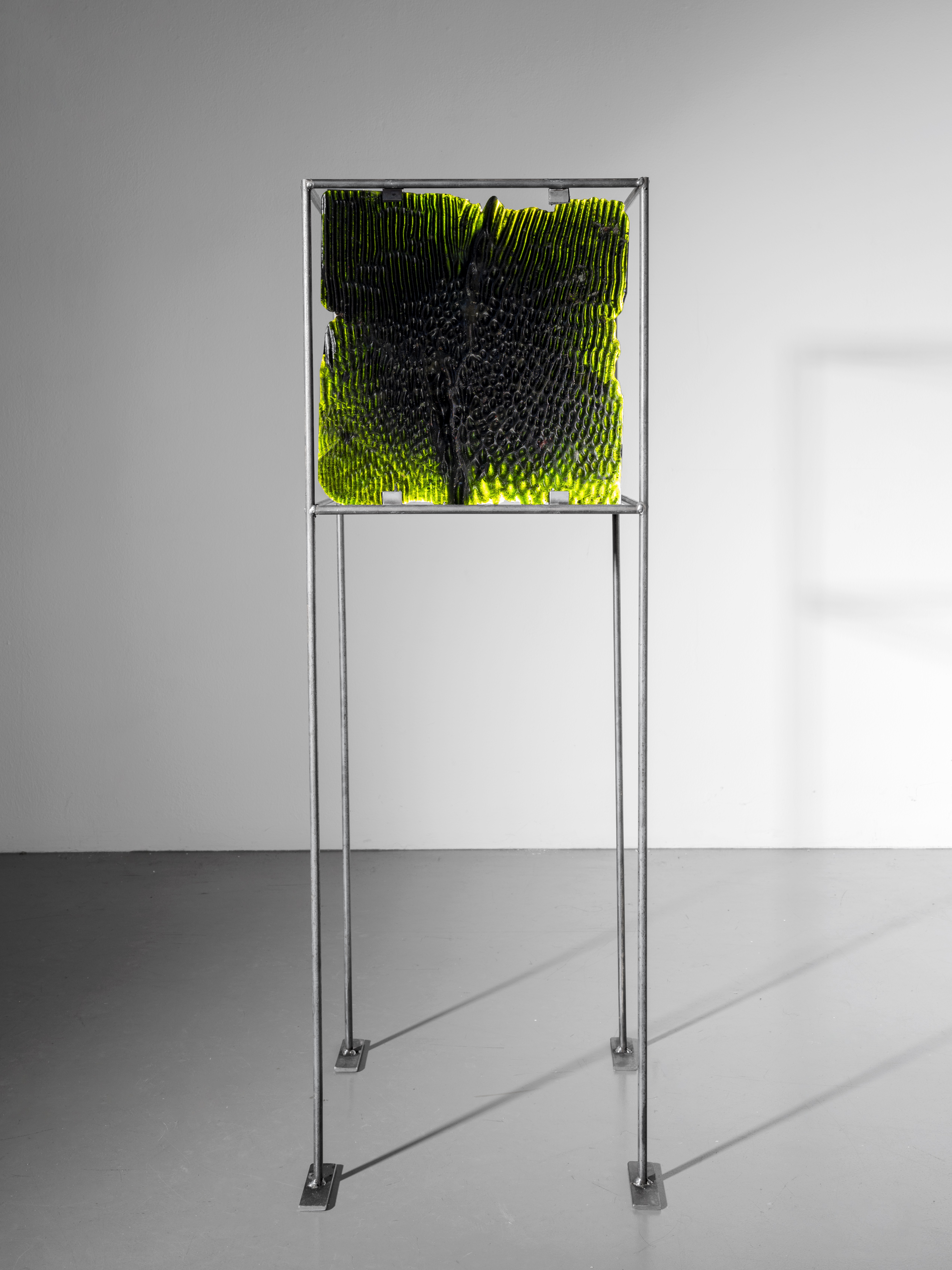
Developed over two years of design-led research, the project establishes a proof of concept for an alternative glassmaking system based on biosilicification. Microalgae are cultivated to produce silica, which is then processed into glass. Early material experiments demonstrate that this biologically derived silica can be used to produce glass at lower melting temperatures than conventional silica, indicating potential for reduced energy consumption and more efficient production processes.
Sea Glass addresses multiple interconnected global challenges: the environmental and social impacts of sand extraction, the urgent need to reduce carbon emissions, and water pollution. Sand is the second most consumed resource worldwide, and its extraction drives ecosystem degradation, coastal erosion, and social inequalities. In parallel, microalgae play a critical role in regulating the global carbon cycle. Through photosynthesis, they capture CO₂ while also absorbing excess nutrients and contaminants from water. Integrating their cultivation into material production introduces the possibility of combining carbon capture with bioremediation, embedding environmental restoration directly into manufacturing processes.
By shifting from extraction to cultivation, the project proposes a regenerative and geographically adaptable material system. Microalgae can be grown locally in diverse environments, including wastewater streams, without competing for arable land. This opens the possibility for decentralized production models that simultaneously generate materials and restore ecosystems.
Sea Glass emerged during my master’s studies in design through new materials in Barcelona, from two parallel observations. On the one hand, material production today relies largely on extractive processes that exploit natural resources, ecosystems, and labour. On the other, materials derived from living systems—such as plants or fungi—can actively contribute to environmental regeneration, for instance by capturing CO₂ through photosynthesis. Yet these bio-based materials often struggle to match the performance of mineral-based ones.
This tension led to a central question: can a material be grown by nature, contribute positively to its environment, and still achieve the performance of mineral materials? To explore this, I began investigating the intersection of two natural processes: photosynthesis and biomineralization, the process through which organisms produce mineral structures.
This research led me to a specific type of microalgae that not only captures CO₂ but also produces silica as part of their biological processes. As silica is the primary component of sand, this revealed a new possibility: growing the very mineral that forms the basis of glass and much of our built environment.
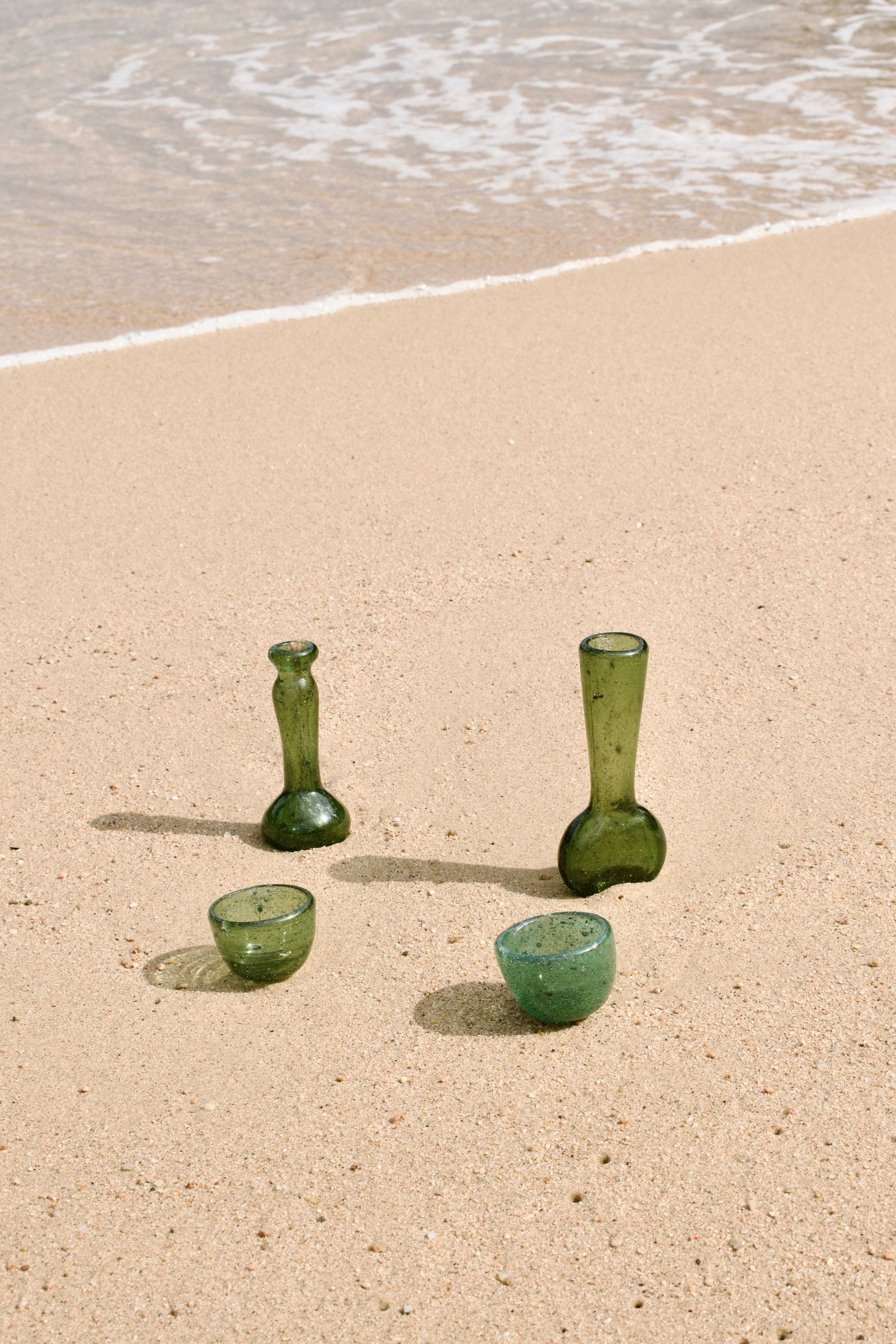
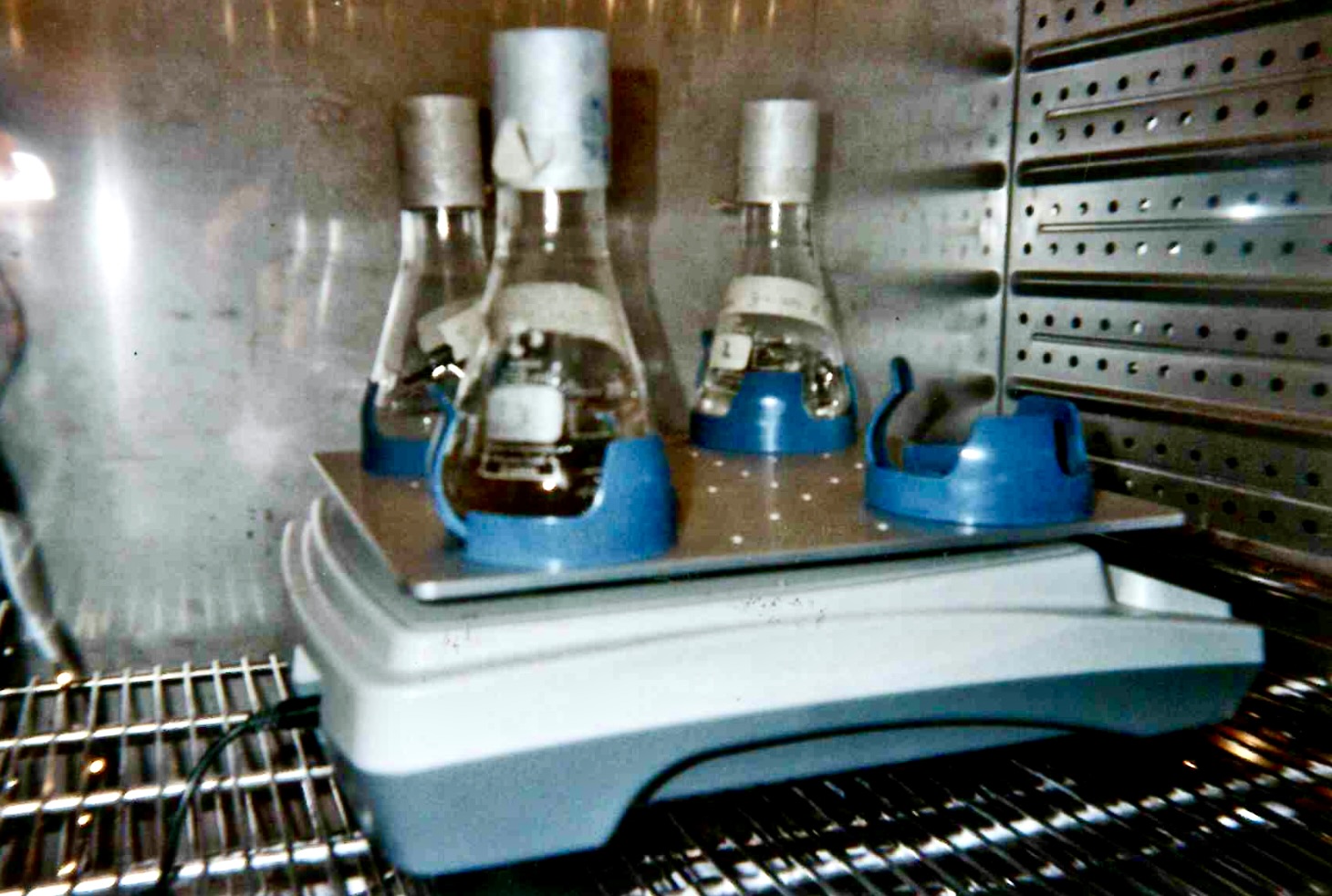
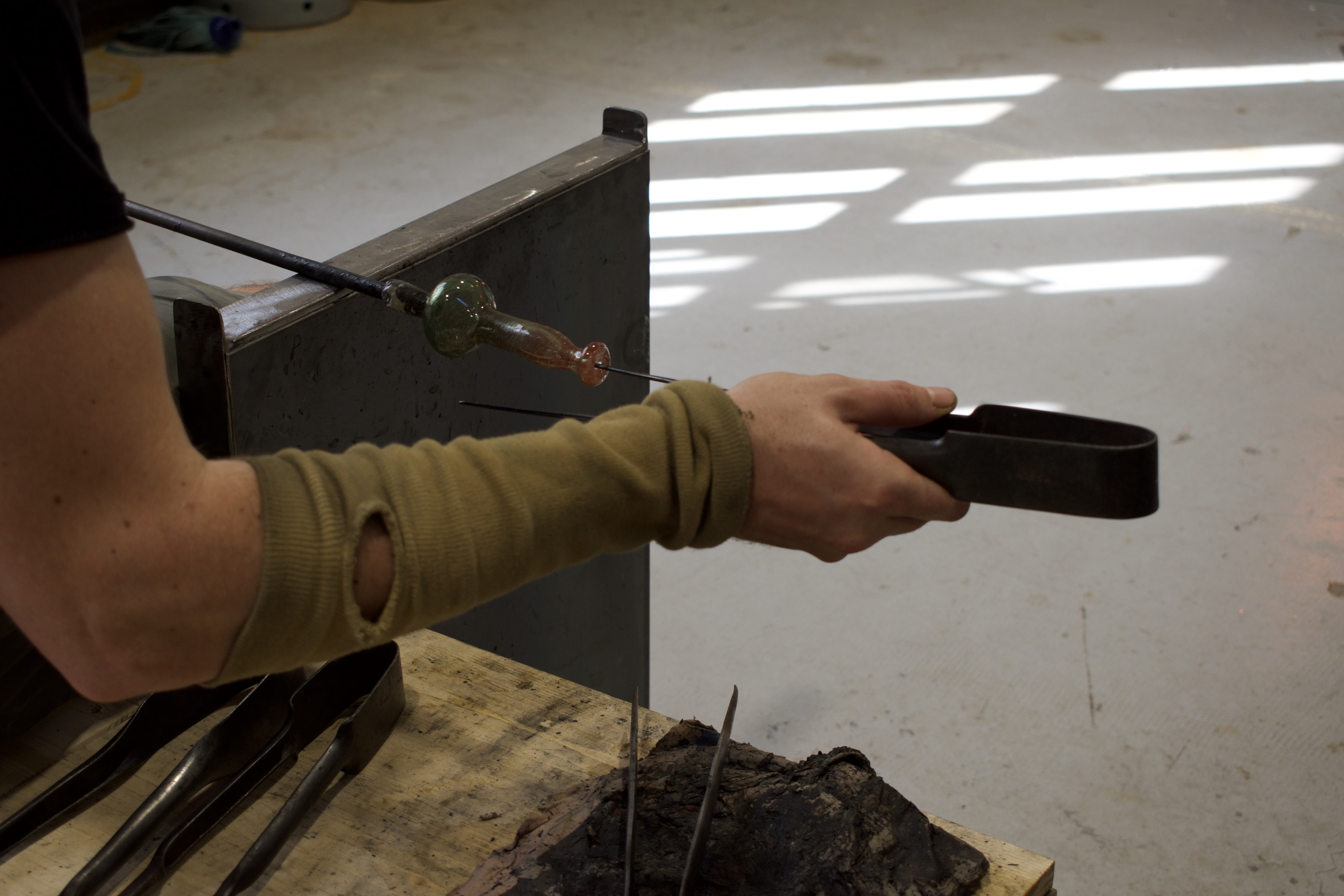
To test this hypothesis, I collaborated with the Institut de Ciències del Mar, where I initiated the cultivation of microalgae with the support of researcher Pedro Cermeño. Early material experiments were conducted using a ceramic kiln, demonstrating that the harvested silica could be transformed through heat. These initial results enabled further collaboration with glassblowers, leading to the first glass prototypes.
The project was further developed during a residency at the Jan van Eyck Academie, in collaboration with the Future Materials Bank and the CHILL Lab. This phase allowed for refinement of the process, exploration of glassmaking techniques, and consolidation of Sea Glass as a design-led research project at the intersection of biology, material science, and craft.
Regenerative materials
Nature-based solutions
Bioremediation
microalgae photosynthesis
bio-silica
Sea Glass addresses sustainability by proposing a fundamental shift from extractive to regenerative material production. Conventional glass relies on sand, the second most consumed natural resource worldwide after water, whose extraction causes severe ecological degradation, including riverbed erosion, biodiversity loss, and coastal destabilization, as well as social issues such as illegal mining and labour exploitation. By replacing sand with biologically produced silica, Sea Glass eliminates the need for geological extraction and introduces a renewable alternative.
The concept goes beyond reducing impact by embedding environmental restoration into the production process itself. Microalgae capture CO₂ through photosynthesis while simultaneously absorbing excess nutrients and contaminants from water. This enables the integration of carbon capture and bioremediation into material production, transforming manufacturing from a polluting activity into a potentially restorative one. In this way, Sea Glass operates at a regenerative level, contributing positively to ecosystems rather than merely minimizing harm.
In addition, material experiments indicate that microalgae-derived silica can be transformed into glass at lower melting temperatures than conventional silica, suggesting a pathway toward reduced energy consumption in glassmaking.
Sea Glass also proposes a geographically adaptable and resilient system. Microalgae can be cultivated locally in diverse environments, including urban or arid contexts and wastewater streams, without requiring fertile land or competing with food production. This enables the development of decentralized and circular material value chains, reducing transport-related emissions and strengthening local resource autonomy.
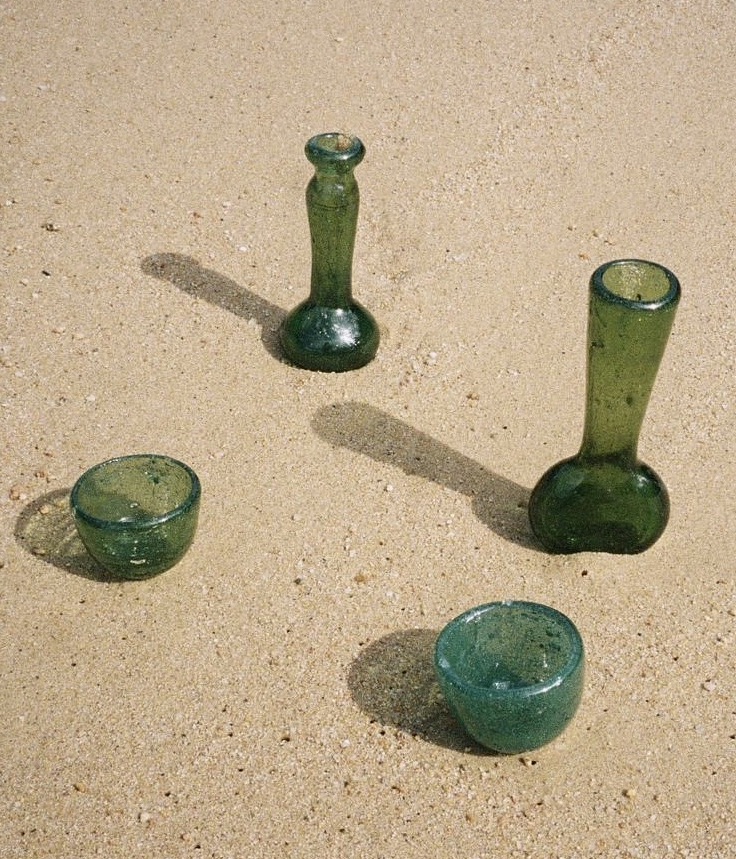
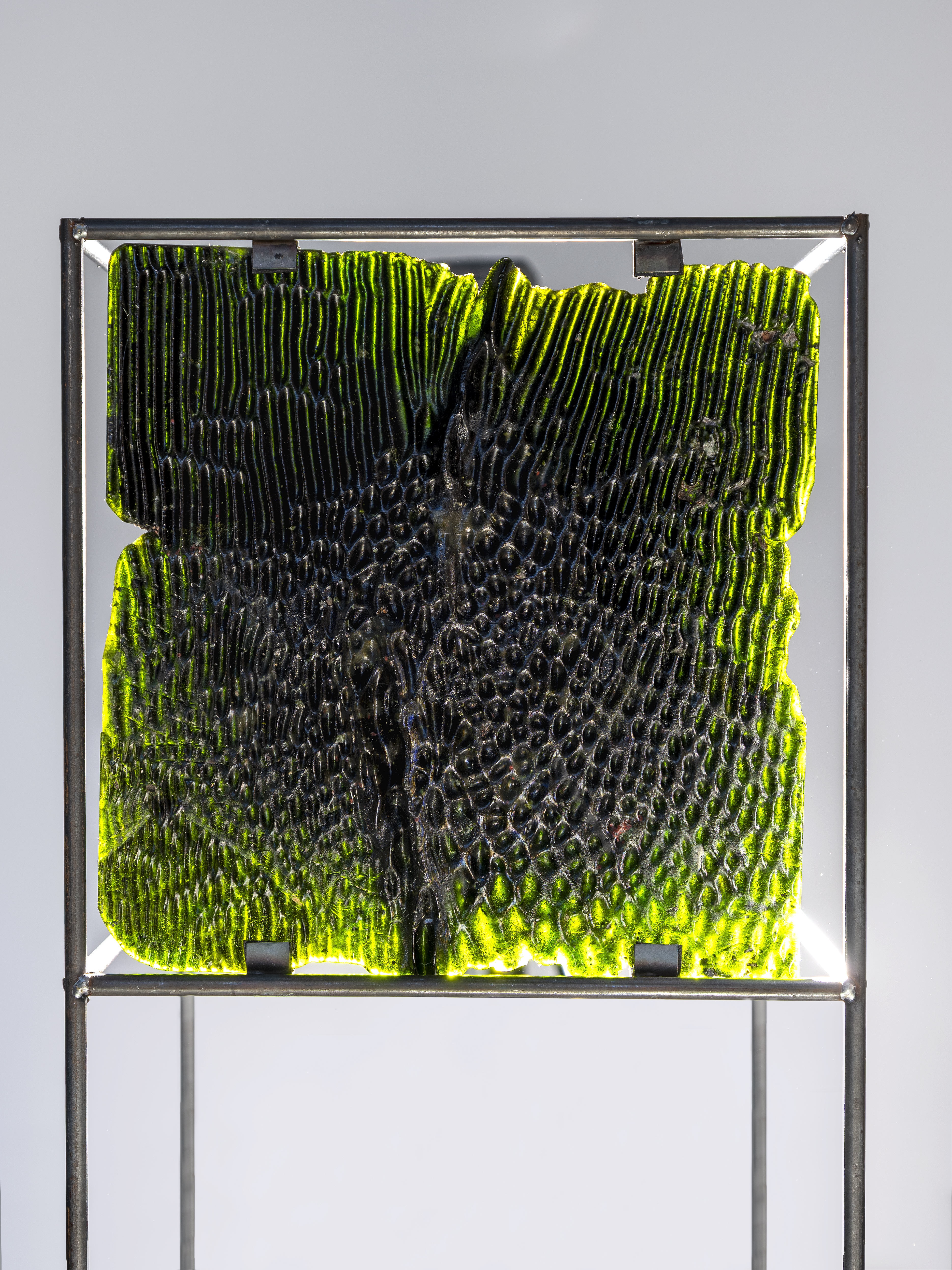
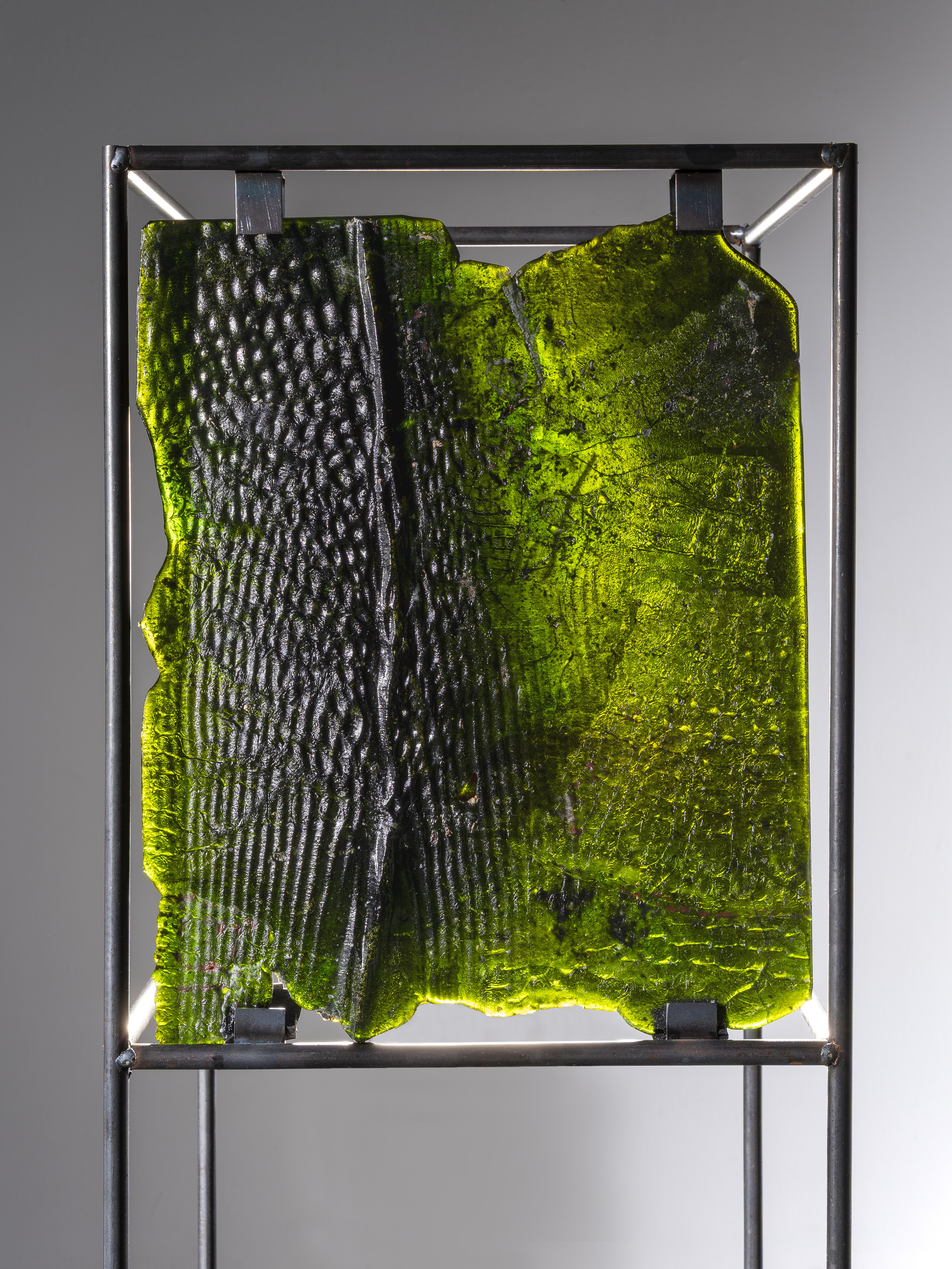
Sea Glass contributes to aesthetics by reactivating the relationship between materials, people, and their local environment. Unlike conventional glass, which is standardized, transparent, and detached from its origin, Sea Glass introduces a distinct material identity. The glass is smooth but carries a natural green tint, whose hue subtly varies with each production depending on the biological conditions of the microalgae. This variability challenges industrial standardization and creates objects that are visually consistent yet never identical, enhancing sensory perception and material awareness.
Beyond the object, Sea Glass fosters a sense of care and belonging by highlighting the connection between human activity and local ecosystems. By integrating microalgae cultivation into communities and urban spaces, the project encourages people to witness and value natural processes, turning everyday interactions with material objects into a reminder of environmental interdependence. Public installations, workshops, and collaborative prototyping invite participation, reinforcing awareness, shared responsibility, and pride in local places.
Sea Glass also contributes to the identity of places by enabling locally grown materials. Its production can adapt to specific environmental conditions, meaning that the colour and qualities of the glass can differ from one location to another. This creates a direct link between material culture and territory, where objects are rooted in their place of production rather than globally standardized.
Finally, the project introduces a new aesthetic paradigm in which beauty emerges from regeneration and co-existence with living systems. It encourages a shift in perception, where materials are valued not only for their appearance or performance, but for their origin, their lifecycle, and their role within broader ecological systems.
Sea Glass addresses inclusion by proposing a material production model that is accessible, decentralized, and adaptable to diverse contexts. Conventional glass production depends on large-scale industrial infrastructure and globally extracted resources, limiting participation to centralized actors. In contrast, Sea Glass is based on the cultivation of microalgae, a resource that can be grown locally with relatively low technological requirements, enabling a broader range of actors to engage in material production.
By allowing materials to be produced from locally available resources, the project opens opportunities for small-scale producers, workshops, and communities to participate in value creation. This contributes to more distributed and resilient economic models, reducing dependency on global supply chains and increasing local autonomy. The ability to cultivate microalgae in diverse environments—including urban areas or regions with limited access to raw materials—supports more equitable access to production systems.
Affordability is addressed through the use of renewable biological processes that do not rely on scarce or highly processed inputs. Over time, this approach has the potential to reduce material costs and make sustainable alternatives to conventional glass more widely accessible.
Sea Glass also promotes inclusive knowledge-sharing. The project is developed through a design-led research approach that can be shared, adapted, and replicated across different contexts. By collaborating with research institutions, craftspeople, and local actors, it encourages a transdisciplinary exchange of knowledge and skills, lowering barriers to entry and fostering collective learning.
Finally, the project proposes a shift in how materials are governed and valued. By moving from extraction to cultivation, it supports a model in which materials are produced in closer relationship to local ecosystems and communities.
The development of Sea Glass has been rooted in a collaborative research process involving stakeholders across science, design, and craft. The project was initiated through collaboration with researchers at the Institut de Ciències del Mar, where the first stages of microalgae cultivation were developed. The project then evolved through experimentation with glassblowers, whose expertise shaped the transformation of the material into glass. Further development during the residency at the Jan van Eyck Academie involved interaction with a community of artists, designers, researchers, and technicians, creating an environment of continuous exchange and iterative development.
Beyond these initial collaborations, Sea Glass is conceived as a participatory system that can be collectively developed and managed. Central to the concept is the idea of microalgae cultivation as a shared infrastructure, where a single pond can serve multiple functions: capturing carbon, remediating wastewater, and producing biomass that can be valorised into different outputs. While the mineral fraction is used for glass production, the organic biomass can be used for applications such as animal feed, biofuels, or pigments.
This multifunctional system opens the possibility for multiple stakeholders such as municipalities, farmers, local industries, and citizens, to engage in and benefit from the same infrastructure. Through workshops, local pilot projects, and collaborative management models, communities can participate not only in the use of the material but also in its production and governance.
The impact of participation is therefore both material and social: it enables shared ownership of resources, fosters cooperation across sectors, and supports the emergence of local ecosystems of knowledge and production. Over time, it aims to evolve from a designer-led initiative into a collectively shaped system, where communities can adapt, manage, and replicate the model according to their needs.
Sea Glass is developed through a multi-level framework connecting local experimentation with regional infrastructures and global environmental challenges. At the local level, the project is rooted in collaboration with researchers, designers, and craftspeople. Initial development took place with the Institut de Ciències del Mar and through exchanges with glassblowers, grounding the project in specific skills and material practices.
At its core, the project proposes microalgae cultivation systems as shared infrastructures. These can operate at local or regional scales and bring together stakeholders such as municipalities, wastewater facilities, farmers, and industries. A single system can capture carbon, remediate water, and generate biomass that is distributed across sectors: mineral components for glass production, and organic components for feed, bio-based products, or energy. This creates horizontal collaboration across environmental, industrial, and agricultural fields.
At the regional level, partnerships with institutions such as the Jan van Eyck Academie and the CHILL Lab connect the project to broader innovation ecosystems, supporting technical development and knowledge exchange.
At the European and global level, Sea Glass addresses shared challenges including resource scarcity, carbon emissions, and water pollution. Its model is designed to be transferable and adaptable, enabling local implementations to respond to specific conditions while contributing to global transitions.
By linking local infrastructures with regional networks and global challenges, Sea Glass enables both horizontal and vertical collaboration, supporting scalable, place-based solutions and cross-sector knowledge exchange.
Sea Glass is inherently transdisciplinary, combining knowledge from material science, biology, design, and craft to develop a new approach to material production. The project brings together life sciences—through the study and cultivation of microalgae—with material science and chemistry, which inform the transformation of biologically produced silica into glass.
Design plays a central role as a mediator between these fields, translating scientific processes into tangible material applications and exploring how they can be integrated into new production systems. This approach is complemented by traditional glassmaking knowledge, where collaboration with craftspeople has been essential to adapt existing techniques to a novel material and to produce the first prototypes.
The project also engages with industrial ecology and circular economy principles, particularly in the development of microalgae cultivation systems as multifunctional infrastructures. These systems connect environmental management (carbon capture and water remediation) with material production and other applications of biomass, such as bio-based products or energy.
This interaction between disciplines is not linear but iterative: scientific research informs material experimentation, which in turn raises new technical and design questions. The combination of laboratory research, hands-on prototyping, and system-level thinking enables the project to move beyond a single material innovation toward a broader model of regenerative production.
By integrating scientific, technical, and creative knowledge, Sea Glass demonstrates how transdisciplinary collaboration can generate new forms of innovation that are both materially grounded and systemically relevant.
Sea Glass is based on a hybrid business model that combines material production with environmental services through a shared infrastructure system. At its core, the project proposes microalgae cultivation units that generate multiple value streams from a single process.
These systems produce silica for glassmaking, which can be supplied to designers, manufacturers, and the construction or product sectors as a sustainable alternative to conventional raw materials. At the same time, the organic biomass generated by microalgae can be valorised into additional products such as animal feed, bio-based materials, pigments, or energy, creating diversified revenue streams.
Beyond material outputs, the system provides environmental services with economic value. Microalgae cultivation can be integrated into wastewater treatment and carbon capture processes, allowing municipalities or industrial actors to reduce treatment costs or meet environmental regulations. This creates opportunities for public-private partnerships, where infrastructure is co-funded and co-managed by multiple stakeholders.
The model supports decentralized implementation: local production units can be developed in collaboration with municipalities, research centres, or private actors, reducing transport costs and strengthening regional value chains. Revenue is therefore generated through a combination of material sales, environmental services, and partnerships.
In early stages, the project can be supported through public funding, research grants, and innovation programmes. Over time, scalability is enabled by replicating the system across territories, adapting it to local conditions while maintaining a consistent framework.
Sea Glass combines material production, environmental services, and shared infrastructure into a financially resilient model linking ecological and economic value, contributing to Europe’s transition toward a regenerative and competitive bio-based economy.
Sea Glass is designed as a transferable system that can be adapted to diverse geographical, environmental, and socio-economic contexts. Its scalability lies not only in the material itself, but in the methodology and infrastructure model behind it.
At the core, microalgae cultivation systems can be implemented in a wide range of locations, including urban, coastal, or industrial areas. These systems do not require fertile land and can operate using existing resources such as wastewater streams, making them adaptable to different local conditions. This allows regions with limited access to raw materials to develop their own production capacity.
The concept of a shared, multifunctional infrastructure is also highly replicable. A single cultivation unit can generate multiple outputs—silica for glass production and organic biomass for applications such as feed, bio-based products, or energy—making it relevant for various stakeholders, including municipalities, farmers, and industries. This flexibility enables the model to be adapted depending on local needs and economic structures.
The project’s methodology, combining scientific research, material experimentation, and design-led development, can be transferred to other contexts and applied to different materials or biological systems. Knowledge developed through the project can be shared through collaborations, workshops, and open research formats, supporting wider adoption.
Finally, Sea Glass is inherently scalable through decentralised implementation. Rather than relying on a single large production site, the system can be replicated as a network of smaller, locally embedded units. This approach supports regional value chains, reduces transport, and allows the concept to grow progressively across territories while remaining responsive to local ecosystems.
The next phase of Sea Glass focuses on transitioning from research and prototyping toward pilot implementation and real-world testing. Over the year following the application, three main steps are planned.
First, the technical development of the material will be further refined. This includes improving the efficiency of microalgae cultivation, optimizing the extraction of silica, and conducting additional tests with glassmakers to stabilise the production process and expand the range of possible applications.
Second, the project will move toward pilot-scale implementation. The aim is to develop a first microalgae cultivation system as a small-scale demonstrator, ideally in collaboration with a local partner such as a municipality, research centre, or industrial actor. This pilot will test the integration of multiple functions—carbon capture, wastewater remediation, and biomass valorisation—within a single system.
Third, the project will focus on building partnerships and visibility. Collaborations with scientists, designers, public institutions, and industry partners will be strengthened to support technical development and future scaling. At the same time, the project will be shared through exhibitions, talks, and workshops to engage broader audiences and potential stakeholders.
These steps are supported by ongoing research positions and institutional partnerships, providing access to technical facilities and interdisciplinary expertise. Together, they aim to establish the foundation for a scalable model that can move from experimental research to practical implementation.