Arts, Culture, and Heritage as Drivers of Change
Berlin Design Network
Berlin Design Network: A Cultural Ecosystem for Sustainable Innovation
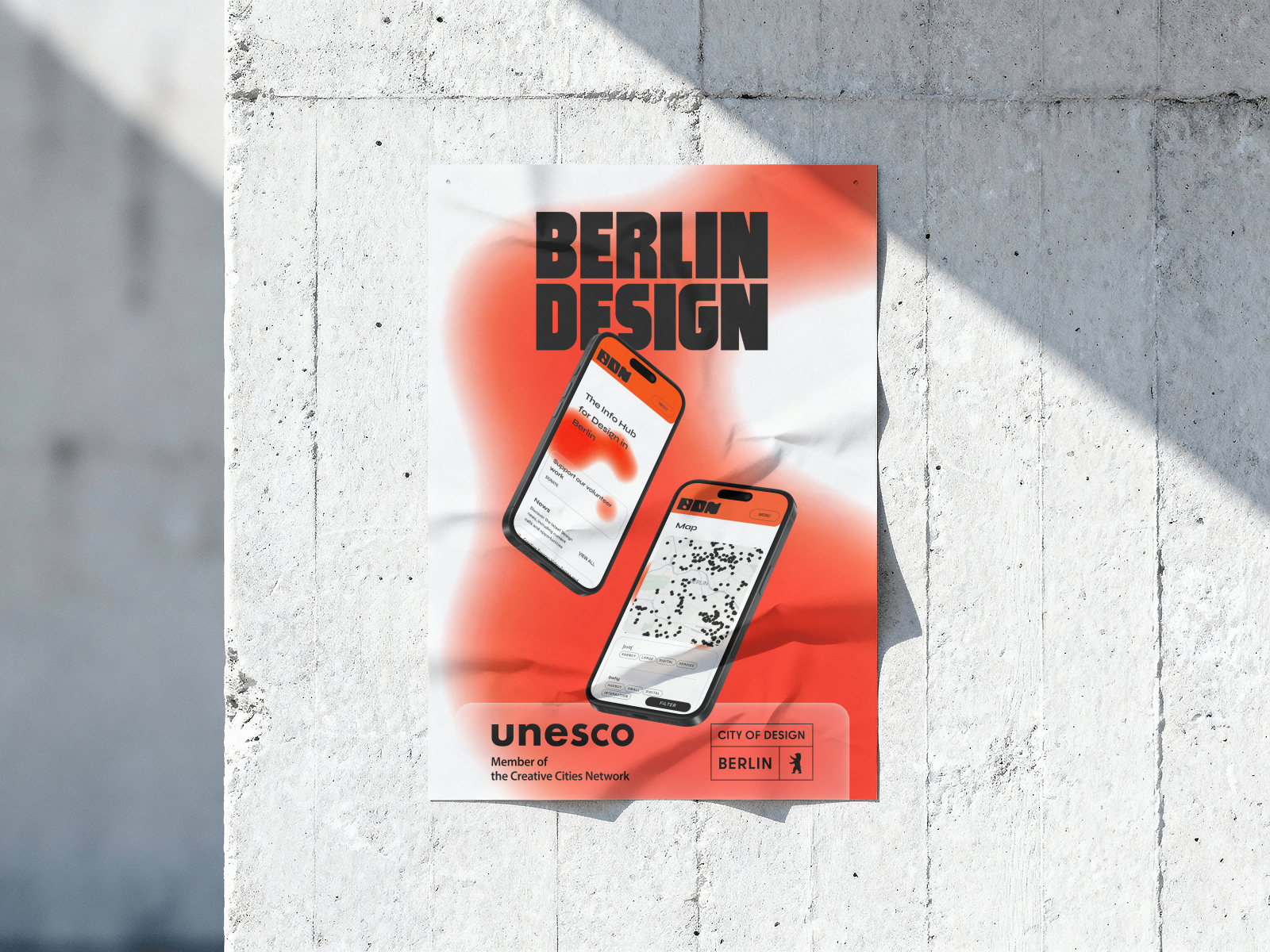
The Berlin Design Network (BDN) is a digital and social infrastructure transforming Berlin’s creative scene into a collaborative powerhouse. By bridging art, science, and policy, BDN empowers designers to lead in sustainability and circularity. As a living heritage of "Design City Berlin," it fosters inclusion through open access to resources, jobs, and mentorship. BDN isn't just a platform; it’s a transdisciplinary incubator driving the sustainable transition through high-quality design.
Germany
Regional
Berlin & Brandenburg
Mainly urban
It involves other types of transformations (soft investment)
Yes
2023-09-01
No
No
No
Organisation
The Berlin Design Network (BDN) is a digital and social infrastructure that consolidates Berlin’s creative landscape into a cohesive, visible ecosystem. As the operational arm of Berlin Design e.V., the BDN serves as a central hub with a direct outreach to 15,000 designers—nearly half of the 35,000+ professionals in the regional sector.
Achieved Results: Beyond a community directory, the BDN acts as a strategic gateway for hard investments. We have established formal partnerships with city planners, district authorities, private investors and international exchange. By utilizing "design craft" as a tool for urban participation, our members actively shape the physical transformation of Berlin. Crucially, the BDN bridges the gap between creative talent and capital. We collaborate with investors and business developers to integrate design-driven innovation into sustainable business models, ensuring that high-quality design is a core component of the region’s economic growth. We have moved from a "creative scene" to a professionalized "innovation system" that provides the expertise and financial connectivity needed for resilient urban development.
Long-term Impact: The BDN creates a "Cultural Commons" that attracts both talent and investment. Our long-term impact is the mainstreaming of NEB values by providing the structural tools for designers to work alongside planners and investors. We are building a resilient creative economy where aesthetics, inclusion, and sustainability are backed by sound financial and planning frameworks.
Berlin is globally recognized as a UNESCO City of Design, yet for years its 35,000+ creative professionals operated in a paradox: the city was rich in talent but deeply fragmented. Numerous volunteer-led communities existed, each passionately building silos around specific design fields—UX, circular fashion, architecture, or social design. While these grassroots initiatives provided local belonging, they lacked the shared infrastructure to exchange resources, influence urban policy, or scale their innovations.
The Birth of the Network:
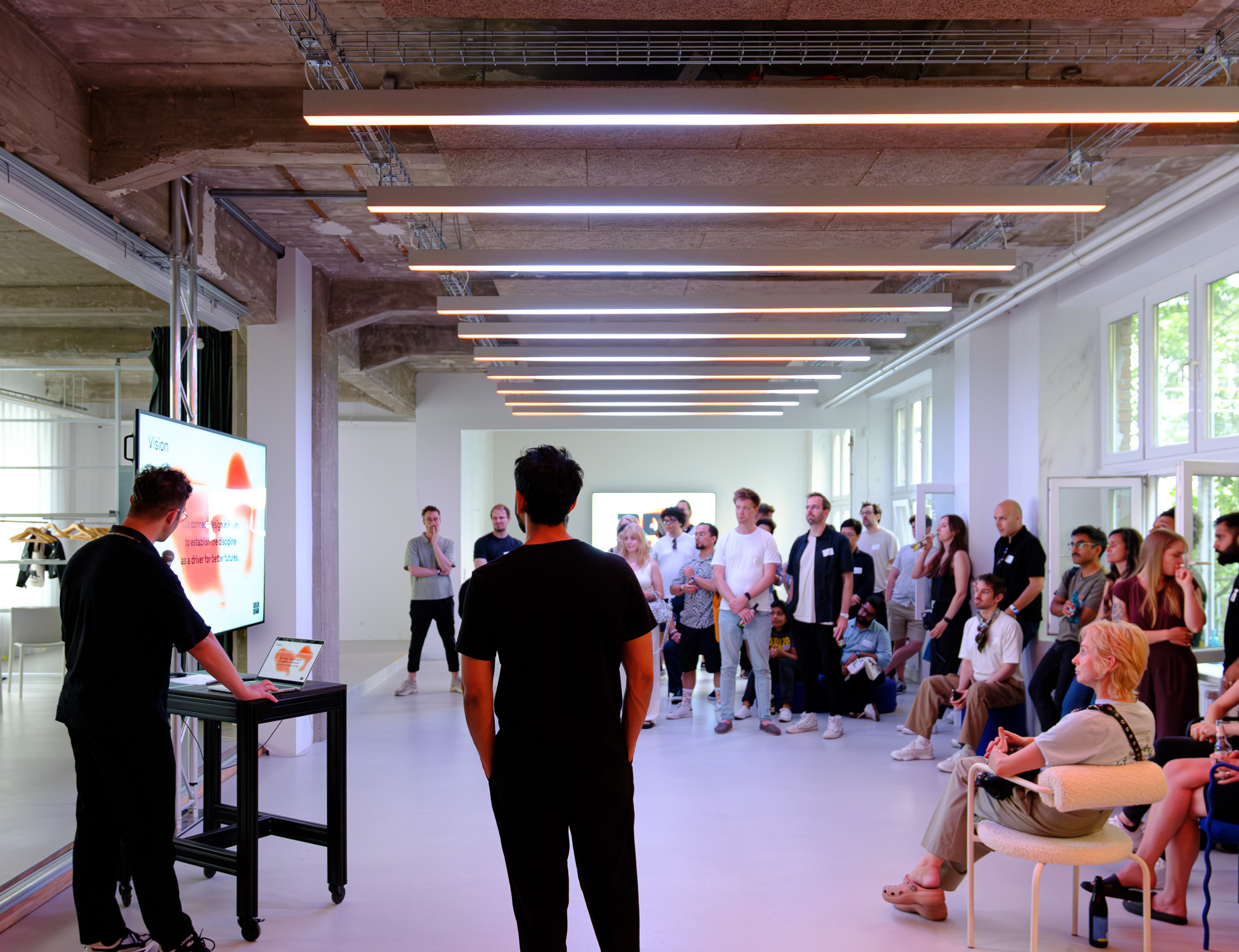
Berlin Design e.V. emerged from the realization that these volunteers were doing the "heavy lifting" of community building without a central nervous system. Our project came about as a mission to unite these fragmented islands. We spent the implementation phase acting as "community architects," mapping out dozens of independent design collectives and inviting them into a unified ecosystem: the Berlin Design Network (BDN).
Implementation on the Ground:
We implemented a professionalized social infrastructure that transformed "isolated volunteering" into "collective power."
The Shared Commons: We built a platform where these diverse communities could finally share knowledge, jobs, and news. Instead of each volunteer group struggling to maintain its own visibility, the BDN provided a high-reach stage for all.
The Infrastructure of Exchange: We moved from digital connection to physical reality by establishing partnerships with city planners and private investors. This allowed volunteer design "craft" to be utilized in official urban participation processes and green-tech investments.
Scaling Value: By connecting the UX designer with the circular materials expert and the urban planner, we enabled a transdisciplinary exchange that didn't exist before. We provided the "human glue" and organizational backbone that allowed these volunteer-led ideas to find the funding and political support needed to scale.
Urban Participation
Design Investment
Collaborative Exchange
Economic Ecosystem
Transdisciplinary Hub
NEB Value: Sustainability
How does your project concretely address challenges and opportunities? In what way is it exemplary?
The Berlin Design Network (BDN) treats social and cultural infrastructure as the ultimate renewable resource. In a city of 35,000+ designers, the greatest threat to sustainability is fragmentation and "volunteer burnout." We address this by transforming isolated grassroots initiatives into a resilient, professionalized ecosystem.
1. Social Resilience & Knowledge Commons:
Our project is exemplary because it prevents "community erosion." By uniting dozens of fragmented volunteer-led design circles into a single infrastructure, we’ve created a permanent Knowledge Commons. This allows for the continuous exchange of "design craft," mentorship, and resources across generations. We sustain the people behind the projects, ensuring that vital social and environmental expertise isn't lost when individual volunteer cycles end.
2. Cultural Sustainability through Connection:
The BDN serves as the "social glue" for Berlin’s creative heritage. We facilitate real-world exchange by bridging the gap between digital networks and physical city-making. Through partnerships with city planners and investors, we provide the structural pathways for "design craft" to move from a community hobby to a funded urban reality. This ensures that cultural innovation is financially supported and physically implemented in our neighborhoods.
3. Scaling Social Impact:
By providing a shared platform for 15,000 designers, we create the market conditions for social change. We empower diverse communities to scale their impact—connecting the circular materials expert with the urban planner and the private investor. We prove that a city’s creative culture is only sustainable if it is connected, visible, and structurally integrated into the economy.
The Berlin Design Network (BDN) serves as a pluralistic, open infrastructure where a vast diversity of cultures and aesthetics coexist. In a global city like Berlin, the primary challenge is "homogenization"—where niche, migrant, or grassroots creative communities are overshadowed by the mainstream industry. We address this by functioning as a decentralized hub that empowers these sub-communities to strengthen their own unique cultural identities.
1. Empowering Diverse Sub-Communities:
Our project is exemplary because it rejects a "monolithic" design identity. Instead, we provide visibility and resources for dozens of volunteer-led design circles—representing different cultural backgrounds and aesthetic traditions—to define their own space. By offering a shared platform for 15,000 designers, we ensure that a grassroots collective from a marginalized neighborhood has the same digital "stage" and access to city planners and investors as a major agency. We move from "gatekeeping" to "gate-opening."
2. Accessibility through Design Craft:
We concretely address social isolation by lowering barriers to professional entry. The BDN acts as a "social elevator," connecting international creatives and young talents directly to the city’s decision-making tables. By using "design craft" as a universal language, we facilitate participation in urban planning that transcends linguistic or economic barriers. This ensures the physical transformation of Berlin reflects the actual diversity of its inhabitants.
3. Fostering "Belonging-by-Doing":
Inclusion in the BDN is active. We empower communities to take co-ownership of the city’s aesthetic future. By connecting fragmented groups into a unified network, we provide the collective power needed to protect local creative spaces. We prove that a design ecosystem is only "beautiful" when it is a safe harbor for a multitude of voices to thrive together.
Gemini said
NEB Value: Inclusion
How does your project concretely address accessibility and affordability? How does it promote inclusive governance or new societal models? In what way is it exemplary?
The Berlin Design Network (BDN) treats inclusion as a structural necessity. In a city where 40% of the population are expats and migrants, our core mission is to ensure this diverse "design craft" has a seat at the table. We address professional segregation by providing an open-access, affordable infrastructure for a pluralistic creative class.
1. A Social Elevator for a Migrant City:
We concretely address accessibility by lowering the "information barrier" that often excludes international talent. By offering a centralized hub for 15,000 designers, we provide migrants and expats immediate access to jobs, resources, and investors. This prevents the professional isolation often faced by new arrivals, ensuring Berlin’s design capital status is built by all its residents.
2. Supporting Minorities & Gender Equality:
Our project is exemplary because it proactively empowers groups focused on gender equality and social justice. The BDN acts as a "hub of hubs," specifically highlighting and resource-sharing with volunteer communities that support women in tech, LGBTQ+ designers, and underrepresented minorities. We provide these groups the visibility needed to influence city planners, ensuring urban participation is truly representative.
3. Inclusive Governance & "Design for All":
We promote a societal model where "Design for All" is the standard. By connecting fragmented volunteer circles into a unified network, we foster a participatory governance system where the community curates its own future. Our partnerships with public authorities ensure design expertise makes Berlin’s physical spaces more accessible. We prove an ecosystem is only inclusive when it functions as a safe harbor for a multitude of voices to lead together.
The BDN is a "by the scene, for the scene" infrastructure. Its very existence is a response to the needs of 15,000+ designers and dozens of volunteer-led collectives.
Role and Involvement: The project was co-designed through a series of workshops and "town hall" assemblies. We didn't build a static tool; we invited volunteer leaders from niche fields—like circular fashion, social design, and UX—to define the platform’s architecture. These communities acted as co-creators, determining how resources should be shared and how "design craft" could best be showcased.
Level of Involvement: High-level empowerment. The network relies on a decentralized submission model where members curate the news, jobs, and events. This ensures the content is culturally relevant and reflects the city's diversity.
Impact: This participatory approach transformed a fragmented landscape into a unified Knowledge Commons. By involving those affected by the "silo" problem, we built a tool that they actually use and protect. It has fostered a deep sense of co-ownership, turning 15,000 individuals into a collective voice that now influences urban policy.
The BDN serves as the "connective tissue" between grassroots creativity and global institutional frameworks.
Local/Regional Level: We partner with city planners, district authorities and community leaders to integrate designers into neighborhood participation. We collaborate with regional bodies and private investors to link the creative economy with state-level innovation goals.
National/European Level: As an official member of the New European Bauhaus (NEB) Network, we align our local initiatives with EU Green Deal objectives. This allows us to scale Berlin-based solutions to a European level.
Global Level: Through our integration into the UNESCO City of Design Network, we represent Berlin’s design heritage internationally. This global connection facilitates the exchange of best practices with other creative capitals, ensuring our local "design craft" is benchmarked against global standards.
The BDN is a laboratory for cross-pollination, breaking down the barriers between "art," "utility," and "policy."
Reflected Disciplines: The implementation synthesized Digital Technology (platform architecture), Social Sciences (community building and behavioral sociology), and Architecture/Urban Planning (spatial design and participation).
Knowledge Fields: We specifically bridge Design Craft—including product, graphic, and fashion design—with Environmental Science (circularity and bio-based materials) and Economic Finance (venture capital and business development).
Implementation: Our infrastructure allows a project to simultaneously involve an artist, a software engineer, and a city official. By facilitating this dialogue, we ensure that urban solutions are not just aesthetically pleasing (Arts), but technically feasible (Engineering), socially inclusive (Sociology), and economically viable (Finance). This holistic, transdisciplinary approach is what enables us to drive systemic change as part of the UNESCO and NEB networks.
The Berlin Design Network (BDN) employs a hybrid, multi-stream business model that ensures long-term resilience and financial independence. We have moved beyond traditional grant dependency toward a diversified economic structure that supports our role as a regional "Champion."
1. Diversified Revenue Streams:
Membership Model: A tiered system for individuals and organizations provides a recurring, "community-powered" baseline of funding.
Public-Private Support: We receive strategic financial backing from regional administration as a vital infrastructure for Berlin’s economic development, complemented by private donations.
Economic Services: We generate revenue through professional matchmaking, premium job-board features, and curated "Design Craft" consulting for city planners and investors.
2. Transformation into Sector Infrastructure:
In 2026, the BDN is evolving into a unified social media infrastructure for the entire design sector. By consolidating fragmented channels into a single platform, we are creating a "Platform as a Service" model. This infrastructure offers high-value networking and a streamlined gateway for private investors to discover sustainable, design-led startups.
3. Strategic Impact:
Our model reduces the "cost of innovation" by providing a shared, low-cost resource network. By operating with the strategic clarity of a tech platform within a non-profit framework, we ensure that Berlin Design e.V. remains a financially sustainable pillar of the New European Bauhaus ecosystem, enhancing the region’s competitiveness on a European scale.
The Berlin Design Network (BDN) is a modular "Hub of Hubs" designed as a technical and methodological blueprint for any creative metropolis.
1. Technology and White-Label Potential:
We custom-coded the BDN infrastructure to be highly adaptable. A core element of our replicability is the ability to share our platform as a "white-label" solution. Other cities or emerging regions can adopt our underlying code to map their own creative ecosystems, drastically reducing technical barriers and "costs of innovation."
2. Bottom-Up Development & User Engagement:
Our methodology is exemplary because it was built strictly bottom-up. The project evolved through intense user testing and iterative feedback loops with the design community. This ensured the infrastructure met real-world needs, resulting in high organic engagement. This participatory process—prioritizing the "human interface" before the technical one—is a key learning for any community-led project.
3. Scaling via Social Media Infrastructure:
Our strategic shift into a unified social media infrastructure creates a "social-economic experiment" in digital governance. By consolidating designers, city planners, and investors into a single platform, we provide a standardized tool for global creative cooperation. We will pitch this model to the UNESCO City of Design Network as a global benchmark.
4. Global Integration:
As an official New European Bauhaus Network member, we provide a proven path for turning fragmented "scenes" into resilient, transdisciplinary systems. By connecting local Design Craft with private investors and EU policy, the BDN serves as a replicable model for harnessing creative heritage for sustainable urban development.