Strengthening Local Democracy and Inclusion
Anitzenea
Anitzenea: Living Together through Culture, Language and Community in Errenteria
Anitzenea turns a former site of control into a shared home for care, culture and coexistence. In the heart of Errenteria, people from over 80 nationalities co-create daily life through art, language and collective governance. It is not just a building, but a living civic infrastructure where diversity becomes belonging and democracy is practiced every day.
Spain
Local
Errenteria, Gipuzkoa, Basque Country, Spain.
Mainly urban
It involves other types of transformations (soft investment)
Yes
2023-01-13
No
No
No
Organisation
Anitzenea is a living community infrastructure for care, culture and social innovation located in Errenteria. It transforms a building with a complex past—once a symbol of control and exclusion—into a shared civic space where diversity, dignity and coexistence are actively built every day. Its core aim is to strengthen social cohesion in a municipality marked by deep cultural diversity, turning difference into a collective asset rather than a source of fragmentation.
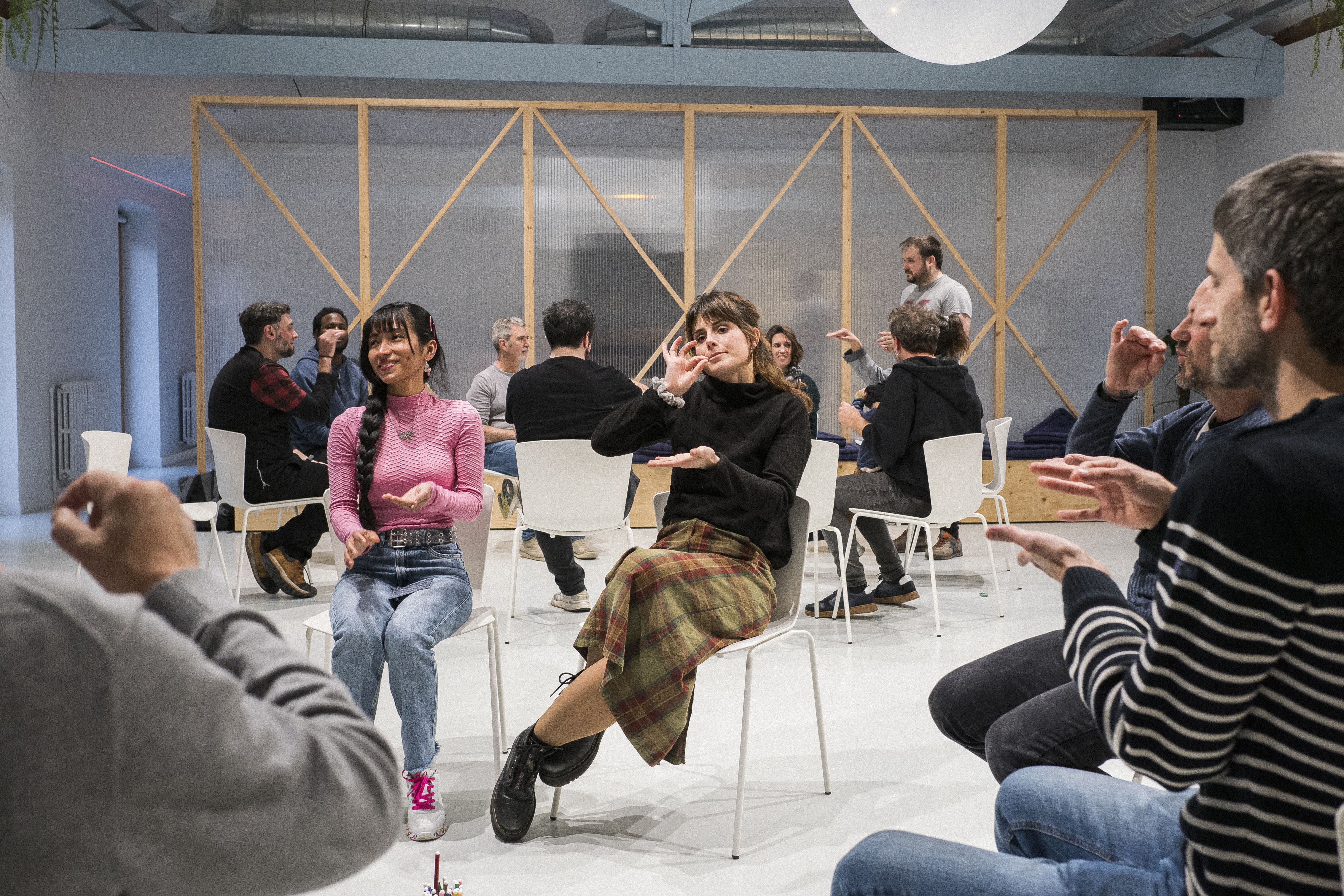
Already achieved results demonstrate its transformative capacity. Anitzenea has become a meeting point for people from over 80 nationalities, bringing together social, cultural and civic actors such as SOS Racismo, Badalab and Xenpelar Bertso Eskola. It has enabled new transdisciplinary collaborations that were previously unimaginable, generating shared projects, mutual recognition and new forms of collective learning. Initiatives such as “Ulersaioak”, a pioneering linguistic welcoming model based on listening without pressure, and multicultural bertsolarismo sessions have redefined how language, identity and belonging are approached in practice. The space functions not as a programmed facility, but as a co-created ecosystem where citizens, organisations and institutions collectively shape everyday life.
In the long term, Anitzenea aims to consolidate itself as the central reference for community life in Errenteria, evolving from peaceful coexistence towards conscious interdependence. It demonstrates that social justice, cultural expression and democratic governance are not parallel agendas but mutually reinforcing processes. By turning a historically divisive space into a shared home, the project proves that inclusive public infrastructures can actively prevent segregation, rebuild trust and create new forms of belonging in diverse European societies.
Anitzenea was born from a decision not to erase history, but to transform it. The Joxepa Anttoni Aranberri building, reopened as Anitzenea in 2023, carries the marks of very different political and social eras. During the Civil War and the years of repression that followed, it functioned as a Guardia Civil barracks, embodying fear, control and institutional exclusion. Later, it became a self-managed Gaztetxe, and in a subsequent phase, the municipal library. Rather than denying these layers, the project began by acknowledging that the building already held a dense public memory in the lives of local people.
Its implementation on the ground consisted of turning that burdened legacy into a democratic resource. Instead of restoring the building as a neutral container, Errenteria City Council adopted an innovative enabling role: it provided the space, the framework and the material conditions, while leaving the everyday life of the building to be co-created by the organisations and communities that inhabit it. This approach made it possible to transform a former symbol of exclusionary authority into a node of social innovation, care and coexistence.
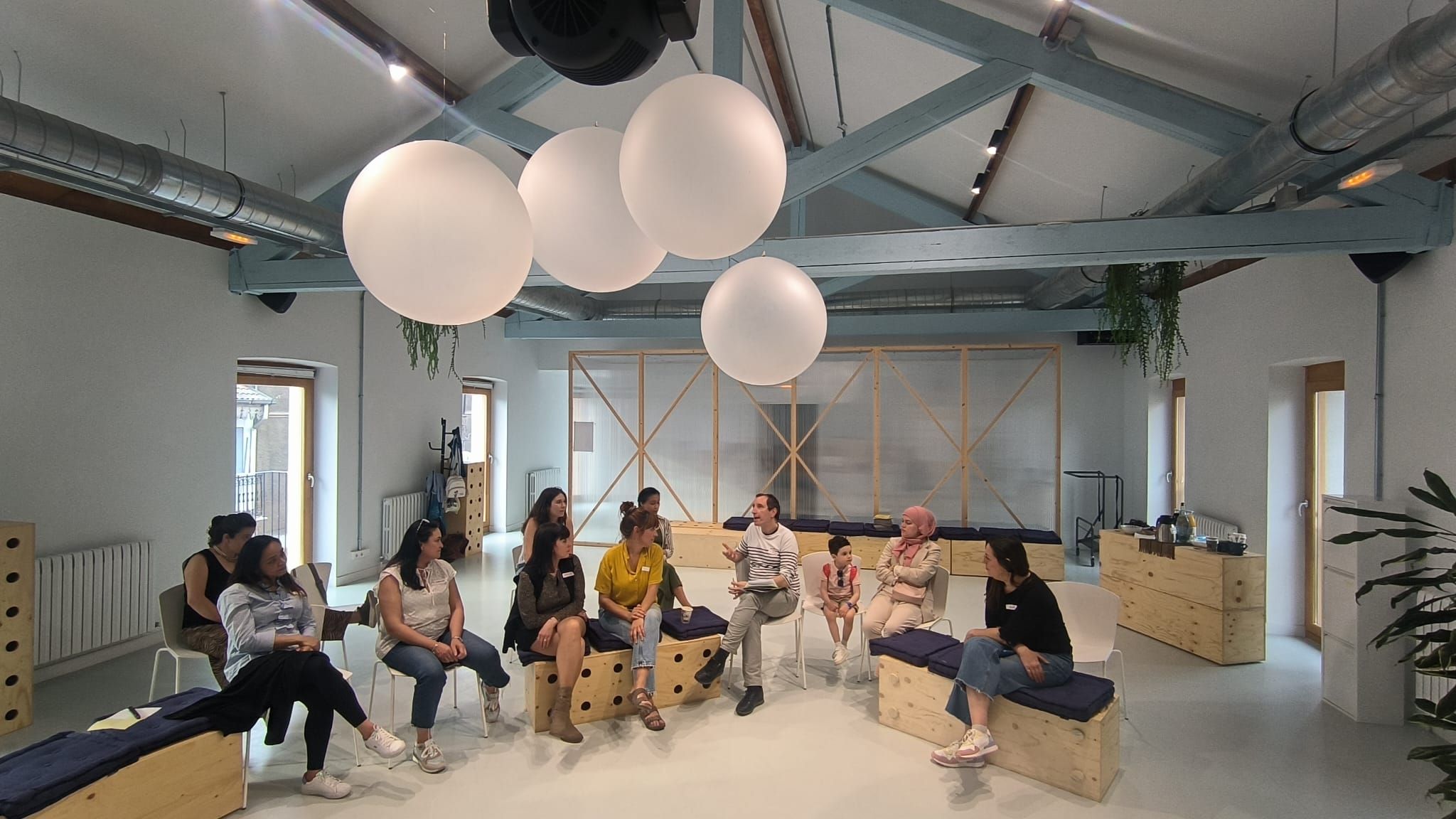
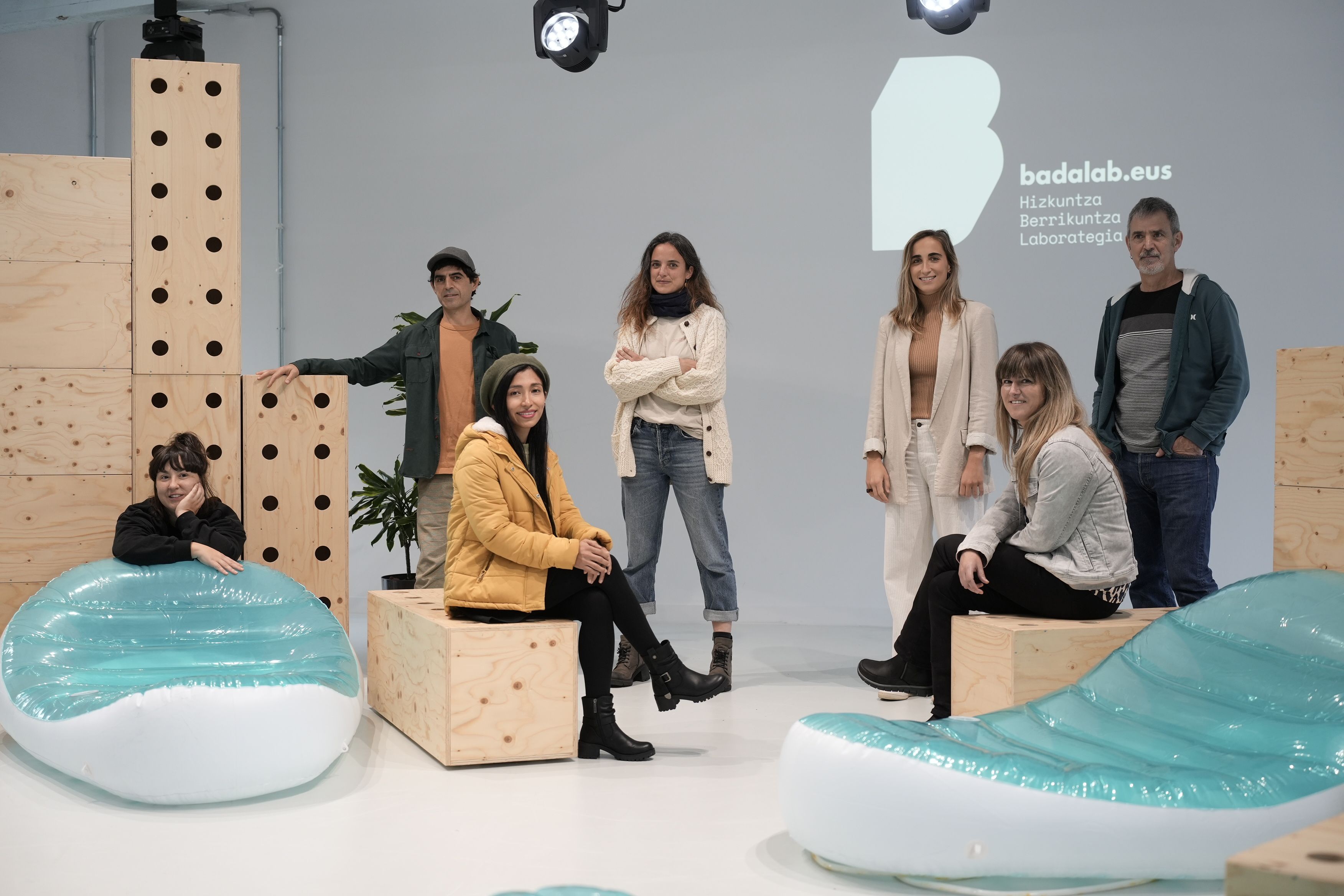
The process was not based on imposing a single programme from above, but on building trust between actors with different trajectories and missions. Social, cultural and linguistic agents such as SOS Racismo, Badalab and Xenpelar Bertso Eskola began to share the space, generating collaborations that would have been difficult to imagine before. On the ground, implementation meant opening the building to plural uses, making coexistence itself part of the project, and allowing new practices to emerge from daily interaction. Today, with people from more than 80 nationalities present in the municipality, Anitzenea resignifies walls that once separated and returns them to the people as a shared civic home.
Public-community governance
Adaptive reuse of heritage
Social cohesion
Intercultural coexistence
Linguistic innovation
Anitzenea approaches sustainability as the capacity of a community to remain socially connected, culturally alive and institutionally resilient over time. Its sustainability is therefore environmental, social, cultural and economic at once. First, the project is based on the adaptive reuse of an existing building with a dense historical legacy. Instead of erasing or replacing this former barracks, later Gaztetxe and library, Anitzenea reopens it to the community, preserving embodied resources while transforming a place of exclusion into a shared civic infrastructure. This makes sustainability tangible through reuse, continuity and the responsible stewardship of heritage.
Second, Anitzenea responds to a major social challenge facing European societies: fragmentation in contexts of growing diversity. In Errenteria, where more than 80 nationalities and 65 languages coexist, the project builds long-term cohesion by creating a stable framework for encounter, mutual recognition and democratic cohabitation. It does not rely on one-off events, but on sustained relationships, shared daily life and collective governance. This makes it socially sustainable, because it strengthens trust, reduces segregation and creates durable support networks between communities and institutions.
Third, the project protects and renews fragile cultural ecosystems. It supports Euskera not through assimilation, but by exploring how a minority language can live and grow in dialogue with migration, multilingualism and contemporary urban life. Initiatives such as Ulersaioak and multicultural bertsolarismo generate new cultural forms that are both rooted and open, ensuring that cultural sustainability is based on exchange rather than exclusion.
Finally, Anitzenea is economically sustainable because it optimises shared public infrastructure and generates operational synergies among established organisations working under one roof.
Anitzenea makes life more beautiful by changing the emotional meaning of a place. What was once linked to fear, control and exclusion has become a house of welcome, language, culture and everyday care. That transformation matters deeply: beauty here does not come from decoration, but from the courage to turn a wounded building into a place where people can breathe, meet and recognise one another. In a time when many public spaces feel anonymous or divided, Anitzenea offers something rarer: a civic atmosphere with soul.
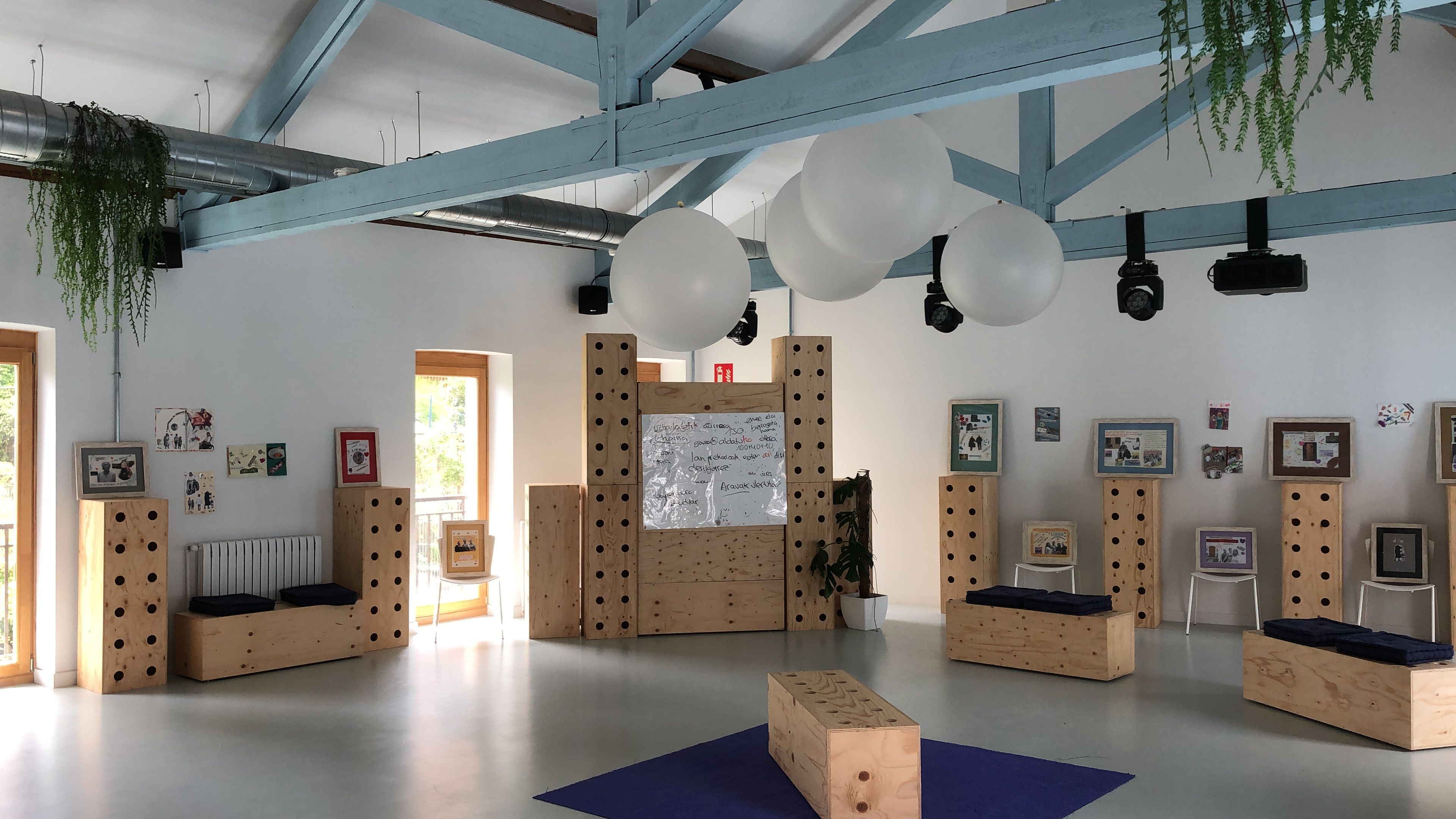
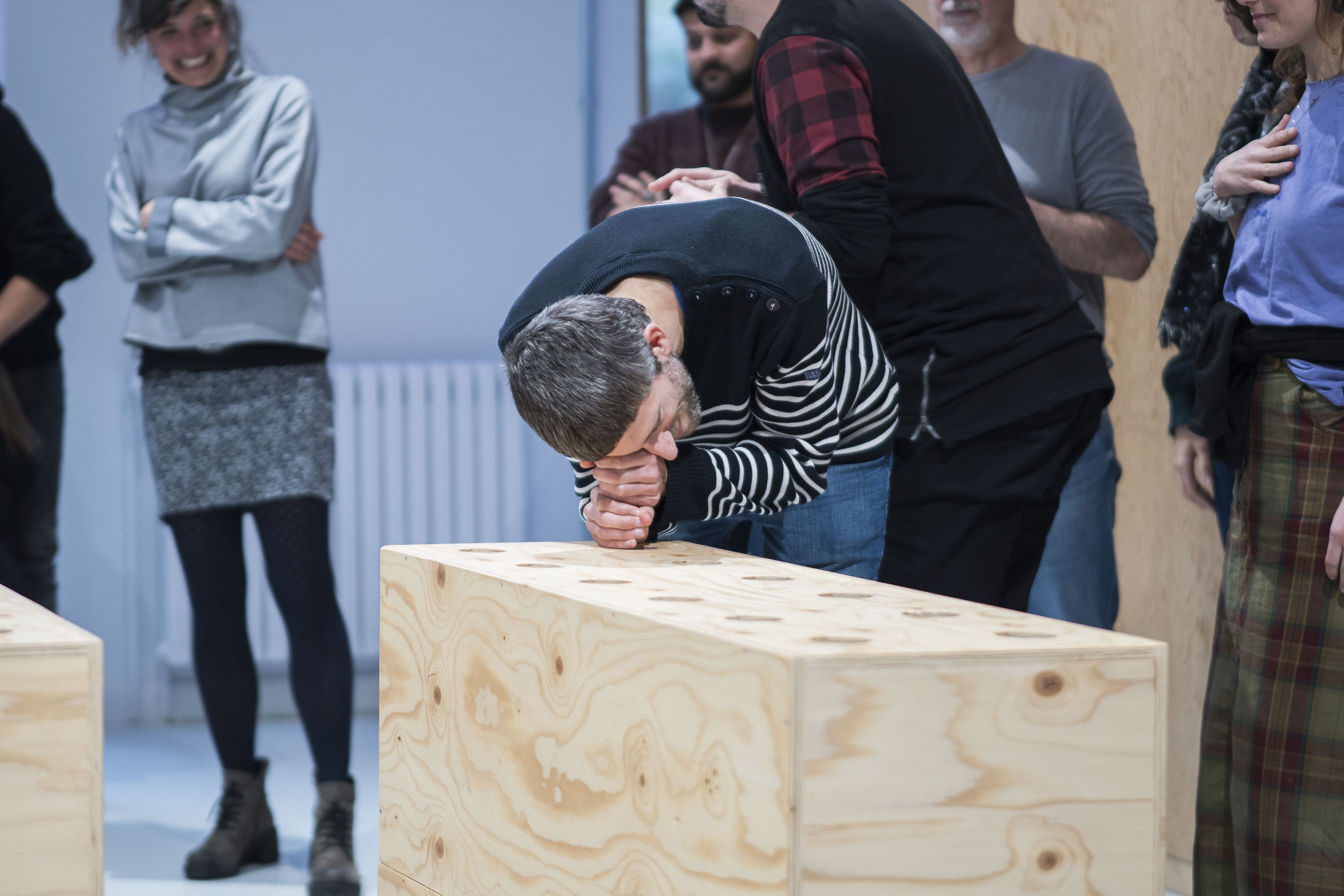
Its beauty is felt in daily life. People from more than 80 nationalities enter a space where they are not asked to hide who they are in order to belong. Languages, stories, bodies and memories are allowed to appear in public. Through multicultural bertsolarismo, linguistic welcoming practices such as Ulersaioak, and artistic installations that connect sound, emotion and identity, the building becomes more than a venue: it becomes a shared cultural home. This gives residents something essential and often missing in contemporary cities — the feeling that a public place can also hold tenderness, curiosity and mutual respect.
Anitzenea also creates belonging because it is designed to be inhabited, not merely visited. Its permeable rooms, shared uses and public-community governance invite people to stay, contribute and care. The space does not separate culture from social justice, or beauty from democracy; it shows that they need each other. Over time, this builds a deeper attachment to place, because people do not just pass through Anitzenea — they leave traces in it, and find themselves reflected back.
It is exemplary in NEB terms because it proves that aesthetics can be ethical, collective and transformative. The most beautiful places are not always the most polished, but the ones that make more life possible. Anitzenea does exactly that.
Inclusion is the beating heart of Anitzenea. The project responds to one of the most urgent challenges in Europe today: how to create places where people with very different origins, languages and life trajectories do not simply coexist, but feel they truly belong. In Errenteria, where more than 80 nationalities live side by side, Anitzenea addresses accessibility not only in physical terms, but also in symbolic, cultural and democratic terms. It creates a space where any neighbour, regardless of origin, language or social situation, can feel legitimate entering, staying and participating. That is a profound form of accessibility, and one that many public buildings still fail to offer.
Affordability is also built into the model. Anitzenea is sustained through municipal public infrastructure and shared resources, which removes the barriers created by commodified spaces. People and organisations can use the building without needing the economic capacity usually required to access central, visible and dignified spaces for meeting, culture or support. This opens the door to groups that are often pushed to the margins of public life.
Its governance model makes inclusion concrete. The City Council does not occupy the whole space of decision-making, but enables a public-community framework in which the organisations inhabiting the building co-shape everyday life. This redistributes power and allows inclusion to be practiced, not only declared. The presence of agents such as SOS Racismo, the Intercultural Table and LGBTI+ spaces ensures that access to rights, anti-racism, language welcoming and the fight against unwanted loneliness are part of the building’s daily logic.
Anitzenea is exemplary because it proposes a new social model: a public infrastructure where vulnerable and diverse communities are not treated as users to integrate from the margins, but as central protagonists of civic, cultural and democratic life.
The project is participatory not because it added consultation to a finished idea, but because participation is the material from which the project is made. The building only became Anitzenea when citizens, communities and civil society organisations began to inhabit it, question it and redefine what it could mean for Errenteria. The people who benefit from the project are not external audiences; they are part of its authorship. Their involvement has shaped not only activities, but the identity, rhythm and democratic culture of the place.
Civil society organisations play a central role in this process. Groups such as SOS Racismo, Badalab and Xenpelar Bertso Eskola do not simply deliver programmes inside the building; they co-create its purpose through their everyday presence, their methods and their alliances. Their level of involvement is therefore structural, not occasional. They help decide how the space is used, what kinds of encounters it should make possible, and how the building can respond to the real tensions and opportunities of a super-diverse municipality. Citizens also participate directly through activities that turn users into contributors: in Ulersaioak, for example, neighbours and school communities engage in pressure-free linguistic welcoming; in artistic and cultural programmes, participants do not merely attend, but generate meaning together.
The impact of this involvement has been transformative. It has created trust between actors who rarely shared space before, generated unexpected collaborations, and turned a former symbol of imposed authority into a place of shared responsibility. Participation has also changed the quality of public life: it has made diversity visible, reduced distance between institutions and residents, and produced a stronger sense that democracy can be lived, not only represented.
Anitzenea works because responsibility is shared across levels, but rooted in one clear civic purpose: making coexistence possible in a diverse town. At local level, Errenteria City Council created the conditions for the project to exist. It provided the building, enabled the framework, allocated resources and chose not to control every outcome from above. That institutional decision was crucial: it turned municipal power into an enabling structure rather than a gatekeeping one. Local organisations and communities then gave the project its real life. Social, cultural and linguistic actors such as SOS Racismo, Badalab and Xenpelar Bertso Eskola brought their own knowledge, methods and constituencies, shaping the building through daily practice rather than occasional consultation. Their involvement was not peripheral; they became part of the operating intelligence of the place.
At an intermediate level, municipal boards, advisory spaces and collaborative public structures helped connect the project to wider policy experimentation. This made it possible for Anitzenea to function not only as a building, but also as a testing ground for new ways of governing diversity, language welcoming, rights-based coexistence and cultural mediation. The added value here was translation: local experience could be turned into institutional learning, and public policy could become more responsive to lived realities.
At European level, Anitzenea speaks directly to challenges that cross borders: migration, democratic fatigue, polarisation, linguistic diversity and the need for public spaces that hold communities together instead of separating them. Its European value does not come from scale, but from relevance. A small local infrastructure becomes a meaningful response to a continental question: how can democracy be felt in everyday life? The strength of this multilevel governance model lies in that combination — municipal commitment, civic co-authorship, institutional learning...
Anitzenea was shaped through the meeting of knowledge fields that are rarely given equal space inside one public project. Social justice and rights advocacy are present through the work of SOS Racismo, which brings legal support, anti-racist practice and direct knowledge of the barriers faced by migrant communities. Linguistic research and innovation enter through Badalab and related actors, who explore how Euskera can live, change and remain meaningful in a multilingual and digital society. Arts and cultural practice are central through Xenpelar Bertso Eskola and other creative initiatives, which use oral poetry, performance and collective expression to turn language, memory and identity into shared public experience.
The project also draws on social sciences, education and community mediation. Anitzenea does not treat coexistence as a symbolic theme, but as something that must be observed, understood and worked on through listening, facilitation and everyday contact. Programmes such as Ulersaioak show how pedagogical and social knowledge can be used to transform linguistic anxiety into empathy and mutual approach. Audiovisual and interactive artistic practices also play a role, especially where sound, body and perception are used to explore how language is lived emotionally and collectively.
What makes distinctive is not simply the presence of many disciplines, but the way they are woven together. Legal support is not separated from culture; linguistic revitalisation is not isolated from migration; art is not decorative; public policy is not detached from lived experience. Each field enlarges the others. The result is a project where culture gives depth to rights, social research gives direction to governance, and artistic practice helps communities imagine themselves differently. In that sense, is not a building hosting activities, but a civic ecosystem where multiple forms of knowledge work together to make coexistence more just, expressive and democratic.
Anitzenea is sustained through a hybrid public-community model that redefines financial sustainability as the ability to maintain a living civic infrastructure over time without excluding those who need it most. The foundation of the model is public: Errenteria City Council provides and maintains the building, covers core operational costs and secures the basic conditions that allow the project to exist. This guarantees stability and removes the structural risk that often undermines community initiatives.
On top of this public base, the project activates a distributed ecosystem of organisations that bring their own resources, funding streams and activities. Agents such as SOS Racismo, Badalab or Xenpelar Bertso Eskola operate within the building while maintaining links to institutional funding, research programmes or cultural networks. This creates operational synergies: instead of duplicating structures, Anitzenea concentrates existing capacities in one shared space, reducing costs and increasing impact.
The model also incorporates modest revenue-generating activities that support everyday functioning without compromising accessibility. These may include cultural events, workshops, small-scale hospitality or collaborative initiatives linked to the life of the building. However, income generation is not the driver of the project; it is carefully balanced with the principle that access to space, dialogue and community life should not depend on purchasing power.
What makes this model strong is its balance. Public investment ensures continuity and equity, while the presence of multiple active organisations ensures dynamism, adaptability and constant use. Financial sustainability is therefore not based on growth or profit, but on shared responsibility, efficient use of public infrastructure and long-term social value. Shows that investing in coexistence, culture and democratic life is not a cost, but a resilient and competitive strategy for European cities.
Anitzenea has strong transferability because its value does not depend on a unique local condition, but on a method that many European towns and cities urgently need. Across Europe, there are underused public buildings marked by difficult histories, growing social fragmentation, linguistic...a lack of shared spaces where people can meet as equals.What can be transferred is not only the building model, but the way the project turns memory, diversity and public responsibility into a common resource.
Several elements are highly replicable. One is the public-community governance model: the administration does not monopolise the space, but enables the framework, provides the infrastructure and shares responsibility with civil society organisations. Another is the methodology of resignifying conflictive heritage: instead of erasing a painful past, the project transforms a former barracks into a democratic space for care, language, rights and culture. A third transferable element is the social innovation toolbox developed inside the building, including linguistic welcoming practices such as Ulersaioak, pressure-free participation formats, multicultural artistic creation and long-term cohabitation between organisations with very different missions.
The project is also transferable across sectors. Its lessons are relevant for urban policy, migration and inclusion strategies, language revitalisation, cultural policy, anti-racism work, democratic innovation and community health. What travels especially well is the key learning that public institutions can create stronger and more resilient communities when they stop trying to programme everything themselves and instead trust the social fabric to co-create everyday life.
Anitzenea matters beyond Errenteria because it offers a credible answer to a European question: how can public space become a place where diversity does not produce separation, but belonging? That question exists everywhere, and this model can travel.